


This post may contain affiliate links. Read my full disclosure policy.
From a family recipe passed down through generations, these cheese blintzes are perfect for brunch and just as good as a sweet treat later on.

After years of cooking for my son, and now sometimes alongside him, this is the first recipe he’s ever passed along to me. It feels even more special because it comes from his roommate Josh, who learned it from his grandfather, Bob Rosenkranz. It all just makes me happy—and it’s really delicious, too.
Cheese blintzes are a traditional Eastern European dish, made with thin, tender crêpes wrapped around a lightly sweet farmer’s cheese filling, then pan-fried until golden and crisp. Dust them with confectioners’ sugar, drizzle with honey or jam, and serve warm with sour cream. They’re perfect for brunch or a sweet treat any time.
What You’ll Need To Make Cheese Blintzes
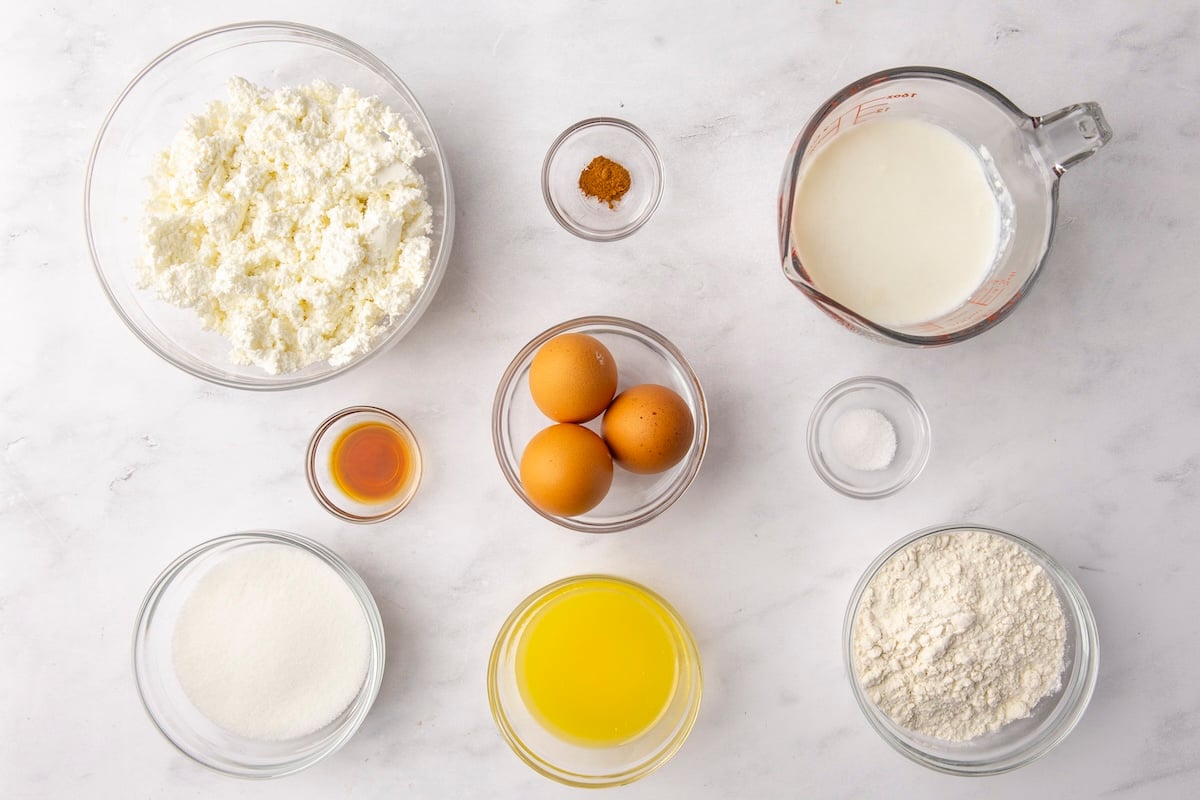
You’ll need eggs, milk, sugar, unsalted butter, all-purpose flour, farmer’s cheese, cinnamon, and vanilla extract.
Farmer’s cheese is a fresh, mild, slightly tangy cheese with a soft, crumbly texture—somewhere between ricotta and cottage cheese, but drier and less creamy. It’s traditional in Eastern European dishes like blintzes because it holds its shape while still being tender and light.
You can usually find it in the dairy case, often near the cottage cheese or sour cream, and sometimes in the specialty or international section. If you can’t find it, well-drained ricotta (or ricotta mixed with a little cream cheese for richness) makes a good substitute.
Step-By-Step Instructions
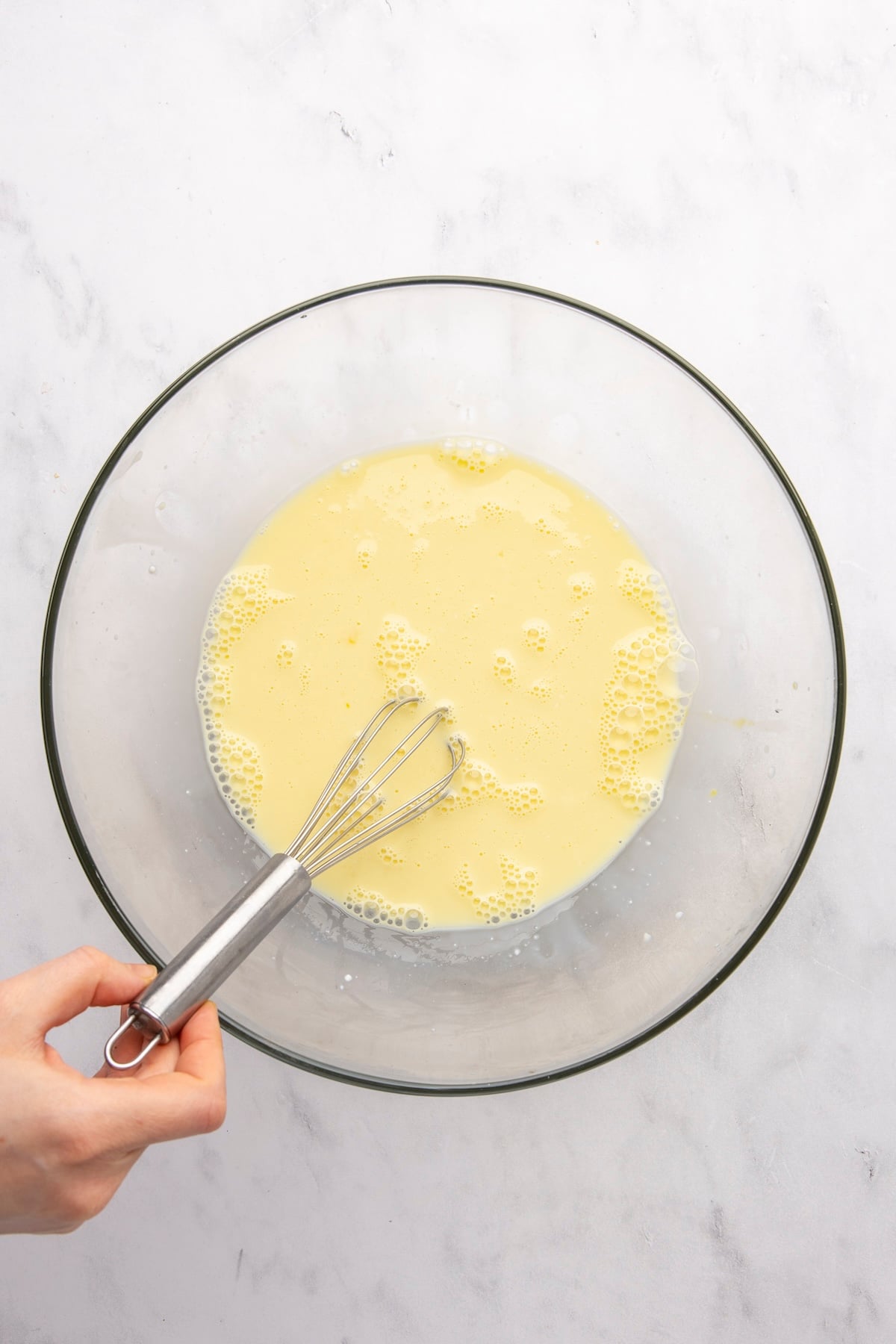
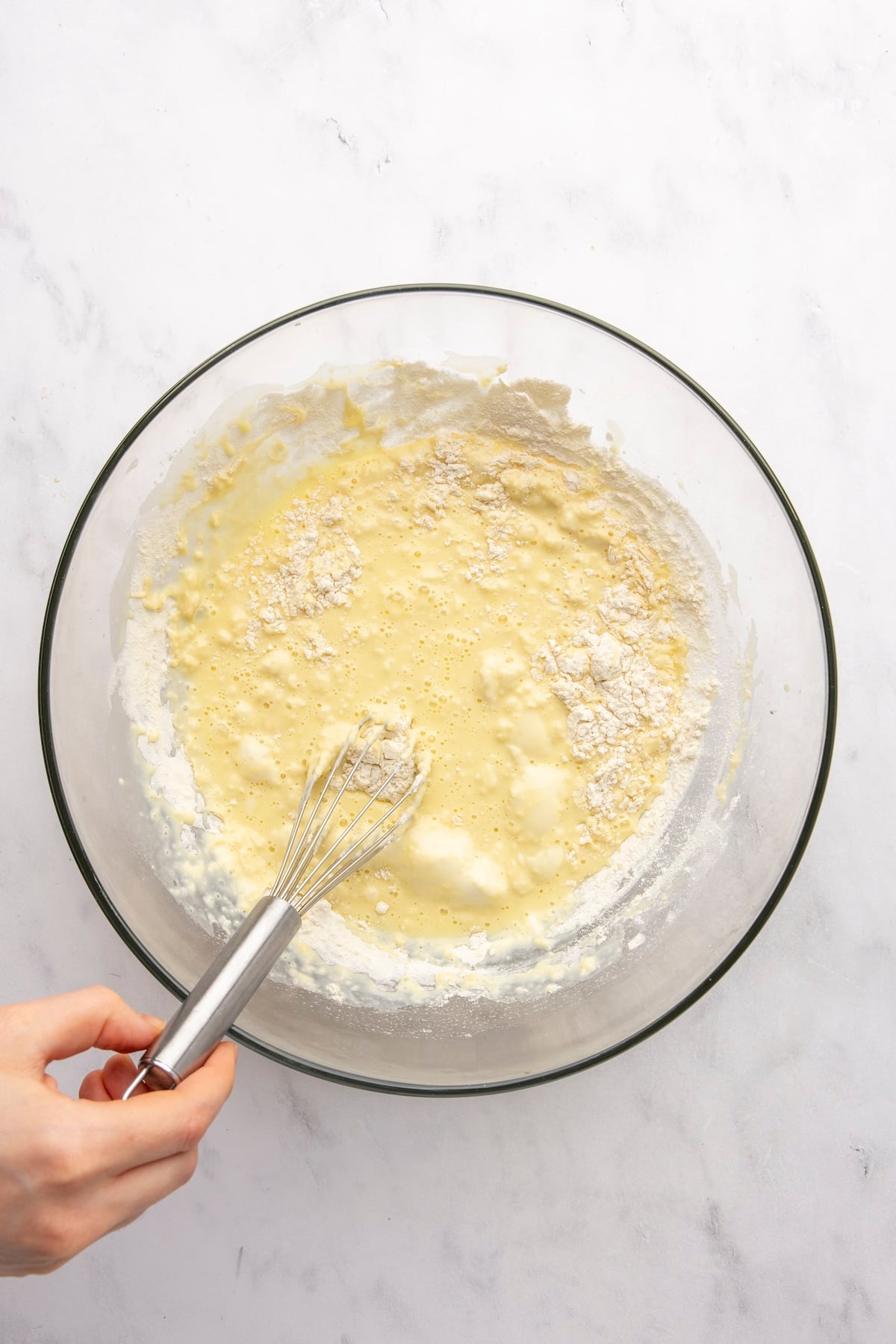
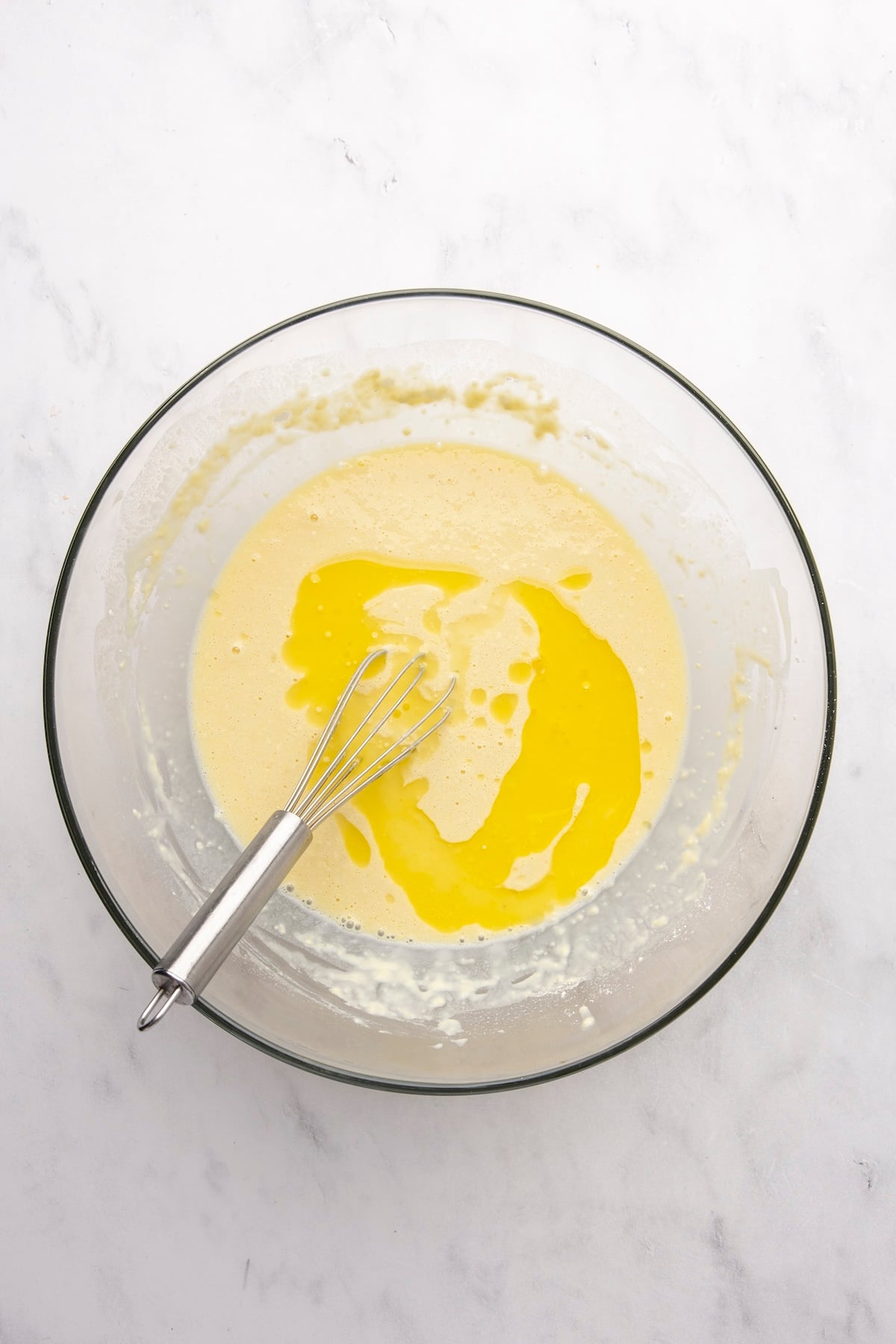
Step 1: Make the crepe batter. In a large bowl, whisk the eggs and milk until well combined, then add the sugar and salt. Gradually whisk in the flour until smooth, then stir in the melted butter. (You can use a handheld electric mixer here if you prefer.) Let the batter rest at room temperature for 20 to 30 minutes.
Pro Tip: Resting the batter for at least 20 minutes allows the flour to hydrate and the gluten to relax. This ensures the crepes are tender and prevents them from shrinking when they hit the pan.

Step 2: Cook the crêpes. Heat a 10-inch nonstick skillet over medium heat and lightly butter the pan. Pour ⅓ cup of batter into the pan, tilting and swirling to fully coat the bottom, and cook until the top is set and the edges lift, about 2 minutes. Loosen the edges with the spatula, flip, and cook for 30 seconds more (once loosened, many cooks find it easiest to flip the crêpes with their fingers).
The crêpes should stay mostly pale with light golden spots, as over-browning can make them less flexible when rolling. Transfer to a plate and repeat to make about 8 crepes.
Pro Tip: Make sure to swirl the batter all the way to the edges of the skillet so the crepes are large enough to hold the filling. Adjust the heat as you go, as the pan will get hotter with each successive crepe.
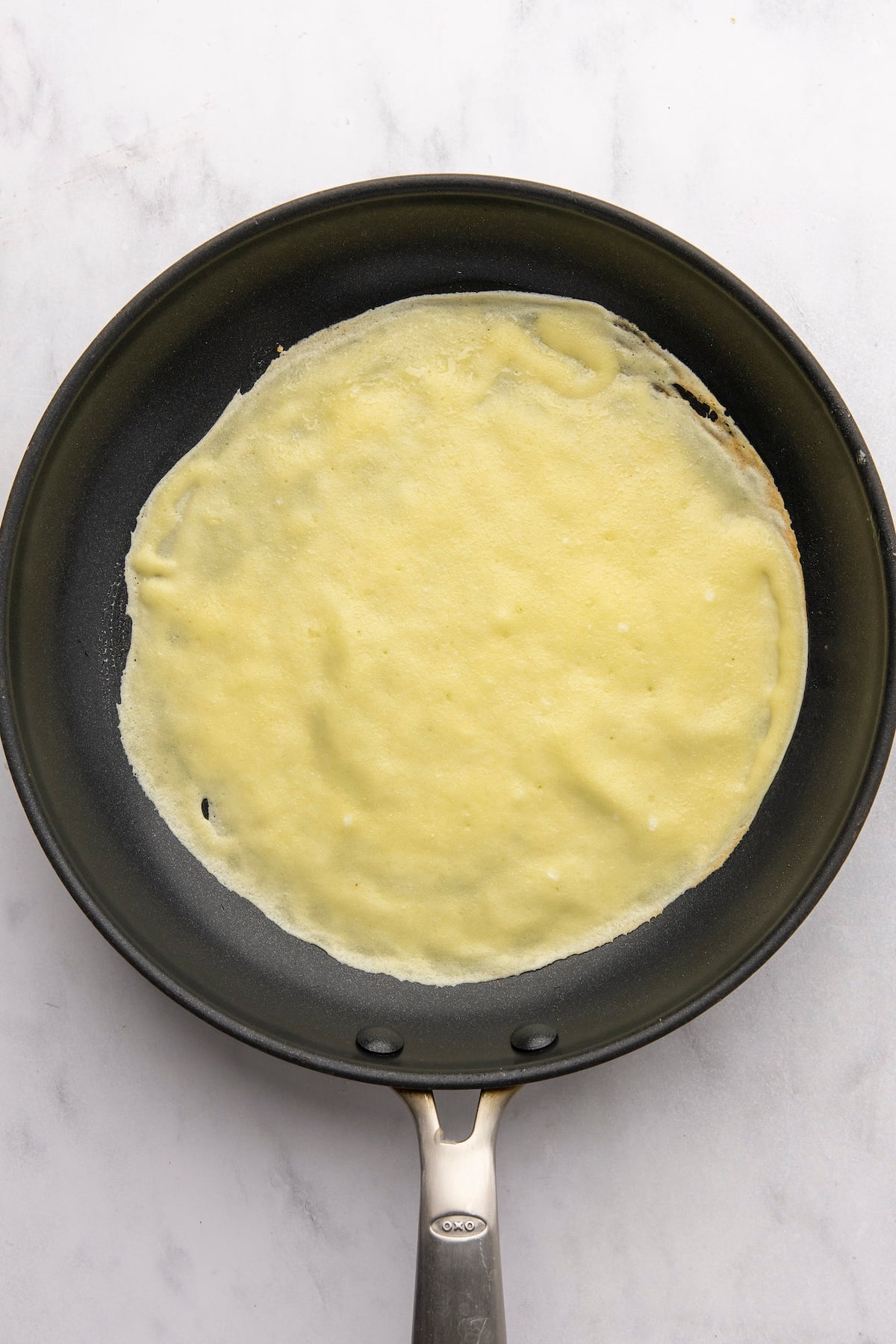
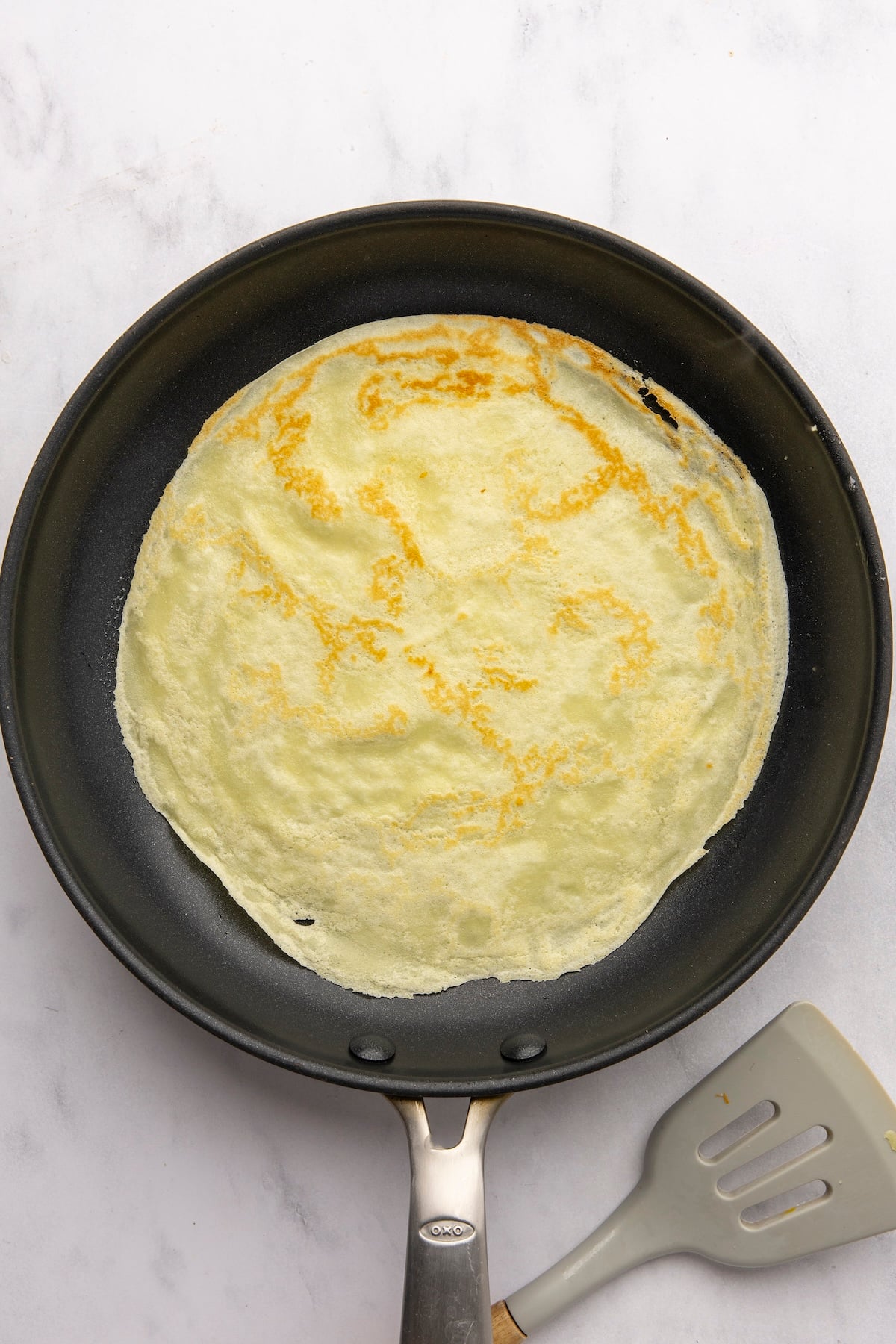

Step 3: Make the filling. In a medium bowl, use a whisk or handheld mixer to combine farmer’s cheese, egg, sugar, salt, cinnamon, vanilla, and melted butter until the mixture is smooth.
Pro Tip: The mixture will start out thick and crumbly, but will smooth out into a creamy consistency as you continue to whisk the cheese with the egg and butter.
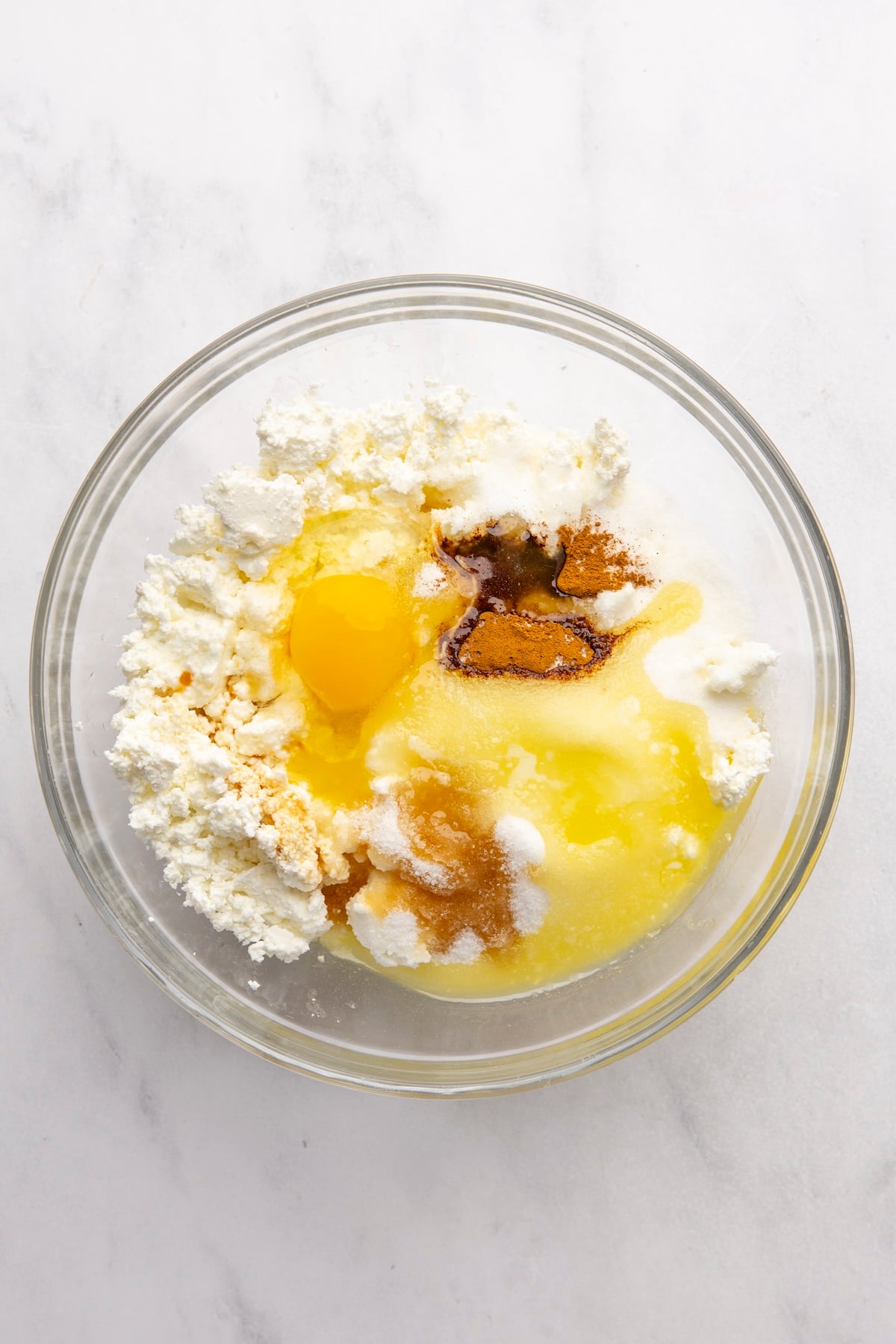
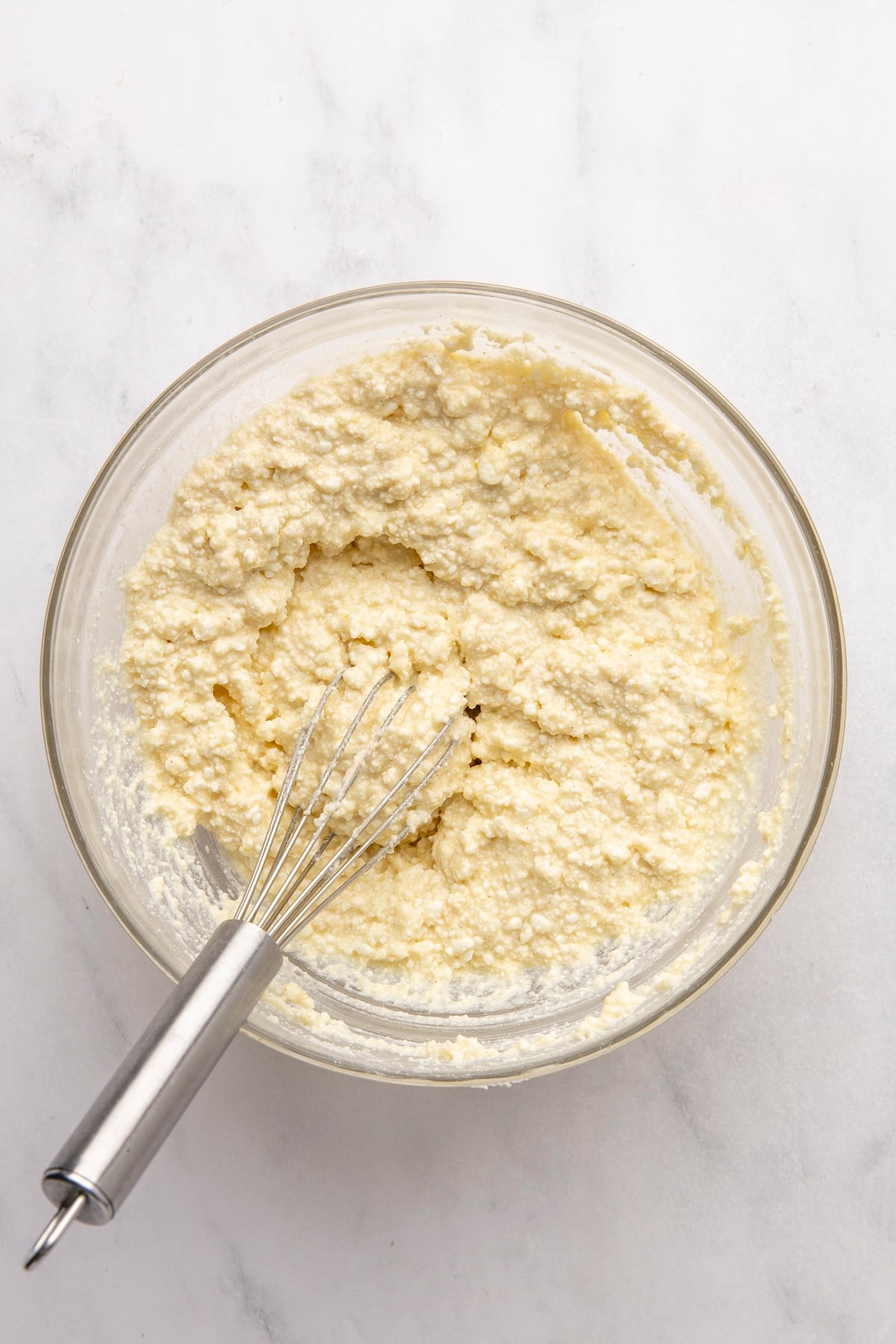
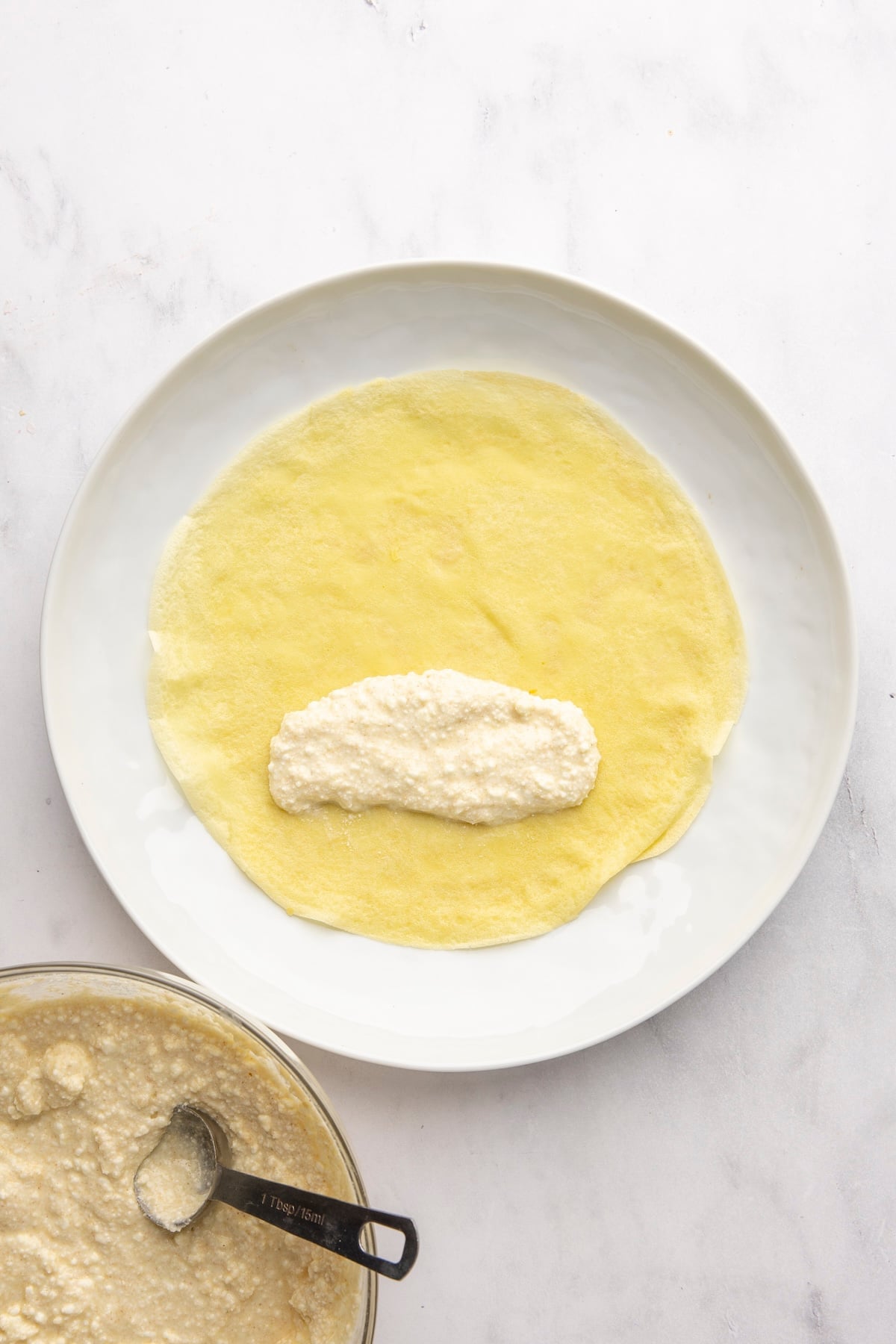
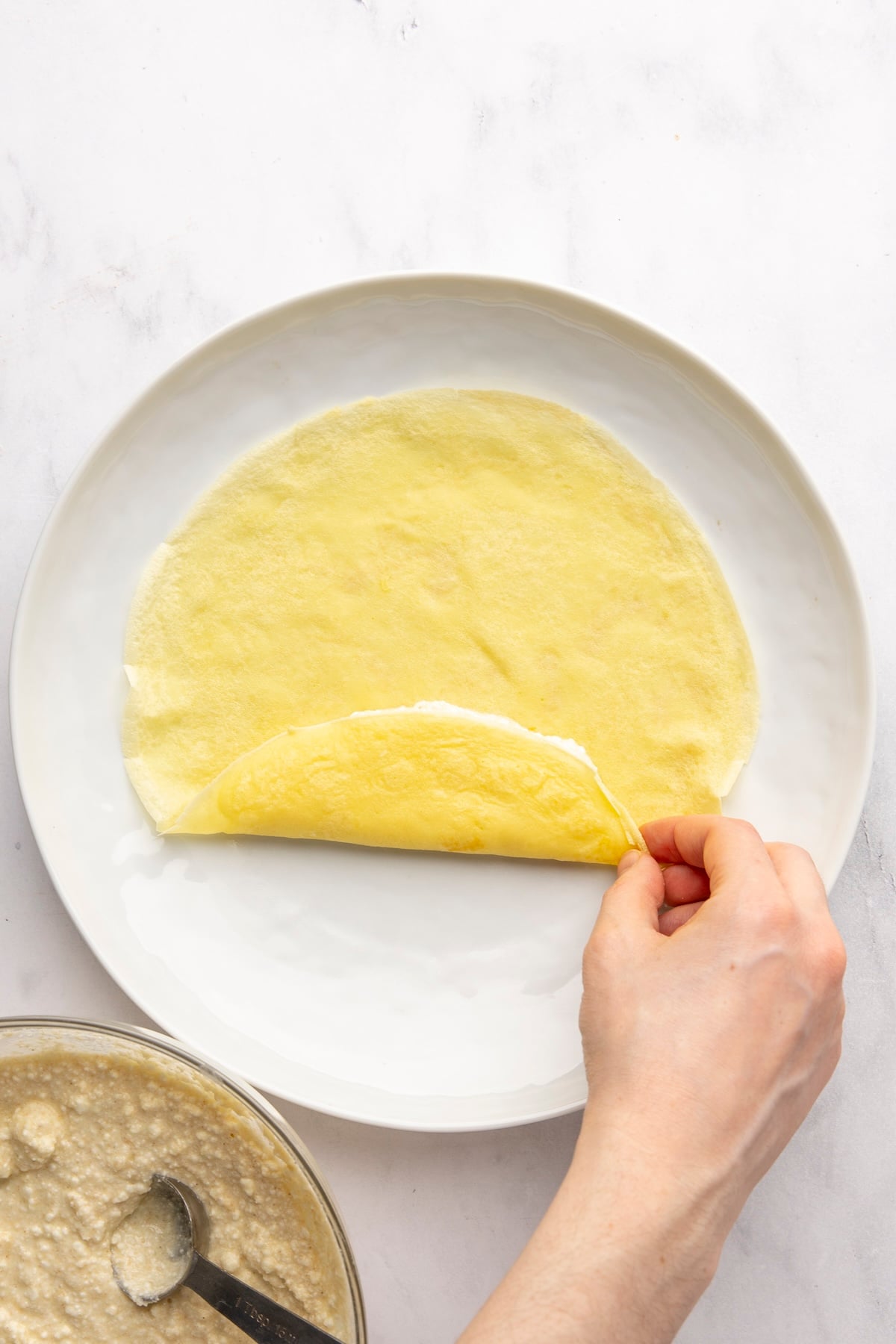
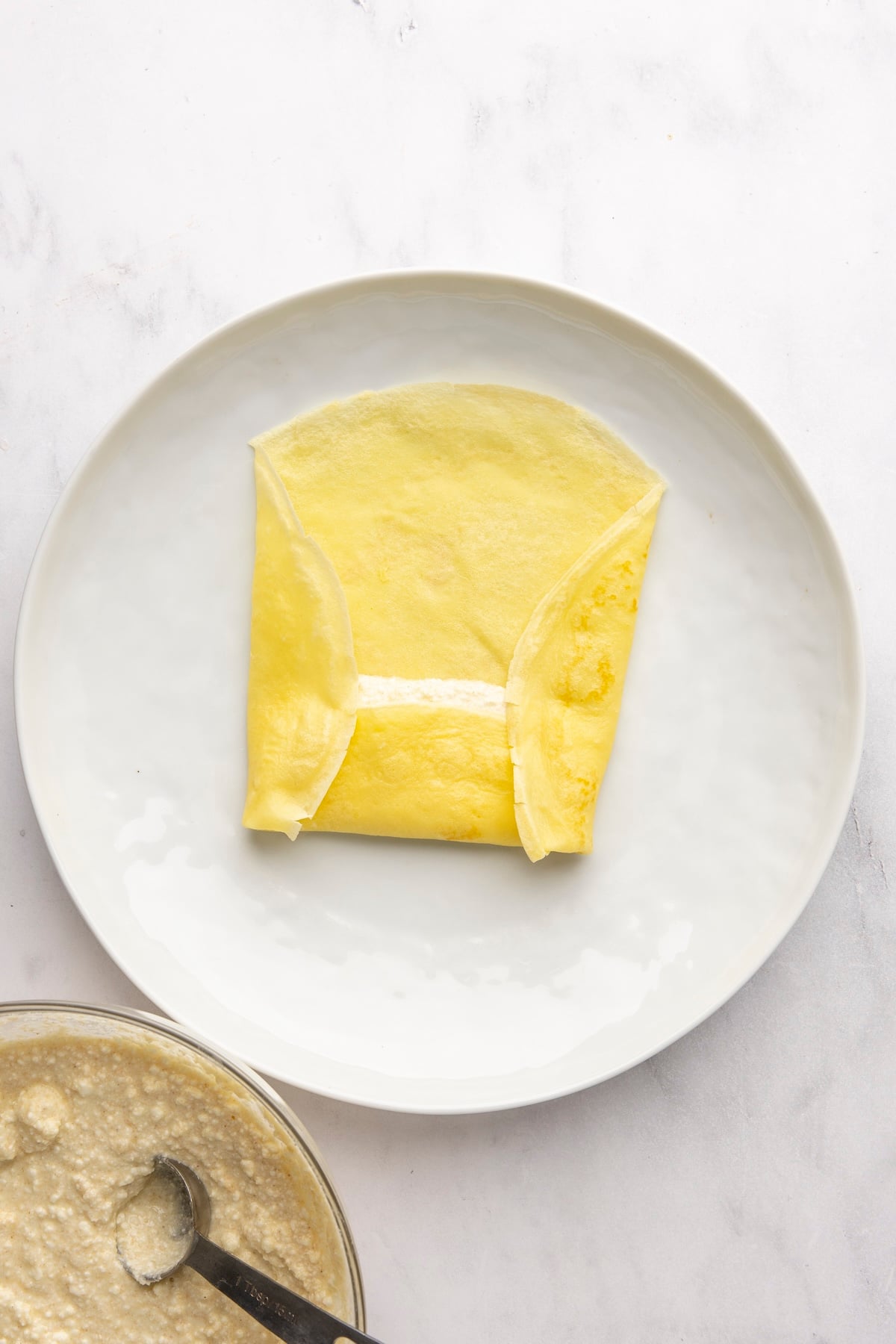
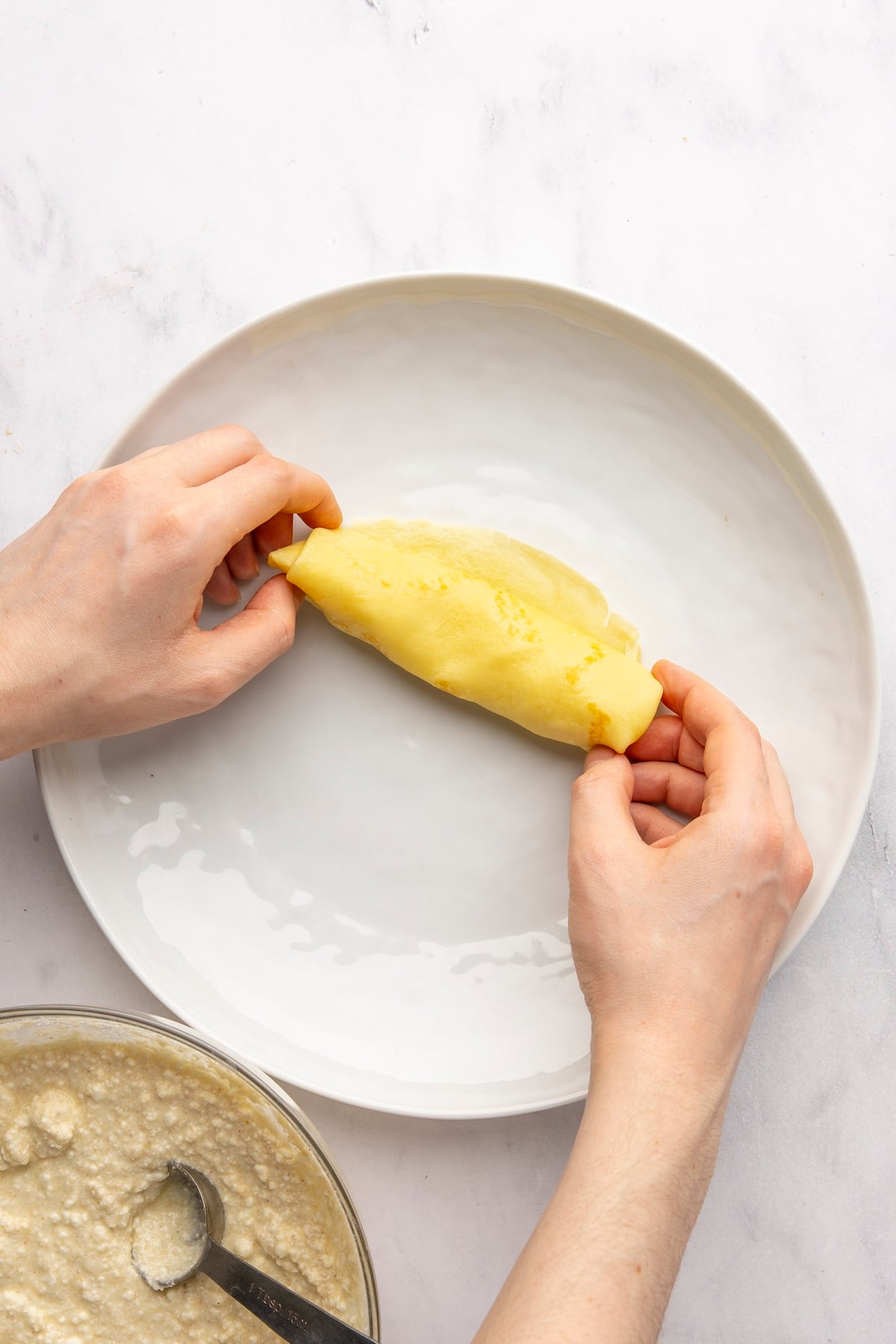
Step 4: Fill and roll. Spoon 3 tablespoons of filling onto a crepe, 2 inches from the bottom, and spread into a 4-inch line. Fold the bottom over the filling, tuck in the sides, and roll into a flat, tidy package about 4 inches long; repeat with the remaining crepes. The blintzes should be fairly flat, not thick or tube-shaped—they crisp up much better that way. Repeat with the remaining crêpes and filling.
Pro Tip: If a blintz doesn’t stay sealed, rub a small amount of beaten egg along the seam before frying to help it hold together.
Step 5: Refrigerate. If you plan to serve them later, the assembled blintzes can be placed on a plate, covered with plastic wrap, and refrigerated for up to 24 hours

Step 6: Fry the blintzes. Heat a large nonstick skillet over medium heat and coat with a half-tablespoon each of butter and oil. Fry the blintzes seam-side down until golden and crisp on both sides, about 2 minutes per side, working in batches if necessary.
Pro Tip: Using a mix of butter and oil prevents the butter from burning while still providing a toasted flavor and a golden crust.


Step 7: Serve. Dust the warm blintzes with confectioners’ sugar and serve with sour cream, fruit, or jam.

More European Breakfast Recipes You’ll Love




Cheese Blintzes

Ingredients
For the Crêpes
- 2 large eggs
- 1⅓ cups milk (any kind)
- 2 tablespoons sugar
- ½ teaspoon salt
- 1 cup all-purpose flour, spooned into measuring cup and leveled-off
- 2 tablespoons unsalted butter, melted and cooled slightly
For the Filling
- 1 lb farmer’s cheese (see note)
- 1 large egg
- ½ cup sugar
- ¼ teaspoon salt
- ¼ teaspoon ground cinnamon
- ½ teaspoon vanilla
- 2 tablespoons unsalted butter, melted and cooled slightly
For Frying and Serving
- Butter and vegetable oil, for frying
- Sour cream
- Fresh fruit or berries
- Jam or preserves
- Honey
- Confectioners’ sugar
Instructions
- Make the crepe batter: In a large bowl, whisk together the eggs and milk until well combined. Add the sugar and salt. Gradually whisk in the flour until smooth and lump-free, then whisk in the melted butter. (You can also use a handheld electric mixer if you prefer.) Let the batter rest at room temperature for 20 to 30 minutes—this helps the crepes cook up tender.
- Cook the crepes: Heat a 10-in (25-cm) nonstick skillet over medium heat and lightly butter the pan. Pour about ⅓ cup of batter into the pan, immediately tilting and swirling it so the batter evenly coats the bottom and just begins to creep up the sides in a thin layer.Cook until the top looks set and the edges begin to lift, 1½ to 2 minutes. Loosen the edges with a spatula, then flip and cook the second side for 20 to 30 seconds more (many cooks find it easiest to flip the crêpes with their fingers once loosened). The crêpes should stay mostly pale with just light golden spots, as over-browning can make them less flexible when rolling. Transfer to a plate and repeat with the remaining batter, stacking the crêpes as you go. As you continue cooking, the pan will gradually get hotter, so the crêpes may cook more quickly; reduce the heat as needed to keep them from browning too much. (You should get about 8 crepes.)
- Make the filling: In a medium bowl, combine the farmer’s cheese, egg, sugar, salt, cinnamon, vanilla, and melted butter. Mix until smooth. (Again, a whisk or mixer both work.)
- Fill and roll: Working with 1 crêpe at a time, spoon 3 generous tablespoons of filling onto the crêpe about 2 in (5 cm) from the bottom edge and spread it into a 4-in (10-cm) line. Fold the bottom edge of the crêpe over the filling, then fold in the sides. Gently roll the crêpe into a tidy package, about 4 in (10 cm) long and 2 in (5 cm) wide. Blintzes should be fairly flat, not thick or tube-shaped—they crisp up much better that way. Repeat with the remaining crêpes and filling. (If a blintz doesn’t want to stay sealed after rolling or doesn’t feel compact, rub a little beaten egg along the seam before frying to help it hold together.)The assembled blintzes can be transferred to a plate, covered with plastic wrap, and refrigerated for up to 24 hours.
- Fry the blintzes: Heat a large nonstick skillet over medium heat and coat the pan with about ½ tablespoon butter and ½ tablespoon oil (the oil prevents the butter from burning). Add the blintzes seam-side down and cook until golden and crisp on both sides, about 2 minutes per side. Depending on the size of the skillet, you may need to do this in two batches.Dust with confectioners’ sugar and serve warm with sour cream, fruit, or jam.
Notes
- Farmer’s cheese is usually sold in the dairy case, near the cottage cheese or sour cream, and sometimes in the specialty or international section. If you can’t find it, well-drained ricotta works well, or use ricotta mixed with a little cream cheese for a richer, more traditional texture.
- Nutritional information does not include toppings.
- Make-Ahead Instructions: The blintzes can be assembled, covered, and refrigerated for up to 24 hours before frying.
- Freezing Instructions: Blintzes can be frozen before or after frying. To freeze before frying: Assemble the blintzes and place in a single layer on a baking sheet. Freeze until solid, then transfer to a freezer-safe container or bag. Freeze for up to 2 months. Thaw overnight in the refrigerator before frying as directed. To freeze after frying: Let the blintzes cool completely, then, on a plate or baking sheet, freeze in a single layer for about an hour. Transfer to a freezer-safe container or bag. Reheat straight from frozen in a skillet over medium-low heat with a little butter (cover loosely for the first few minutes so the centers warm through), or in a 350°F (175°C) oven for 10 to 15 minutes, flipping once.
- Citrus: Add 1 to 2 teaspoons lemon or orange zest to the filling (omit the cinnamon).
- Honey-Sweetened: Replace 2 tablespoons of the sugar with honey.
- Richer Filling: Replace about ¼ of the farmer’s cheese with softened cream cheese.
- Raisins: Add 2 to 3 tablespoons golden raisins (especially nice with lemon zest).
Nutrition Information
This website is written and produced for informational purposes only. I am not a certified nutritionist and the nutritional data on this site has not been evaluated or approved by a nutritionist or the Food and Drug Administration. Nutritional information is offered as a courtesy and should not be construed as a guarantee. The data is calculated through an online nutritional calculator, Edamam.com. Although I do my best to provide accurate nutritional information, these figures should be considered estimates only. Varying factors such as product types or brands purchased, natural fluctuations in fresh produce, and the way ingredients are processed change the effective nutritional information in any given recipe. Furthermore, different online calculators provide different results depending on their own nutrition fact sources and algorithms. To obtain the most accurate nutritional information in a given recipe, you should calculate the nutritional information with the actual ingredients used in your recipe, using your preferred nutrition calculator.
OMGosh these are so yummy and filling! We couldn’t locate farmer cheese, so we did the ricotta and cream cheese suggestion. We also did the honey suggestion since we just purchased some amazing wildflower honey at a farmer’s market. So. Freaking. Yummy. 😋
I will give one note if this is your first time making crepes; Easy on the butter for the pan. My first one was a mess because I had a little too much butter and the batter was not able to grip the pan. I ended up using a paper towel with melted butter and gave the pan a quick wipe with that between crepes. The crepe batter could grip and it still released.
We will definitely be making these again! Thank you so much for sharing this recipe!
Jenn, I love that you have (and share!) this recipe!!
Growing up in Ukraine we often had these as a weekend treat, just heavenly. 🙂
We also fill these with savoury fillings such as dill and garlic farmer’s cheese. Or a cooked ground meat with finely shredded hard-boiled eggs (yes, on an actual cheese shredder… and a bit of water if it all doesn’t want to stay together), then wrapped up and pan fried as you do here. Served alongside a light bouillon. Another childhood favourite!
Thank you, as always, for sharing your favourite recipes, Jenn!
Sour cream all the way for my family. I live in Toronto. Believe it or not, it is not easy to find farmers cheese.
Hi Linda. Try an Eastern European store (Ukrainian delis are a great place to find it). Costco in Western Canada also sells MC Dairy pressed cottage cheese (item#118840) which is a decent substitute, though a little dry because it is low in fat. Perhaps your Costco carries it as well!
Hope this helps! 🙂
I haven’t yet tried this specific recipe but have made a similar recipe in the past and will try this version soon because your recipes are always so good! That said, I’m wondering if mascarpone would be a good substitute filling for either the farmer’s cheese (which I have never seen in my grocery stores) or the ricotta (with cream cheese or on its own). Mascarpone is so delicious anyway and has a slightly sweet flavor.
Thanks for this recipe, and all of your recipes and generous work.
Annie C.
Hi Annie, thanks for your kind words – so glad you like the recipes! I don’t recommend mascarpone on its own, but if you’d like to include it, you could do a combination of ricotta and mascarpone (instead of cream cheese). I’d love to hear how they turn out!
If I use 1/3 of the batter to make 3 crepes, how do I end up with 8 crepes??? Do I need to use 3 times the stated amount of ingredients????
Hi Edna, it’s 1/3 cup of batter for each crepe, not a third of the batter. Hope that clarifies!
Basically heaven, cannot wait to make!
I haven’t made these yet, but am giving a 5 star rating because of the sweet memories your post conjures up. My mother (I grew up in NYC) made these, and I remember the smell in the kitchen, and the taste of the blintzes. Your photos look like her blintzes! The frozen blintzes in the supermarket can’t compare to homemade. I no longer live in the northeast, and haven’t heard of “farmer’s cheese” for years. Thank you for the recipe.