
Quiche Lorraine

This post may contain affiliate links. Read my full disclosure policy.
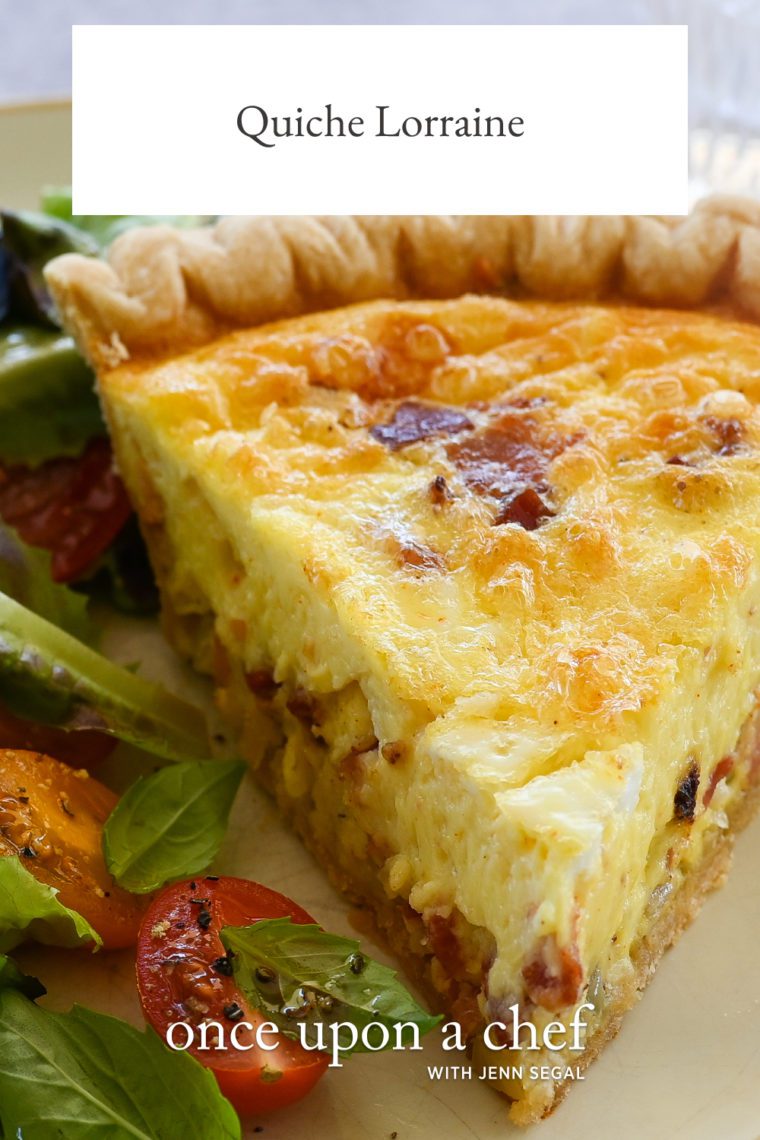
Bacon, Gruyère, and a rich egg custard baked in a flaky crust—there’s a reason this quiche Lorraine recipe is a French classic.
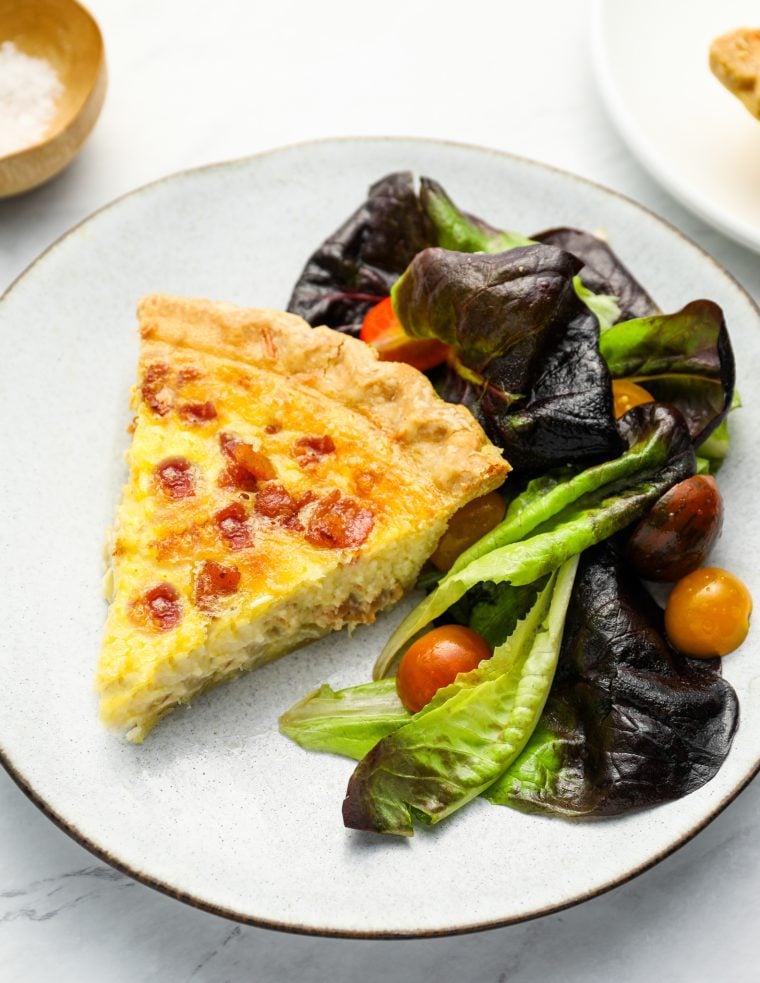
During my college years, I spent a semester studying abroad in Tours, France, a charming university town about an hour from Paris. One of my daily rituals was walking to a local boulangerie for lunch, where I’d get a mini quiche Lorraine, still warm from the oven. I’d savor every bite while walking back to class through the cobbled streets. This quiche Lorraine recipe takes me right back.
Named after the region of France where it originated, quiche Lorraine is one of the most iconic—and satisfying—French quiches. Made with smoky bacon, nutty Gruyère cheese, and shallots baked into a silky custard, it’s ideal for brunch, lunch, or dinner, especially paired with a green salad and a crisp glass of white wine.
“Hands down, the BEST quiche Lorraine recipe ever…People always tell me it’s the best quiche they’ve ever tasted!”
What You’ll Need To Make Quiche Lorraine
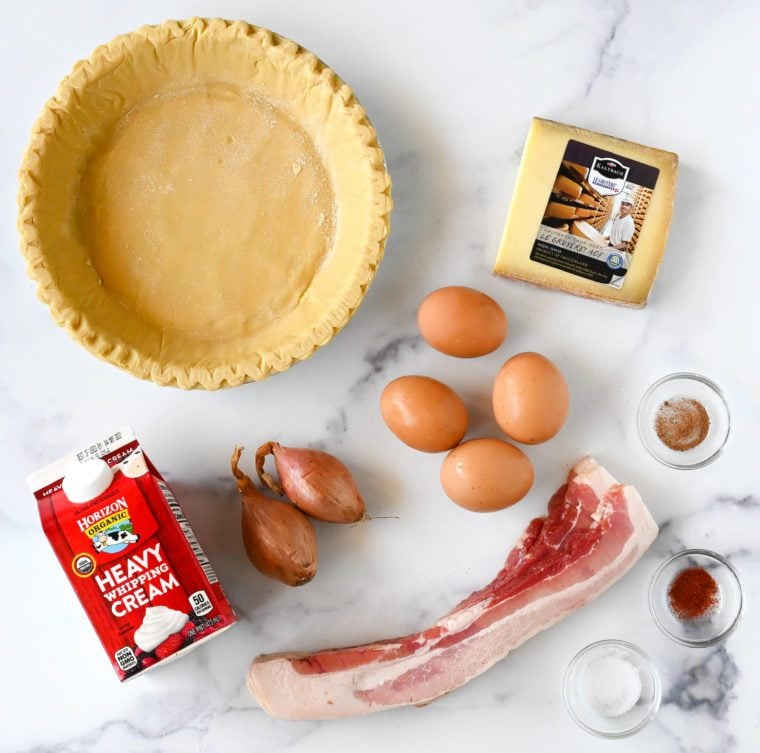
- Frozen pie crust: I prefer a frozen deep-dish crust to refrigerated rolled dough—it’s convenient, holds all the filling, and is less prone to shrinking during par-baking. You can also use homemade pie crust.
- Thick-cut bacon: Gives the quiche its smoky, savory flavor and meaty texture. Pop it in the freezer briefly before cutting to make it easier to dice.
- Shallots: Milder and sweeter than onions, they complement the bacon and Gruyère without overpowering the custard.
- Eggs & heavy cream: Form the custard. I always use heavy cream rather than milk or half-and-half for the richest, silkiest texture.
- Gruyère: Its nutty flavor is a classic match for bacon and eggs. I recommend authentic Swiss Gruyère with the AOP seal; shred it finely so it melts evenly.
- Salt, cayenne & nutmeg: Season the custard. Cayenne adds just a hint of warmth, while nutmeg is a classic addition to creamy French egg dishes.
- Jump to the printable recipe for precise measurements
How To Make Quiche Lorraine
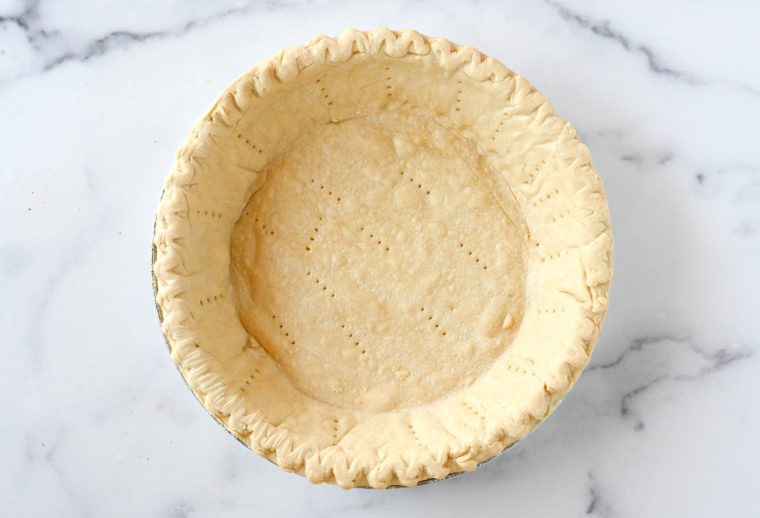
Blind bake the crust: Par-bake the crust until lightly golden. This gives the crust a head start so it stays crisp once the custard filling goes in. If it puffs as it bakes, gently prick it with a fork to deflate it.
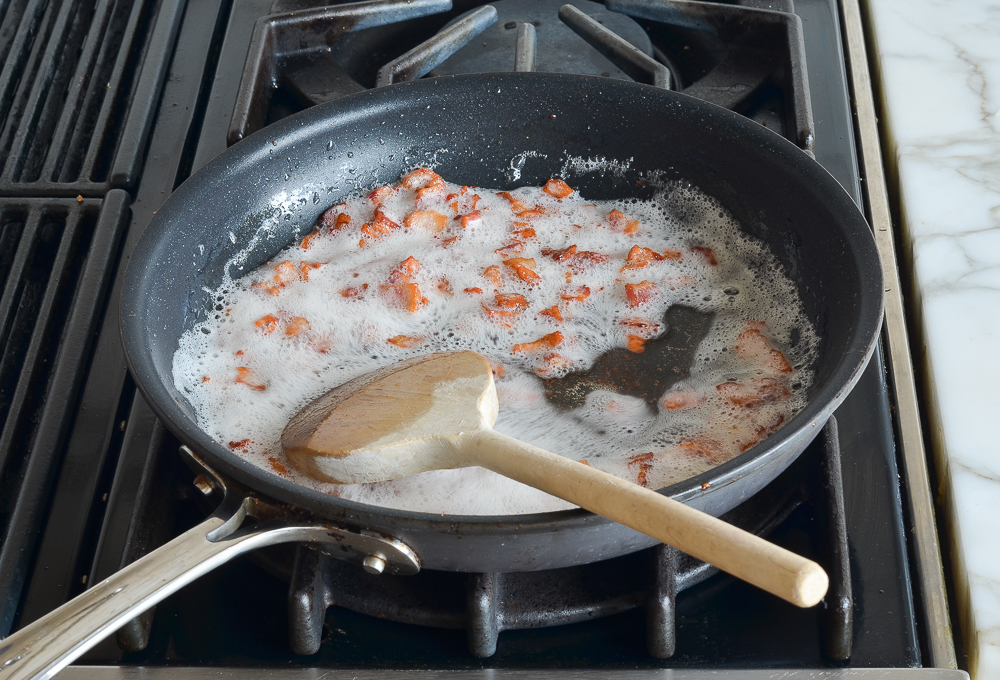
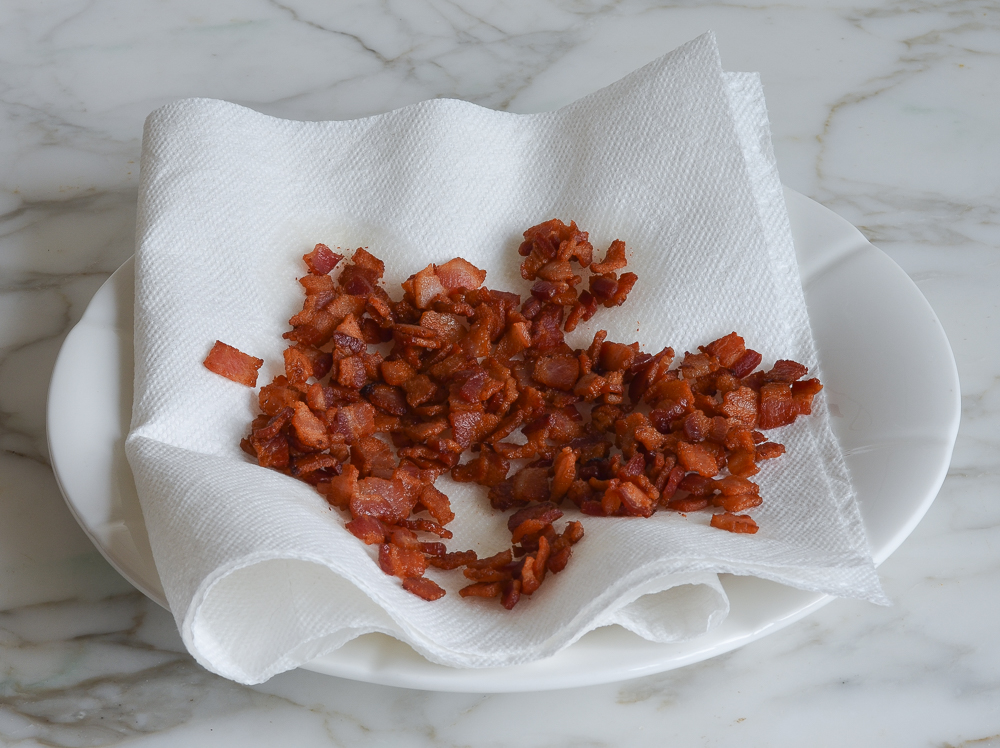
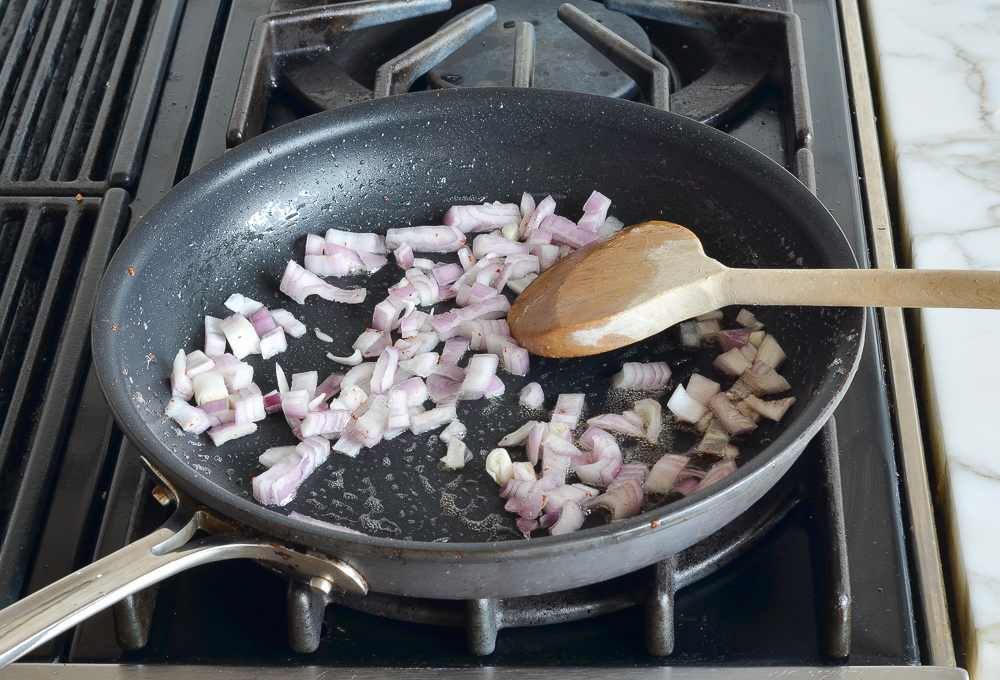
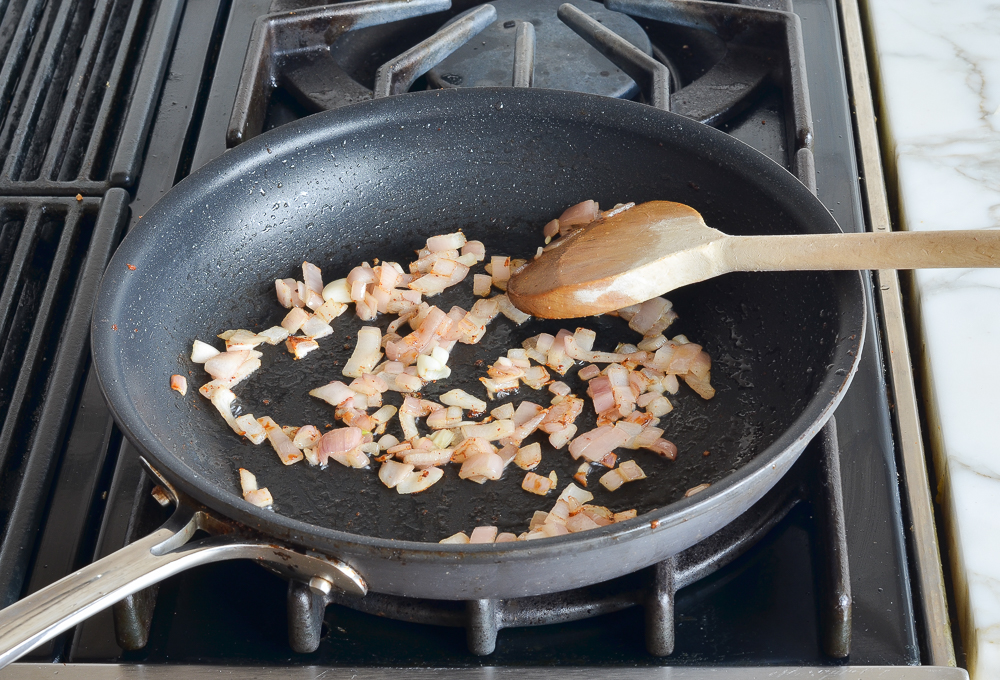
Cook the bacon and shallots: Cook the bacon until crisp, then drain it well so the quiche doesn’t become greasy. Sauté the shallots in a little of the bacon fat until soft and translucent, taking care not to brown them.
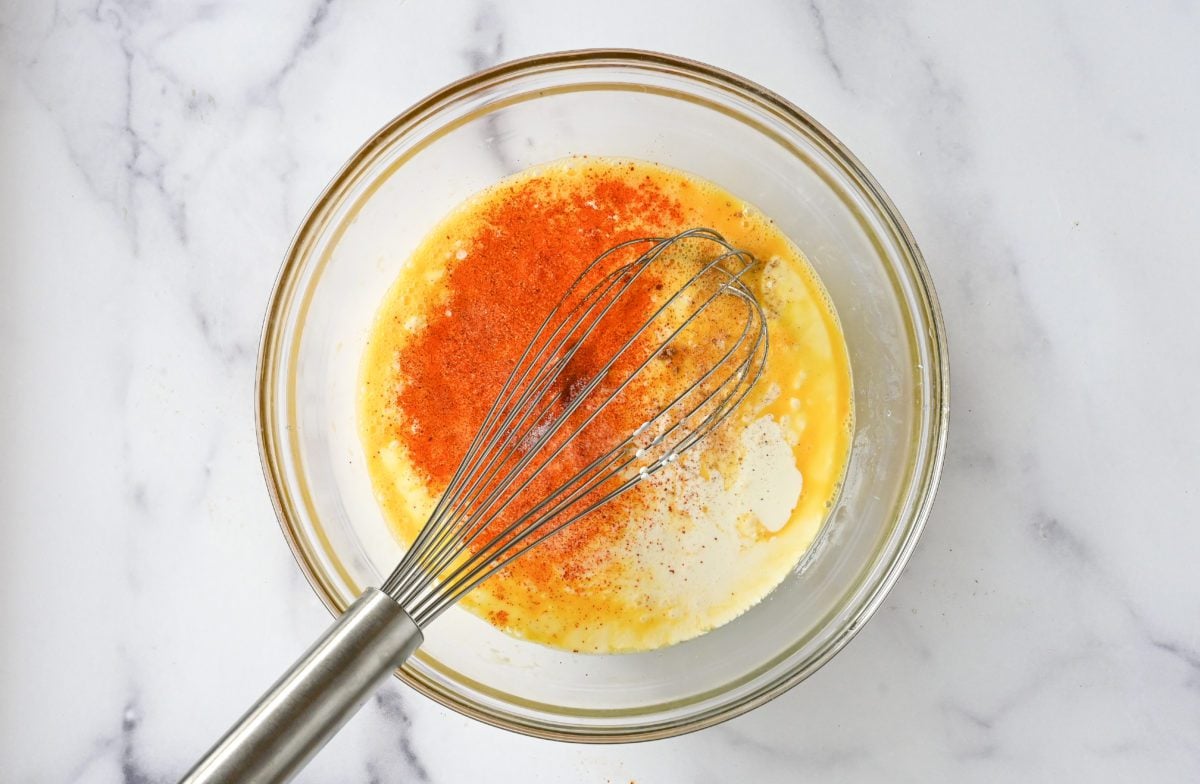
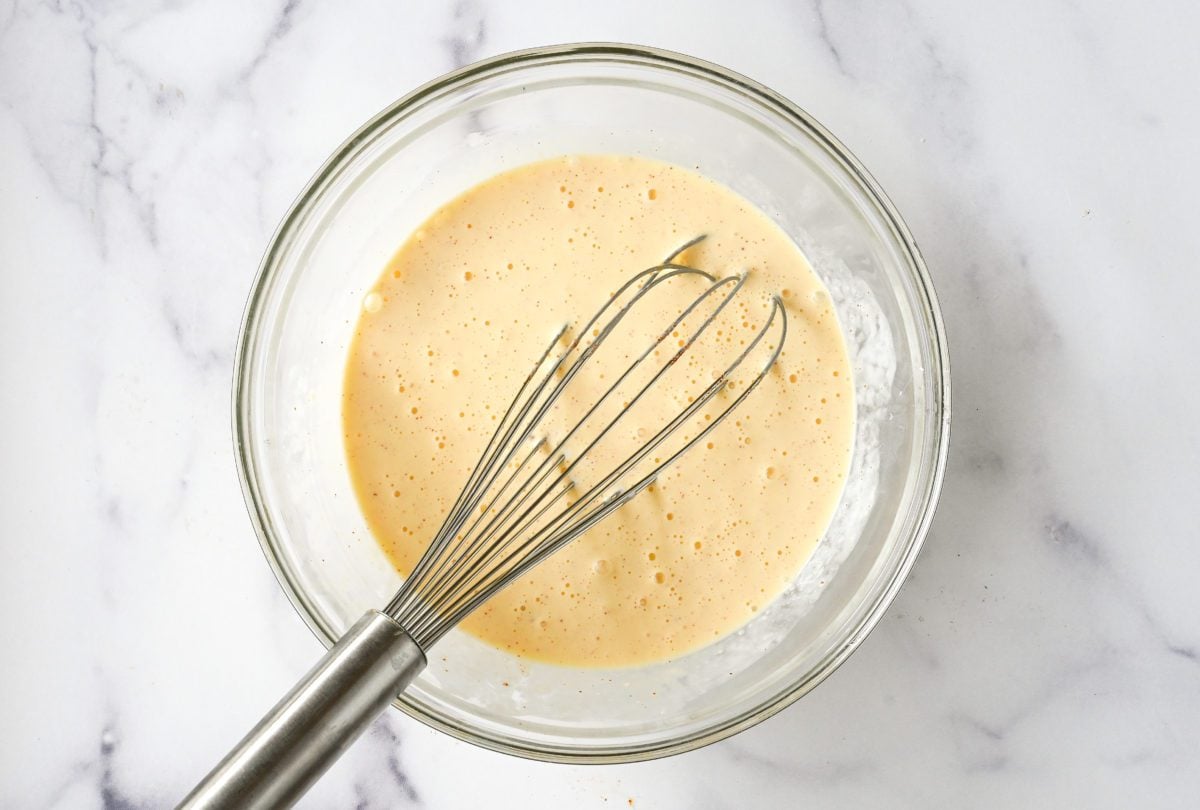
Make the custard. Whisk the eggs to break them up, then add the heavy cream, salt, cayenne pepper, and nutmeg and whisk until evenly combined.
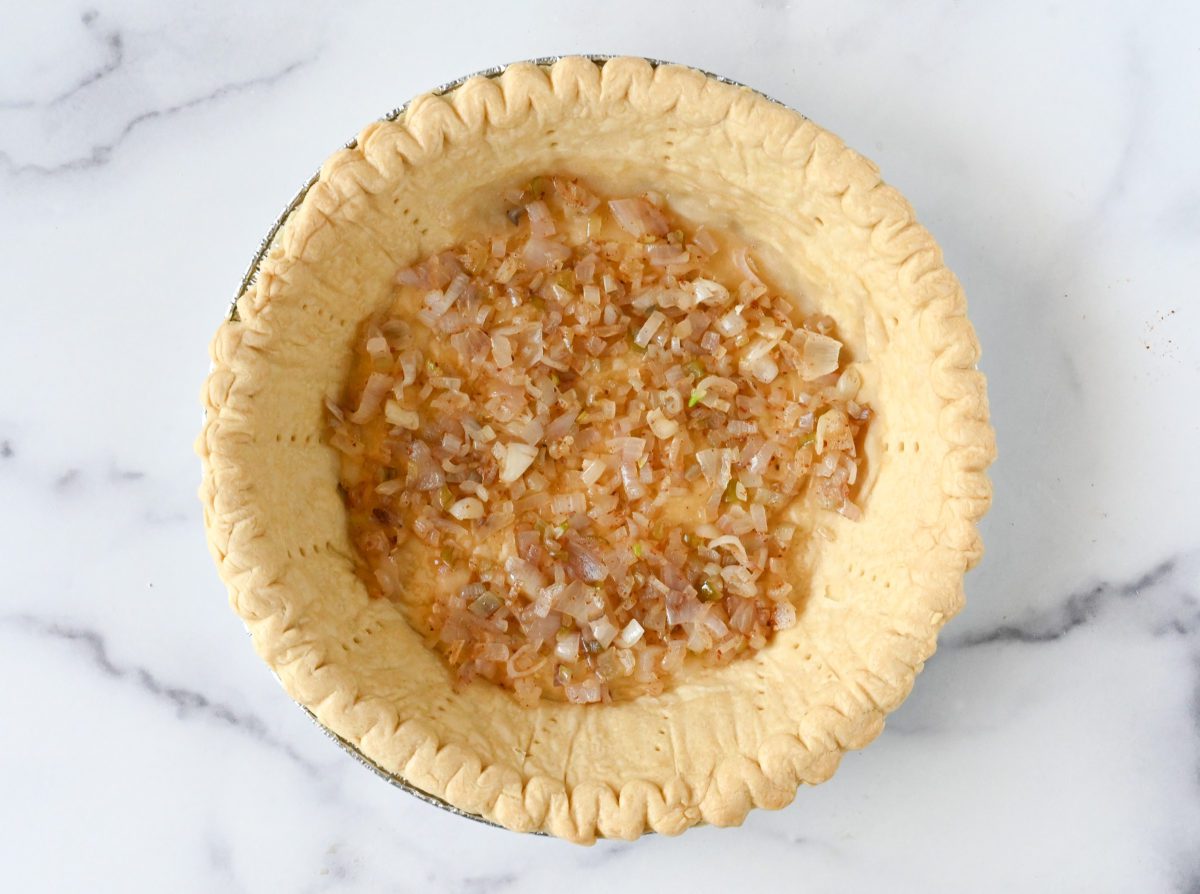
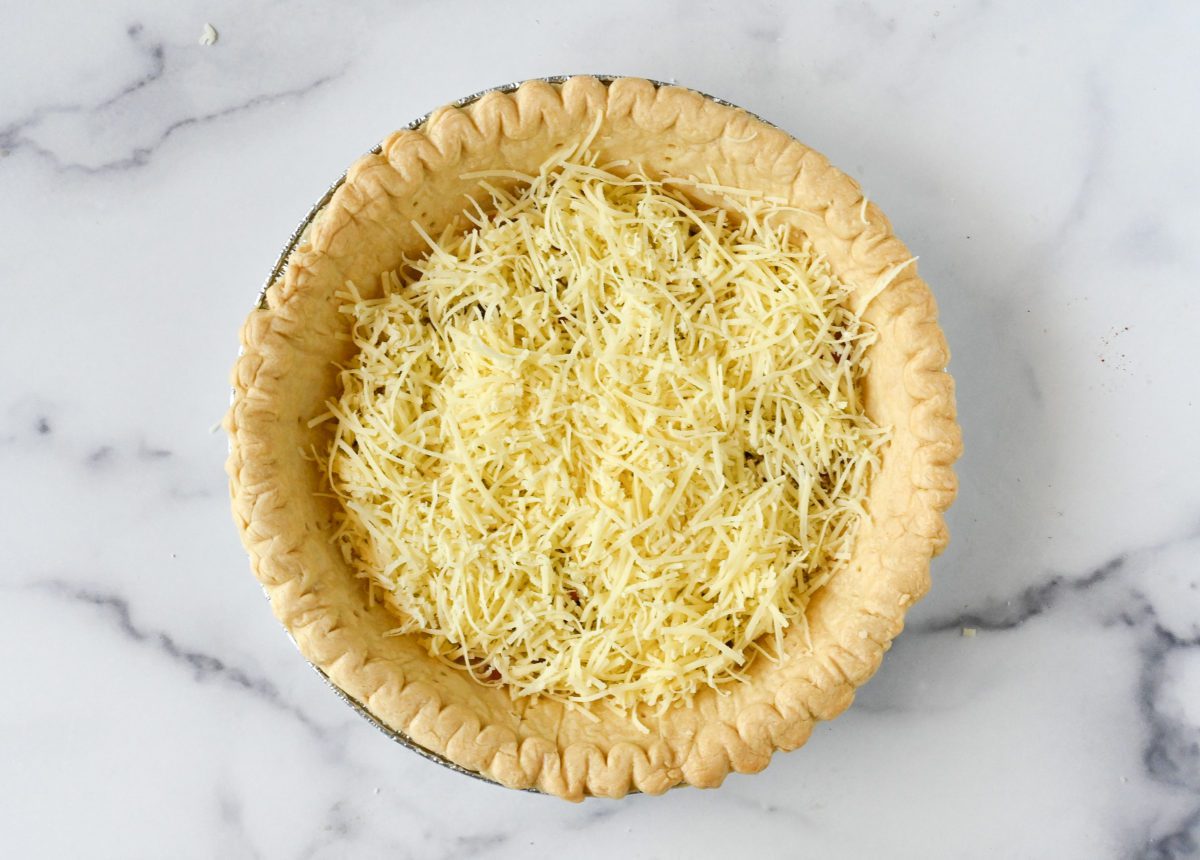
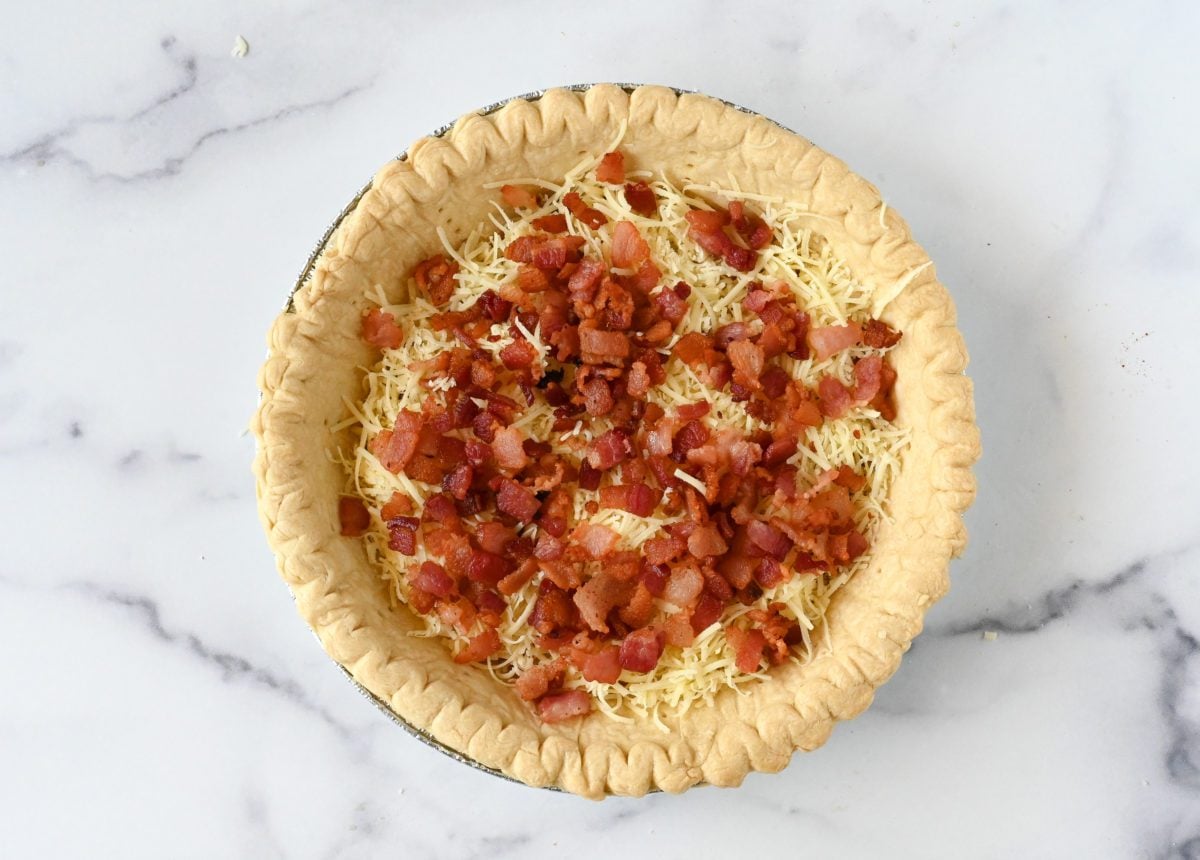
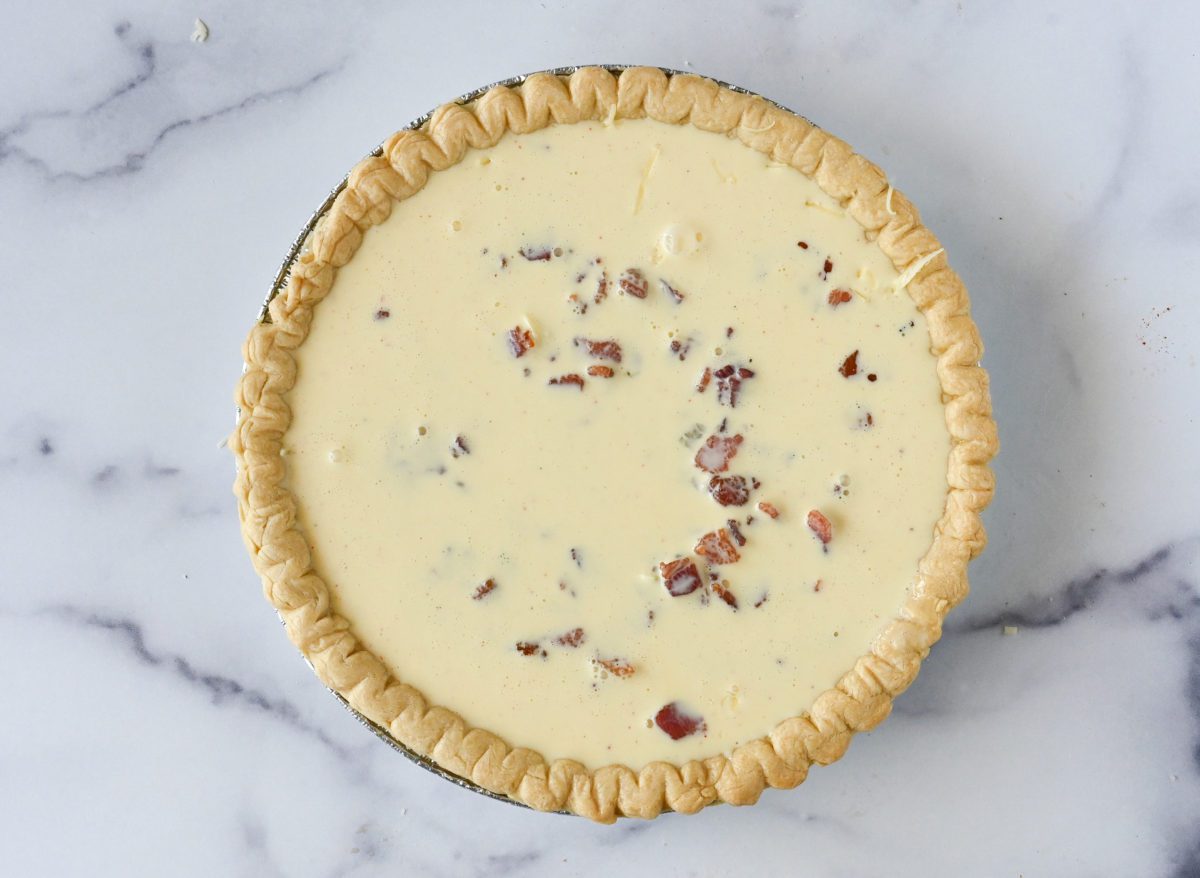
Assemble the quiche: Layer the shallots, bacon, and Gruyère in the par-baked crust, then pour the custard over top.
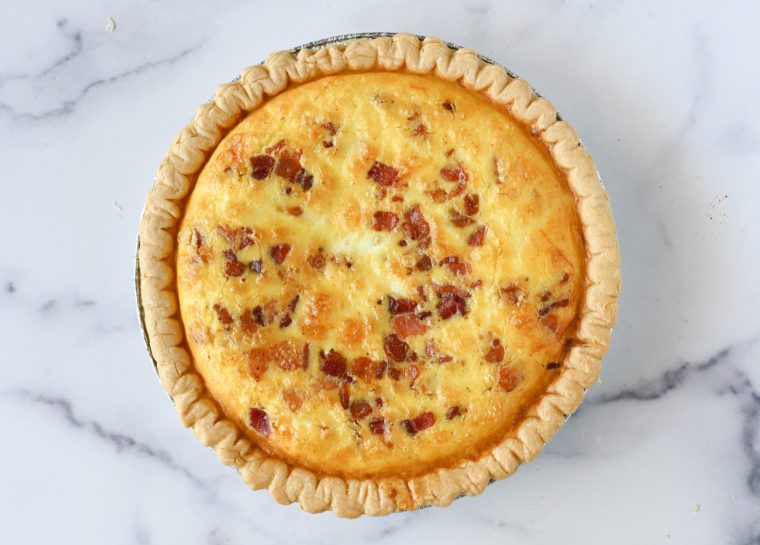
Bake: Bake until the filling is just set and lightly golden. Baking quiche at a relatively low temperature is a technique I learned in culinary school and while working in a French restaurant—it cooks the eggs gently so the custard sets up silky and tender rather than firm or rubbery. It really does make a difference. Serve hot or at room temperature.
Video Tutorial
You May Also Like


Quiche Lorraine

Ingredients
- One 9-inch (23-cm) deep-dish frozen pie crust
- 8 oz thick-cut bacon about 6 slices, diced
- ½ cup chopped shallots from 2 medium shallots
- 4 large eggs
- 1¼ cups heavy cream
- ¼ teaspoon salt
- ⅛ teaspoon cayenne pepper
- Pinch ground nutmeg
- 4 oz Gruyère finely shredded (about 1¼ cups)
Instructions
- Blind bake the crust: Preheat the oven to 400°F (200°C) and set a rack in the middle position. Remove the pie crust from freezer and thaw until just soft enough to easily prick with a fork, about 10 minutes. (If there are any cracks in the crust, see note below on how to patch them up.) Prick the bottom and sides all over with a fork. Place the crust on a baking sheet to make it easy to move in and out of the oven. Bake on until lightly golden, 10 to 15 minutes. Keep an eye on it; if it puffs up while cooking, gently prick it with a fork so it will deflate. (If it cracks while baking, see note below for instructions on how to patch it up.) Set aside and reduce the oven temperature to 325°F (170°C).
- In a medium nonstick sauté pan over medium heat, cook the bacon, stirring occasionally, until crisp, about 10 minutes. Use a slotted spoon to transfer the bacon to a paper towel-lined plate to drain. Pour off all but one tablespoon of fat from the pan. Add the shallots and cook over medium-low heat until soft and translucent, 3 to 4 minutes. Do not brown. Remove the pan from the heat and set aside.
- In a medium bowl, whisk the eggs. Add the heavy cream, salt, cayenne pepper, and nutmeg; whisk until evenly combined.
- Spread the shallots evenly over the bottom of the cooked crust. Top with half of the bacon, all of the Gruyère, and then the remaining bacon. Pour the egg/cream mixture over top.
- Slide the quiche (still on the baking sheet) into the oven and bake at 325°F for 45 to 50 minutes, until the custard is set and lightly golden. Serve hot or warm.
Notes
- Don't panic if your crust has cracks—you can easily fix it. Make a smooth paste by mixing 1 tablespoon of flour with 1 tablespoon of water. Use your fingers to patch up and fill any cracks, then proceed with the recipe. If the crust cracks while blind baking, patch it afterwards and place it back in the oven for a minute or so to set. It should be good as new.
- Make-Ahead/Freezing Instructions: This quiche can be baked up to a day ahead of time and refrigerated. To reheat, cover the quiche with aluminum foil and heat in a preheated 300°F (150°C) oven for 35 to 45 minutes, or until hot in the center. The cooked quiche can be frozen for up to 3 months. After baking and cooling the quiche, wrap it in a layer of plastic wrap and then a layer of aluminum foil. Remove the quiche from the freezer about 24 hours prior to eating. Remove the plastic wrap and reheat it, covered with foil, in a 300°F oven for 35 to 45 minutes, or until hot in the center.
Nutrition Information
This website is written and produced for informational purposes only. I am not a certified nutritionist and the nutritional data on this site has not been evaluated or approved by a nutritionist or the Food and Drug Administration. Nutritional information is offered as a courtesy and should not be construed as a guarantee. The data is calculated through an online nutritional calculator, Edamam.com. Although I do my best to provide accurate nutritional information, these figures should be considered estimates only. Varying factors such as product types or brands purchased, natural fluctuations in fresh produce, and the way ingredients are processed change the effective nutritional information in any given recipe. Furthermore, different online calculators provide different results depending on their own nutrition fact sources and algorithms. To obtain the most accurate nutritional information in a given recipe, you should calculate the nutritional information with the actual ingredients used in your recipe, using your preferred nutrition calculator.
The best recipe I had so far. Absolutely delicious. Made it three times so far and it never failed to make guests and me happy.
I have made this recipe for Quiche Lorraine many times. It comes out beautifully every time. DELICIOUS!!!!