

This post may contain affiliate links. Read my full disclosure policy.
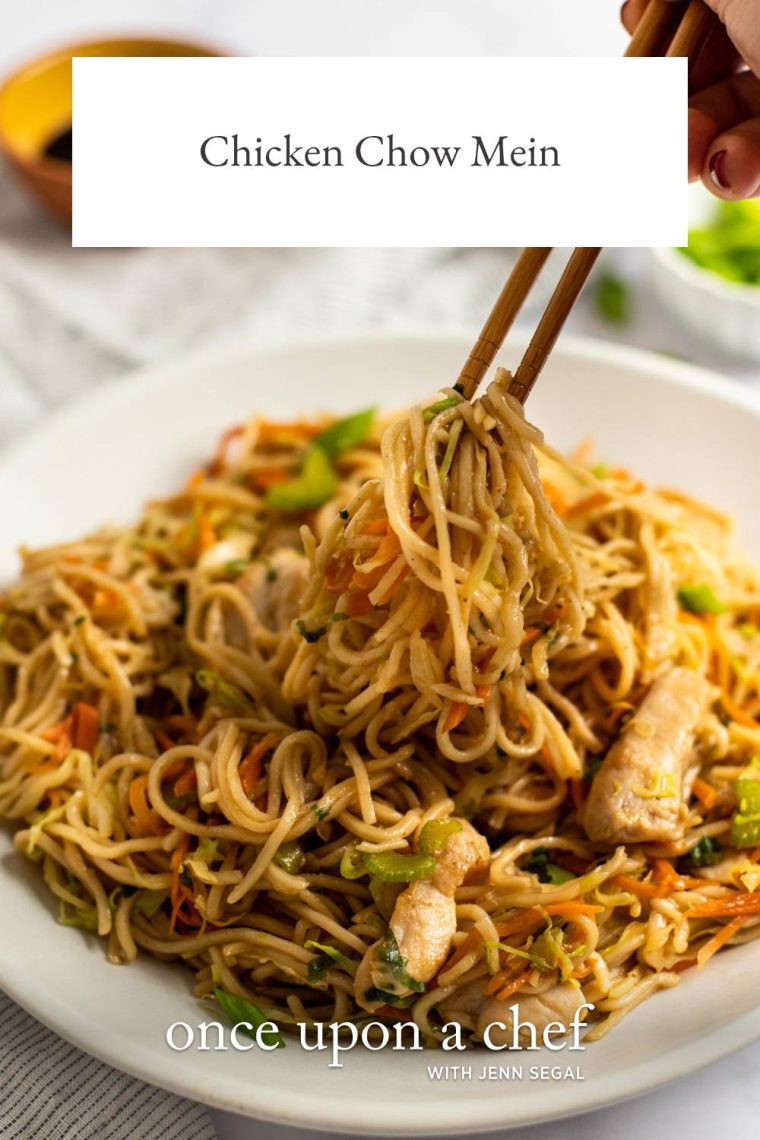
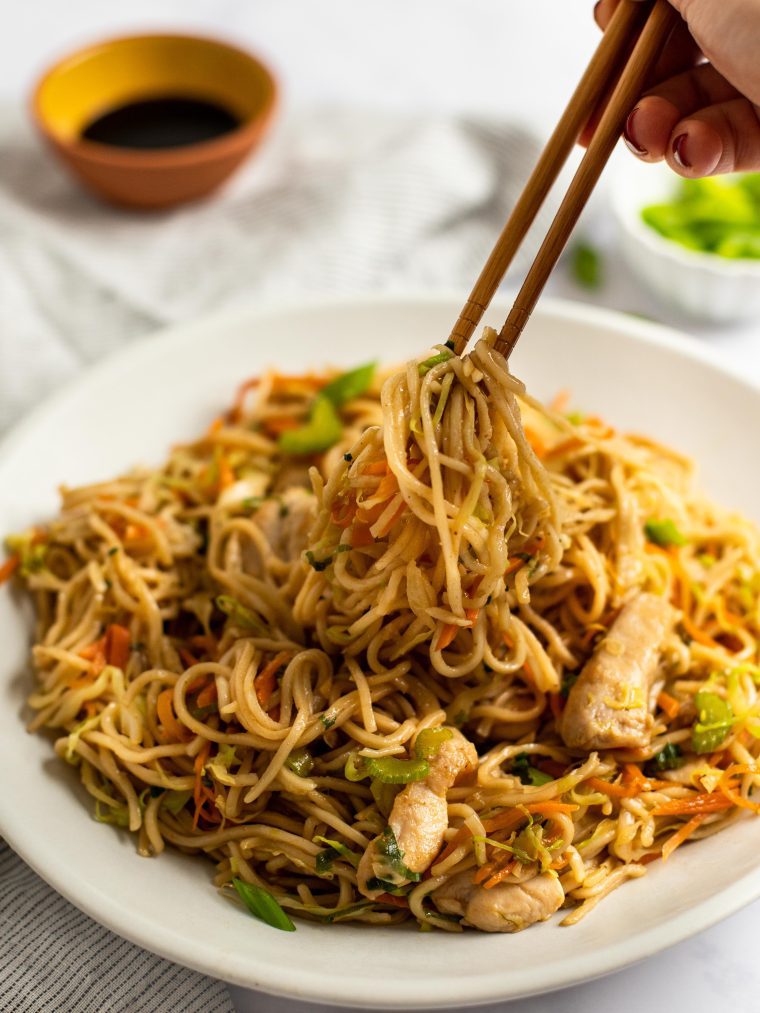
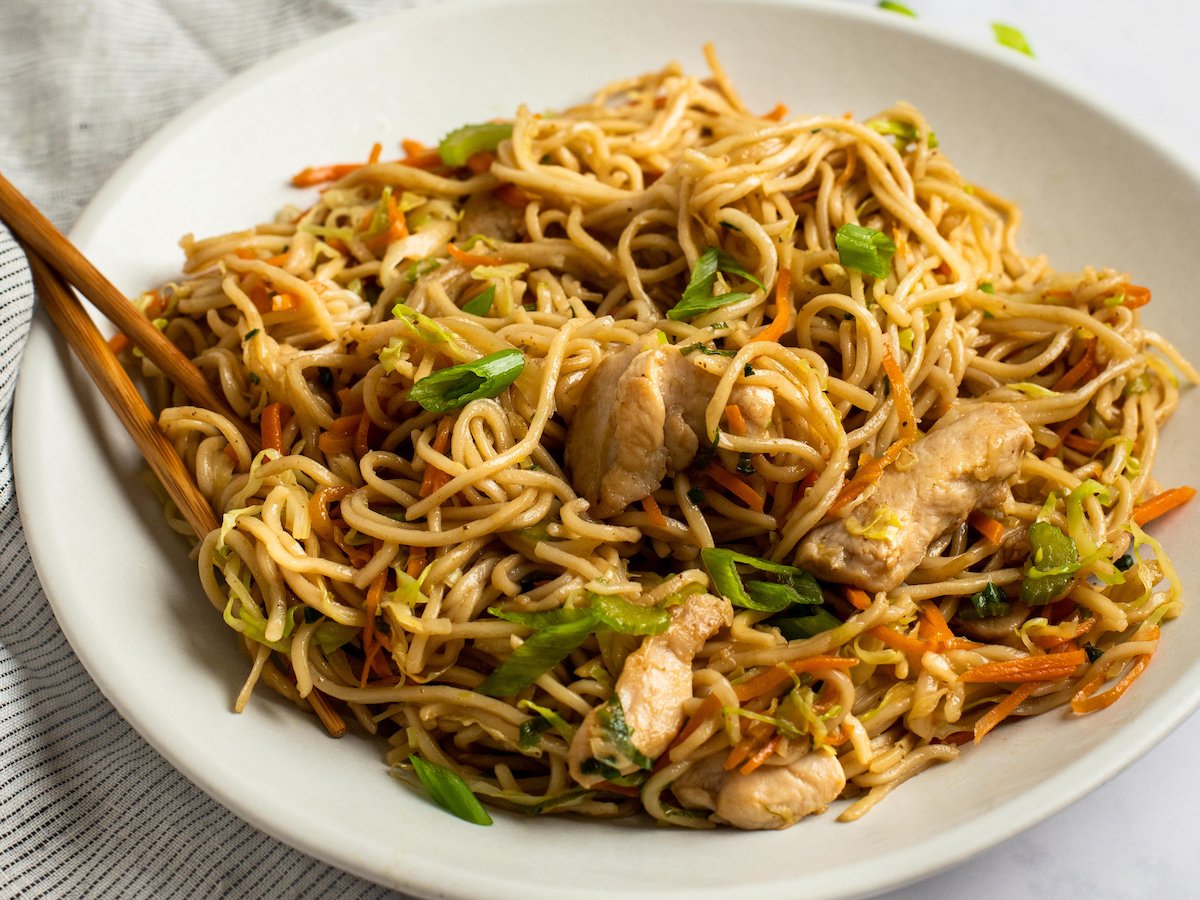
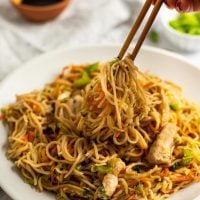
Stir-fried noodles mingling with onions, celery, cabbage, and succulent chicken, all tossed in a delicious sauce—this takeout-style chicken chow mein recipe is a cinch to make at home!
Navigating the world of chow mein at American Chinese restaurants can be a bit confusing. “Chow mein” simply means “stir-fried noodles,” which are usually tossed with vegetables and sometimes meat or tofu. But when you order it, you’ll find two main styles.
Some places serve Hong Kong-style chow mein, which features crispy deep-fried noodles topped with veggies and proteins in a thick sauce. Then there’s the stir-fried version—like the one you find at Panda Express—where soft, stir-fried noodles are mixed with onions, celery, cabbage, and your protein of choice, all coated in a flavorful sauce (similar to Japanese yakisoba).
My chicken chow mein recipe is a nod to the Panda Express version that so many love. Sure, it’s designed to appeal to the masses, but there’s something about its simple, savory goodness that makes it irresistible.
“Made this last night for my family – it was a total hit. Next up is your fried rice!”
What You’ll Need To Make Chicken Chow Mein
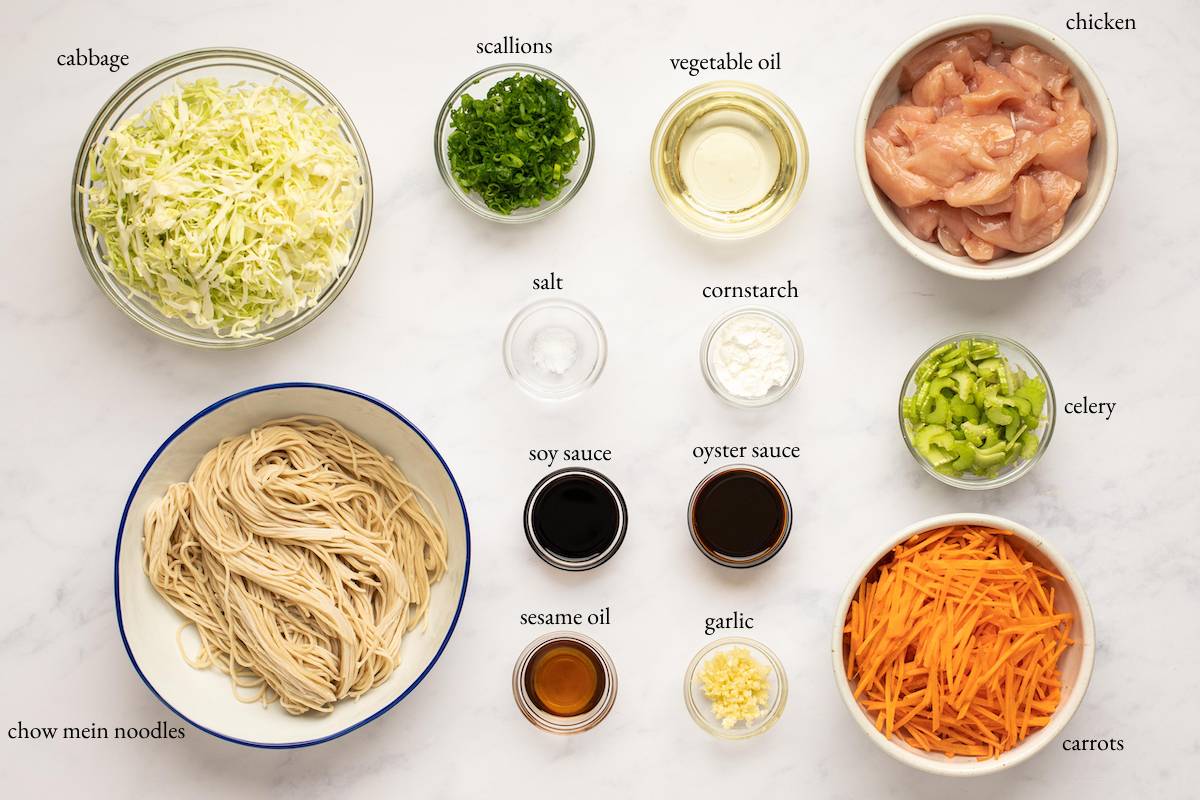
- Chow mein noodles: These make up the base of the dish. Go for the soft, stir-fry-style noodles—not the crunchy deep-fried kind. I use Wel-pac chow mein noodles, which cook in just a few minutes—you can find them at Target, Amazon, and many large grocery stores. In a pinch, yakisoba noodles, ramen, or even spaghetti will do the trick.
- Soy sauce: Adds salty depth and that classic savory flavor.
- Oyster sauce: Brings a rich, sweet-savory flavor that makes the sauce taste more complex.
- Sesame oil: Adds a toasty, nutty, and distinct Asian flavor. Look for toasted (Asian) sesame oil, which is dark in color and nutty in flavor, not the light, untoasted variety.
- Chicken tenderloins (or chicken breasts): The protein in the dish—tender, lean, and great at soaking up all the flavor.
- Cornstarch: Helps the chicken brown and thickens the sauce just the right amount.
- Vegetable oil: Used for stir-frying the chicken and veggies.
- Green cabbage, celery, carrots: Add crunch, color, and freshness. You can easily swap in water chestnuts, broccoli, bell pepper, or snow peas if that’s what you have on hand.
- Scallions and garlic: These aromatics bring bold flavor and a little sharpness. The scallions also add a nice pop of green to finish the dish.
- Jump to the printable recipe for precise measurements
Step-by-Step Instructions
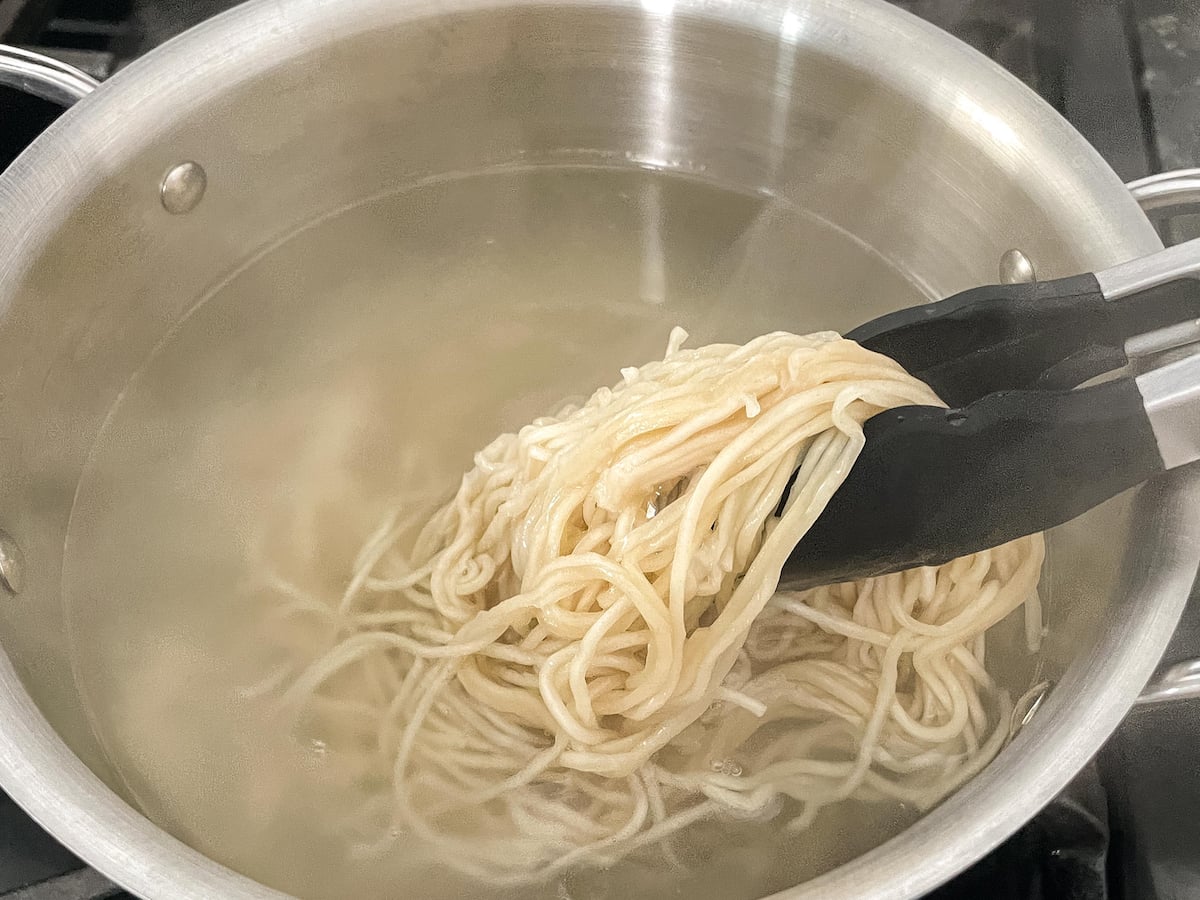
Step 1: Boil the Noodles. Bring a large pot of water to a boil. Cook the noodles until very al dente—about 30 seconds less than the package directs. (For example, I cook Wel-Pac noodles for 2½ minutes instead of 3.) Undercooking the noodles slightly ensures they don’t become mushy once stir-fried with the sauce and veggies. Drain in a colander and rinse under cold water to stop the cooking.
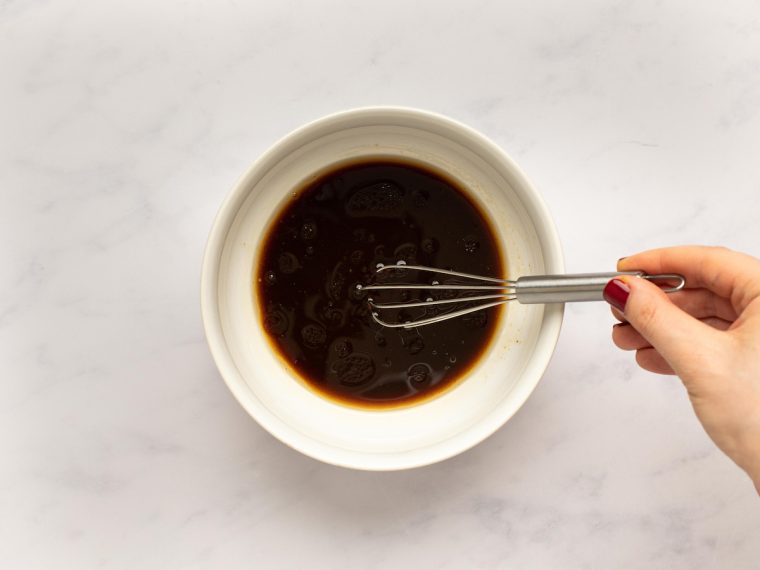
Step 2: Make the chow mein sauce. In a medium bowl, whisk together the soy sauce, oyster sauce, sesame oil, and water. (The water prevents the sauce from being too salty and thins it just enough so it coats the noodles evenly.)
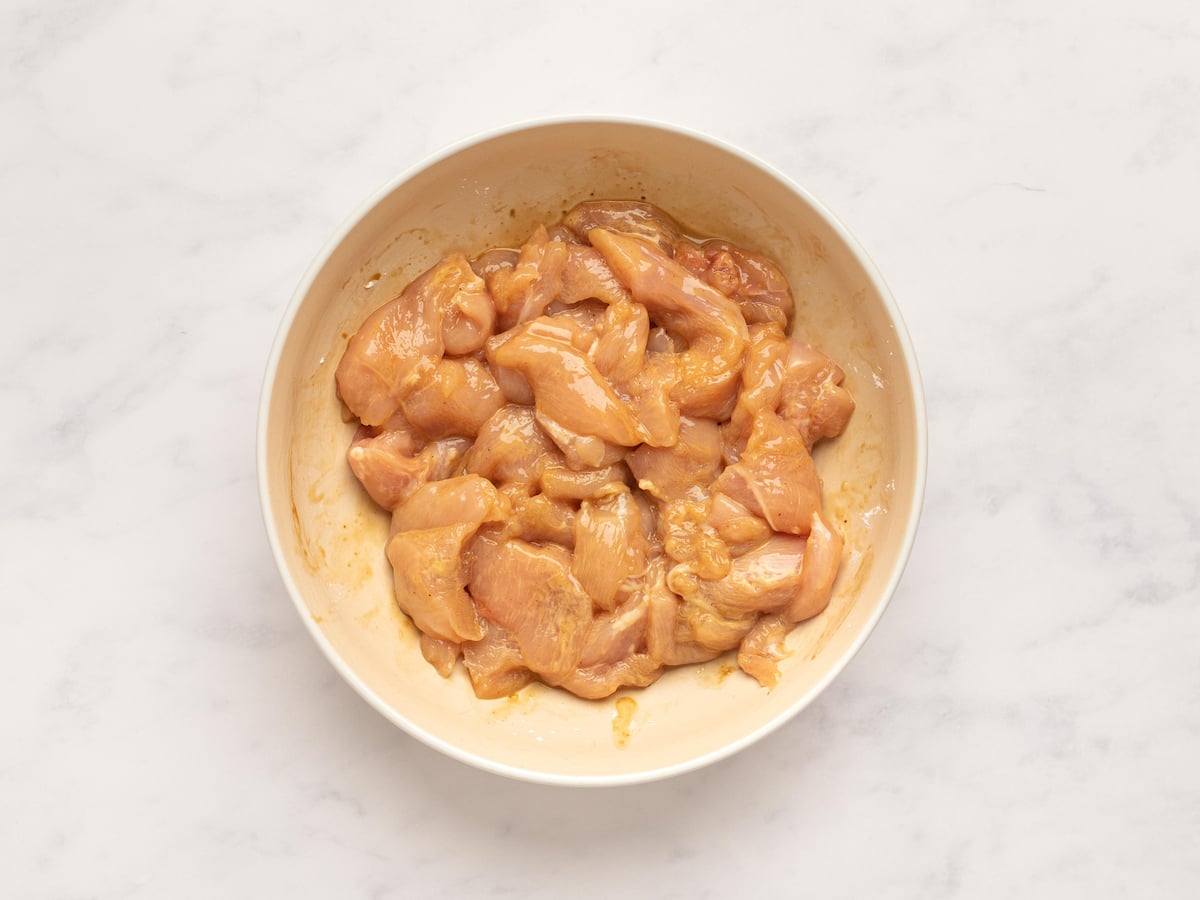
Step 3: Prep the chicken. In another bowl, toss the chicken with 1½ tablespoons of the sauce, the cornstarch, and the salt until evenly coated.
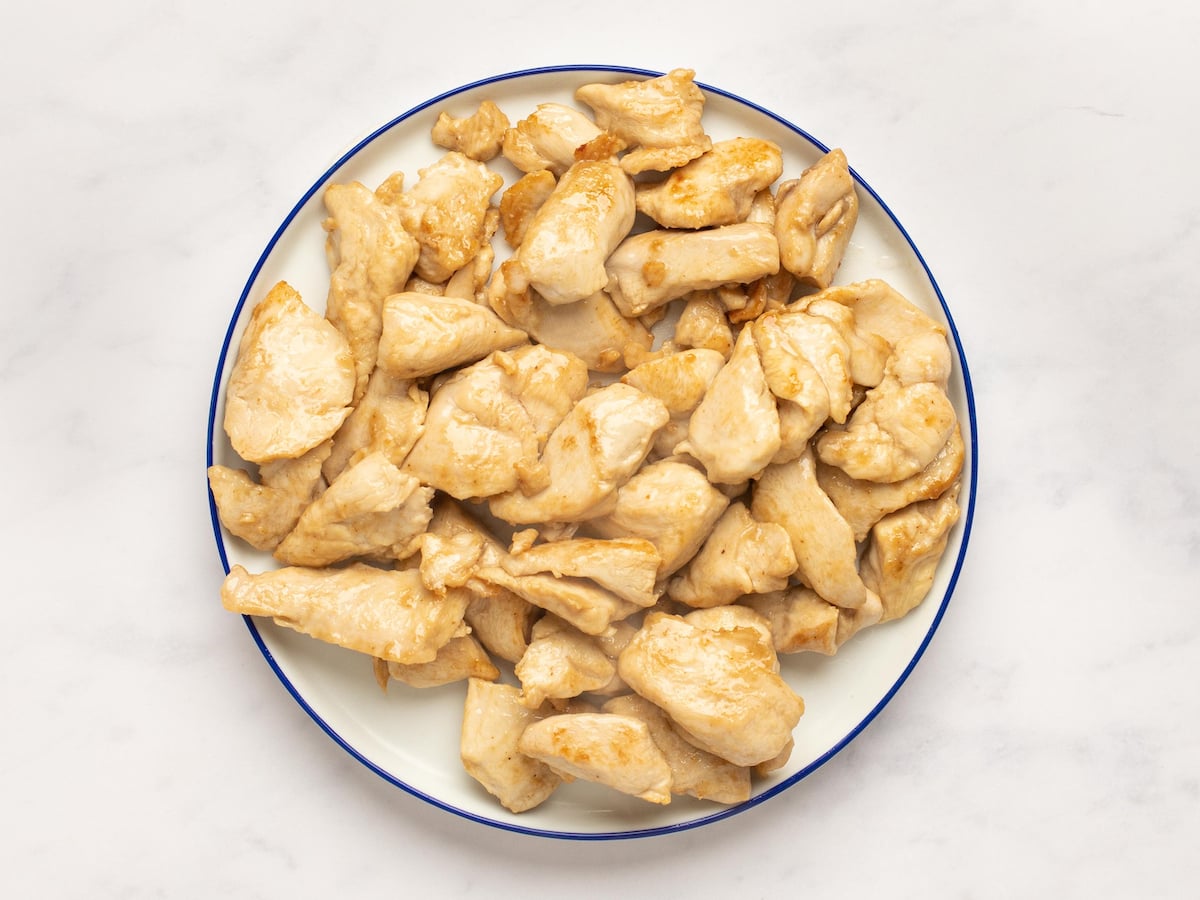
Step 4: Cook the chicken. Heat 1½ tablespoons of the oil in a 12-inch nonstick skillet over medium-high heat until shimmering. Add the chicken and cook, stirring often, until just cooked through, about 3 minutes. Transfer to a plate. Cooking the chicken first and removing it prevents overcooking and allows the pan to be used for vegetables without overcrowding.
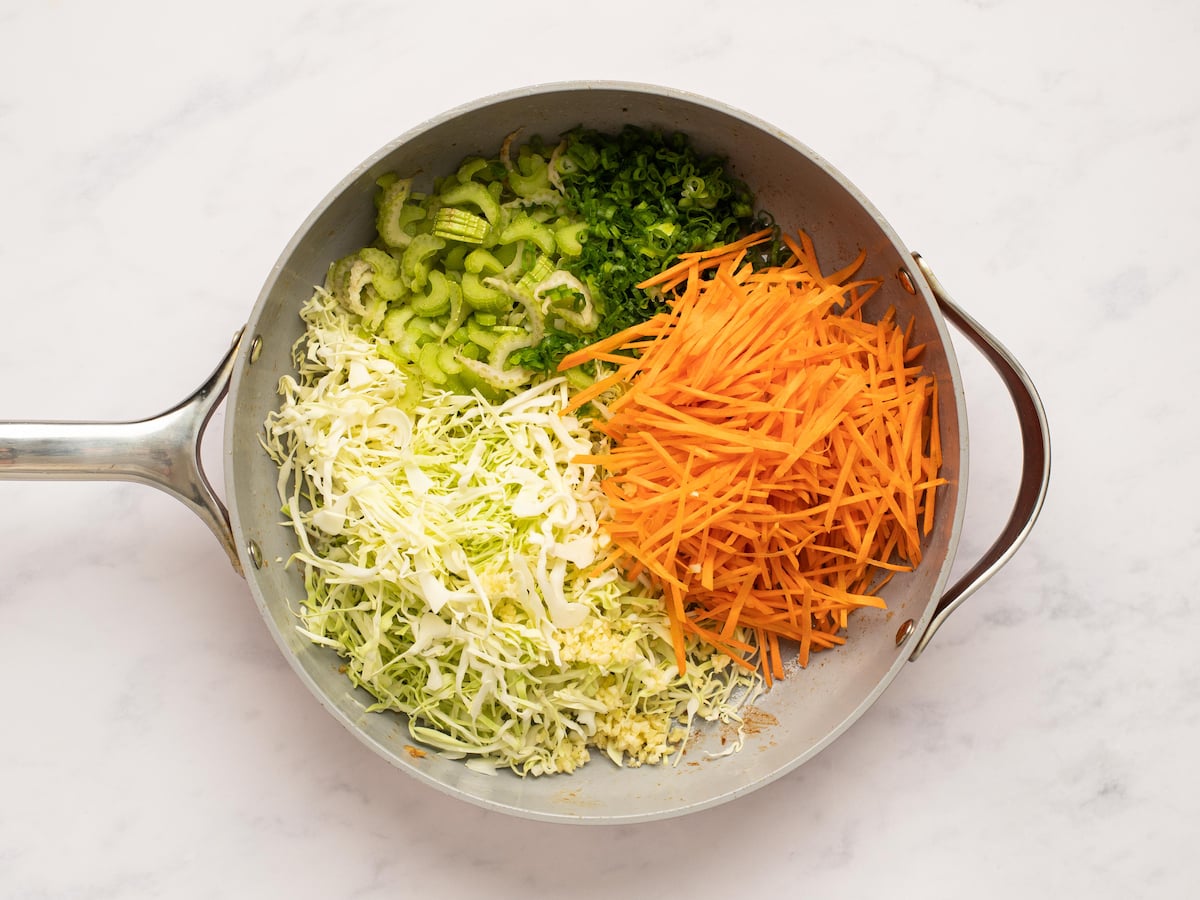
Step 5: Cook the vegetables. Add the remaining ¼ cup oil to the skillet, then add the cabbage, celery, carrots, scallions, and garlic. Don’t be put off by the amount of oil—using a generous amount of oil helps the vegetables stir-fry rather than steam, keeping them crisp-tender with slightly caramelized edges. Cook, stirring frequently, until the veggies are softened and starting to brown, about 8 minutes.
Step 6: Toss everything together. Add the noodles, chicken, and remaining sauce. Toss everything together and stir-fry for about 1 minute, until the noodles are coated and the sauce is absorbed.
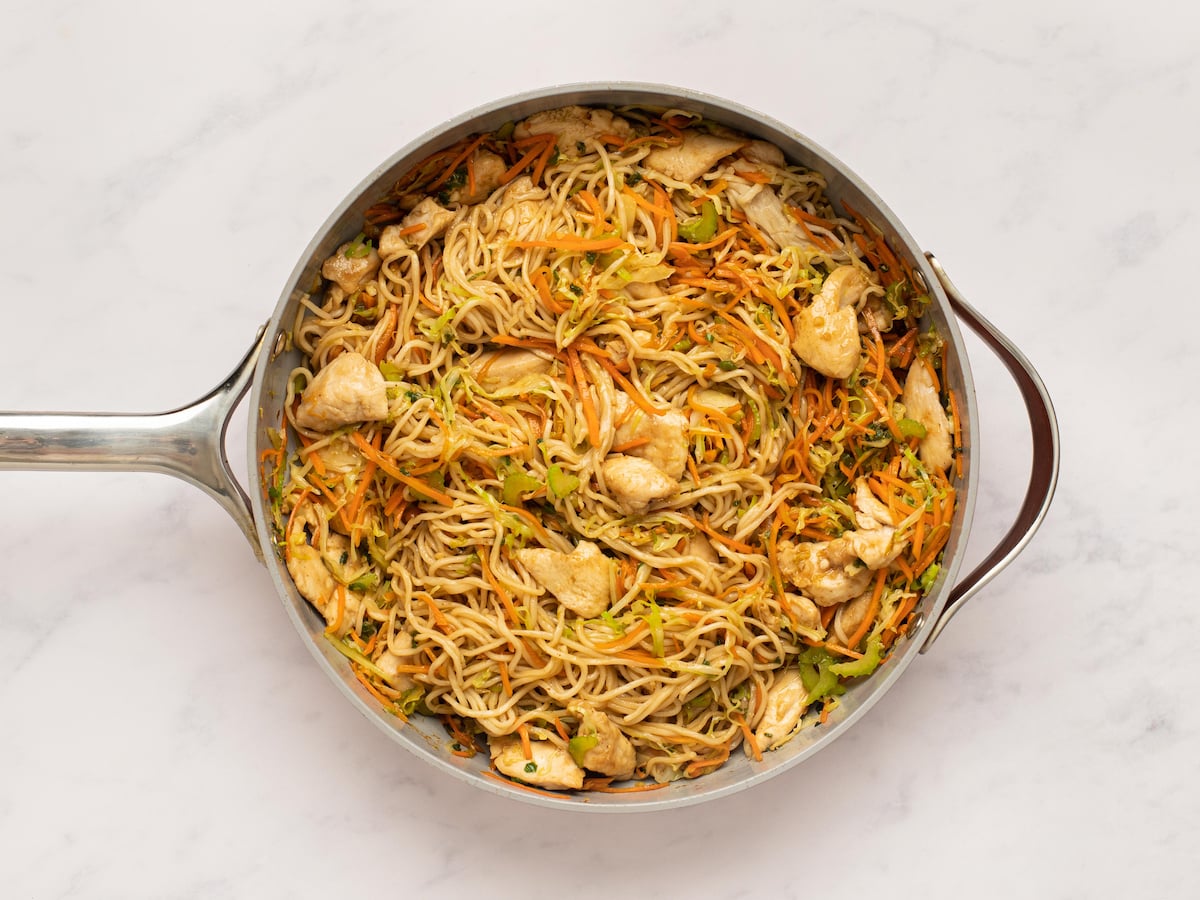
Taste and adjust seasoning if needed. Serve hot and enjoy!
More Asian Recipes You May Like
Chicken Chow Mein
Ingredients
For the Noodles
- 12 oz chow mein stir-fry noodles (see note)
For the Sauce
- 2 tablespoons soy sauce
- 2 tablespoons oyster sauce
- 1 tablespoon sesame oil
- ½ cup water
For the Chicken
- 1 pound chicken tenderloins or chicken breasts, thinly sliced into bite-sized pieces
- 2 teaspoons cornstarch
- ⅛ teaspoon salt
For Cooking
- 1½ tablespoons + ¼ cup vegetable oil, divided
- 3 cups (8 oz) thinly sliced green cabbage, from 1 small cabbage
- 2 stalks celery, very thinly sliced
- 2 cups shredded carrots
- 6 scallions, dark and light green parts, cut into 1-in (2.5-cm) pieces
- 2 cloves garlic, minced
Instructions
- Boil the noodles: Bring a large pot of water to a boil. Cook the noodles until very al dente. (The noodles I use call for 3 minutes of boiling; I cook them for 2½ minutes. If the timing is different on your package, reduce the time accordingly.) Drain and rinse with cold water to stop the cooking process.
- Make the sauce: In a medium bowl, whisk the soy sauce, oyster sauce, sesame oil, and water until well combined.
- Prep the chicken: In a medium bowl, combine the chicken with 1½ tablespoons of the sauce, the cornstarch, and salt. Stir until the chicken is evenly coated.
- Heat 1½ tablespoons of the oil in a 12-inch (30-cm) nonstick skillet over medium-high heat until shimmering. Add the chicken and cook, stirring frequently, until just cooked through, about 3 minutes. Transfer the chicken to a plate. Add the remaining ¼ cup (60 ml) oil to the skillet, then add the cabbage, celery, carrots, scallions, and garlic. Cook, stirring frequently, until softened and starting to brown, about 8 minutes. Add the noodles, chicken, and sauce, and stir-fry for about one minute, until well combined and the noodles have absorbed the sauce. Taste and adjust seasoning, if necessary. Serve.
Notes
Nutrition Information
This website is written and produced for informational purposes only. I am not a certified nutritionist and the nutritional data on this site has not been evaluated or approved by a nutritionist or the Food and Drug Administration. Nutritional information is offered as a courtesy and should not be construed as a guarantee. The data is calculated through an online nutritional calculator, Edamam.com. Although I do my best to provide accurate nutritional information, these figures should be considered estimates only. Varying factors such as product types or brands purchased, natural fluctuations in fresh produce, and the way ingredients are processed change the effective nutritional information in any given recipe. Furthermore, different online calculators provide different results depending on their own nutrition fact sources and algorithms. To obtain the most accurate nutritional information in a given recipe, you should calculate the nutritional information with the actual ingredients used in your recipe, using your preferred nutrition calculator.
This was really delicious – I followed the recipe – but also added a little diced up chinese bbq pork. I may add a few almonds next time for crunch but this recipe as written if very good. I always have good luck with Jenn’s recipes.
Thank you for this wonderful recipe! We made it for dinner tonight, and my husband was chomping in delight the entire time!
For us, the chicken chow main satisfies our craving for Panda Express.
Fabulous recipe, will definitely be making again. Question on the noodles. I noticed as I was cooking that the recommended noodles I bought was a 6 oz package rather than 12 oz. Since I only had one package of noodles, I just cooked half of the vegetables that I had chopped, went ahead with all the chicken, and then just added half of the remaining sauce with the vegetables. After stirring everything together I ended up using all the sauce because thought it could use some more. So basically ended up with the recipe with 1/2 of the vegetables. Just wondering if the recipe is intended for a 6 oz package of noodles rather than a 12 oz? It was very good but personally would have been fine with more vegetables.
Hi Jen, Glad you liked it! The 12 oz package is correct. Feel free to make 1.5 times the sauce next time if you’d like it a bit saucier (with all the veggies).
Mine seems to be missing something in the flavor. Needed more salt or sweet or spicy. It was good and filling and will make again. I’ll add hoisin or more oyster sauce next time.
I haven’t yet made it, but is there a reason you don’t make it in a wok?
Hi Susan, You could definitely use a wok here. I typically show the recipes in a skillet since that’s what most people have at home.
Absolutely the best recipe for Chicken Chow Mein I have ever used. Everyone in the family loved it!
Can’t wait to try this recipe! Can you let me know what pan (brand/type) you used for this recipe? I know you mentioned using a non-stick but I was wondering if this is an enamel cast iron pan, I am looking for one and yours caught my eye! Thank you!
Hi Glenda, It’s a Caraway pan. Hope that helps!
This was so good!! I replaced the oyster sauce with hoisen sauce ( I even a little more of than the recipe called for). It was perfect!
Made this last night, loved it. Ate the leftovers cold today, loved those too. I will be making this again very soon. Thank you for the recipe! I really appreciate the simplicity of the ingredients and directions.
Made this last night for my family – it was a total hit. Both my kids have had and enjoyed the Panda Express version and said this one was even better!! We loved the combination of noodles, veggies and chicken as it was a meal on a plate. The chicken was tender and the sauce was incredibly flavorful. This is one that will be in our rotation for the long haul — thanks for another winner Jenn!