
Chicken Cacciatore

This post may contain affiliate links. Read my full disclosure policy.
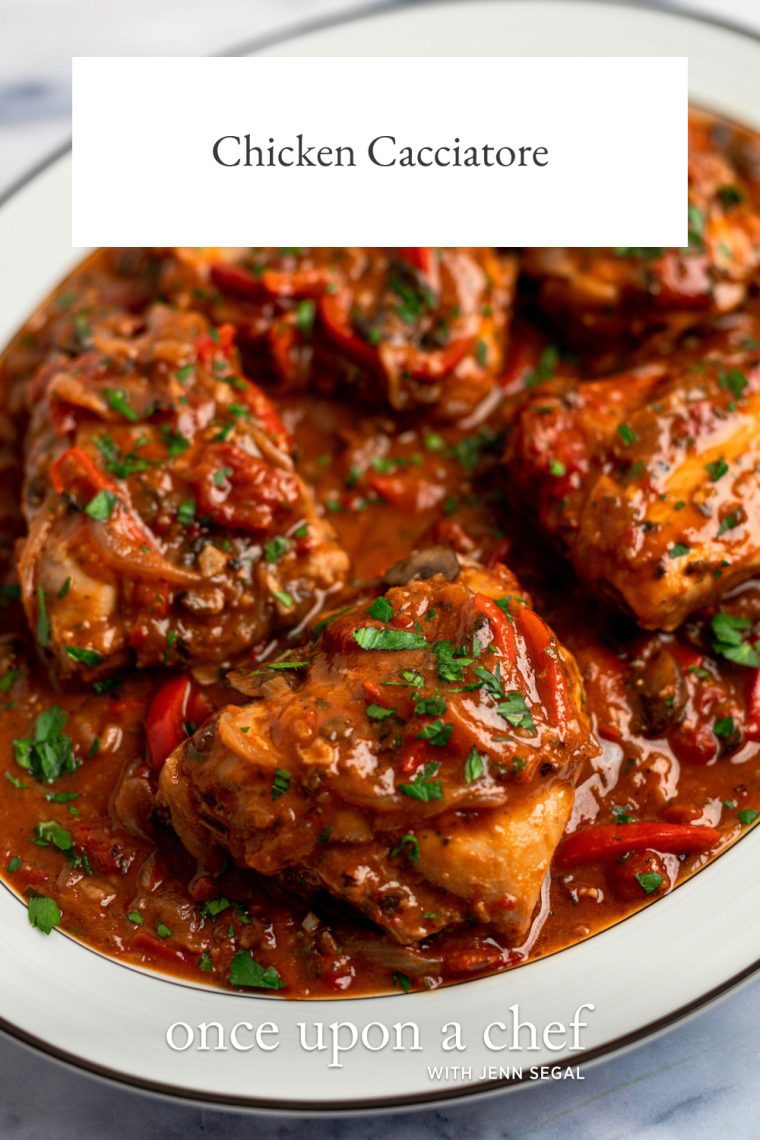
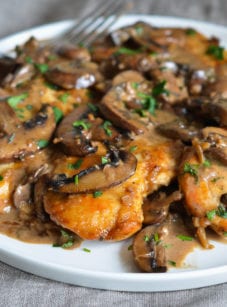
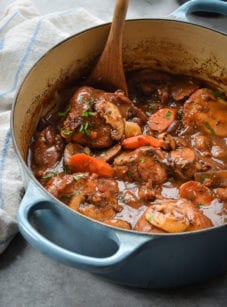
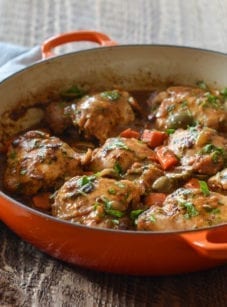
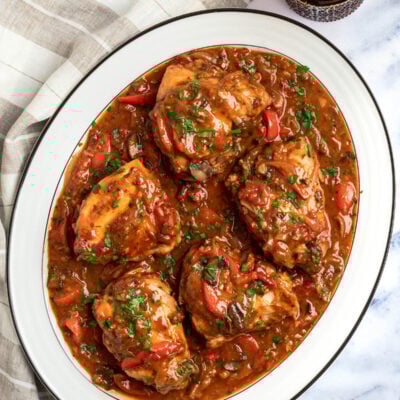
Tender chicken simmered in a rich red wine and tomato sauce with plenty of vegetables—this chicken cacciatore recipe is just the thing for a cozy dinner.

Chicken cacciatore, or “hunter’s chicken,” is a rustic Italian dish of chicken braised with tomatoes, wine, vegetables, and herbs. Traditionally, it’s made with a whole chicken cut into pieces, but for my chicken cacciatore recipe, I use only bone-in thighs. They’re inexpensive, cook evenly, and stay incredibly tender as they simmer in the rich red wine and tomato sauce.
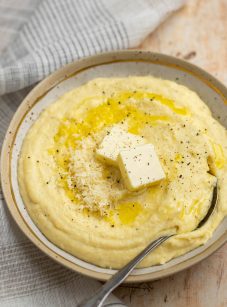
Mushrooms, bell peppers, garlic, and fresh herbs round out the sauce, and the whole dish is even better after the flavors have had some time to mingle. Serve it over creamy polenta, Parmesan smashed potatoes, or pasta to catch every bit of the sauce. It’s old-fashioned Italian comfort food at its best.
“Followed the recipe exactly as written and served over polenta. Outstanding!!!”
What You’ll Need To Make Chicken Cacciatore
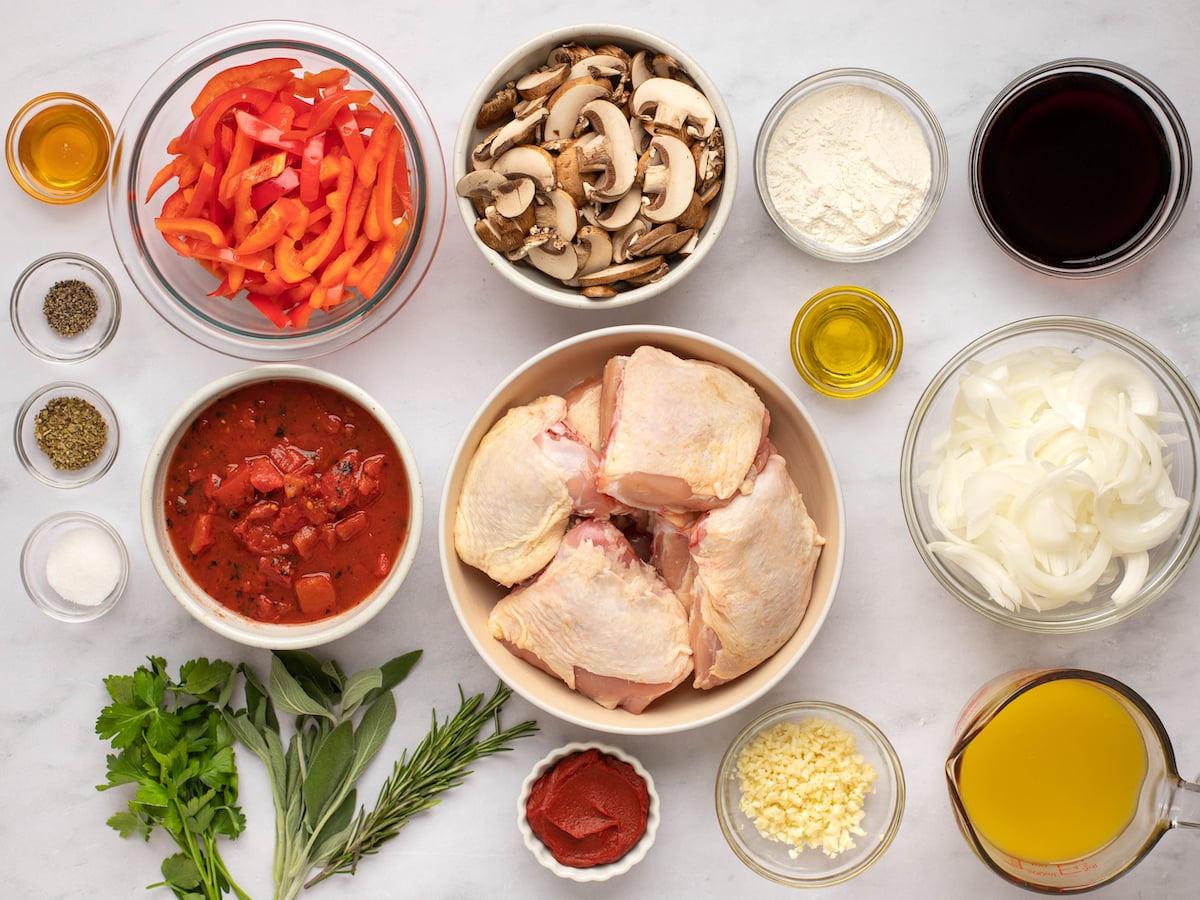
- Bone-in, skin-on chicken thighs: Ideal for a long braise because they stay juicy and tender. The skin helps flavor the sauce as the chicken cooks; you’ll remove it before serving.
- Flour: A light coating helps the chicken brown nicely and also gives the sauce a bit of body.
- Onion, garlic, mushrooms & red bell peppers: Form the vegetable base of the cacciatore. The mushrooms add savory depth, while the peppers bring sweetness and color.
- Dry red wine: Adds depth and acidity to the sauce. Use an inexpensive wine that’s still good enough to drink, such as Pinot Noir, Chianti, Merlot, or Cabernet Sauvignon, and avoid cooking wine.
- Chicken broth, diced tomatoes & tomato paste: Create the rich, savory braising sauce. Fire-roasted or regular diced tomatoes both work well.
- Sage, rosemary & oregano: Give the sauce its woodsy, Italian flavor. Fresh sage and rosemary are especially nice in a long-simmered dish like this.
- Honey: Just a tablespoon rounds out the acidity of the tomatoes and wine without making the sauce taste sweet.
- Jump to the printable recipe for precise measurements
How To make Chicken Cacciatore
Prep and brown the chicken: Pat the chicken dry, season it, and lightly dredge it in flour. Brown the thighs in batches until golden and crisp. Transfer to a plate and pour off all but a couple tablespoons of the rendered fat. Don’t rush the browning—it builds the foundation of flavor for the sauce.


Once it’s browned, move it to a plate and set it aside while you build the sauce.

Cook the vegetables: Add the onions and cook until softened and just beginning to brown, then add the garlic and cook briefly without letting it brown. Add the mushrooms and bell peppers and continue cooking until they begin to soften.


Add and reduce the wine: Pour in the red wine and bring it to a boil, scraping up all the flavorful browned bits from the bottom of the pot. Let the wine cook down until it has mostly evaporated; reducing it concentrates the flavor and cooks off its raw edge.

Build the sauce and braise the chicken: Add the chicken broth, diced tomatoes, tomato paste, herbs, honey, and remaining salt, and let the sauce simmer briefly so the flavors begin to come together. Return the chicken and any accumulated juices to the pot, spoon some of the sauce over the top, then cover and gently simmer until the chicken is tender and cooked through.
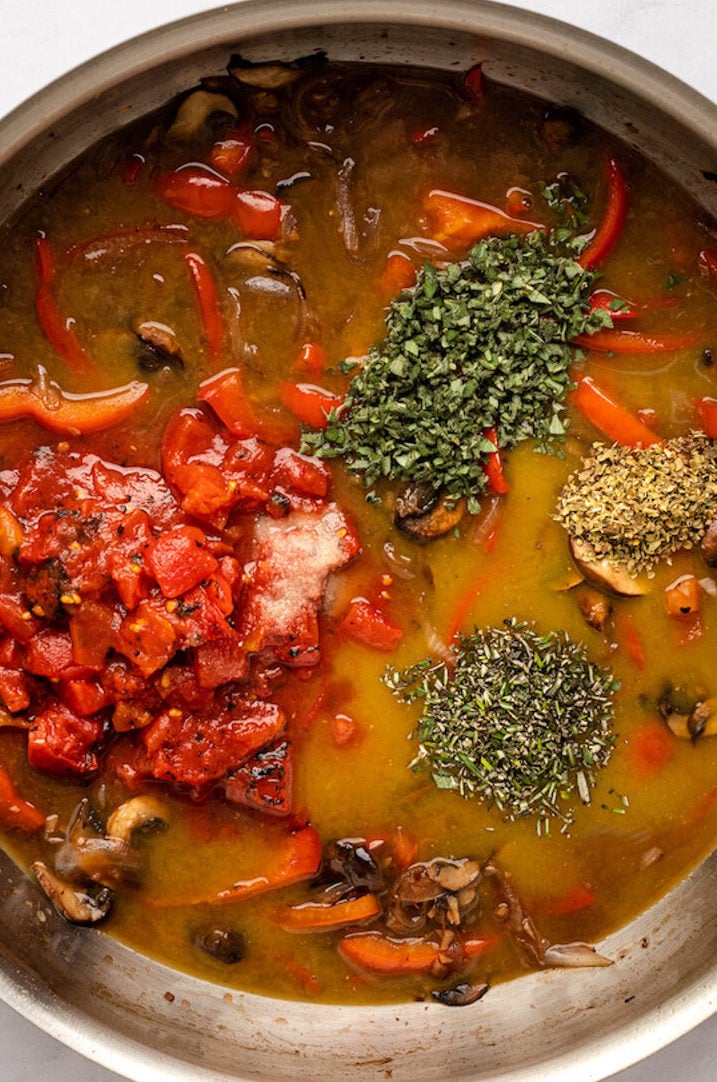

Finish the sauce: Transfer the chicken to a plate and simmer the sauce uncovered until it thickens to your liking. Remove and discard the chicken skin, then return the chicken and any accumulated juices to the pot and spoon the thickened sauce over the top. Garnish with parsley, if you like, and serve.


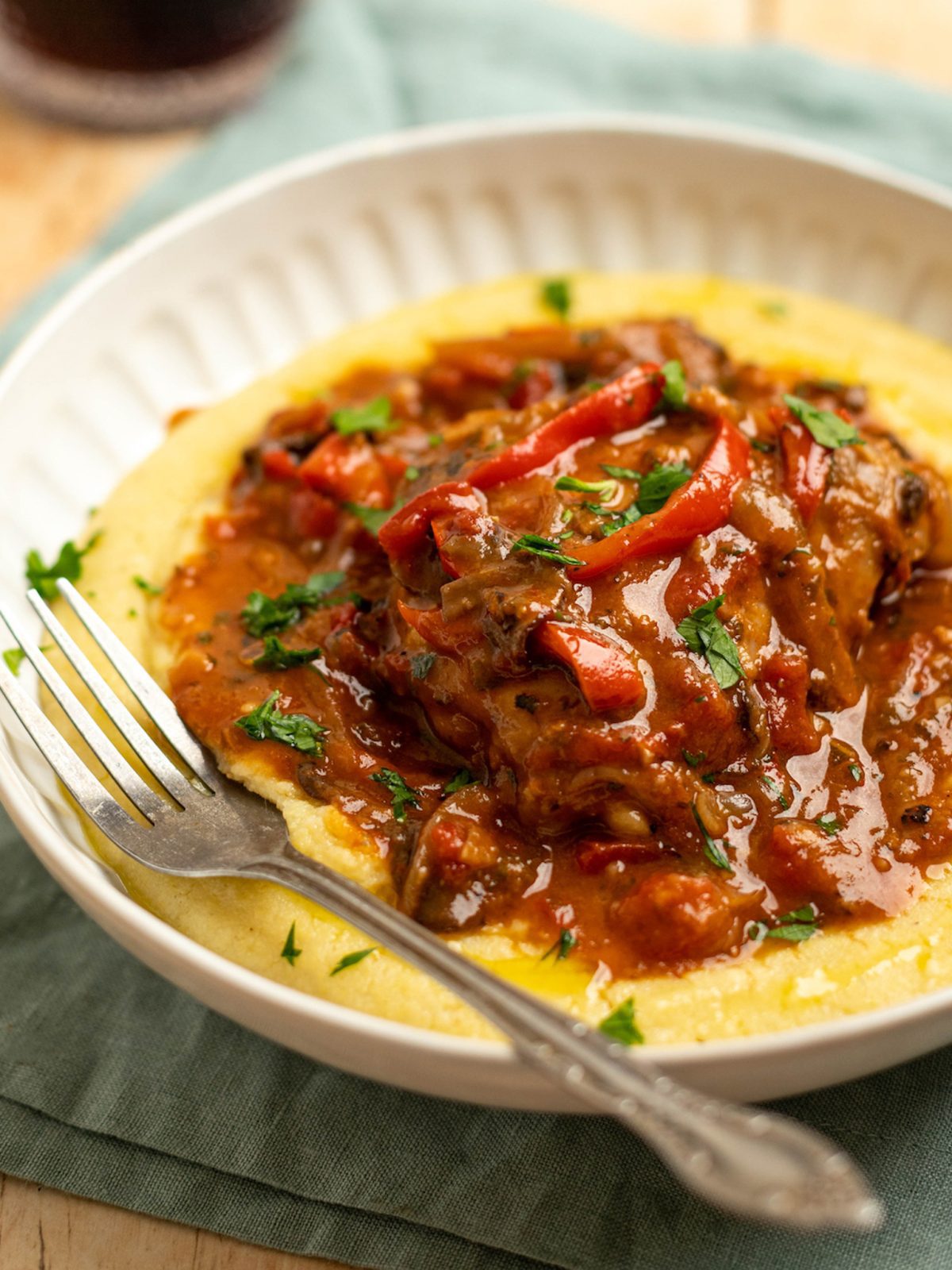
Serve: Spoon the chicken and plenty of sauce over creamy polenta, mashed potatoes, or pasta. Garnish with fresh parsley, if you like, and serve hot.
Video Tutorial
More Hearty Chicken Recipes You’ll Love
Chicken Cacciatore
Ingredients
- 8 bone-in, skin-on chicken thighs (about 4 lbs/1.8 kg), trimmed of excess skin (see note)
- 2½ teaspoons salt, divided
- ½ teaspoon freshly ground black pepper
- ½ cup all-purpose flour
- 2 tablespoons extra virgin olive oil
- 1 large yellow onion, halved and thinly sliced
- 6 cloves garlic, minced
- 8 ounces bella or cremini mushrooms, sliced
- 2 red bell peppers, cut into ¼-in (6-mm) strips
- ¾ cup dry red wine (see note)
- 2 cups chicken broth
- 1 (14.5-oz) can fire-roasted or regular diced tomatoes
- ¼ cup tomato paste
- 2 tablespoons chopped fresh sage
- 1 tablespoon chopped fresh rosemary
- 1 teaspoon dried oregano
- 1 tablespoon honey
- Fresh chopped parsley, for garnish (optional)
Instructions
- Blot the chicken with a paper towel to remove any excess moisture. Season the chicken all over with 1½ teaspoons salt and the pepper. Place the flour on a large plate. Dredge the chicken pieces in the flour, coating all over.
- Heat the oil in a large (5-qt/5-L) Dutch oven or heavy-bottomed, high-sided large skillet over medium-high heat. Brown half the chicken in a single layer, skin side down, until golden and crispy, 5 to 7 minutes. Flip and brown on the other side for 1 to 2 minutes more. Using tongs, transfer the chicken to a large plate; set aside. Repeat with the remaining chicken. Pour off all but about 2 tablespoons of the fat.
- Return the pot to the stove and reduce the heat to medium-low. Add the onions to the pot and cook, stirring occasionally, until they are softened and just starting to brown, about 5 minutes. Add the garlic and cook, stirring constantly, until fragrant, about 1 minute. Do not brown. Add the mushrooms and peppers and increase the heat to medium. Cook for 5 minutes, stirring occasionally until the veggies just begin to soften.
- Add the wine and bring to a boil over high heat. Cook, stirring to scrape the brown bits from the bottom of the pan, until the wine has mostly evaporated, 5 to 6 minutes.
- Add the chicken broth, diced tomatoes, tomato paste, sage, rosemary, oregano, honey, and the remaining 1 teaspoon salt. Bring to a boil, then reduce the heat to medium-low and gently simmer, uncovered, for 10 minutes.
- Add the chicken and any accumulated juices from the plate back to the pot, and spoon some of the sauce over it. Bring to a simmer, then cover and cook over medium-low heat for about 35 minutes, until the chicken is cooked through or registers 165 to 170°F (74 to 77°C) on a meat thermometer.
- Using a slotted spoon, transfer the cooked chicken to a plate. Gently simmer the sauce for a few minutes, or until it is thickened to your liking. Taste and adjust seasoning, if necessary.
- Using a fork and knife, pull the skin off of the chicken and discard. Add the chicken and any accumulated juices back to the pot and simmer, uncovered, for a few minutes, spooning the thickened sauce over the chicken. Garnish with parsley, if using, and serve.
Notes
- Sometimes chicken thighs have excess skin and/or fat. Before cooking, using kitchen shears, trim any skin that extends farther than the edges of the chicken thigh, and snip off any excess fat.
- For the wine, use any red (Pinot Noir, Chianti, Merlot, Cabernet Sauvignon, etc.) that is inexpensive but still good enough to drink. Avoid “cooking wines,” which are salty and contain additives.
- Make-Ahead/Freezing Instructions: Let cool to room temperature and then store in the refrigerator for up to 3 days, or freeze in an airtight container for up to 3 months. Before serving, defrost in the refrigerator for 24 hours if necessary, and then reheat on the stovetop over medium-low heat until hot.
Pair with
Nutrition Information
This website is written and produced for informational purposes only. I am not a certified nutritionist and the nutritional data on this site has not been evaluated or approved by a nutritionist or the Food and Drug Administration. Nutritional information is offered as a courtesy and should not be construed as a guarantee. The data is calculated through an online nutritional calculator, Edamam.com. Although I do my best to provide accurate nutritional information, these figures should be considered estimates only. Varying factors such as product types or brands purchased, natural fluctuations in fresh produce, and the way ingredients are processed change the effective nutritional information in any given recipe. Furthermore, different online calculators provide different results depending on their own nutrition fact sources and algorithms. To obtain the most accurate nutritional information in a given recipe, you should calculate the nutritional information with the actual ingredients used in your recipe, using your preferred nutrition calculator.
Absolutely delicious. Served it with your polenta and it was a hit. I made it a few days ahead of time and I thinking the resting time made the flavors even better.
Add me to the “This is DELICIOUS!!!” list!
It is not my mom’s cacciatore…it is even better! The only thing I did different is when I de-skinned the thighs, I also deboned them and broke the meat up into bite-sized pieces (now mom served it). That just makes it so much easier to eat (bowl dinner!). Served over some IP soft polenta, hubs said it was “divine!”
I made this chicken cacciatore yesterday and it was absolutely delicious, the best I have ever tasted! I served it with polenta parmesan fried cakes per recipe on package on Bob’s Red Mill. It was a perfect combo. It’s a new favorite in our home.
I made this last weekend, and it was delicious. I do have a question about the seasoning. In this recipe you call for some fresh, and some dry herbs. I know they can be substituted one for the other, but is there a time when it’s best to use one over the other?
Thank you.
Hi Jeremy, glad you enjoyed it! There’s really no rule of thumb when it comes to fresh herbs versus dried. Often, if a recipe requires only a very small amount of an herb/spice, I’ll usually go with dried from a convenience standpoint.I kind of handle it on a case by case basis. Sorry I can’t be more specific!
I made a double batch the first time for a dinner party. It was a huge success. Also just made it again yesterday for a group of friends. Another double batch and it was a hit once again and we are lucky enough to have leftovers for christmas eve.
Be ready to spend a few hours in the kitchen. I think I would do the prep the day before next time and cook the following day.
Thanks for the recipe. This one will be a go to for special dinners.
I also want to make this for a dinner party. Did you double all the ingredients. I’m not sure about doubling spices. Could you let me know? Thanks
Hi Barbara, in case Brad doesn’t see this, I wanted to weigh in — I would double all of the ingredients. 😊
This was a 5 star winner at our dinner table. Made with 4 thighs and 2 breasts cut in half to make 4 pieces. Served with mashed potatoes but next time I’d like to try it with polenta. I made it pretty much exactly as written. Your recipes always turn out nicely Jenn!
I’ve made this recipe several times and it’s always a hit. This is a keeper!
Hi Jen,
Why do you remove the skin after the chicken is cooked instead of at the outset?
Thanks,
Cecile
Hi Cecile, The skin protects the meat while cooking and also adds flavor. You remove it when the chicken is done cooking as it gets kind of flabby and unappealing. Hope that clarifies!
I am looking forward to trying this – your site is my go to and I have had great success with your recipes. Would I be able to substitute drumsticks for thighs ?
So glad you like the recipes! It’s fine to use drumsticks, and you wouldn’t need to make any modifications. I’d love to hear how it turns out!
Great recipe. I bumped up the spices a little bit. I made this recipe without tasting during the cooking process (vegan) and everyone loved it.