
Deep Dish Pizza

This post may contain affiliate links. Read my full disclosure policy.
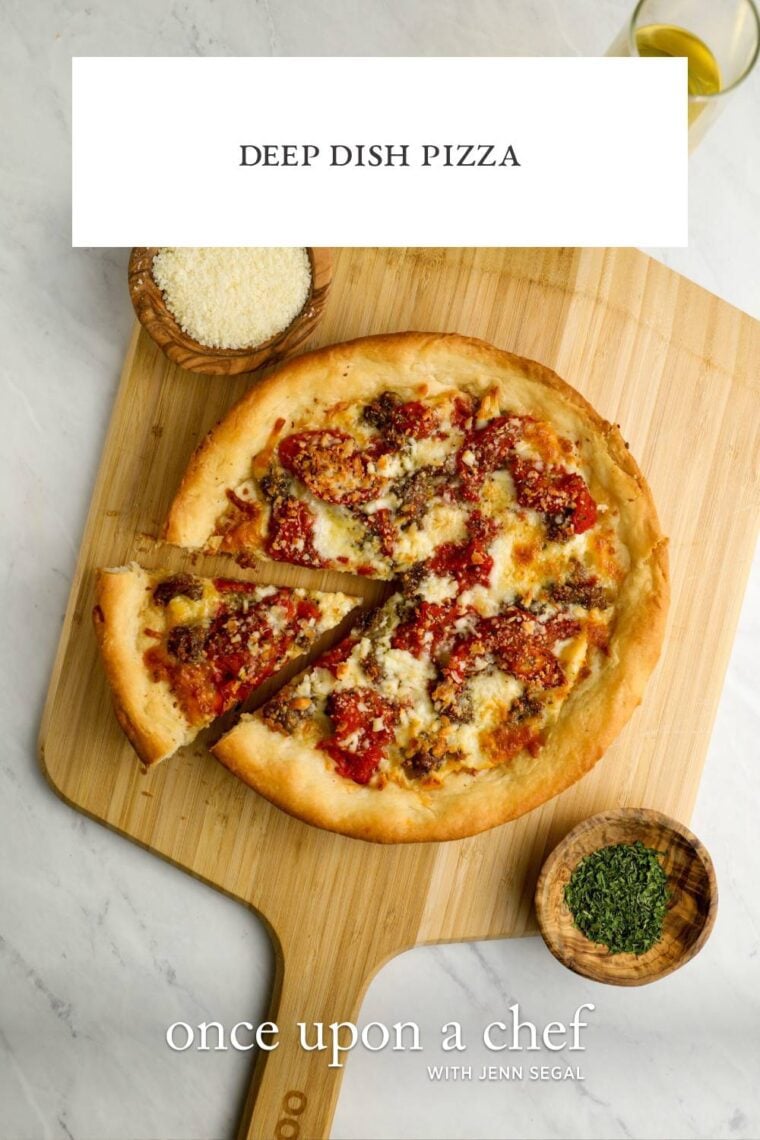
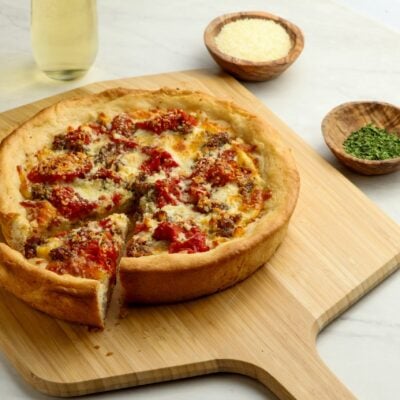
This Chicago-style deep-dish pizza recipe has a buttery, flaky crust piled high with melted cheese, savory sausage, and chunky tomato sauce. It’s a fun one to make at home—and well worth it.
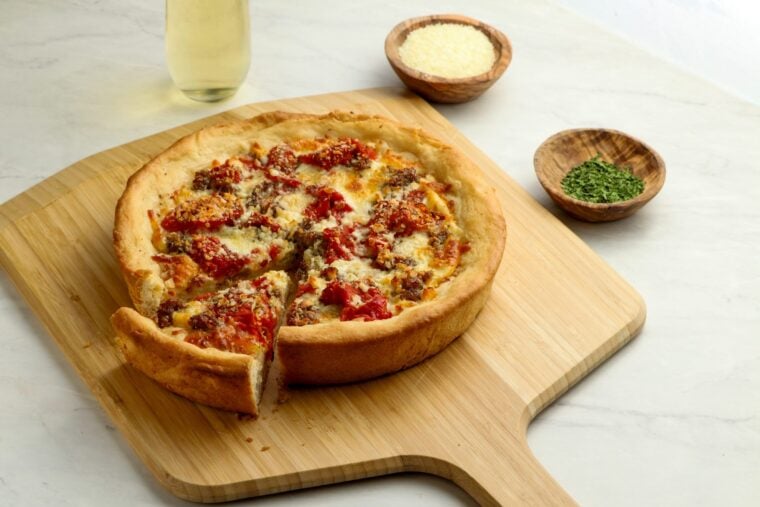
Chicago-style deep-dish pizza is in a category all its own—unapologetically rich and layered, with a buttery, almost pastry-like crust. If you ask five Chicagoans what makes the perfect version, you’ll probably get five different answers. So, in the name of research, I ordered a few to try at home (some all the way from Chicago!). And as luck would have it, I also had a Chicago native staying with us while I was testing this deep dish pizza recipe, so I had some built-in quality control. With his help, I think we got pretty close to the real deal.
What sets Chicago deep dish apart is its structure as much as its flavor. The crust comes high up the sides of the pan to form a pie-like shell, and unlike a typical pizza, the cheese goes in first, followed by the toppings and then a layer of chunky tomato sauce. The dough is richer than standard pizza dough, too, with enough oil to give it a tender, slightly flaky texture and help it crisp against the pan as it bakes. This is definitely a knife-and-fork pizza—and every bite is worth it.
“As a lifelong Chicagoan, I think you nailed it! The pizza came out of the pan easily, the crust was crispy—it was perfect!”
What You’ll Need To Make Deep Dish Pizza
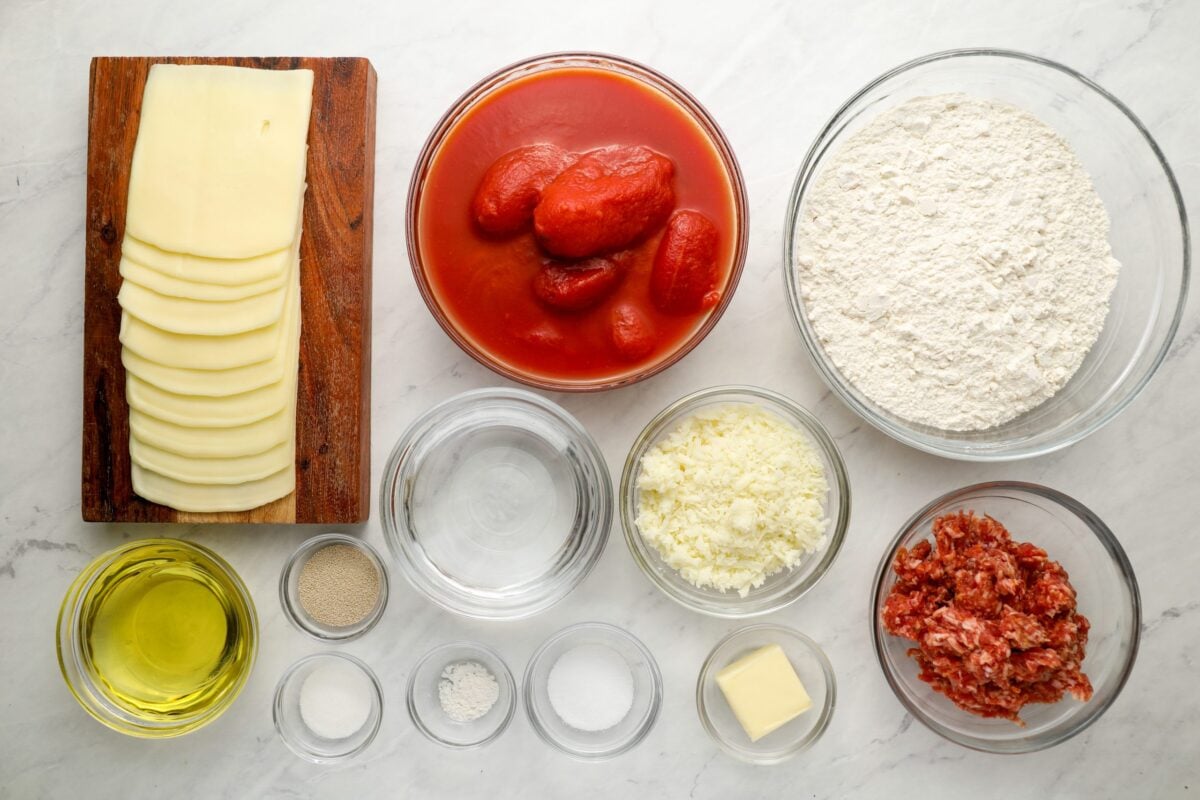
- Flour, Salt & Sugar: These form the base of the dough, with a little sugar helping with flavor and browning.
- Cream of Tartar: A small amount helps keep the crust tender rather than overly chewy, giving it the slightly flaky texture that sets deep-dish crust apart from standard pizza dough.
- Instant/Rapid-Rise Yeast: This can be mixed directly into the dry ingredients, no proofing required. If you’re using packets, you’ll need slightly more than one.
- Corn Oil: The generous amount of oil is key to the crust’s rich, tender texture and helps it crisp against the pan as it bakes. Corn oil is traditional, but vegetable oil works well too.
- Unsalted Butter: Softened butter is best for greasing the pan because it helps the oily dough cling to the sides better than liquid oil or melted butter. It also adds buttery flavor to the crust.
- Whole Tomatoes: The base of the chunky sauce. San Marzano tomatoes are ideal here; be sure to drain them very well, as excess liquid can make the pizza soggy.
- Whole-Milk Mozzarella: Use sliced whole-milk mozzarella rather than part-skim for the richest melt. The slices also create a layer between the crust and toppings, helping protect the dough from the sauce.
- Raw Italian Sausage: There’s no need to cook it first. Pinched into small pieces, the sausage cooks through as the pizza bakes and releases its flavorful juices directly into the filling.
- Oregano & Parmigiano Reggiano: Oregano gives the pizza its classic savory flavor, while freshly grated Parmigiano Reggiano adds a salty, nutty finish over the sauce.
- Jump to the printable recipe for precise measurements
How To Make Deep Dish Pizza
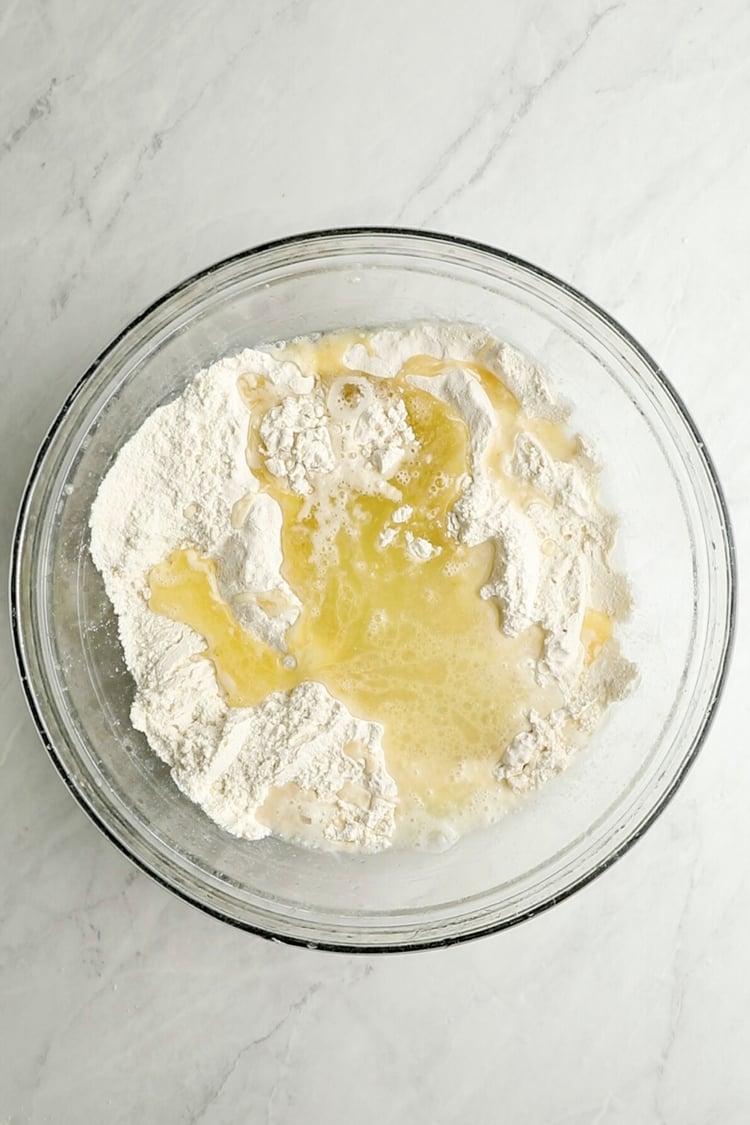
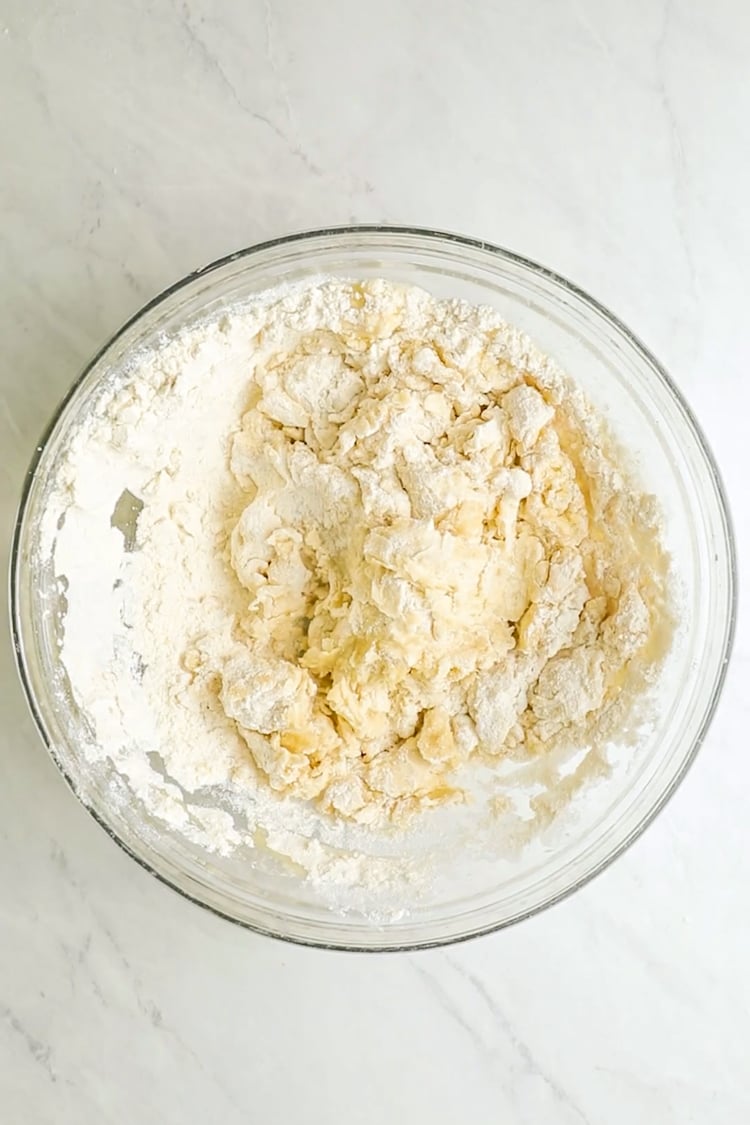
Make the dough: Stir the wet and dry ingredients together until they form a shaggy, somewhat uneven dough. Because this dough contains a generous amount of oil, it won’t look or feel like typical pizza dough at this stage—that’s exactly what you want.
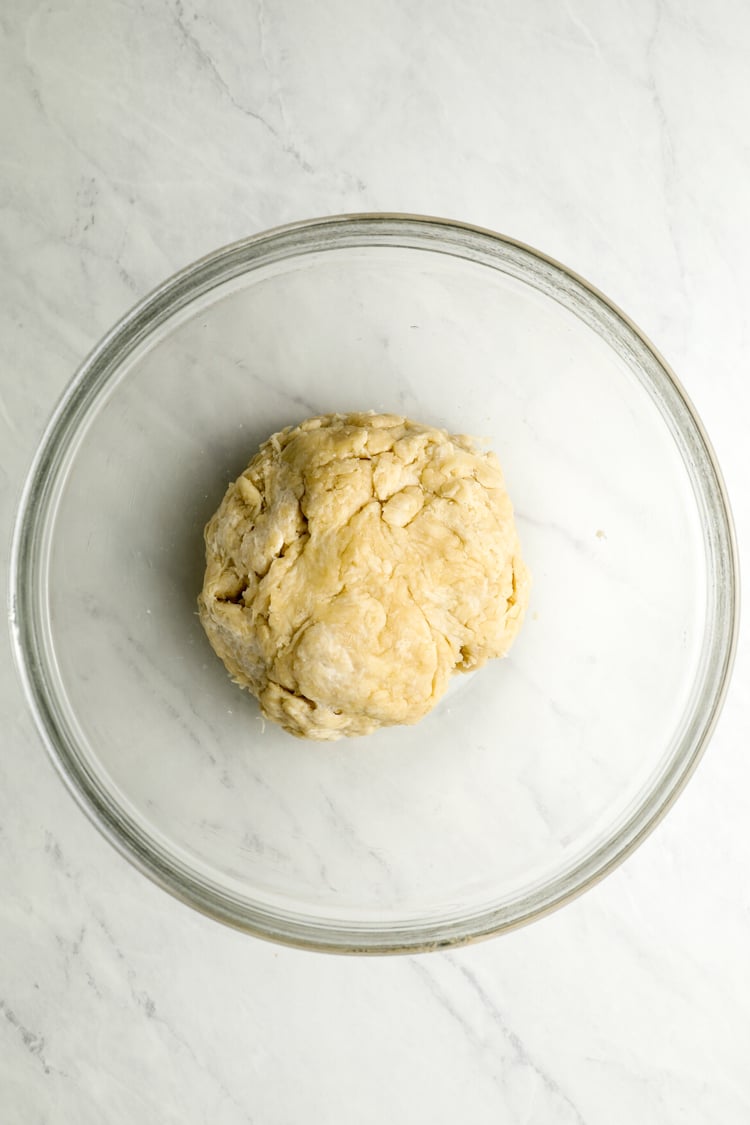
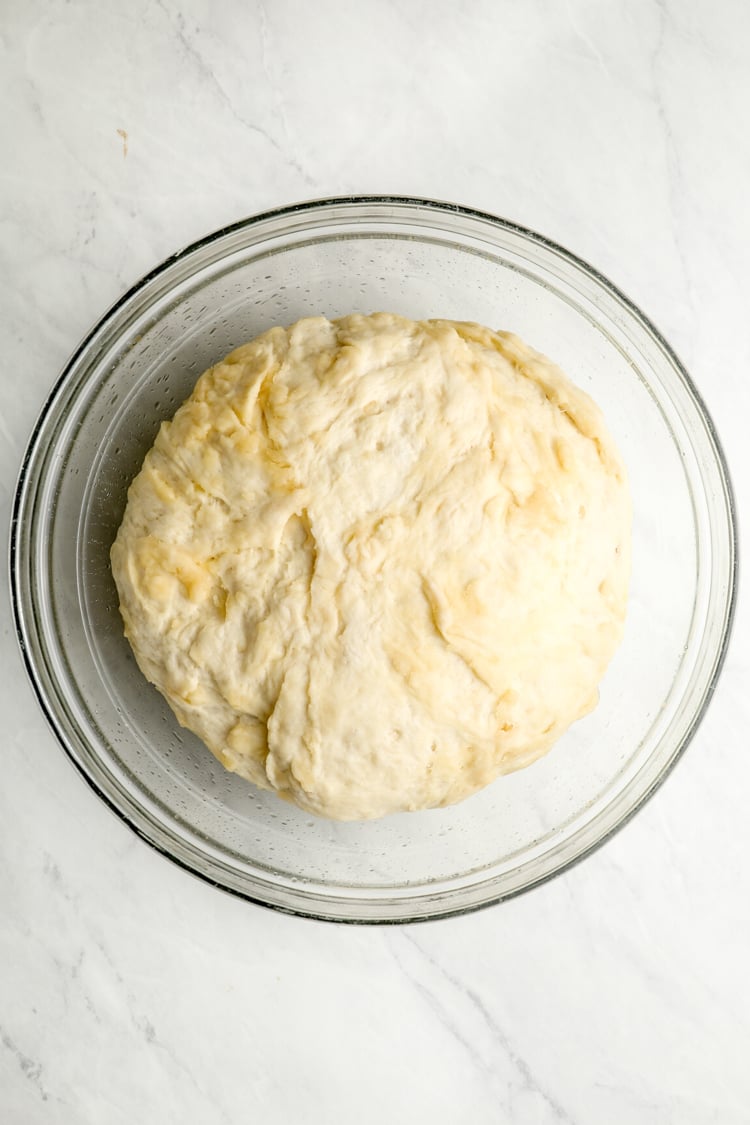
Knead and let rise: Knead the dough only briefly, just until it comes together. Don’t try to work it until perfectly smooth; minimal kneading helps keep the finished crust tender rather than chewy. The dough may look spotty or uneven at first, but it will smooth out as it rests. Let it rise until roughly doubled in size. Because of the high oil content, this dough rises much more slowly than standard pizza dough.
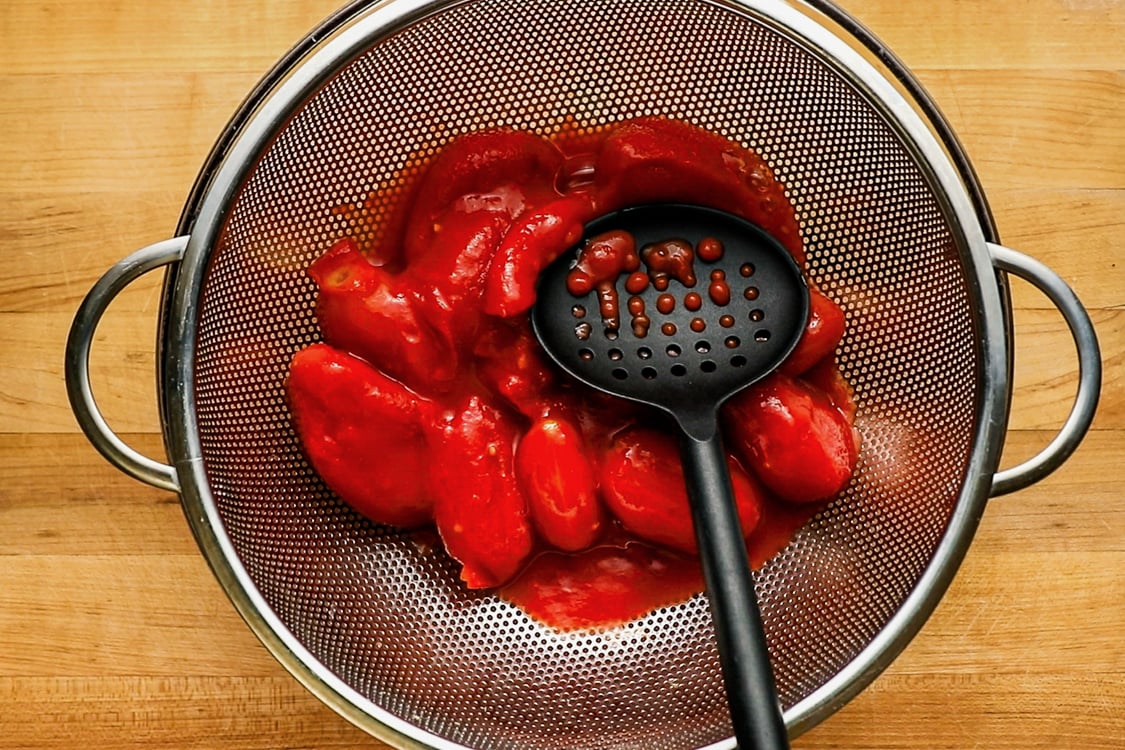
Prepare the tomatoes: Crush the tomatoes with your hands as they drain, allowing the excess liquid and seed gel to escape. Take your time with this step—the tomatoes should be well drained before they go onto the pizza. Too much moisture can make the filling watery and prevent the crust from crisping properly.
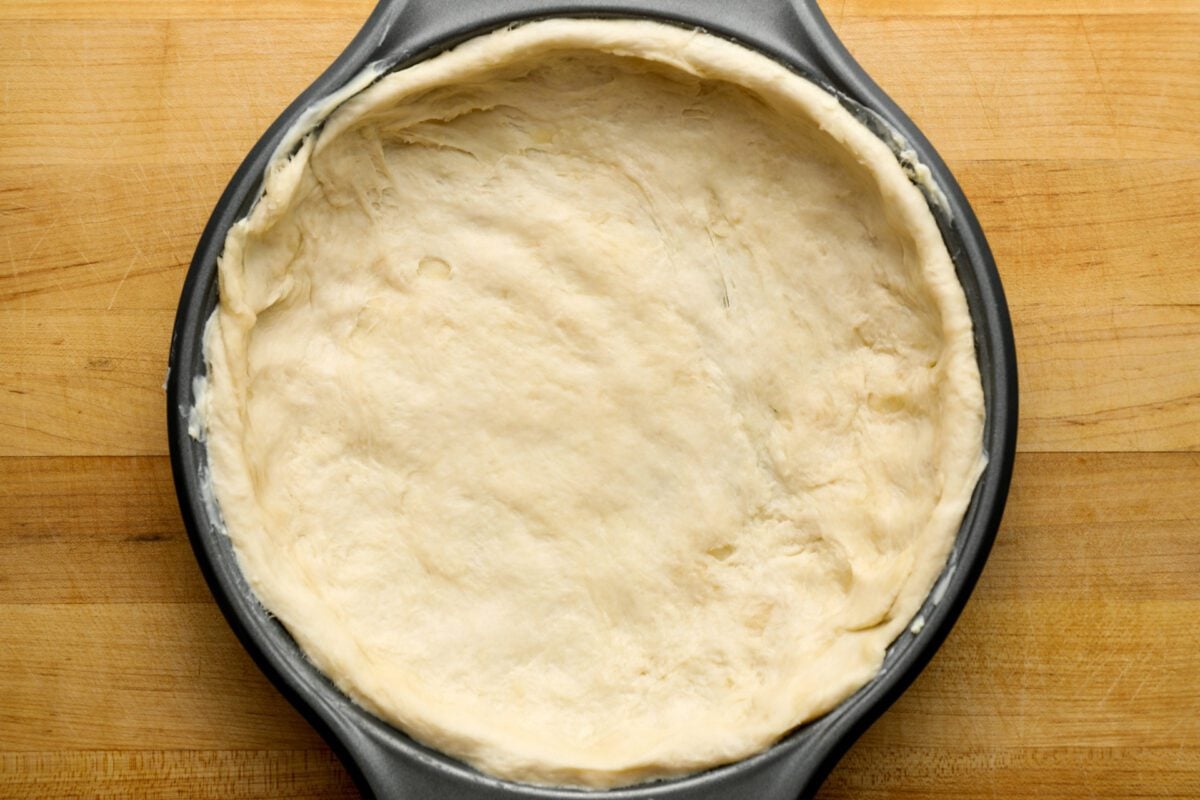
Shape the crust: Press the dough evenly across the bottom of generously buttered pans, then work it up the sides to create the characteristic deep-dish shell. Aim for a sturdy base with slightly thinner sides. A 12-inch deep-dish pizza pan can also be used for the full batch instead of two cake pans.
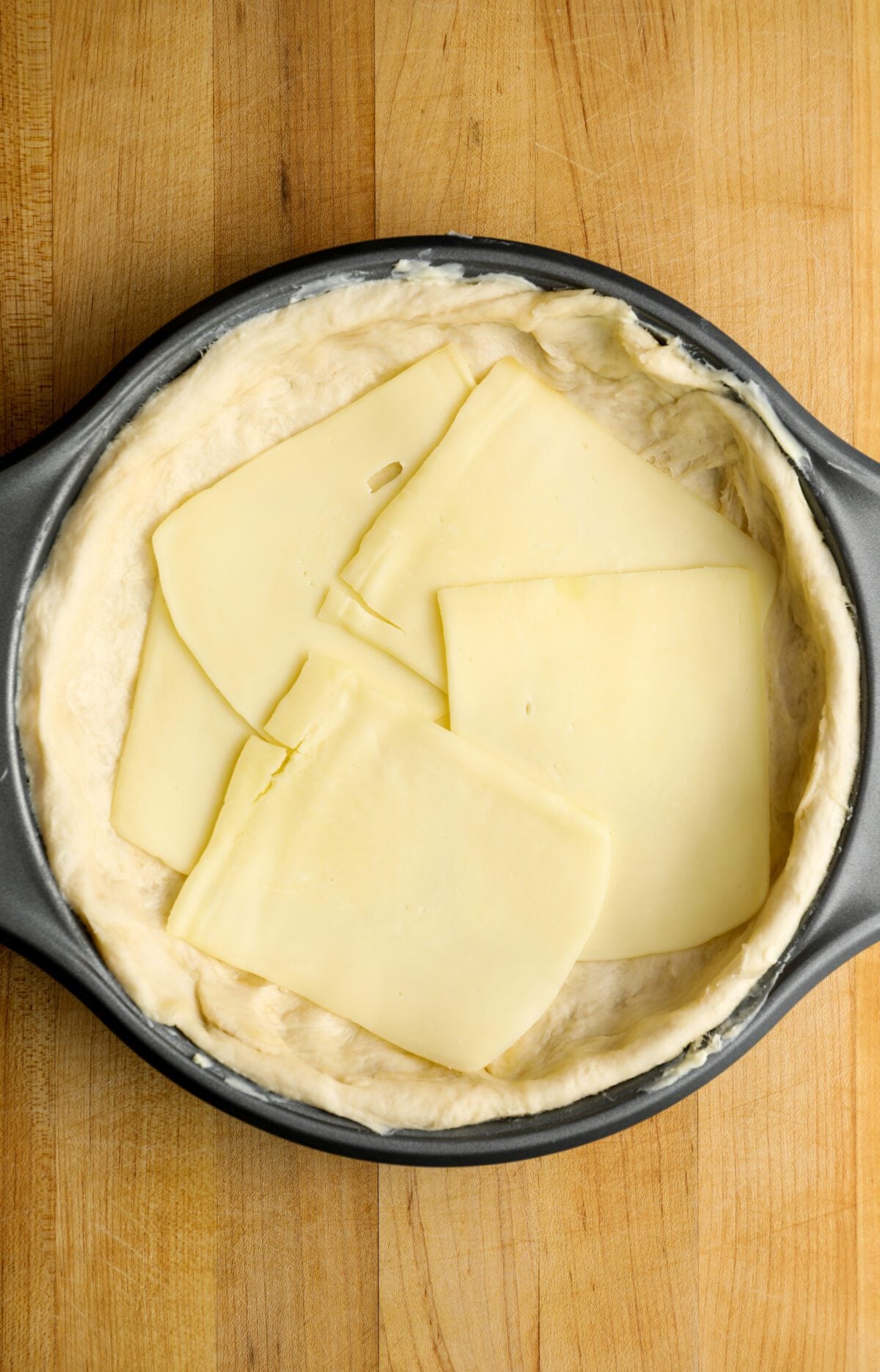
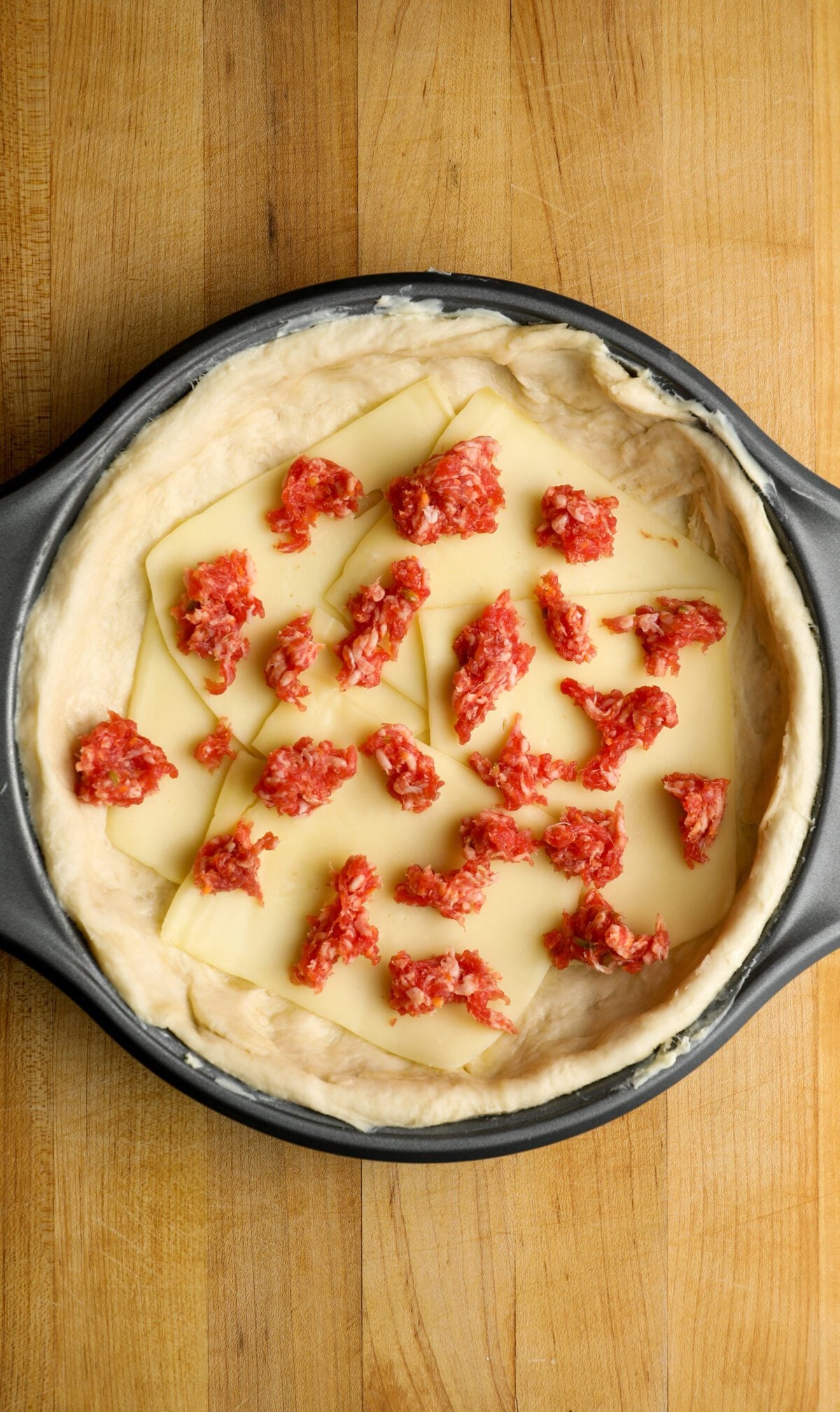
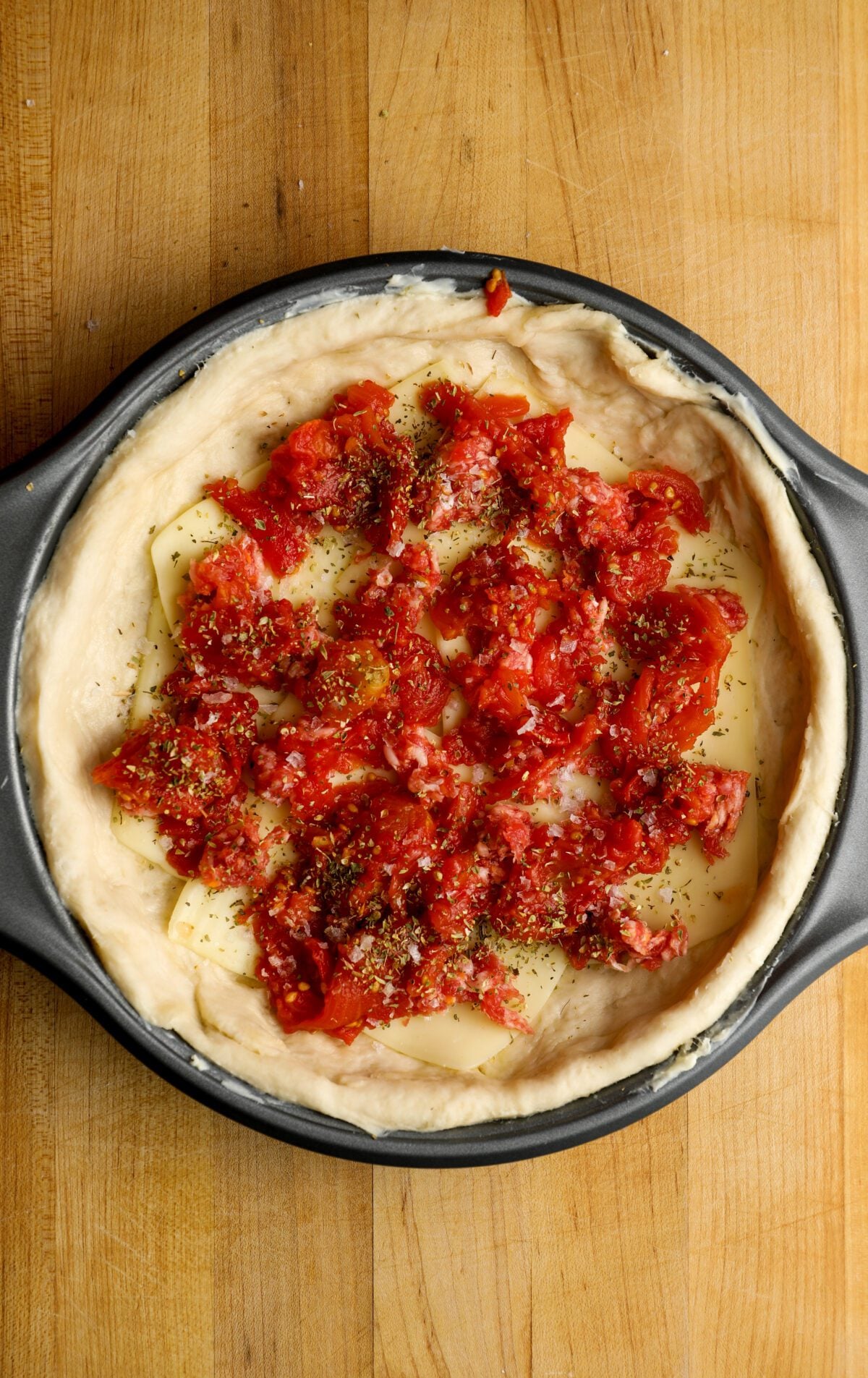
Layer the pizza: Start with the mozzarella directly on the dough, followed by small pieces of sausage, then the well-drained tomatoes and seasonings. It may feel backward if you’re used to making regular pizza, but the order is intentional: putting the cheese underneath the tomatoes helps shield the crust from their moisture. Finish with the Parmigiano Reggiano over the top.
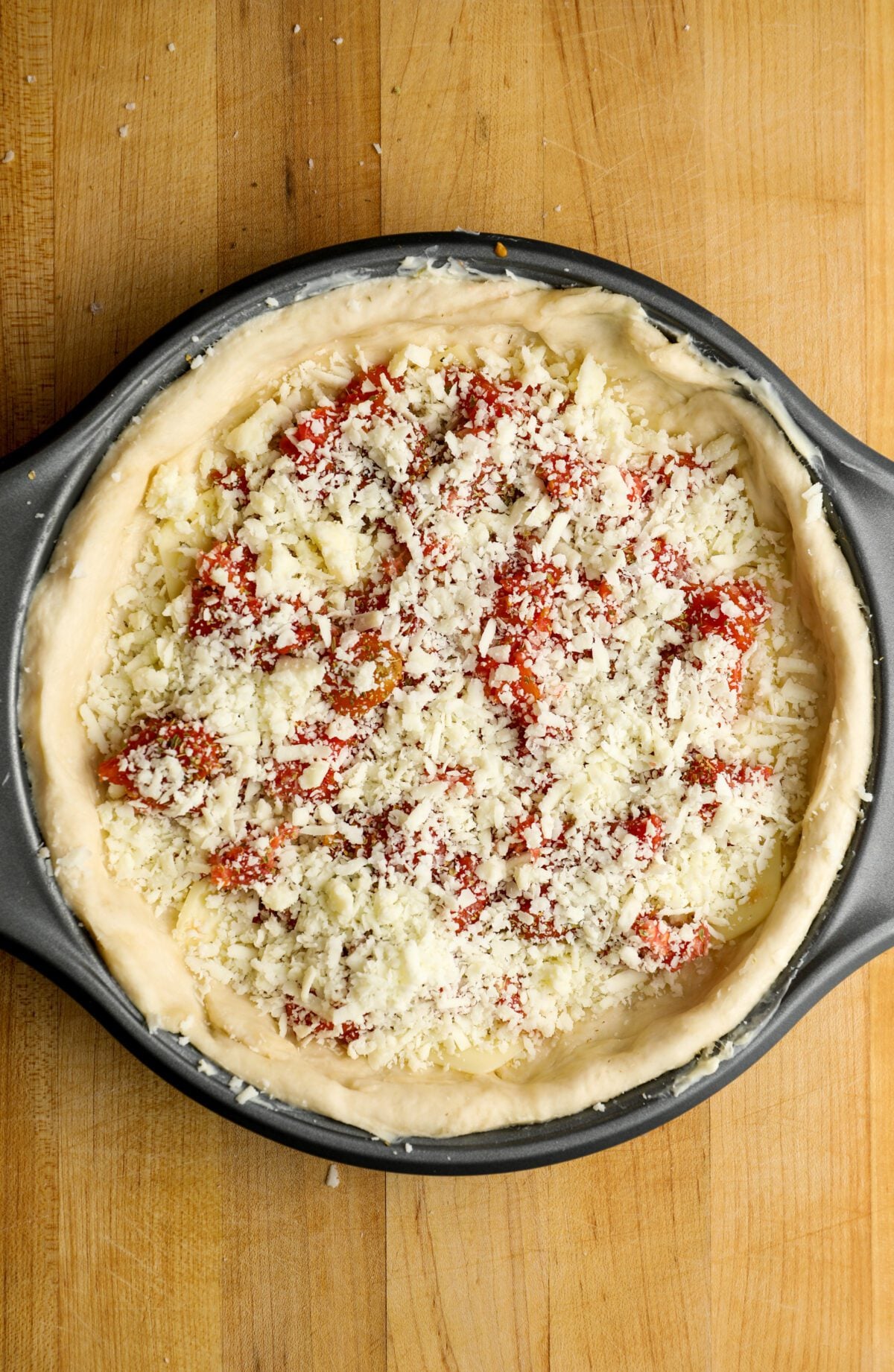
Bake, rest, and serve: Bake the pizza on the bottom rack so the base gets plenty of heat. Look for a deeply golden-brown crust and lightly browned top; the edges should feel crisp and firm rather than pale or doughy. Let the pizza rest in the pan before removing and slicing it. This gives the layers time to settle so the cheese and sauce stay put rather than sliding off with the first cut.
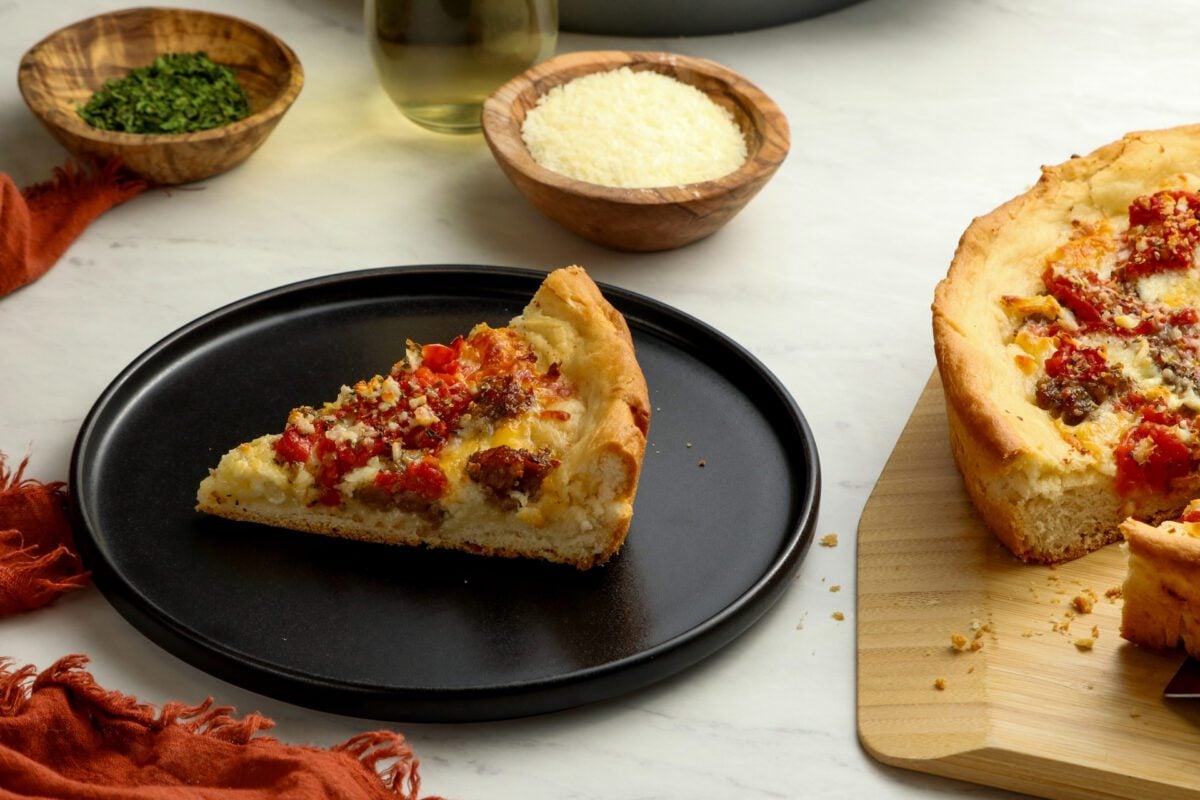
Deep Dish Pizza Video Tutorial
More PIzza Recipes You’ll Love
Deep Dish Pizza
Ingredients
For the Crust
- 3¼ cups all-purpose flour, spooned into measuring cup and leveled-off
- 1 teaspoon sugar
- 1¾ teaspoons salt
- ⅛ teaspoon cream of tartar
- 2¼ teaspoons instant/rapid-rise yeast
- ½ cup corn oil
- 1 cup warm water (see note)
- 2 tablespoons unsalted butter, softened, for greasing the pan
For the Sauce
- 1 (28-oz) can whole tomatoes, preferably San Marzano
For the Toppings
- 12 oz sliced whole-milk mozzarella (not part-skim)
- ½ lb (8 oz) raw Italian sausage
- 1 teaspoon dried oregano
- Pinch of salt
- Heaping ¾ cup (3 oz) freshly grated Parmigiano Reggiano
Instructions
- Make the Dough: In a large bowl, whisk together the flour, sugar, salt, cream of tartar, and yeast. Add the oil and water and stir with a spoon until the dough comes together into a shaggy mass.
- Knead briefly by hand—about 30 seconds, just until the dough comes together. It will be sticky. Do not overmix. Lightly oil a large bowl (you can clean and reuse the same bowl if you like), add the dough, flip it to coat the top with oil, and cover with plastic wrap. Let rise at room temperature until doubled, 5 to 6 hours (this dough rises slowly because of the high oil content). Don’t worry if the dough looks spotty or uneven; that’s normal for this high-oil dough.(Alternatively, for a make-ahead option, let the dough rise in the refrigerator overnight. If chilled, let it sit at room temperature for 45 minutes to 1 hour before shaping so it’s easy to press into the pan.)
- Preheat the Oven: Set an oven rack in the lowest position and preheat the oven to 450°F.
- Generously grease two 9-in cake pans or one 12-in deep-dish pizza pan with the softened butter, coating the bottom and sides well. (Do not use oil, as the soft butter helps the pizza dough cling to the pan, making it easier to press out.)
- Make the Sauce: Place a colander in the sink and add the tomatoes and their juices. Let the juices drain. Crush the tomatoes by hand, allowing their excess liquid and seed gel to drain away. Set aside while assembling the pizza(s).
- Assemble: Divide the dough as needed (one portion for a 12-in pan, two for 9-in pans). Dust your hands with flour and press the dough evenly into the pan(s), working it across the bottom and about 1½ in up the sides, keeping the sides thinner than the base (aim for about ⅛-in thick around the sides and ¼-in thick on the base). Flour your hands as needed; this is an oily dough.
- Cover the dough evenly with the sliced mozzarella. Pinch off small pieces of the raw sausage and scatter them over the cheese. Scatter the crushed, well-drained tomatoes into an even layer over the sausage, then sprinkle with the oregano and salt. Finish with the Parmigiano Reggiano.
- Bake on the bottom rack for 25 to 35 minutes, until the crust is deeply golden and the top is lightly browned. If needed, rotate the pan once for even baking.
- After baking, let the pizza(s) rest in the pan(s) for 10 to 15 minutes to allow the cheese to set and the crust to firm up. Run a thin spatula around the edge to loosen it, then carefully lift the pizza out of the pan and transfer it to a cutting board before slicing. A serrated knife works best. Serve with a knife and fork, if you like.
Notes
- Warm water helps activate yeast. The temperature should be about 110°F (43°C), but it doesn’t need to be exact; just try to get it about the temperature of bath water.
- Don’t be tempted to overload the toppings or reduce the oil in the dough, or the crust won’t crisp properly.
- Freezing Instructions for Dough: After the first rise, divide it (if making two pizzas), wrap each portion tightly in plastic wrap, and freeze for up to 3 months. Thaw overnight in the refrigerator, then let sit at room temperature for 45 minutes to 1 hour before shaping so it’s soft and easy to press into the pan.
Pair with
Nutrition Information
This website is written and produced for informational purposes only. I am not a certified nutritionist and the nutritional data on this site has not been evaluated or approved by a nutritionist or the Food and Drug Administration. Nutritional information is offered as a courtesy and should not be construed as a guarantee. The data is calculated through an online nutritional calculator, Edamam.com. Although I do my best to provide accurate nutritional information, these figures should be considered estimates only. Varying factors such as product types or brands purchased, natural fluctuations in fresh produce, and the way ingredients are processed change the effective nutritional information in any given recipe. Furthermore, different online calculators provide different results depending on their own nutrition fact sources and algorithms. To obtain the most accurate nutritional information in a given recipe, you should calculate the nutritional information with the actual ingredients used in your recipe, using your preferred nutrition calculator.
I think some of the prominent Chicago locations use corn meal in their crusts. May I suggest to you, not your readers, my corn meal crust recipe to have in your file.
CRUST
Pam regular or for baking, either one
1 1/2 cups non-chlorinated spring water at 115ºF
1/4 cup oil, not olive
1 1/2 tbsp sugar
2 1/4 tsp table salt
1 package Platinum active dry yeast
3/4 cup yellow corn meal
3 cup King Arthur all purpose unbleached flour.
You know what to do with the dough to make a perfect crust.
Thanks Stuart!
Another great recipe!! I love your recipes, they always turn out perfectly!
Thank you!
Hi Jen,
My family so enjoys all of your wonderful recipes. I was looking at 12-inch deep dish pizza pans and they run from $15 to almost $100. Some appear to be non-stick and some do not. Do you have a preference?
Thank you from an appreciative reader in Savannah, GA.
Janie Hoven
Hi Janie, So glad your family enjoys the recipes! This is the one I have – it’s currently on sale. I’ve also used regular nonstick cake pans, and they work well. I don’t think you need to spend a lot.
Jenn, I LOVE and admire many of your recipes. You are my “go to” again and again. For this I thank you heartily.
But, in this case, this born-and bred-Chicagoan who has enjoyed many deep-dish pizzas over many decades must differ. The crust has to have cornmeal mixed into it. It just has to in order to provide that crunchy, flavorful and distinct difference.
The historic major Chicago-style pizza makers – Uno’s, Due’s and Gino’s East — all do. That’s what makes it! Lou Malnati’s I don’t believe uses cornmeal though their crust is buttery and very tasty; but I would argue not the iconic Chicago deep dish crust. Giordano’s crust has changed over the years. When they just had the one store on the SW side of town, the crust was delicious. Different but delicious: It was much more buttery, now it’s just flour-y.
Clearly, I have more to say on this topic than is needed. Take it for what it’s worth:) If you decide to give the cornmeal addition a try, I’d be curious to hear your comments.
Lastly, the frozen ones and/or half-baked ones you buy from the purveyors are not even close to what a restaurant-fresh pizza conveys. Not even close because I’ve tried — again and again Hope springs eternal, I guess. And buying a frozen one at the grocery store is not worth it.
That’s my two cents. Thanks for all you do for so many through “Once Upon a Chef”!
Would this dough cook well in a 12″ cast iron pan?
Hi Susan, I do think that would work. Please LMK how it turns out if you try it. 🙂
Will do! Thanks for responding so quickly.
Jenn, as a lifelong Chicagoan who has consumed a lot of deep dish over the decades from all the best places (Uno, Due, Malnati’s, Pequods, etc.), this recipe is the bomb for a home cook! Perfect flaky crust like the originals (their frozen, shipped products are okay, but crust is compromised to something resembling the consistency of a graham cracker crust). I now living in a place where I have to make my own deep dish because no restaurants do. I make mine Malnati-style, which is to place a solid “pancake” – 1/3 inch of raw Italian sausage – atop the cheese slices, then the crushed and drained tomatoes and Parm. (I use a 12 inch cast iron skillet and form the sausage layer in a 12 inch tart pan then flop that onto the base to avoid pressing down the bottom crust). Whether you go with a 9-, 10- or 12-inch pan, a CAST IRON SKILLET is perfect for this pizza and is what the restaurants use. You might have to increase cooking time a bit using cast iron vs. a cake pan. Also, if you use more cheese and/or the solid sausage, you might need more cooking time and increase the oven temp to 485-500 degrees.
Hi Jen! I haven’t tried this yet and intend to, but with all the bad hype about seed oils, I never use them. So do you think EVOO would work instead of corn oil or vegetable oil? Thanks, I love your recipes!!
Hi Cheryl, Glad you enjoy the recipes! While corn oil is traditional, olive oil will work; it will just give a very different flavor.
I’m from Chicago as well. When I moved away I was forced to make my own pizza. The Frugal Gourmet nailed it with his recipe on deep dish and I’ve been making it ever since. You have some extra ingredients in yours. I’ll give this a try and let you know. 🙂
Good morning,
Wondering if olive oil can be substituted for the corn oil?
Thanks, in advance.
Hi Marg, I like the flavor of corn oil here, but olive oil will work.
While I love deep dish once or twice a year, Chicago people usually opt in for tavern style thin crust (cracker crust?) pizza. Would love to see your take on that style!