

This post may contain affiliate links. Read my full disclosure policy.
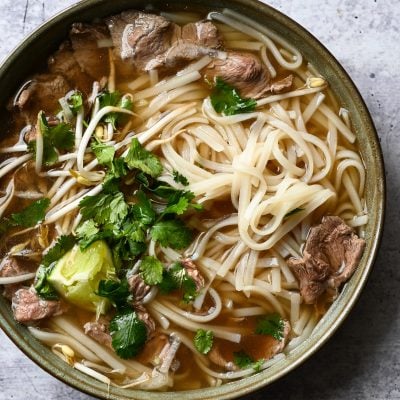
Craving a rich, comforting bowl of Vietnamese pho but short on time? This easy, healthy pho recipe brings the classic steaming broth, slurpy noodles, and tender meat to your table in just 45 minutes—without sacrificing a bit of flavor!
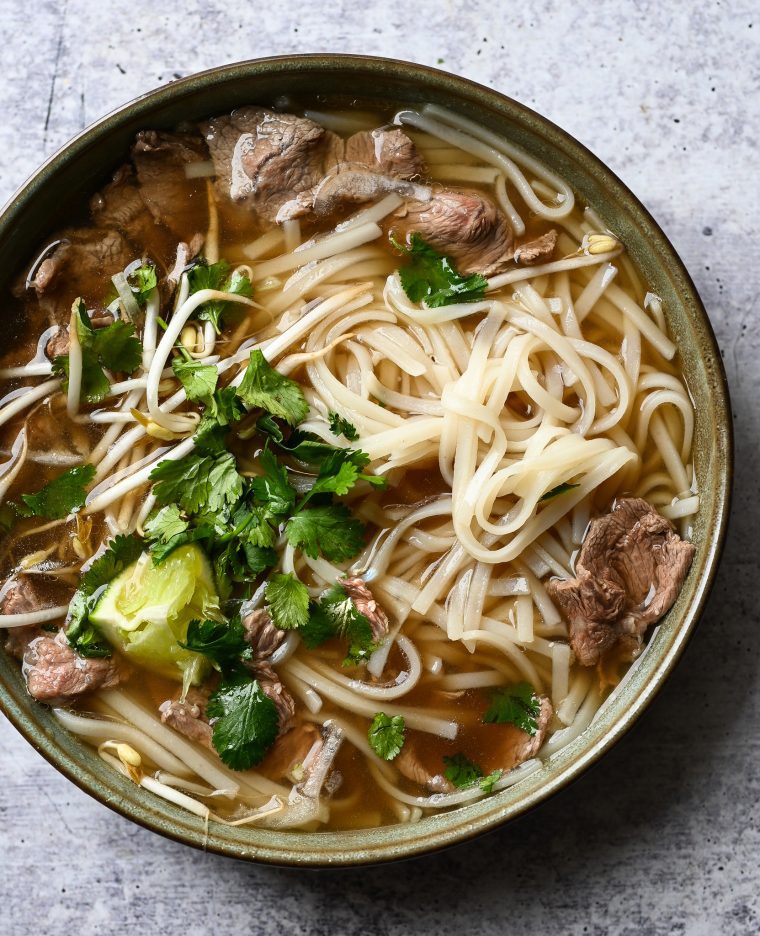
Pho (pronounced “fuh”) is one of my favorite dishes to order when we go out for Vietnamese food. This delicious noodle soup is made with a rich, savory broth, rice noodles, and tender meat, topped with fresh herbs, bean sprouts, chilies, and lime—and of course, the meal wouldn’t be complete without the standard squeeze bottles of hoisin and sriracha on the side.
Traditional pho recipes require hours of slow-cooking beef bones, meat, and spices to develop deep flavors. But there’s a quicker, simpler way to bring this comforting soup to your table at home. By simmering store-bought beef and chicken broth with aromatic spices, you can enjoy a flavorful, nourishing bowl of pho in a flash—perfect for those nights when you want something quick and satisfying. This recipe is adapted from America’s Test Kitchen.
“Felt like I was at my favorite pho restaurant…You really nailed the pho flavors!”
What You’ll Need To Make Quick Beef Pho
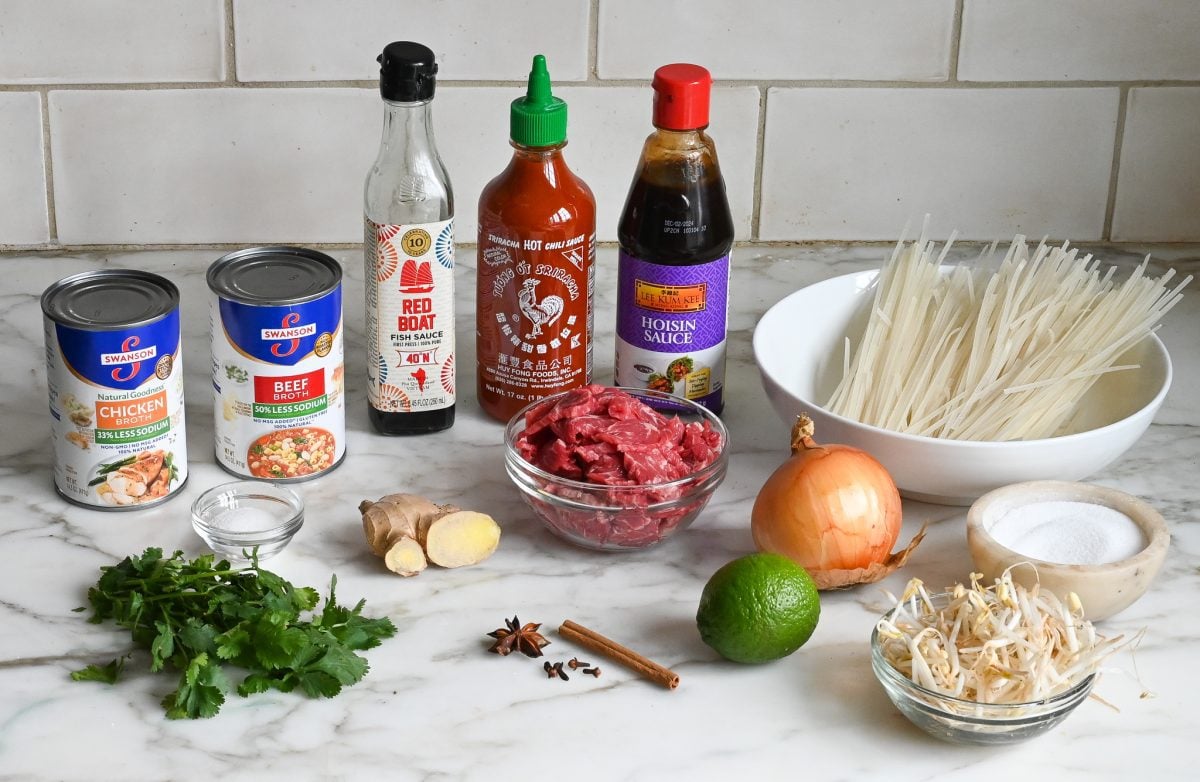
- Onion: Adds depth and sweetness to the broth, with a portion thinly sliced and reserved for serving.
- Beef broth, Chicken Broth &Water: The base of the soup that makes a rich, savory and layered flavor characteristic of pho.
- Fish sauce: Provides salty, umami depth to the broth.
- Fresh ginger, Cinnamon stick, Star anise pod, Whole cloves: Simmered in the broth to impart warmth, sweetness, and complexity to the soup.
- Flat rice noodles: A key component of the dish, these noodles, sometimes referred to as banh pho or rice sticks, have a slightly chewy texture that soaks up the flavor of the broth. They require soaking in hot water until soft and pliable before adding to the soup.
- Thinly sliced beef: The protein component of the dish, the thin slices cook quickly in the hot broth, staying tender and flavorful. I like to use a flat iron or flank steak—both are easy to find and slice thinly. Other cuts such as brisket, sirloin, round steak, or ribeye also work well.
- Bean sprouts, Cilantro leaves, Lime wedges, Hoisin sauce, and Sriracha: Classic garnishes and condiments for pho. Thai basil is also a traditional accompaniment, but it can be difficult to find at many supermarkets—feel free to add it if you can find it.
- Jump to the printable recipe for precise measurements
Step-By-Step Instructions
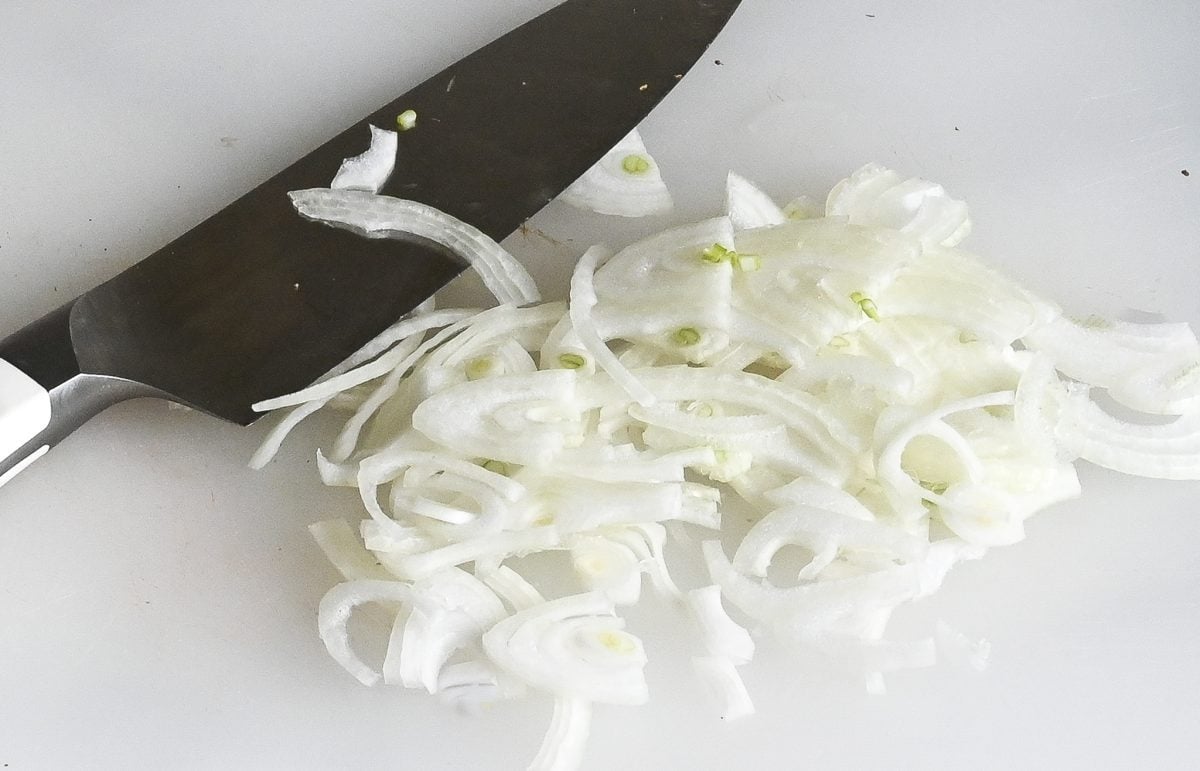
Start by slicing one of the onion quarters as thin as you can—this is important so you don’t end up with big bites of onion later. Set it aside for serving the soup.
In a large pot, combine the remaining 3 onion quarters, beef broth, chicken broth, water, fish sauce, ginger, cinnamon, sugar, star anise, and cloves. Bring everything to a boil, then reduce the heat to medium-low and let it simmer for 30 minutes.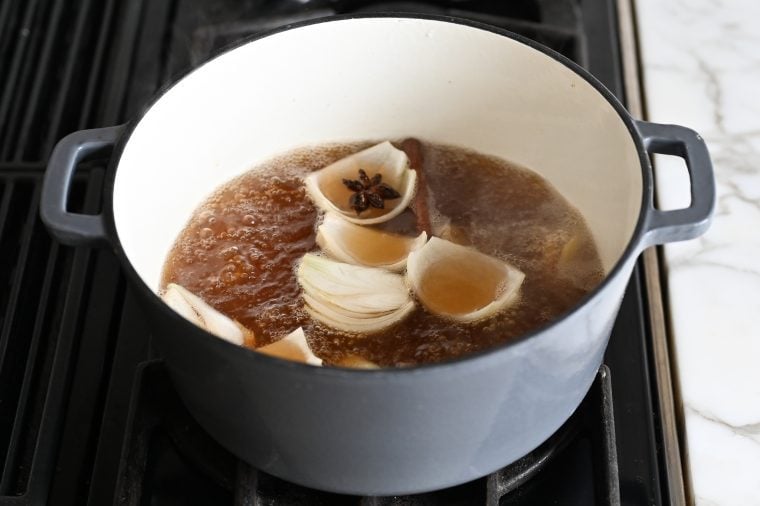
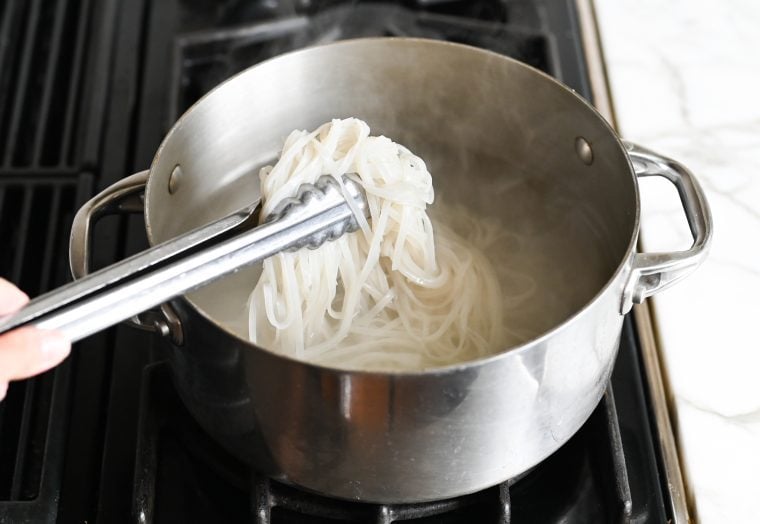
Meanwhile, bring a large pot of water to a boil. Off the heat, add the noodles and let them sit, stirring occasionally to prevent sticking, until they’re soft and pliable but not quite tender—5 to 10 minutes. Drain and rinse well with cold water, then set aside.
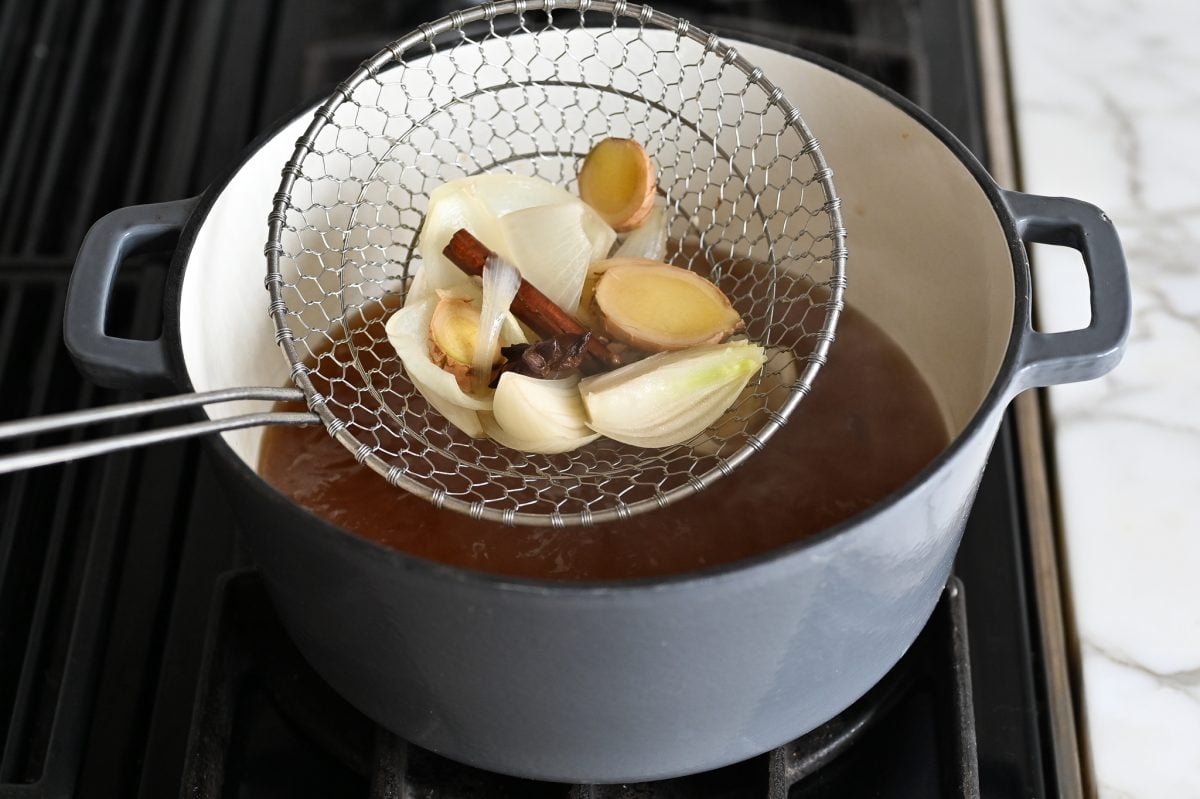
Over a large bowl, strain the broth through a fine mesh strainer, discarding the solids, and pour the clear broth back into the pot. (Or if you have a fine mesh spider, you can use that to fish out the solids—it’s much easier!) At this point, the broth can be made ahead and stored in the refrigerator for up to 3 days or frozen for up to 3 months.
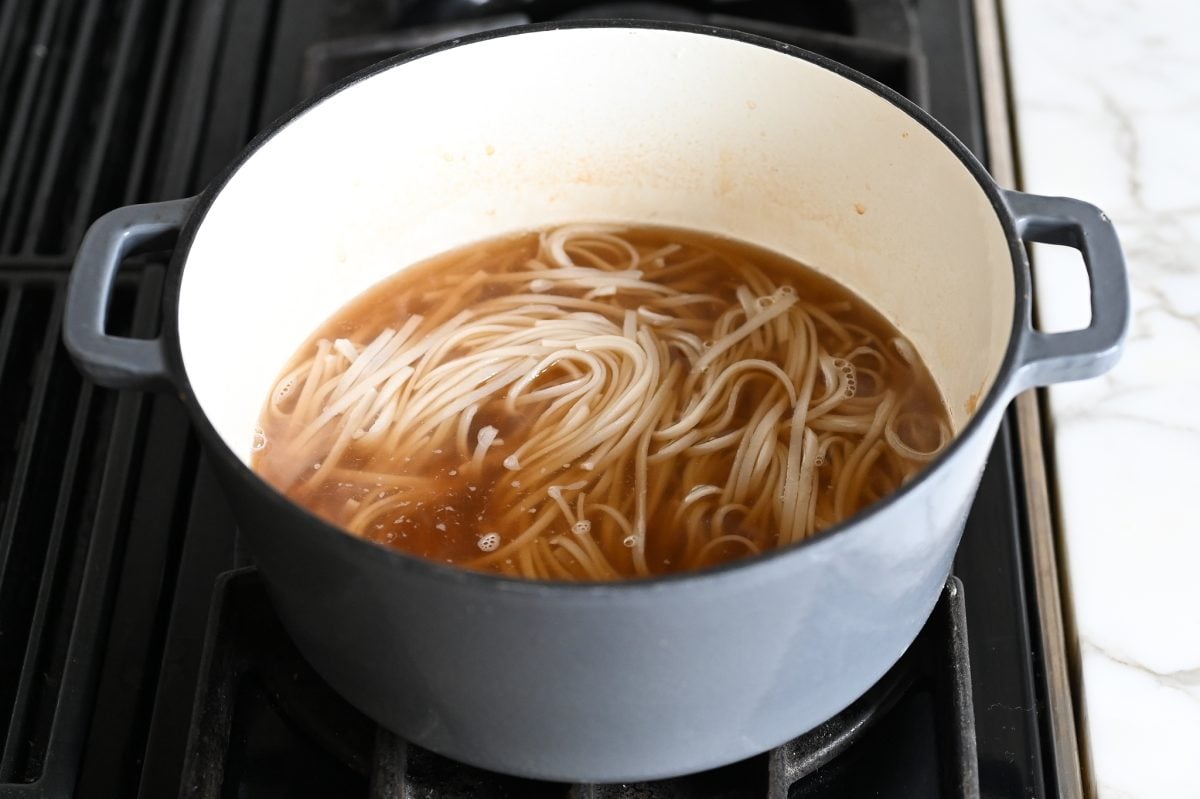
Bring the strained broth to a boil and add the soaked noodles. Cook them until they’re just tender, no more than a minute—you don’t want them to lose their “chew.”
Using tongs (or a spider, if you have one), lift the noodles from the pot and divide them evenly into serving bowls. Reduce the heat to a simmer and add the sliced beef to the broth. Let it simmer just until it’s no longer pink, about 1 minute—be careful not to overcook the beef, or it can become tough!
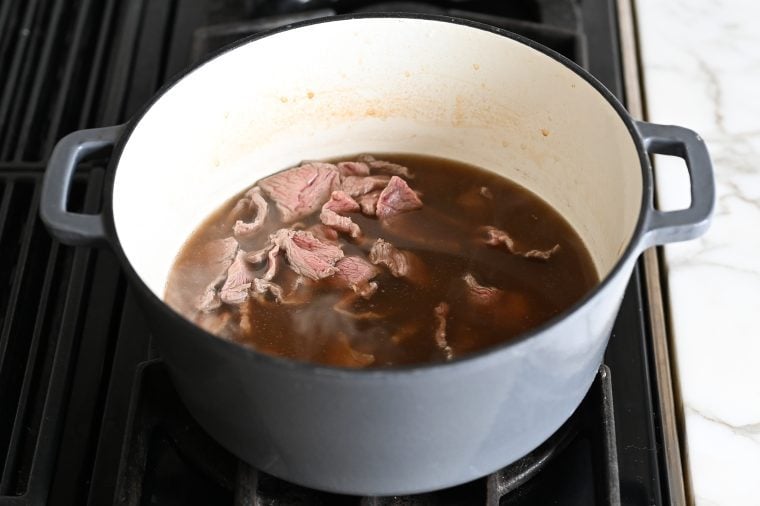
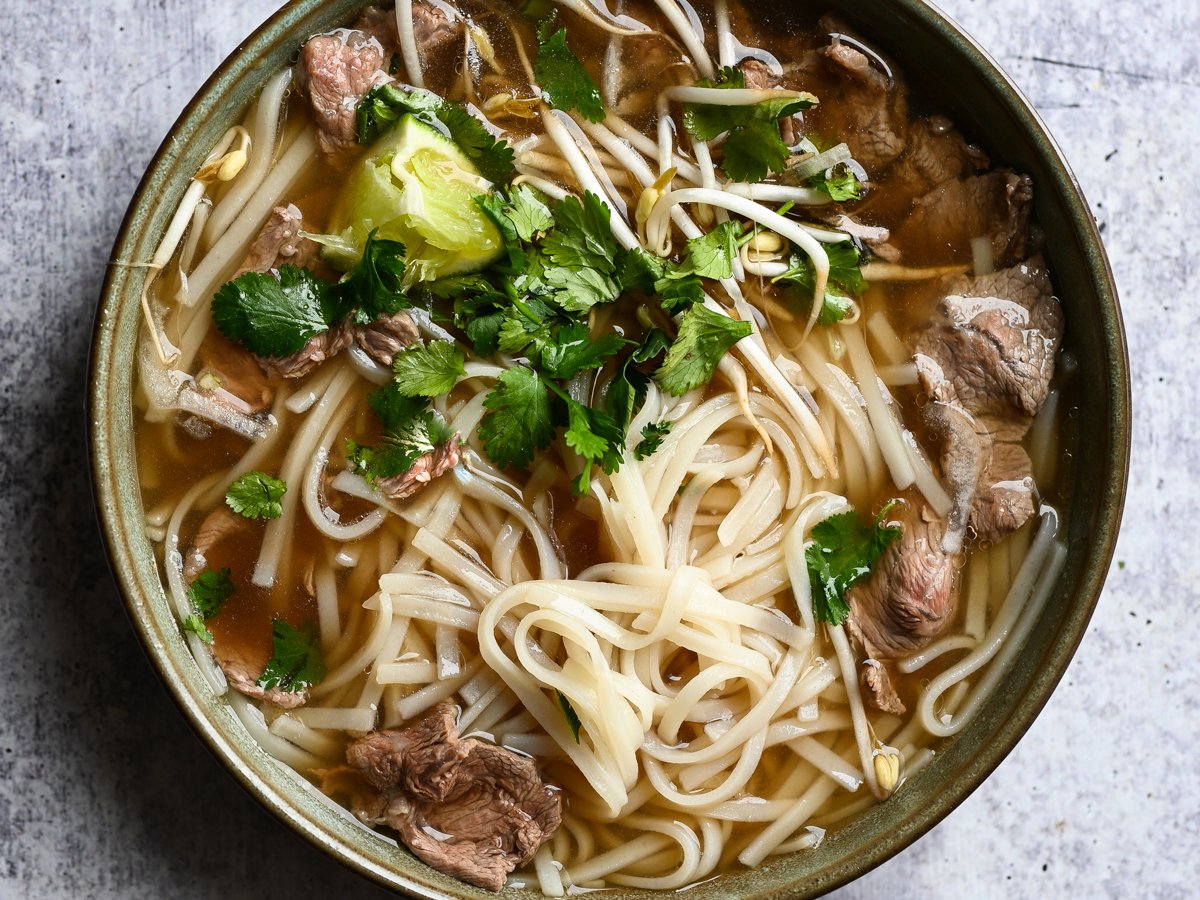
Using a slotted spoon or spider, remove the beef from the broth and divide it between the bowls. Ladle the hot broth over the noodles and beef, then top each bowl with the reserved thinly sliced onions, bean sprouts, and cilantro. Serve with lime wedges, hoisin, and sriracha on the side. This recipe makes two large dinner-sized bowls or four smaller ones.
Pho Variations
Pho is highly customizable. You can easily swap the beef for chicken to make pho ga (chicken pho). For the best results, use boneless chicken breasts or tenderloins, slicing them thinly to ensure they cook quickly and evenly. Bring the broth to a gentle boil before adding the chicken, and cook until it’s opaque and cooked through. For a richer chicken flavor, replace the beef broth with additional chicken broth. If you’re looking for more variety, you can experiment with other proteins like tofu or shrimp.
Video Tutorial
You May Also Like


Quick & Easy Pho
Ingredients
- 1 medium yellow onion, quartered, divided
- 1 (14.5-oz) can low-sodium beef broth (1¾ cups)
- 1 (14.5-oz) can low-sodium chicken broth (1¾ cups)
- 2 cups water
- 1 tablespoon fish sauce
- 1 (1-inch) piece fresh ginger, thinly sliced (no need to peel)
- 1 cinnamon stick
- 2 teaspoons sugar
- 1 star anise pod
- 4 whole cloves
- 7 oz flat rice noodles
- 8 oz very thinly sliced beef, such as flat iron or flank steak
- Salt, to taste
- ½ cup bean sprouts
- ¼ cup chopped fresh cilantro leaves
- Lime wedges, for serving
- Hoisin sauce and sriracha, for serving
Instructions
- Slice one of the onion quarters as thin as possible; set aside. In a large pot, bring the remaining 3 onion quarters, beef broth, chicken broth, water, fish sauce, ginger, cinnamon stick, sugar, star anise, and cloves to a boil. Reduce the heat to medium-low and simmer, uncovered, for 30 minutes.
- Meanwhile, bring a large pot of water to a boil. Off the heat, add the noodles. Let sit, stirring regularly to prevent sticking, until the noodles are soft and pliable but still not tender, 5 to 10 minutes. Drain and rinse well with cold water. Set aside.
- Over a large bowl, strain the broth through a fine mesh strainer. Discard the solids and pour the clear broth back into the pot. (Alternatively, you can use a fine mesh spider to fish out the solids.)
- Bring the broth to a boil and add the noodles; cook until the noodles are just tender, 30 seconds to 1 minute. Using tongs or a spider, lift the noodles from the pot and divide evenly into bowls. Reduce the heat to a simmer and add the sliced beef to the broth; let simmer until no longer pink, about 1 minute. Using a slotted spoon or spider, remove the beef from the broth and divide between the bowls. Taste the broth and adjust the seasoning with salt, if necessary. Ladle the broth over the noodles and beef. Top each bowl with the reserved thinly sliced onions, bean sprouts, and cilantro (you may not need all of the onions). Pass the lime wedges, hoisin, and sriracha at the table.
Notes
Nutrition Information
This website is written and produced for informational purposes only. I am not a certified nutritionist and the nutritional data on this site has not been evaluated or approved by a nutritionist or the Food and Drug Administration. Nutritional information is offered as a courtesy and should not be construed as a guarantee. The data is calculated through an online nutritional calculator, Edamam.com. Although I do my best to provide accurate nutritional information, these figures should be considered estimates only. Varying factors such as product types or brands purchased, natural fluctuations in fresh produce, and the way ingredients are processed change the effective nutritional information in any given recipe. Furthermore, different online calculators provide different results depending on their own nutrition fact sources and algorithms. To obtain the most accurate nutritional information in a given recipe, you should calculate the nutritional information with the actual ingredients used in your recipe, using your preferred nutrition calculator.
Gluten-Free Adaptable Note
To the best of my knowledge, all of the ingredients used in this recipe are gluten-free or widely available in gluten-free versions. There is hidden gluten in many foods; if you’re following a gluten-free diet or cooking for someone with gluten allergies, always read the labels of your ingredients to verify that they are gluten-free.
Got around to making this tonight and it was very very good! It was just me and my 7y/o daughter, she’d never had pho and wasn’t pumped about the idea of beef and noodle soup, but I toasted the star anise, cinnamon stick, and cloves while charring the onion and ginger right in the (dry) soup pot I used to make the broth and as soon as the stock sent the aromatics up into the room in a vapor cloud of savory deliciousness she came running over and kept sniffing the broth with her eyes closed repeating her appreciation of the aroma. My daughter ate more than half of it saying over and over “Oh my gosh, mom! This is so delicious!” Thank you!!
Home cooks can “shave” the beef by freezing it. It is then very easy to take a SHARP knife and slice the beef very thin.
Really delicious as usual! And I couldn’t find star anise today so just use Anise. This is just the kind of light but filling dinner that my husband and I both enjoy.
Yes I made this per your recipe.! It was outstanding,but littl confession —no rice noodles,had to substitute other noodles(no egg)Still very flavorful!Thank you from this 90 yr old still learning!
I love this! Just wanted to say you are inspiring. I hope when I’m in my 90s I’m still cooking and learning new recipes!
Jenn – It is so wonderful to see a Vietnamese recipe on your site! I’m Vietnamese and grew up making pho the traditional way. In recent decades, I often use this broth technique to speed up the process, particularly when making chicken pho. Let me offer 2 suggestions that may, dare I say, improve your recipe even more: (1) The unique aroma of pho comes from roasting the onion and ginger before adding them to the broth. You do this by taking the unpeeled onion and ginger and placing it directly on the gas stovetop and letting the flame blacken the onion and ginger on every side. Then, you wash and scrape off the charred parts and add the (mostly) clean onion and ginger directly to the broth. While a bit more work, this adds a subtle smoky aroma/flavor layer that is found in traditional pho broth. (2) Treat the noodles like you would pasta. Make the broth first and keep it hot on a simmering boil. When ready to eat, cook the noodles using a pasta strainer basket til al dente, and add the hot strained noodles directly to the empty soup bowl. Place the raw thinly sliced beef on top of the noodles, then the sliced onions/green onions/cilantro on top of the raw beef…. then pour the boiling hot broth into the bowl to finish. The broth will cook the beef w/o making it chewy. Cooking the noodles in the broth will muddy up the broth, and traditional Vietnamese cooks prize a clear beef broth for pho. Well done.
Love these suggestions, Van – thank you for sharing! I actually considered adding the raw beef to the noodles since that’s the traditional way, but since most home cooks can’t “shave” the beef as thinly as restaurants do, I worried it wouldn’t cook through.
Hi Jenn,
I have an electric stove…how would I roast the ginger and onion? And, thank you Van!
Elizabeth
p.s. Jenn, your recipes are making my retirement dreamier than imagined! Thank you!
Hi Elizabeth, You can roast them under the broiler. And so happy you’re enjoying the recipes! 🙂
Hi Jenn! Anything to sub for the wine? Would prefer no alcohol. Thanks!
This dish doesn’t have any alcohol. Are you confusing it with a different recipe?
Finally a pho recipe !! There are 5 of us – can this be doubled? All five Will want more than 1 serving. How to store if any leftovers?
Definitely! I would remove the beef and noodles from the broth as soon as they are cooked and store everything separately in the fridge before reheating.
It is traditional (standard practice) to always keep the separately cooked noodles from the broth. This makes storage much easier, as the broth could be kept frozen for several months. To make a fresh bowl of pho, all you have to do is reheat the broth, throw on fresh beef slices and vegetable aromatics (Vietnamese cardamom/basil, bean sprouts, etc.).
Hi Jenn, can dry star anise spice be used instead of fresh pods? I can’t seem to find fresh in the grocery store.
Hi Michelle, are you referring to dried pods that you get in the spice aisle (which is what the recipe calls for) or ground star anise?
Your timing is perfect! How did you know I was visiting Vietnam and Cambodia this month? Besides eating these dishes in their original country, I will be duplicating them from your recipes once home.
Thanks,
Helene
Jenn,
May I substitute chicken for beef? Would I still use fish sauce with the chicken? Any other changes if chicken? Best, David K
Hi David, Yes thinly sliced chicken breasts or chicken tenderloins work really well here. You could replace the beef broth with more chicken broth for a lighter soup, if you like.
Hi Jenn,
Can you recommend a substitute for the star anise pods I am having trouble finding it at local supermarkets. I will order on line but would like to make it in the meantime. Thank you!
Maria
Hi Maria, there is no perfect substitute for the star anise pods. This version of the soup is already a short-cut version, so for the best results, I’d order them online.
Yes, most definitely still use the fish sauce.
Just made. Delicious. Thank you. Now I am PHO soup ready. Will not hesitate to impress and prepare this again. DK
OMG- you have no idea how happy you just made me! I LOVE Pho but live in a cultural wasteland and would have to drive 40 minutes to a Vietnamese establishment. I sometimes look for recipes for things like Pho or Jambalaya, but had given up after being burned too many times (domestically I find nothing more frustrating than spending hours in the kitchen on a meal that turns out uninspired or boring). I can’t wait to make this as your recipes have been foolproof in my home.