

This post may contain affiliate links. Read my full disclosure policy.
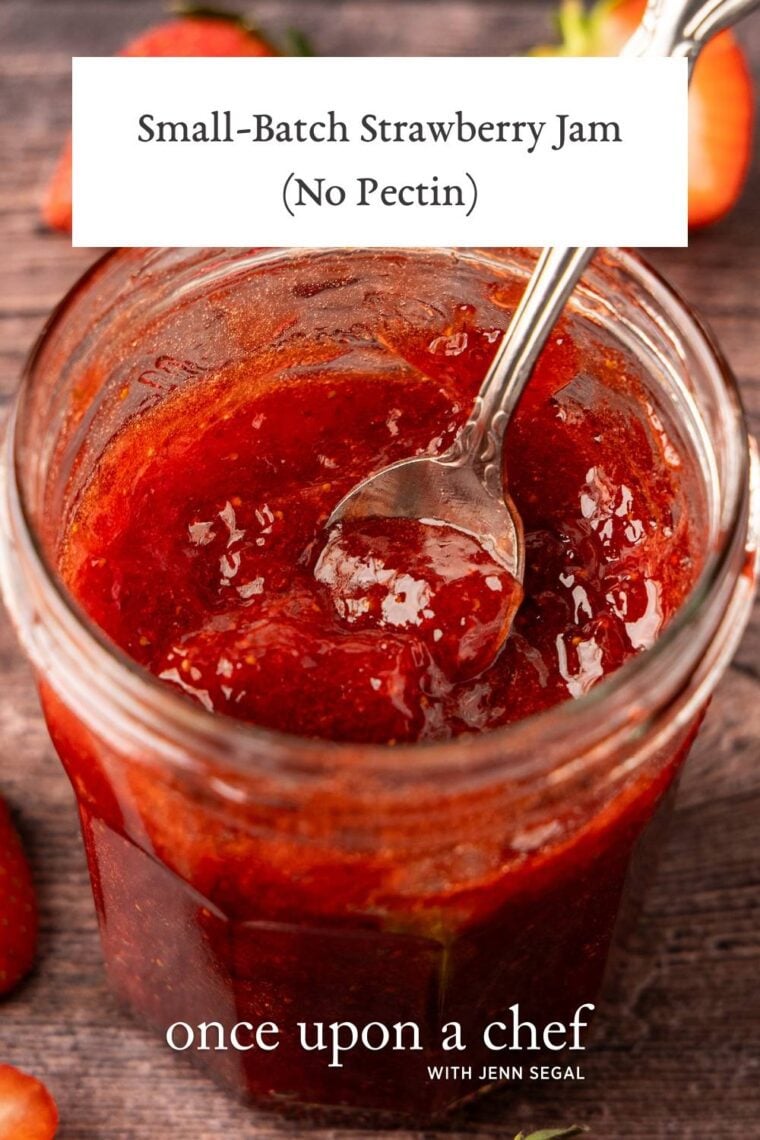
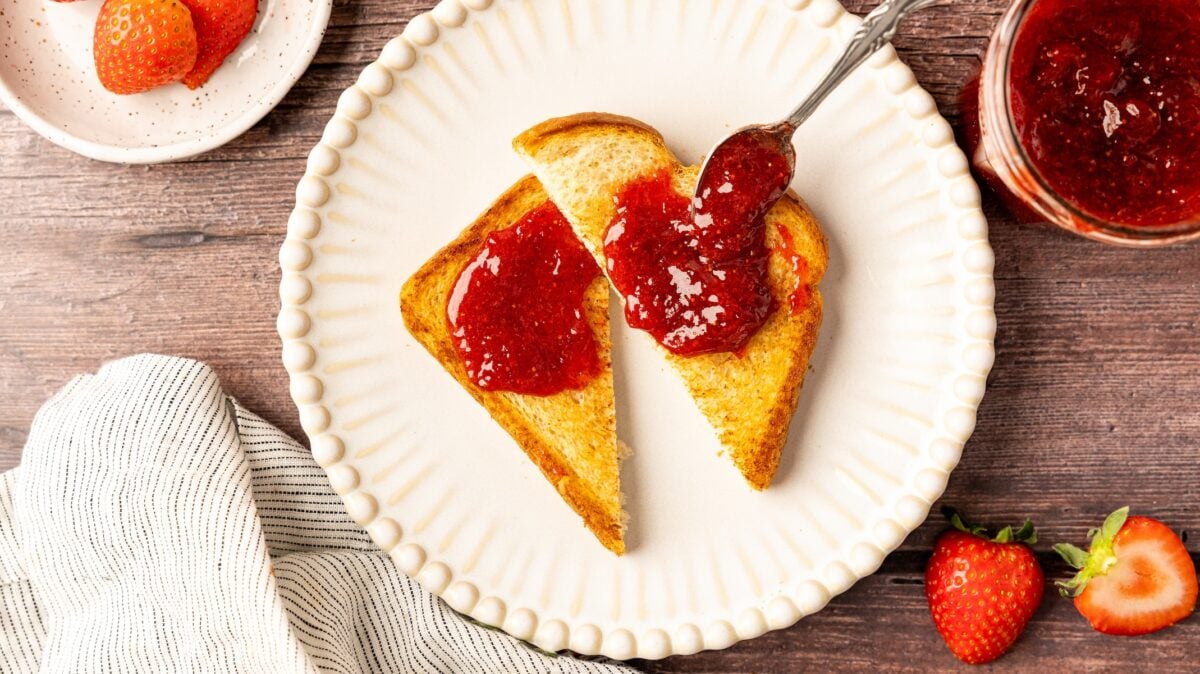
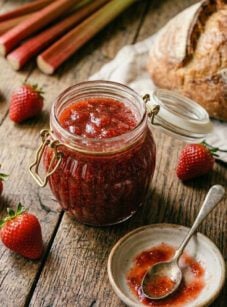
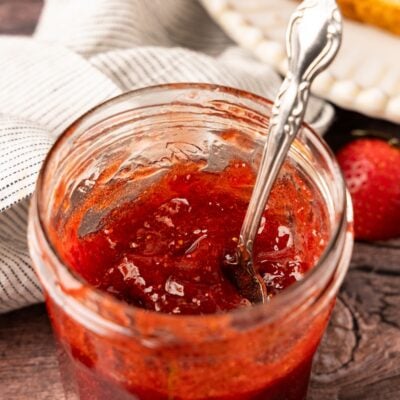
Thick, glossy, and bursting with real strawberry flavor, this small-batch strawberry jam tastes worlds better than anything from a jar. It’s the kind of recipe you’ll find yourself making again and again whenever fresh strawberries are in season.
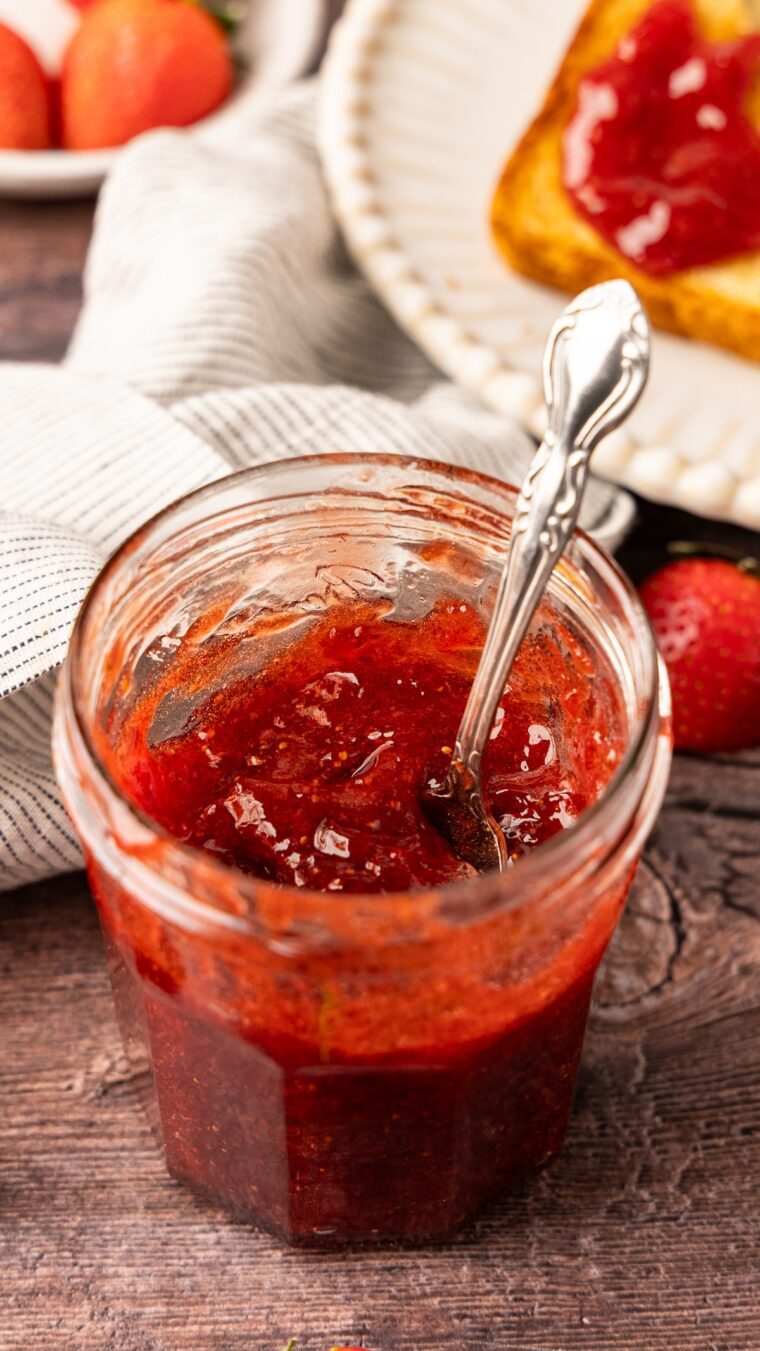
When strawberries are at their peak—sweet, juicy, and piled high at markets and grocery stores—there’s nothing better than turning them into homemade jam. This small-batch version is wonderfully simple: just strawberries, sugar, and a squeeze of lemon juice cooked down until thick and glossy.
The jam is made without pectin and requires no canning, so it comes together in about 20 minutes and keeps in the fridge for easy breakfasts and snacks. Spoon it over yogurt, spread it on toast, or swirl it into oatmeal—the fresh strawberry flavor really shines.
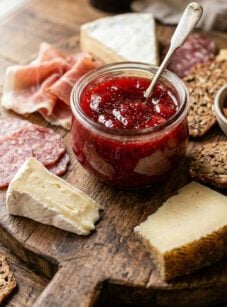
For a fun variation, swap the lemon juice for white balsamic vinegar and stir in 1 teaspoon of freshly ground black pepper. It adds a subtle sweetness and gentle peppery kick that’s especially good with savory pairings, like a charcuterie board or cheese and crackers.
“What an easy, delicious recipe for strawberry jam. It’s so much better than store bought. Another home run!”
What You’ll Need To Make Strawberry Jam
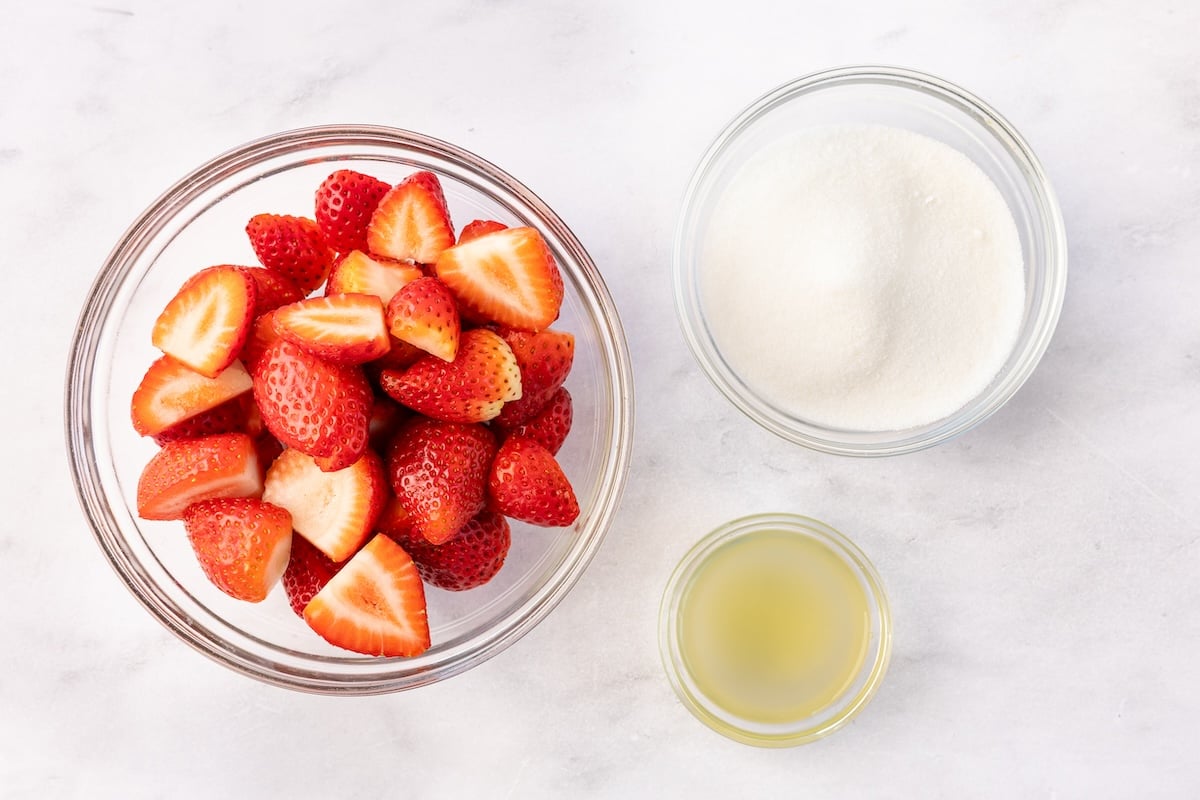
You’ll need strawberries, granulated sugar, and lemon juice to make homemade strawberry jam.
Step-By-Step Instructions
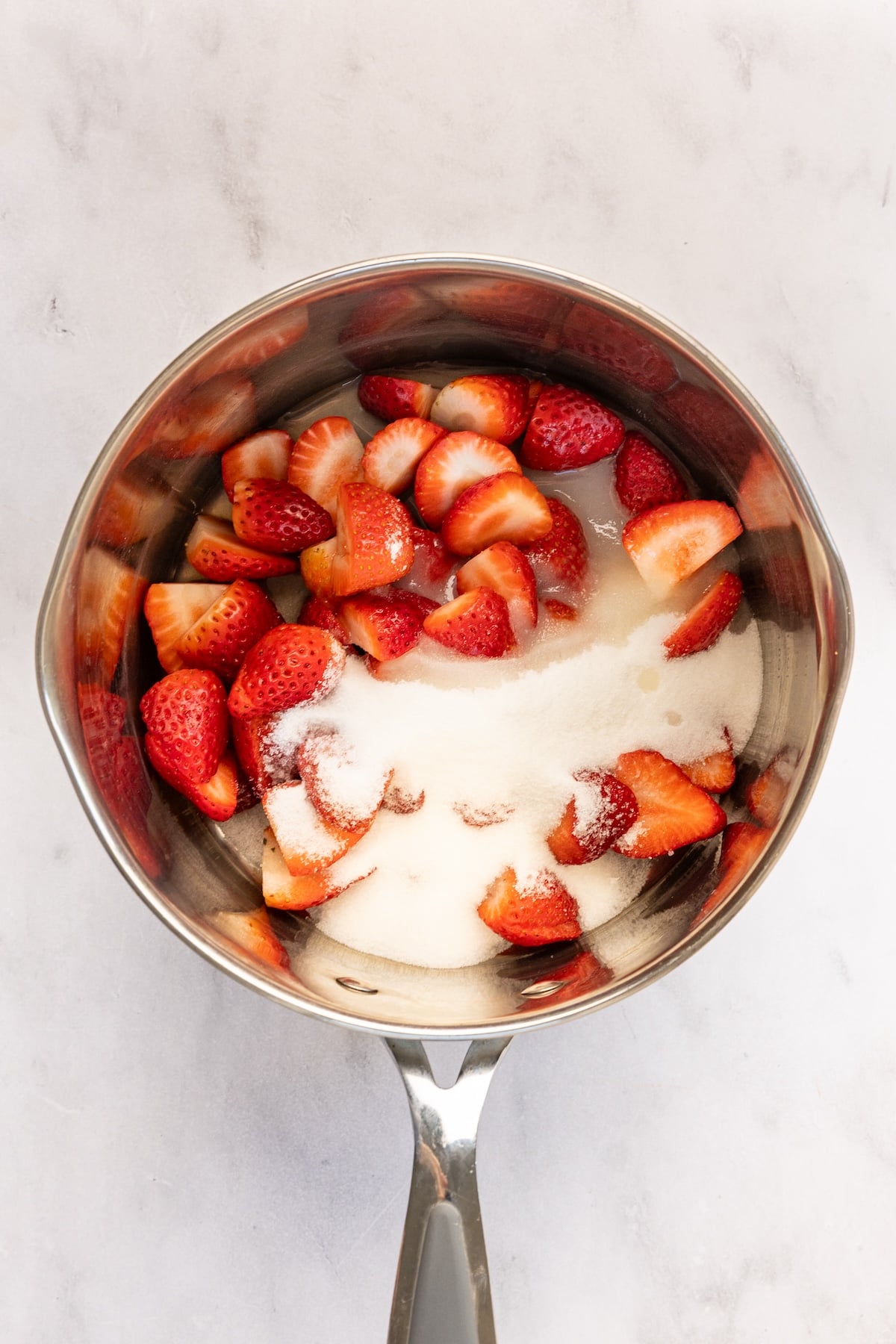
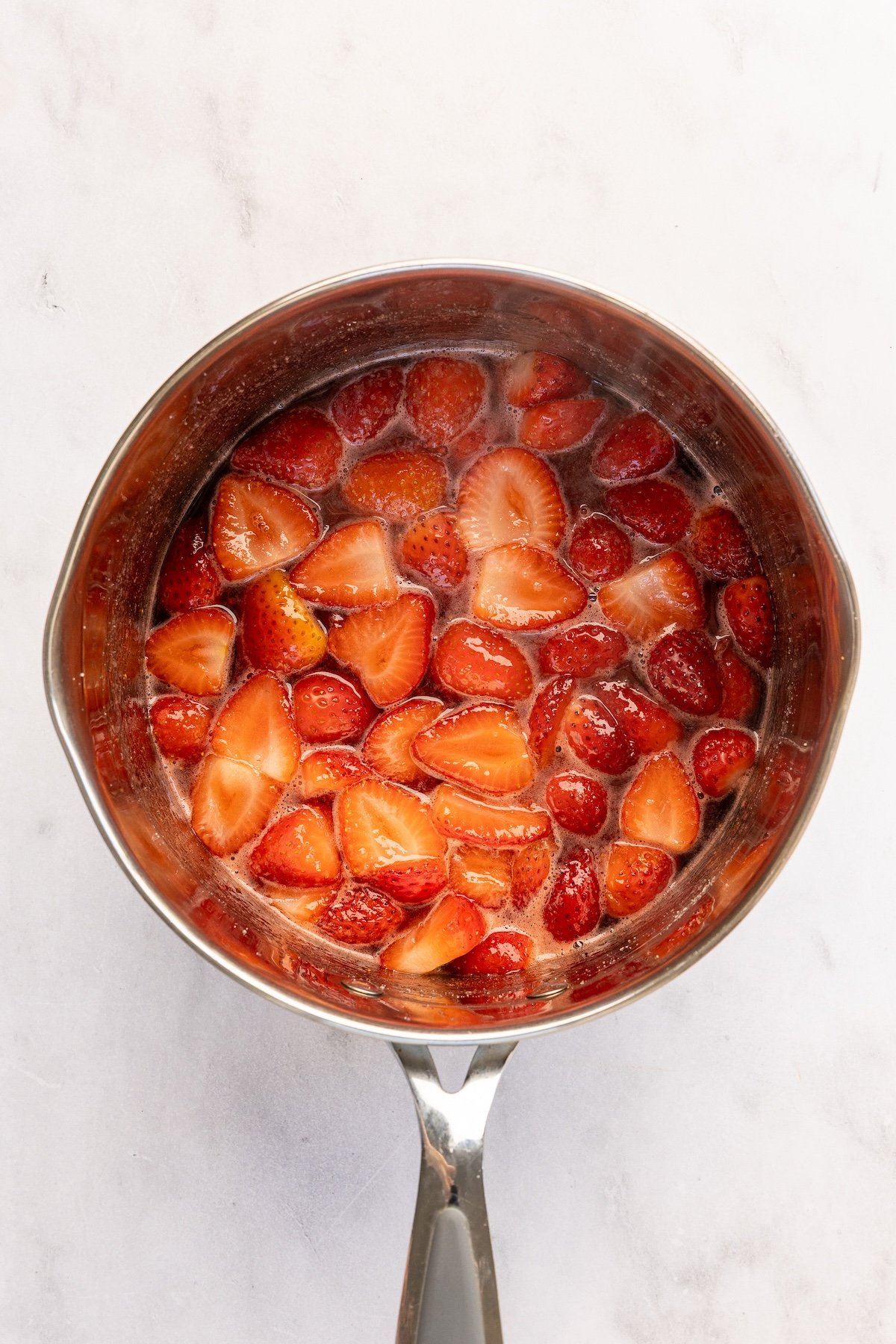
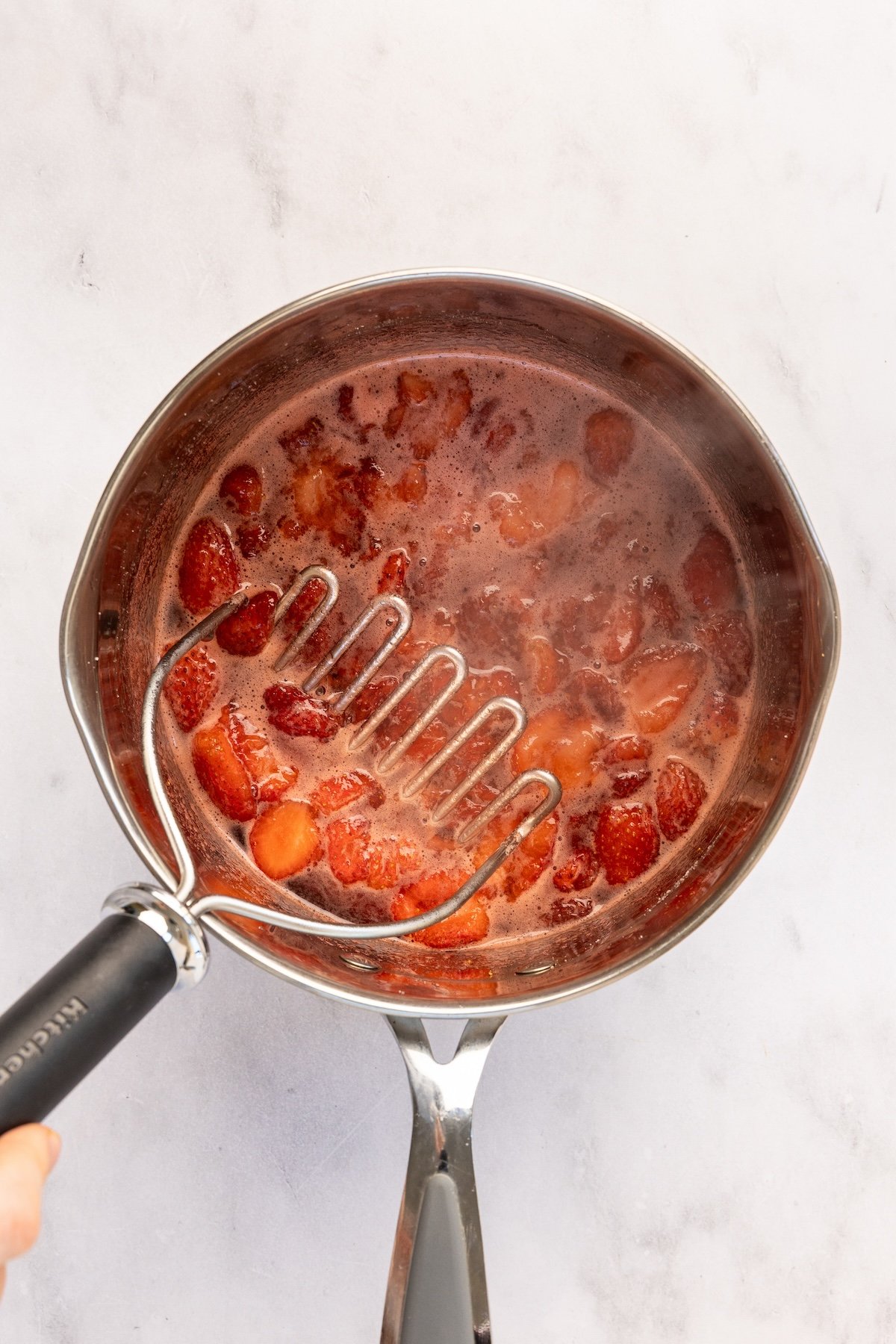
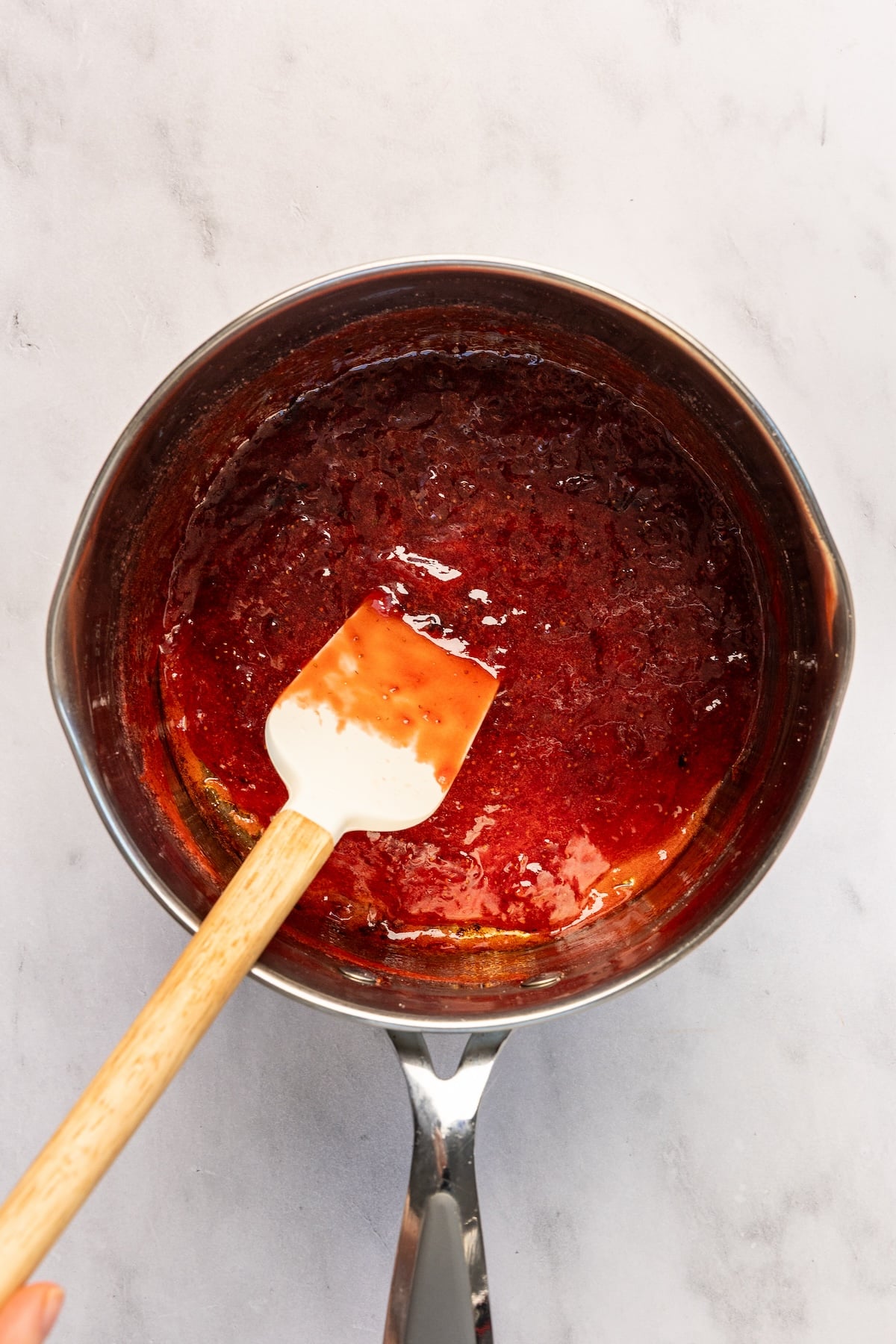
Step 1. Cook the jam. Before you begin, place two small plates in the freezer to chill. In a medium heavy-bottomed saucepan, combine the strawberries, sugar, and lemon juice. Cook over medium-high heat, stirring frequently, until the sugar dissolves and the mixture comes to a full boil, then reduce the heat to medium-low and simmer, stirring often and gently mashing the berries as they soften, until the jam thickens, 10 to 15 minutes.
Pro Tip: Use a heavy-bottomed saucepan—sugar-rich mixtures like jam scorch easily because the sugar sinks and concentrates at the bottom as it cooks. A thicker pan distributes heat more evenly and helps prevent hot spots that can burn the jam before it has time to thicken properly.
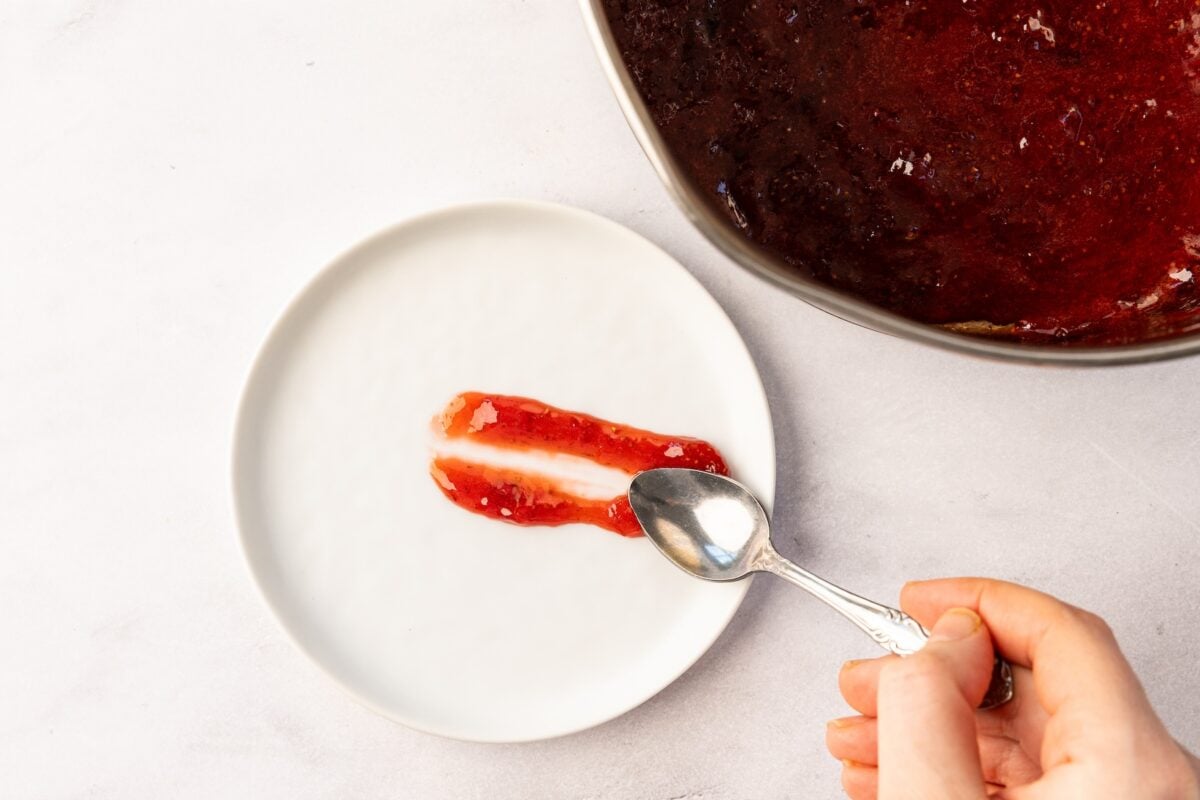
Step 2. Test for doneness. Spoon a small amount of jam onto one of the chilled plates and let it sit for a few seconds. Drag your finger or a spoon through it—if the line holds, the jam is ready. If it runs back together, continue cooking for a few more minutes and test again. (If using a thermometer, the jam should reach about 220°F.)
Pro Tip: The chilled-plate test is more reliable than the clock. Cooking time can vary depending on the juiciness of the berries and the size of your pan, so trust the texture—not the timer.
Step 3. Finish and store. Skim any foam from the surface, then let the jam cool slightly. Transfer to clean jars or airtight containers and refrigerate for up to 2 weeks, or freeze for up to 6 months.
MORE Fruit Recipes You’ll LOve
Small-Batch Strawberry Jam
Ingredients
- 16 oz strawberries, hulled and halved
- ¾ cup granulated sugar
- 2 tablespoons lemon juice, from 1 lemon
Instructions
- Before you begin, place two small plates in the freezer so they are well chilled—you’ll use them later to test whether the jam is set. (The second plate is a backup in case the jam needs a little more time to cook.) If you don’t end up using the second plate, be sure to take it out of the freezer when you’re done.
- In a medium heavy-bottomed saucepan, stir together the strawberries, sugar, and lemon juice. Set the pot over medium-high heat and cook, stirring frequently, until the sugar dissolves and the mixture comes to a full boil. Reduce the heat to medium-low and simmer, stirring often and gently mashing the berries as they soften (a potato masher or the back of a sturdy spatula works well), until the jam thickens, 10 to 15 minutes.
- To test for doneness, drop a small spoonful of jam onto a chilled plate and let it sit for a few seconds. If you can drag your finger through it and the line holds (instead of running back together), it's ready. If it still seems loose, continue cooking for a few more minutes and test again. (If you have a candy thermometer, the jam is done when it reaches about 220°F/104°C.)
- Skim any foam from the surface of the jam using a small spoon.
- Let the jam cool slightly, then transfer to clean jar(s) or airtight container(s). Refrigerate for up to 2 weeks or freeze for up to 6 months.
Nutrition Information
This website is written and produced for informational purposes only. I am not a certified nutritionist and the nutritional data on this site has not been evaluated or approved by a nutritionist or the Food and Drug Administration. Nutritional information is offered as a courtesy and should not be construed as a guarantee. The data is calculated through an online nutritional calculator, Edamam.com. Although I do my best to provide accurate nutritional information, these figures should be considered estimates only. Varying factors such as product types or brands purchased, natural fluctuations in fresh produce, and the way ingredients are processed change the effective nutritional information in any given recipe. Furthermore, different online calculators provide different results depending on their own nutrition fact sources and algorithms. To obtain the most accurate nutritional information in a given recipe, you should calculate the nutritional information with the actual ingredients used in your recipe, using your preferred nutrition calculator.
Gluten-Free Adaptable Note
To the best of my knowledge, all of the ingredients used in this recipe are gluten-free or widely available in gluten-free versions. There is hidden gluten in many foods; if you’re following a gluten-free diet or cooking for someone with gluten allergies, always read the labels of your ingredients to verify that they are gluten-free.
This was delicious! I had some strawberries that were going to go bad so made a batch of this jam. So good! Thank you for a great recipe.
Approximately how many cups of halved strawberries should you have? Thanks!
Hi Leslie, I’d guesstimate it’s somewhere between two and three cups.
This is delicious! Do yourself a favor and make this and Jenn’s scones – you will be so happy you did! Can’t wait for fresh blueberries this summer to try the blueberry jam recipe 😊
Great recipe everything from this nice Lady Jen.everything is pure gold she made.
Thank you.
What an easy, delicious recipe for strawberry jam. It’s so much better than store bought. Another home run!!
Thanks for always responding to my questions regarding the recipes. I appreciate your feedback.
Wow, this was so easy to make and it tastes delicious! Thanks!
Delicious easy recipe, just the right amount of sweetness for me, definitely a keeper!
Can you process the jam in a bath to keep longer than 6 months?
Hi Luanne, I didn’t create the jam with canning in mind, so I’m not sure it would be safe – sorry!
So tasty! Perfect way to capture Summer.
Would love to make more – do you think the recipe would work if I doubled it?
Sure (and glad you like it)!
would this also work for other berries ie. raspberries, blueberries, gooseberries, etc…?
Hi Mary, I think it will work, but because all fruits behave a little differently, you may need to experiment with the amount of sugar you use. Please LMK how it turns out if you make it with any other fruit!
Can I use frozen strawberries?
Yes, frozen strawberries will work. I’d thaw them first (but don’t drain off the liquid). Hope you enjoy!
Can you suggest a sugar substitute that you like?
Hi Susan. I’ve never used a sugar substitute, so I really can’t say. Two substitutes that a lot of readers mention are stevia and monk fruit sweetener. Hope that helps at least a bit!