
Challah


This post may contain affiliate links. Read my full disclosure policy.
Learn how to make my favorite challah recipe with this step-by-step guide, including how to create a beautiful four-strand braid. Perfect for Shabbat, holidays, or any special occasion.
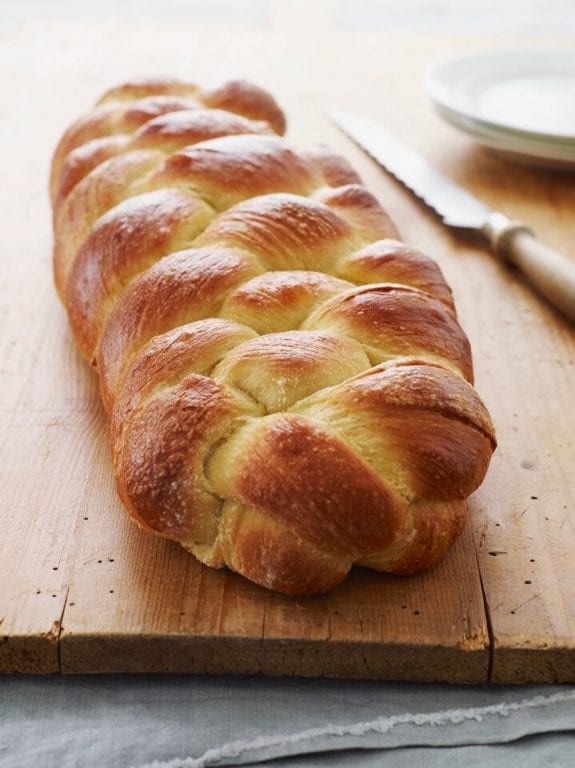
Photo by Alexandra Grablewski (Chronicle Books, 2018)
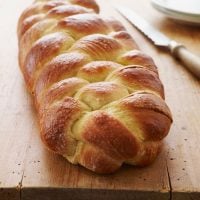
Challah is the bread of celebration in Jewish tradition, but I put it in the matzo ball soup and bagel category: it appeals to everyone. It’s a rich, slightly sweet loaf with a shiny, golden crust and pillowy-soft interior. But what makes it truly special is its distinctive braid, which symbolizes, among other things, the joining together of family and friends.
Rest assured, challah looks like far more trouble than it actually is. Think of it as a once-in-a-while baking therapy project. Kneading and braiding the dough, smelling the challah baking in the oven—it really is satisfying. And when the long braided loaf is presented at the dinner table, it is a sight to behold!
I owe much of the credit for this recipe to Nanci Hirschorn, one of my lovely readers, who has been perfecting her challah recipe for over thirty-five years. Thank you, Nanci, for all the pointers! Heads up: this recipe makes one 16-in loaf. It’s huge! If you have leftovers, use it to make challah French toast.
“This was my first attempt at challah and it was AMAZING! Easy to follow directions and looked and tasted great.”
What You’ll Need To Make Challah
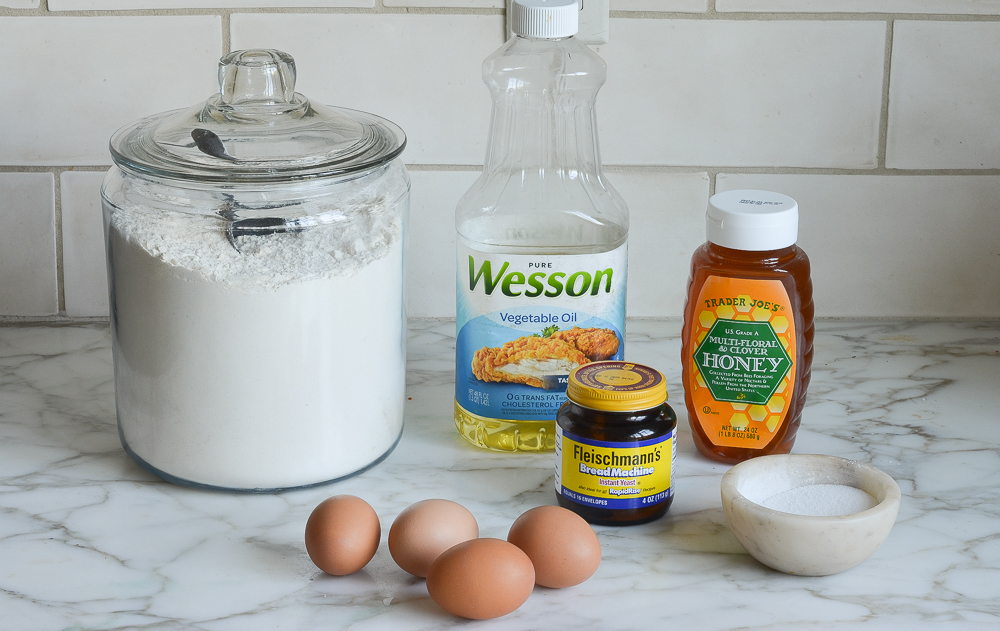
- All-purpose flour: Gives the challah structure while keeping the crumb soft and tender. For the most accurate results, I recommend weighing the flour with a digital kitchen scale; if measuring by volume, spoon it into the measuring cup and level it off.
- Instant/rapid-rise yeast: Can be mixed right into the flour—no proofing required. Note that the recipe calls for 1 tablespoon, which is more than one standard packet.
- Lukewarm water: The water should feel warm, not hot, so it encourages the yeast without damaging it.
- Vegetable oil: Keeps the challah soft and moist without adding a competing flavor.
- Honey: Gives the loaf its subtle sweetness and helps create a beautiful golden crust.
- Eggs: Give challah its characteristic richness, golden color, and tender crumb. Be sure they’re at room temperature; cold eggs can slow the rise.
- Jump to the printable recipe for precise measurements
How To Make Challah
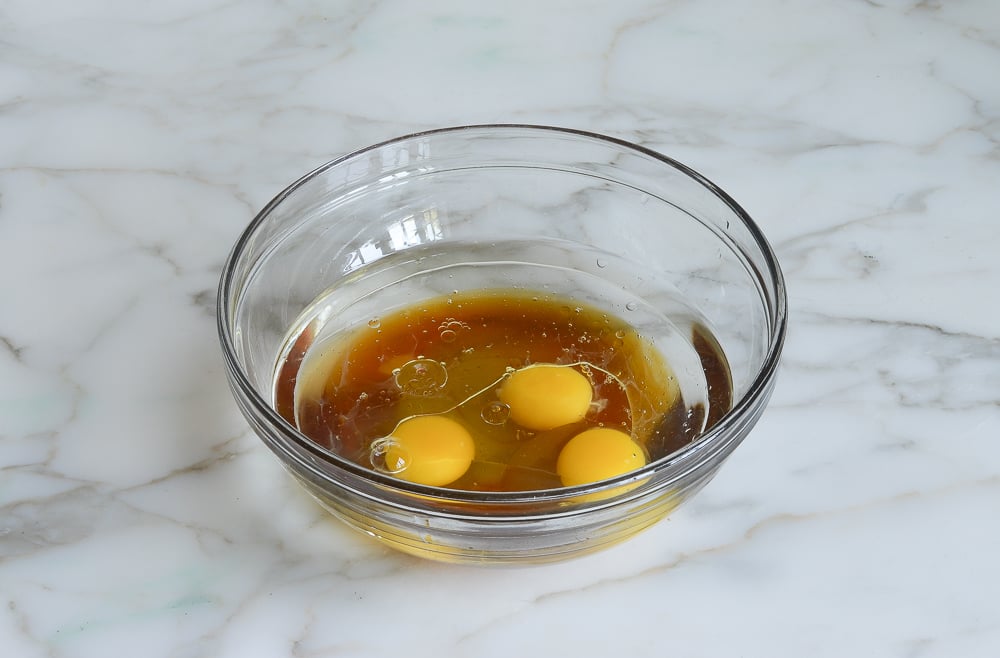
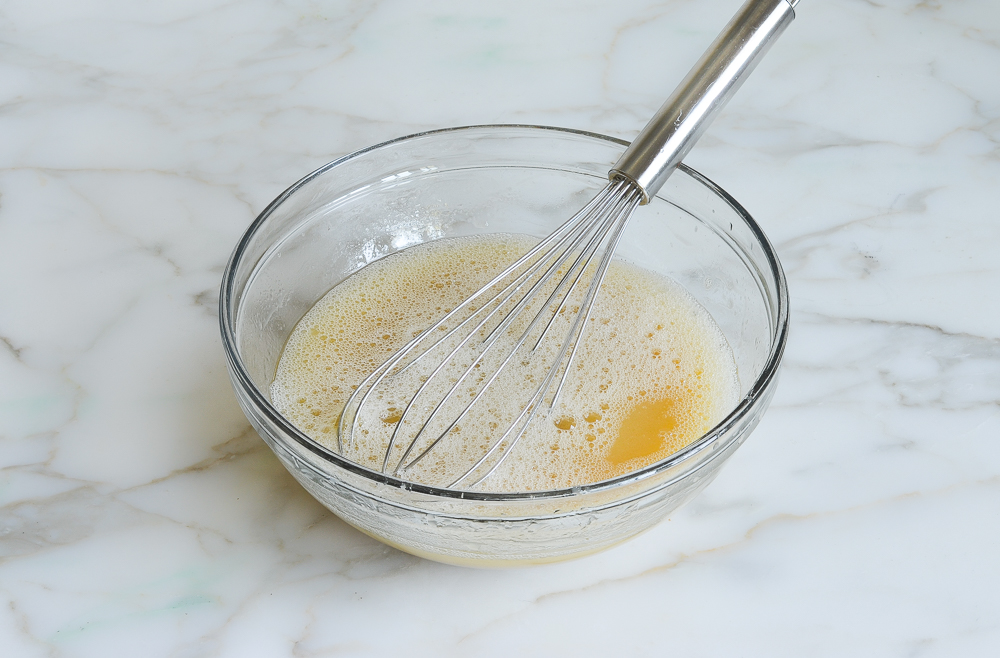
Step 1: Mix the wet and dry ingredients. Whisk the water, oil, honey, eggs, and egg yolk together until well combined.
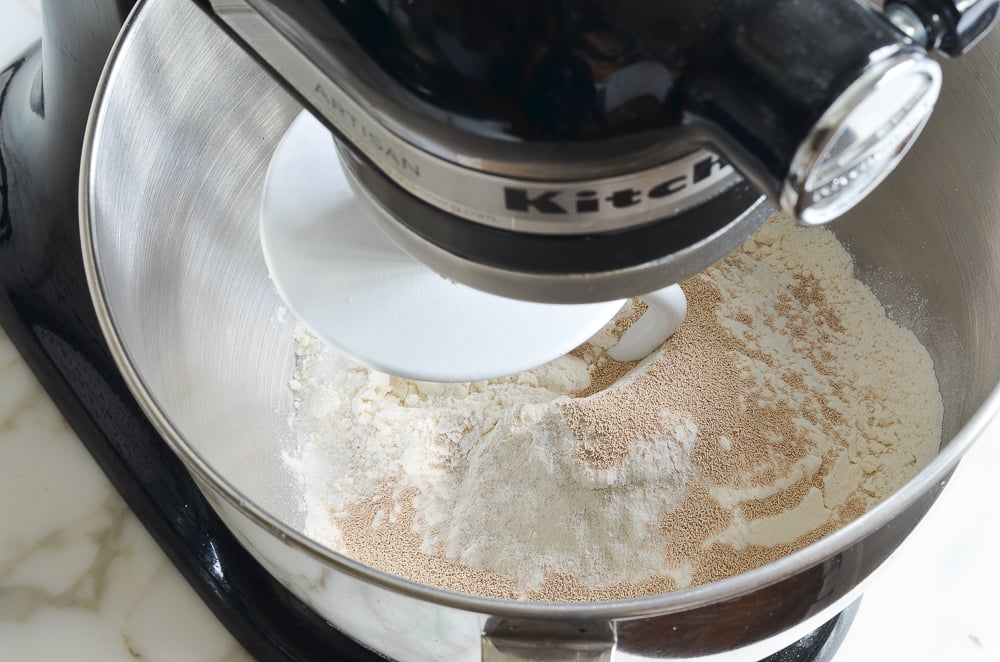
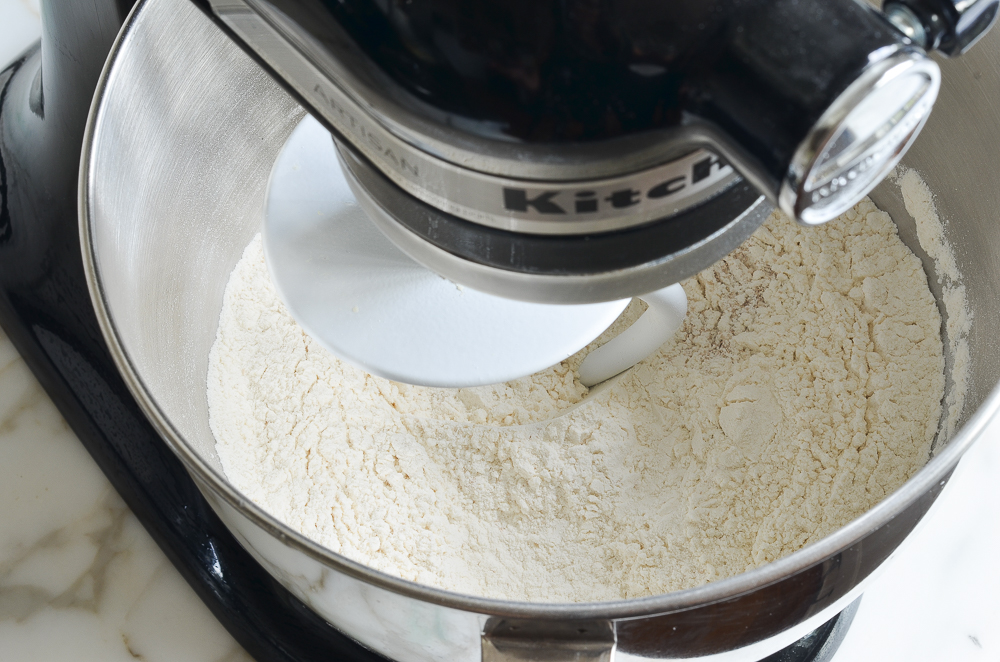
Step 2: Mix the dry ingredients. Combine the flour, yeast, and salt in the bowl of a stand mixer fitted with the dough hook.
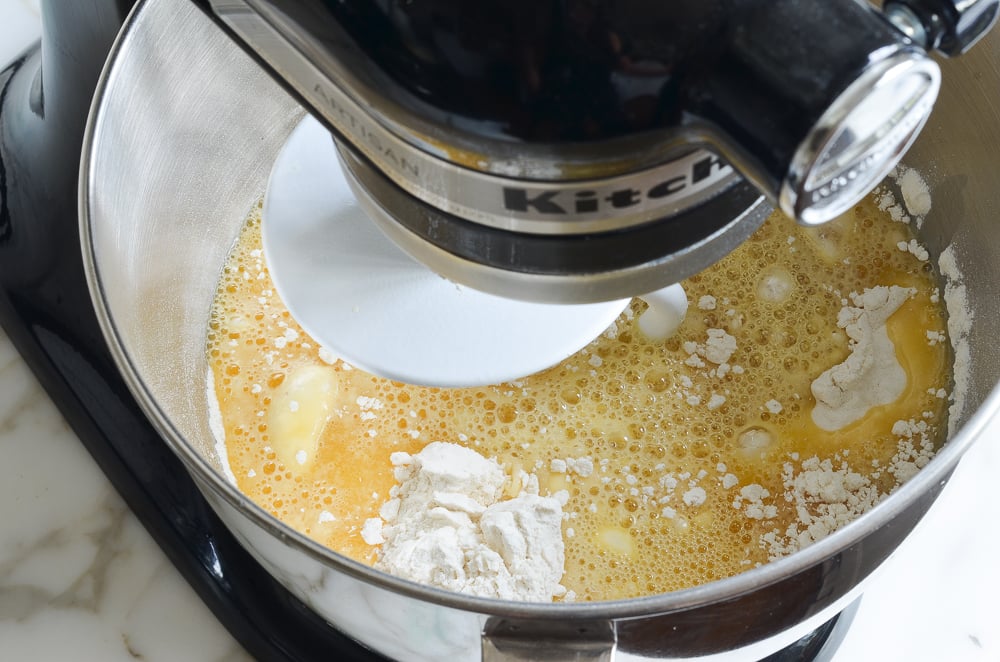
Step 3: Mix and knead the dough. Add the wet ingredients to the dry and knead on medium-low speed for 5 to 7 minutes. The finished dough should be smooth and elastic but still quite sticky—it will cling to the bottom of the bowl and may look wetter than you expect. Resist the urge to add more flour; that soft, sticky dough is what gives the challah its tender, pillowy texture.
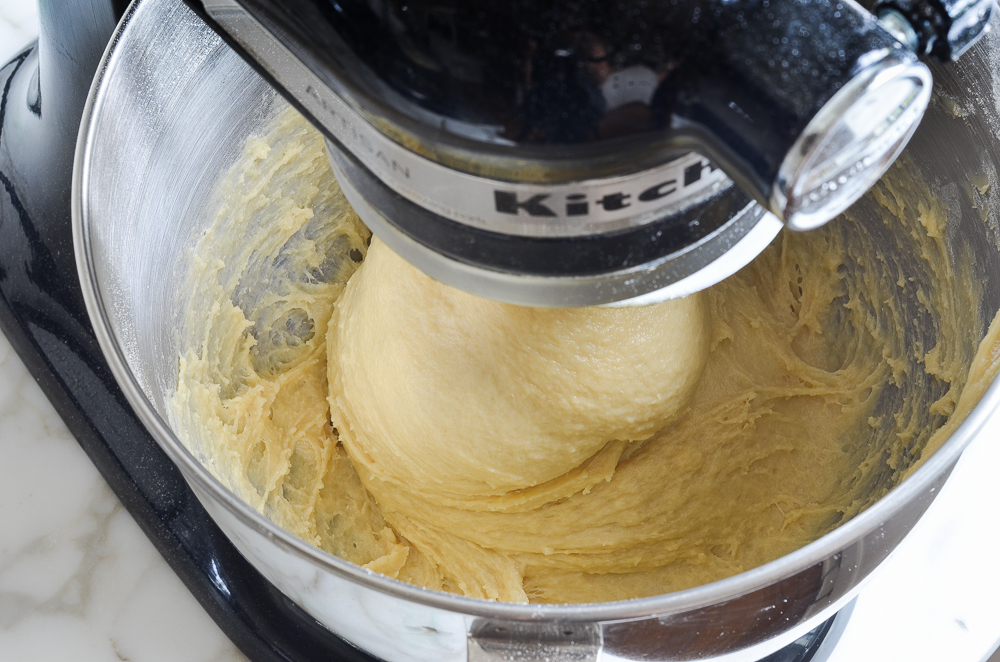
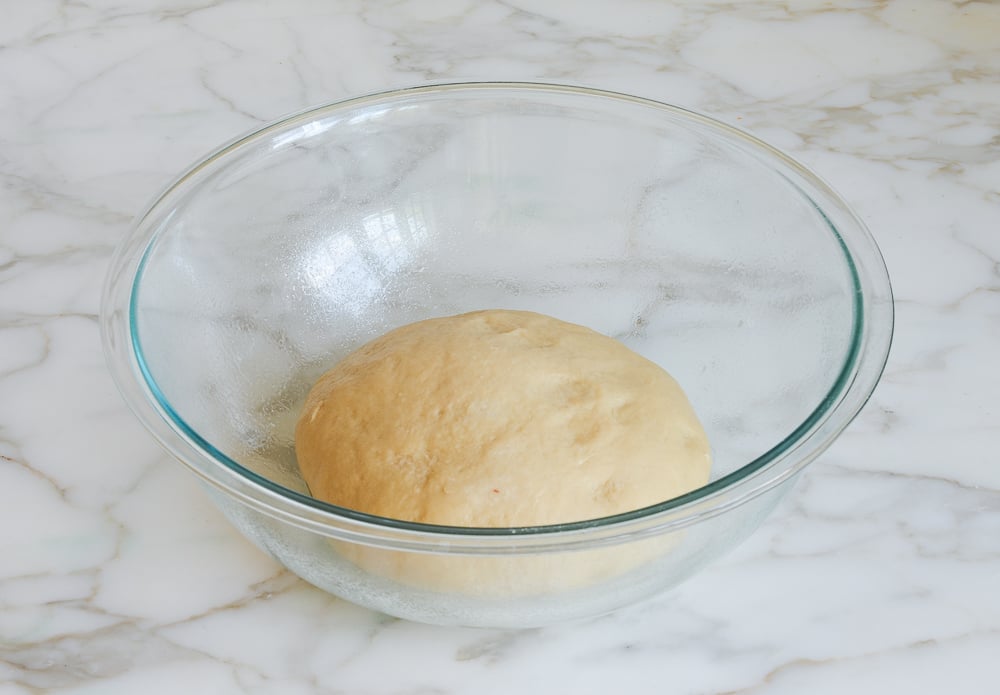
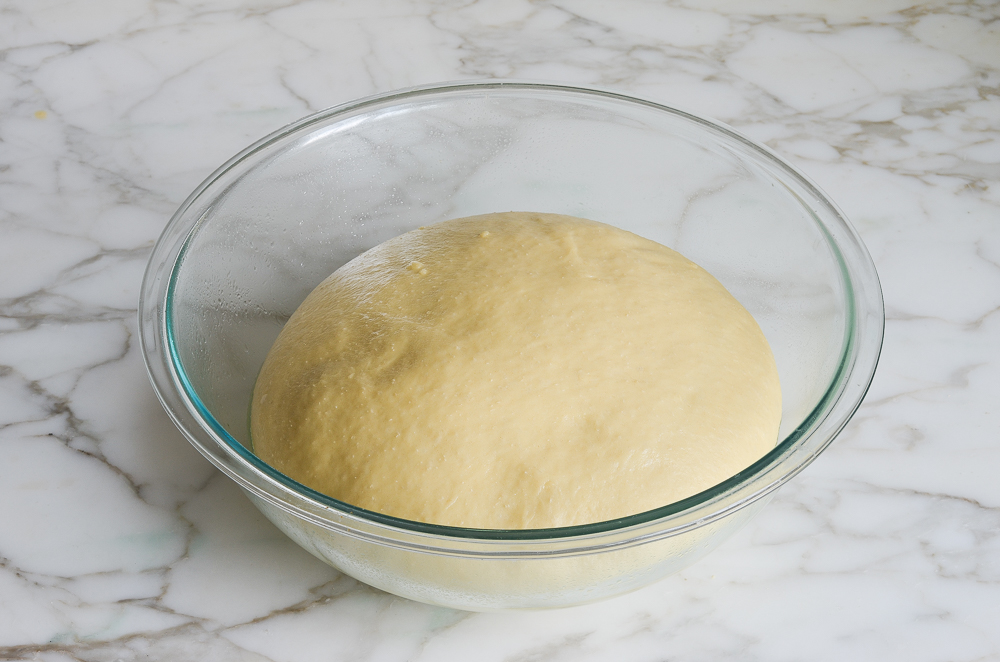
Step 3: Let the dough rise. Turn the dough out onto a lightly floured surface and knead briefly, adding just enough flour to form a soft, smooth ball. Place in a lightly greased bowl, cover, and let rise in a warm spot until doubled in size, 2 to 3 hours. Go by how the dough looks rather than the clock—a cool kitchen may take longer.
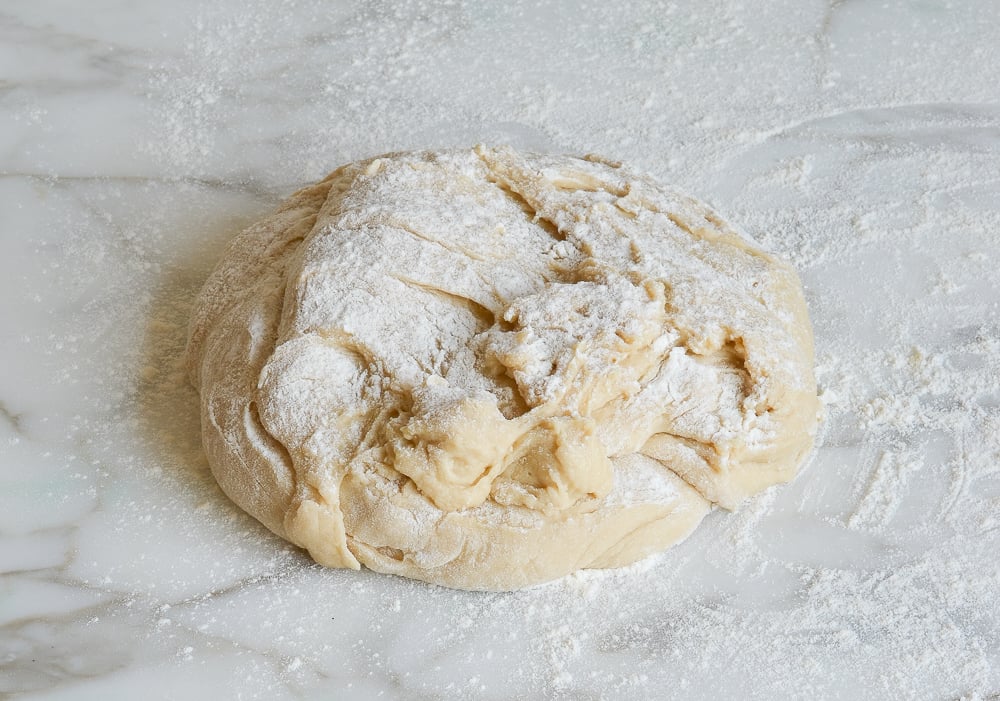
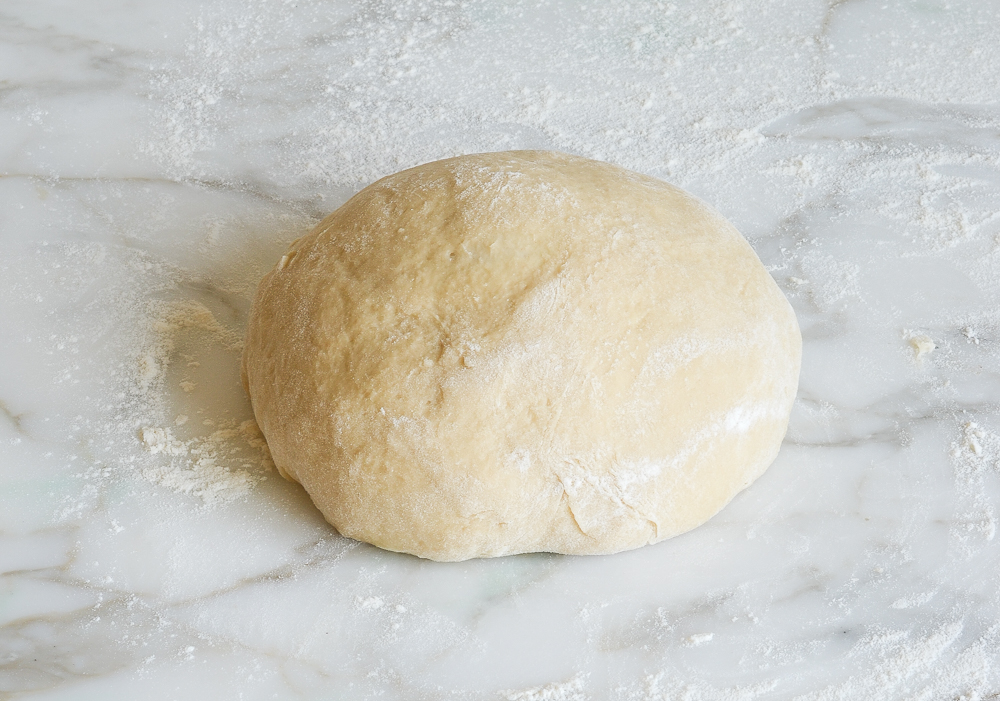
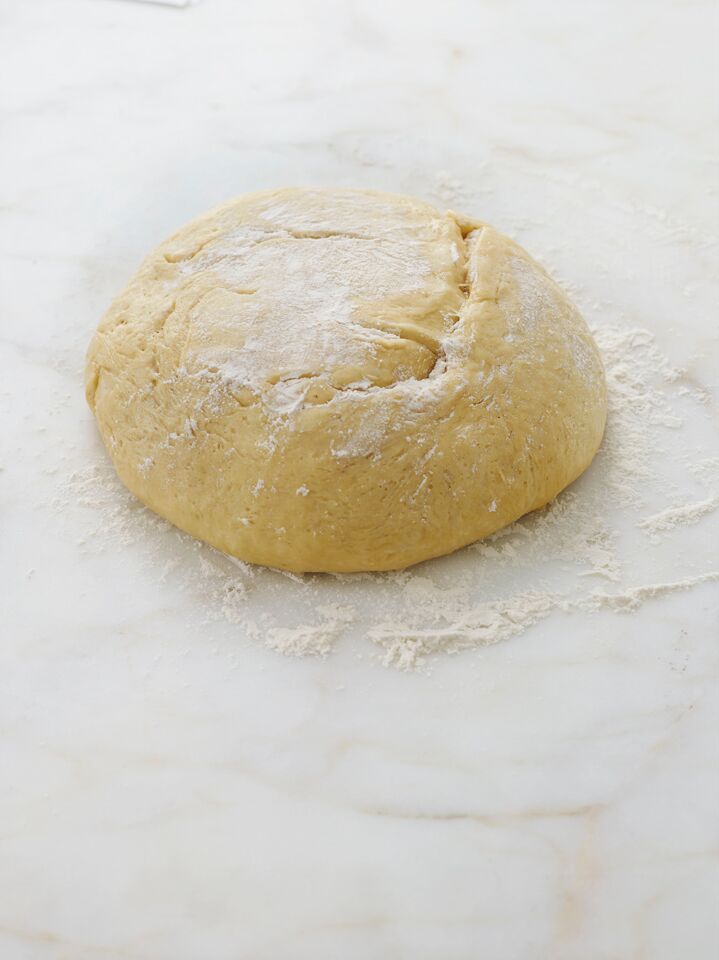
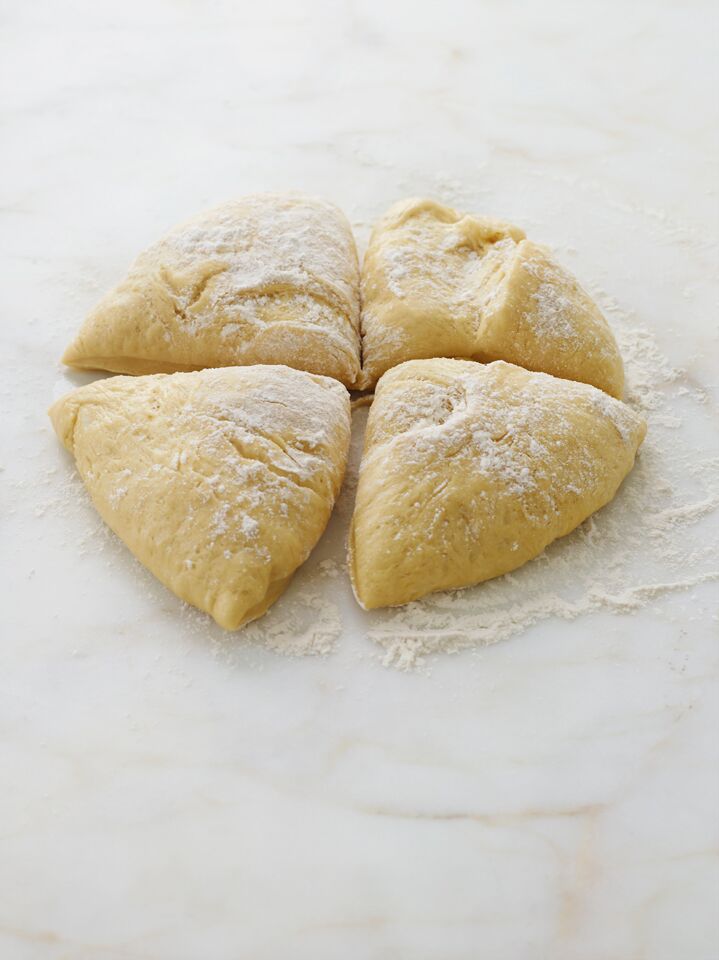
Step 4: Divide the dough. Turn the dough onto a lightly floured work surface and divide it into four equal pieces. For the most even-looking loaf, weigh the pieces; each should be about 9 ounces (255 grams).
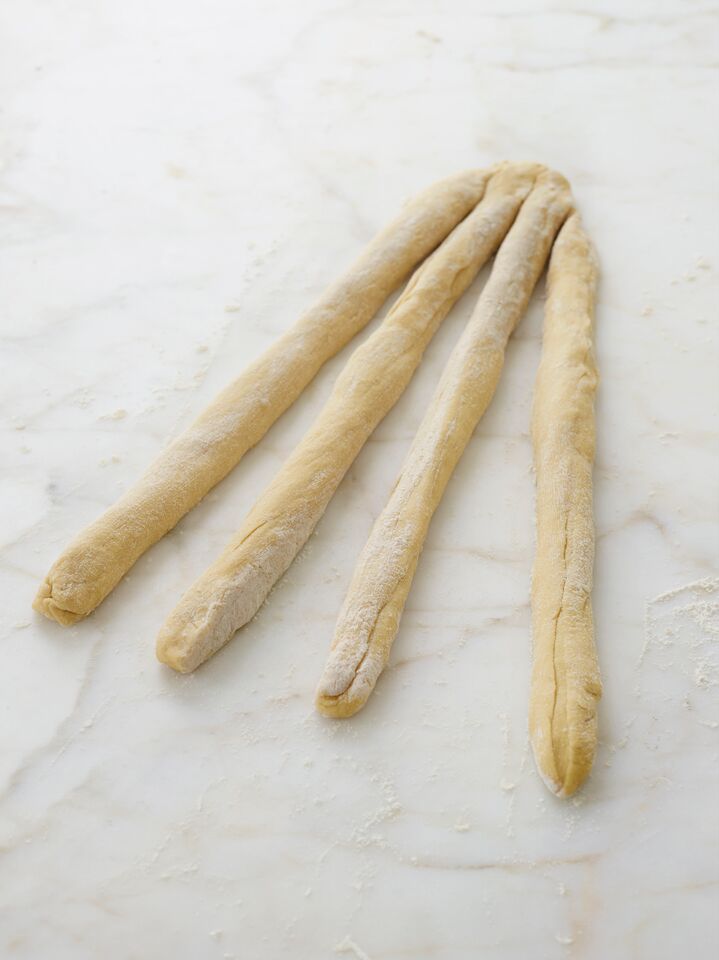
Step 5: Braid the challah. Roll each piece into a rope about 20 inches long. Arrange the four ropes vertically, side by side, and pinch them together at the top. Starting with the strand on the far right, weave it to the left using an over-under-over pattern. Repeat with the new strand on the far right, continuing until you reach the bottom. Pinch the ends together and tuck them underneath the loaf. Don’t worry about a perfect braid—it will smooth out as it rises and bakes.
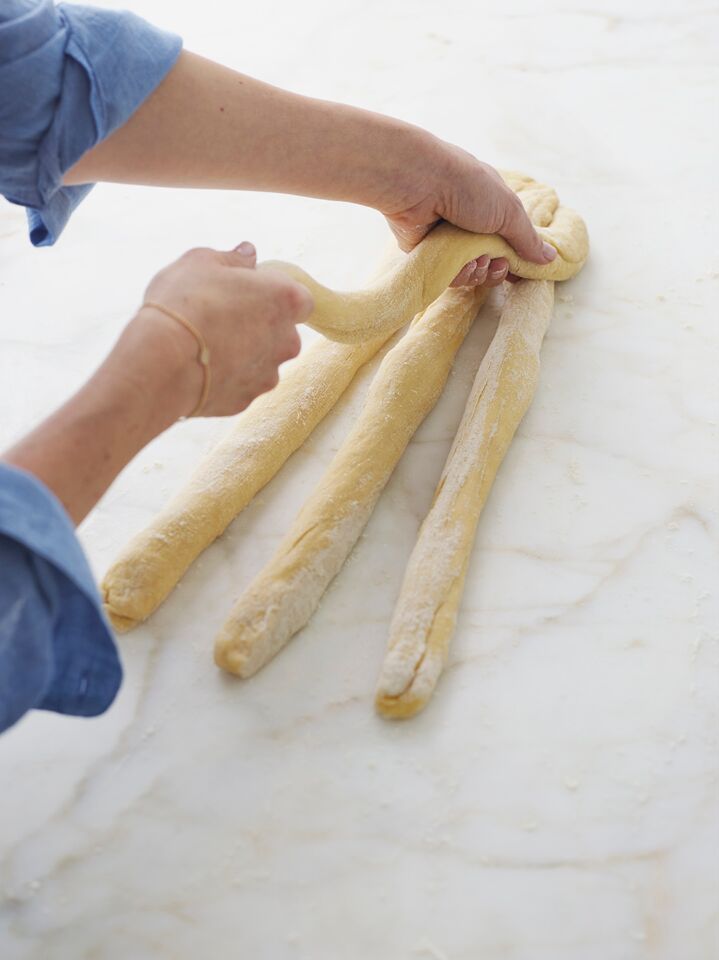
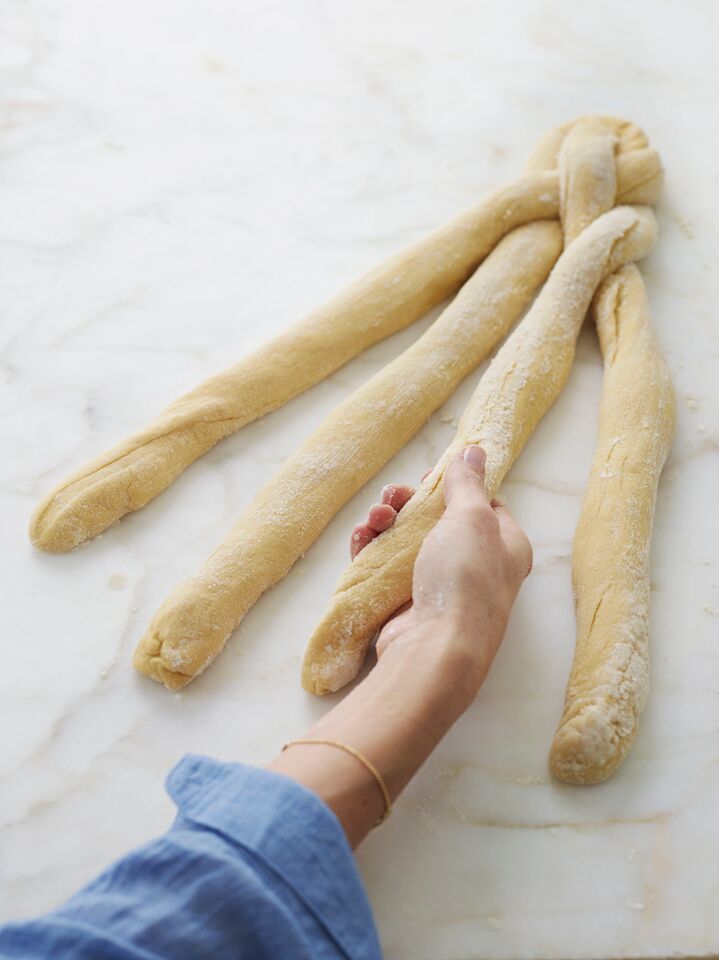
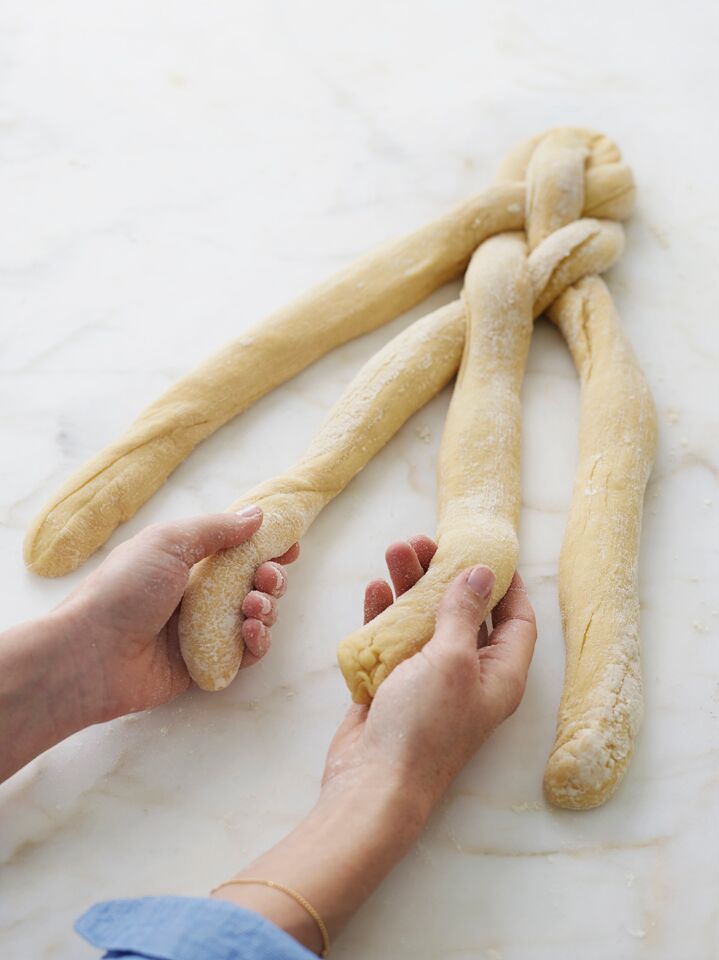
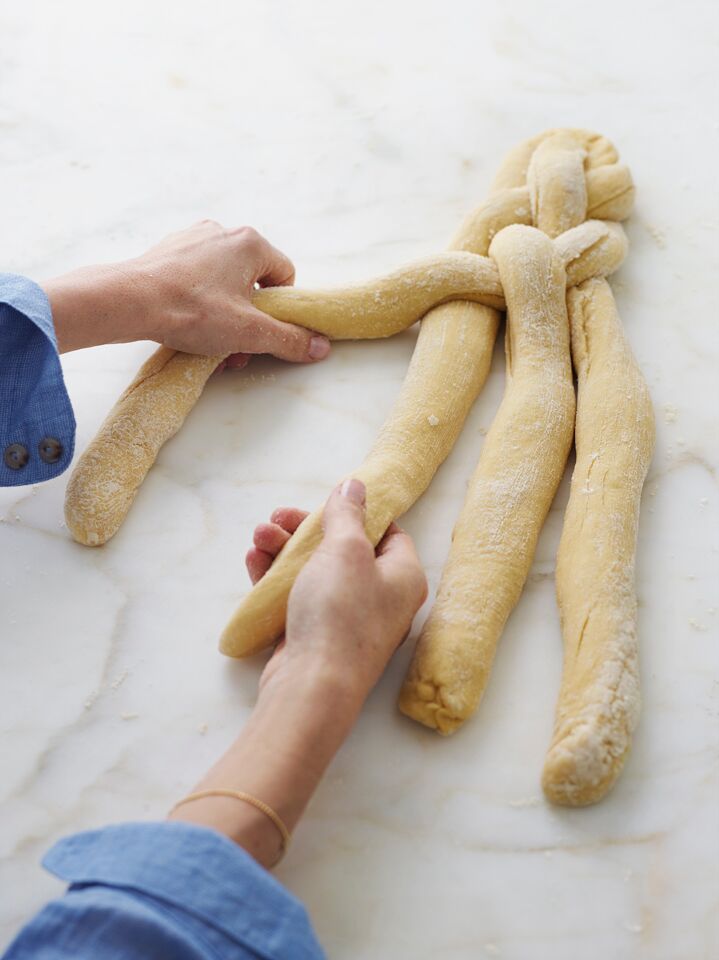
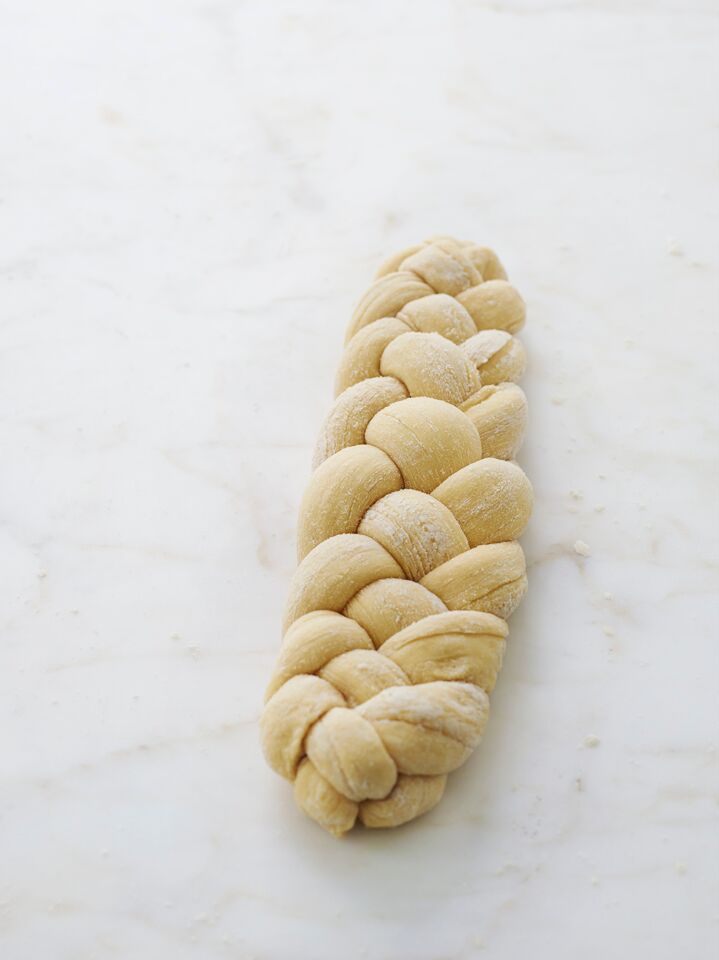
Step 6: Let rise and egg wash. Transfer the challah to a parchment-lined baking sheet, cover loosely, and let rise until noticeably puffy and about 1½ times its original size. Brush generously with beaten egg, making sure to get into the crevices of the braid. Sprinkle with sesame or poppy seeds, if desired.
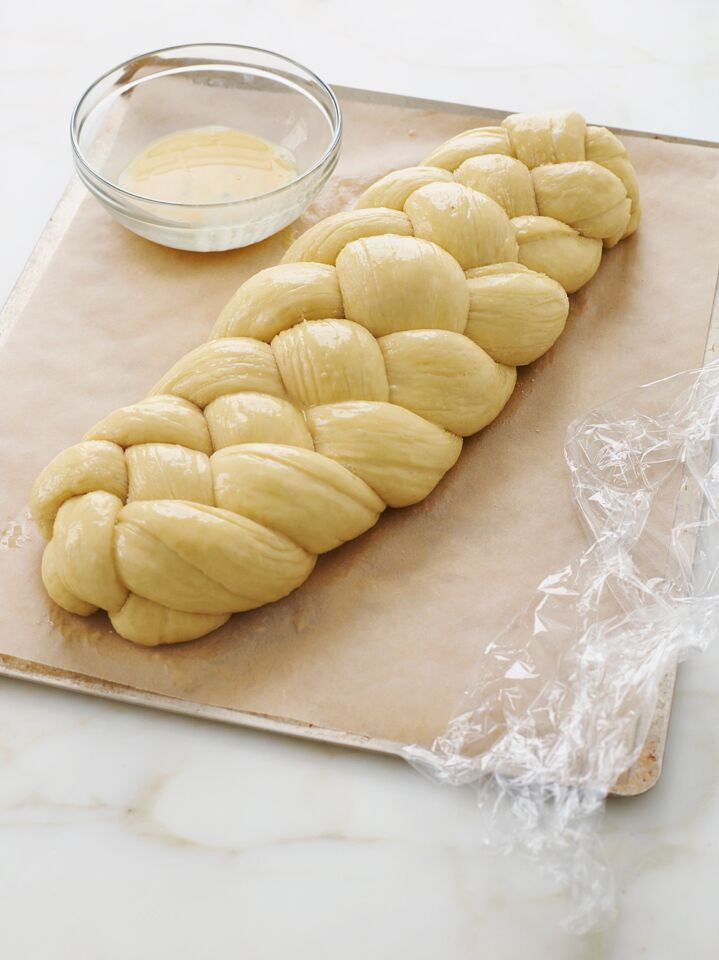
Step 7: Bake. Stack the baking sheet on top of a second baking sheet; the extra insulation helps keep the bottom from getting too dark. Bake until the challah is a rich golden brown and the center registers 190°F to 200°F on an instant-read thermometer. Transfer to a rack and let cool before slicing.
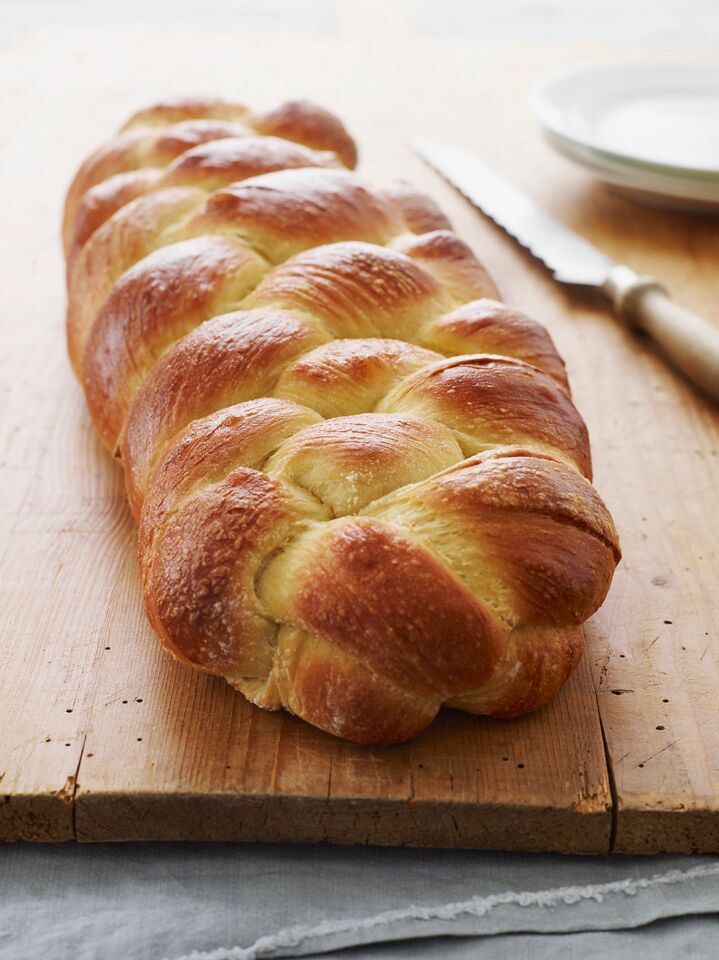
Challah keeps well at room temperature for a few days; freeze it for longer storage. If you’re making challah for a holiday meal, you’ll find plenty more inspiration in my collection of Jewish recipes, including brisket, crispy latkes, and apple cake.
More Homemade Breads You’ll Love
Homemade Challah
Ingredients
- 4¼ cups all-purpose flour, spooned into measuring cup and leveled-off, plus more for dusting
- 1 tablespoon instant/rapid-rise yeast (see note)
- 2 teaspoons salt
- ¾ cup lukewarm water
- ¼ cup + 2 tablespoons vegetable oil
- ¼ cup + 2 tablespoons honey
- 3 eggs, at room temperature
- 1 egg yolk, at room temperature
Instructions
- In a stand mixer fitted with the dough hook, combine the flour, yeast, and salt. Mix on low speed for 30 seconds to combine. In a separate bowl, combine the lukewarm water, oil, honey, 2 of the eggs, and the egg yolk. Add to the dry ingredients and knead on medium-low speed until you have a sticky dough that clings to the bottom of the bowl, 5 to 7 minutes. The dough may seem too wet but have faith—it’s supposed to be.
- Dust your hands generously with flour, then scrape the sticky, elastic dough out onto a lightly floured work surface. Dust the top of the dough lightly with flour and knead briefly into a soft, smooth ball. Lightly grease a large bowl with oil or nonstick cooking spray. Place the dough in the bowl, flip it over once so the top is lightly oiled, and then cover the bowl with plastic wrap. Allow the dough to rise in a warm, draft-free spot until it’s puffy and doubled in size, 2 to 3 hours.
- Invert the dough onto a lightly floured work surface and dust with flour. It will deflate. Cut the dough into four even 9-oz (255-g) pieces, and then stretch and roll each piece into a rope about 20 inches (50 cm) long. Lay the ropes parallel to one another (vertically). Pinch them tightly together at the top, and then fan them out. If the ropes shrink a bit, just work them back into their original length.
- Begin by taking the strand farthest to the right and weave it toward the left through the other strands using this pattern: over, under, over. Take the strand furthest to the right and repeat the weaving pattern again: over, under, over. Repeat this pattern, always starting with the strand farthest to the right, until the whole loaf is braided. Tuck the ends under to give the loaf a finished look.
- Carefully transfer the braided loaf to a parchment-lined 13 x 18-inch (33 x 46-cm) baking sheet. Cover the loaf loosely with plastic wrap and let it rise in a warm, draft-free spot until about 1.5 times the size, 1 to 2 hours. Toward the end of the rising time, preheat the oven to 350°F (175°C) and set an oven rack in the middle position. (Note that the loaf will continue to rise significantly in the oven.)
- In a small bowl, beat the remaining egg and brush the beaten egg generously over the risen dough. (Note: If you like, sprinkle poppy or sesame seeds onto the challah before putting it in the oven.) Place the baking sheet atop another baking sheet; this will prevent the bottom crust from browning too much. Bake for 25 to 35 minutes, until the crust is a rich brown color and the internal temperature is between 190°F and 200°F (88°C and 93°C) on an instant-read thermometer. Remove the bread from the oven and place it on a rack to cool. Challah is best enjoyed fresh, but leftovers will keep for a few days in a sealed plastic bag.
Notes
Nutrition Information
This website is written and produced for informational purposes only. I am not a certified nutritionist and the nutritional data on this site has not been evaluated or approved by a nutritionist or the Food and Drug Administration. Nutritional information is offered as a courtesy and should not be construed as a guarantee. The data is calculated through an online nutritional calculator, Edamam.com. Although I do my best to provide accurate nutritional information, these figures should be considered estimates only. Varying factors such as product types or brands purchased, natural fluctuations in fresh produce, and the way ingredients are processed change the effective nutritional information in any given recipe. Furthermore, different online calculators provide different results depending on their own nutrition fact sources and algorithms. To obtain the most accurate nutritional information in a given recipe, you should calculate the nutritional information with the actual ingredients used in your recipe, using your preferred nutrition calculator.
Love this challah. Made it for my family & they loved it. Light, fluffy & delicious.
Hi Jen! I made your challah tonight and it was PERFECT! I followed your directions exactly. Your recipes are always my “go to”. Thank you! I wish I could post a picture here but not sure how to do it.
would this recipe work with a different braiding technique? Like braiding 2/3 of the dough for the bottom of the loaf and then placing the remaining 1/3 braided on top? How would the baking time differ?
Sure, Sally, that will work. I don’t know how it will impact the baking time though, so keep a close eye on it. Enjoy!
Favorite challah recipe I’ve tried so far! I did have trouble with the dough not rising at first – might have just been too cold in my kitchen. I re-kneaded the dough a little then stuck it in a warm (but not turned on) oven with just the light on and it rose fine.
can you share how to make this recipe in a breadmaker? haven’t tried yet but excited.
Hi Rachel, I’ve never used a bread machine so I can’t say confidently whether or not this would be appropriate for one. Sorry I can’t be more helpful!
Hi, did you try the bread maker? i’m curious if i can make the dough on the dough setting in my bread maker.
sorry if this a duplicate question but I didn’t want to ready all 400 comments : )
recipe calls for 1 Tablespoon instant/rapid rise yeast, the little yeast packets are 2 1/4 teaspoons….the recipe will need 2 packets, one all and the other 3/4 of a teaspoon? I’m curious why you didn’t write the recipe to accommodate the way yeast is packaged or made note of 2 packets would be required..thanks
Hi Rifka, Thanks for pointing that out. You can also buy yeast in a jar or bag, but I will add a note to the recipe to indicate to readers that they will need more than one packet.
Hi Jenn,
I’m making this challah for the first time for Rosh. I’d like to make it a round raisin challah so my question is when do I add the raisins?
Also, the video link to how to make round raisin challah is awesome – thank you.
Depending on how the challah turns out I will probably never buy a store made one again. But based on all of your recipes that I’ve made through the years I know it will be great.
Hi Marilyn, I would add the raisins at the very end of the kneading process – just mix until they are evenly incorporated. Hope it turns out well!
I’ve made this challah five times. Each time it gets better.
I’ve learned that you’re right – using weight for flour instead of volume is the best thing I’ve learned in baking. Thank you.
I follow the recipe exactly. It’s the most perfect detailed bread recipe I’ve done in my ten years of baking yeast breads.
My kitchen is chilly so I proof in the oven. Turn it on to 350 and leave on just till it starts to feel warm and then turn it off. Leave the oven light on. Put dough in and wait.
So excited to make the challah for Rosh Hashanah family dinner for the second time! After trying many famous bakers’ recipes I’m grateful I found this last year.
Shanah Tovah
Jenn – I do not have a stand mixer with a dough hook. What are the initial instructions for mixing the dough by hand? Thanks.
Hi Priya, This is a pretty wet dough, so kneading by hand might be a bit challenging. I would mix the flour, yeast, and salt in a large bowl. In a separate bowl, combine the lukewarm water, oil, honey, 2 of the eggs, and the egg yolk. Add to the dry ingredients and use a wooden spoon to mix until you have a shaggy dough. I would then just knead by hand in the bowl for 5 to 7 minutes. Please LMK how it turns out if you try it!
Hi Jenn!
Can this recipe do well with a cold rise? Doing a cold rise is easier those that don’t want to wait until after work to start this task. Love all your recipes and looking forward to trying this one!
Shana Tova!
Sure, Tracey – that should be fine. Happy New Year!