

This post may contain affiliate links. Read my full disclosure policy.
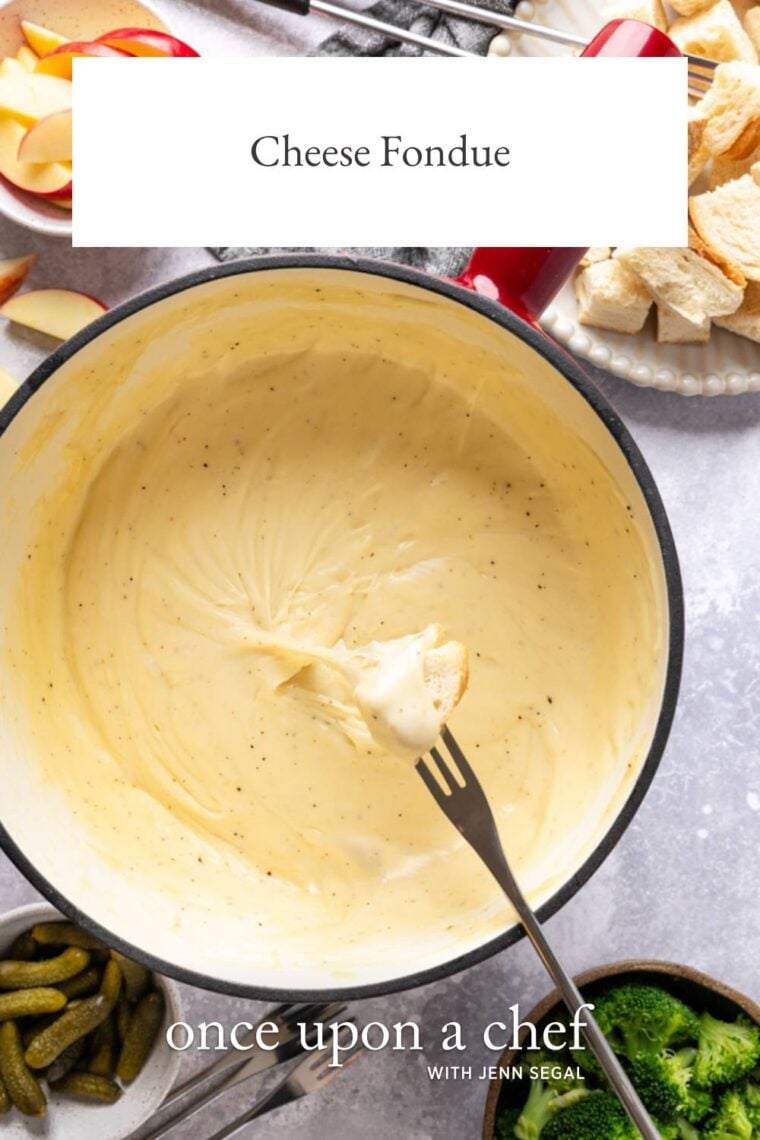
Warm, melty cheese with just the right balance of richness and bite—perfect for dipping crusty bread, veggies, and fruit. It’s simple to make and even more fun to eat.
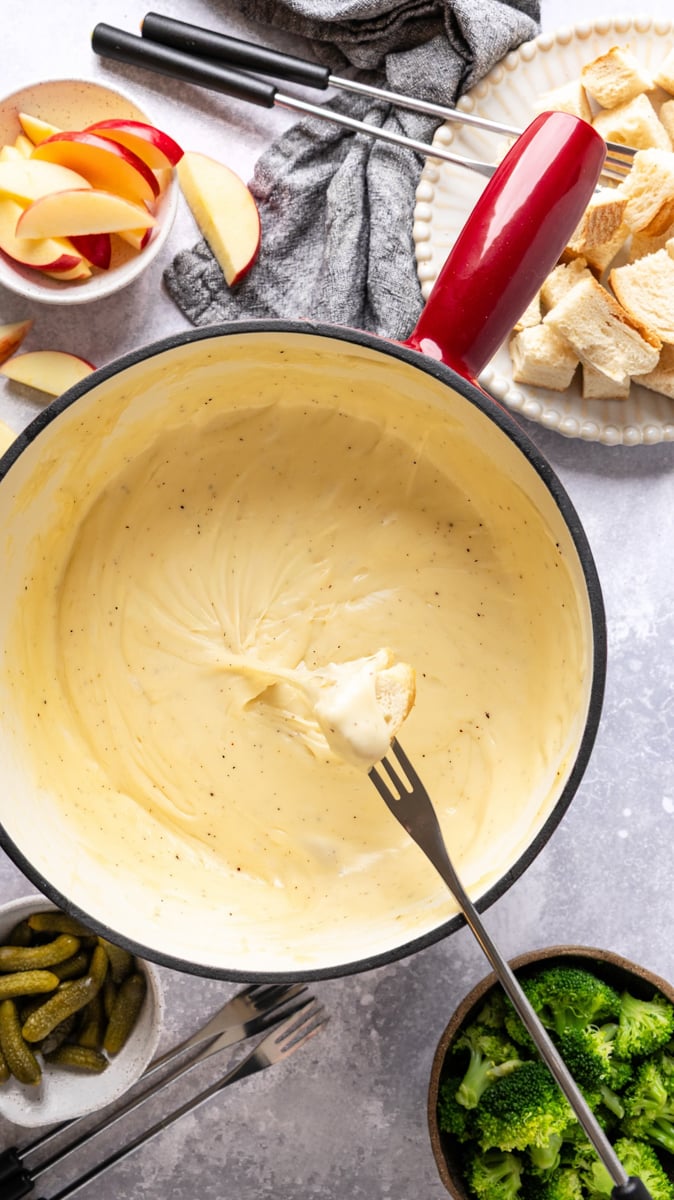
Cheese fondue has a way of turning an ordinary dinner into a little occasion. This classic Swiss dish is all about gathering around the pot, whether with friends, family, or for a cozy dinner for two. It’s comforting, a little retro, and surprisingly easy to make at home.
What You’ll Need To Make Cheese Fondue
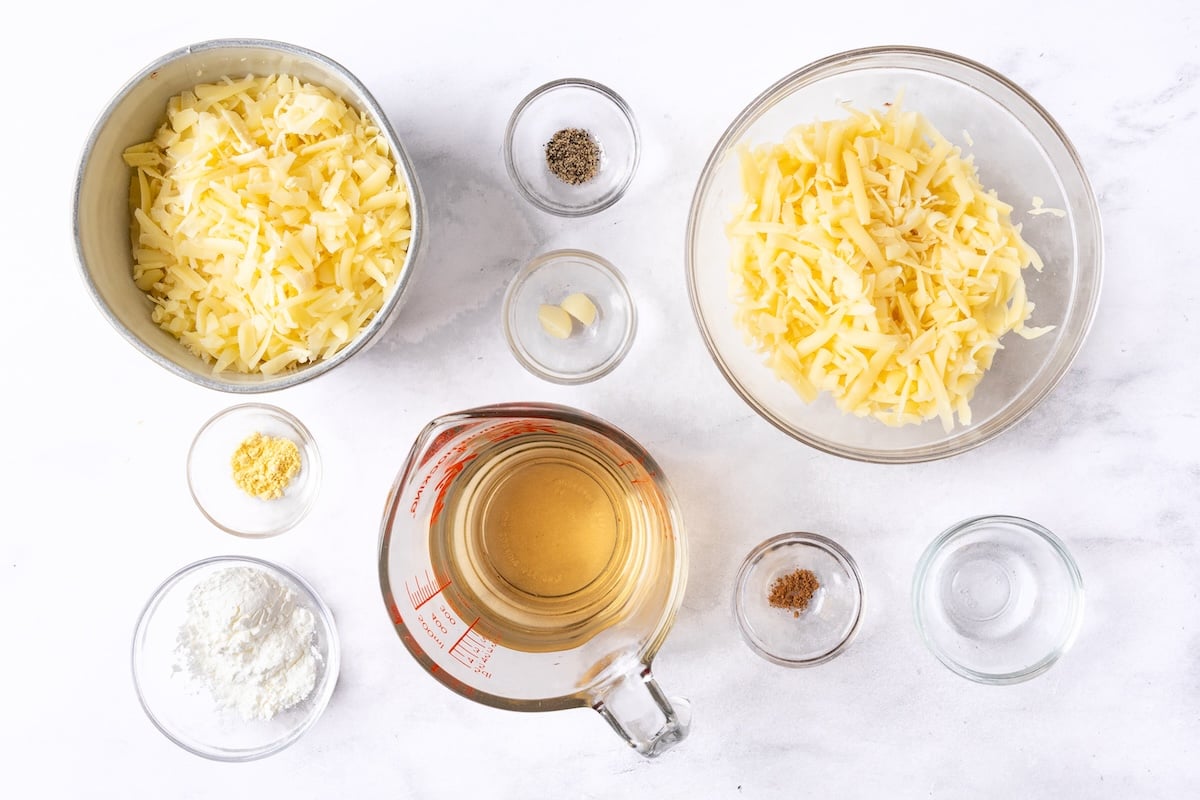
- Gruyère & Emmentaler Cheese: Using two cheeses gives fondue the ideal balance of flavor and texture. Gruyère adds rich, nutty depth, while Emmentaler is milder and melts beautifully for a smooth, velvety consistency. You can use all Gruyère (it’s delicious, just more intense), or substitute Jarlsberg or Fontina for the Emmentaler. Avoid generically labeled “Swiss cheese,” which doesn’t melt as well and can turn stringy.
- Cornstarch: Tossed with the cheese before heating, it keeps the fondue silky and stable, so it doesn’t separate as it melts.
- Wine, Kirsch & Garlic: The wine provides acidity to help the cheeses melt smoothly, kirsch (cherry brandy) adds that traditional Swiss flavor (totally optional), and the garlic infuses the liquid with a bit of savory flavor before being removed—subtle but important. No need to get anything pricy for the wine; use something inexpensive but good enough to drink.
- Dry Mustard, Black Pepper & Nutmeg: A small trio of seasoning that perks up the richness
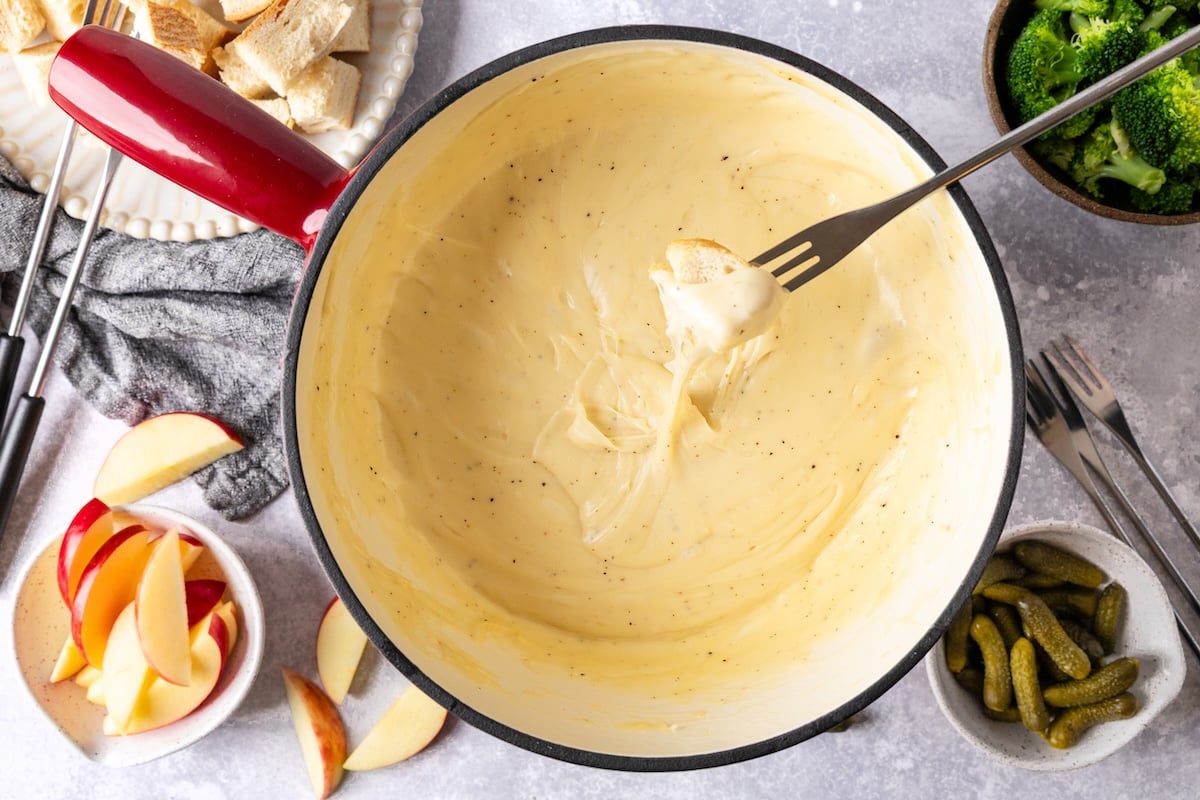
- Dippers: Choose your favorites—crusty bread is classic, but blanched veggies, apples, pears, potatoes, or sliced sausages all work beautifully for dipping.
- Jump to the printable recipe for precise measurements
Choosing the Right Fondue Pot
There are a few different types of fondue pots, and how you use them depends on the material. Enameled cast-iron pots (like Swissmar or Artestia) are stovetop-safe, so you can cook the fondue directly in the pot and then transfer it to the stand to keep warm.
Ceramic or stoneware pots, which are common in traditional fondue sets, are meant for serving only—the cheese should be prepared in a saucepan and then poured in.
Electric fondue sets (like Cuisinart) plug in and have adjustable heat, so you can both melt the cheese and keep it warm in the same pot—no stovetop needed.
If you don’t have a fondue set, you can simply make the fondue in a saucepan and serve it straight from the pot; just rewarm it occasionally over low heat to keep the cheese smooth and fluid.
Step-By-Step Instructions
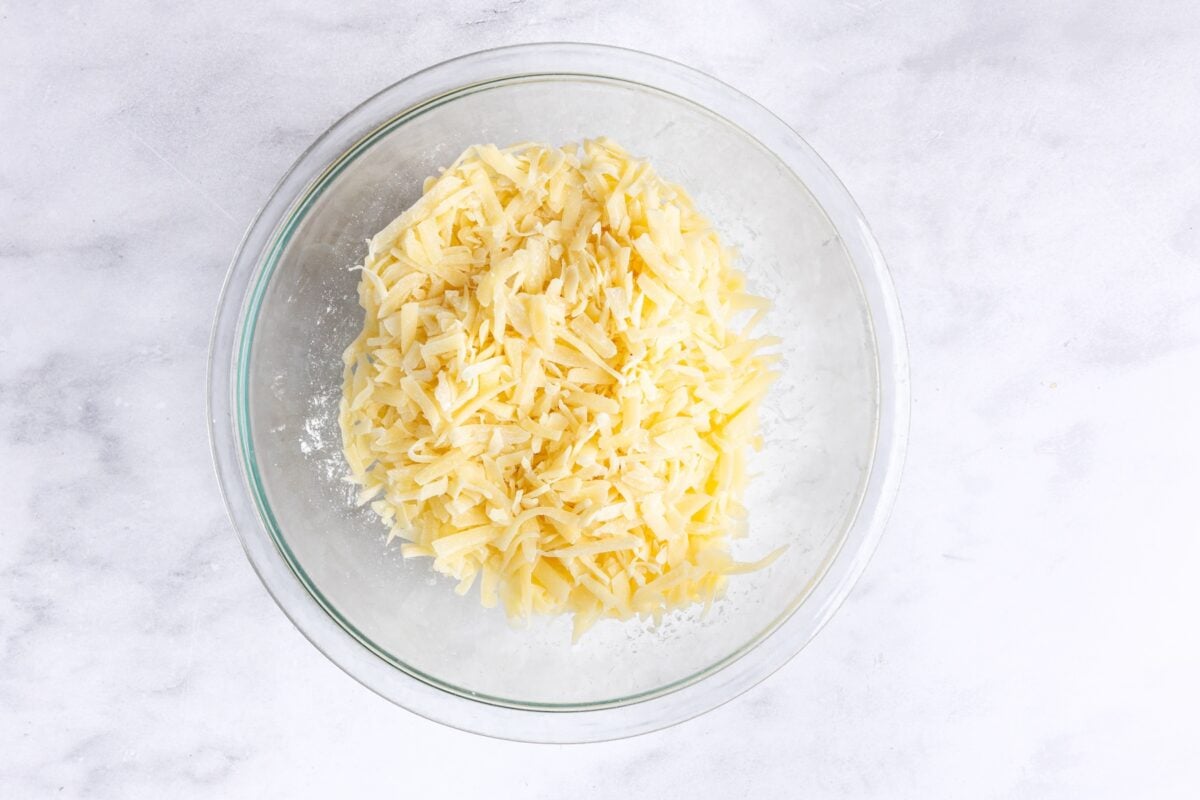
Step 1. Toss the cheese with cornstarch. In a large bowl, toss the Gruyère and Emmentaler with the cornstarch until evenly coated.
Pro Tip: Feel free to pop your cheese in the freezer for 10 minutes before grating. This makes it a bit firmer and helps prevent it from gumming up the grater.
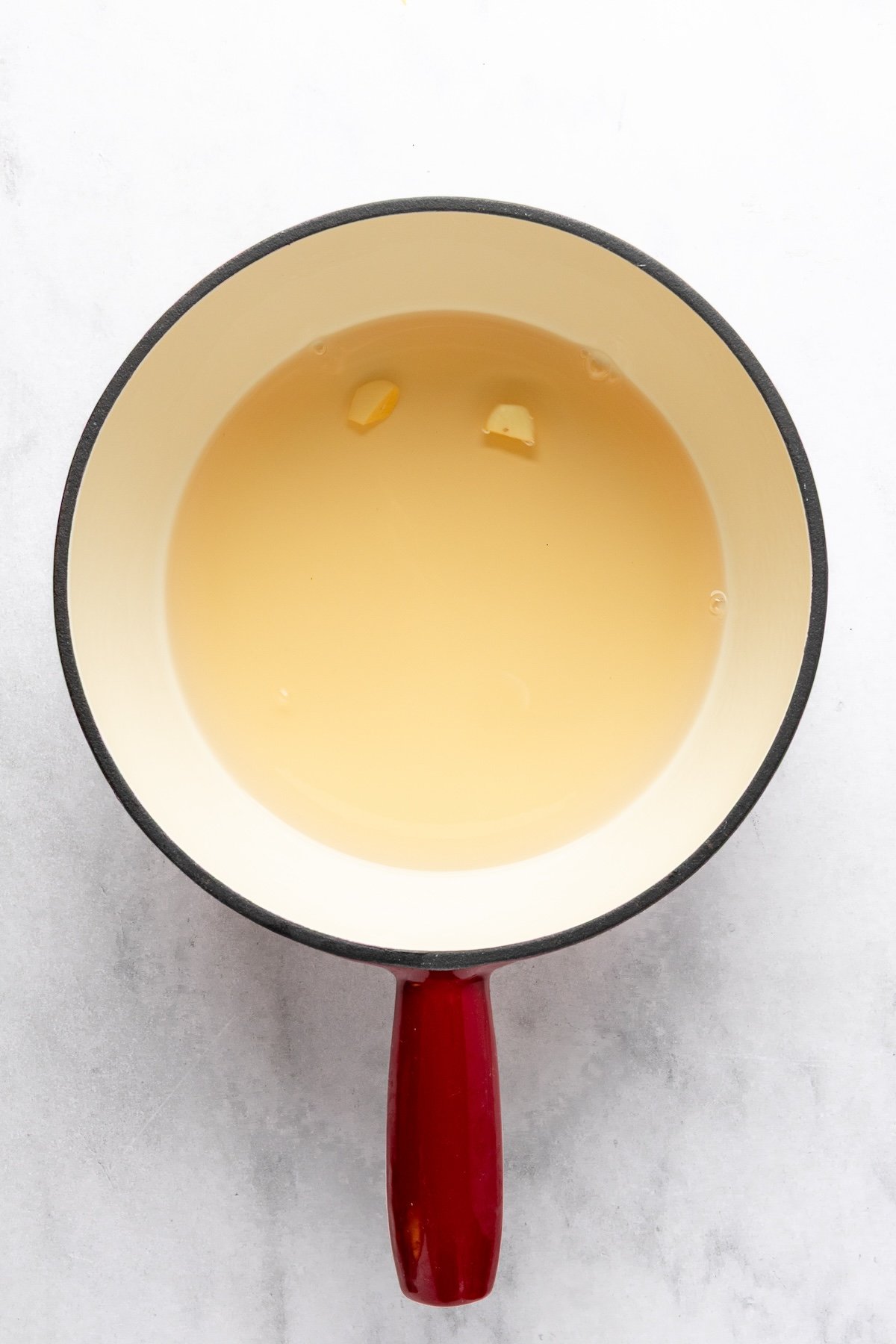
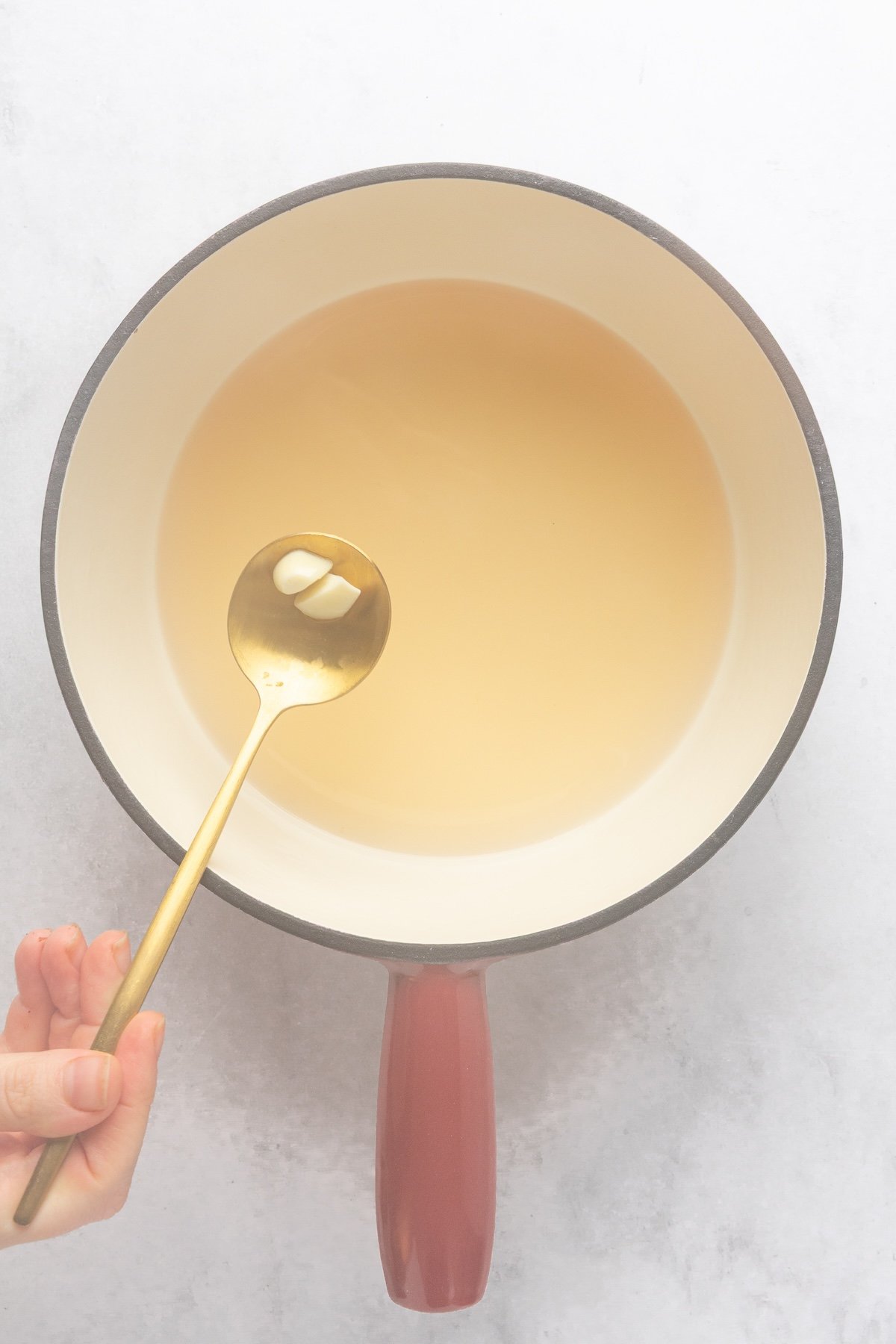
Step 2. Heat the wine mixture. Over high heat, bring the wine, kirsch (if using), and garlic to a boil in a fondue pot or heavy medium saucepan—enameled cast iron works best, but stainless steel is fine too. Once boiling, remove and discard the garlic.
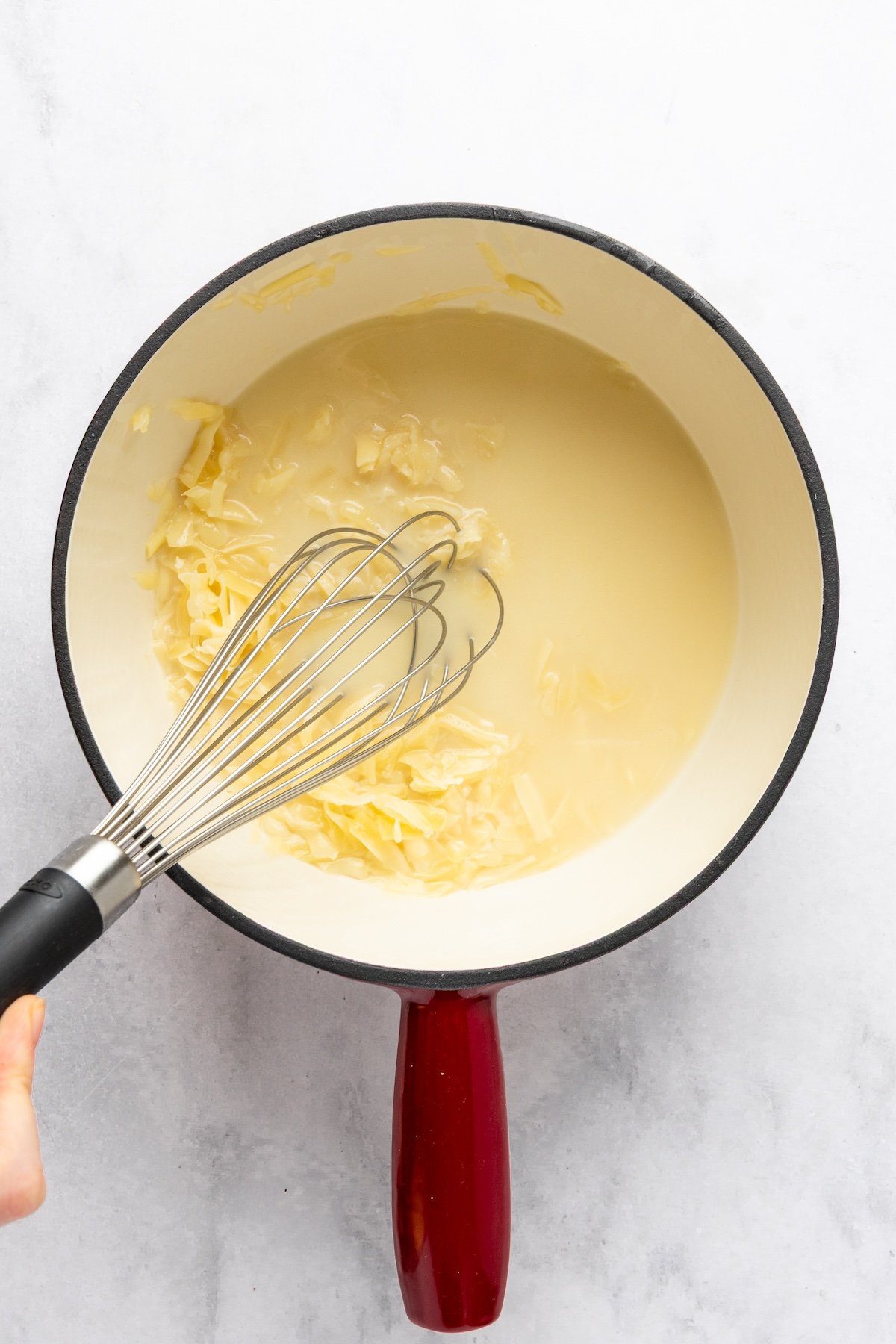
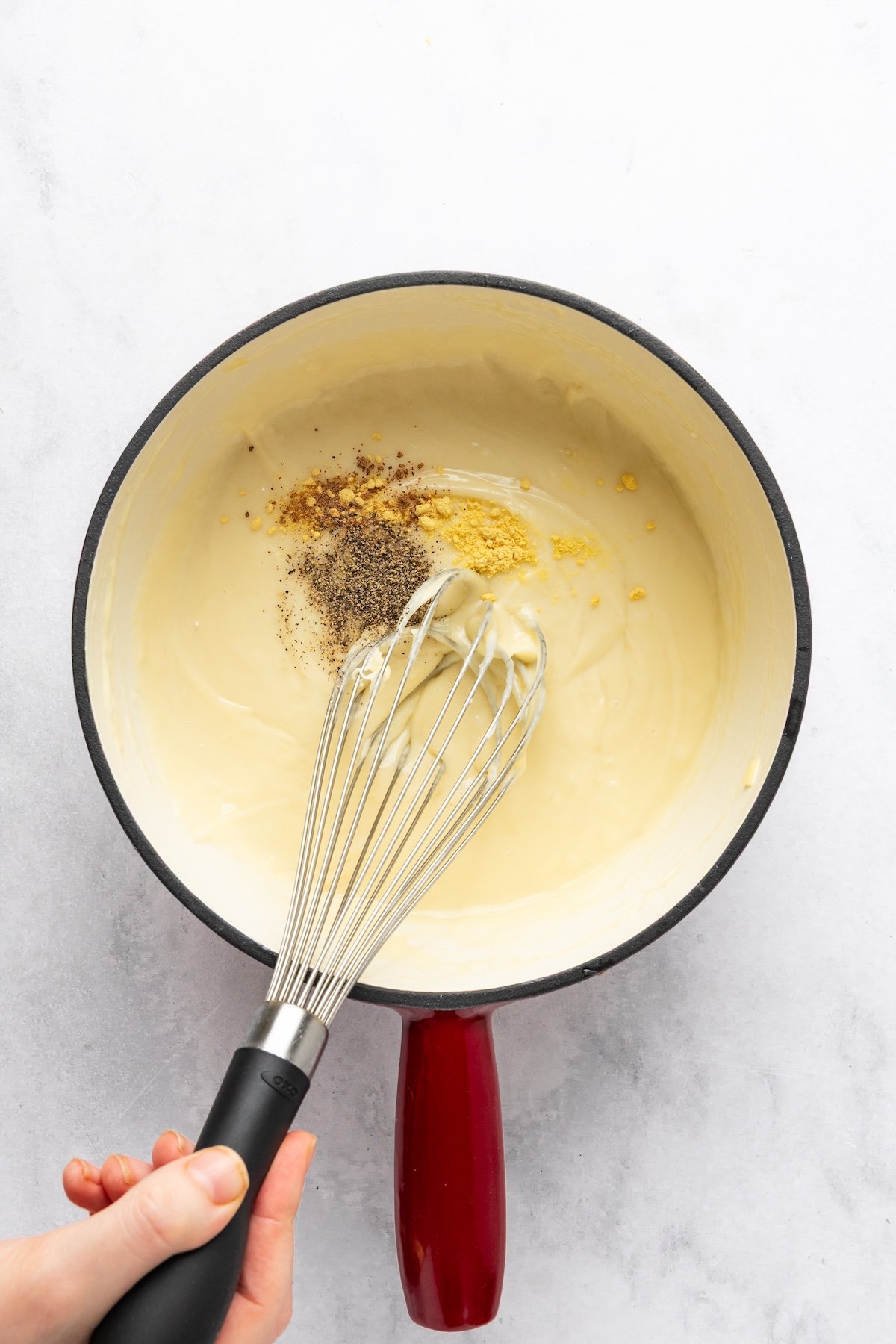
Step 3. Melt the cheese. Reduce the heat to medium-low so the liquid stays hot but not boiling. Whisk in the cheese mixture a handful at a time, adding more once the previous addition is mostly melted. Keep whisking until smooth and gently bubbling, then stir in the dry mustard, pepper, and nutmeg.
Pro Tip: Adding the cheese a handful at a time gives it time to fully melt and bind with the wine before the next addition. If you dump it all in at once, it can seize or turn grainy.
Step 4. Serve and stir. Transfer the pot to its stand over a very low flame, just enough to keep the fondue warm and fluid. Stir occasionally and remind guests to stir in a figure-eight motion as they dip—this keeps the fondue smooth and prevents sticking. Handle the hot pot carefully and keep potholders nearby.
Pro Tip: No fondue pot? Just serve it straight from the saucepan. If it starts to thicken, set it over the lowest heat to loosen it up, stirring occasionally, or whisk in a splash of warm wine to bring it back to a silky texture.
More Retro Appetizers you’ll Love




Cheese Fondue
Ingredients
- 8 oz Gruyère cheese, shredded (2 cups)
- 8 oz Emmentaler cheese, shredded (2 cups)
- 2 tablespoons cornstarch
- 1¼ cups dry white wine (such as Sauvignon Blanc)
- 1 tablespoon kirsch (cherry brandy), optional but traditional
- 1 clove garlic, peeled and halved
- ½ teaspoon dry mustard
- ¼ teaspoon freshly ground black pepper
- Pinch ground nutmeg
- Cubed crusty bread, blanched cauliflower or broccoli, apple or pear slices, small boiled potatoes, or sliced sausages, for serving
Instructions
- In a large bowl, toss the Gruyère and Emmentaler with cornstarch until evenly coated.
- In an enameled cast-iron fondue pot or a heavy medium saucepan, bring the wine, kirsch (if using), and garlic to a boil over medium-high heat. Remove and discard the garlic.
- Reduce the heat to medium-low (the liquid should be hot but not boiling). Whisk in the cheese mixture a handful at a time, adding the next handful once the previous one is mostly melted and incorporated. Continue whisking until all the cheese is added and the mixture is smooth and gently bubbling, a few minutes. Stir in the dry mustard, pepper, and nutmeg.
- If using a fondue pot, transfer to its stand and set it over a low, gentle flame—just enough to keep the cheese warm and fluid, not bubbling. If you made the fondue in a saucepan, pour it into the fondue pot and set it over the flame to keep warm, or serve it straight from the saucepan (see note).
- Stir occasionally and encourage guests to stir in a figure-eight motion as they dip; this helps maintain a smooth texture and prevents the cheese from sticking or scorching on the bottom. Just remember: the pot (or pan) will stay hot, so handle with care and keep potholders nearby.
Notes
- If using an electric fondue set, make the fondue directly in the pot and reduce the heat to low to keep it warm for serving.
- No fondue set? Serve the fondue directly from the saucepan. As needed, return the pan to the stovetop over the lowest possible heat, stirring occasionally to keep the cheese smooth. If it starts to thicken, gently rewarm it or whisk in a splash of warm wine to loosen.
- The nutritional information only includes the fondue itself—not the dippers.
- Reheating Instructions: Fondue is best enjoyed right away, but leftovers can be reheated. Transfer the fondue to a small, heavy-bottomed saucepan and add a splash of white wine, milk, or cream to loosen it. Warm over low heat, whisking constantly, until smooth and hot. If it starts to look too thin, whisk in a small handful of grated cheese to bring it back together.
Nutrition Information
This website is written and produced for informational purposes only. I am not a certified nutritionist and the nutritional data on this site has not been evaluated or approved by a nutritionist or the Food and Drug Administration. Nutritional information is offered as a courtesy and should not be construed as a guarantee. The data is calculated through an online nutritional calculator, Edamam.com. Although I do my best to provide accurate nutritional information, these figures should be considered estimates only. Varying factors such as product types or brands purchased, natural fluctuations in fresh produce, and the way ingredients are processed change the effective nutritional information in any given recipe. Furthermore, different online calculators provide different results depending on their own nutrition fact sources and algorithms. To obtain the most accurate nutritional information in a given recipe, you should calculate the nutritional information with the actual ingredients used in your recipe, using your preferred nutrition calculator.
Gluten-Free Adaptable Note
To the best of my knowledge, all of the ingredients used in this recipe are gluten-free or widely available in gluten-free versions. There is hidden gluten in many foods; if you’re following a gluten-free diet or cooking for someone with gluten allergies, always read the labels of your ingredients to verify that they are gluten-free.
I followed directions and used excellent quality cheese. I thought the consistency was perfect but that the flavor was a bit flat. I’m not sure how to improve on this. I used sauvignon blanc and kirsch. Next time I’ll use all gruyere.