
Homemade Naan

This post may contain affiliate links. Read my full disclosure policy.
There’s nothing quite like warm, homemade naan straight from the skillet. Soft, chewy, and blistered in all the right places, it’s the perfect companion to curries, soups, or anything with lots of sauce to soak up.
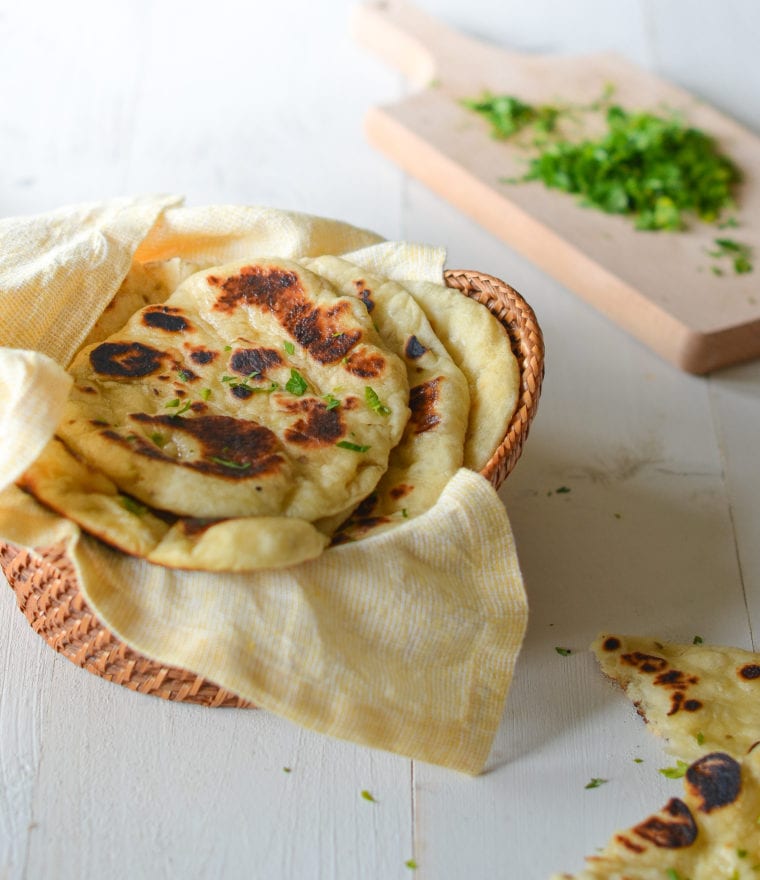
Naan is a pillowy flatbread traditionally baked in a tandoor, a cylindrical clay or metal oven used in kitchens across the Indian subcontinent, the Middle East, and Central Asia. These ovens get scorching hot and give food that signature smoky flavor. The naan dough is rolled out and slapped onto the tandoor’s inner walls, where it sticks and cooks fast over open flames. Once it’s done, it gets brushed with melted butter. In this homemade naan recipe, I replicate the process using a hot skillet—and the results are just as soft, chewy, and delicious.
Aside from the rising time, this easy naan recipe is quick to make, and it’s far superior to anything you’ll find at the store. Pair it with saucy dishes like chicken curry, butter chicken, or chicken tikka masala.
“My search for the perfect naan bread is over—this recipe is the best!”
What You’ll Need To Make Homemade Naan
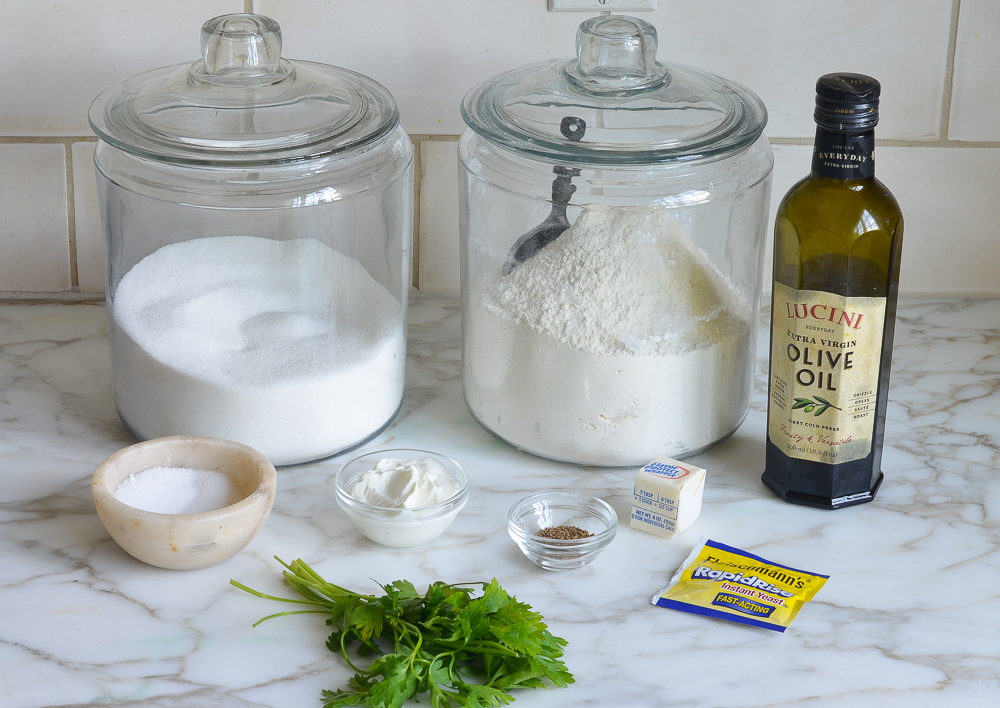
- All-purpose flour: The base of the dough. For best results, spoon it into your measuring cup and level it off.
- Sugar and salt: Sugar adds a touch of sweetness and helps activate the yeast, while salt brings out the flavor.
- Instant or rapid-rise yeast: Makes the dough rise quickly and gives naan its fluffy texture. You can use active dry yeast instead—just allow a little extra time for rising.
- Warm water, plain yogurt, and olive oil: These bring the dough together and keep it soft, tender, and easy to work with.
- Anise seeds (optional): Add a subtle licorice note. Or swap in nigella, poppy, or sesame seeds—or skip them entirely.
- Melted salted butter: Brushed on after cooking for that buttery finish everyone loves.
- Chopped parsley (optional): Adds color and freshness. Use cilantro if you prefer, or add minced garlic for a garlic naan variation.
- Jump to the printable recipe for precise measurements
Step-by-Step Instructions
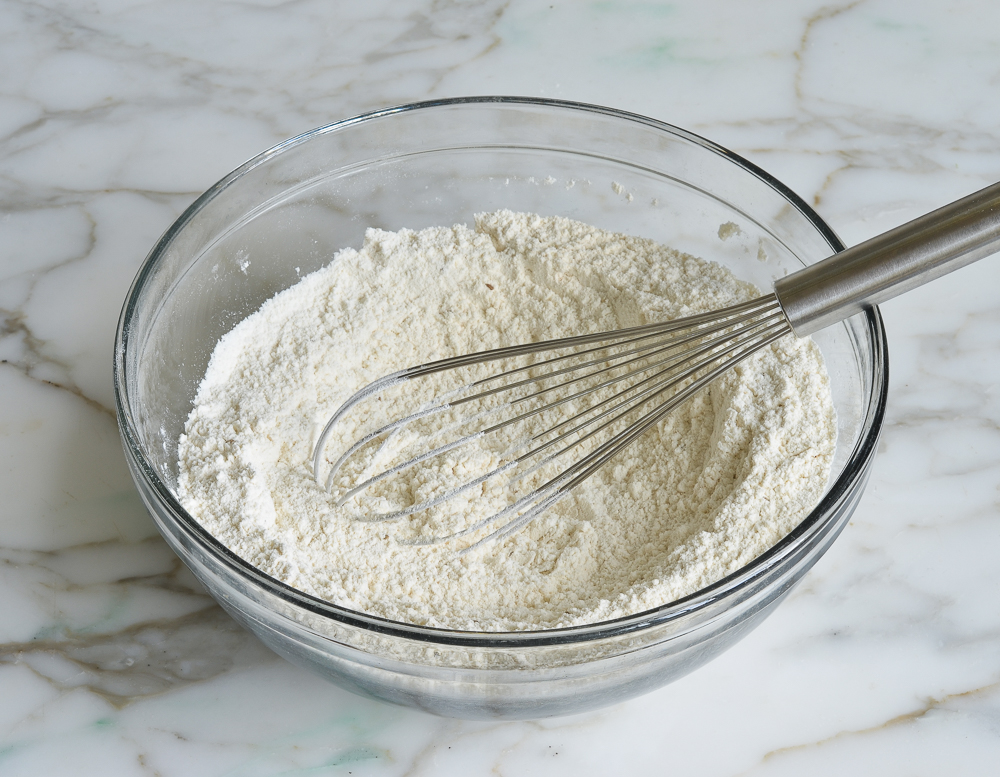
Step 1: Mix the dry ingredients. In a large bowl, whisk together the flour, yeast, sugar, anise seeds, and salt.
Step 2: Add the wet ingredients. In a separate bowl, whisk the yogurt, olive oil, and warm water, then pour into the dry ingredients.
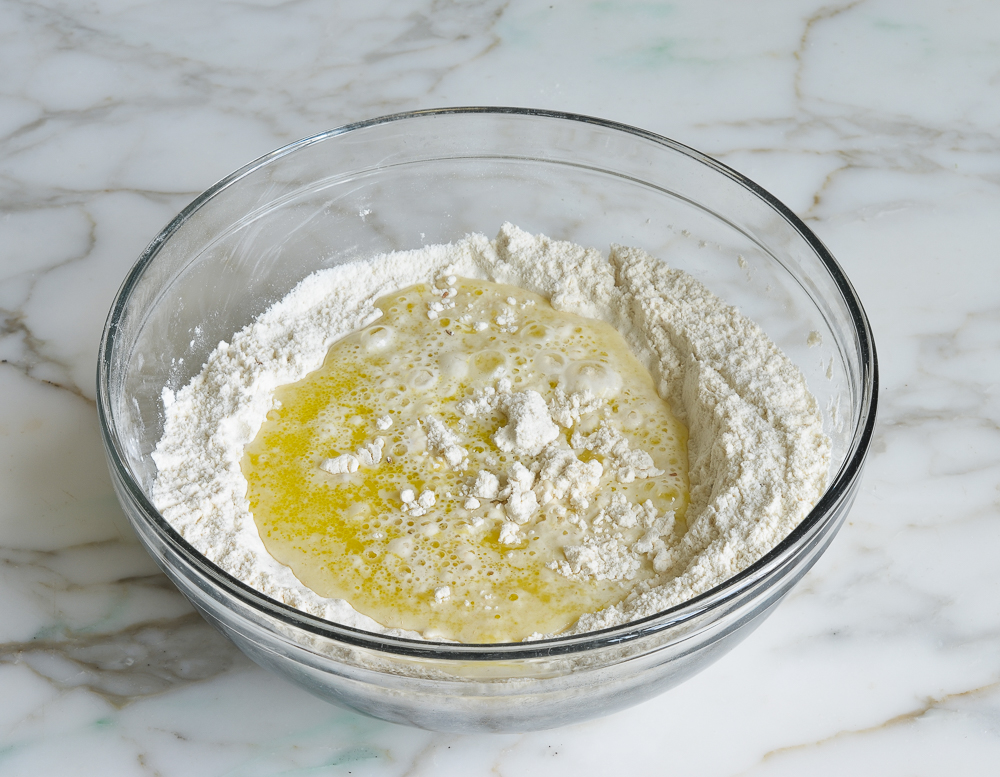
Step 3: Stir. Stir with a fork until the dough starts to come together.
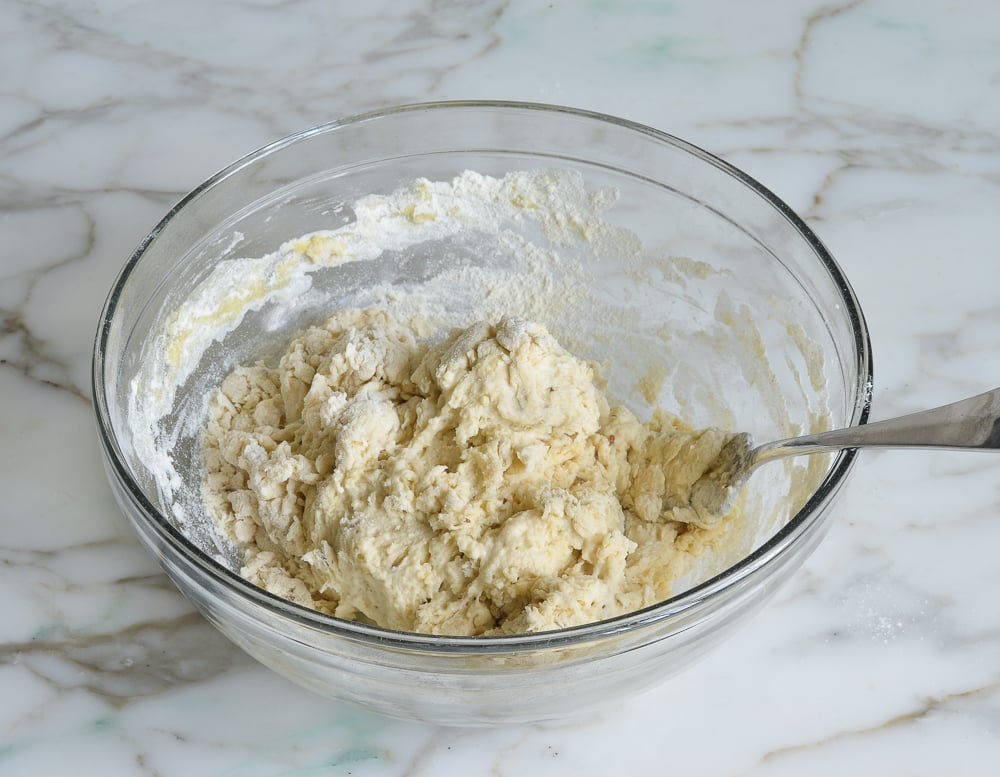
Step 4: Knead. Dust your hands with flour and knead into a soft, sticky ball, then cover with plastic wrap.
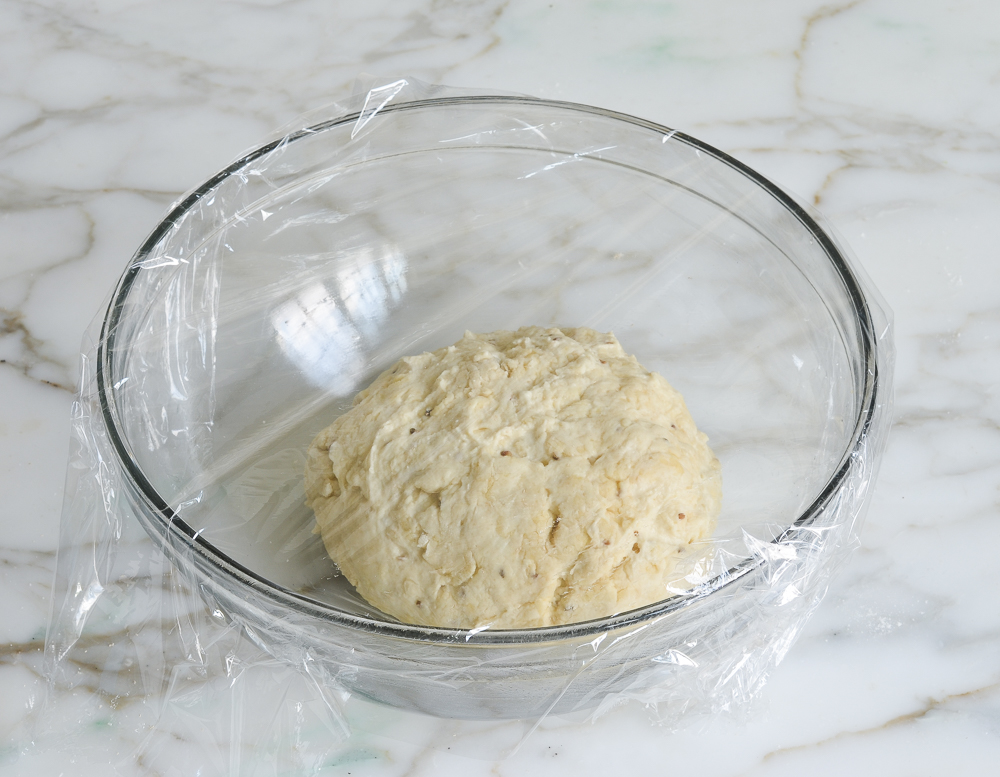
Step 5: Let it rise. Let the dough rise in a warm spot until it’s about doubled in size, 1 to 1½ hours. (The warmer the spot, the faster it’ll rise.)
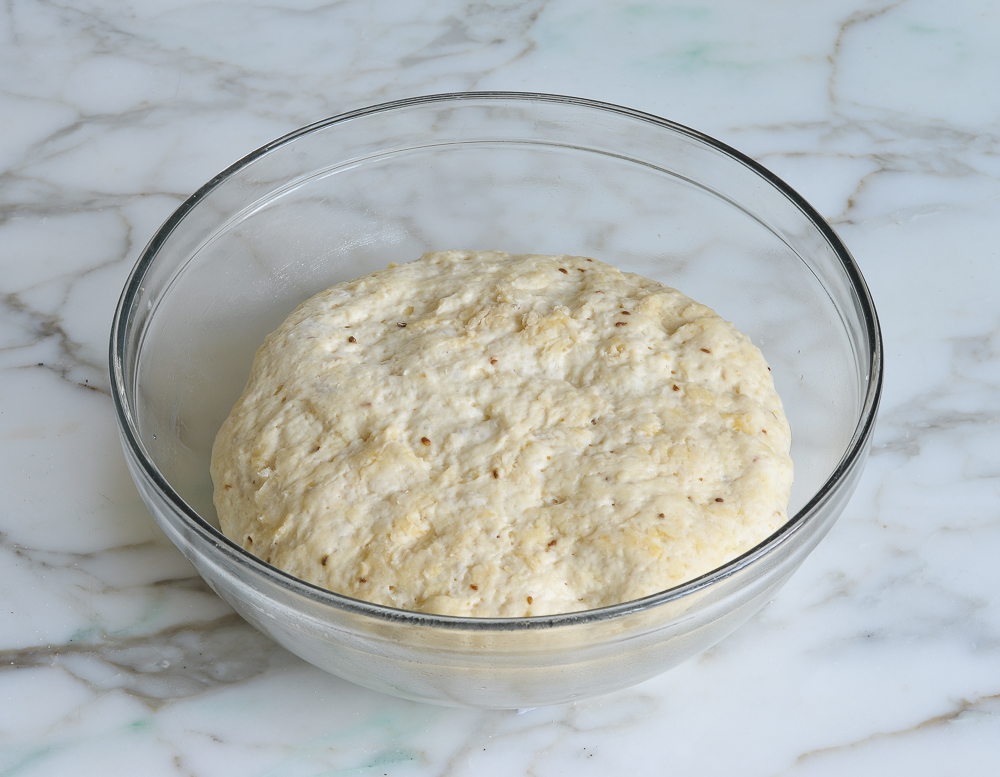
Step 6: Prep the dough. Dust a work surface with flour and fill a small bowl with extra flour for dusting. Turn the dough onto the floured surface and sprinkle with more flour.
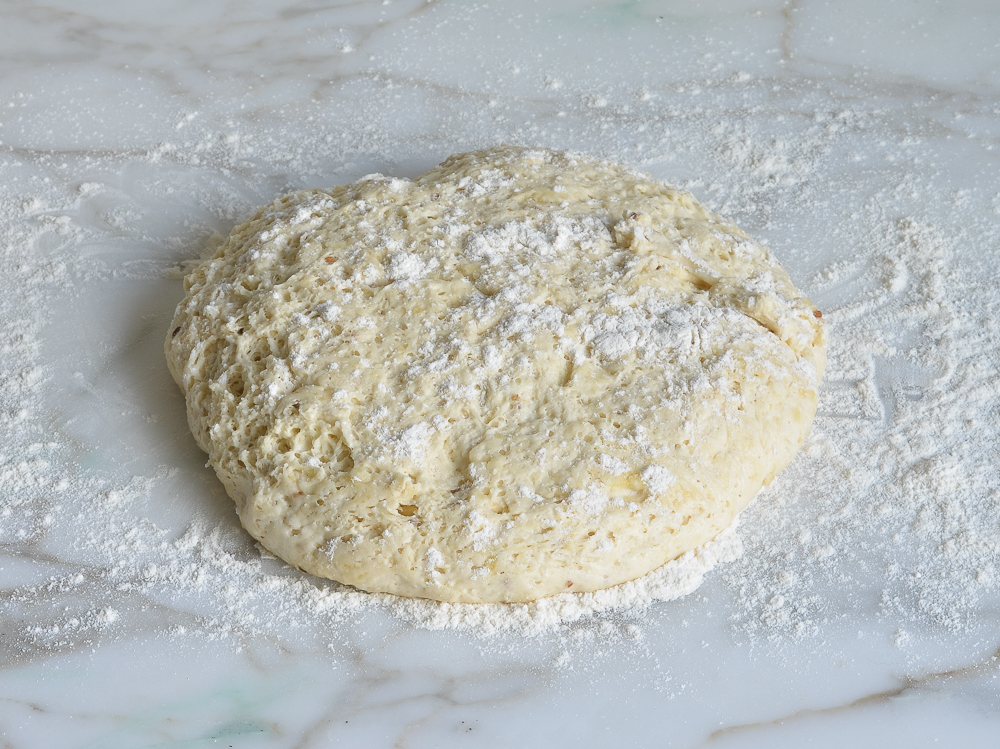
Step 7: Divide and shape. Shape the dough into a long rectangle and then cut into six equal portions.
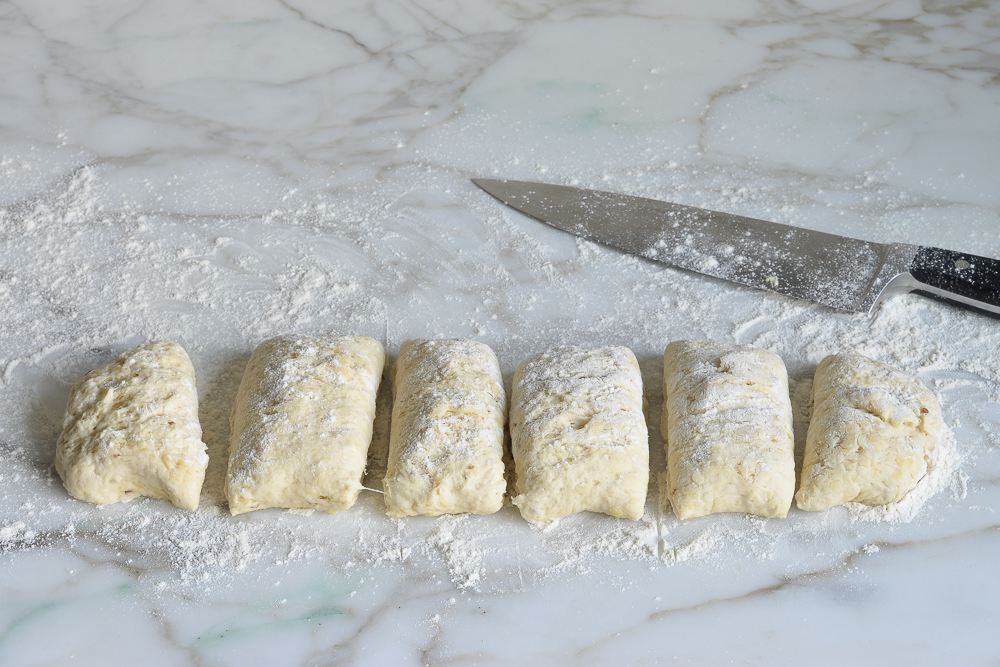
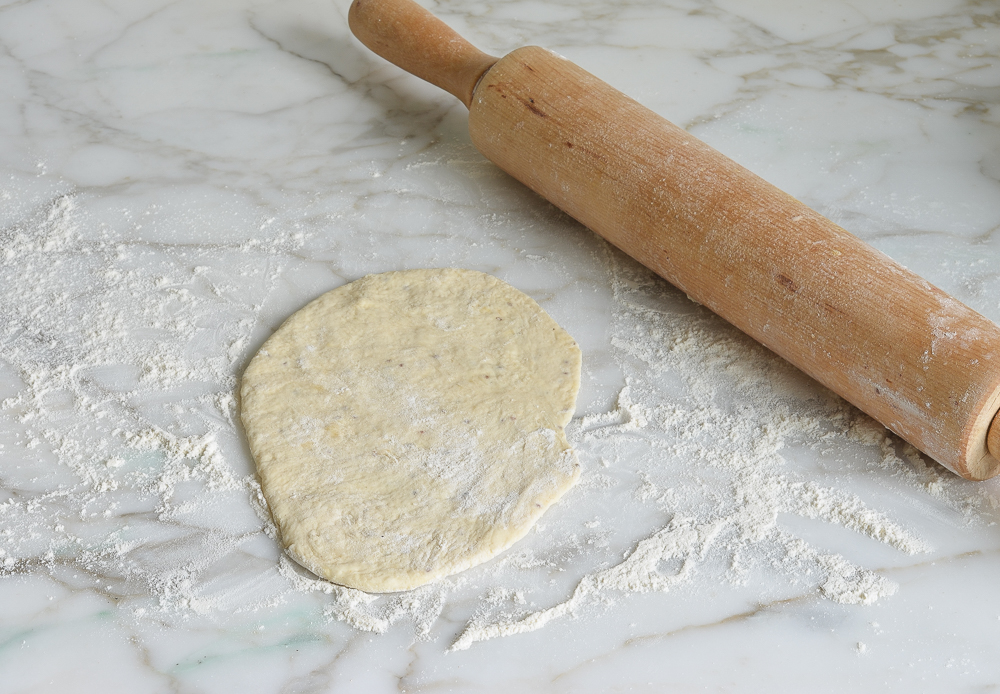
Step 8: Heat the skillet and roll out the dough. Heat a cast iron or heavy nonstick skillet over medium-high heat until very hot. While it heats, roll one piece of the dough into an oval about 1/8-inch thick.
Step 9: Cook the naan. Place the dough in the hot skillet and cook until bubbles form and the bottom is browned in spots.
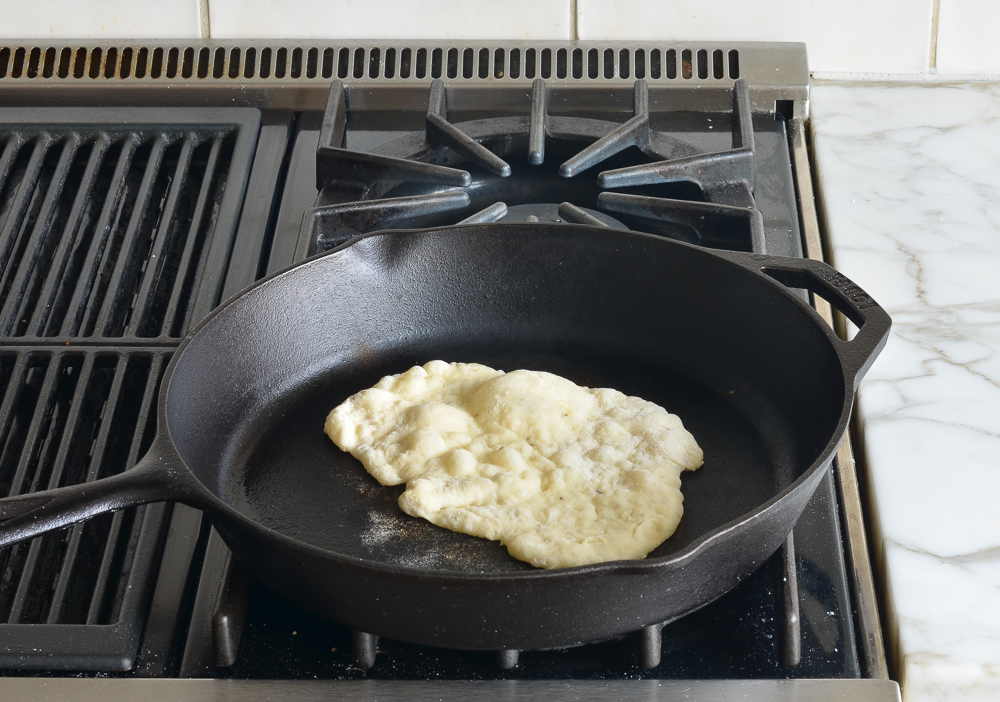
Flip the naan and let it cook a few minutes more, until golden brown with some charred spots.
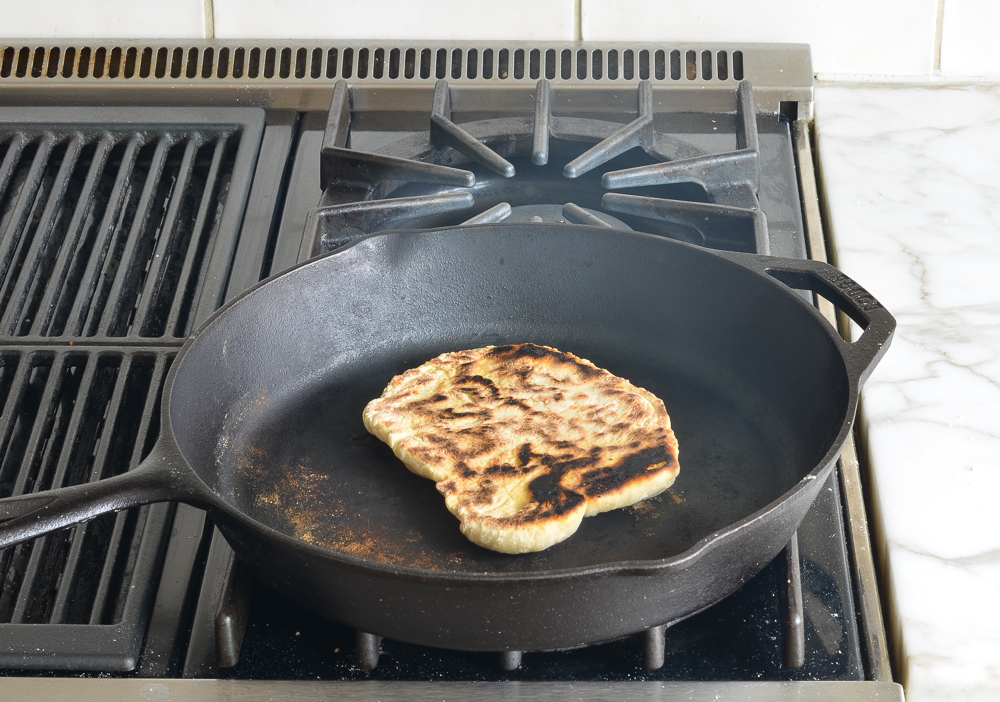
Step 11: Finish and serve. Brush the cooked naan with melted butter, and repeat with remaining dough balls. Sprinkle with parsley, if using, then serve warm. Store naan in a sealed bag at room temperature for 1 day or freeze for up to 3 months.

Naan Recipe Video Tutorial
More Homemade Bread Recipes You may like




Homemade Naan

Ingredients
- 2 cups all purpose flour spooned into measuring cup and leveled-off, plus more for rolling (see note)
- 1 tablespoon sugar
- 1 teaspoon instant dry yeast/rapid-rise yeast (see note)
- 1 teaspoon salt
- Heaping ½ teaspoon anise seeds (optional)
- 3 tablespoons plain yogurt
- 2 tablespoons extra-virgin olive oil
- ¾ cup warm water (about 100°F/38°C)
- 2 tablespoons melted salted butter, for brushing on finished naans
- 1 tablespoon chopped fresh Italian parsley (optional), for serving
Instructions
- In a large bowl, whisk together the flour, sugar, yeast, salt and anise seeds (if using). Set aside.
- In a medium bowl, whisk together, the yogurt, olive oil, and ¾ cup (180 ml) warm water (about 100°F/38°C). Add the yogurt mixture to the dry ingredients and mix with a fork. When the dough is about to come together, dust your hands with flour and knead gently into a soft, slightly sticky dough (sprinkle more flour, little by little, if the dough is too wet to work with). As soon as it comes together, stop kneading.
- Lightly oil or spray a clean bowl with nonstick cooking spray (the bowl should be large enough to allow the dough to double in size). Transfer the dough to the prepared bowl and cover with plastic wrap or a damp kitchen towel. Let sit in a warm place for 1 to 1½ hours, or until about doubled in size (hint: the warmer the spot, the faster the dough will rise).
- Fill a small bowl with about ½ cup (65 g) flour. Dust a work surface with some of the flour and dump the dough on top. Sprinkle some of the flour on top of the dough and on your hands. Shape the dough into a long rectangle and cut into 6 equal portions, dusting with more flour as necessary so the dough doesn't stick. Roll each portion of dough in the bowl of flour to keep them from sticking.
- Warm a large cast iron or heavy nonstick pan over medium-high heat until very hot. Using a rolling pin, roll one of the dough balls into an oval shape about ⅛-in (3-mm) thick (it should be about 9 x 4 in/23 x 10 cm). Pick up the dough and flip-flop it back and forth between your hands to release any excess flour; then gently lay the dough in the dry skillet and cook until the top is bursting with air bubbles and the bottom is golden and blackened in spots, a few minutes. Flip the naan and cook about 1 to 2 minutes more until the the bottom is lightly browned and blistered in spots. Remove the naan from the skillet and brush with melted butter. Place the naan in a tea towel-lined dish to keep warm. Repeat with the remaining naans, adjusting the heat lower if necessary as you go (I usually find it necessary to lower the heat to medium after the first naan). Sprinkle with parsley, if using, and serve warm.
- To keep the cooked naan warm, place them in a 200°F (96°C) oven. Store leftovers in a Ziplock bag and reheat in a 350°F (175°C) oven wrapped in foil.
Notes
- I use King Arthur flour, which is higher in protein than some other all-purpose flours. If using a flour with a lower protein content, such as Gold Medal, you will likely need to add a few more tablespoons of flour.
- Active dry yeast may be used instead of instant/rapid-rise yeast, however, the dough will take longer to rise. To give active dry yeast a boost, you can dissolve it in the lukewarm water and let it sit until frothy, about 10 minutes. After that, add it to the flour, sugar, salt, and anise seeds, and proceed with the recipe.
- Freezing Instructions: The naan can be frozen for up to 3 months. Once it’s completely cooled, wrap each piece securely in plastic wrap and put all the rounds in a sealable plastic bag prior to putting in the freezer. To reheat, wrap the naan in aluminum foil and warm in a 350°F (175°C) oven until hot.
Nutrition Information
This website is written and produced for informational purposes only. I am not a certified nutritionist and the nutritional data on this site has not been evaluated or approved by a nutritionist or the Food and Drug Administration. Nutritional information is offered as a courtesy and should not be construed as a guarantee. The data is calculated through an online nutritional calculator, Edamam.com. Although I do my best to provide accurate nutritional information, these figures should be considered estimates only. Varying factors such as product types or brands purchased, natural fluctuations in fresh produce, and the way ingredients are processed change the effective nutritional information in any given recipe. Furthermore, different online calculators provide different results depending on their own nutrition fact sources and algorithms. To obtain the most accurate nutritional information in a given recipe, you should calculate the nutritional information with the actual ingredients used in your recipe, using your preferred nutrition calculator.
Your recipe is missing the 3/4 cup of warm water. I think. Or am I missing something? 🙂
Hi Karen, When water is used in recipes, it is typically not listed in the ingredients. I always go back and forth on this, because I agree that it can be confusing.
Can I use traditional yeast. What are the differences
Hi Irene, when you say traditional yeast, are you referring to active dry yeast? If so, if you scroll about halfway through the recipe, you’ll see a note in bold about that. Just follow the instructions immediately below the bold text on how to prepare the naan using that. Hope that helps!
I made these tonight. The dough was beautiful and delicate. These were delicious with our Greek chicken and tzaiaki sauce.
Made this last night to serve with the chickpea and red lentil soup. So delicious! I had read the reviews that said to back off the water, and I did initially, but it was too dry, so added the rest of the water. Turned out perfect and the bf went back for more, saying how good it was. Definitely a keeper…bookmarked. Thanks Jen!
I used Greek yogurt and these came out perfect! I’ll never buy naan from the store again!
I have been successful with all the recipes I tried on this site so far except this one. The flour is super super wet, it would off my finger. I had to add about another 1/2 c of four but then it not rise properly.
Hi Han, sorry you had a problem with this! The dough should definitely not be soupy! Are you using a standard liquid measuring cup for the water and a dry ingredient measuring cup for the flour?
I started using Jenn’s naan recipe a few years ago. It’s become a staple and a favorite – so much better than the dry, heavy grocery store offerings. The leftover bread is versatile, too – think personal pizzas, or topped with any sandwich topping. We love it with butter, rubbed with a cut garlic clove, and dipped or spread with sour cream, aka Hungarian style. Yum!
This recipe is so easy and delicious! The perfect bread to go with all of my favorite Indian dishes. Thanks!
I was recommended this recipe by a friend who I turned on to your website.
I have had difficulty in the past with making breads in general. She knew my love of indian food and recommended I try your recipe. IT WAS A SUCCESS!!!
The only suggestion I would give to people doing this for the first time is to make sure there is “no excess flour” on the dough prior to putting on the cast iron skillet. I use this recipe all the time now, even without “Indian food” as a complement.
So easy to make and delicious! Keeps well in the fridge for multi day leftovers.