
Cheesecake

This post may contain affiliate links. Read my full disclosure policy.
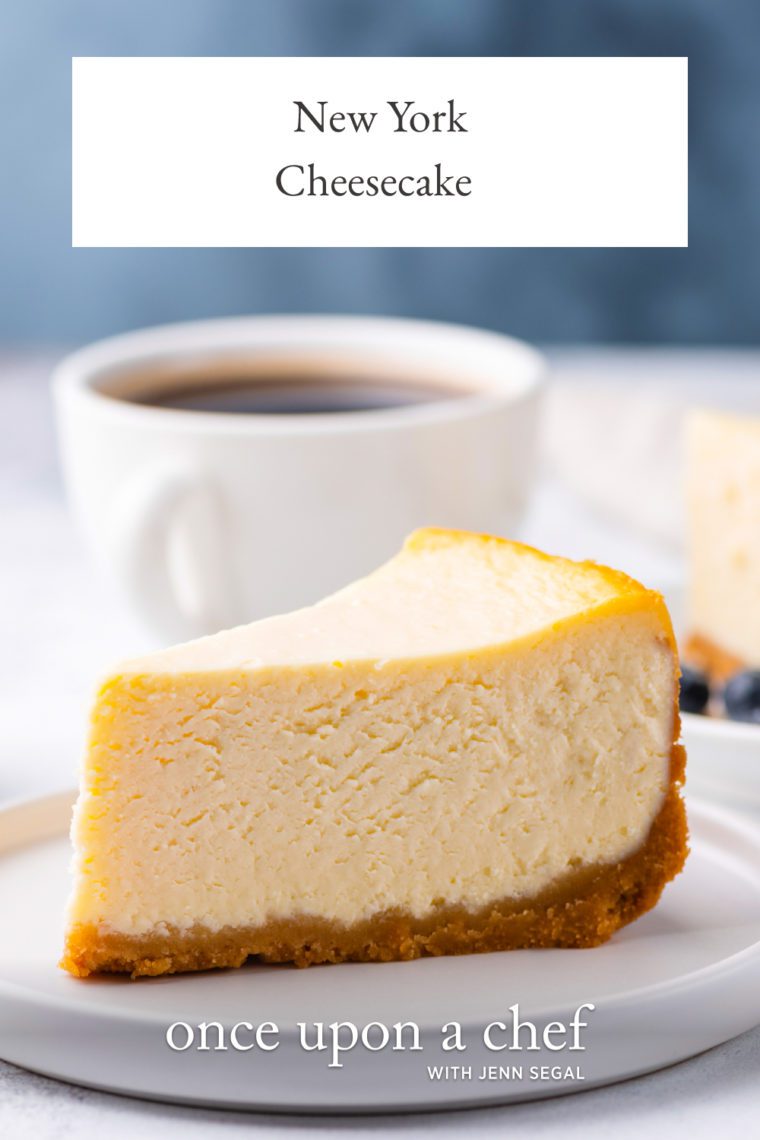
This foolproof cheesecake recipe delivers a rich, creamy New York-style cheesecake that’s surprisingly easy to make at home.
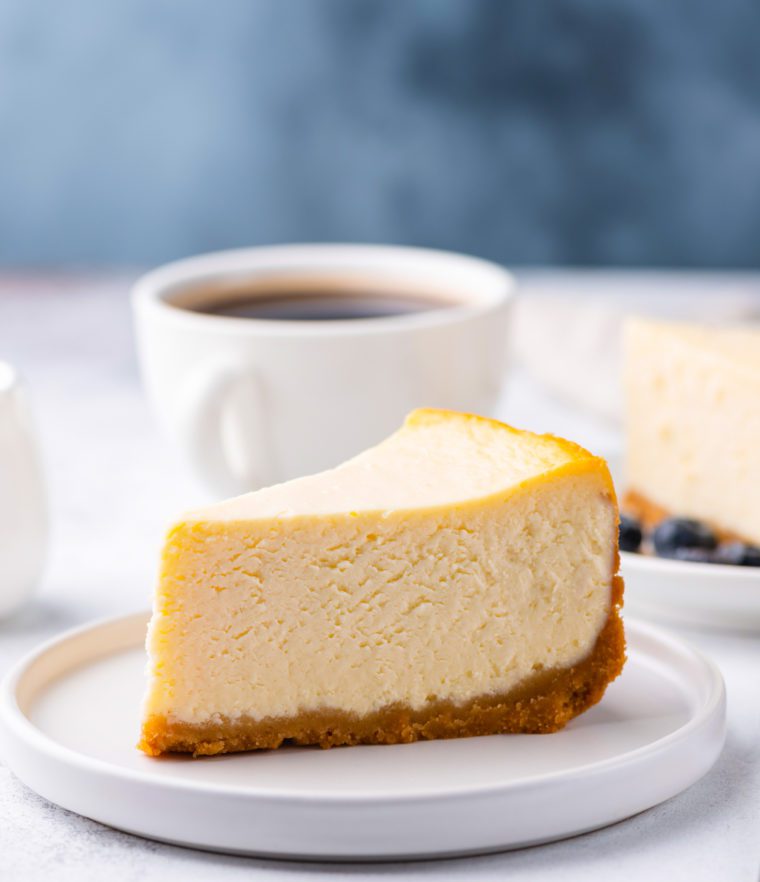
Cheesecake has always been my husband Michael’s favorite dessert. I remember when I first met my future mother-in-law over 20 years ago, she told me the key to her son’s heart was through his stomach—and he could be persuaded to do just about anything for a slice of New York cheesecake. Fortunately, I had just graduated from culinary school, so I had a little advantage in both winning his heart and perfecting my cheesecake recipe!
Rich, creamy, and dense with a buttery graham cracker crust, this classic New York-style cheesecake is everything a great cheesecake should be. I know making cheesecake can seem intimidating. It’s a custard dessert that requires gentle baking in a water bath to achieve its signature silky texture and help prevent cracks. But don’t let that scare you off. With a few pointers and this tried-and-true recipe, you’ll be rewarded with a beautiful cheesecake every time.
“I made this cheesecake for my family at Christmas time and everyone LOVED it!”
What You’ll Need To Make Cheesecake
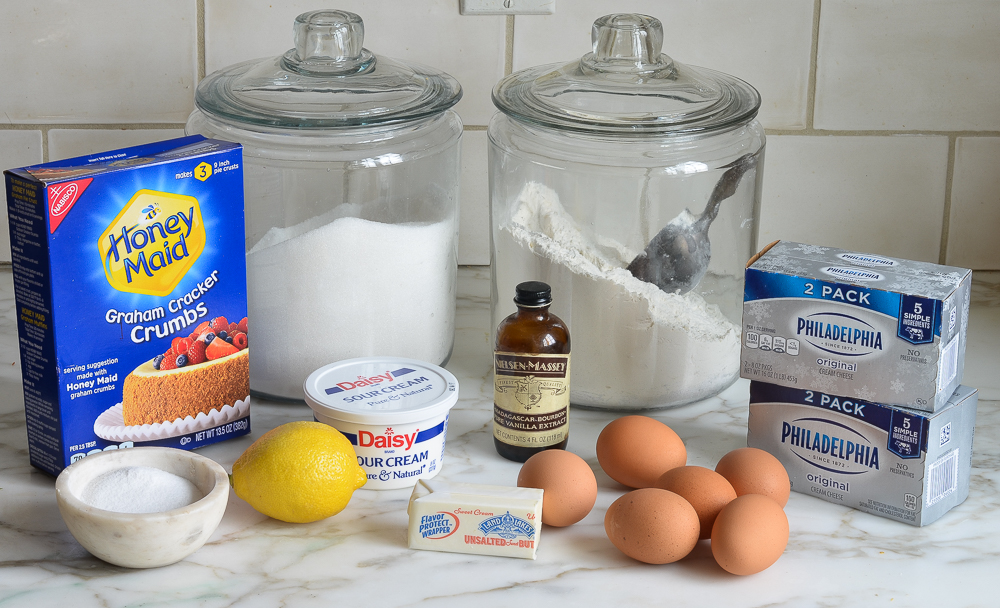
- Graham cracker crumbs: Forms the base of the graham cracker crust, providing a sweet, crumbly texture.
- Butter: Binds the graham cracker crumbs together and adds richness to the crust.
- Sugar: Sweetens the crust and filling.
- Cream cheese: The key ingredient of the filling, it provides the rich, creamy texture and tangy flavor. I recommend using a good brand, like Philadelphia, and be sure it’s completely softened before mixing. Cold cream cheese won’t blend smoothly and can leave lumps in the batter.
- All-purpose flour: While it may seem unusual in a cheesecake, the flour is the secret to success. A little starch helps prevent cracking and makes the filling lighter and fluffier.
- Vanilla extract & lemon zest/juice: Flavorings that add warmth, brightness, and just enough tang to cut through the richness.
- Eggs: Provide structure and stability, helping the cheesecake set.
- Sour cream: Adds tang, moisture, and a silky, creamy texture.
- Jump to the printable recipe for precise measurements
Key Equipment
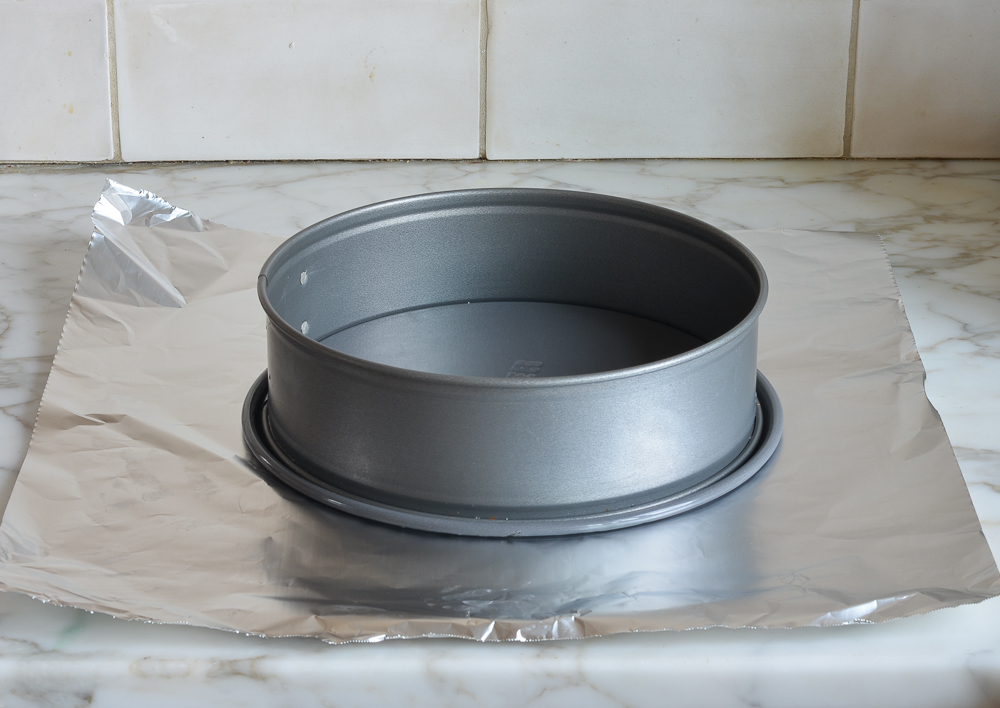
You’ll need a 9- or 10-inch springform pan and heavy-duty aluminum foil. The removable sides make it easy to release the cheesecake, but they often leak. Wrapping the pan in foil prevents water from seeping in during the water bath. Alternatively, place the springform in a larger cake pan to avoid using foil (see how it’s done here) or purchase a silicone wrap for your pan. You will also need an electric mixer for whipping up the batter and a large roasting pan for the water bath.
Video Tutorial
Step-by-Step Instructions
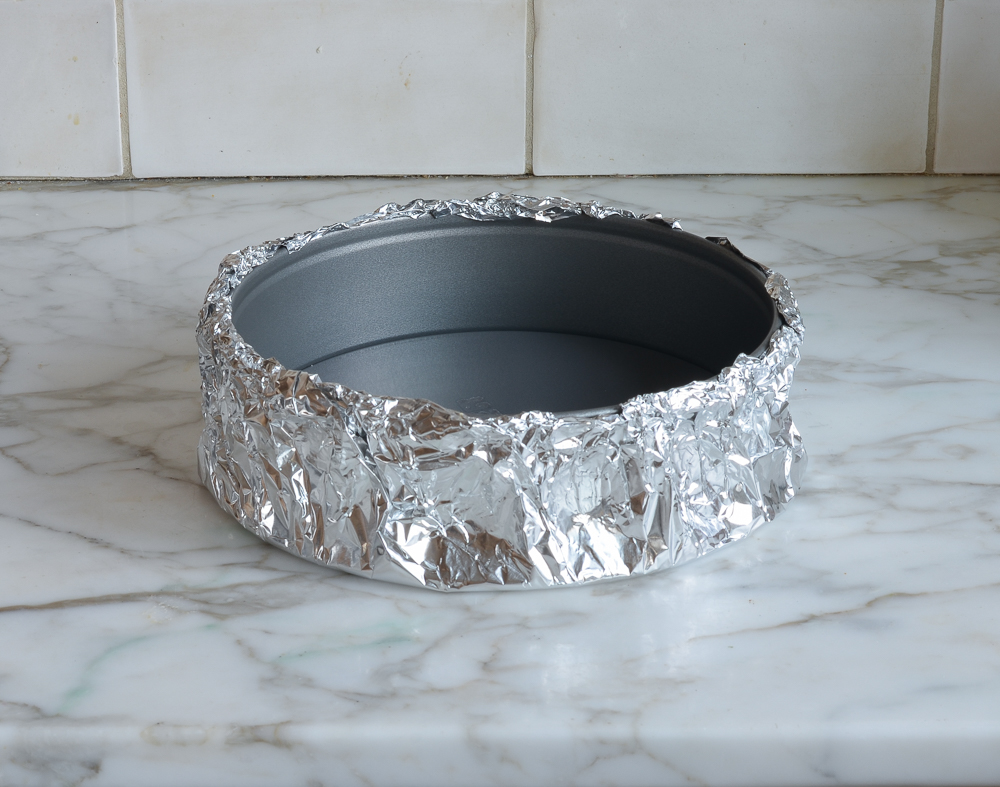
Step 1: Prep the pan. Wrap the springform pan with two layers of heavy-duty foil, covering the bottom and sides. This helps keep water from seeping into the pan during the water bath. Spray the inside with nonstick cooking spray to prevent the cheesecake from sticking.
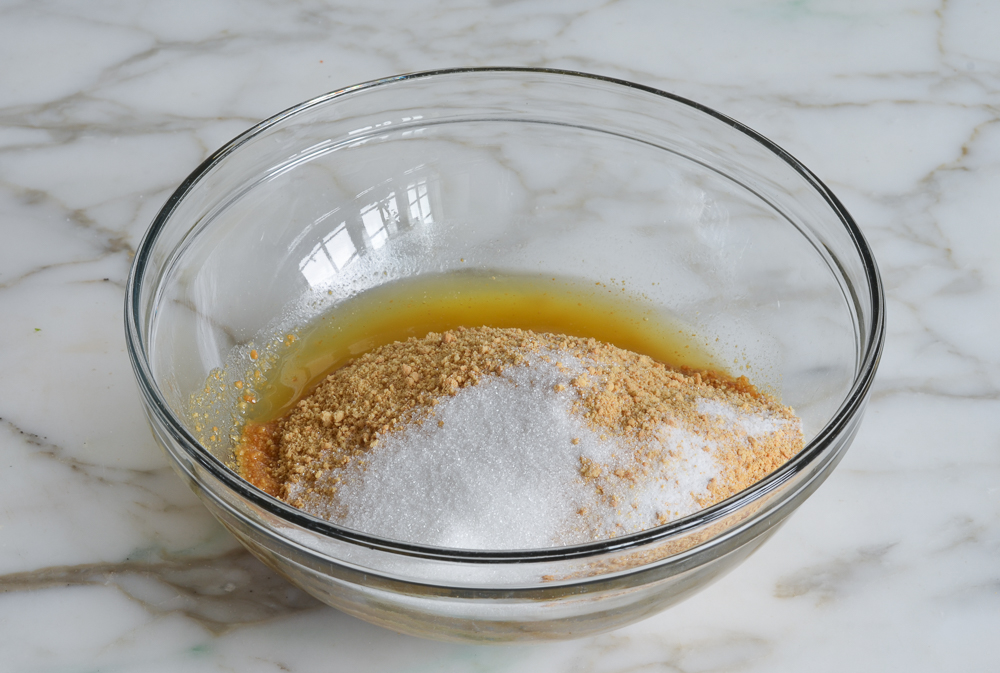
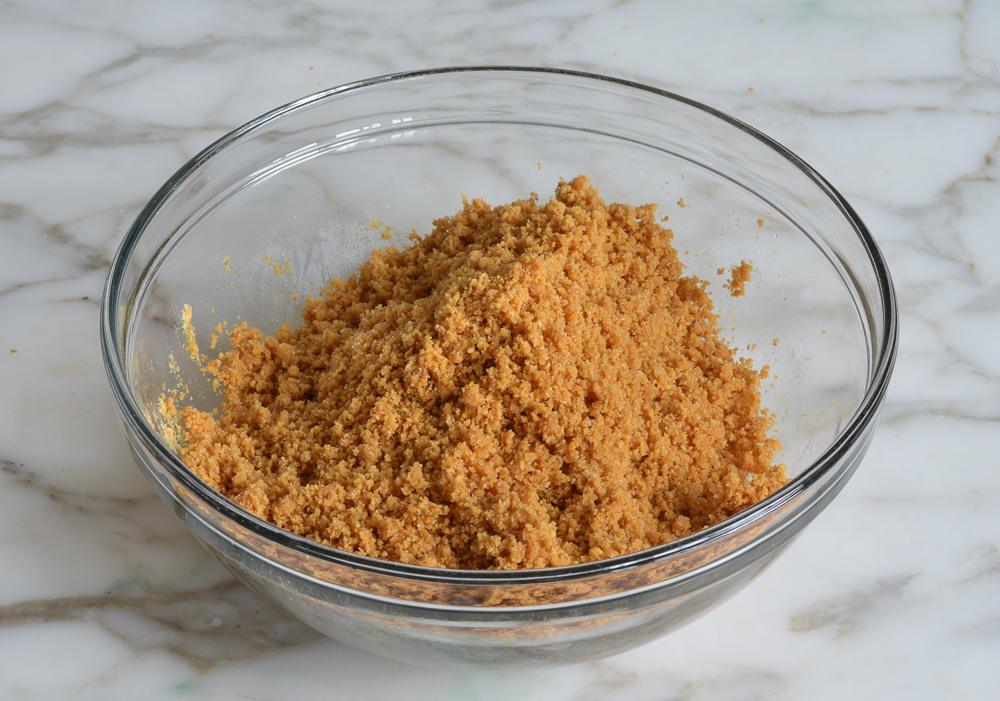
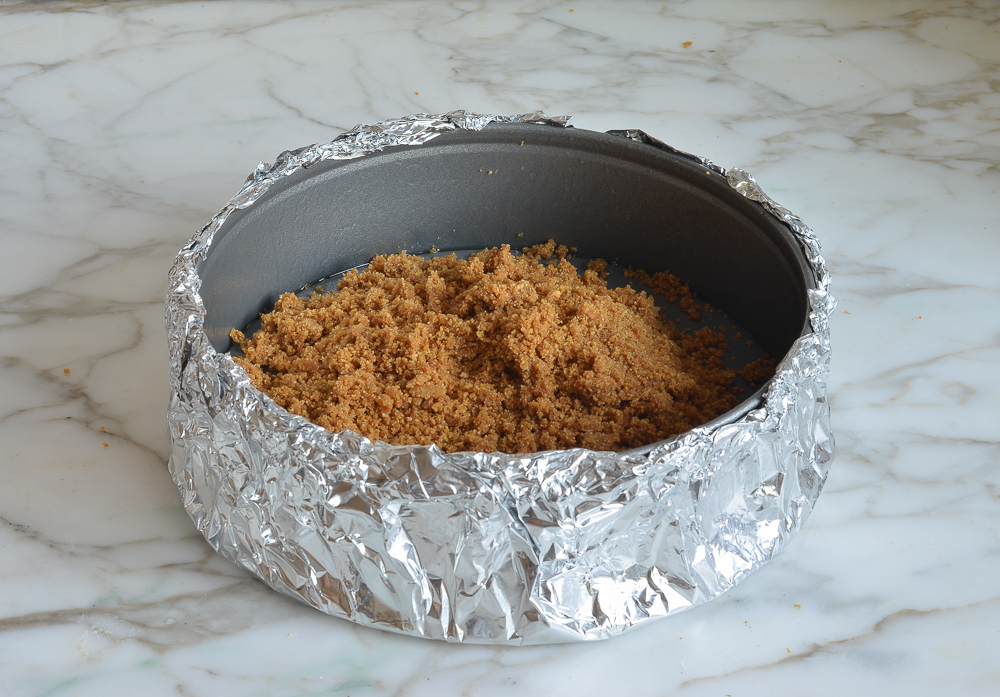
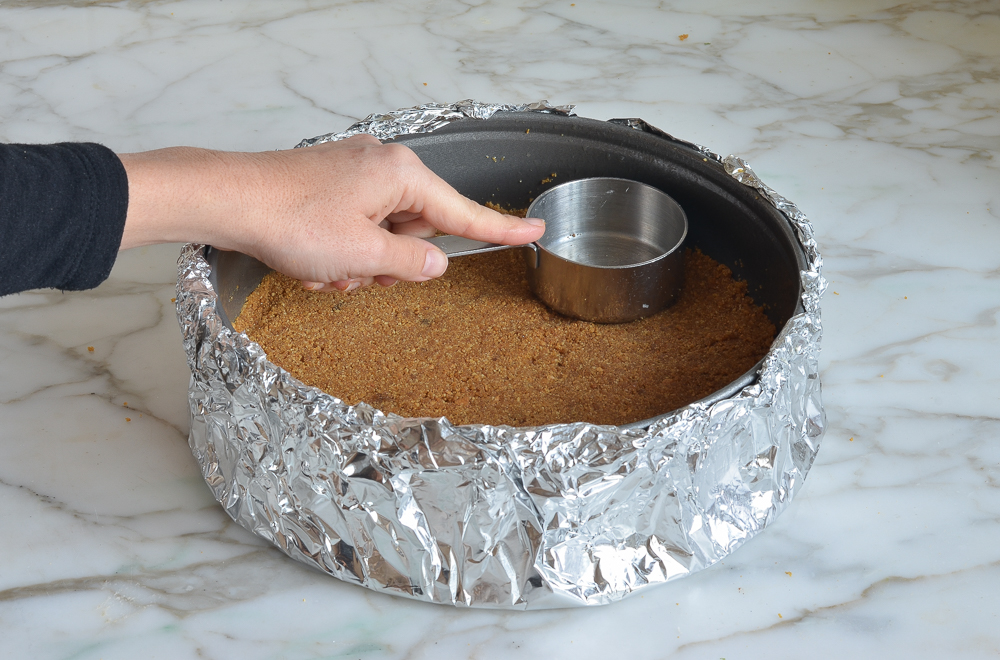
Step 2: Make the graham cracker crust. Combine the graham cracker crumbs, melted butter, sugar, and salt until evenly moistened. Press the mixture firmly into an even layer on the bottom of the prepared pan—I like to use the bottom of a measuring cup to really pack it in. Bake until the crust is lightly golden and set.
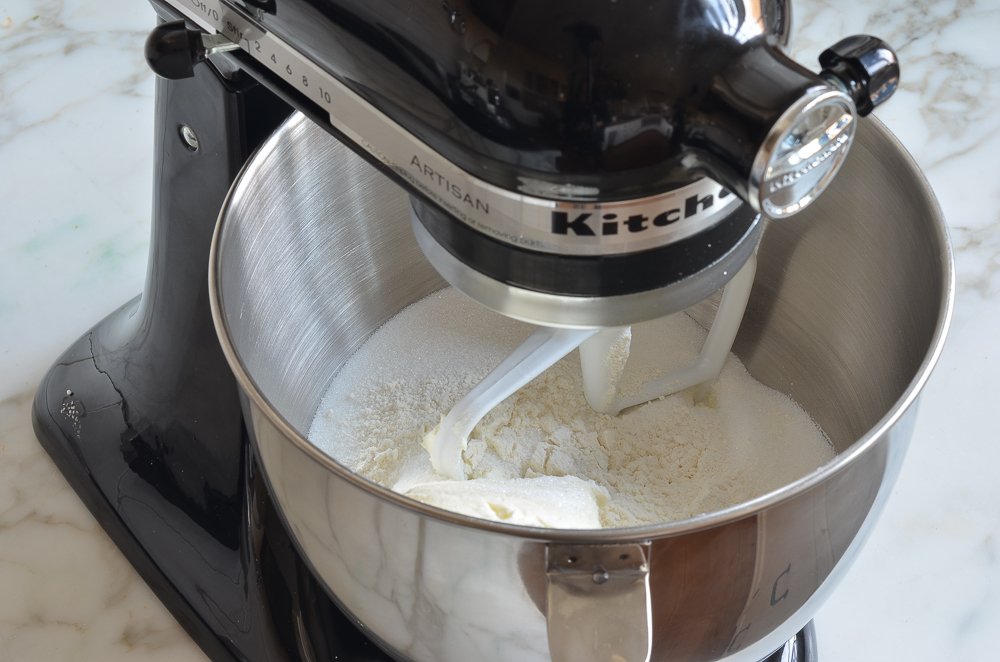
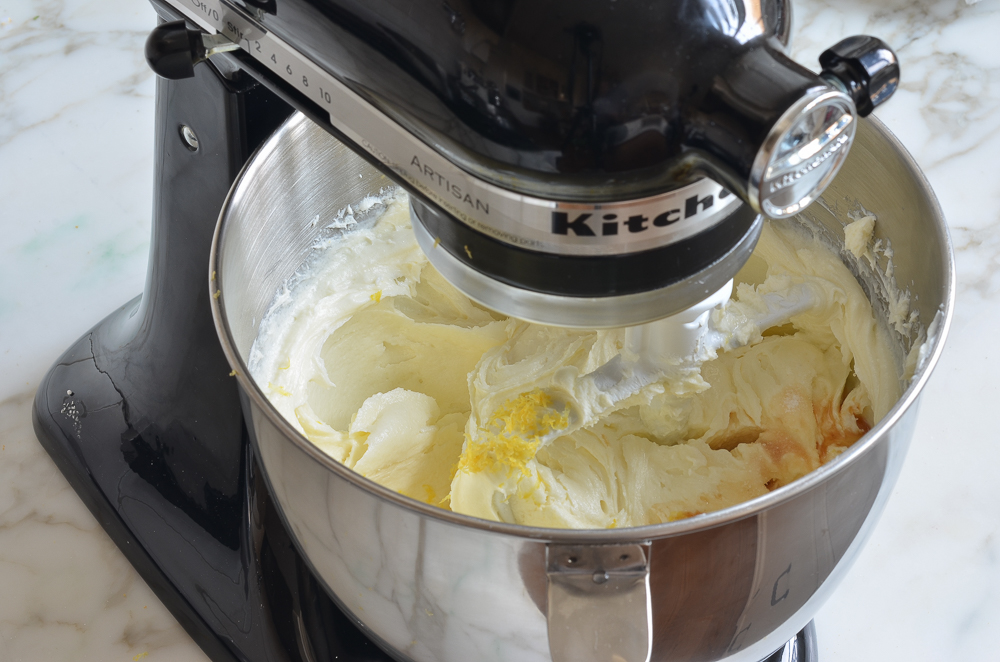
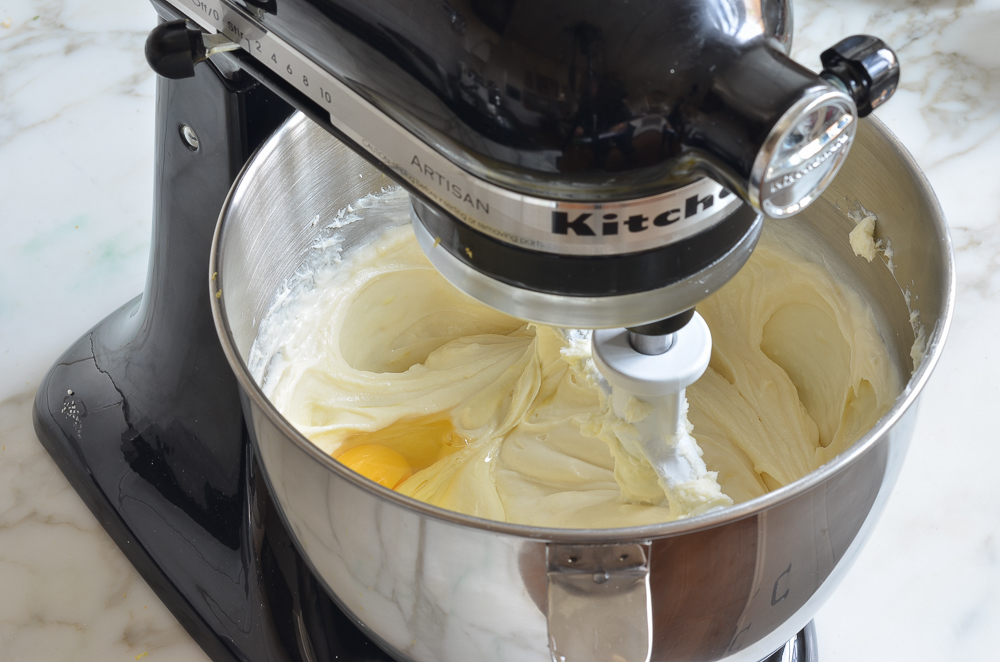
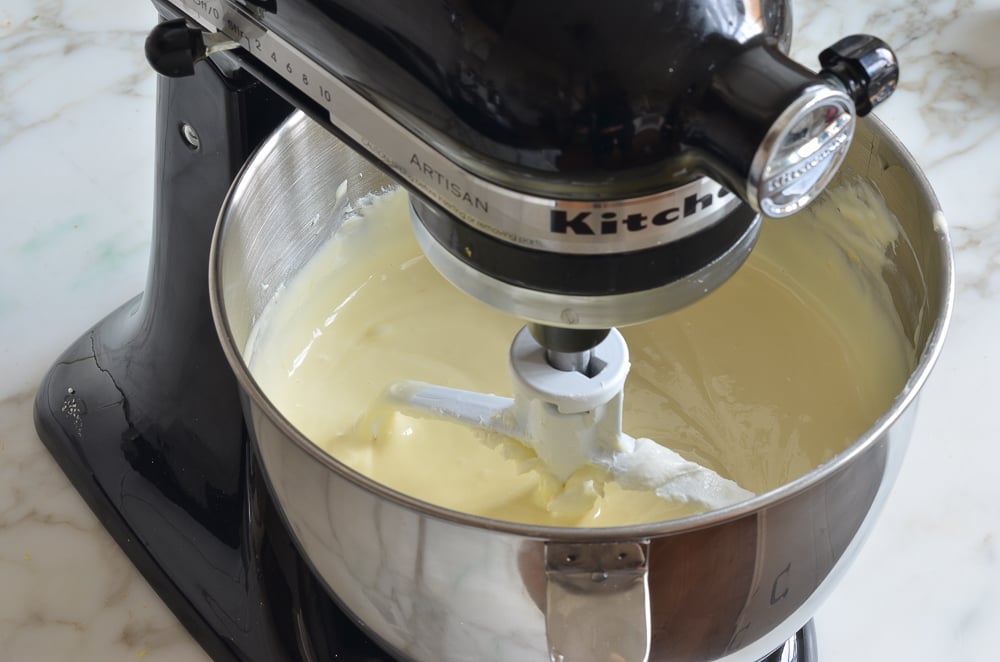
Step 3: Make the cheesecake batter. In the bowl of an electric mixer, beat the cream cheese, sugar, and flour on medium speed until completely smooth and free of lumps, about 1 minute. Mix in the vanilla, lemon zest, lemon juice, and salt. Add the eggs one at a time, mixing just until incorporated and scraping down the bowl as needed. Finally, mix in the sour cream until the batter is smooth and uniform.
Pro Tip: Be careful not to overmix the batter once the eggs are added. Overmixing can incorporate excess air, increasing the chance of cracks as the cheesecake bakes.
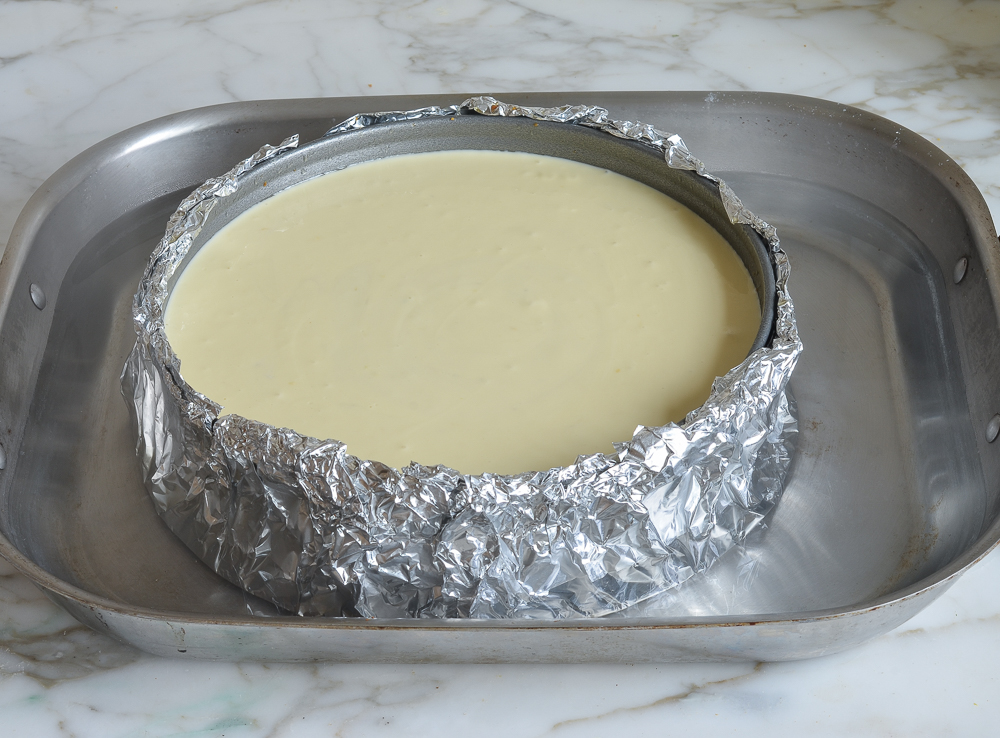
Step 5: Assemble and bake. Pour the batter on top of the baked crust. Place the unbaked cheesecake in a large roasting pan and add boiling water to the pan, about an inch up the sides of the springform. This water bath, or bain marie, ensures even, gentle baking and helps prevent cracking or drying.
Bake until the edges are set but the center still has a slight wobble when gently nudged. It will continue to set as it cools.
Pro Tip: Along with the water bath, baking the cheesecake at 325°F helps the filling cook slowly and evenly, resulting in a creamier texture. If the cheesecake starts to brown more than you’d like before it’s fully baked, loosely tent it with foil for the remainder of the baking time.
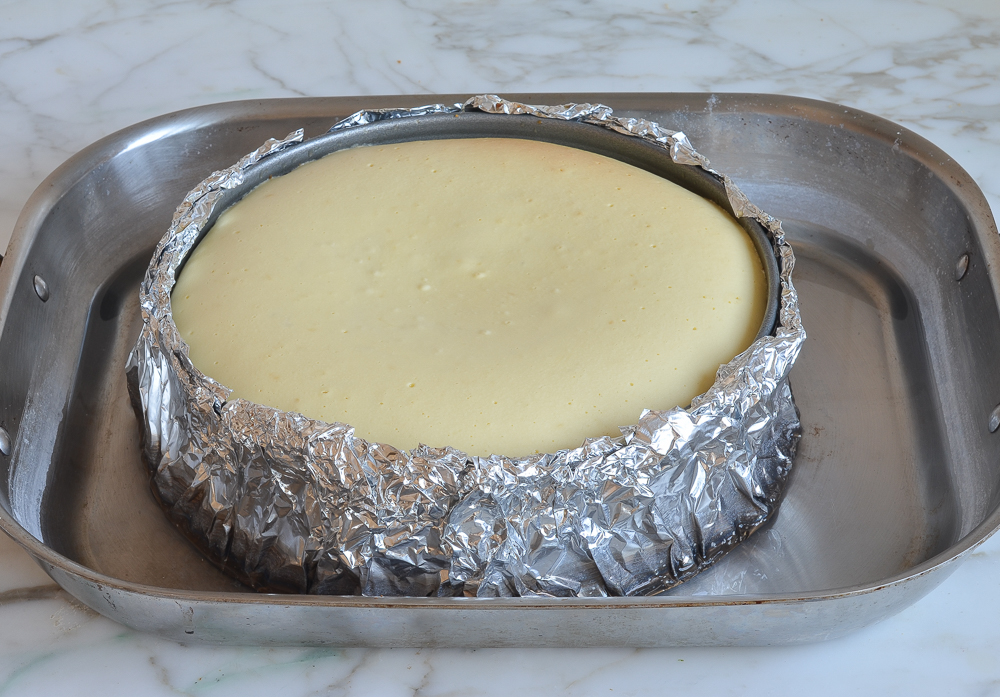
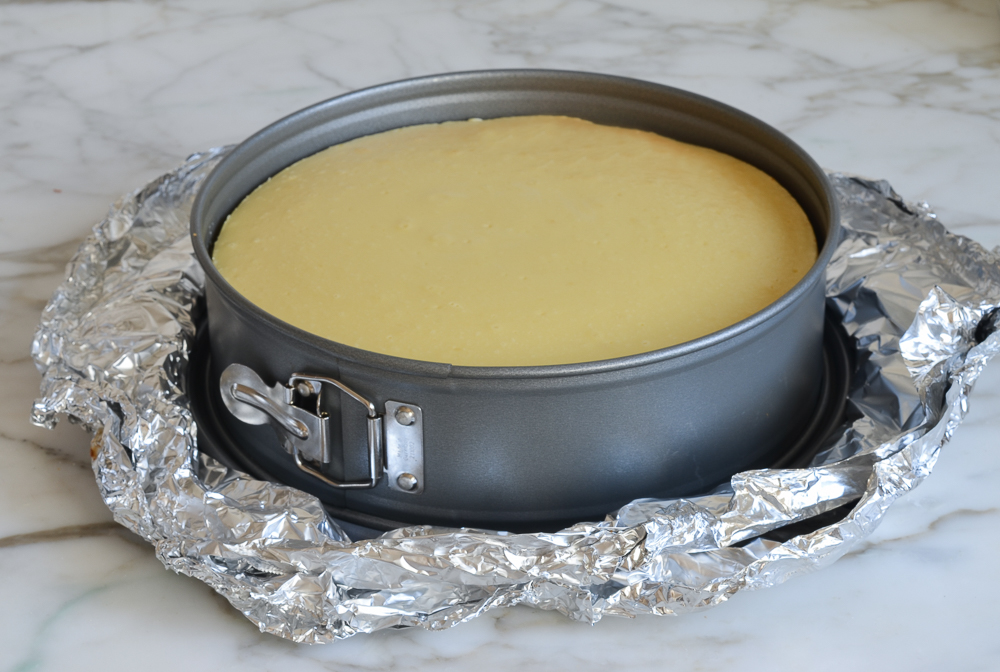
Step 7: Cool, chill, and serve. Let the cheesecake cool in the water bath for 45 minutes. Gradual cooling helps minimize the risk of cracks. Refrigerate for at least 8 hours or overnight so the cheesecake has time to fully set and the flavors can meld.
For the cleanest slices, dip a sharp knife in hot water and wipe it dry between cuts before slicing. Cheesecake is an ideal make-ahead dessert—it can be prepared up to 2 days in advance or frozen for up to 3 months.
How To Serve Cheesecake
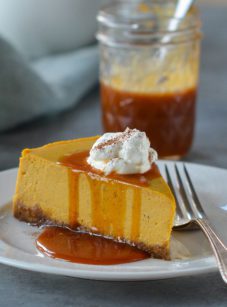
This cheesecake is wonderful served plain, but it’s easy to dress up for special occasions. Top it with fresh berries, my easy berry sauce for a bright, tangy contrast, or caramel sauce and whipped cream if you’re in the mood for something a little more indulgent.
More Cheesecake Recipes You’ll Love


Cheesecake Recipe (New York Style)

Ingredients
For the Crust
- 1½ cups graham cracker crumbs, from 12 whole crackers
- 5 tablespoons unsalted butter, melted
- 2 tablespoons sugar
- ⅛ teaspoon salt
For the Filling
- 32 oz (four 8-oz blocks) cream cheese, at room temperature
- 2 cups sugar
- 3 tablespoons all-purpose flour
- 4 teaspoons vanilla extract
- 1 teaspoon packed lemon zest, from 1 lemon
- 2 teaspoons fresh lemon juice, from 1 lemon
- ¼ teaspoon salt
- 6 large eggs
- ½ cup sour cream
- Special equipment: 9 or 10-in (23 to 25-cm) springform pan; 18-in (46-cm) heavy-duty aluminum foil (see Pro Tip)
- Berry sauce, for serving (optional)
Instructions
For the Crust
- Preheat the oven to 375°F (190°C) and set an oven rack in the lower middle position. Wrap a 9 or 10-in (23 or 25-cm) springform pan with one large piece of heavy-duty aluminum foil, covering the underside and extending all the way to the top so there are no seams on the bottom or sides of the pan. Repeat with another sheet of foil for insurance. Spray the inside of the pan with nonstick cooking spray.
- Make the crust: In a medium bowl, combine the graham cracker crumbs, melted butter, sugar, and salt. Stir until well combined. Press the crumbs into an even layer on the the bottom of the prepared pan. Bake the crust for 10 minutes, until set. Remove the pan from the oven and set aside.
- Reduce the oven temperature to 325°F (165°C). Set a kettle of water to boil.
- Make the batter: In the bowl of an electric mixer fitted with the paddle attachment or beaters, beat the cream cheese, sugar, and flour together on medium speed until just smooth, about 1 minute. Scrape the bottom and sides of the bowl to be sure the mixture is evenly combined. Add the vanilla, lemon zest, lemon juice, and salt; beat on low speed until just combined. Add the eggs, one at a time, mixing on low speed until incorporated, scraping the bowl as necessary. Mix in the sour cream. Make sure the batter is uniform but do not over-mix.
- Check to make sure your oven has cooled to 325°F (165°C), then set the cheesecake pan in a large roasting pan. Pour the batter on top of the crust. Pour the boiling water into the large roasting pan to come about 1 inch up the side of the cake pan. Bake until the cake is just set, 1 hour and 30 minutes to 1 hour and 45 minutes. (If the cheesecake starts to look too golden on top towards the end, cover it loosely with foil.) The cake should not look liquidy at all, but will wobble just a bit when the pan is nudged; it will continue to cook as it cools. Carefully remove the roasting pan from the oven and set it on a wire rack. Cool the cheesecake in the water bath until the water is just warm, about 45 minutes. Remove the springform pan from the water bath and discard the foil. If necessary, run a thin-bladed knife around the edge of the cake to make sure it's not sticking to the sides (which can cause cracks as it cools), then cover with plastic wrap and transfer to the refrigerator to cool for at least 8 hours or overnight.
- For serving: Remove the sides of the springform pan. Serve the cheesecake right from the base of the pan; or, to transfer it to a serving platter, run a long, thin spatula between the crust and the pan bottom, and then use two large spatulas to carefully transfer the cheesecake to a serving dish. Slice with a sharp knife, wiping the knife clean between slices. Serve with berry sauce, if you like.
Notes
- Make-Ahead/Freezing Instructions: The cheesecake can be stored in the springform pan in the fridge, tightly covered with plastic wrap, for up to two days. It can also be frozen for up to 3 months. To freeze, place the cake in the freezer briefly, unwrapped, to firm it up. Then double-wrap it tightly with aluminum foil or plastic freezer wrap, or place it in a heavy-duty freezer bag. Thaw in the refrigerator the night before you plan to eat it.
- Pro Tip: Springform pans are notorious for leaking. Since a cheesecake bakes in a water bath, the foil prevents the water from seeping in during baking. Please do not attempt to use standard 12-inch (30cm) aluminum foil – you can’t have any foil seams on the bottom or sides of the pan. No matter how well (or how many times) you wrap the pan, if there are seams exposed to the water, the water will find a way in. Even when wrapped properly, you can occasionally get some condensation inside the foil. If this happens, don’t worry – the crust is likely just a bit moist around the edges. Simply remove the sides of the springform pan before refrigerating and let it dry out in the refrigerator.
Nutrition Information
This website is written and produced for informational purposes only. I am not a certified nutritionist and the nutritional data on this site has not been evaluated or approved by a nutritionist or the Food and Drug Administration. Nutritional information is offered as a courtesy and should not be construed as a guarantee. The data is calculated through an online nutritional calculator, Edamam.com. Although I do my best to provide accurate nutritional information, these figures should be considered estimates only. Varying factors such as product types or brands purchased, natural fluctuations in fresh produce, and the way ingredients are processed change the effective nutritional information in any given recipe. Furthermore, different online calculators provide different results depending on their own nutrition fact sources and algorithms. To obtain the most accurate nutritional information in a given recipe, you should calculate the nutritional information with the actual ingredients used in your recipe, using your preferred nutrition calculator.
This turned out wonderful!! I must say, I actually don’t like cheesecake. I know, I know (insert gasp here). This was probably my favorite cheesecake I have made. Most end up tasting really heavy on my tongue, but this was dense without going overboard. I put 2 teaspoons of vanilla extract and 2 of vanilla bean paste. I also used biscoff cookies for the crust and incorporated the extra cookie crumbs into some heavy cream to make a cookie flavored whipped cream. I also made a maple caramel ( what can I say? Autumn flows through me). I honestly didn’t mean to wax poetic about a cheesecake, so simply put, everyone loved it and you earned every one of these stars.
First time making this recipe. Best cheesecake ever. One question. The recipe calls for 12 Graham crackers. That was way too much when crushed. I believe 6 is more accurate.
There’s no there’s no quantity as to what you’re putting together there I mean how much cheese how much cream cheese how
much lemon zest how much lemon how much vanilla and how much flour sugar all of it
Hi Teresa, It sounds like you are just looking at the portion of the page that has the pictures with some instructions underneath. If you scroll down a bit to under the pictures, you’ll find the full recipe. Alternatively, at the very top of the page, to the right of the recipe name, you’ll see an orange/red button that says Jump to Recipe – if you click on that, it will take you directly to the recipe. Hope that clarifies!
Try your food processor if you have one to achieve a fine crumb – works for me.
Such a great recipe. Turned out perfect. About to make my second one. Thanks.
Love this recipe and adapted to Keto! Wondering if you have this recipe adapted for a pumpkin version with the holidays coming up? Other versions are so heavy.
Thanks,
Theresa
Hi Theresa, I’m not sure I fully understand your question about it being adapted but I do have a pumpkin cheesecake recipe. You can check it out here. Hope you enjoy if you make it!
Hi. This is my third time making your recipe. I’m doing a half size right now and then I will make a large one for Thanksgiving. Thank you very much. This is a wonderful recipe and your directions are great.
Not a fan. Very eggy and overly sweet. I was very disappointed
Omg. Yes! Wayyy too many eggs!! 😔
I do not bake, I baked this, it was amazing! I cut the recipe way down (see below) as I only had a small 4″ spring pan and am the only one who eats cheesecake in my house. I DO NOT BAKE, and regularly screw up cupcakes from a box, so I AM NOT SKILLED IN ANY WAY, it turned out AMAZING. I wasn’t sure my measurements were right, but figured I could always double the batch if there wasn’t enough filling. I crushed a bunch of ginger cookies until fine crumbs, added some melted butter until I got the amount of crust I wanted (no sugar or salt added), baked it for 10 min at the temp in the recipe, then used 4 oz of cream cheese, a half of a beaten egg, a splash of lemon and vanilla, 2 TSP of flour, and a 1/2 TBS or so of sour cream from the squeeze tube. Blended that with a small immersion whisk I had, poured it in the baked crust, and then cooked at the temp above for 30 min, with a new check every 5-10 min until it stopped being wobbly. I am not good at not making a mess, so I did not use the foil and place it in the water, but I did have a large crock of water in the oven, under the rack I was baking on, which I put in at the same time I started the preheat, so it would get hot and steamy by the time I put the cheesecake in. I did get two surface cracks on the top, but they did not affect the cheesecake and I was the only one eating it, so presentation was less important than simplicity of baking. At the same time, I used a similar method and vegan cream cheese and non-dairy creamer. It also came out great (no cracks, but did take longer to cook), it was not as flavorful as the plain. Not sure if it was because of the vegan cream cheese or the use of cream and pumpkin instead of sour cream, or my lack of consistent measuring. The pumpkin called for a larger amount of ingredients that weren’t as easy to try and scale, so I used 4 oz of vegan cream cheese, 3/4 of a beaten egg (you can use egg substitute if it needs to be vegan, I am just lactose intolerant and trying to mitigate my discomfort after eating 2 cheesecakes), 1 oz of non-dairy creamer, 2 -3 TBS of pumpkin, 2-3 TBS sugar, spices to taste, and a splash of vanilla. I cooked the pumpkin and sugar in a fry pan til thick and blended first as suggested. I am the only one eating this, so no peanut gallery comments to encourage my lack of following directions, but I did have a few family members look at it and say they both looked like they came from a bakery…1 hour of counter cooling and 1 hour in the fridge was plenty of time to dig in because they were small, I did save half of each for the next day to see if it got more flavorful, but they taste the same even 48 hours later. I topped with pumpkin whipped cream from a can. I will add the plain one to my resume, I will not make the pumpkin again. Thank you for anytime I want cheesecake!!
Hi! I would like to try this recipe out but I’m not sure if I can get Graham cracker crumbs in Australia. Is there a substitute?
Hi Rhonda, Do you have digestive biscuits? A lot of readers outside the US have used them.
Perfect instructions. I was always intimidated by trying to make a real cheesecake. I will definitely make this again.
Hi 🙂
I was wondering can I use Caster Sugar instead of White Sugar?
Hi Elizabeth, I’d stick with granulated sugar for this. Caster sugar may work, but cheesecake is pretty finicky and so I think it’s best to stick with the recipe for the most predictable results.
This is how a cheesecake should be all the time. great recipes – well worth the time and love put into it. thanks for the recipe