

This post may contain affiliate links. Read my full disclosure policy.
Learn how to cook basmati rice on the stovetop with this easy, step-by-step guide. From rinsing the rice to getting the water ratio just right, I’ll walk you through the process so it turns out perfectly every time.
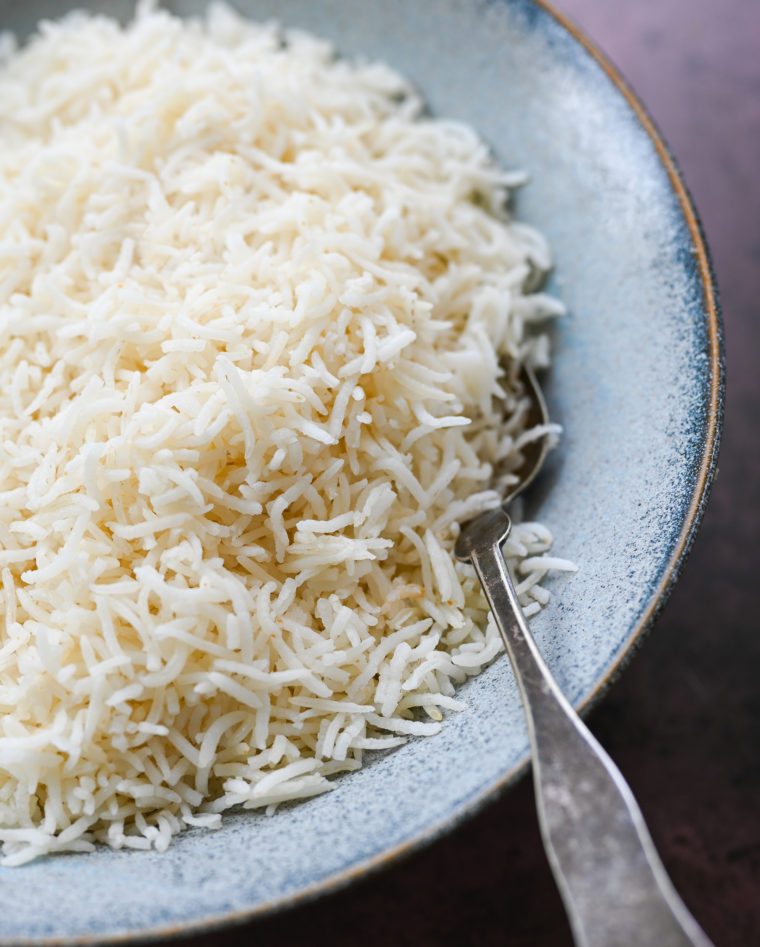
I love basmati rice for its wonderful fragrance and delicate, nutty flavor, which pair so well with richly spiced Indian dishes. Making rice should be simple, but as I often say, sometimes the simplest dishes are the trickiest to get right. Fortunately, with a little know-how, you can make beautifully fluffy rice with long, separate grains every time.
For this basmati rice recipe, I recommend starting with a high-quality brand of rice, preferably one imported from India or Pakistan. Not all basmati rice is alike, and some domestic varieties don’t have the same extra-long grains you may be used to seeing at Indian restaurants. My favorite brand is Jyoti Basmati Supreme, which has especially long grains that expand beautifully. I use 1 cup of rice to 1¾ cups of water, a ratio that’s worked well for me over the years.
“This truly is the perfect basmati rice! Tried and true, this recipe never fails…much better than the package directions!”
What You’ll Need To Make Basmati Rice

How To Make Basmati Rice
Rinse the rice: Place the rice in a fine-mesh strainer and rinse under cold running water, gently swishing the grains with your hand, until the water runs almost clear. Alternatively, rinse the rice in a bowl of water several times, draining between rinses.

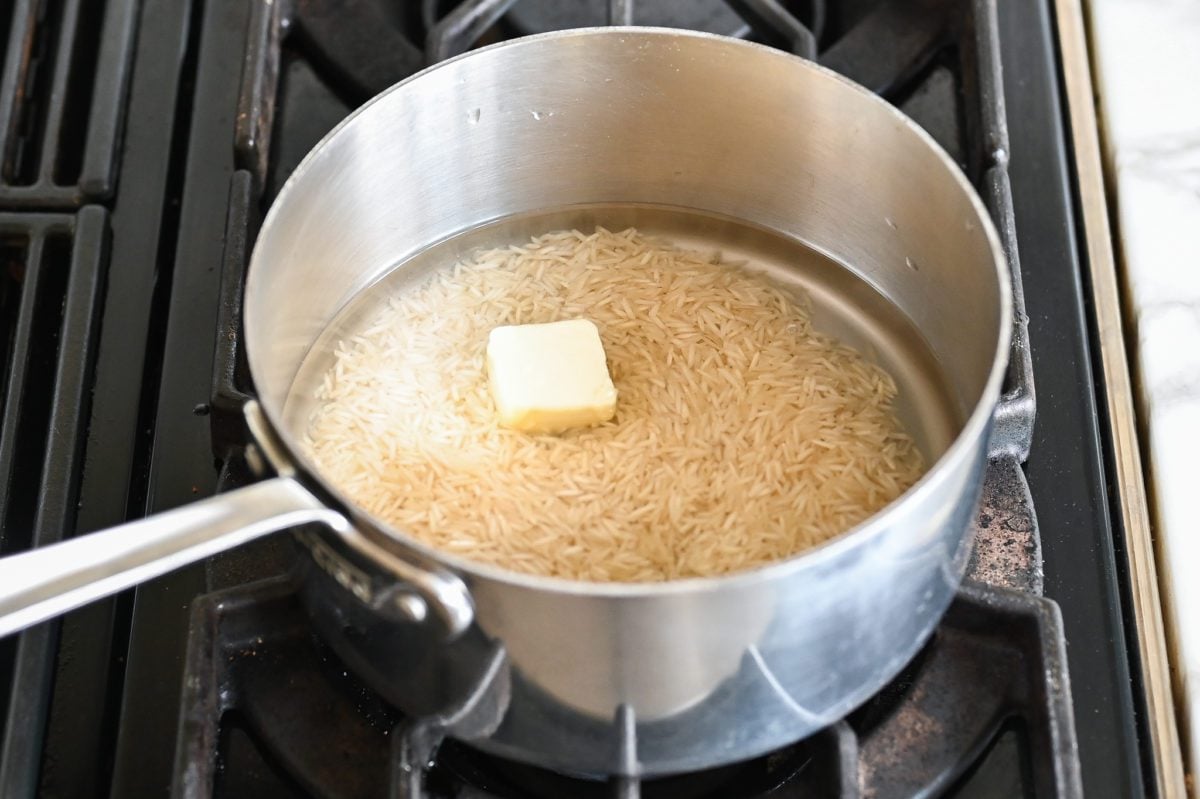
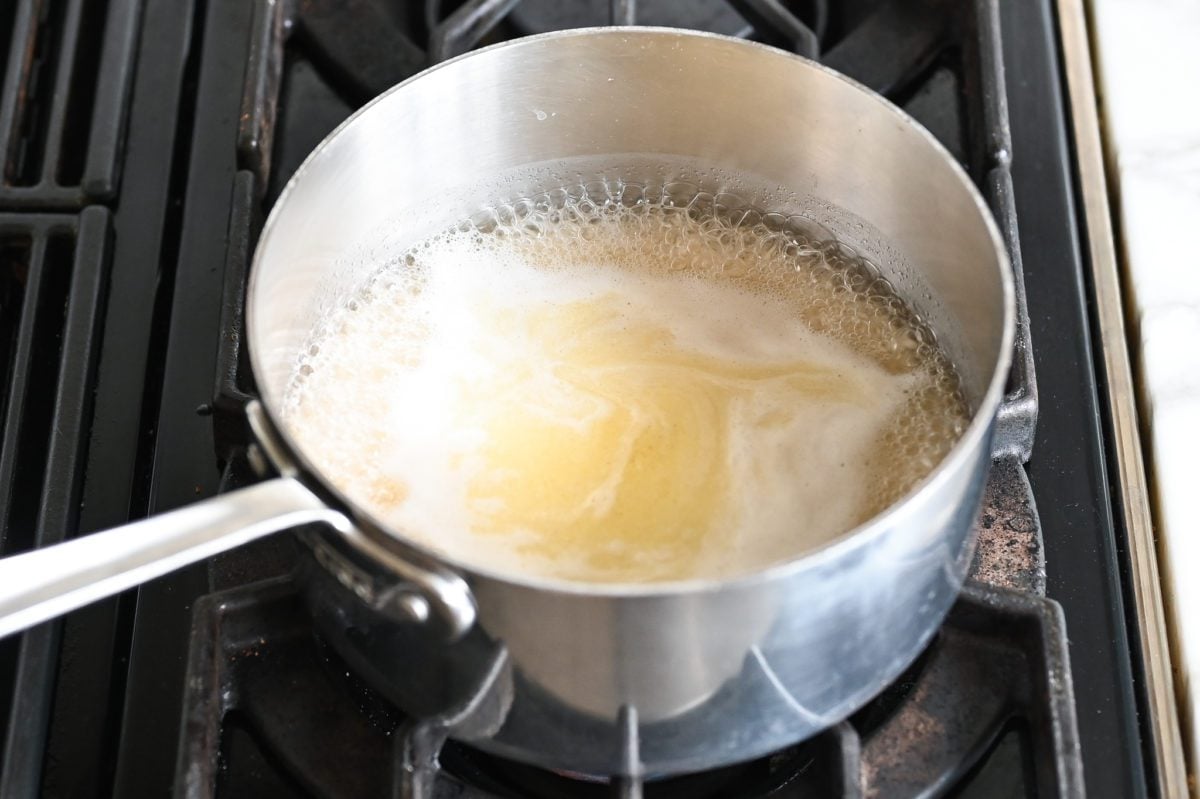
Cook the rice: Combine the rice, water, butter, and salt in a medium saucepan and bring to a boil. Once the water is bubbling, cover with a tight-fitting lid and reduce the heat to a gentle simmer. The rice is ready when the water has been absorbed and the grains are tender. If they’re still a little firm, add a few tablespoons of water and continue cooking briefly.
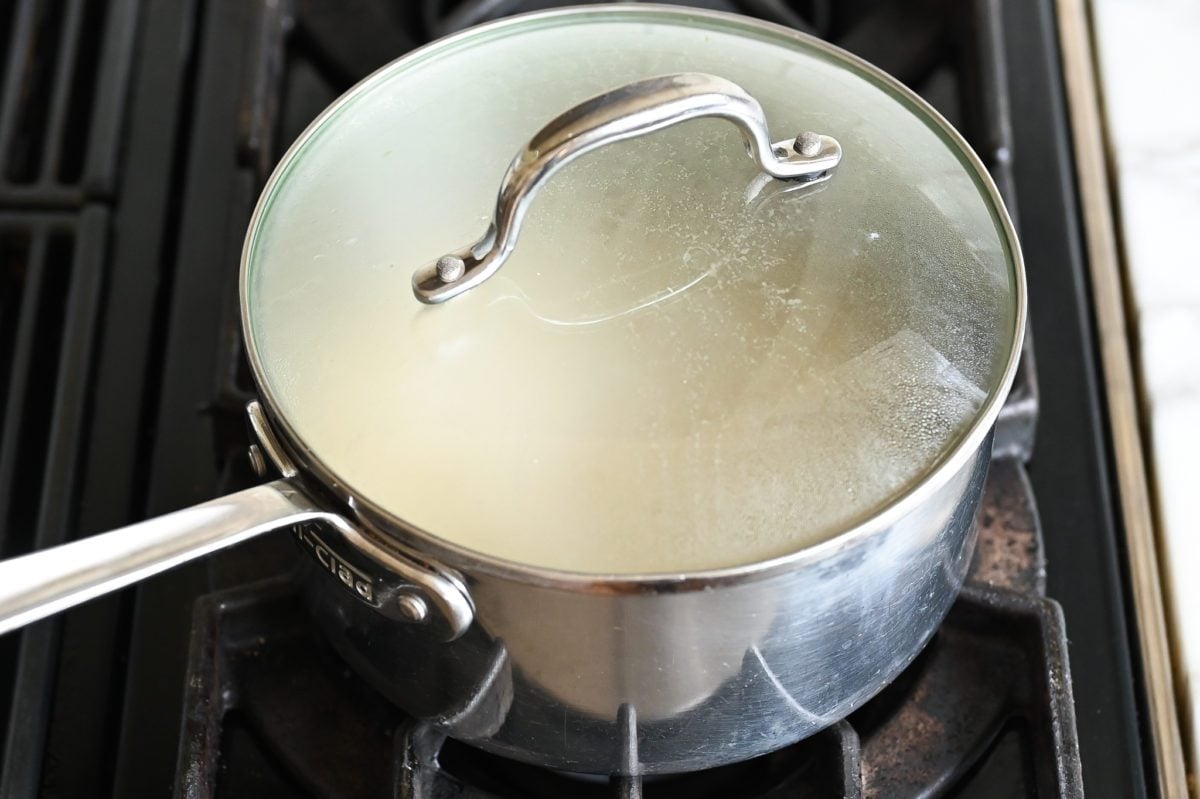

Rest and fluff: Remove the pan from the heat and leave it covered so the rice can finish steaming. Then gently fluff with a fork, lifting and separating the grains rather than stirring them. Serve warm.

How To Store, Freeze & Reheat Basmati Rice

Store: Transfer leftover rice to a shallow container so it cools quickly, then refrigerate promptly, ideally within an hour. Store in an airtight container and use within 1 to 2 days.
Freeze: Once cooled, transfer the rice to freezer-safe containers or resealable bags. Flattening the bags makes them easier to stack and helps the rice thaw or reheat evenly. Freeze for up to 3 months.
Reheat: Add a splash of water to keep the rice moist, cover, and microwave until steaming hot throughout. You can reheat frozen rice directly from the freezer without thawing it first.
Perfect Basmati Rice

Ingredients
- 1 cup basmati rice preferably imported from India or Pakistan
- 1¾ cups water
- 1½ tablespoons unsalted butter
- ½ teaspoon salt
Instructions
- Rinse the rice: Place the rice in a fine-mesh strainer and rinse under cold running water for 1 to 2 minutes, gently swishing the grains with your hand, until the water runs almost clear. Alternatively, rinse the rice in a bowl of water several times, draining between rinses.
- Cook the rice: Combine the rice, water, butter, and salt in a medium saucepan and bring to a boil. Cover with a tight-fitting lid, reduce the heat to low, and simmer for 15 to 20 minutes, until the water is absorbed and the rice is tender. If the rice is still a little firm, add a few tablespoons of water and cook for a few minutes more.
- Rest and fluff: Remove the pan from the heat and let the rice rest, covered, for 5 minutes. Fluff gently with a fork and serve.
Nutrition Information
This website is written and produced for informational purposes only. I am not a certified nutritionist and the nutritional data on this site has not been evaluated or approved by a nutritionist or the Food and Drug Administration. Nutritional information is offered as a courtesy and should not be construed as a guarantee. The data is calculated through an online nutritional calculator, Edamam.com. Although I do my best to provide accurate nutritional information, these figures should be considered estimates only. Varying factors such as product types or brands purchased, natural fluctuations in fresh produce, and the way ingredients are processed change the effective nutritional information in any given recipe. Furthermore, different online calculators provide different results depending on their own nutrition fact sources and algorithms. To obtain the most accurate nutritional information in a given recipe, you should calculate the nutritional information with the actual ingredients used in your recipe, using your preferred nutrition calculator.
Gluten-Free Adaptable Note
To the best of my knowledge, all of the ingredients used in this recipe are gluten-free or widely available in gluten-free versions. There is hidden gluten in many foods; if you’re following a gluten-free diet or cooking for someone with gluten allergies, always read the labels of your ingredients to verify that they are gluten-free.
What to Serve with Basmati Rice
Basmati rice is especially good with Indian dishes because its light, fluffy grains are perfect for soaking up flavorful sauces. I love serving it with butter chicken or chicken tikka masala, but it’s also delicious alongside just about any curry. Add some warm naan and a simple cucumber salad, and you’ve got a wonderful meal.
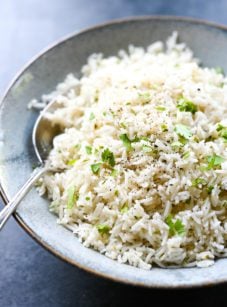

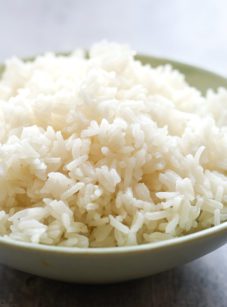
It turned out perfect. Thank you!
This recipe worked great and my daughter kept saying that the rice was the best part of the meal
I tried with brown basmati rice and added the gravy of the chicken legs we baked. Very good result! Thanks for the recipe
Excellent white basmati rice using all measurements given in recipe and a vented rice cooker. The butter and salt brought out the nutty flavor of the basmati!
Success! Used brown basmati, rinsed the same several times (more like 8-10 tomes) but otherwise followed recipe as is. It was delicious. Thank you!!!
Sorry forgot my rating.
My husband does NOT like rice, at all!!! I used your recipe for basmati, and he really enjoyed it!! So much, we are having it again tonight!! Thank you the recipe is delicious!!!👍👍👍😀😀😀😀
Turned out great, I used coconut oil instead of the butter and it’s the first time I have rinsed out the rice 4 times but it was definitely worth the rinses, it worked perfectly, thanks
Way too much liquid. Completely overcooked and generally awful. I’ve lived in Asia for over a decade and just came back to the states, thinking the lack of humidity would change the radio of water to rice, but this just didn’t work.
I have made this recipe numerous times and like the title says, it turns out perfectly every time!
Excellent recipe. Turned out perfect.
Awful mushy mess. I followed the recipe to a T and ended up throwing out and starting over. Total waste!!!
This recipe is the opposite of perfect basmati rice. I followed the recipe exactly and what I got instead was a mushy mess. I ended up throwing everything away and wasting my time. The amount of water called for is simply not correct. After much searching the only basmati recipe that truly makes perfect basmati rice is the one from food52.com . Don’t bother with this one.
Two kinds of rice are in market one from indian side and from pakistani. indian basmati rice needs less water and pakistani needs more water. you have to take into account this as well. I think there is a gap in above recipe which is after boiling you need to heat rice for five minutes with lid on and very low heat. Thereafter with lid still on rice should be left for another ten minutes. This will dry the cooked rice. Then there will be no mushy mess.