

This post may contain affiliate links. Read my full disclosure policy.
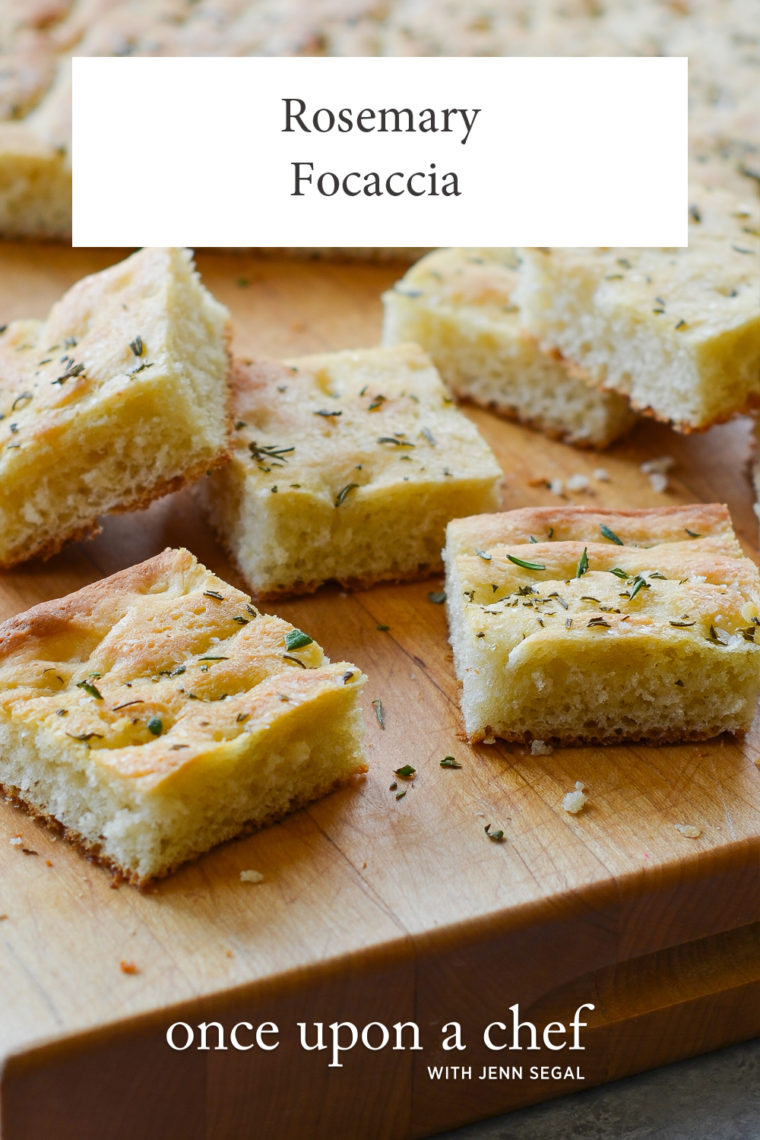
Learn to make focaccia, the simple Italian flatbread with its signature dimpled surface and rich olive oil flavor—it’s easier than you think!
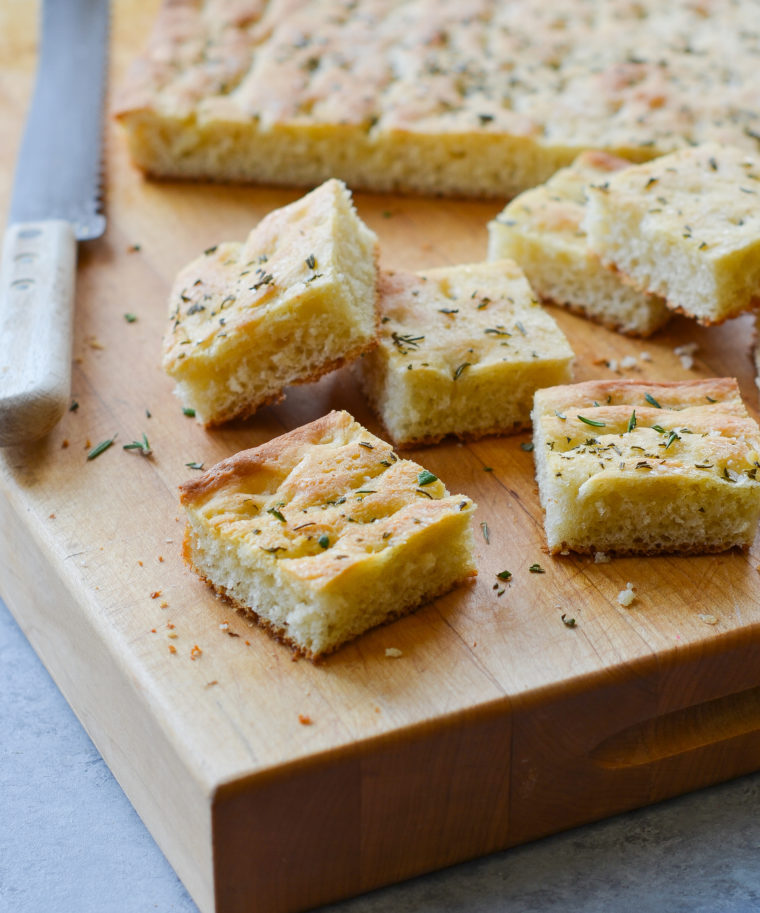
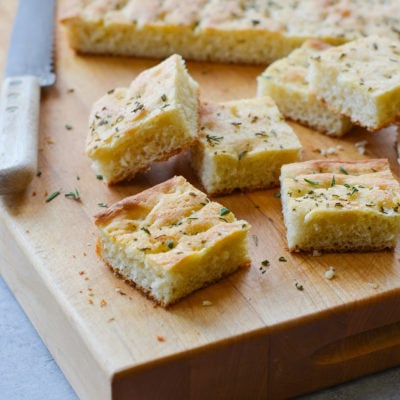
Perfect for feeding a crowd, focaccia is a rich and flavorful Italian flat bread baked in a sheet pan. It’s made with a yeast dough that rises twice: once after it is mixed and then again after it is shaped. To give the bread its signature dimpled appearance, you use your fingers to form little indentations all over the dough. These “dimples” hold tiny pools of olive oil that soak into the bread as it bakes. The recipe calls for about one cup of oil, which I know seems like a lot, but that’s what makes focaccia so good!
Adapted from Anne Burrell, this simple focaccia recipe is topped with coarse salt and fresh rosemary, but other toppings can be added, such as thinly sliced tomatoes, cherry tomatoes, olives, caramelized onions or Parmesan cheese. Enjoy the bread warm out of the oven with pasta fagioli, zuppa Toscana, bolognese, or Italian wedding soup. Leftovers make wonderful sandwiches.
“Thanks for another hit Jenn! I made this for Christmas Eve and it paired perfectly with your classic lasagna.”
What You’ll Need To Make Focaccia
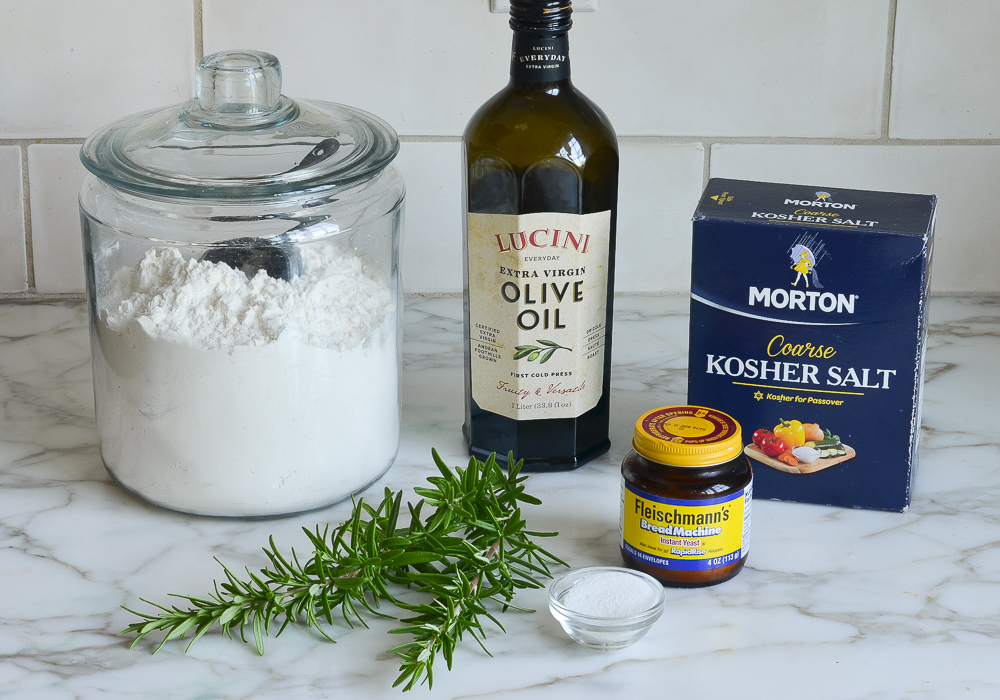
- All-purpose flour: The base of the dough. Be sure to use the spoon and level method (spoon the flour into your measuring cup and level it off with a knife) for accuracy and best results.
- Sugar: Feeds the yeast to help the dough rise.
- Yeast: Makes the bread rise. I use instant or rapid-rise yeast (sometimes labeled “bread machine yeast”) for focaccia and other yeast breads because it rises much faster than active dry yeast. You can find it in jars or packets, and once opened, it keeps in the fridge for 3 to 6 months. If you don’t bake homemade breads often, I recommend buying the individual packets to ensure freshness.
- Kosher salt: Adds flavor to both the dough and the top of the focaccia.
- Warm water: Activates the yeast and brings the dough together.
- Extra-Virgin Olive oil: Provides richness and flavor while also creating a crispy bottom. Note that it is added in stages, so be sure to read the recipe carefully before starting so that you don’t accidentally add it all at once.
- Fresh rosemary: Adds an earthy, fragrant flavor. Feel free to experiment with other herbs like thyme or oregano for a different twist.
- Jump to the printable recipe for precise measurements
Step-By-Step Instructions
Step 1: Combine the dry and wet ingredients. Combine the flour, salt, sugar, and yeast in the bowl of a stand mixer fitted with the dough hook. Add the liquid ingredients.
Pro Tip: Use a kitchen scale to weigh your flour if you have one. Focaccia dough is all about the hydration level, and even a little extra flour from a packed measuring cup can turn a light, airy bread into a dense one.
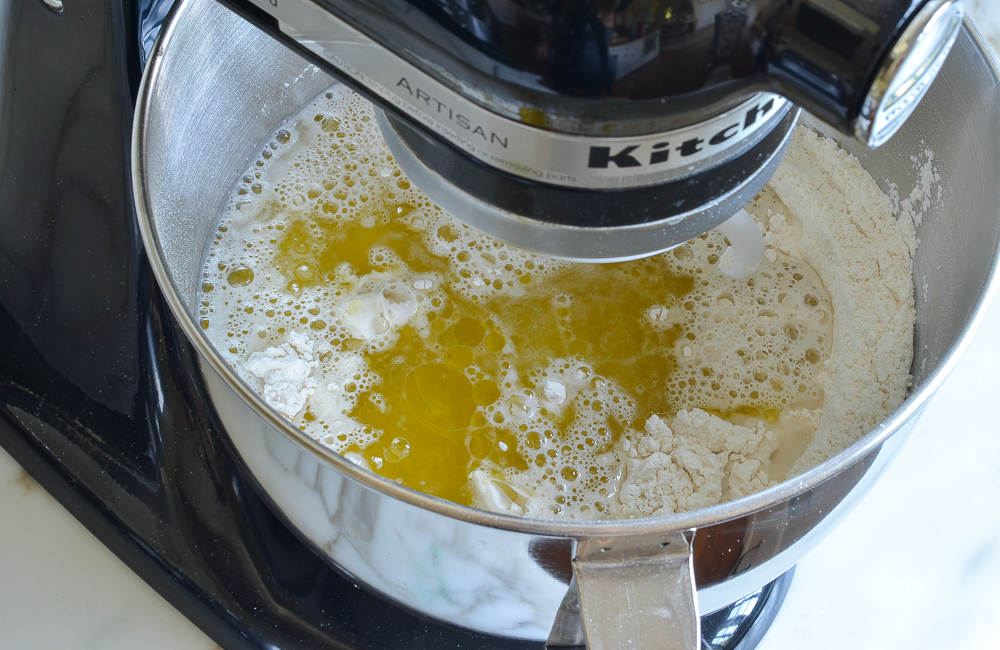
Step 2: Mix until sticky. Mix on low speed until the focaccia dough comes together into a sticky mass.
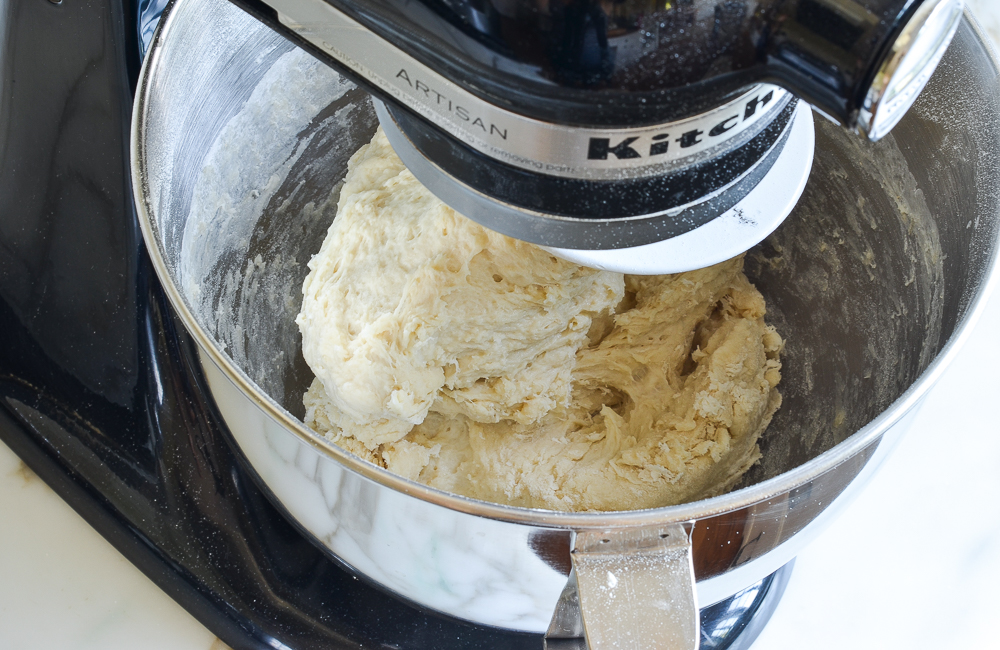
Step 3: Knead the dough. Increase the speed to medium and knead for 5 to 6 minutes. The dough should be soft and slightly sticky at the bottom; if it seems too wet, add a sprinkle of flour.
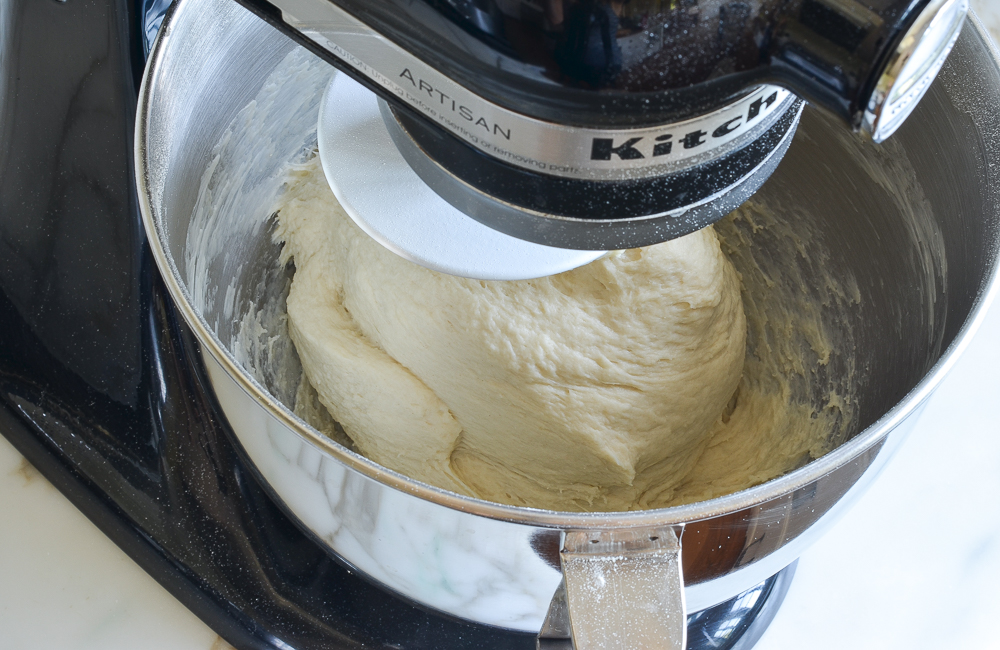
Step 4: Hand knead and prep for rise. Transfer the dough to a lightly floured surface and knead by hand until it forms a smooth ball. Place it in a large greased bowl, flipping once to coat with oil.
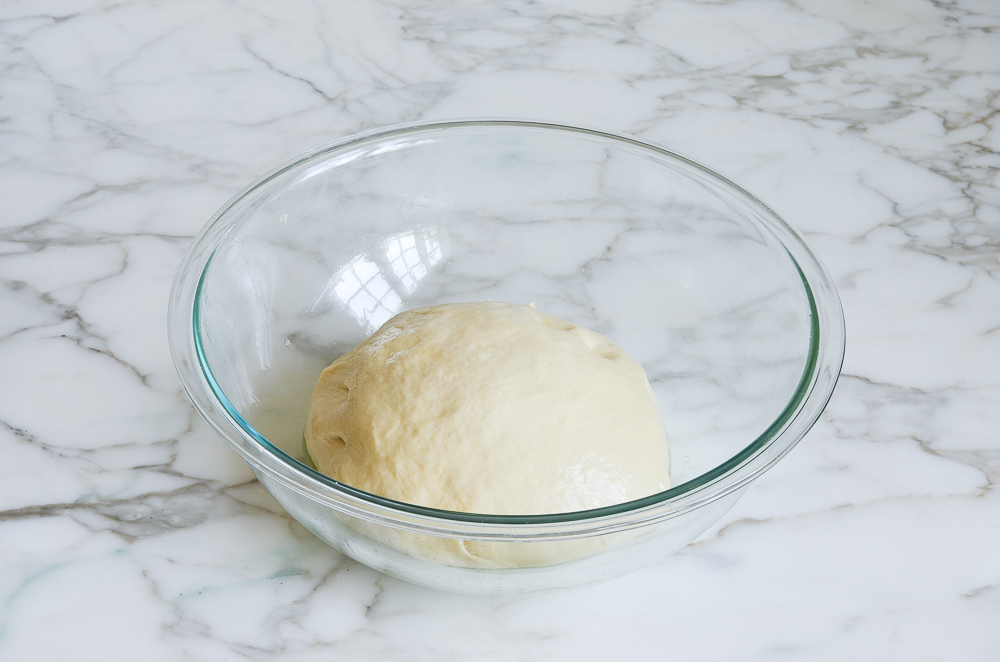
Step 5: First rise. Let the dough rise in a warm, draft-free spot until doubled in size, which typically takes 1 to 2 hours.
Pro Tip: Rising times can vary based on your kitchen’s temperature and humidity. On a cold day, your dough might need the full two hours, while a warm, humid kitchen can cut that time significantly.
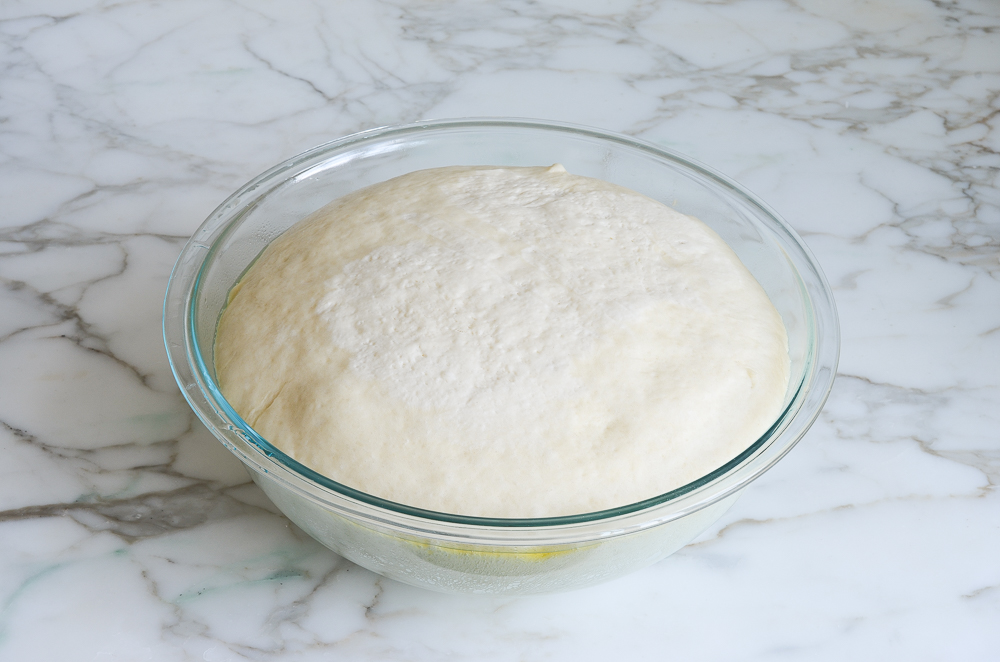
Step 6: Oil the pan and dough. Pour ¼ cup of olive oil onto a rimmed baking sheet and place the dough on top. Flip the dough over so both sides are coated with oil. (Yes, it’s a lot but that’s what gives focaccia its deliciously crispy bottom!)
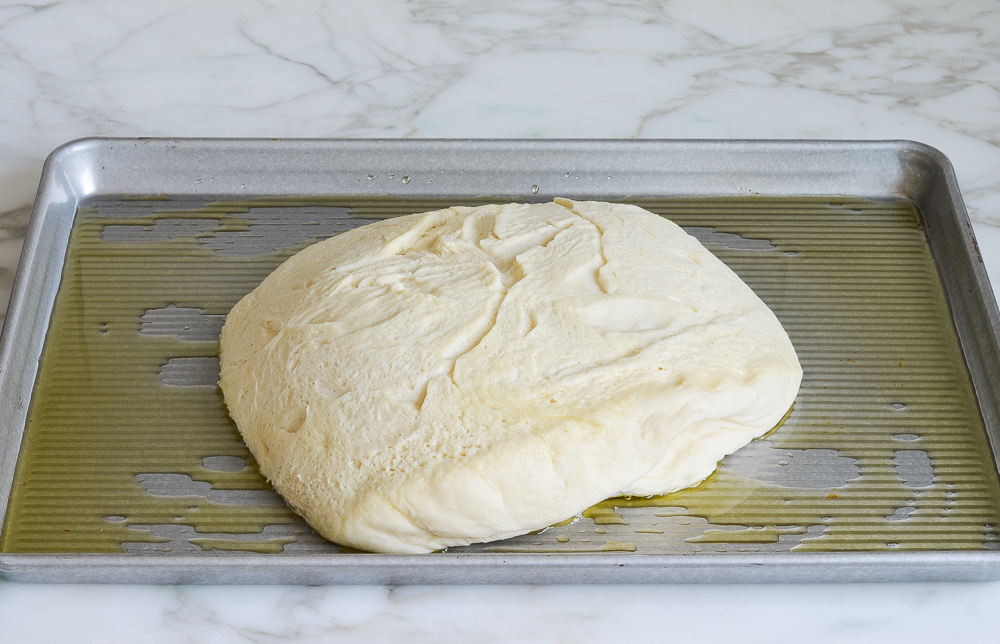
Step 7: Stretch and dimple. Use your hands to spread the dough out to the corners of the pan. Then use your fingertips to make dimples all over the surface of the dough.
Pro Tip: If the dough keeps shrinking back while you try to stretch it to the corners, let it rest for five minutes to relax the gluten, then try again.
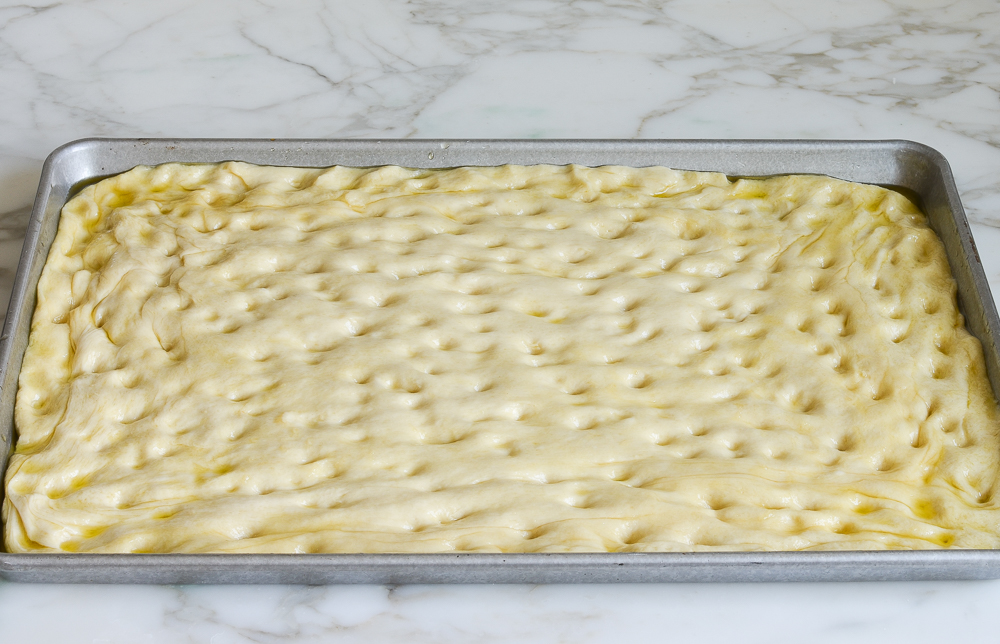
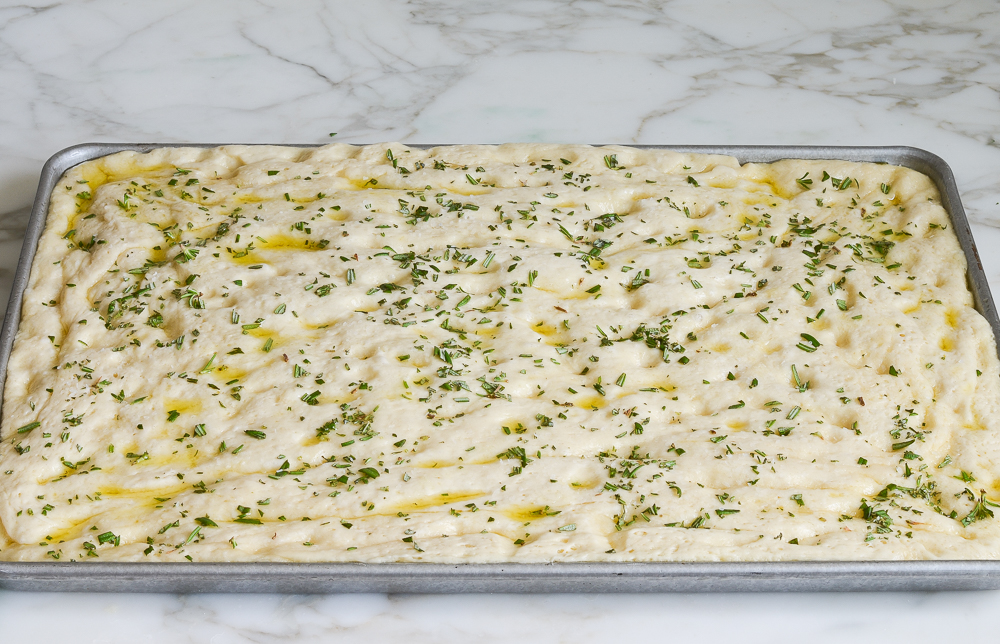
Step 8: Second rise and toppings. Cover with plastic wrap and let rise in a warm spot until puffed and doubled, about 1 hour. Drizzle with more olive oil to fill the dimples, then sprinkle with kosher salt and fresh rosemary.
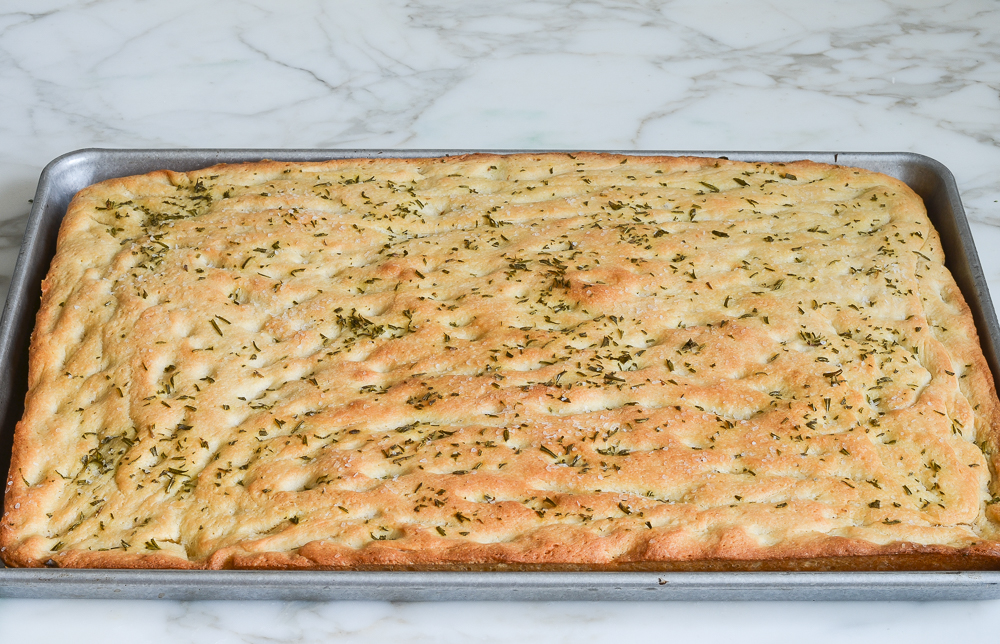
Step 9: Bake, cool, and serve. Bake the bread for about 20 minutes, until it is nicely golden brown. Cool in the pan for 15 minutes before transferring to a cutting board to slice. Serve with an optional drizzle of olive oil. The bread is best if eaten within 1 day, or can be frozen for longer storage.
More Homemade Bread Recipes You’ll Love
Focaccia
Ingredients
- 5 cups all-purpose flour, spooned into measuring cup and leveled-off, plus more for kneading
- 1 tablespoon sugar
- 1 packet (2¼ teaspoons) instant/rapid-rise yeast (see note)
- 1 tablespoon + ¾ teaspoon kosher salt, divided
- 1¾ cups warm water
- ¾ cup extra virgin olive oil, divided, plus more for oiling the bowl and drizzling on top
- 1 tablespoon chopped fresh rosemary, from several sprigs
Instructions
- In the bowl of a mixer fitted with a dough hook, combine the flour, sugar, yeast, and 1 tablespoon of the salt. Mix on low speed to combine. Add the water and ½ cup (120 ml) of the olive oil; mix on low speed until the dough comes together, then turn the speed up to medium-low and continue to knead for 5 to 6 minutes, until the dough becomes soft and slightly tacky. It should stick to the bottom of the bowl a bit. If the dough seems too wet, sprinkle with a few tablespoons of flour, and turn the mixer back on to knead it briefly to combine.
- Transfer the dough to a clean, lightly floured surface (it helps to flour your hands, too). Knead by hand briefly until the dough comes together into a smooth ball.
- Coat the inside of a large bowl with about 1 teaspoon of olive oil. Place the dough in the bowl, flipping once so that both the top and bottom are lightly slicked with oil. Cover the bowl with plastic wrap and put it in a warm, draft-free spot until the dough has doubled in size, 1 to 2 hours. (The warmer the spot, the faster it will rise.)
- Coat a 13 x 18-in (33 x 46-cm) rimmed baking sheet with ¼ cup (60 ml) of olive oil. (It will seem like a lot, but that's what makes the bottom crispy.) Plop the dough onto the prepared pan and begin pressing it out with your hands to fit the size of the pan. Turn the dough over once to coat both sides with olive oil. Continue to stretch the dough to fit the pan. Once the dough is stretched, spread your fingers out and make impressions almost all the way through the dough (don't poke holes, just press down to the bottom of the pan). Cover the pan with plastic wrap and place in a warm, draft-free spot until the dough has puffed up and doubled in size, about 1 hour.
- While the dough is rising a second time, preheat the oven to 425°F (220°C). Set an oven rack in the middle position.
- Sprinkle the top of the focaccia dough with the remaining ¾ teaspoon kosher salt and rosemary, then lightly drizzle about 1 tablespoon of olive oil on top so it pools in the indentations. Bake until golden brown, about 20 minutes. Remove the focaccia from the oven and let it cool in the pan on a wire rack for about 15 minutes. Transfer the focaccia to a cutting board and slice into squares. Drizzle a touch more oil on top before serving, if desired.
Notes
- Active dry yeast can be used as an alternative to instant/rapid-rise yeast; however, the dough will take longer to rise. To give active dry yeast a boost, add it to the warm water in the recipe, let it sit until frothy (about 10 minutes), and then proceed with the recipe.
- Make-Ahead/Freezing Instructions: Focaccia is best eaten freshly baked, but it can be made 1 day ahead of time, if necessary. For best results, wrap the focaccia in aluminum foil and place in a sealed plastic bag at room temperature. Reheat, wrapped in foil, in a 350°F (175°C) oven until just warmed through, about 10 minutes. The focaccia can also be made ahead and frozen. To freeze, cut it into portions, wrap in plastic wrap, and then foil and freeze for up to 3 months. To reheat the focaccia, remove the plastic wrap and re-wrap it in the foil. Heat it in a 350°F (175°C) oven for 10 minutes or until heated through
Nutrition Information
This website is written and produced for informational purposes only. I am not a certified nutritionist and the nutritional data on this site has not been evaluated or approved by a nutritionist or the Food and Drug Administration. Nutritional information is offered as a courtesy and should not be construed as a guarantee. The data is calculated through an online nutritional calculator, Edamam.com. Although I do my best to provide accurate nutritional information, these figures should be considered estimates only. Varying factors such as product types or brands purchased, natural fluctuations in fresh produce, and the way ingredients are processed change the effective nutritional information in any given recipe. Furthermore, different online calculators provide different results depending on their own nutrition fact sources and algorithms. To obtain the most accurate nutritional information in a given recipe, you should calculate the nutritional information with the actual ingredients used in your recipe, using your preferred nutrition calculator.
Help! My company for tonight just had to cancel and my dough is on its first rise. I’d like to make it tomorrow. Should I refrigerate after the first or second rise? Thanks. I’ve made this several times and it’s always fantastic.
Hi Jill, I’d refrigerate it after the first rise. Hope your company enjoys it as much as you do!
Hi Jen,
I’ve made this recipe at least a dozen times with rave reviews. Super fun to make as well. I need to make this for a very small group and would like to know if I can cut the recipe in 1/2. If so, what size pan should I use and would there be any other differences in the recipe? Thanks again!
So glad you like this! Yes, you can halve the recipe and use the same pan if you don’t have a smaller baking sheet. The dough just won’t fill the whole pan.
I made this for a dinner party and served with olive oil/balsamic vinegar & wowed the guests. It was delicious! Thanks Jenn, I can always count on your recipes to be flawless.
I cut the recipe in half and baked the bread in a 9 inch cast iron pan.
Turned out great. Crusty outside, soft inside.
Great focaccia! Jen, Should I make any alterations if I add grapes?
No alterations needed. I’d love to hear how it turns out!
Hi Jenn- I have a small oven, so a 13″ by 18″ sheet pan doesn’t fit in it. Do you think it is okay to make this recipe with a smaller sheet pan (11″ by 15″)? Will it end up just being thicker? Or do you think I should try to just make a smaller batch size? Thank you!
Hi De, While it may work, I’m a little concerned that the outside would get baked but the inside may be a bit doughy.
If you want to make a smaller batch (and can do the math!), 2/3 of the recipe should work well.
Great, I am going to do 2/3! I will let you know how it goes 🙂 thank you very much for the quick reply here!
I made this recipe this afternoon. It was so easy and turned out very well. It was delicious. I served it with homemade chicken soup – a great combination! I am looking forward to trying some more of your recipes.
I made this last night as per the recipe, serving it warm with balsamic vinegar to dip it in. It was delicious. My guests were very impressed and the house smelt amazing. Leftovers today (the next day) are delicious both at room temperature or warmed slightly in the microwave.
Thankyou for the awesome recipe which is a keeper!
This is the best focaccia ever! I have made it several times for gatherings and everyone loves it along with the oil dipping recipe that you suggest. As there are only two of us, can this recipe be halved? Would the amount of yeast be the same? Thanks so much for all of your incredible recipes!
So glad you like this, Elizabeth! Yes, it’s fine to halve this and you’d halve all the ingredients (including the yeast). 🙂
Yum