
Classic Lasagna

This post may contain affiliate links. Read my full disclosure policy.
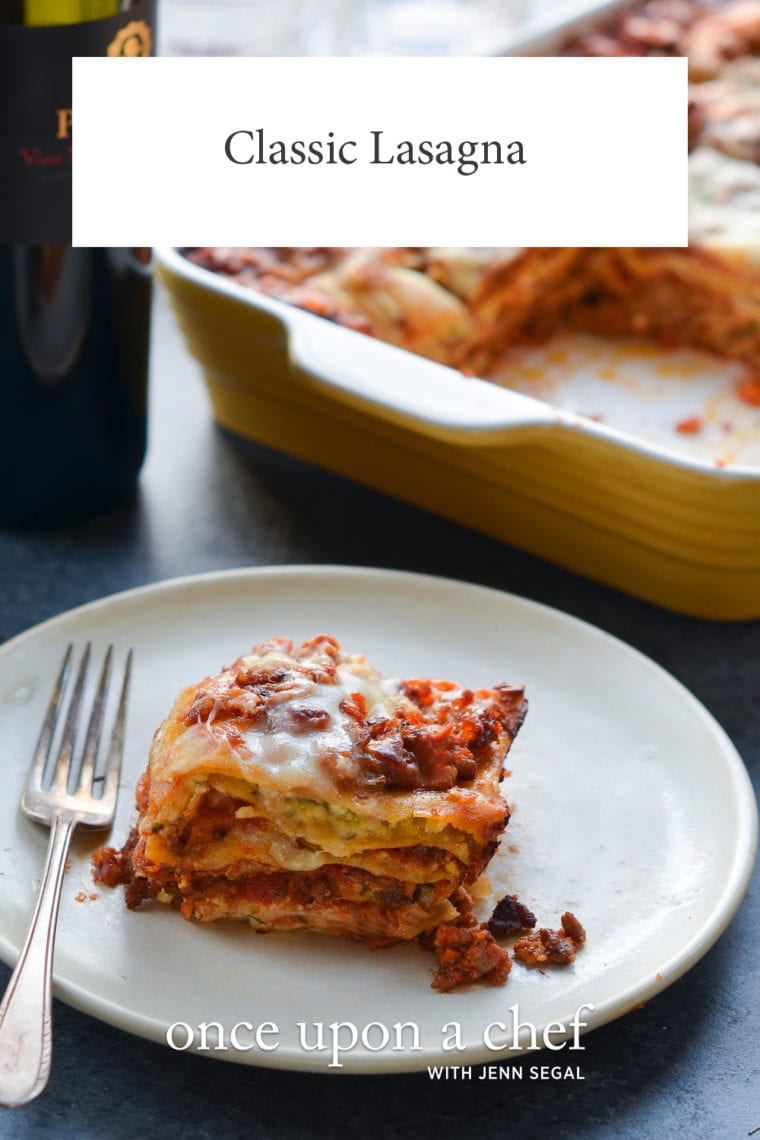
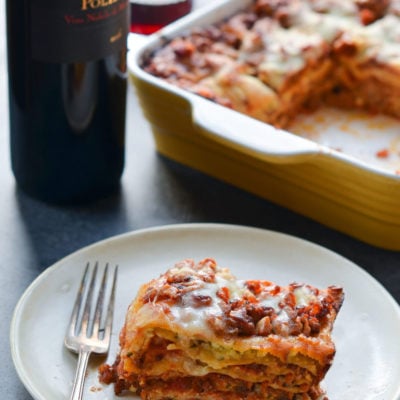
This classic lasagna recipe layers a rich Italian sausage and tomato sauce with creamy ricotta, gooey mozzarella, and tender pasta for one seriously delicious lasagna.
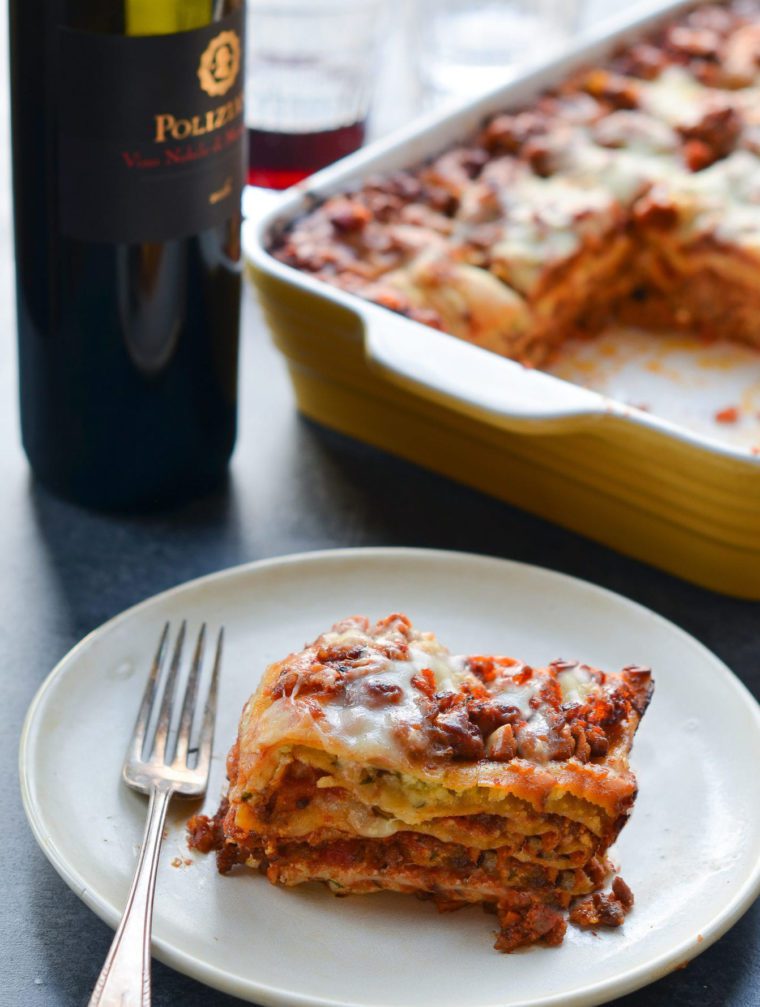
I love this classic lasagna recipe because it has all the cozy, familiar flavors of the lasagna I grew up on, but it tastes like something you’d get at a nice Italian restaurant. The Italian sausage makes the sauce especially rich and flavorful, and a little cream cheese makes the ricotta filling extra smooth and creamy. I also use oven-ready noodles, which save the trouble of boiling a big pot of pasta and have a delicate texture that’s surprisingly close to fresh homemade pasta.
The lasagna takes some time from start to finish, but none of the steps are difficult, and you can assemble the whole thing ahead of time. It freezes beautifully, too.
“Best lasagna recipe—ever! Served with your fab Caesar salad. Conversation at the table was reduced to sighs of delight and an occasional OMG or YUM.”
What You’ll Need To Make Lasagna
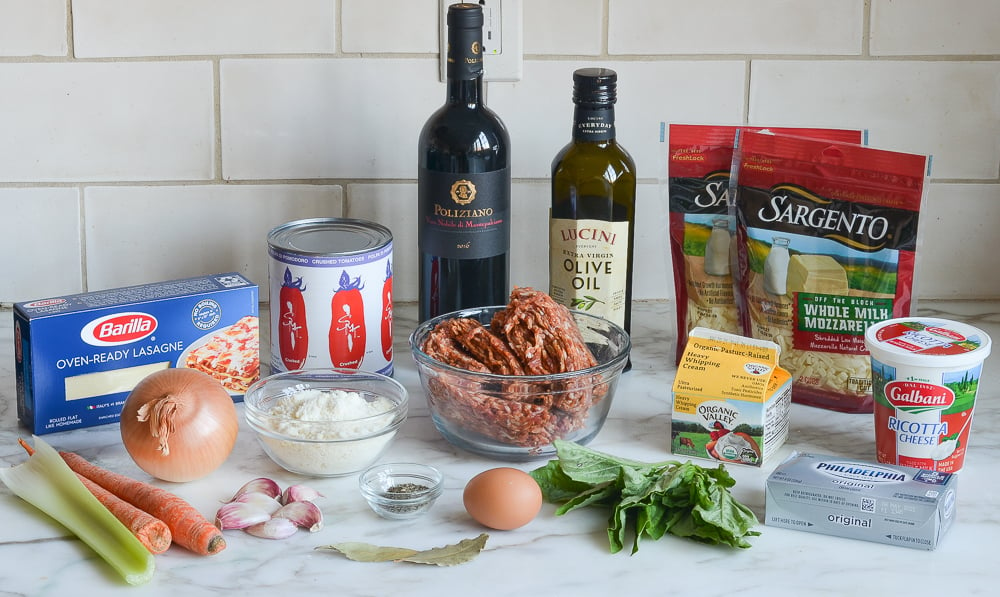
- Onion, Garlic, Carrots & Celery: These aromatic vegetables form the base of the sauce, adding sweetness, savoriness, and depth of flavor.
- Italian Sausage: Adds richness and bold flavor. You can substitute ground beef—just amp up the garlic and Italian seasoning to compensate.
- Crushed Tomatoes, Red Wine & Heavy Cream: The tomatoes provide body and tang, the wine deepens the flavor, and the cream rounds it all out for a rich, well-balanced sauce.
- Ricotta, Cream Cheese, Egg & Parmigiano-Reggiano: These combine for a creamy, flavorful filling that bakes up smooth and rich (the cream cheese keeps the ricotta from getting grainy, and the egg helps it set).
- Oven-Ready (No-Boil) Lasagna Noodles: No need to pre-cook—these absorb the sauce as they bake. I like the Barilla brand best.
- Mozzarella: Melts into gooey, cheesy layers throughout the dish. Pre-shredded is fine—just go for whole milk for the best melt.
- Jump to the printable recipe for precise measurements
How To Make Lasagna
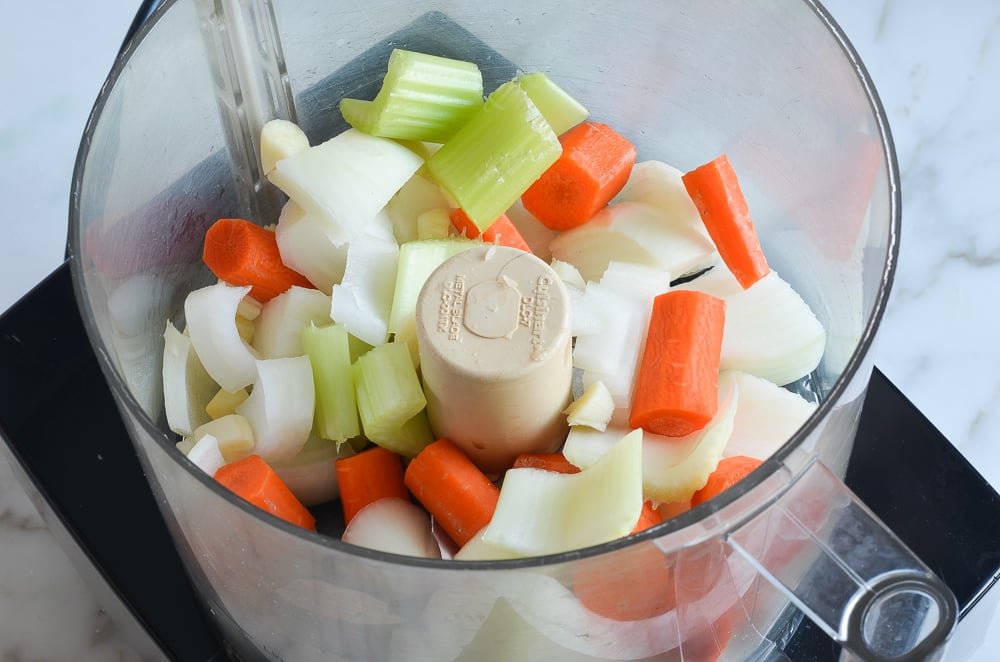
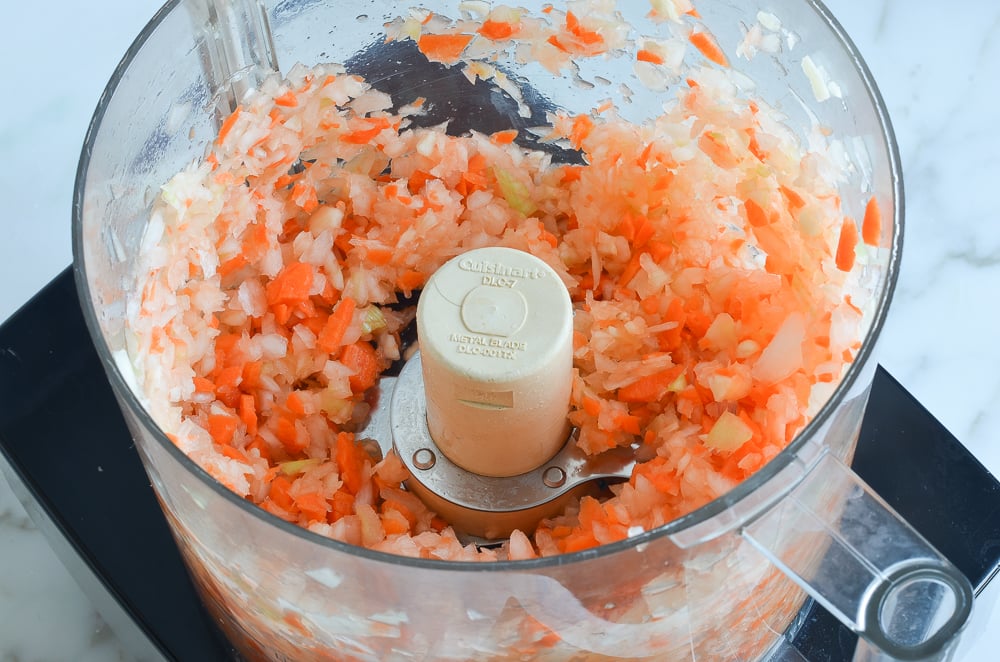
Prep the vegetables: Add the onion, garlic, carrots, and celery to a food processor and pulse until very finely minced, but not puréed. Taking the vegetables down this small helps them practically melt into the sauce. If you don’t have a food processor, it’s fine to chop by hand.
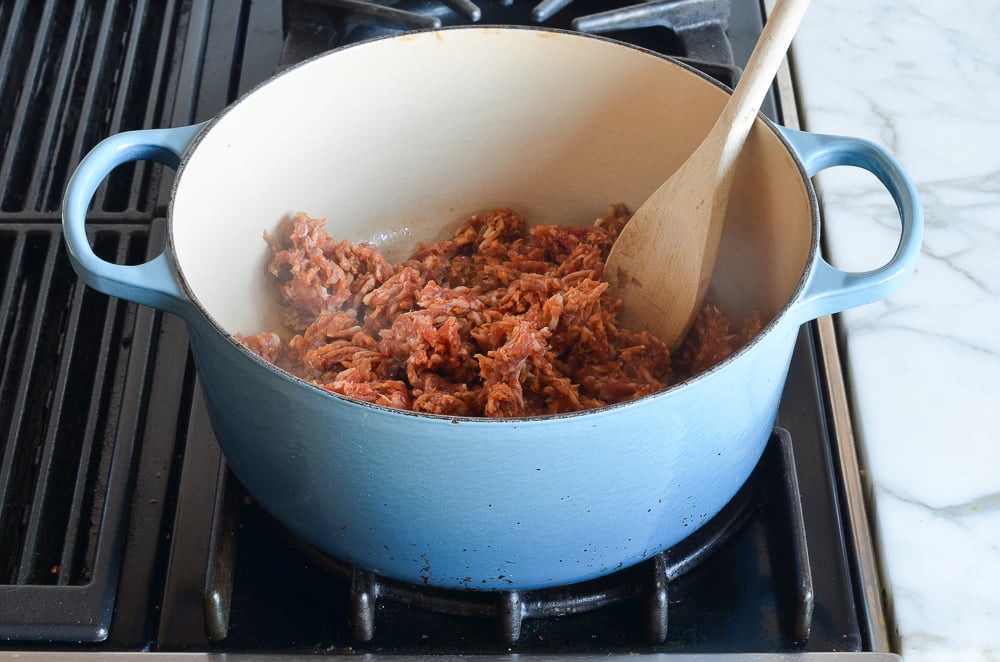
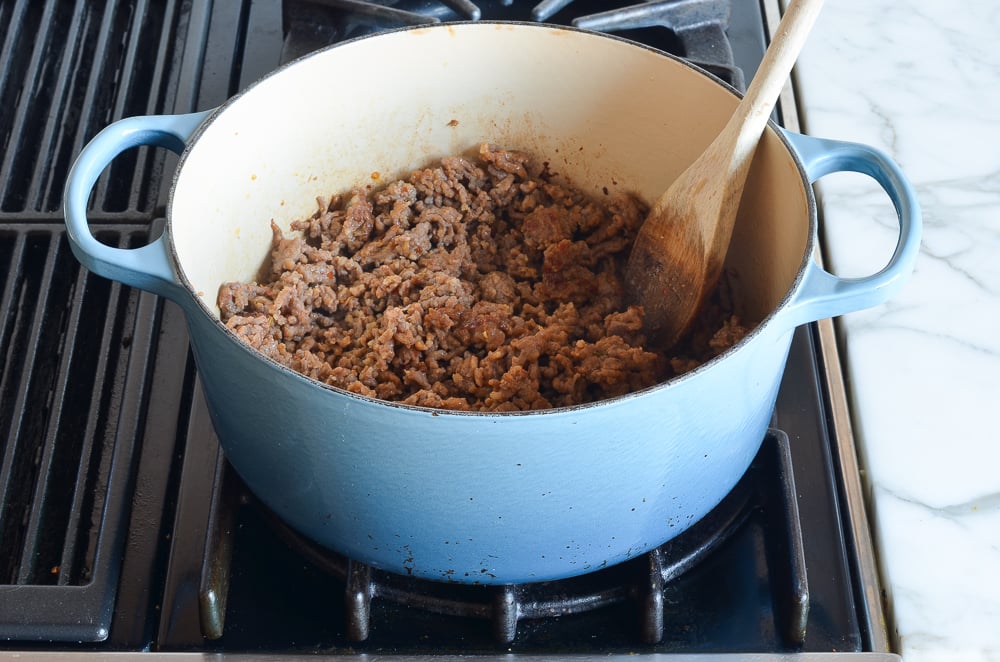
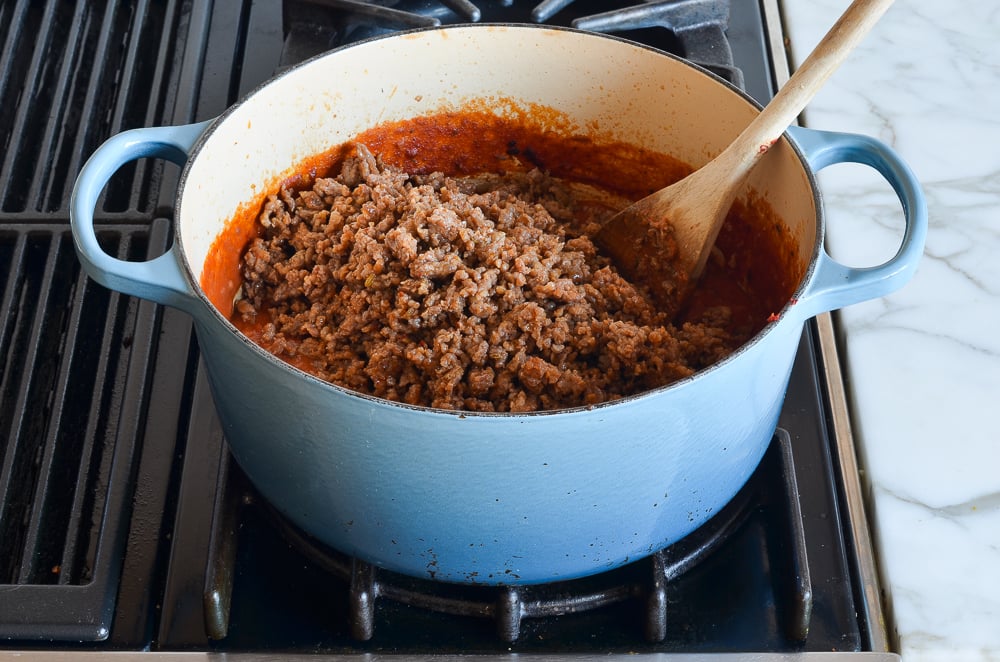
Brown the sausage: Cook the sausage in olive oil, breaking it up as you go, until lightly browned but not cooked all the way through. Transfer it to a plate. Don’t worry about getting it fully cooked at this point—it will finish cooking in the sauce.
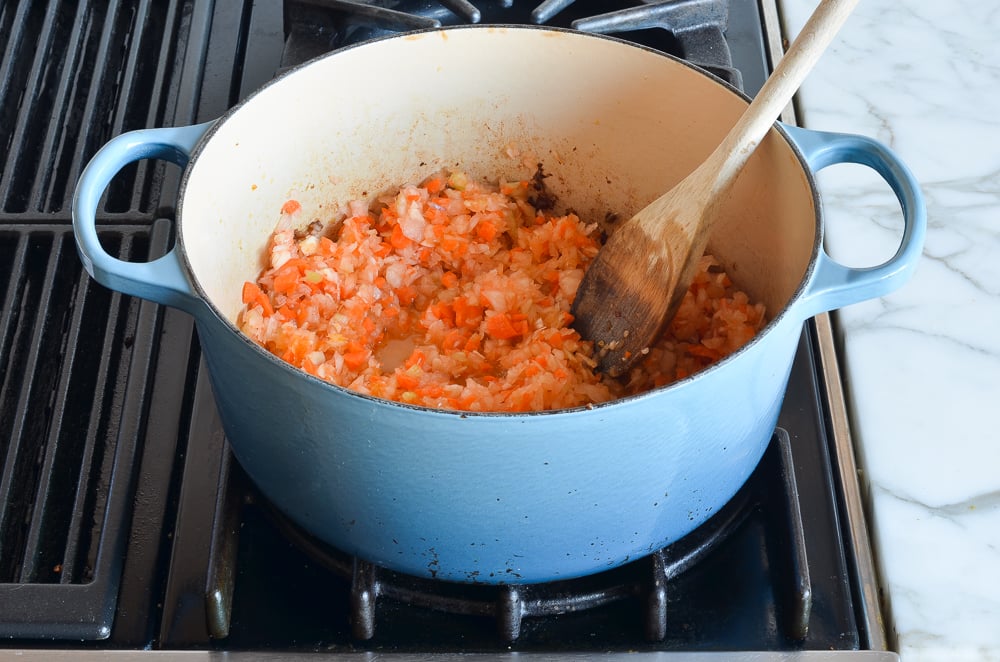
Cook the vegetables: Add the minced vegetables to the same pot and cook until very soft, stirring frequently. You’re looking for them to soften without taking on much color.
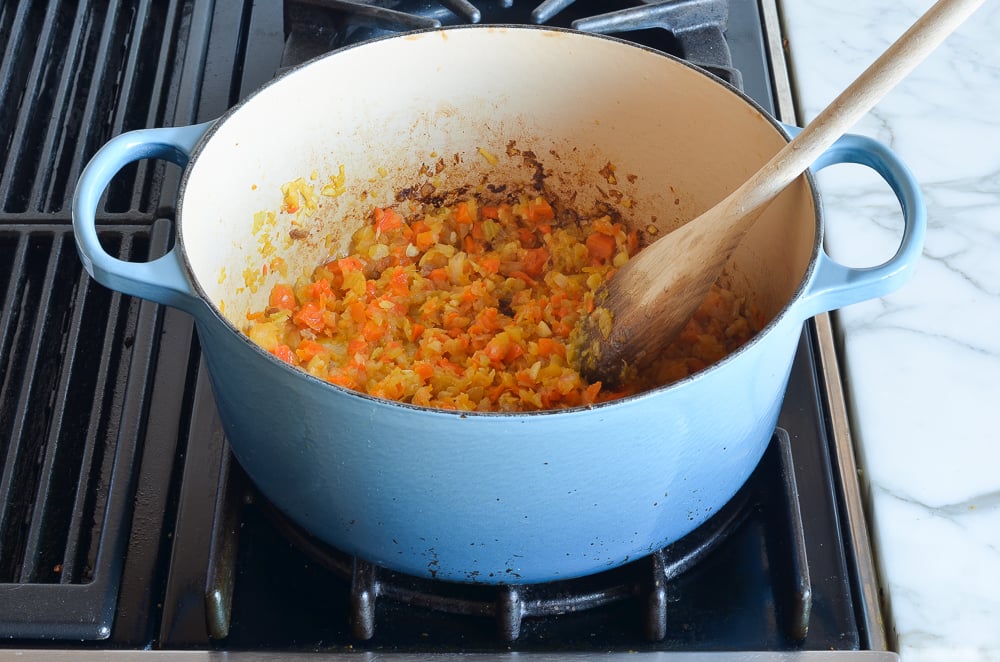
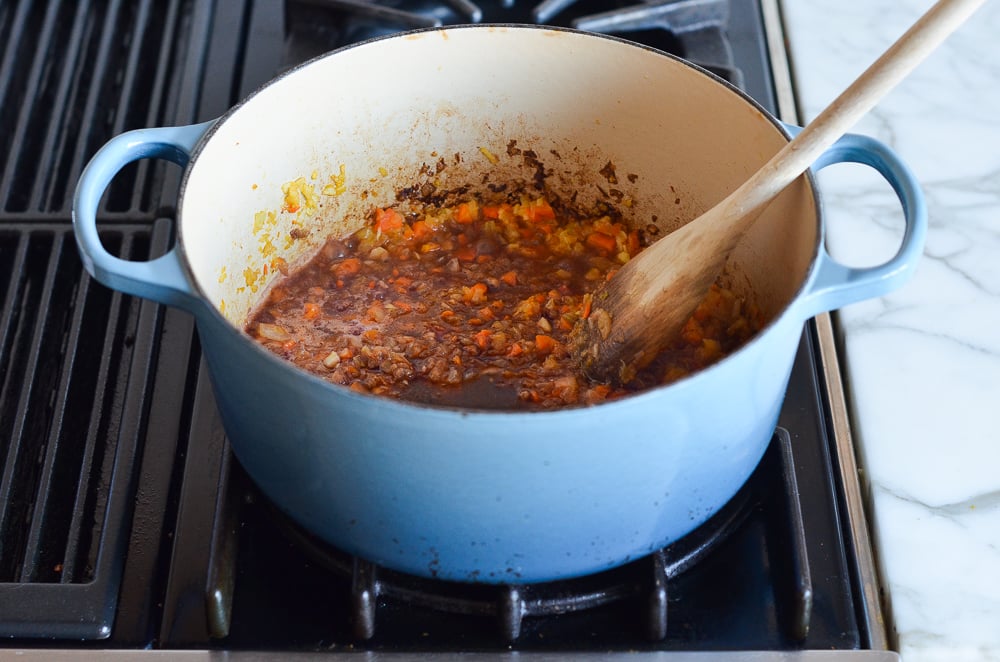
Add the wine: Pour in the wine and scrape up any browned bits from the bottom of the pot. Continue cooking until most of the wine has been absorbed by the vegetables.
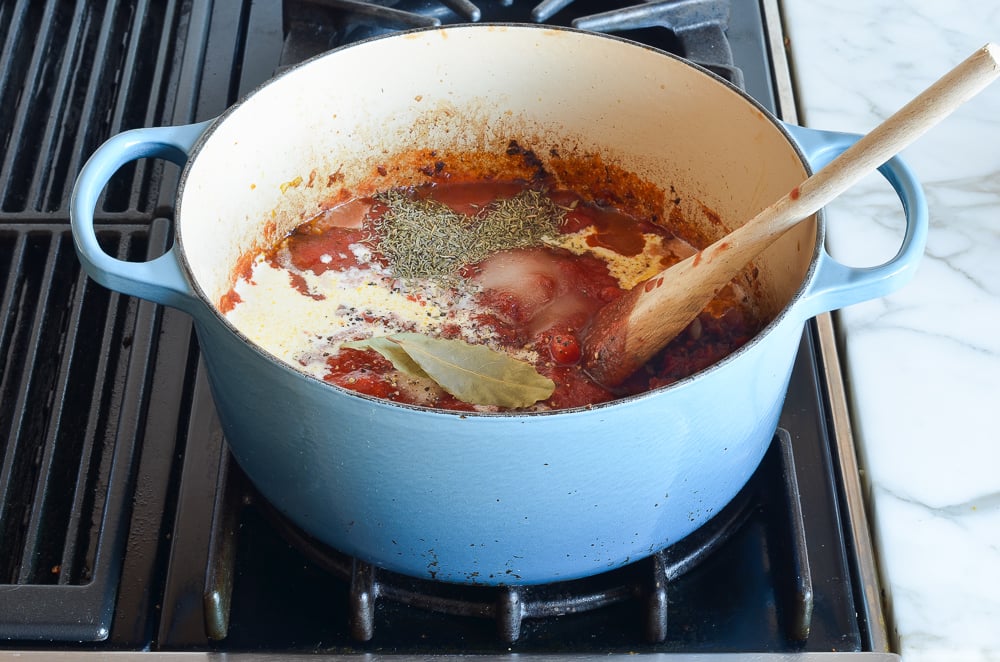
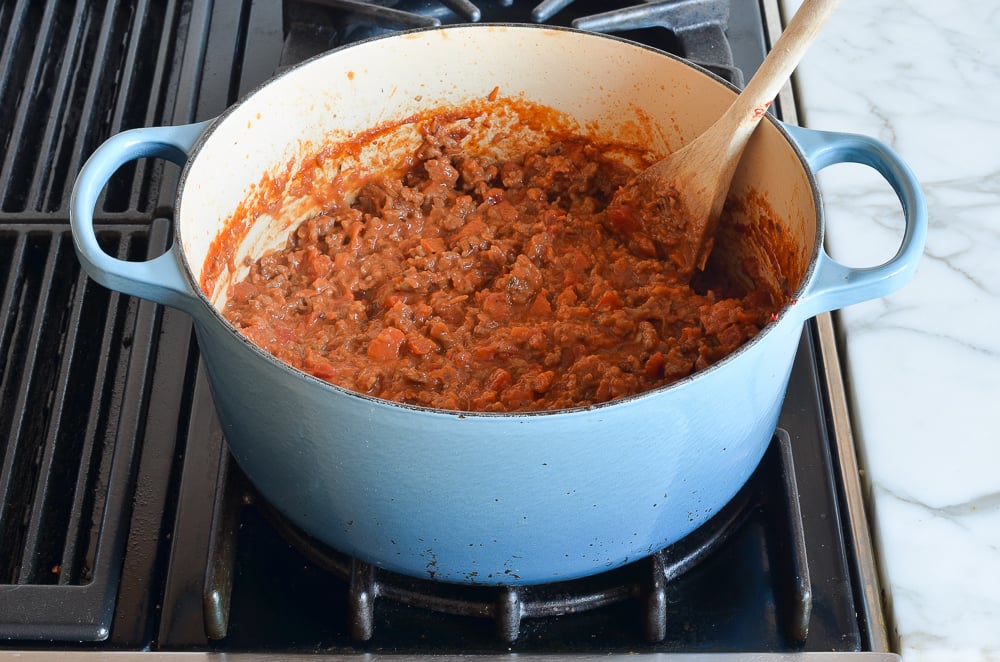
Simmer the sauce: Add the tomatoes, cream, and seasonings and bring to a boil, then reduce the heat and simmer until the sauce thickens.
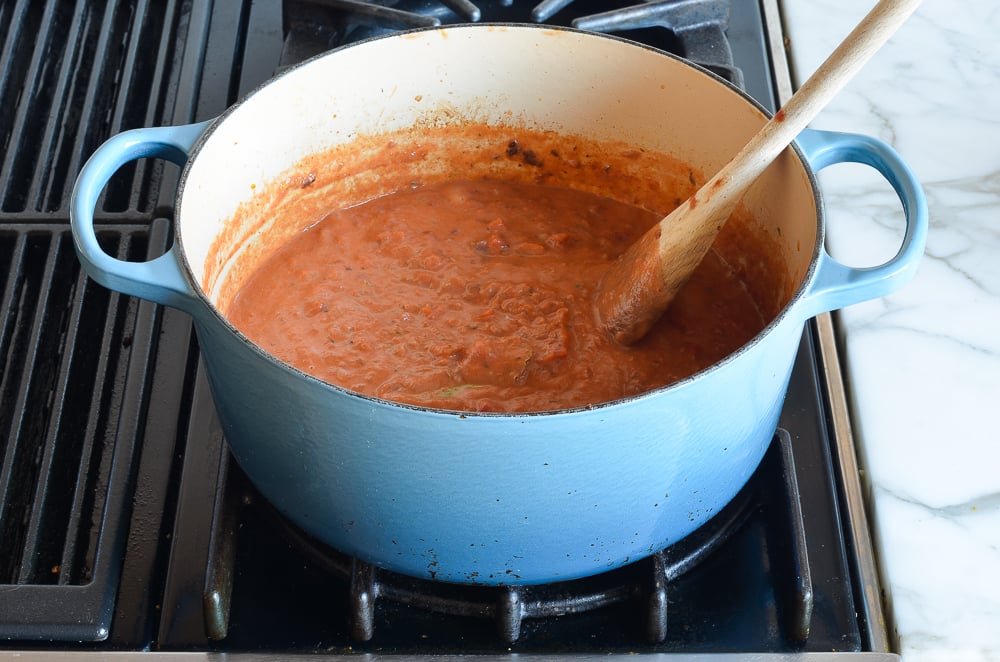
Add the sausage: Chop the browned sausage into smaller pieces—large chunks can make the lasagna harder to layer and slice neatly—and return to the pot. Continue simmering until it’s cooked through and the flavors come together. Remove the bay leaves before assembling the lasagna.
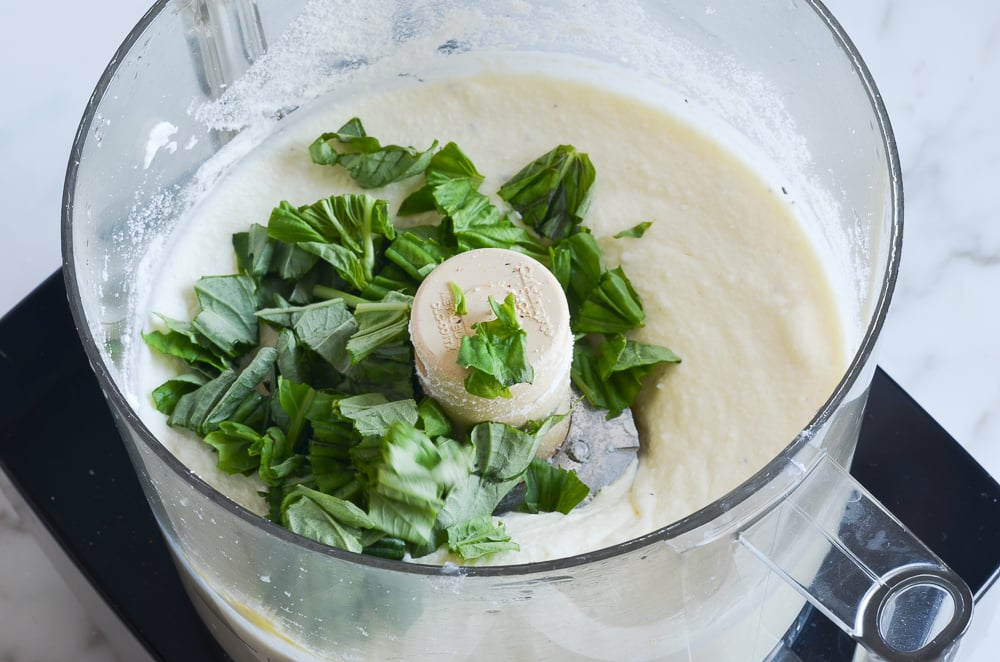
Make the ricotta filling: Process the ricotta, cream cheese, egg, garlic, Parmesan, salt, and pepper until smooth and evenly combined. Add the basil and pulse just until finely chopped. Processing the mixture gives the filling an especially smooth, creamy texture.

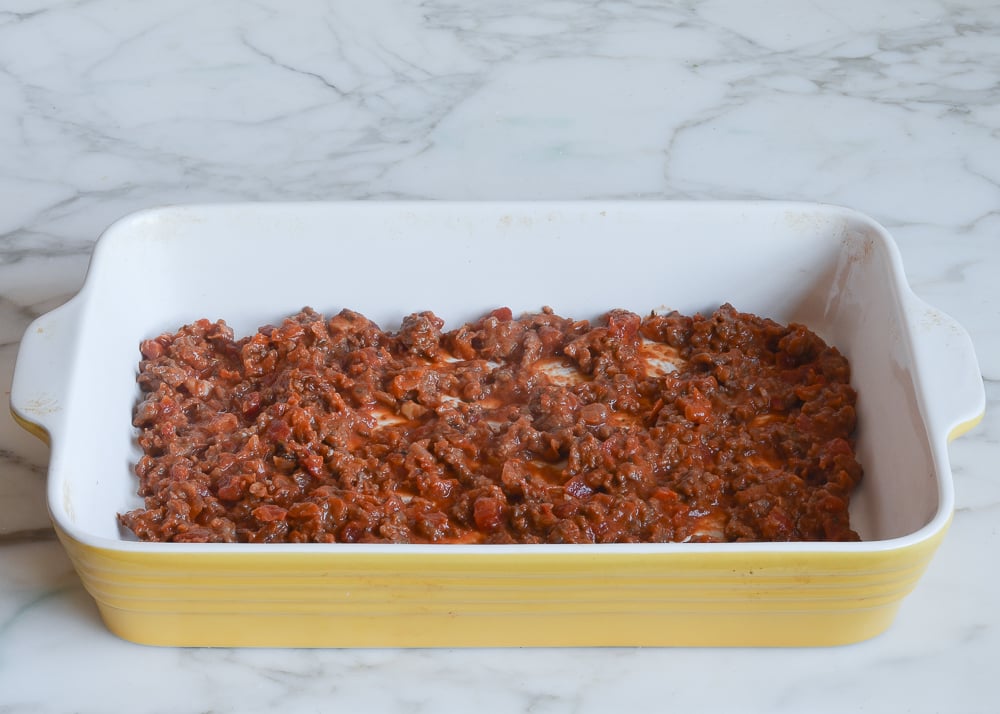
Assemble the lasagna: Spread a layer of sauce over the bottom of the baking dish, then add the noodles, leaving a little space between them—they’ll expand as they cook. Layer with the ricotta filling, mozzarella, and more sauce, repeating until everything is used up and finishing with sauce and cheese on top. Be sure the top noodles are covered with sauce so they have enough moisture to cook properly.
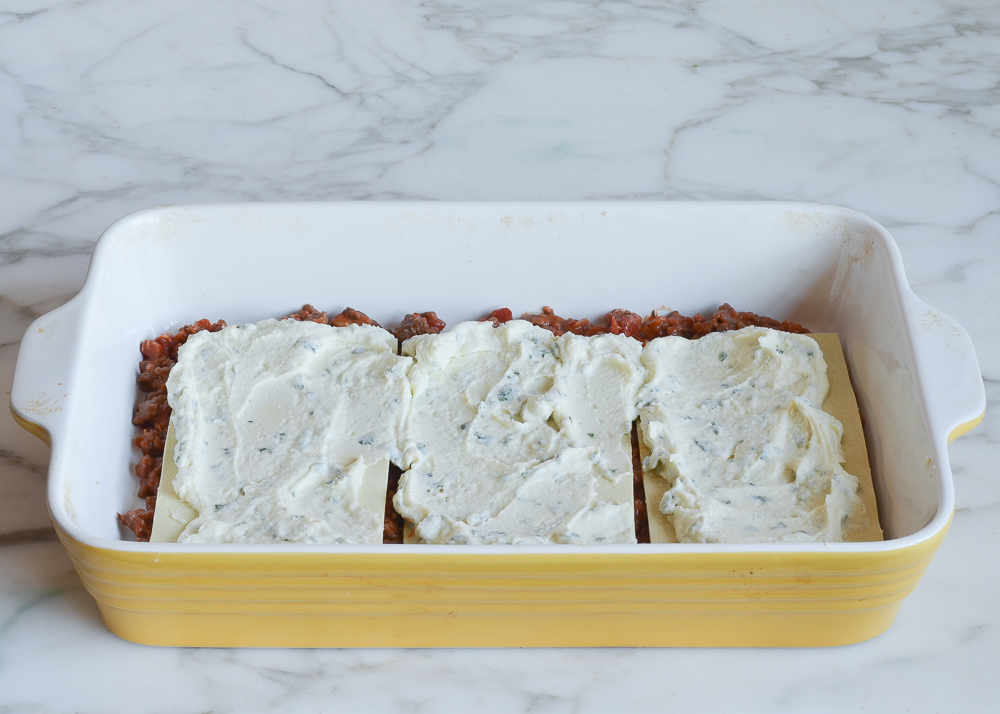
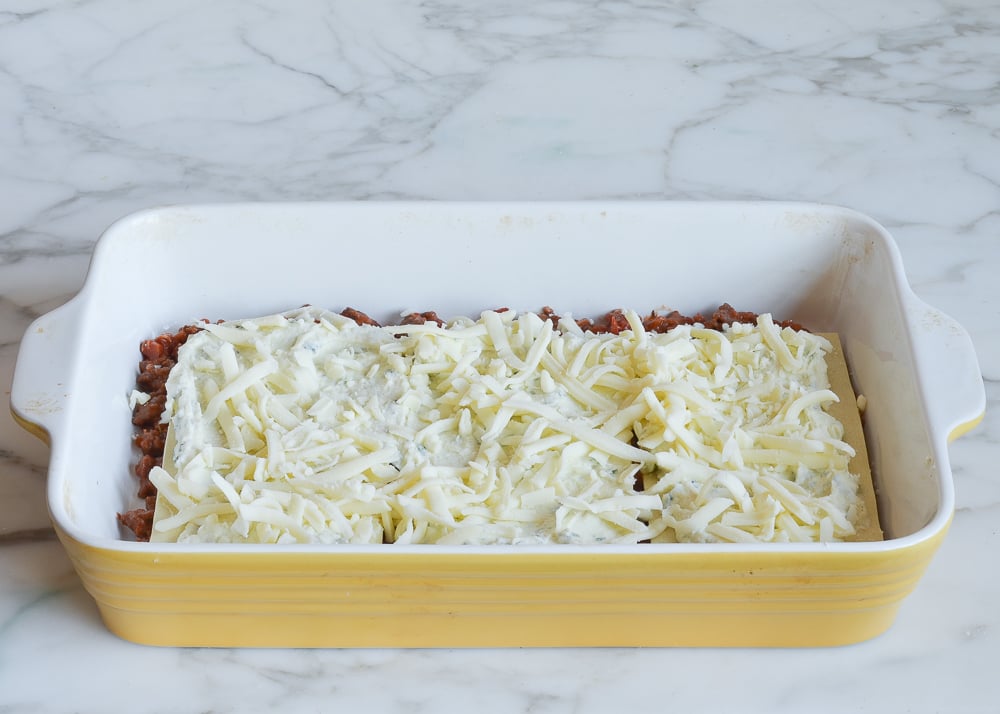
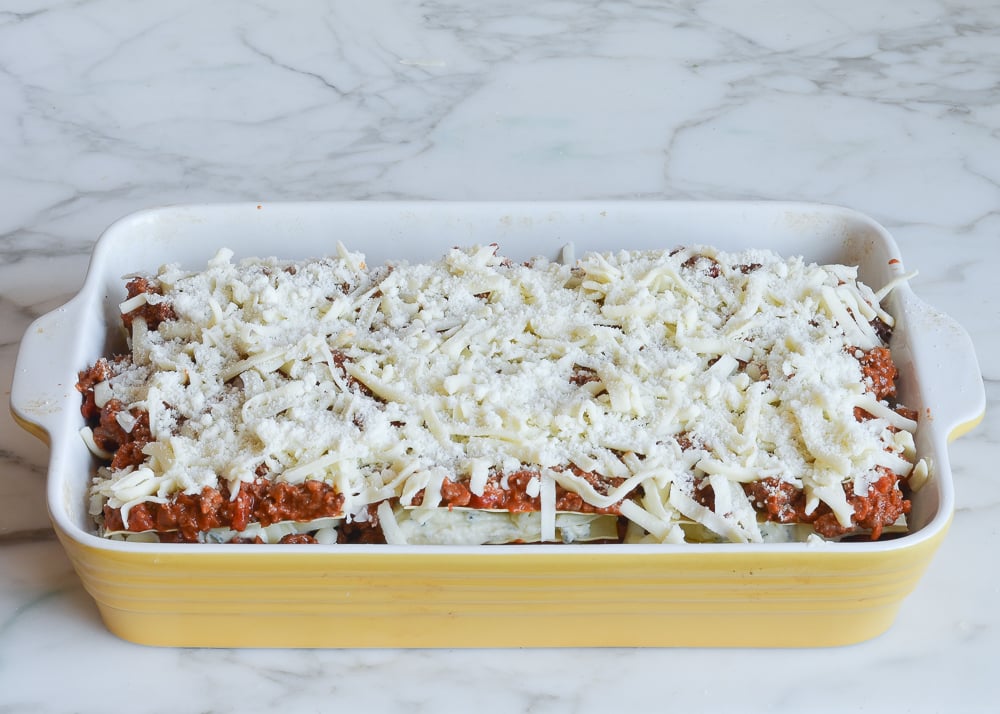
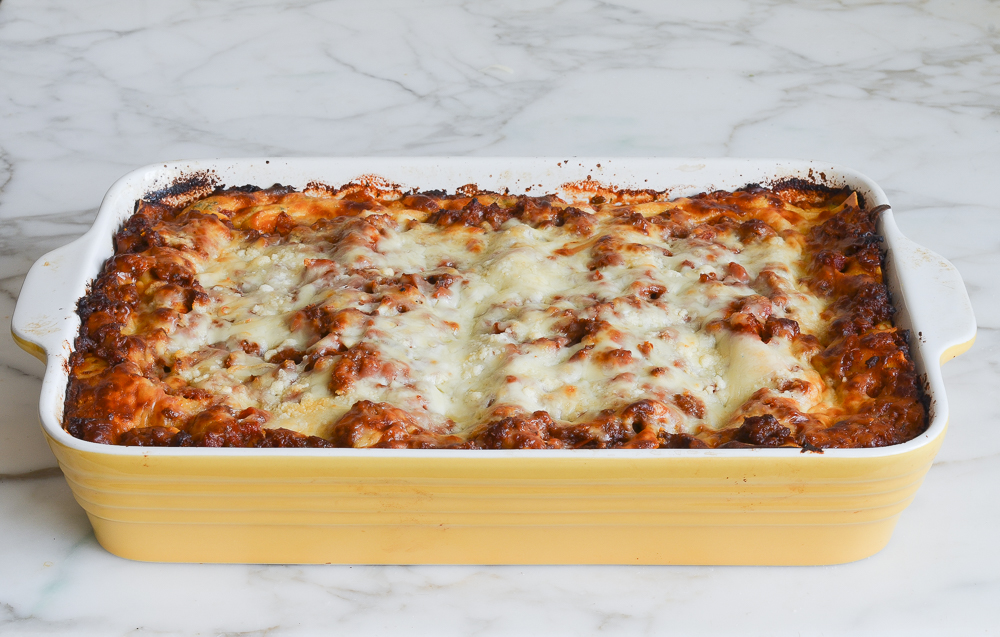
Bake: Cover the dish tightly with foil and bake until the lasagna is hot and bubbling. Remove the foil and continue baking at the higher temperature until the noodles are tender and the top and edges are golden and puffed. Give the lasagna about 15 minutes to rest before cutting into it. This gives the layers time to settle and makes it much easier to slice and serve.
Video Tutorial
You May Also Like
Classic Lasagna
Ingredients
For the Sauce
- 1 medium yellow onion, roughly chopped
- 5 cloves garlic, roughly chopped
- 2 medium carrots, roughly chopped
- 1 stalk celery, roughly chopped
- 3 tablespoons olive oil, divided
- 1½ pounds Italian sausage (bulk or removed from casing)
- ¾ cup dry red wine
- 1 (28-oz) can crushed tomatoes
- ½ cup heavy cream
- ¾ teaspoon salt
- ¼ teaspoon freshly ground black pepper
- 2 teaspoons sugar
- 1½ teaspoons dried thyme
- 2 bay leaves
For the Ricotta Mixture
- 1 (15-oz) container whole milk ricotta (about 1¾ cups)
- 3 oz cream cheese
- 1 large egg
- 1 clove garlic, roughly chopped
- ¾ cup grated Parmigiano-Reggiano
- ¾ teaspoon salt
- ¼ teaspoon freshly ground black pepper
- ½ cup roughly chopped fresh basil
For Assembling
- 12 oven ready, no boil lasagna noodles (such as Barilla)
- 16 oz shredded whole milk mozzarella cheese
- ¼ cup grated Parmigiano-Reggiano
Instructions
For the Sauce
- Place the onions, garlic, carrot and celery in the bowl of a food processor fitted with the metal blade; pulse until finely minced but not puréed.
- Heat 2 tablespoons of the olive oil in a large pot over medium-high heat. Add the sausage into the pan and cook, stirring occasionally and breaking the sausage into small pieces, until slightly browned but not cooked all the way through, about 5 minutes. Using a slotted spoon, transfer the partially cooked sausage to a plate. Set aside.
- Add the remaining tablespoon olive oil to the pan, reduce the heat to medium, and add the minced vegetables. Cook, stirring frequently, until the vegetables are very soft, 6 to 8 minutes. Do not brown; reduce the heat if necessary.
- Add the wine; continue cooking, stirring to scrape any brown bits from the bottom of the pan, until the wine is mostly absorbed by the vegetables, a few minutes.
- Add the tomatoes, cream, salt, pepper, sugar, thyme and bay leaves and bring to a boil. Reduce the heat and simmer, covered, until the sauce is thickened, about 20 minutes.
- Meanwhile, transfer the sausage to a cutting board and chop into smaller pieces (big chunks don't work well in lasagna).
- Add the sausage back to the pan and continue simmering, covered, until the sausage is fully cooked and the flavors meld together, about 10 minutes. Taste and adjust seasoning if necessary. Fish out the bay leaves and discard.
For the Ricotta Mixture
- Combine the ricotta, cream cheese, egg, garlic, Parmigiano-Reggiano, salt and pepper in the bowl of a food processor fitted with a metal blade. Process until evenly combined. Add the basil and pulse until finely chopped.
For Assembly
- Preheat the oven to 375°F (190°C).
- Spread about 1½ cups of sauce in the bottom of a 9 x 13-in (23 x 33-cm) baking dish. Arrange 3 noodles over the sauce (there will be a bit of space between the noodles; they expand as they cook). Dollop a third of the ricotta filling over the noodles, then spread evenly to cover. Sprinkle with ¾ cup (90 g) of the mozzarella cheese. Repeat the layering of sauce, noodles, ricotta filling and mozzarella 2 more times. Top with the remaining 3 noodles. Spoon the remaining sauce over the noodles, then sprinkle with the remaining mozzarella and Parmigiano-Reggiano.
- Spray a large piece of foil with nonstick cooking spray. Cover the lasagna tightly with the foil, sprayed side down. Bake for 40 minutes. Carefully uncover and increase the oven temperature to 400°F (205°C). Bake, uncovered, until the noodles are tender, the sauce is bubbling, and the edges are golden and puffed, about 20 minutes. Remove from the oven and let stand for about 15 minutes before serving.
Notes
Pair with
Nutrition Information
This website is written and produced for informational purposes only. I am not a certified nutritionist and the nutritional data on this site has not been evaluated or approved by a nutritionist or the Food and Drug Administration. Nutritional information is offered as a courtesy and should not be construed as a guarantee. The data is calculated through an online nutritional calculator, Edamam.com. Although I do my best to provide accurate nutritional information, these figures should be considered estimates only. Varying factors such as product types or brands purchased, natural fluctuations in fresh produce, and the way ingredients are processed change the effective nutritional information in any given recipe. Furthermore, different online calculators provide different results depending on their own nutrition fact sources and algorithms. To obtain the most accurate nutritional information in a given recipe, you should calculate the nutritional information with the actual ingredients used in your recipe, using your preferred nutrition calculator.
My husband and son said this was the best lasagna they have ever eaten…..i thought it was pretty awesome too!
Hi Jenn,
A time sensitive question. I’m making this a day ahead tomorrow as instructed to consume in two days. When reheating, you say to add a few minutes if baking from cold, and it will be cold.
So, 43 minutes for the covered bake, and 18 minutes after the uncovered bake? I asked AI for clarification and it acted like I should cook it for 50- 55 minutes and then 20 – 25 minutes so I’m really confused and don’t want my company to consume cold lasagna.
Thanks!
Hi Chad, I’d add 15 minutes to the baking time while the lasagna is covered (and leave the timing for when it’s uncovered the same). Before you serve it, check the center to make sure it’s fully heated through. I’m going to add more specific guidance in the make-ahead instructions. Hope everyone enjoys!
The modification of this recipe due to my comment has now made me refer to myself as Once Upon a Chad! All joking aside, it turned out perfectly. Our company devoured it. Thank you!
Lol! Glad everyone enjoyed. 😊
Love your recipes. Plan on making your lasagna recipe but I’m concerned about using the uncooked pasta sheets, had heard they can cause lasagna to be dry. I’m more comfortable using the lasagna pasta that you cook el dente, would they work with your recipe and if so do I need to adjust your recipe anywhere in ingredients or cooking time?
Thank you for your help!
So glad you liked the recipes! Other than cooking the lasagna noodles until very al dente, you won’t need to make any other modifications. Enjoy!
My hard to impress family couldn’t stop thanking me! It was worth the time and effort. This is a ridiculously good recipe that people will leave your house talking about.
Hi Jenn! Happy New Year
I have a box of the traditional lasagna noodles – could I use these in place of the noodles cook without compromising the recipe results?
Sure – just cook them until very al dente. Enjoy!
Best lasagna! I made the recipe exactly as written and it was perfect. Lasagna I have made before always seemed to fall apart when cutting and plating- not this one! I used to always use ground beef and found it to not have the flavor of the sausage. So glad I made this recipe. The only thing I will do next time is to have some warm sauce on the plate or pasta bowl to place the square of lasagna on, just to add some moisture to the dish. Thanks Jenn!
Thank you for an amazing recipe, Jenn! I made this last night for Christmas Eve dinner and my husband graded this as the best lasagna he’s ever had. I used ground beef and pork instead of the sausage and followed everything else to the letter. Incredible flavor and just simply delicious. I was so proud to serve it.
I have made this recipe many times! It’s delicious and I love making it ahead so all I have to do is pop it in the oven and can visit with my guests instead of cooking. A tip I’d like to share: instead of transferring the half-cooked, greasy meat to a cutting board to chop, I put the meat in two plates, allow it to cool, and while my sauce is thickening, I use my fingers to just break up the meat into tiny pieces. It’s faster and less messy. Hope this helps!
jen what options of meat can you use, ground pork?
Hi Jules, if you don’t want to use sausage, ground pork or ground beef would be fine; just make sure it’s well seasoned as the sausage has a lot of seasoning. Some spices I would add — a bit of oregano, Italian seasoning, whole or ground fennel seeds, paprika, red pepper flakes, salt, and pepper.
I put the meat in the food processor and pulsed it. It was perfect and not at all messy.
Hi Jen. Would it be ok to use half ground beef and half sausage
Sure, Dave, that’s fine. Just make sure it’s well seasoned, as the sausage has a lot of seasoning.
I’ve made several recipes of yours and they have all been awesome! Thank you for sharing your expertise. I plan on trying this recipe this week instead of the labor intensive one I usually make that includes a béchamel sauce and a Bolognese sauce.
For the Italian sausage, do you recommend a particular type? Hot, sweet, fennel…?
Hi Nancy, thanks for your nice words – so glad you’ve enjoyed the recipes! For the sausage, I’d go with either the hot or sweet; whatever you’d prefer. Hope you enjoy!
This Classic Lasagna was delicious , as good or better than our local Italian Restaurant serves in Little Italy .
This lasagna was perfect – the best one I have ever made. The cream cheese in the ricotta mixture made such a difference! Same with the sausage meat vs traditional ground beef. It took me 3 hours start to finish, which meant we ate a bit later than planned … but it was definitely worth the wait.