

This post may contain affiliate links. Read my full disclosure policy.
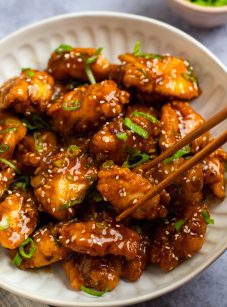
Kung Pao Chicken, a Chinese takeout favorite, features tender chicken, crunchy peanuts, and vibrant veggies in a bold, savory sauce—and it’s ready in just 30 minutes for an easy weeknight meal!

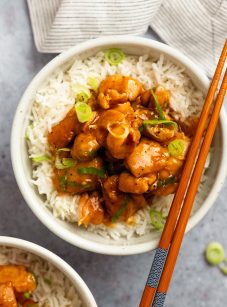
Kung pao chicken is traditionally made with ingredients like Sichuan peppercorns, Chinese black vinegar, rice wine, and dried red chilies. I wanted to create a version using ingredients you can find at most supermarkets without sacrificing the bold, savory flavor that makes it so delicious. The result is a quick, satisfying stir-fry that’s perfect for a weeknight. Pair it with white rice or fried rice, and dinner is done.
“Better than take out!”
What You’ll Need To Make Kung Pao Chicken

- Boneless, skinless chicken breasts: Cut into bite-sized pieces for quick, even cooking. Chicken tenderloins are ideal, as they are easy to work with and naturally very tender.
- Soy sauce, dry sherry, and cornstarch: The soy sauce and sherry flavor the chicken, while the cornstarch helps thicken the sauce. Dry sherry is a convenient substitute for Chinese cooking wine.
- Bell pepper and celery: Add color and crunch.
- Scallions and garlic: Add fresh, aromatic flavor.
- Balsamic vinegar: A supermarket-friendly substitute for Chinese black vinegar.
- Hoisin sauce: Adds savory-sweet flavor and depth to the sauce.
- Sugar, ginger, and red pepper flakes: Balance the savory sauce with sweetness, warmth, and a little heat.
- Vegetable oil and toasted sesame oil: Vegetable oil is used for stir-frying, while toasted sesame oil adds rich, nutty flavor. Be sure to use toasted sesame oil, not the regular kind.
- Peanuts or cashews: Add crunch and a nutty finish.
- Jump to the printable recipe for precise measurements
How to Make Kung Pao chicken
Marinate the chicken: Combine the chicken with the marinade ingredients and toss to coat. Set aside while you prepare the vegetables and sauce.
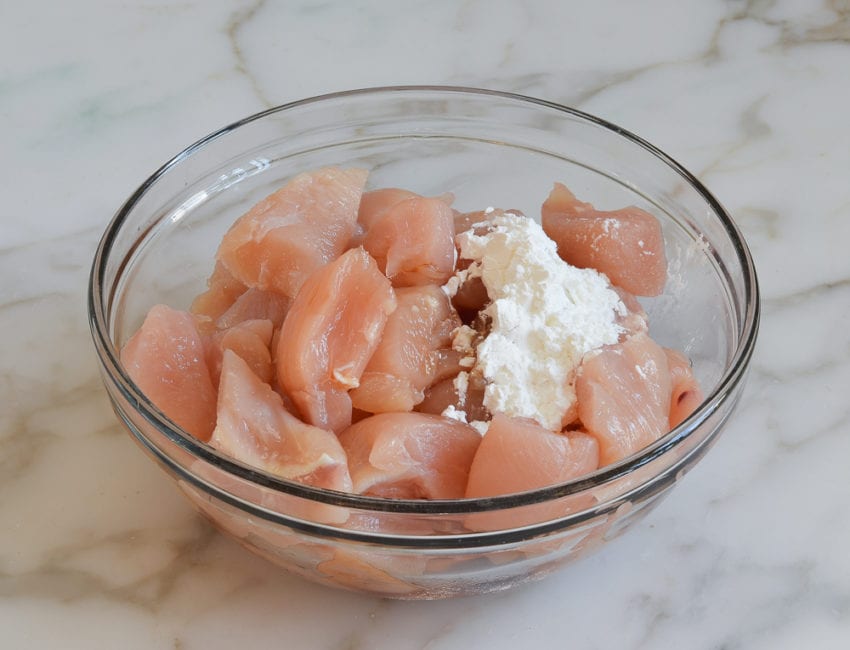

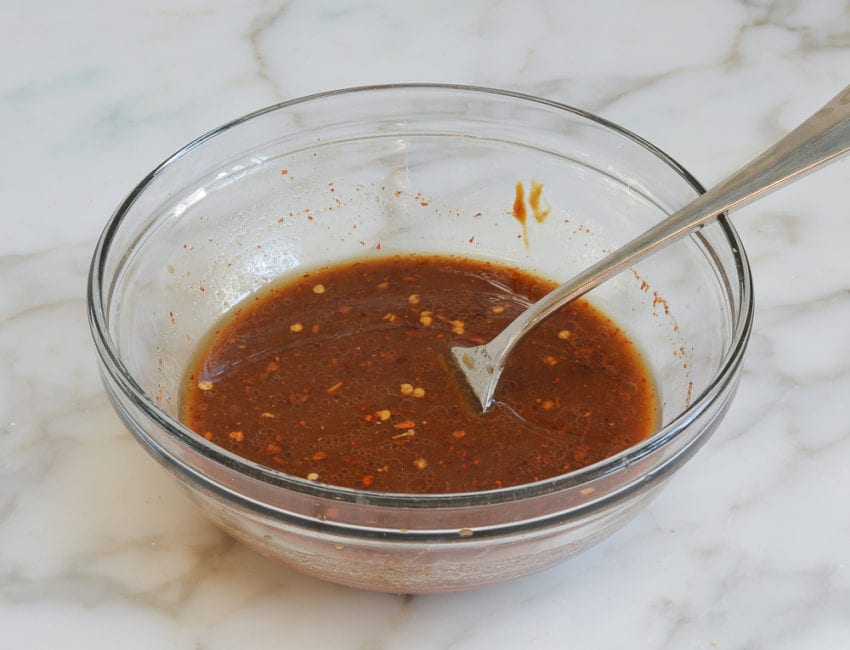
Prepare the vegetables and sauce: Chop the bell pepper, celery, scallions, and garlic, then whisk together the sauce ingredients in a separate bowl. Stir-frying goes quickly, so it’s best to have everything ready before you start cooking.

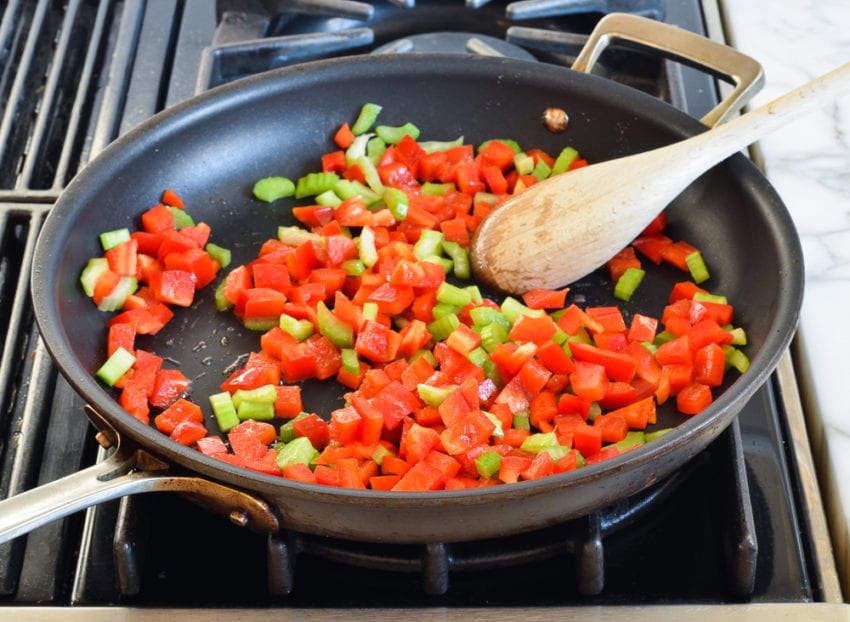
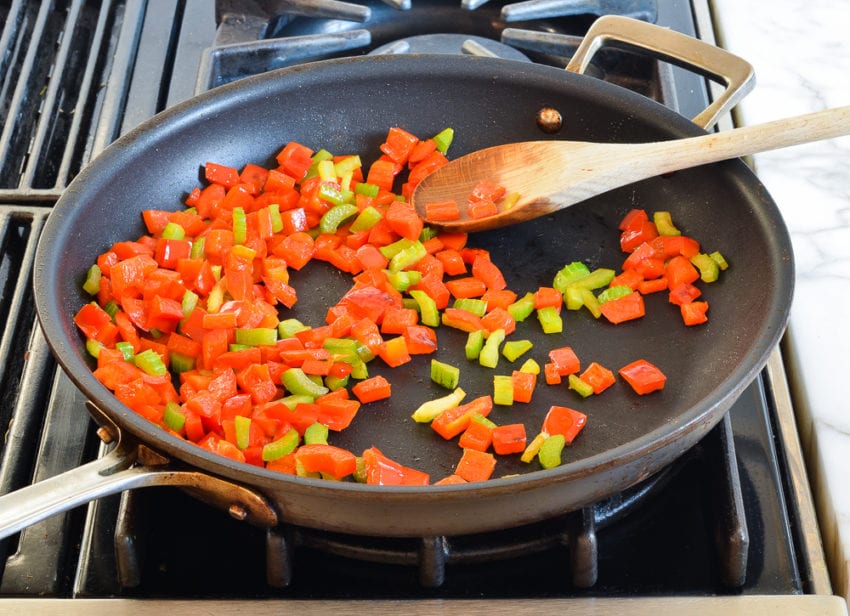
Cook the vegetables: Stir-fry the bell pepper and celery over high heat until slightly softened and beginning to brown. Transfer to a bowl.
Brown the chicken: Cook the chicken in two batches, giving the pieces enough room to brown rather than steam. Add the garlic and scallions toward the end of cooking the second batch.
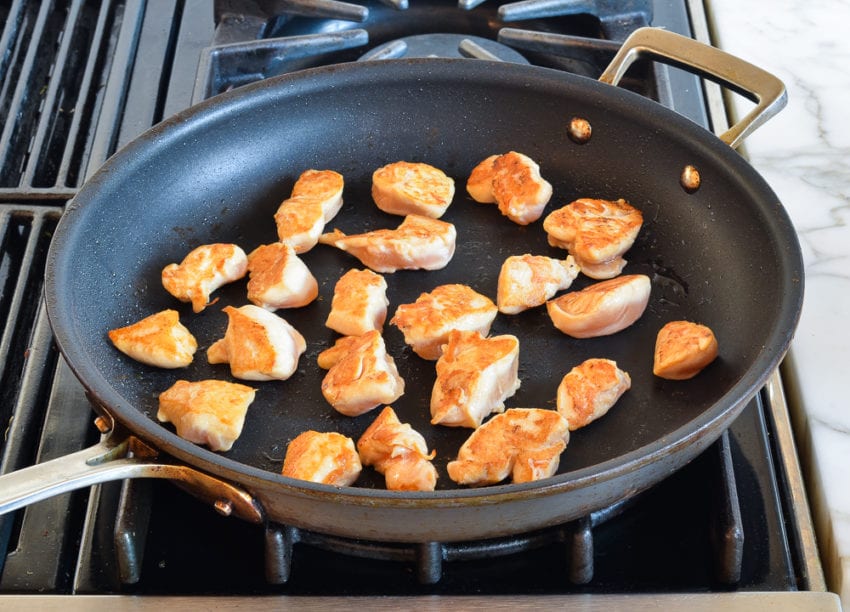
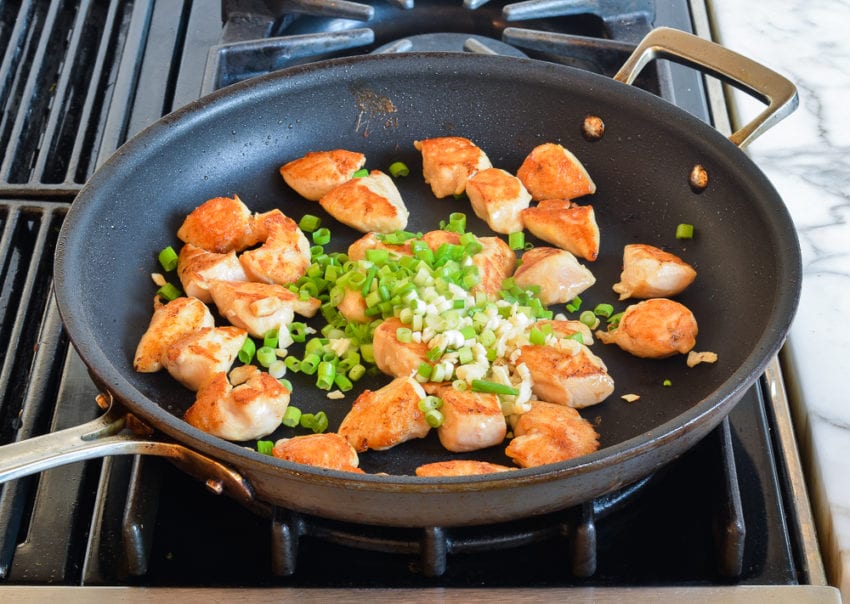
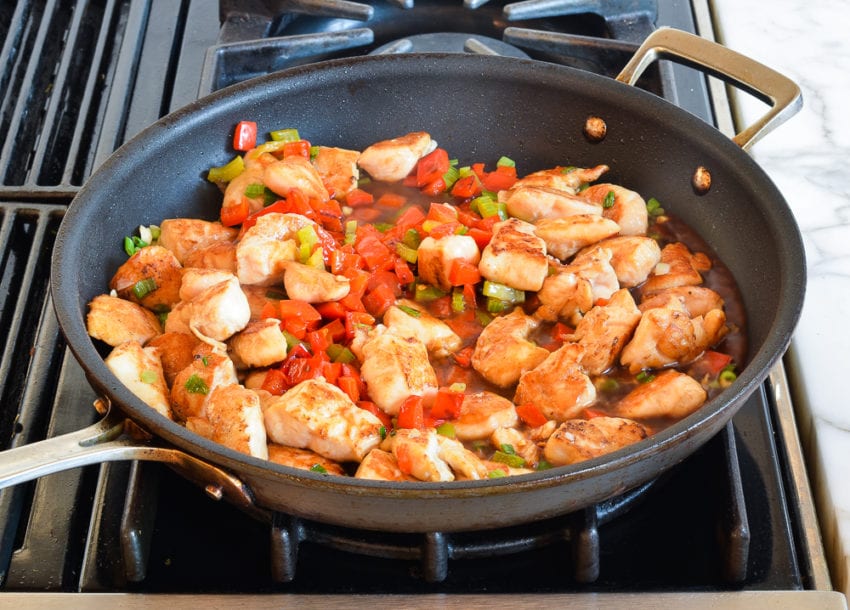
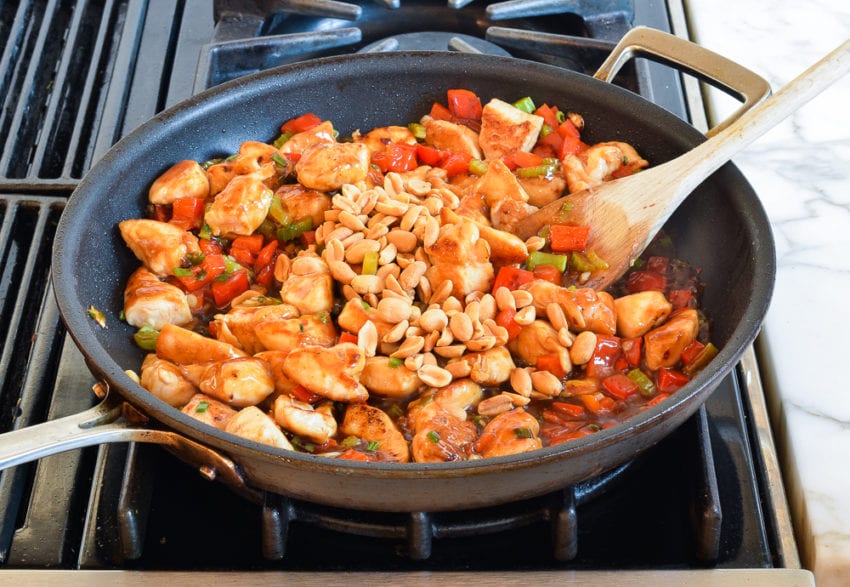
Finish the dish: Return the chicken and vegetables to the pan and add the sauce. Toss until the sauce thickens and coats everything, then stir in the peanuts or cashews. Serve hot.
Make-Ahead, Storage & Reheating
You can cut the chicken and vegetables and prepare the sauce up to a day ahead. Store everything separately in airtight containers in the refrigerator, then marinate the chicken and cook the dish just before serving.
Leftover kung pao chicken can be stored in an airtight container in the refrigerator for up to 3 days. To reheat, warm gently in a skillet over medium-low heat, adding a splash of water if needed to loosen the sauce. Heat just until warmed through to keep the chicken from drying out.
Video Tutorial
Kung Pao Chicken

Ingredients
For the Marinade
- 1½ tablespoons soy sauce
- 1 tablespoon dry sherry
- 2 teaspoons cornstarch
- 1½ lbs chicken tenderloins (or boneless skinless chicken breasts), cut into 1-in (2.5-cm) pieces
For the Sauce
- 1 tablespoon balsamic vinegar
- 2 tablespoons soy sauce
- 1 tablespoon hoisin sauce, best quality such as Kikkoman or Lee Kum Kee
- 1 tablespoon sesame oil
- 1½ tablespoons sugar
- 1 tablespoon cornstarch
- ½ teaspoon crushed red pepper flakes (use half the amount for a milder sauce)
- ¼ teaspoon ground ginger
- ⅓ cup water
For the Stir-fry
- 2½ tablespoons vegetable oil
- 1 large red bell pepper, diced
- 2 stalks celery, halved lengthwise and thinly sliced
- ¼ teaspoon salt
- 3 cloves garlic, chopped
- 5 scallions, white and green parts, thinly sliced
- ⅓ cup whole roasted unsalted peanuts or cashews
Instructions
- Marinate the chicken: In a medium bowl, whisk together the soy sauce, dry sherry, and cornstarch until the cornstarch is dissolved. Add the chicken and toss to coat. Let stand at room temperature for 15 minutes, stirring occasionally.
- Prepare the sauce: In another medium bowl, whisk together all of the sauce ingredients until the cornstarch is dissolved (it can stick to the bottom of the bowl so be sure to scrape it up).
- Heat a large nonstick skillet over high heat until very hot. Add 1 tablespoon of the oil and swirl to coat. Add the bell pepper, celery, and salt and cook, stirring frequently, until slightly softened and starting to brown, about 5 minutes. Transfer the vegetables to a large bowl and set aside.
- Add an additional ½ tablespoon of oil to the pan and set over high heat. Add half of the chicken and brown on one side, about 1½ minutes. Turn the chicken pieces and continue cooking for about 1½ minutes more, or until the chicken is just cooked through. Transfer the chicken to the bowl with the peppers and celery.
- Add another ½ tablespoon of oil to the pan. Add the remaining chicken and cook until golden on one side, about 1½ minutes. Turn the chicken pieces over and cook for 1 minute. Add ½ tablespoon more oil to the pan, along with the garlic and scallions, and cook, stirring with the chicken, for about 30 seconds more.
- Add the reserved vegetables and reserved chicken to the pan, along with the sauce. Reduce the heat to low and cook until the chicken and vegetables are warmed through and the sauce is thickened, about 30 seconds. Stir in the nuts.
- Taste and adjust seasoning, if necessary, and serve. The sauce will thicken as it sits; thin it with a few tablespoons of water, if necessary.
Nutrition Information
This website is written and produced for informational purposes only. I am not a certified nutritionist and the nutritional data on this site has not been evaluated or approved by a nutritionist or the Food and Drug Administration. Nutritional information is offered as a courtesy and should not be construed as a guarantee. The data is calculated through an online nutritional calculator, Edamam.com. Although I do my best to provide accurate nutritional information, these figures should be considered estimates only. Varying factors such as product types or brands purchased, natural fluctuations in fresh produce, and the way ingredients are processed change the effective nutritional information in any given recipe. Furthermore, different online calculators provide different results depending on their own nutrition fact sources and algorithms. To obtain the most accurate nutritional information in a given recipe, you should calculate the nutritional information with the actual ingredients used in your recipe, using your preferred nutrition calculator.
Gluten-Free Adaptable Note
To the best of my knowledge, all of the ingredients used in this recipe are gluten-free or widely available in gluten-free versions. There is hidden gluten in many foods; if you’re following a gluten-free diet or cooking for someone with gluten allergies, always read the labels of your ingredients to verify that they are gluten-free.


The recipe was excellent! The preparation of the chicken is a great tip – definitely made the texture of the dish much better than if the recipe was not followed! THANKS!
I also liked all the details provided by Chef Jennifer Segal regarding the preparation of the chicken and the cooking details and the sequence to set up to do the cooking. I am definitely going to try the other Chinese recipes offered by Chef Jennifer!
Thank you!
Thank you so much! And for the sesame oil – should it be toasted or regular?
You’ll need the toasted (Asian) sesame oil. Enjoy!