


This post may contain affiliate links. Read my full disclosure policy.
Say goodbye to dry, bland grilled chicken breasts. This recipe guarantees juicy, flavorful chicken every time.

Sometimes in cooking the simplest dishes are the hardest to get right, and grilled chicken is a perfect example. Because boneless chicken breasts are so lean, they often turn out dry, rubbery, and bland. Contrary to popular belief, marinating alone will not prevent grilled chicken from drying out; in fact, it’s often the marinade that causes the problem!
My technique and marinade ensure tender, juicy, and flavorful grilled chicken every time. You can serve the fillets on their own as a healthy main course (kids love them), topped with cheese on a toasted bun, or, as I often do, sliced over a Greek salad or Caesar salad. Bonus: the recipe is quick and easy. You do all the prep ahead of time and won’t even dirty a single bowl. It’s also great for meal prep—make a double batch and freeze the extra for salads, pastas, and sandwiches.
“Truly the best grilled chicken. Juicy and flavorful and oh so easy.”
What You’ll Need To Make The Best Grilled Chicken

The marinade is a simple combination of olive oil, garlic, dried thyme, oregano, and lemon zest. I use lemon zest rather than juice because acidic ingredients like lemon juice and vinegar can give lean chicken breasts a leathery texture when marinated too long. The zest adds plenty of bright lemon flavor without affecting the chicken’s tenderness.
How to Make Grilled Chicken Breasts
Pound the chicken: Place the chicken breasts in a 1-gallon freezer bag and pound to an even ½-inch thickness. This tenderizes the meat and ensures even cooking, so the thinner ends don’t dry out before the thicker portions are done. If you don’t have a meat mallet, use a rolling pin or saucepan.

Make the marinade: Using a Microplane or fine grater, zest the lemon, rotating it as you go and avoiding the bitter white pith underneath. Combine the zest with the remaining marinade ingredients (except the chicken) in a 1-gallon zip-lock bag. You can reuse the bag from pounding the chicken if it’s still in good shape.

Marinate: Add the chicken breasts to the bag and massage the marinade into the meat until evenly coated. Seal the bag, place it in a bowl to catch any leaks, and refrigerate for at least 4 hours or overnight.

Grill: Preheat the grill to high heat and oil the grates. Grill the chicken, covered, for 2 to 3 minutes per side, until cooked through and an instant-read thermometer inserted into the thickest part registers 165°F. If the chicken sticks when you try to flip it, give it another 30 seconds; it should release naturally.
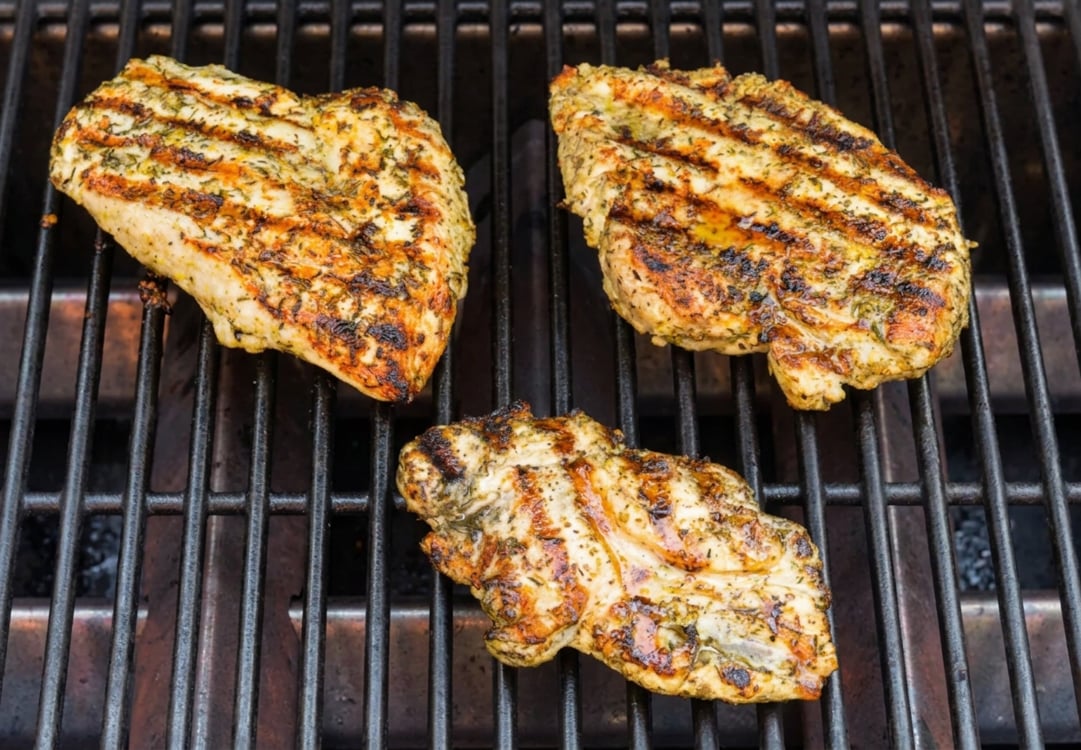
Rest: Transfer the chicken to a platter and let rest for 3 to 4 minutes before slicing. This helps keep the juices in and the chicken moist.
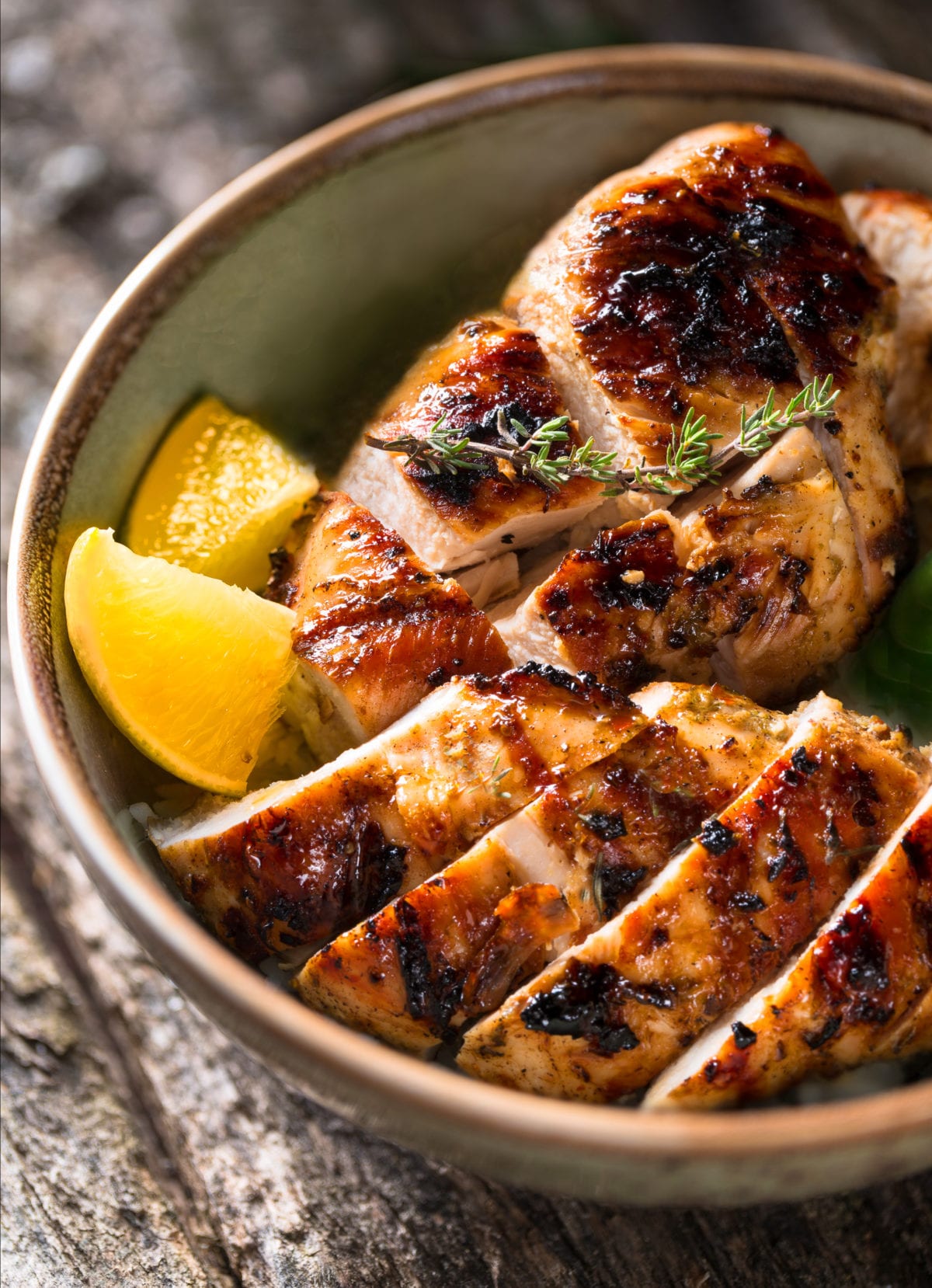
Can You Make Grilled Chicken Without an Outdoor Grill?
Absolutely! You can use a grill pan or your oven’s broiler.
Grill pan: Heat a grill pan over medium-high heat until hot. Add the marinated chicken and cook for 2 to 3 minutes per side, or until an instant-read thermometer registers 165°F. There’s no need to cover the pan.
Broiler: Preheat the broiler and position an oven rack about 6 inches from the heat source. Arrange the chicken on a foil-lined, broiler-safe baking sheet and broil for about 3 to 5 minutes per side, or until an instant-read thermometer registers 165°F.
Storage, Freezing & Reheating
Storage: Store leftover cooked chicken in an airtight container in the refrigerator for up to 3 to 4 days.
Freezing: Let the chicken cool completely, and keep the breasts whole rather than slicing them. Wrap each piece individually in plastic wrap, then place them together in a zip-lock freezer bag. This prevents the pieces from sticking together and allows you to thaw just what you need.
Reheating: Thaw frozen chicken overnight in the refrigerator. Reheat, covered with foil, in a 325°F oven until heated through to 165°F.
Video Tutorial
Grilled Chicken Breasts (Juicy)

Ingredients
- 1¾ lb boneless, skinless chicken breasts
- 6 tablespoons extra-virgin olive oil
- 4 large cloves garlic, minced
- 1 teaspoon dried thyme
- ½ teaspoon dried oregano
- 1¼ teaspoon salt
- ½ teaspoon freshly ground black pepper
- 1½ teaspoons lemon zest, from 1 lemon
Instructions
- One at a time, place the chicken breasts in a 1-gallon zip-lock bag; using a meat mallet, pound to an even ½-in (13-mm) thickness.
- Mix all of the ingredients except for the chicken together in a 1-gallon zip-lock bag (go ahead and use the same one you used for pounding if it is still in good shape). Add the chicken breasts to the bag and massage the marinade into the meat until evenly coated.
- Seal the bag and place in a bowl in the refrigerator (the bowl protects against leakage); let the chicken marinate for at least 4 hours or overnight.
- Preheat the grill to high heat and oil the grates. Place the chicken breasts on the grill and cook, covered, for 2 to 3 minutes per side, or until an instant-read thermometer registers 165°F. Transfer the chicken to a platter and let rest for 3 to 4 minutes before serving.
Notes

Nutrition Information
This website is written and produced for informational purposes only. I am not a certified nutritionist and the nutritional data on this site has not been evaluated or approved by a nutritionist or the Food and Drug Administration. Nutritional information is offered as a courtesy and should not be construed as a guarantee. The data is calculated through an online nutritional calculator, Edamam.com. Although I do my best to provide accurate nutritional information, these figures should be considered estimates only. Varying factors such as product types or brands purchased, natural fluctuations in fresh produce, and the way ingredients are processed change the effective nutritional information in any given recipe. Furthermore, different online calculators provide different results depending on their own nutrition fact sources and algorithms. To obtain the most accurate nutritional information in a given recipe, you should calculate the nutritional information with the actual ingredients used in your recipe, using your preferred nutrition calculator.
Gluten-Free Adaptable Note
To the best of my knowledge, all of the ingredients used in this recipe are gluten-free or widely available in gluten-free versions. There is hidden gluten in many foods; if you’re following a gluten-free diet or cooking for someone with gluten allergies, always read the labels of your ingredients to verify that they are gluten-free.


I have tried a lot of different marinades, trying to get my husband to like chicken. This was the best!! Even my husband liked it. It was delicious, and the chicken was nice and juicy and tender. I’ve finally found my go to recipe!
I made this recipe. It was delicious!! My husband love it and he want this to be one of my go to recipes for chicken breasts. Thanks for sharing.
What a great recipe and explanation. The tough chicken breasts I was serving before just weren’t cutting it and I was getting desperate even while thinking, I don’t think any recipe can make a chicken breast delicious and juicy — must be luck of the draw with the bird. Well, I was totally amazed by how good the chicken breast was using this recipe — juicy, flavorful. I think she’s right on in saying that lemon juice makes chicken tough. This was really really good. I followed her recipe very closely. It was a hit with everyone. You too can achieve this level of renown.
Delicious tender chicken. Your tip about NOT using the lemon juice, only the zest is a real game changer. I have modified all chicken marinades to remove the citrus juice..
This has quickly been adopted into our weekly rotation. I’ve grilled it on a gas grill, used a panini press (messy), and baked it. All cooking methods yield fantastic, flavorful chicken.
I tried this recipe a couple of times, sometimes with different but the same method and it’s just great. Really moist chicken 🙂
I’m wondering though, how do you tell when the chicken breasts are cooked? Also, I don’t have access to a grill so I have just been using the stovetop and the oven. I’ve read somewhere here you should put the braise the chicken breast using a cast iron skillet first and then into a 350-degree oven but I found that to be too weak. Could I just put the oven to a broil setting instead?
Hi Dennis, Yes it’s fine to just broil the chicken, and the easiest way to check for doneness with thin chicken breasts is to just cut one of the pieces with a knife. There shouldn’t be any pinkish hue and the juices should run clear. Hope that helps!
A meat thermometer. Boneless chicken breast is best cooked at 160 degrees. It will continue to cook once removed so remove it at 158 to 160 degrees. Let it rest for about 5 minutes before cutting it.
I love baking but am not so great with cooking meats/poultry. I made this marinade, let the chicken sit in it overnight, and grilled it the next day. It was absolutely delicious. Everyone loved it, and it was a good and simple intro to marinades.
Took me 5-6 minutes longer but I think it’s a user pounding error. Taste is fantastic.
This was unbelievably tasty and everyone to whom I’ve served has raved and requested the recipe!!!! Thank you!!
Very tender but I didn’t like the herb flavoring