


This post may contain affiliate links. Read my full disclosure policy.
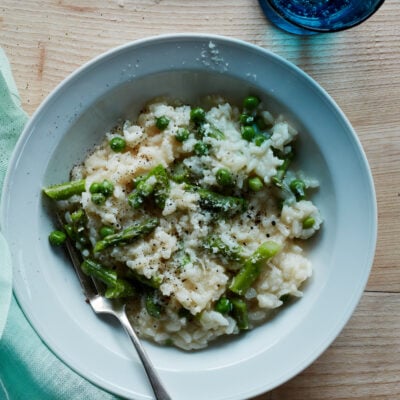
Learn to make restaurant-quality risotto with this simple recipe—creamy, cheesy, and packed with fresh spring flavor.

Photo by Johnny Miller (Clarkson Potter, 2021)
Comforting to eat—and just as comforting to make (all that stirring is like mindful meditation!)—risotto is a northern Italian rice dish cooked gently until it reaches a creamy consistency. Most people think of it as a restaurant-style dish, but this risotto recipe is easy to make at home with very few ingredients. The only thing to keep in mind is that it requires frequent stirring, so you need to stay close to the stove for 25 minutes while it cooks.
This recipe highlights seasonal vegetables, but there’s plenty of room for improvisation. Don’t love asparagus? Swap in zucchini or mushrooms. Cooking vegetarian? Use vegetable broth instead of chicken. Want to dress it up? Stir in some fresh herbs at the end. You really can’t go wrong as long as you stick to the basic formula.
Serve this risotto as a meatless main with an arugula salad or as a side to something simple, like pan-seared salmon, scallops, or grilled chicken breasts.
“Outstanding. I made the recipe exactly as written and my family declared it ‘restaurant quality.’rnrn”
What You’ll Need To Make Risotto with Asparagus & Peas
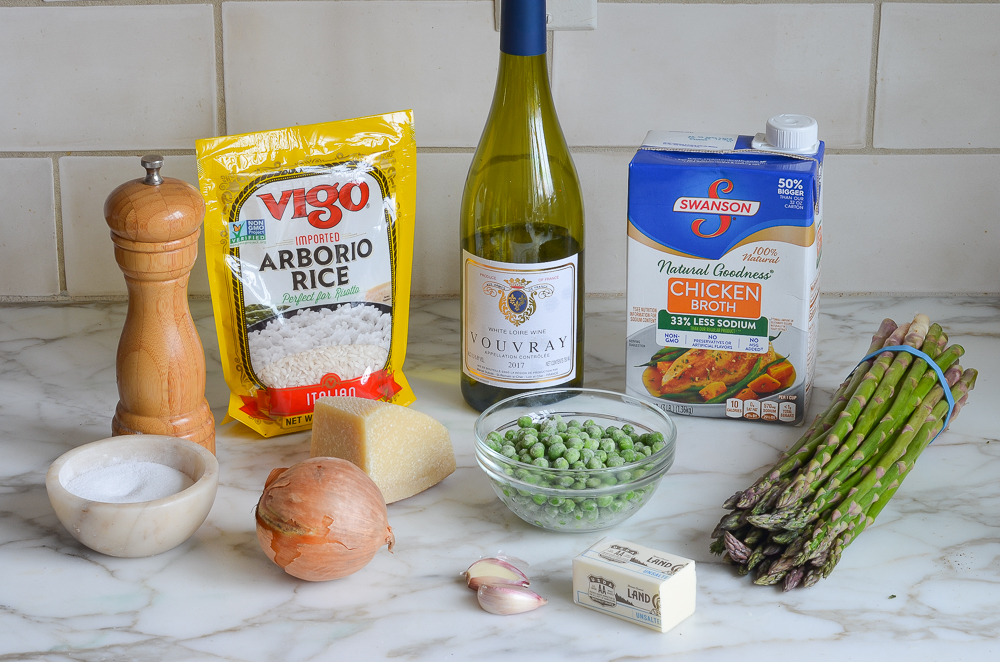
- Low-sodium chicken broth – The cooking liquid for the risotto, absorbed gradually to create a creamy consistency. Using low-sodium broth is important, as it reduces while cooking and can become too salty if not controlled.
- Unsalted butter – Adds richness and flavor. Some is used for sautéing the aromatics, while the rest is stirred in at the end for a silky finish.
- Asparagus & frozen peas – Add color, freshness, and a subtle sweetness. The asparagus provides a slight crunch, while the peas bring a delicate, tender bite.
- Onion & garlic – A classic flavor base for risotto, adding depth and aromatic richness as they soften and cook.
- Arborio rice – The foundation of all risotto recipes. This short-grained, high-starch Italian rice creates a creamy, slightly chewy texture when cooked. You can find it in the rice section of most supermarkets.
- Dry white wine – Adds depth and subtle acidity to balance the richness. If you prefer not to use wine, substitute with more broth and finish with a squeeze of lemon for brightness.
- Parmigiano-Reggiano – Adds a savory, nutty flavor and helps create the risotto’s signature creaminess.
- Jump to the printable recipe for precise measurements
Risotto Recipe: Step-by Step Instructions
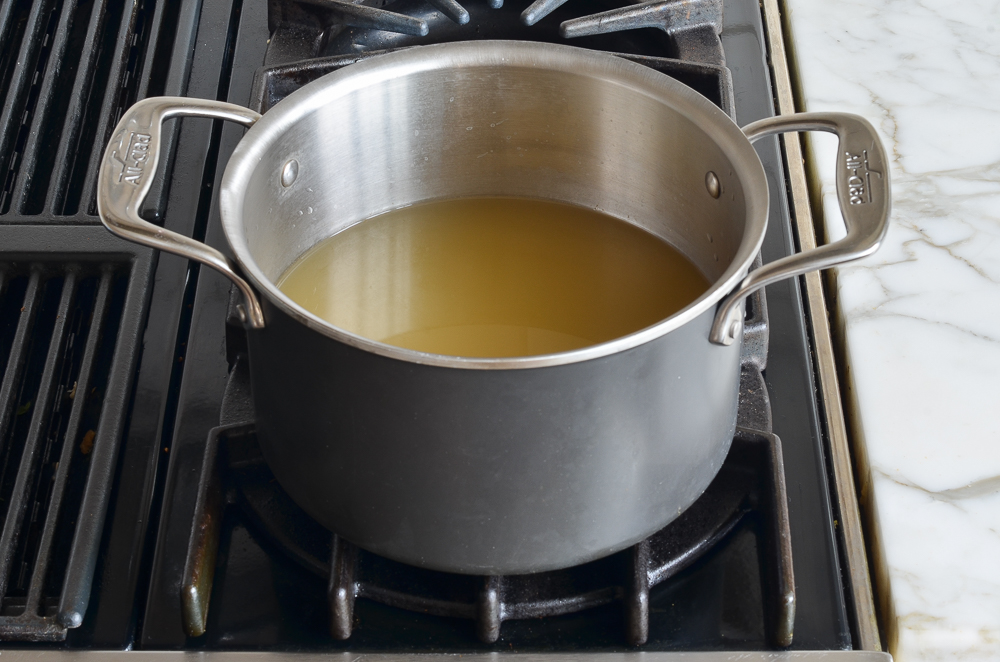
The first step to cooking risotto is to bring your broth to a simmer. It’s important that the broth is hot before you add it to the rice, as cold broth will cool the pan down and slow the cooking process.
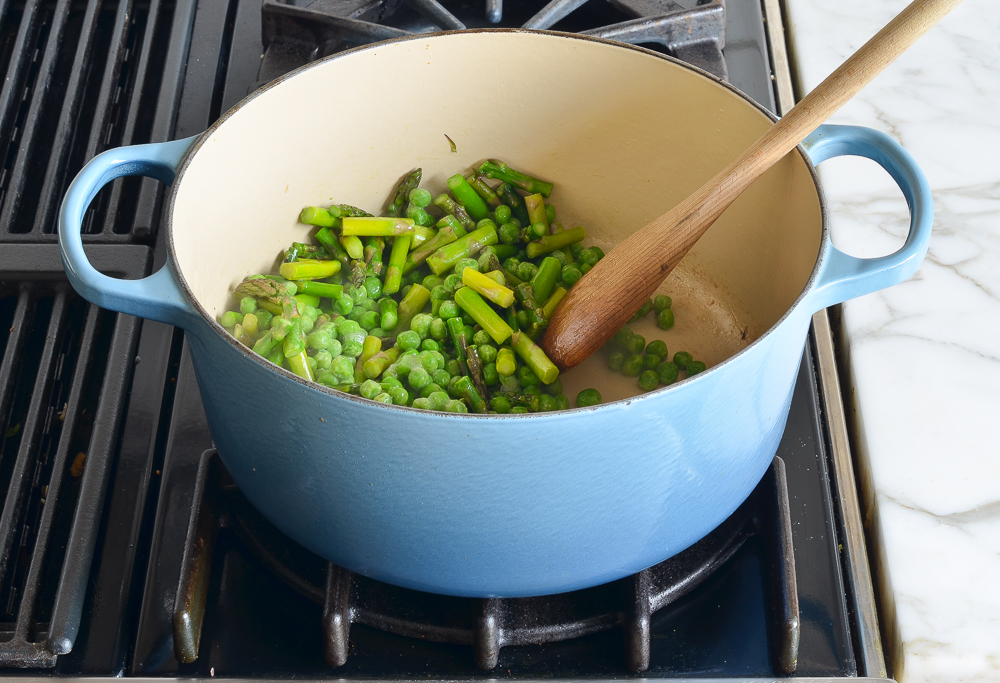
While the broth warms up, melt the butter in a large pot or Dutch oven—it’s important to use a big enough pot since the rice will expand as it cooks. Add the asparagus and sauté for a few minutes until it’s tender-crisp, then toss in the peas and cook for another minute, just until they’re defrosted.
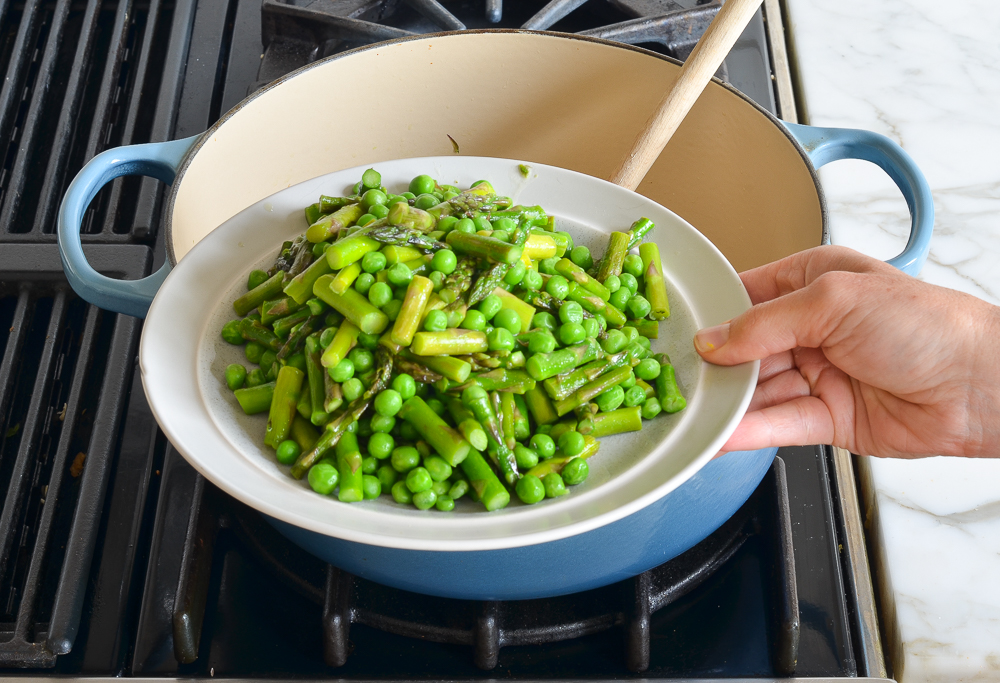
Transfer the veggies to a plate and set them aside—you’ll stir them back in at the very end. Cooking them separately keeps them bright and tender, so they don’t turn mushy in the risotto.
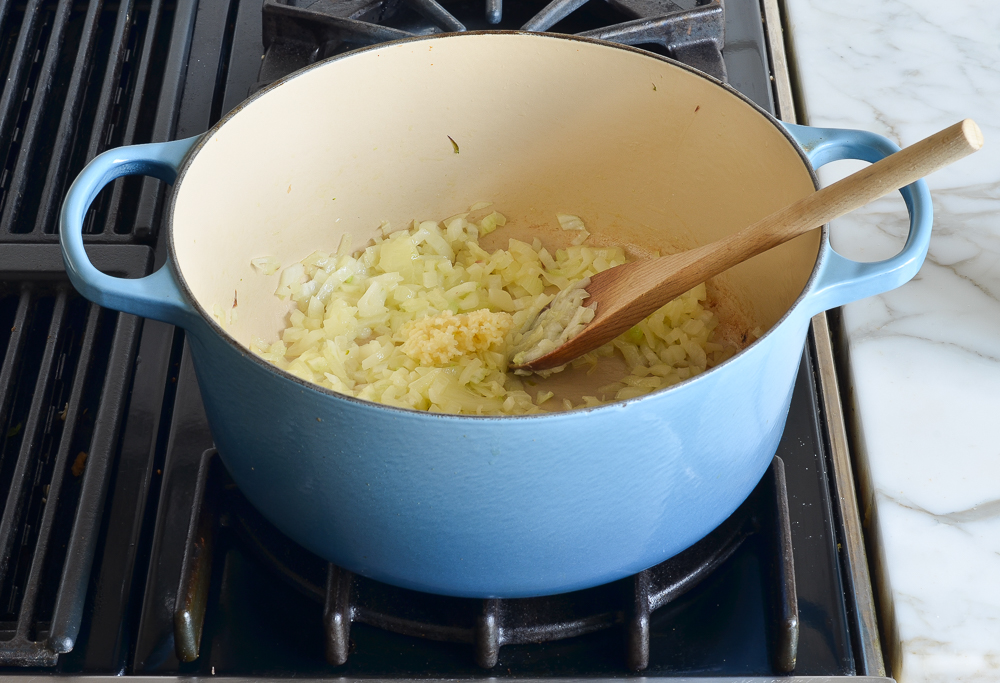
In the same pot over medium-low heat, melt 2 tablespoons of butter and add the onions. Cook, stirring often, until they’re soft and translucent, about 2 to 3 minutes. Stir in the garlic and cook for another minute, just until fragrant—be careful not to let it brown.
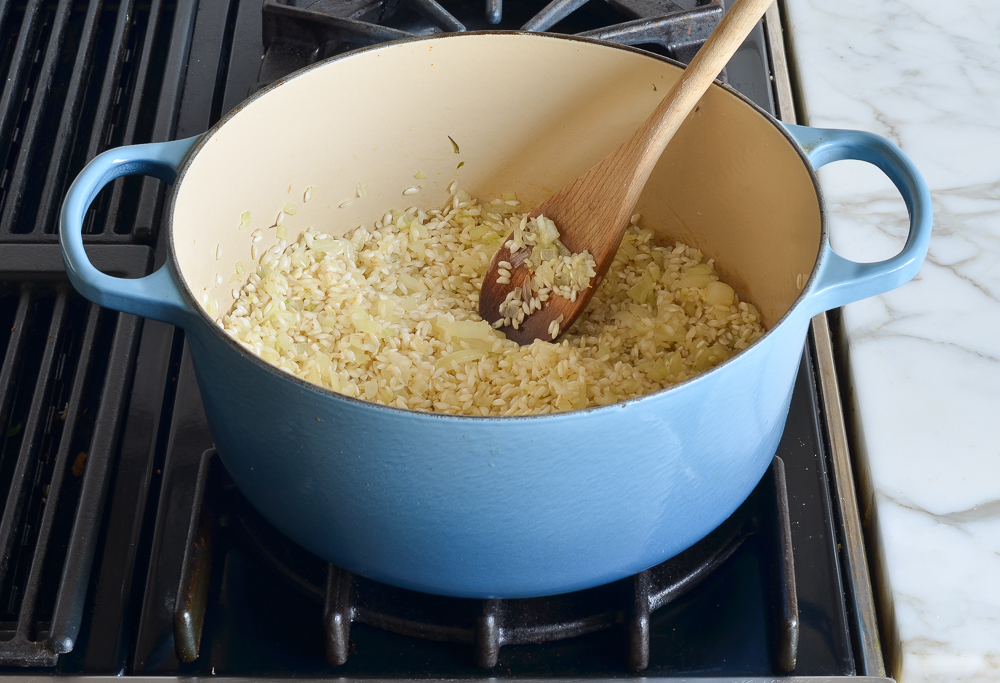
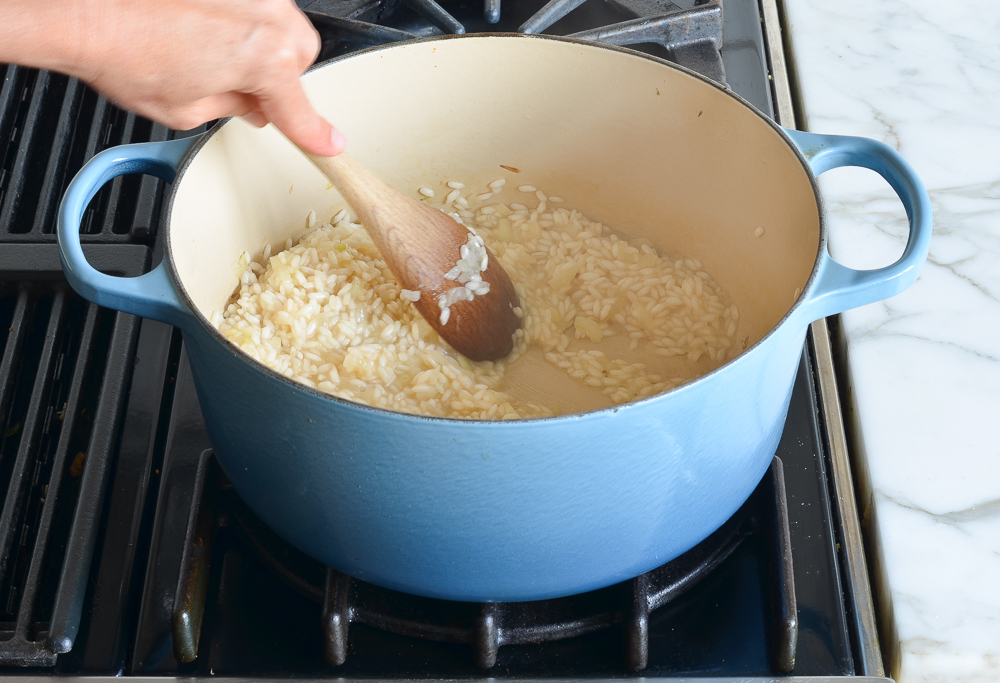
Stir the Arborio rice into the onions and garlic, cooking and stirring constantly for about 3 minutes until the grains look glossy and slightly translucent around the edges. Toasting the rice in butter at this stage deepens the flavor and helps the grains hold their shape, so they don’t turn mushy as they cook.
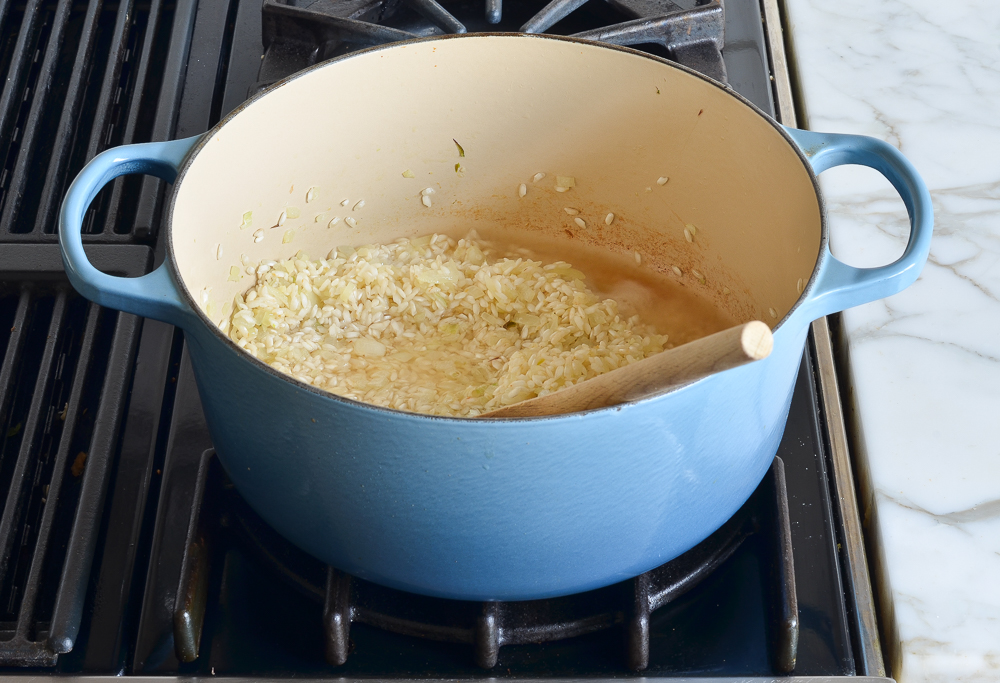
Add the wine and cook until completely absorbed, about 1 minute.
Ladle about 1 cup of the simmering broth into the rice.
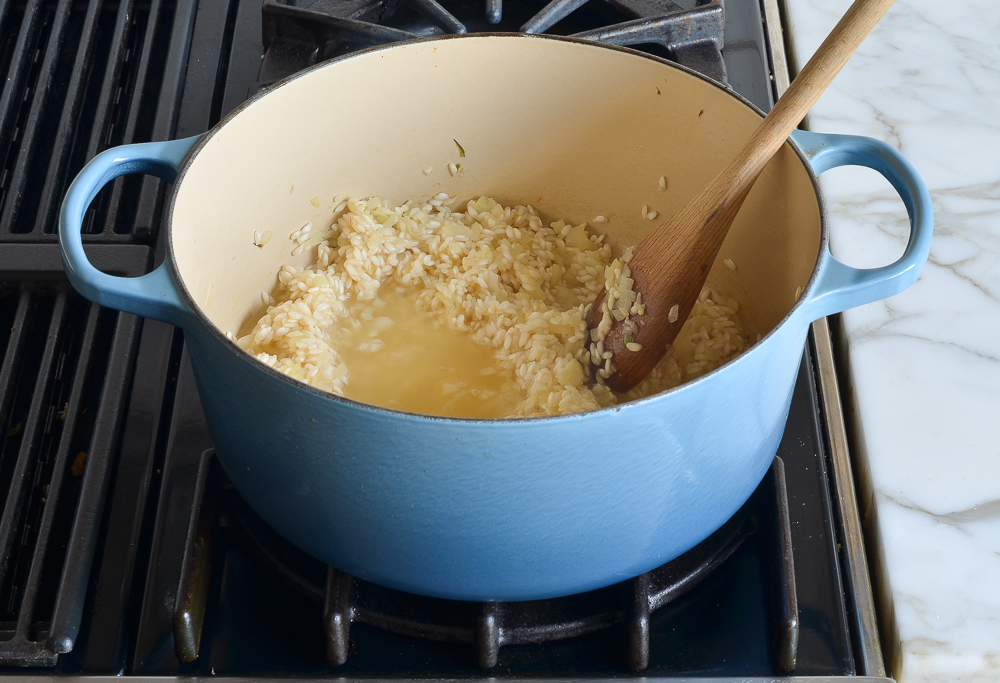
Cook, stirring occasionally, until the liquid is absorbed. Continue adding the broth, one cup at a time, stirring every few minutes to keep the rice from sticking. Let each addition absorb before adding the next. After about 25 minutes, the rice should be al dente—tender but still with a slight bite. No need to stir constantly, just keep an eye on it and give it a good stir every few minutes.
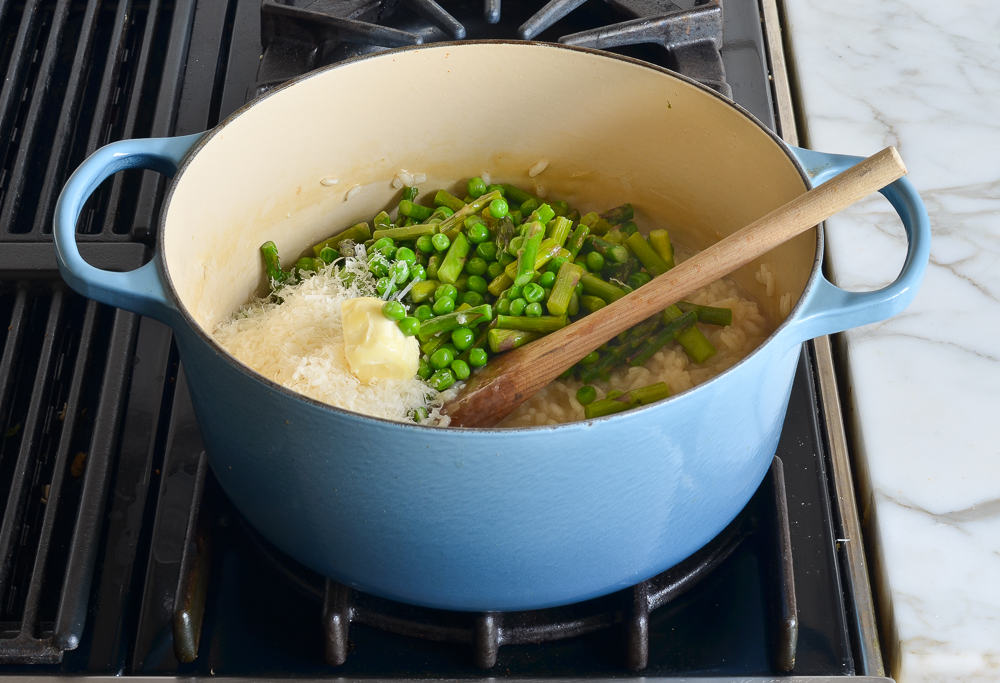
Add the reserved veggies, grated Parmesan, and remaining tablespoon of butter to the risotto.
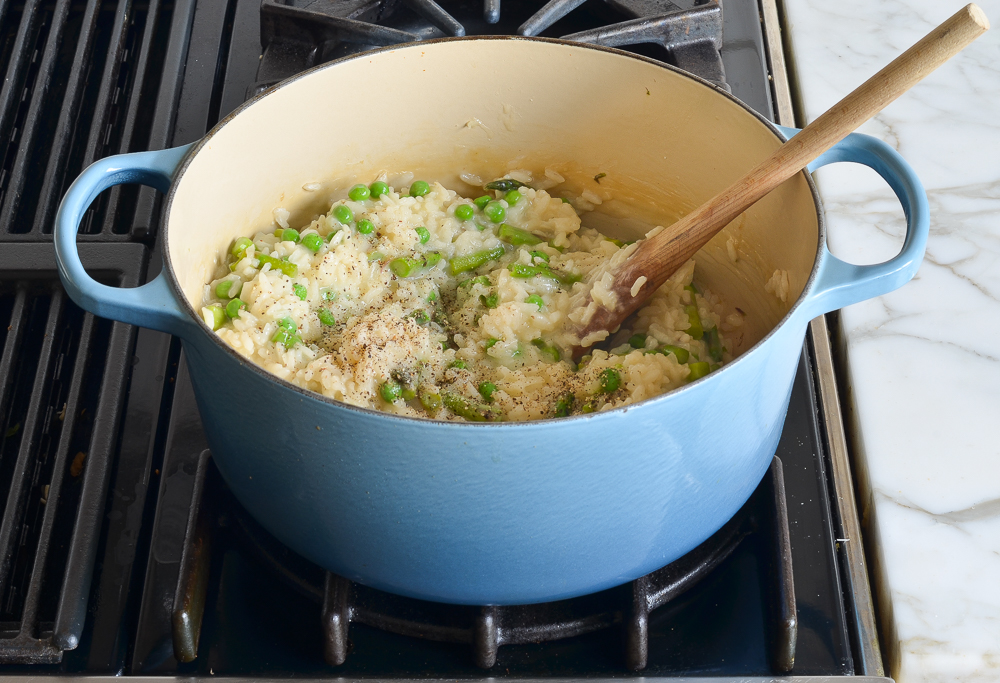
Give it a stir, then taste and adjust the seasoning with salt and pepper if needed. If the risotto seems too thick, loosen it up with a splash of milk. Spoon into bowls, sprinkle with extra cheese, and serve warm.
Got Leftover Risotto? Make Risotto Cakes!
If you have leftover risotto, do yourself a favor and make risotto cakes—they might just be even better than the risotto itself! No recipe needed: just mix the cold risotto with a generous handful of shredded cheese that melts well, like fontina, Cheddar, Gruyère, or mozzarella. Scoop about 1/3 cup at a time and shape into patties about 3 inches wide and 3/4 inch thick. Coat them in panko, then fry in olive oil over medium heat until golden and crisp, about 3 minutes per side.
More Rice and Risotto Recipes You May Like



Spring Risotto with Asparagus & Peas
Ingredients
- 6 cups low-sodium chicken broth
- 4 tablespoons unsalted butter, divided
- 1 bunch asparagus preferably thin, trimmed, and cut into 1-in (2.5-cm) pieces
- ¼ teaspoon salt
- Freshly ground black pepper
- 1 cup frozen peas
- 1 medium yellow onion, finely chopped
- 2 cloves garlic, minced
- 1½ cups Arborio rice
- ½ cup dry white wine
- ½ cup grated Parmigiano-Reggiano, plus more for serving
Instructions
- In a medium pot, bring the broth to a simmer.
- Meanwhile, in a large pot or Dutch oven, melt 1 tablespoon of the butter over medium-low heat. Add the asparagus, salt, and a few grinds of pepper. Cook, stirring frequently, until the asparagus is tender-crisp, 2 to 4 minutes, depending on the thickness of the asparagus. Add the peas and continue cooking until the peas are defrosted, about 1 minute. Transfer the vegetables to a plate and set aside.
- In the same pot over medium-low heat, melt 2 tablespoons of the butter. Add the onions and cook, stirring frequently, until translucent, 2 to 3 minutes. Add the garlic and cook for 1 minute more. Do not brown. Add the rice and cook, stirring constantly, until glossy and translucent around the edges, about 2 minutes. Add the wine and cook until completely absorbed, about 1 minute. Ladle about 1 cup of the simmering broth into the rice and cook, stirring occasionally, until absorbed. Continue adding the broth, 1 cup at a time and stirring frequently until it is absorbed, until the rice is al dente and creamy, about 25 minutes. (Be careful not to get distracted while the rice is cooking; while it doesn’t require a lot of skill, it does require you to keep a close eye on it to prevent sticking.)
- Stir in the reserved vegetables, Parmigiano-Reggiano, and remaining tablespoon of butter into the risotto. Taste and adjust seasoning with salt and pepper, if necessary. If the risotto is too thick, thin it with a bit of milk. Spoon the risotto into bowls and serve. Pass the Parmigiano-Reggiano at the table.
Nutrition Information
This website is written and produced for informational purposes only. I am not a certified nutritionist and the nutritional data on this site has not been evaluated or approved by a nutritionist or the Food and Drug Administration. Nutritional information is offered as a courtesy and should not be construed as a guarantee. The data is calculated through an online nutritional calculator, Edamam.com. Although I do my best to provide accurate nutritional information, these figures should be considered estimates only. Varying factors such as product types or brands purchased, natural fluctuations in fresh produce, and the way ingredients are processed change the effective nutritional information in any given recipe. Furthermore, different online calculators provide different results depending on their own nutrition fact sources and algorithms. To obtain the most accurate nutritional information in a given recipe, you should calculate the nutritional information with the actual ingredients used in your recipe, using your preferred nutrition calculator.
Amazing! What a great Lenten alternative! Cooked with a Franciscan Chardonnay. Love the veggies and turned out great. Thank you!
Easy and delicious!
I followed the recipe and it was perfect! I did add crumbled bacon and chives once plated. Thank you for another amazing recipe!
This looks wonderful. I’m hosting about 8 girlfriends next week and wanted to do a spring menu so am thinking:
-Spring Risotto with asparagus and peas
-Grilled Shrimp with tomato, garlic & herbs
-Roasted beet salad with goat cheese and walnuts
-Fresh Strawberry cake for dessert
– anything you’d change??
I think I can have most of it made ahead of time so just do risotto and quick grill of shrimp before dinner.
Thanks Jen!
Allison, I think it sounds like a nicely paired, well-rounded meal. Hope everyone enjoys!
I wish I was there. It sounds delicious. 😉
This was delicious! I subbed sautéed broccoli and carrots and served this with chicken Piccata and roasted asparagus.
Excellent excellent excellent. My 83 year old mother still regularly delivers me her homemade chicken broth which clearly has a higher fat content (evident when cold); because I used that broth for this recipe, I used less butter than the recipe called for, but the flavor and consistency was spot on otherwise. Thank you for another great recipe.
I made this last night and it’s excellent. I’ve never made or eaten risotto before and was surprised by how easily it cooked up and how delicious it is. As it cooked up my wife called in and I suggested we might be doing take out because dinner wasn’t looking good. Ha! We were both surprised by it’s deliciousness! We’re making the risotto cakes with the leftovers tonight.
My go to! I have made this many times and always amp up veggies but either way, it is delicious!
I made this tonight and, wow, it was absolutely delicious. I really don’t know what I’d do without your recipes. They are all an excellent culinary adventure. Thank you.
💗
Hi Jenn! Love your recipes and wanting to make this one soon. How long does white wine (and wine in general) last once opened? I always buy the little bottles of wine to cook with since we don’t drink alcohol, but I’m always unsure if it is bad by the time I go to use the rest of it…I do refrigerate once opened.
Hi Lauren, So glad you like the recipes! If you look online, you’ll see that many sources say that open wine will last for 2 to 5 days in the fridge (here’s one), but I keep a bottle of wine open in my fridge for up to about 2 weeks and have never had a problem. Hope that helps and that you enjoy the risotto when you make it!