

This post may contain affiliate links. Read my full disclosure policy.
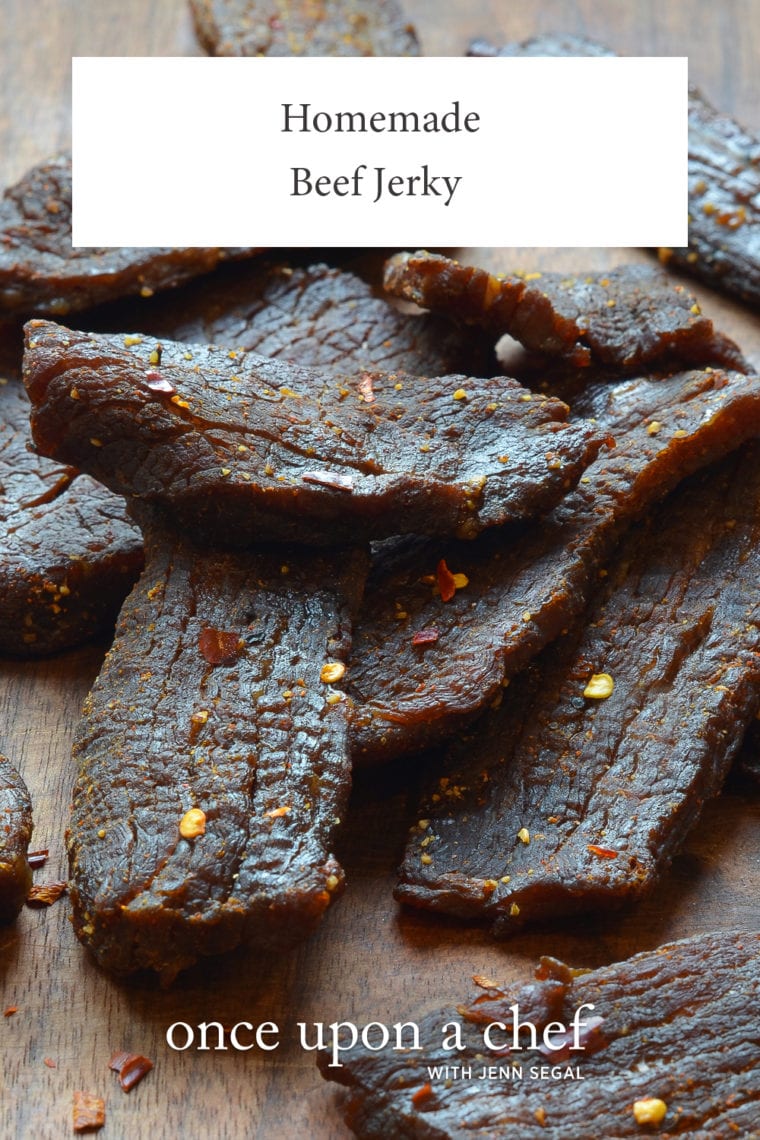
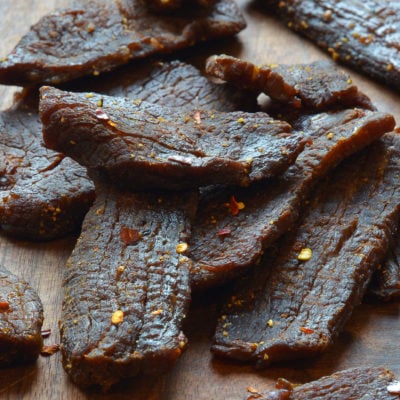
This is the best homemade beef jerky recipe, and it’s easy to make without any special equipment.
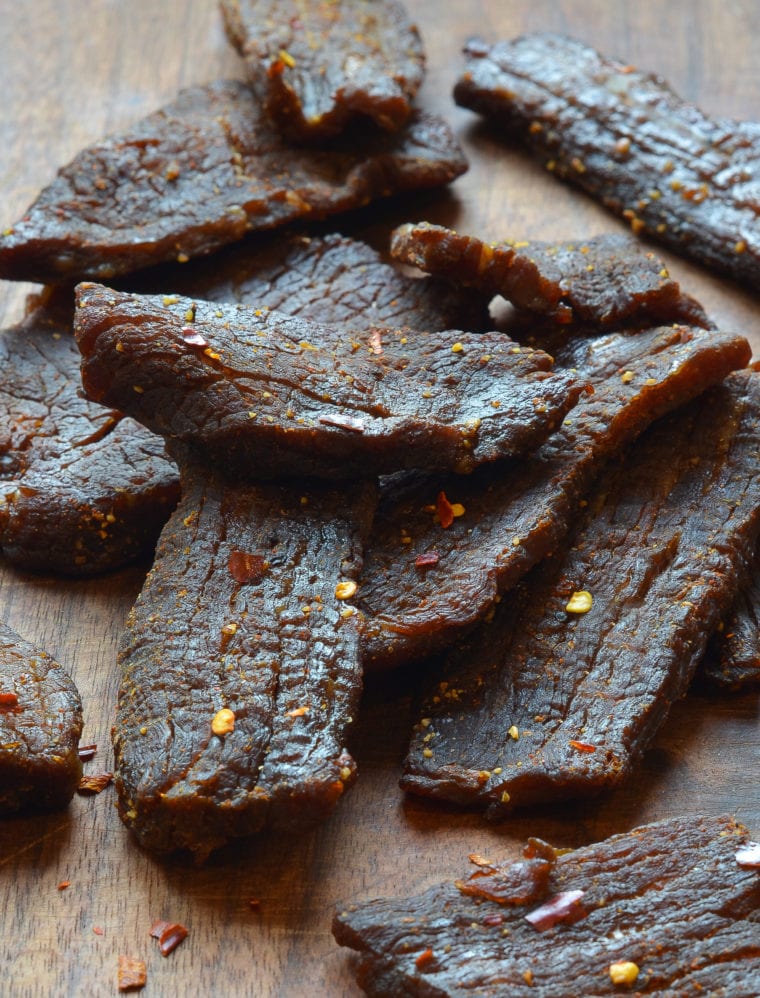
After road tripping with my family and sampling jerky from gas stations along the way — and spending a small fortune on it — I resolved to come up with a good homemade beef jerky recipe. The good news is that beef jerky is surprisingly easy to make and doesn’t require any special equipment other than a standard oven, baking sheets, and wire racks. However, most homemade jerky isn’t nearly as tender as the store-bought kind. That’s because commercial jerky producers use special equipment and curing preservatives to make their signature jerky.
Finally, after falling down an internet rabbit hole of pitmaster video tutorials, I learned the secret to making tender jerky at home: adding plenty of sugar to the marinade. The extra sugar not only helps preserve the meat but also locks in moisture. This recipe makes a salty-sweet, smoky jerky with a chewy yet tender texture, similar to the well-known brands.
What You’ll Need To Make Homemade Beef Jerky
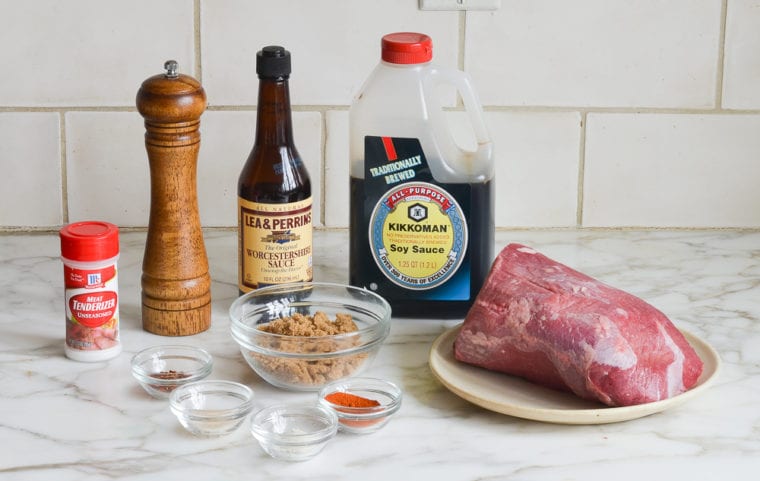
When making beef jerky, it’s important to start with a well-trimmed, lean cut of meat, as fat does not dry out and accelerates spoilage. An eye of round roast is ideal; it’s affordable, accessible, lean, and easy to trim. Before slicing, pop it in the freezer for 1 to 2 hours; it will be much easier to cut.
The marinade contains soy sauce, brown sugar, Worcestershire sauce, seasoning, and unseasoned meat tenderizer. Meat tenderizer contains bromelain, an enzyme that breaks down meat tissue. You can find it in the spice section of your supermarket (I use McCormick).
Step-by-Step Instructions
Step 1: Slice the Meat
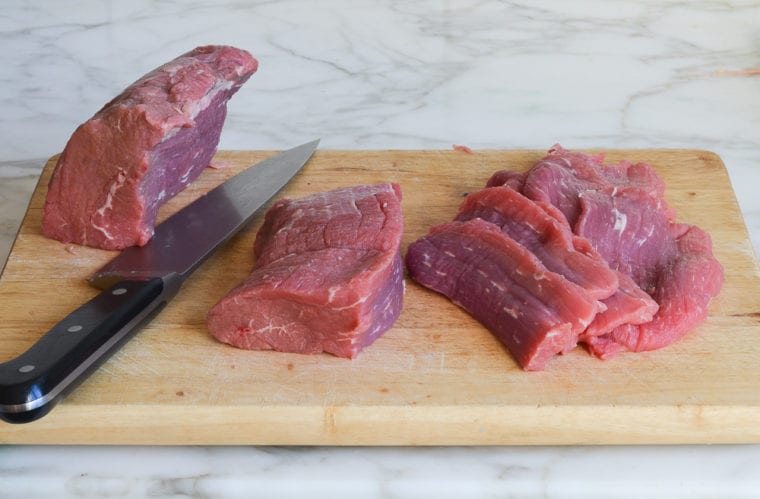
Slice the meat between 1/8 and 1/4 inch thick with the grain. If the roast is too thick to slice easily, cut it in half horizontally before slicing.
Step 2: Make the Marinade
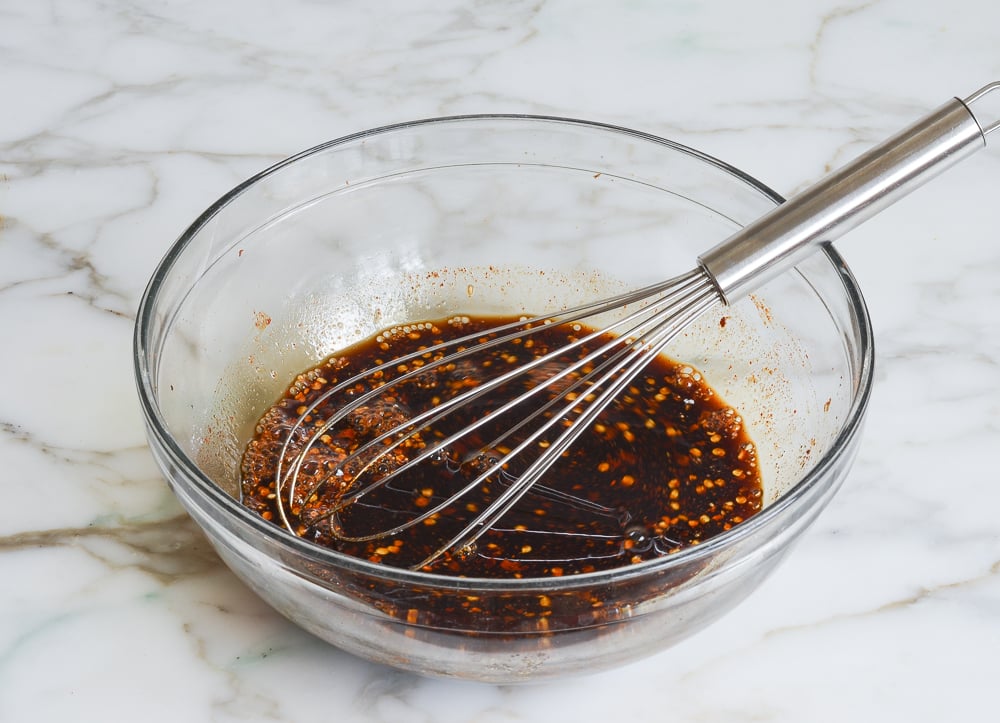
In a medium bowl, combine the brown sugar, soy sauce, Worcestershire sauce, smoked paprika, meat tenderizer, black pepper, red pepper flakes, onion powder, and garlic powder. Whisk until evenly combined and the sugar is dissolved.
Step 3: Marinate the Beef
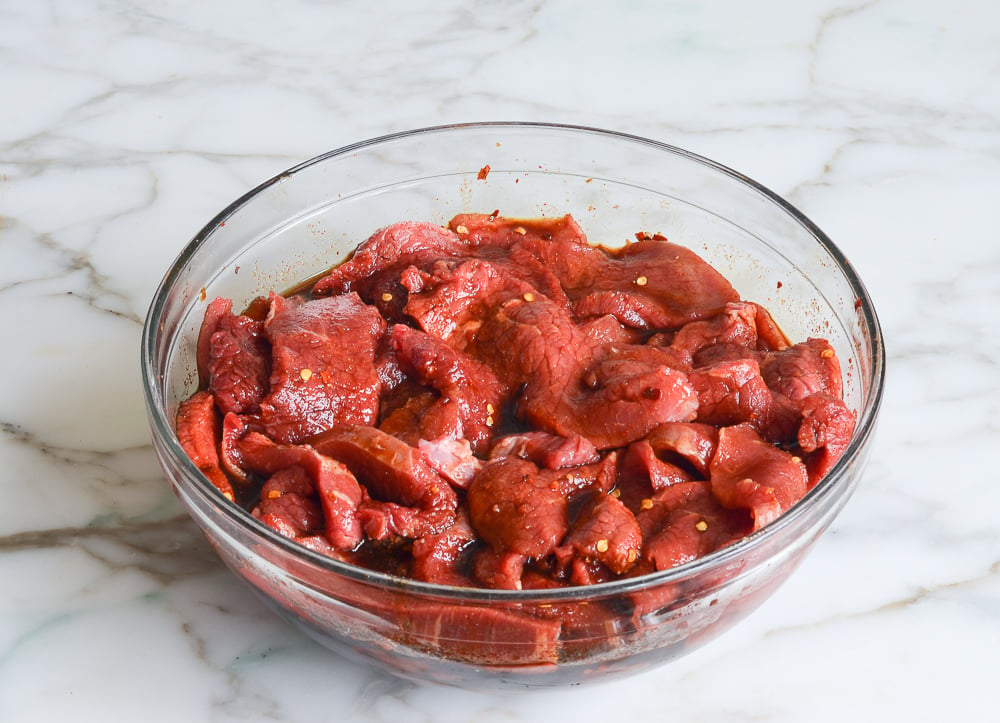
Add the meat to the marinade and toss until all of the pieces are evenly coated. Cover with plastic wrap (or transfer to a large ziplock bag) and marinate in the refrigerator for at least 12 hours or overnight. Toss the meat (or flip the bag) once or twice to be sure the meat marinates evenly.
Step 4: Dry Out The Meat
Line two baking sheets with aluminum foil for easy clean-up. Place a wire rack over each pan. Preheat the oven to 175°F and set two oven racks in the centermost positions.
Arrange the marinated meat on the wire racks in a single layer.
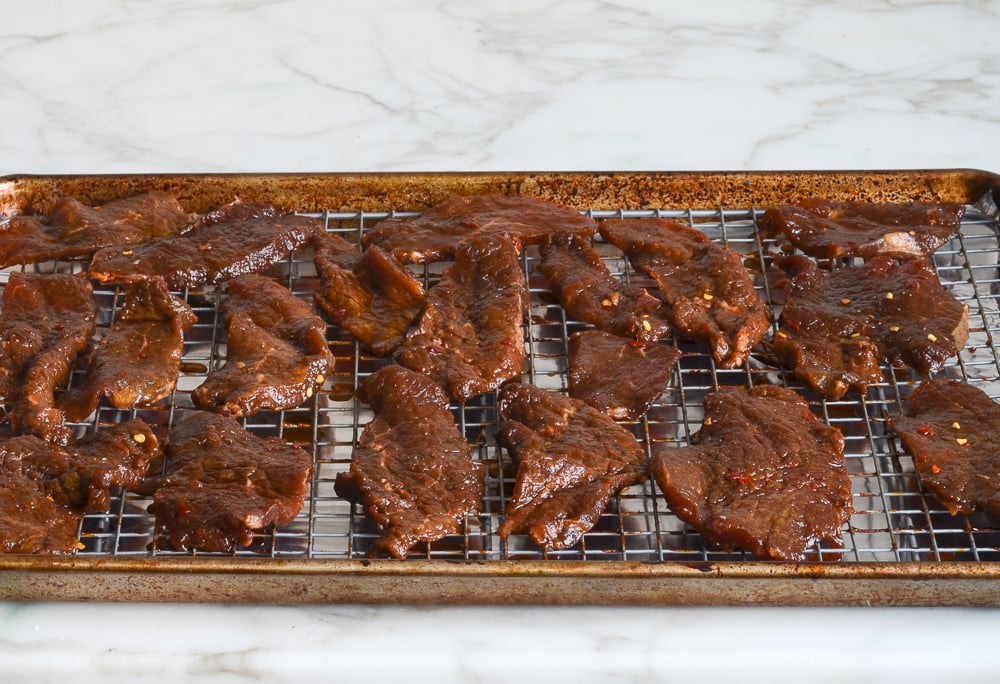
Bake, rotating the pans from front to back and top to bottom midway through, until the meat is dried out, 3 to 4 hours. To determine if the jerky is thoroughly dried out, take a piece out of the oven and let it cool to room temperature. It should be dry to the touch, leather-like in appearance, and chewy but still somewhat tender.
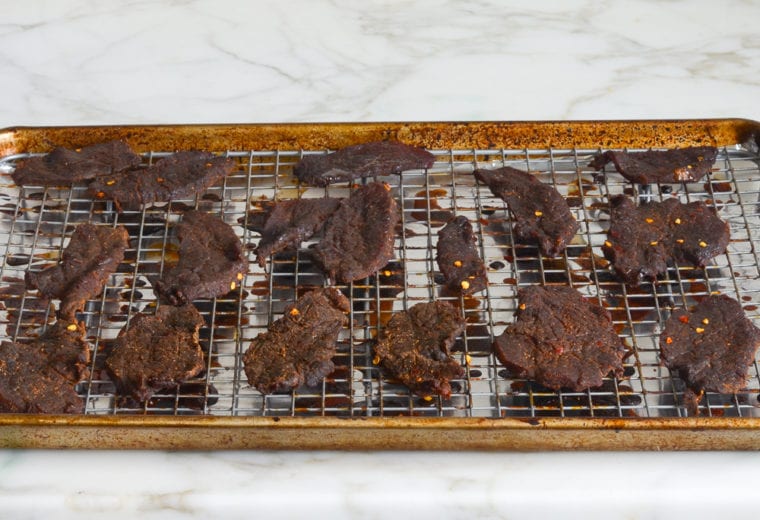
Store the jerky inside an airtight plastic container, Ziploc bag, or airtight glass jars. Properly dried jerky will keep at room temperature for about one week.
video tutorial

You May Also Like


The Best Homemade Beef Jerky Recipe
Ingredients
- 1 (3-lb) eye of round roast (see note), trimmed of fat and silver skin
- 1 cup (packed) dark brown sugar
- 1 cup soy sauce
- 3 tablespoons Worcestershire sauce
- 1 tablespoon smoked paprika
- 1 teaspoon unseasoned meat tenderizer (see note)
- 1 teaspoon freshly ground black pepper
- 1 teaspoon crushed red pepper flakes
- 1 teaspoon onion powder
- ½ teaspoon garlic powder
Instructions
- Slice the meat between ⅛ and ¼ in (3 and 6 mm) thick with the grain. (If the roast is too thick to slice easily, cut it in half horizontally before slicing.)
- Make the marinade: In a medium bowl, combine the brown sugar, soy sauce, Worcestershire sauce, smoked paprika, meat tenderizer, black pepper, red pepper flakes, onion powder, and garlic powder. Whisk until evenly combined and the sugar is dissolved.
- Add the meat to the marinade and toss until all of the pieces are evenly coated. Cover with plastic wrap or transfer to a large ziplock bag and marinate in the refrigerator for at least 12 hours or overnight. Toss the meat (or flip the bag) once or twice to be sure the meat marinates evenly.
- Line two baking sheets with aluminum foil for easy clean-up. Place a wire rack over each pan. Preheat the oven to 175°F (79°C) and set two oven racks in the centermost positions.
- Arrange the marinated meat on the wire racks in a single layer. Bake, rotating the pans from front to back and top to bottom midway through, until the meat is dried out, 3 to 4 hours. To determine if the jerky is thoroughly dried out, take a piece out of the oven and let it cool to room temperature. It should be dry to the touch, leather-like in appearance, and chewy but still somewhat tender.
- Store the jerky inside an airtight plastic container, Ziploc bag, or airtight glass jars. Properly dried jerky will keep at room temperature for about one week. Refrigerate or freeze for longer storage.
Notes
- Pop the meat in the freezer for 1 to 2 hours before slicing; it will be easier to cut.
- Meat tenderizer contains bromelain, an enzyme that breaks down meat tissue. You can find it in the spice section of your supermarket. (I use McCormick.)
This website is written and produced for informational purposes only. I am not a certified nutritionist and the nutritional data on this site has not been evaluated or approved by a nutritionist or the Food and Drug Administration. Nutritional information is offered as a courtesy and should not be construed as a guarantee. The data is calculated through an online nutritional calculator, Edamam.com. Although I do my best to provide accurate nutritional information, these figures should be considered estimates only. Varying factors such as product types or brands purchased, natural fluctuations in fresh produce, and the way ingredients are processed change the effective nutritional information in any given recipe. Furthermore, different online calculators provide different results depending on their own nutrition fact sources and algorithms. To obtain the most accurate nutritional information in a given recipe, you should calculate the nutritional information with the actual ingredients used in your recipe, using your preferred nutrition calculator.
Jennifer – this is not a review against you, it’s just an opinion on the jerky :). I have made homemade jerky for years, on the smoker, in the over and dehydrator. My favorite jerky is medium heat and mild to little sweetness. I ran across your recipe several times and finally decided to try it (given the great reviews).
I was reluctant given the amount of sugar and my apprehension was correct. As I stated, you have a LOT of people that love this jerky. Sadly, I am not one of them. The first piece (thinnest cut piece) finished, and I tried it. I will see if the neighbors want it – darn – WAY too sweet for my liking. I’m hoping to re-home it and move on. Glad so many like it – just overpowering sweetness.
Slice the meat AGAINST the grain, unless you like having to tear your teeth out to eat your jerky. If so, go for it. If you slice the meat against the grain, your jerky will be tender and a joy to eat, without sore jaws or a trip to the dentist.
*ACROSS the grain
Yes, similar meaning, but across is the correct term. Perpendicular to the grain will make for more tender jerky most often.
BUT, it depends on the cut you’re using. WITH the grain is fine for a cut with more marbling, because the fat will help break up the grain pattern.
Roasts tend to have nice marbling, so the cut is not as important, and it’s easier to get a clean, long cut *with* the grain.
For a cut like a top round or petite sirloin that is more lean or more tough, without the marbling, against the grain is better.
For something like skirt steak that has heavy marbling and a higher fat content, across the grain is great and will melt in your mouth, but with the grain will make for sturdier jerky, and will still be tender.
Hope that helps.
*ACROSS the grain, isn’t that what you said?
For a cut like a top round or petite sirloin that is more lean or more tough, without the marbling, against the grain is better. 😆
Sorry but it is called against the grain, not across the grain. And I think the author of this recipe who said to cut the meat with the grain made a typo.
There is nothing telling how much you should put
It sounds like you are just looking at the portion of the page that has the pictures with some instructions above. If you scroll down a bit under the pictures, you’ll find the full recipe. Alternatively, at the very top of the page, to the right of the recipe name, you’ll see an orange/red button labeled ‘Jump to Recipe.’ If you click on it, it’ll take you directly to the recipe. Hope that helps!
This is an exceptionally good recipe for making jerky. The only thing I did different is to reduce the amount of sugar by 1/4 and put in 1/2 teaspoon of cayenne pepper only because I like the heat. I have tried it with the basic recipe in and it is outstanding as is. This gets a five star and I recommend giving it a try. One thing I do slightly different is to put it into the smoker for two hours to add smoke flavor and that highly intensifies the flavor. The additional smoke flavor puts this recipe over the top of anything I have tried so far.
Did you smoke it prior to drying it out?
This recipe is fool proof! In case anyone is wondering, we cut the sugar in half for health reasons and still get great results. I’ve made about one batch of month since I discovered this recipe and my family can’t get enough! This would make a great homemade gift for Father’s Day.
I didn’t put the chili in, but has to be best recipe I’ve tried for jerky. Gave a to few people to try and they all said the same
The recipe is about 200kcal per serving (Based on twelve servings) in case anybody needs/wants to know.
Recipe looks great. Just wondering is there a reason to cut with the grain instead of against it?
Thanks!
Hi Scott, This jerky is the exception to the rule when it comes to slicing against the grain. When you slice it against the grain, it almost falls apart. The jerky has a better texture when sliced with the grain. Hope you enjoy if you make it!
Can this recipe be used in a dehydrator?
Hi Dwight, Surprisingly, I’ve found that the jerky turns out better and more tender if you use this method versus a dehydrator. I hope you enjoy if you make it!
Thank you Jenn Segal!
Can you use the marinade again to make a second batch?
I don’t recommend it from a food-safety standpoint. Sorry!