

This post may contain affiliate links. Read my full disclosure policy.
Moist, tender, and unapologetically lemony, this cake pairs plenty of citrus with a generous scattering of poppy seeds.

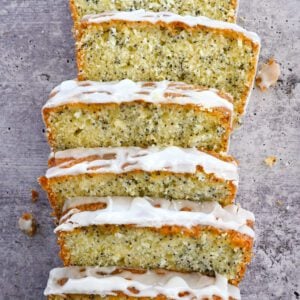
A variation of my popular lemon pound cake, this lemon poppy seed cake is laced with fresh lemon zest, filled to the brim with nutty, crackly poppy seeds, and drizzled with a bright lemon glaze. The melt-in-your-mouth texture is just what you’d hope for in a homemade loaf.
This lemon poppy seed cake recipe yields two loaves that stay fresh for days. My grandmother would have called it “company cake” since it’s the perfect treat to have on hand when friends and family come over. And if you love the lemon and poppy seed combo, don’t miss my lemon poppy seed muffins!
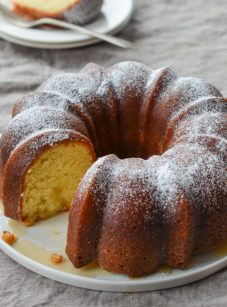
(Note: This recipe was originally a Bundt cake, but due to readers having issues with sticking, I updated it in January 2025 to loaf pans, which can be lined with parchment for easy removal.)
“The cake was moist and lightly lemony and the proportion of poppy seeds spot on…It’s a GEM.”
What you’ll need to Make Lemon Poppy Seed Cake
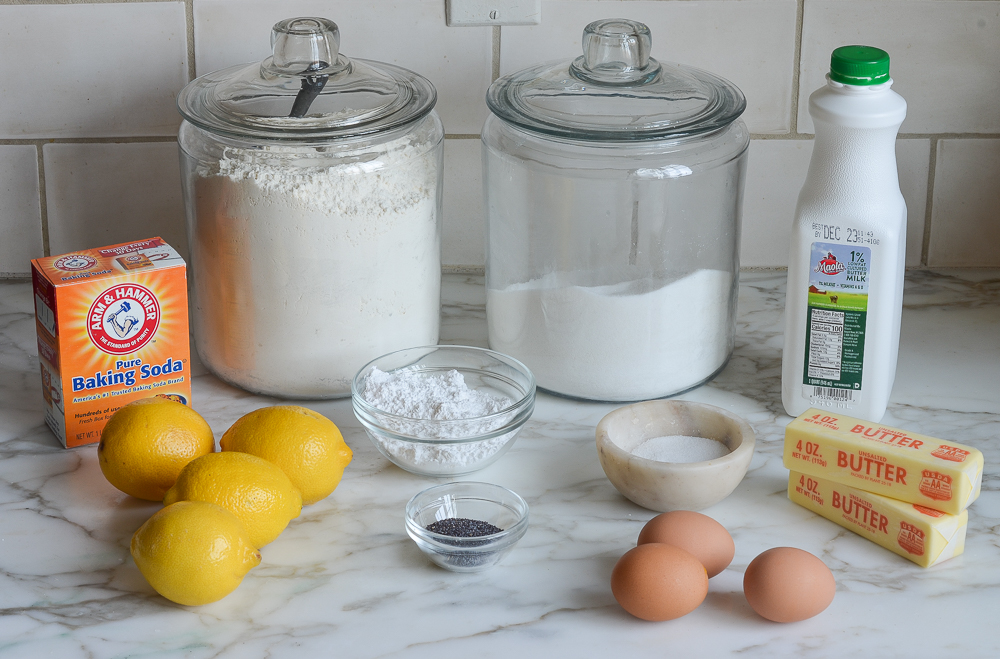
- All-Purpose Flour: Gives the cake its structure while still allowing for a tender crumb. For accuracy, spoon it into your measuring cup and level it off with a knife.
- Baking Soda: Works with the acidity in the buttermilk and lemon juice to help the cake rise.
- Salt: Balances the sweetness and brings out the lemon.
- Poppy Seeds: Give the cake its signature look along with a subtle nutty taste and a little crunch.
- Low-Fat Buttermilk: Keeps the cake moist and tender while adding a slight tang that works especially well with the lemon. If you’d prefer not to buy it, check out some easy guidance on how to make buttermilk using milk and lemon juice or vinegar.
- Lemon Zest & Fresh Lemon Juice: Zest gives the cake its strongest lemony punch, while the juice is used in the cake, syrup, and glaze. It adds brightness to the batter, gives the syrup a tart edge, and turns the confectioners’ sugar into a tangy glaze.
- Unsalted Butter: Makes the cake rich and tender; softening it first allows it to cream properly with the sugar.
- Granulated Sugar: Sweetens the cake and is also used to coat the pan and make the lemon syrup that soaks into the baked cake.
- Eggs: Give the cake structure and richness and help hold the batter together.
- Confectioners’ Sugar: Whisked with lemon juice to make the simple glaze that goes over the cooled cake.
- Jump to the printable recipe for precise measurements
Step-by-Step Instructions
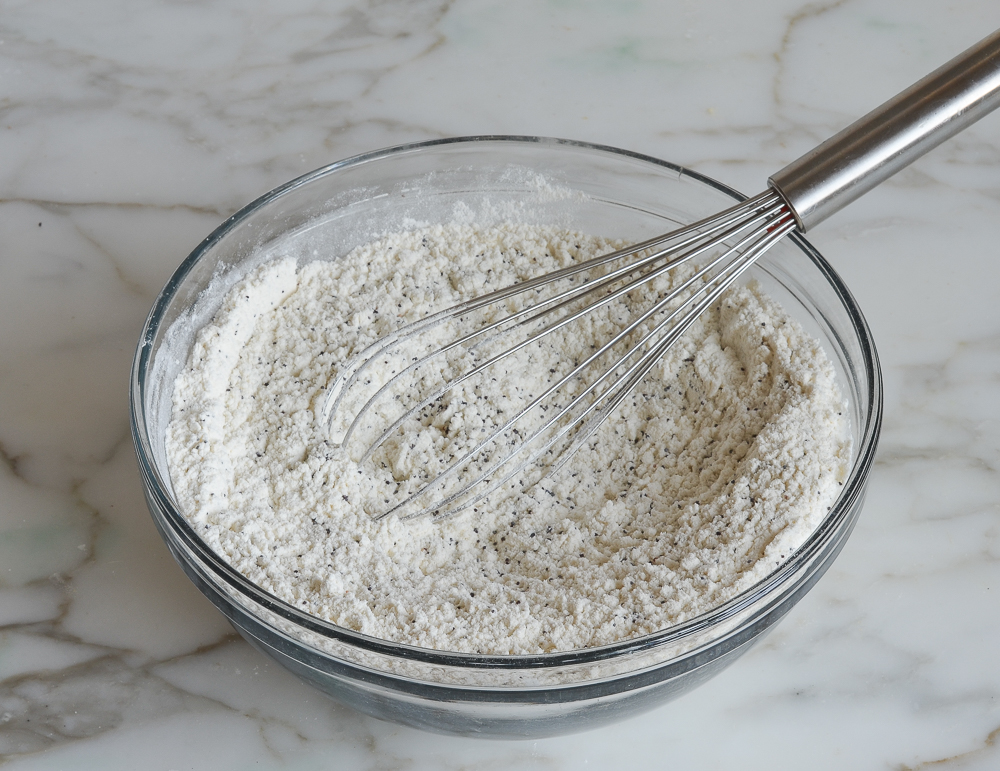
Step 1: Combine the dry ingredients. Whisk the dry ingredients together until evenly combined. Take a moment to make sure the poppy seeds are well distributed so they’re scattered evenly throughout the finished cakes.
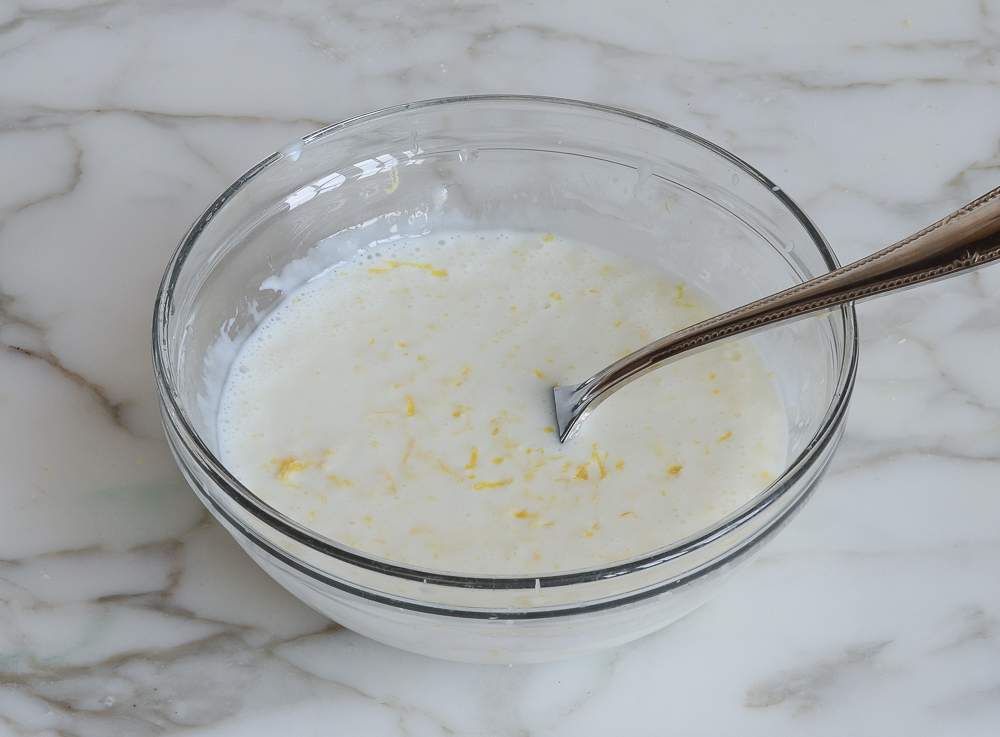
Step 2: Combine the wet ingredients. Combine the buttermilk and lemon zest/juice. Don’t be concerned if the mixture looks slightly curdled after the lemon juice goes in—that’s completely normal.
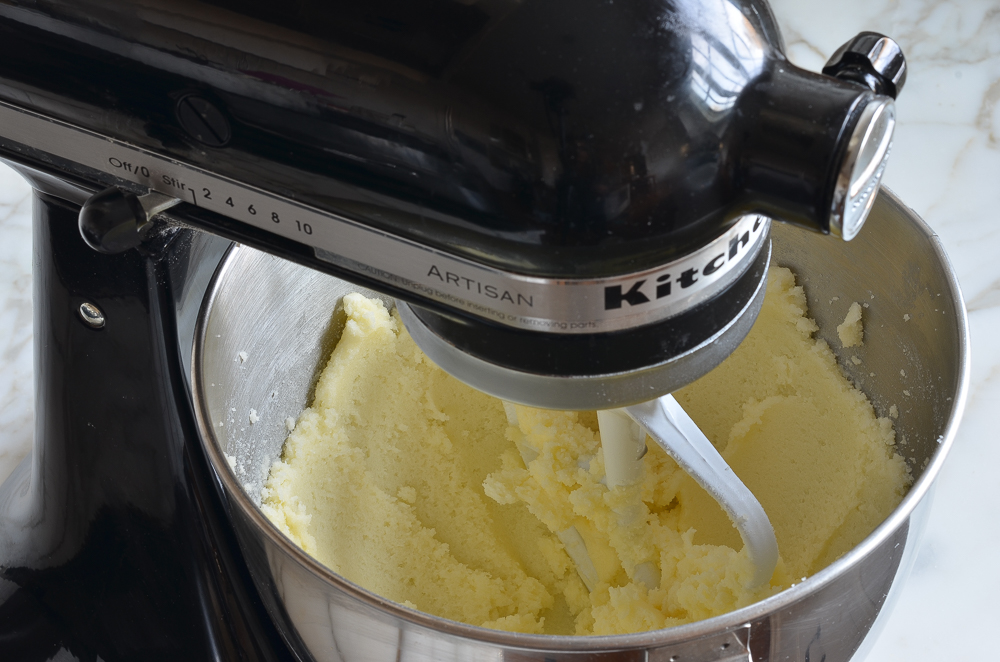
Step 3: Cream the butter and sugar. Beat the butter and sugar until light and fluffy. Give this step a few minutes—the mixture should look noticeably lighter in both color and texture before you move on.
Step 4: Add the eggs and begin the batter. Beat in the eggs one at a time, then start incorporating the dry ingredients on low speed. Scrape down the bowl as needed so everything mixes evenly.
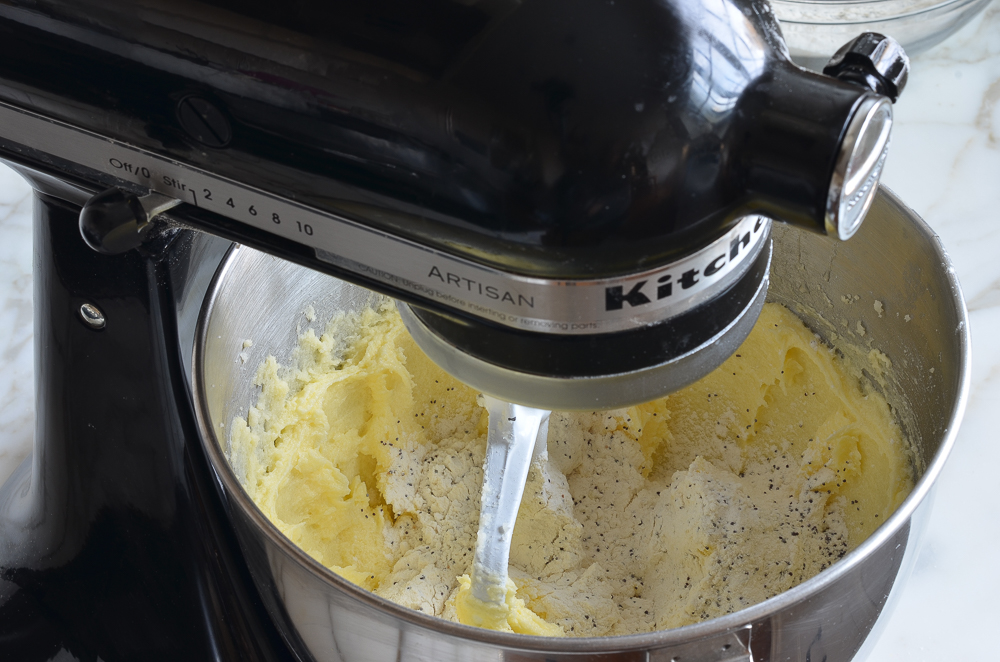
Step 5: Add some of the buttermilk mixture. Mix in the first portion of the buttermilk mixture. The batter may look a little uneven at this point, but it will come together as you continue adding the wet and dry ingredients.
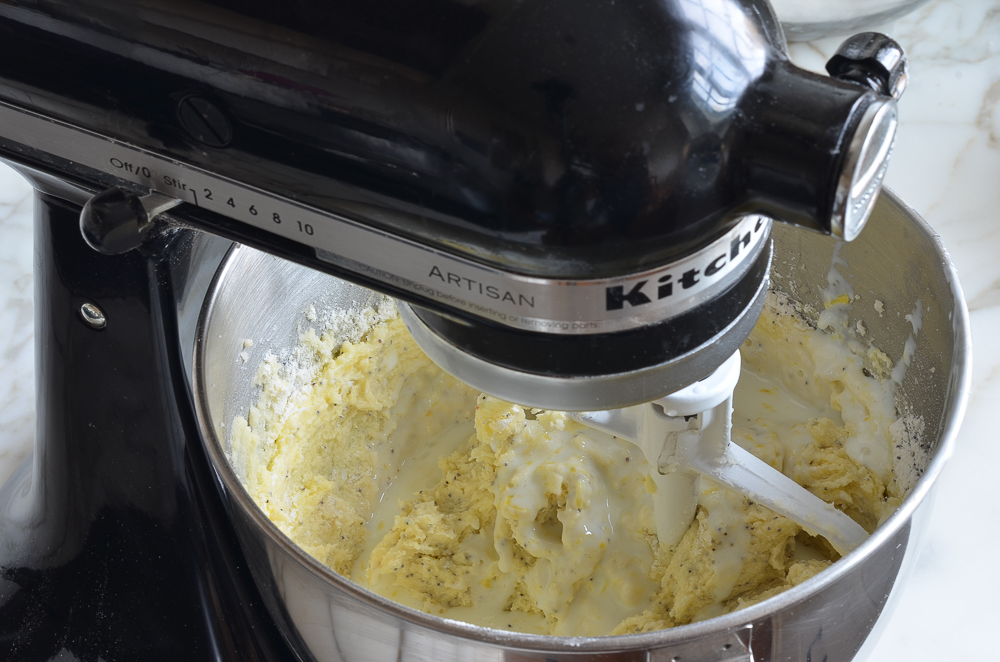
Step 6: Finish the batter. Continue alternating the dry and wet ingredients, ending with the dry. Once the flour starts going in, keep the mixer on low and mix only until everything comes together; overmixing at this stage can make the cakes less tender.
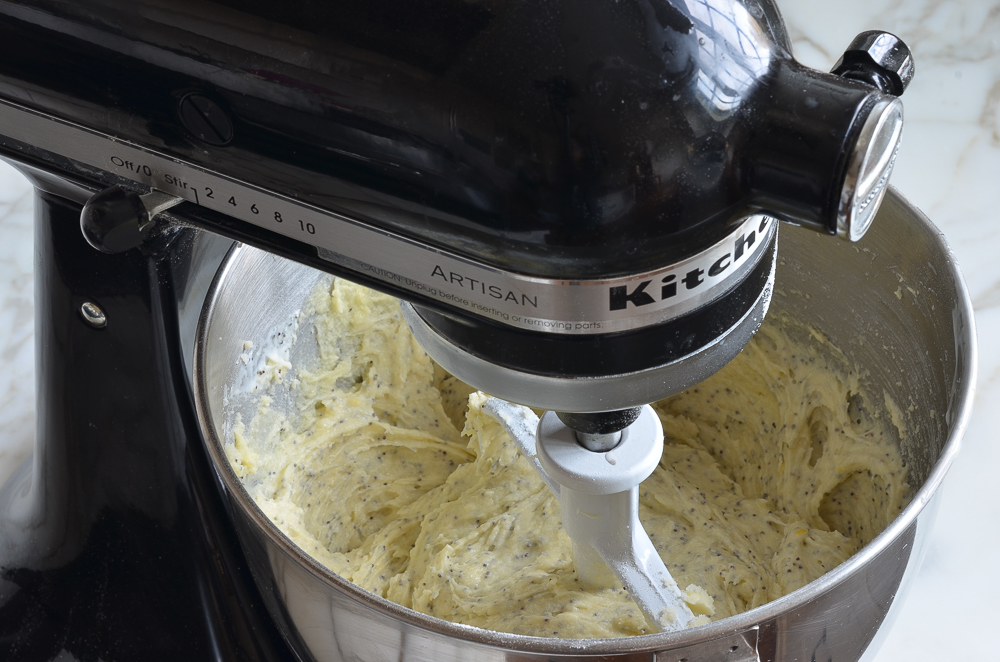
Step 7: Fill the pans. Divide the thick batter between the prepared loaf pans and smooth the tops. Just eyeballing the amounts is fine, but if you happen to have a kitchen scale, you can use it to get the two loaves reasonably close.

Step 8: Bake and cool. Bake until the cakes are golden, and a tester inserted into the center comes out clean. Let them rest briefly in the pans before lifting them out to finish cooling on a rack. The short rest gives the cakes a chance to firm up.

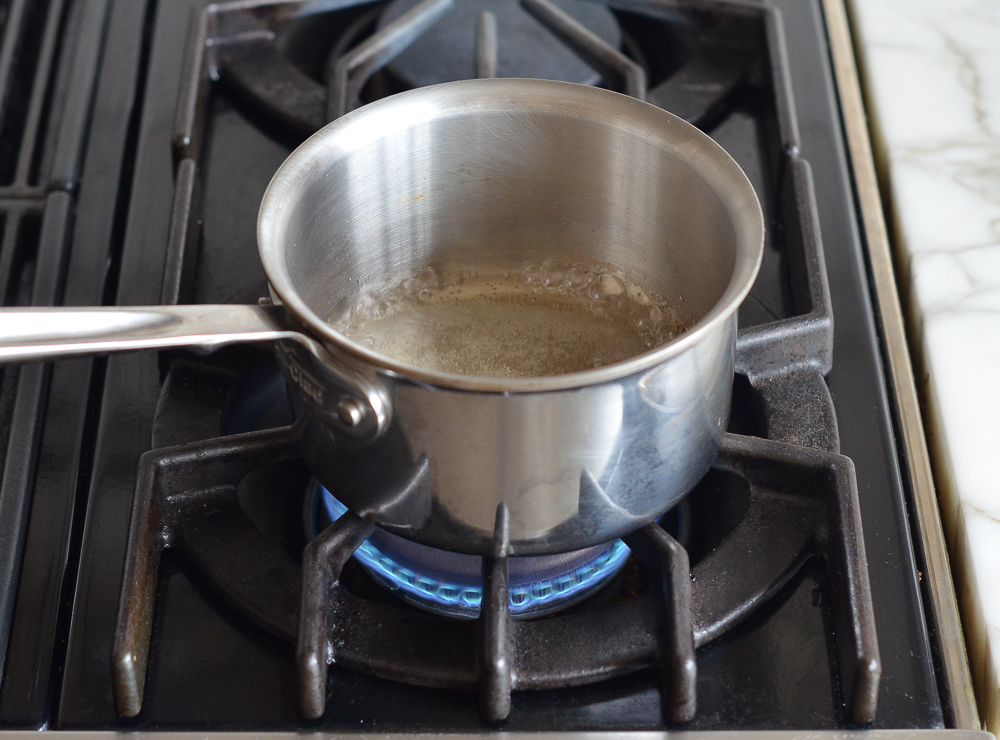
Step 9: Make the lemon syrup. While the cakes finish cooling, make the simple syrup and stir in the lemon juice off the heat. You want the syrup to stay warm so it absorbs readily into the cakes.
Step 10: Make the glaze. Whisk together the glaze until smooth, adjusting the consistency if needed. It should be thick but pourable—closer to honey than a thin icing—so it stays on top of the cakes while still dripping down the sides.
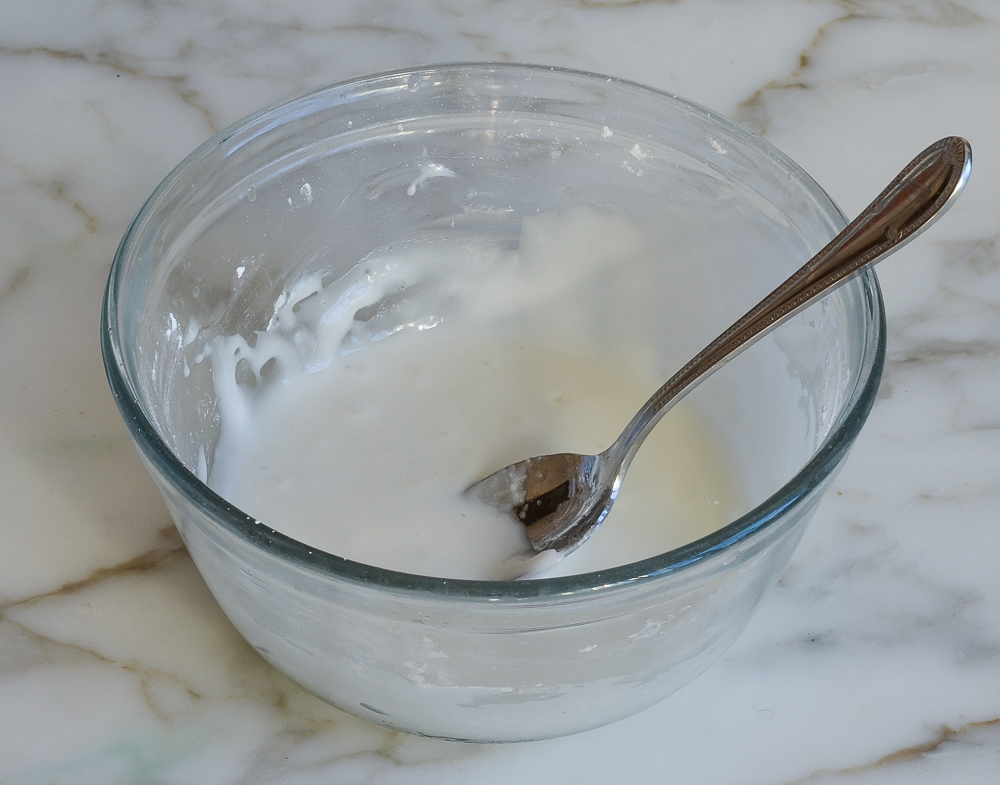
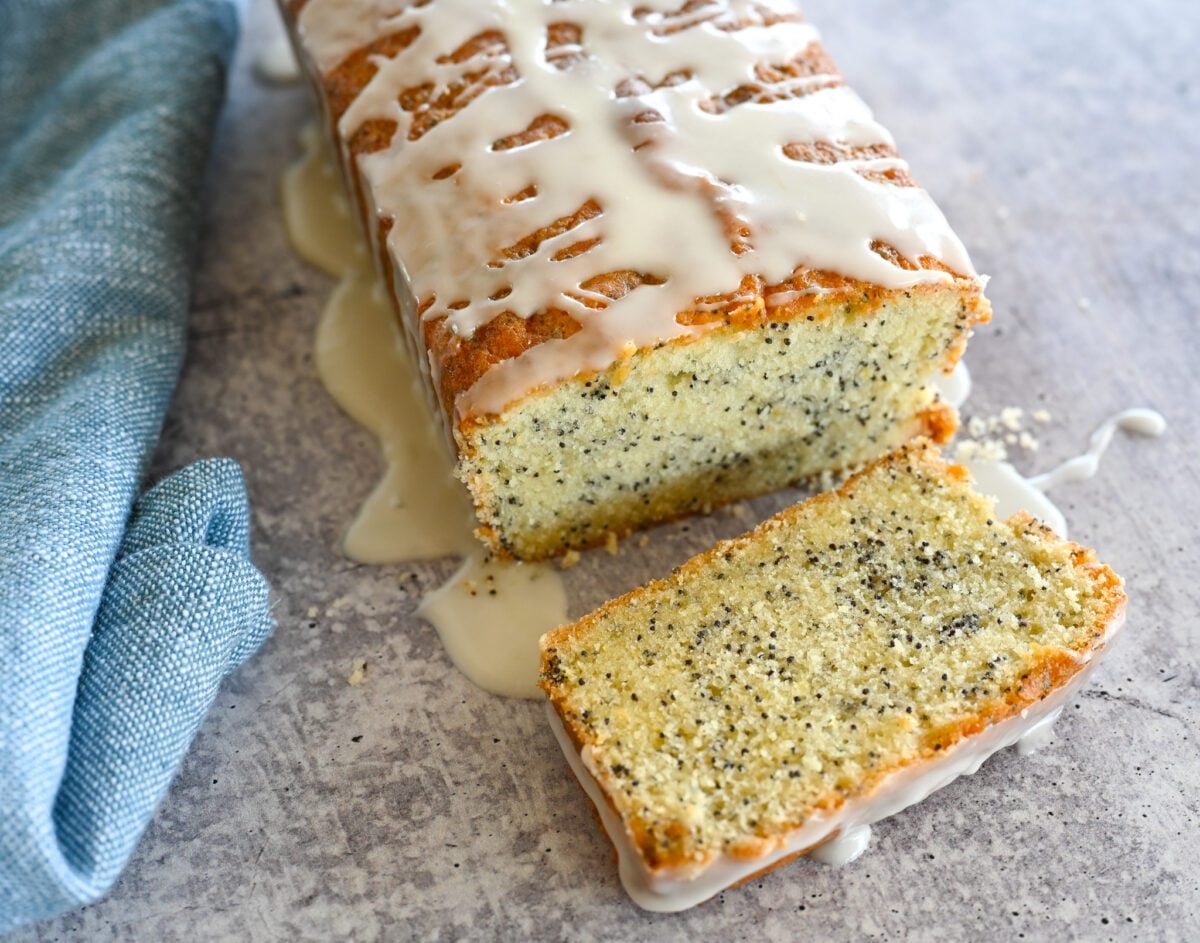
Step 11: Soak and glaze the cakes. Slowly brush the warm syrup over the cooled cakes, giving it time to soak in as you go, then spoon the glaze over the top. Let the glaze set before slicing. The cakes keep well for a few days and can also be frozen without the glaze for up to 3 months.
More Bright, Buttery Cakes you may like

Lemon Poppy Seed Cake
Ingredients
For the Cake
- 3 cups all-purpose flour, spooned into measuring cup and leveled-off
- ½ teaspoon baking soda
- ½ teaspoon salt
- ¼ cup poppy seeds
- 1 cup low-fat buttermilk (see note)
- Finely grated zest of 3 lemons, about 3 (gently packed) tablespoons
- 2 tablespoons fresh lemon juice (see note)
- 1 cup (2 sticks) unsalted butter, softened
- 2¼ cups granulated sugar
- 3 large eggs
For the Syrup
- 2 tablespoons water
- 2 tablespoons granulated sugar
- 2 teaspoons fresh lemon juice
For the Glaze
- About 1 cup confectioners' sugar
- 2 tablespoons fresh lemon juice
Instructions
- Preheat the oven to 350°F (175°C) and set an oven rack in the middle position. Spray two 8½ x 4½-in (22 x 11-cm) loaf pans with nonstick cooking spray. Line the long sides of the pans with parchment paper “slings” and spray lightly with nonstick cooking spray again.
- In a medium bowl, whisk together the flour, baking soda, salt, and poppy seeds. Set aside.
- In a small bowl, combine the buttermilk, lemon zest and lemon juice. Set aside.
- In the bowl of an electric mixer fitted with the paddle attachment (or beaters), cream the butter and sugar on medium speed until light and fluffy, 3 to 4 minutes. Scrape down the sides of the bowl, then beat in the eggs one at a time, beating well after each addition. Scrape down the sides of the bowl again. With the mixer on low speed, beat in one-quarter of the flour mixture, then one-third of the buttermilk mixture. Beat in another quarter of the flour mixture, then another third of the milk mixture. Repeat with another quarter of the flour mixture and the remaining milk mixture. Finally, beat in the remaining flour mixture. Scrape down the sides and bottom of the bowl, and give a quick mix with a rubber spatula to make sure all of the ingredients are well incorporated.
- Spoon the thick batter into the prepared pans and smooth the top with a rubber spatula. Bake for 55 to 65 minutes, or until the top of the cake is golden and a cake tester comes out clean.
- Set the cakes on a cooling rack, and cool in the pans for 10 minutes. Carefully run a knife along the unlined sides of the pans to loosen the cake from the pan. Using the parchment slings, lift the cakes out of the pans and place onto the rack, leaving the parchment paper in place under the cakes. Let cool for about 1 hour.
- When the cakes are almost cool, make the syrup. Combine the water and sugar in a saucepan and bring to a boil. Remove from the heat and stir in the lemon juice.
- When the cakes are cool, carefully transfer them to serving platters.
- Gradually brush the warm syrup all over the cakes, including the sides, letting it soak in as you go.
- To make the glaze: in a medium bowl, whisk together the confectioners’ sugar and lemon juice. Add more confectioners’ sugar or lemon juice as necessary to make a thick but pourable glaze (it should be a little thicker than you’d think, about the consistency of molasses or honey). Spoon the glaze over the top of the cake, letting it drip down the sides. Let the cakes sit for about one hour to allow the glaze to set before serving.
Notes
- If you’d prefer not to buy it, check out some easy guidance on how to make buttermilk using milk and lemon juice or vinegar.
- You’ll need 3 large lemons for this recipe.
- Freezing Instructions: The cake can be frozen (without the glaze) for up to 3 months. After it is completely cooled, double-wrap it securely with aluminum foil or plastic freezer wrap, or place it in heavy-duty freezer bag. Thaw overnight on the countertop before serving. (Add the glaze after the cake is thawed.)
Nutrition Information
This website is written and produced for informational purposes only. I am not a certified nutritionist and the nutritional data on this site has not been evaluated or approved by a nutritionist or the Food and Drug Administration. Nutritional information is offered as a courtesy and should not be construed as a guarantee. The data is calculated through an online nutritional calculator, Edamam.com. Although I do my best to provide accurate nutritional information, these figures should be considered estimates only. Varying factors such as product types or brands purchased, natural fluctuations in fresh produce, and the way ingredients are processed change the effective nutritional information in any given recipe. Furthermore, different online calculators provide different results depending on their own nutrition fact sources and algorithms. To obtain the most accurate nutritional information in a given recipe, you should calculate the nutritional information with the actual ingredients used in your recipe, using your preferred nutrition calculator.
Made this cake (in a bundt pan, no trouble with sticking using butter and flour to prep the pan) for the first time this weekend and it is hands-down fabulous. I’ve passed it along to several people. I did not use the syrup, just the glaze as that’s really all it needs. An amazing cake! Thank you!
Hi, the cake was delicious and I made a large one, not two loaves. I made a few alterations. In my view, there is no need for almost half a kilo of sugar in a cake. I cut the 450 grams to 150 grams which worked out to 2.5 teaspoons per serve (12 serves). Plenty!
I used a spatula to fold in the flour in two batches as mixing the flour in 4 times overworks the dough.
I used one and a half cups of buttermilk as poppy seeds absorb a lot of moisture.
To reduce the sugar I chose to poke holes into the cake whilst still hot and spooning in the syrup. No need to add more sugar in the form of icing sugar glaze.
Everyone is loving this zesty, lemony cake!
I love this recipe; however, I found it moist but very crumbly . Anything I can do to make it more firm ? Love the flavor.
Hi Molly, did you wait until the cake was completely cool before slicing it?
One loaf we cut while warm; however, the second loaf was completely cool but still somewhat crumbly.
Did you make the slices quite thin? (Thicker slices will be sturdier.) Did you use the syrup? If not, that would definitely make the cake drier/more crumbly.
Fantastic recipe! Thank You so much, the lemon zest is Brilliant and delicious!
Hi Jennifer again another recipe I really like ….just wondering could you please email me old version buntd poppy seeds cake…thank you
I love the original bundt cake version but did find it stuck to the pan. Solved that by changing bundt pans! Having said that, I’m so happy to have a loaf version also. And fun tip, I almost always make my own almond paste and put dollops of that inside the cake. A perfect cake even sweeter. (Jenn, could you send the link to the original recipe? Mine is in tatters as it’s my most made cake recipe!)
Hi Jennifer, glad you have a new Bundt pan that will work for this recipe (and like the loaves)! I just emailed you the Bundt version. 😊
I follow this recipe to the letter, and it is hands down my favorite cake in the world, it is a magical and special cake and I just adore the chef for putting this on the internet. I once “made” buttermilk for a home health care client of mine using lemon juice and it was dry and gross, I was very embarrassed use real butter milk, TRUST ME. You don’t use buttermilk for flavor, you use it for moisture retention and fluff, no one makes vinegar milk pancakes or vinegar milk biscuits. (Maybe I botched it but I will never try again to find out)
10/10
100/100
Best cake
Best cake
I have never made Lemon Poppy Seed Cake before. This recipe is fantastic. I have a question though – is the amount of sugar correct? I cut it down to 1.5 cups and it was still too sweet for us. I will definitely be making this again, but next time, using only 1 cup of sugar. Apart from that, this is a fantastic cake!! Thank you!!
Hi Anita, yes, the amount of sugar is correct. Glad you enjoyed it with the modification!
I love baking; however, I found this recipe overly long and tiresome to make. Next time. I’ll look for an easier yet delicious recipe.
Hi Jenn, may I please have the bundt recipe for this cake? Thanks so much! I love your recipes and use them often.
Just sent it – enjoy!