


This post may contain affiliate links. Read my full disclosure policy.
This homemade naan recipe makes soft, chewy flatbread with beautifully blistered spots and a buttery finish. All you need is a hot skillet—no tandoor required.
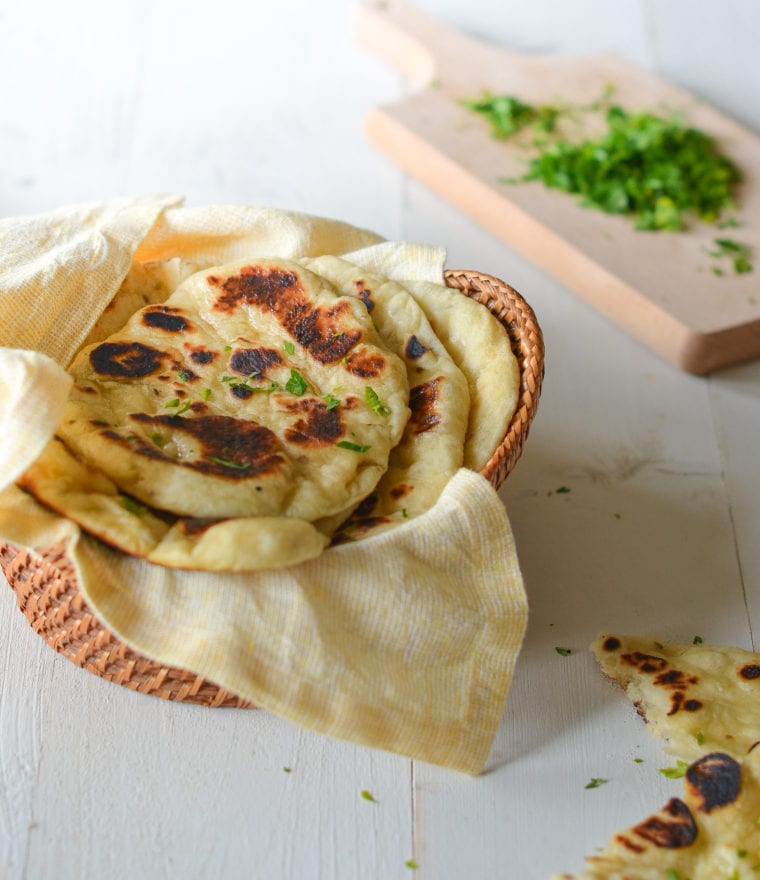
Naan is a soft, pillowy flatbread traditionally baked in a tandoor, a blazing-hot clay oven that gives it those characteristic bubbles and charred spots. Of course, most of us don’t have a tandoor at home, but I’ve found that a good, hot skillet does a wonderful job. The trick is to keep the dough soft and slightly sticky, then cook it over high heat so it puffs up and develops those beautiful golden, blistered spots.
This homemade naan recipe is one of my favorite breads to make because, aside from the rising time, it’s surprisingly quick and easy. And there’s nothing quite like brushing a warm piece of naan with melted butter and serving it alongside chicken curry, butter chicken, or chicken tikka masala.
“My search for the perfect naan bread is over—this recipe is the best!”
What You’ll Need To Make Homemade Naan
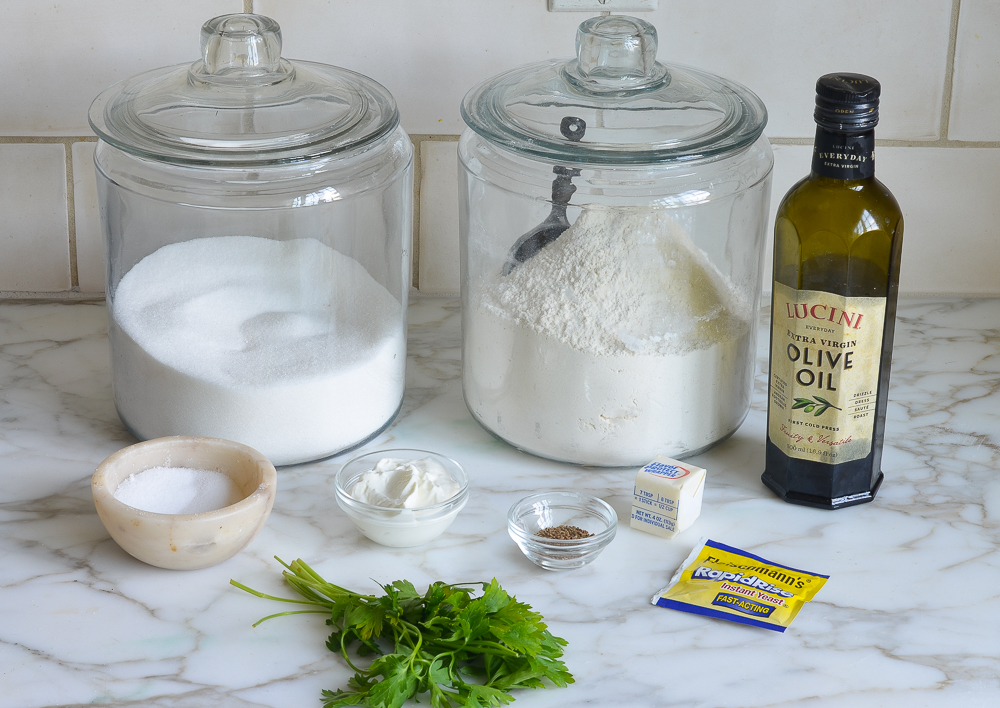
- All-purpose flour: The base of the dough. For best results, spoon it into your measuring cup and level it off.
- Sugar and salt: Sugar adds a touch of sweetness and helps the yeast along, while salt brings out the flavor.
- Instant or rapid-rise yeast: Helps the dough rise and gives the naan its pillowy texture. You can use active dry yeast instead, but allow a little extra time for rising.
- Warm water, plain yogurt, and olive oil: Bring the dough together and help keep the naan soft and tender.
- Anise seeds (optional): Add a subtle licorice note. You can substitute nigella, poppy, or sesame seeds, or leave them out.
- Melted salted butter: Brushed over the naan after cooking for a rich, buttery finish.
- Chopped parsley (optional): Adds color and freshness. Use cilantro if you prefer. For garlic naan, stir minced garlic into the melted butter before brushing it over the cooked bread.
- Jump to the printable recipe for precise measurements
How To Make Naan
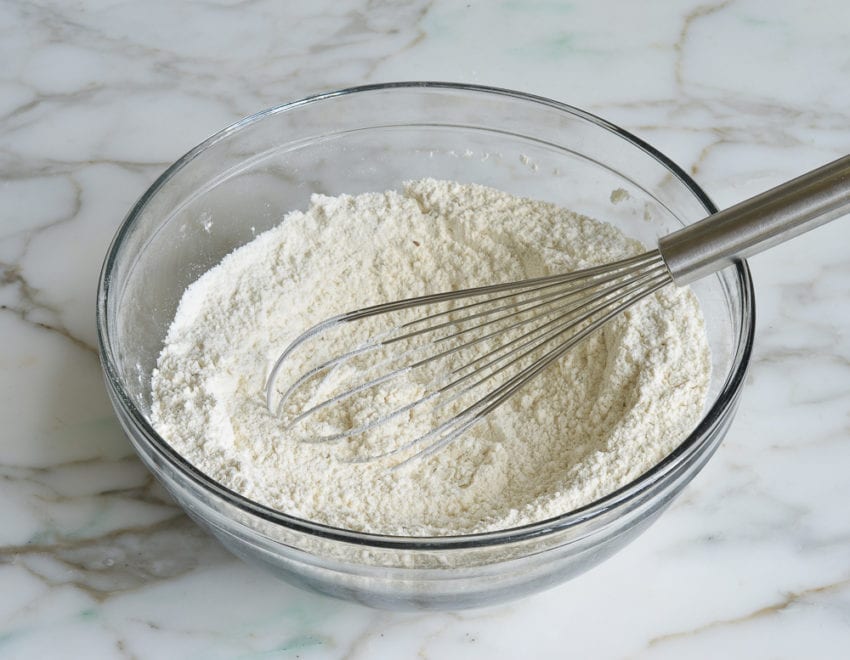
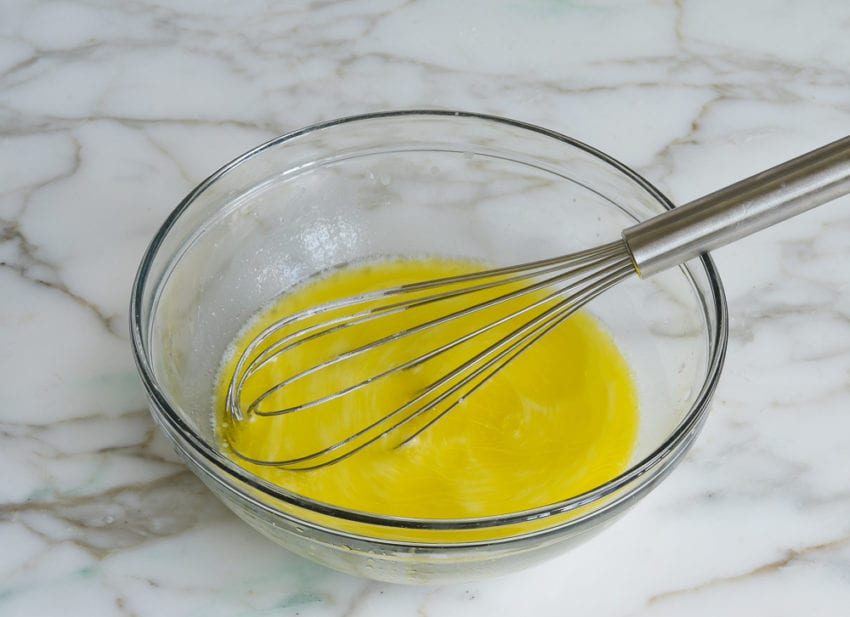
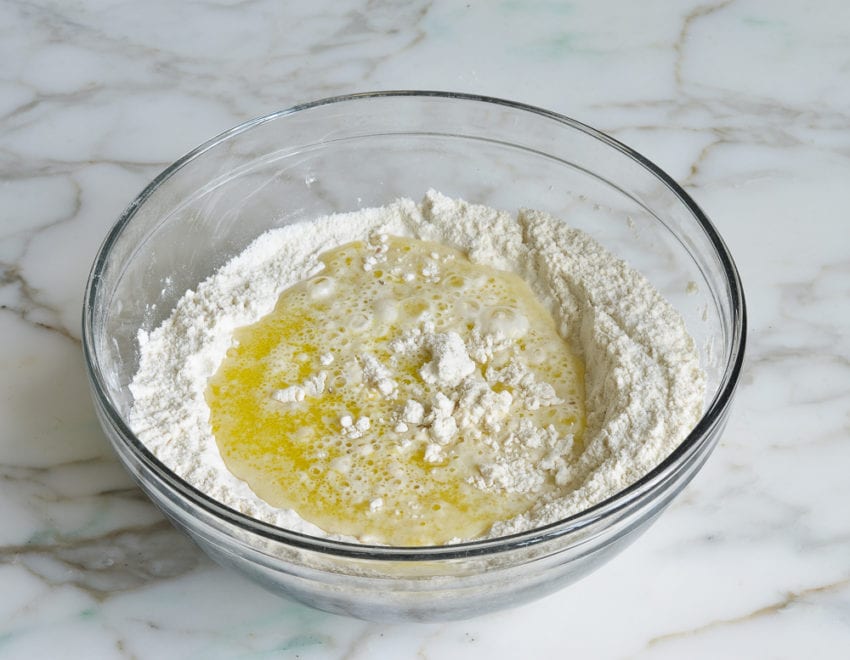
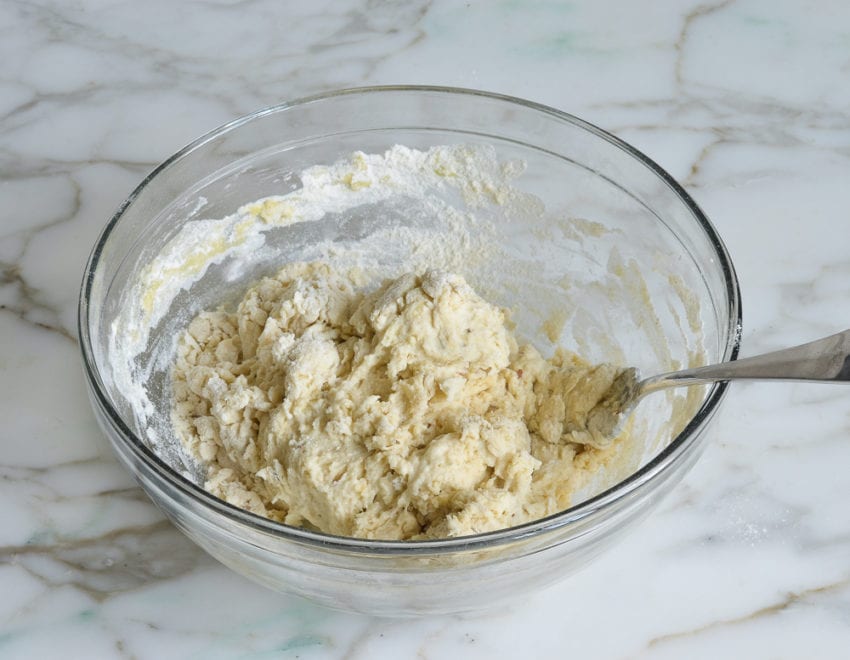
Make the dough: Whisk together the dry ingredients in a large bowl. In a separate bowl, combine the yogurt, olive oil, and warm water, then add to the dry ingredients. Stir with a fork until the dough starts to come together, then knead gently with floured hands until you have a soft, slightly sticky ball. There’s no need to knead it until smooth.
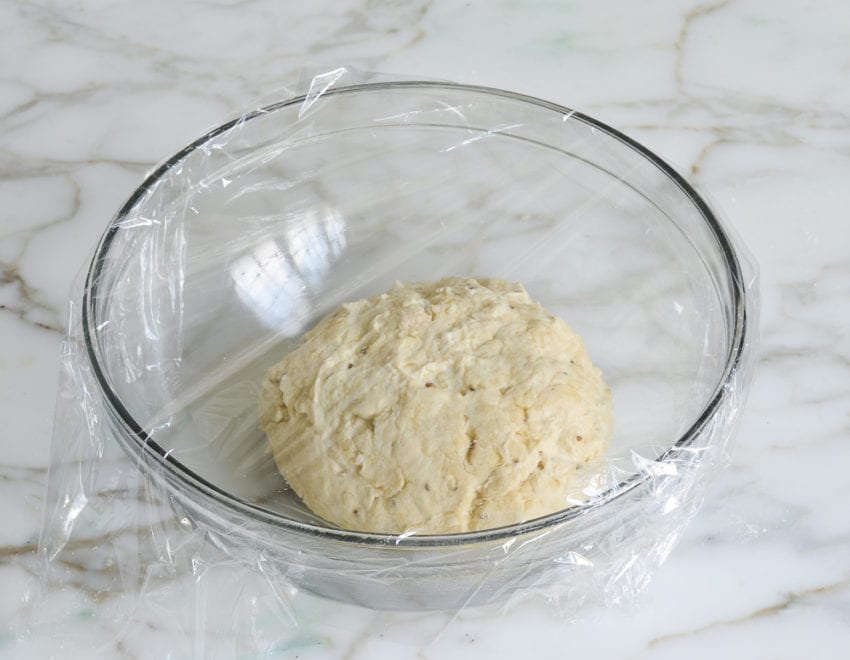
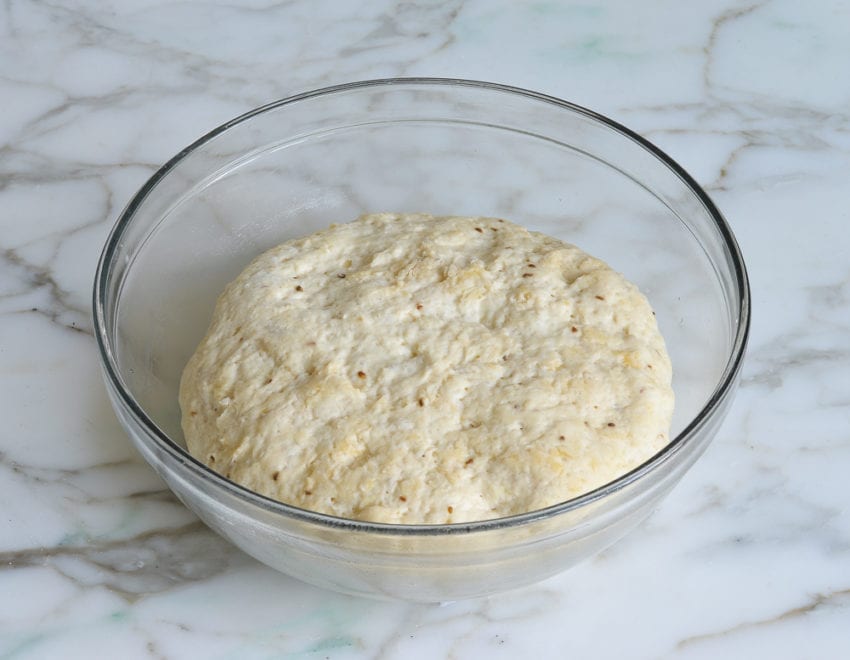
Let it rise: Transfer the dough to a lightly oiled bowl and cover. Leave it in a warm spot until it’s about doubled in size. The dough should look noticeably puffier and feel soft and airy.
Divide and shape: Turn the dough onto a well-floured work surface and divide it into six pieces. Dust with flour as needed to keep the dough manageable, then roll each piece into a thin oval. Don’t worry about making them perfectly uniform—a slightly irregular shape is part of naan’s charm.
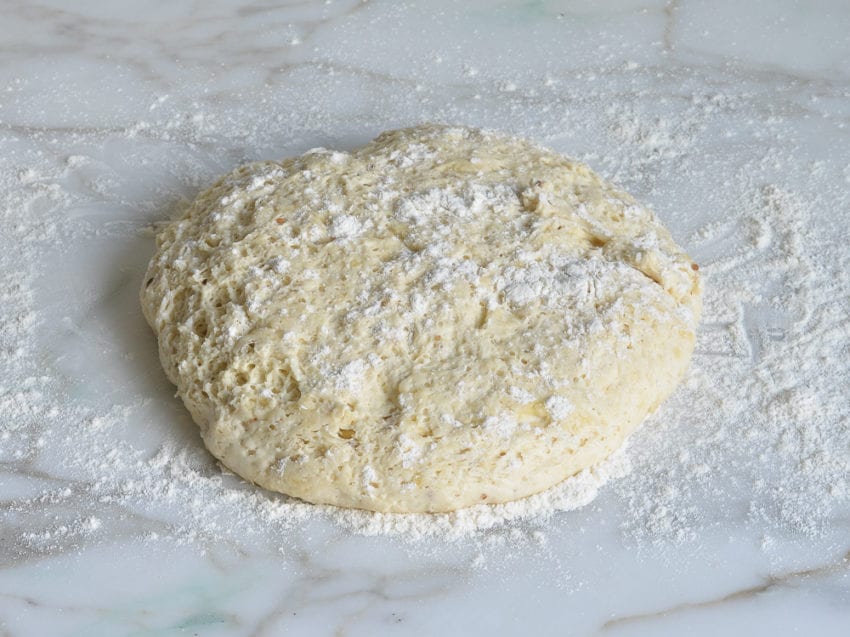
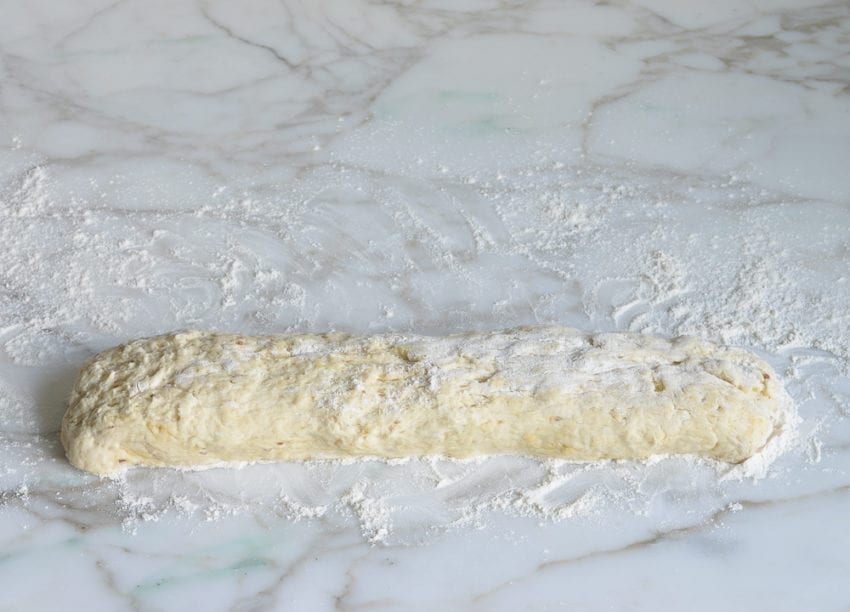
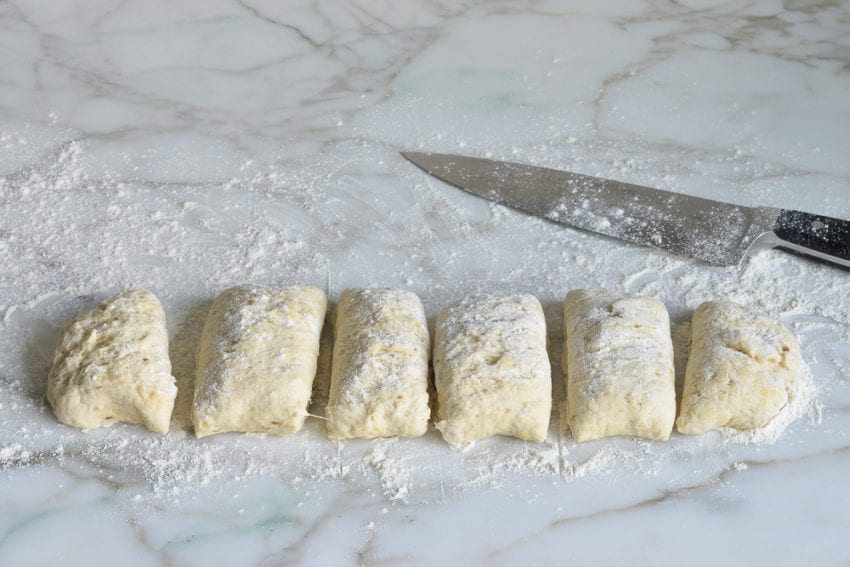
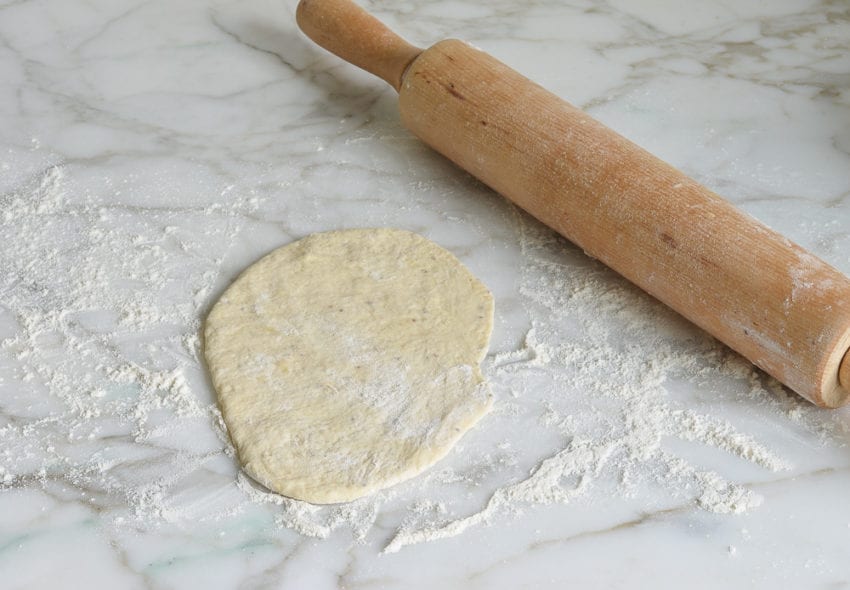
Cook the naan: Heat a dry cast-iron or heavy nonstick skillet until very hot. Add a piece of dough and watch for large bubbles to form on the surface and golden-brown spots to appear underneath. Flip and cook until the other side is browned and blistered, with a few darker charred spots. Adjust the heat as you go; I usually lower it to medium after the first naan.
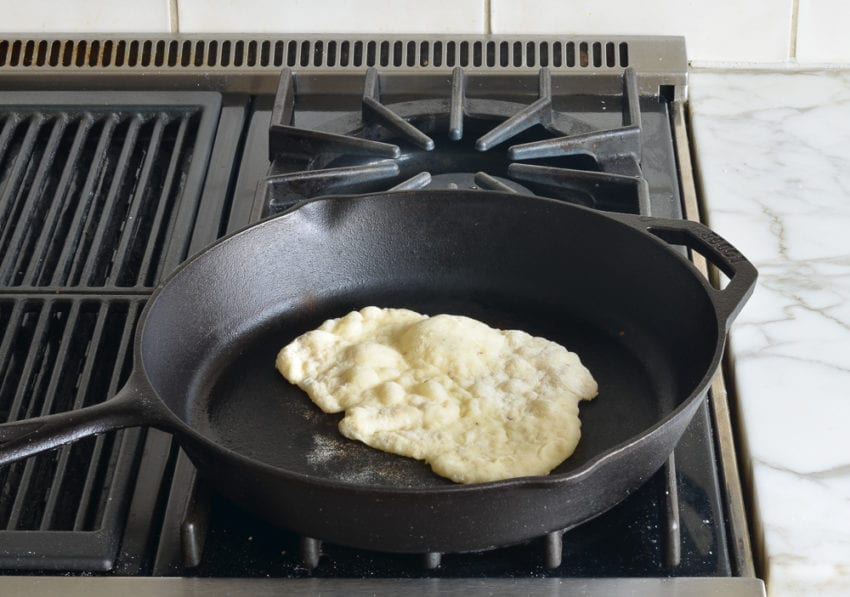
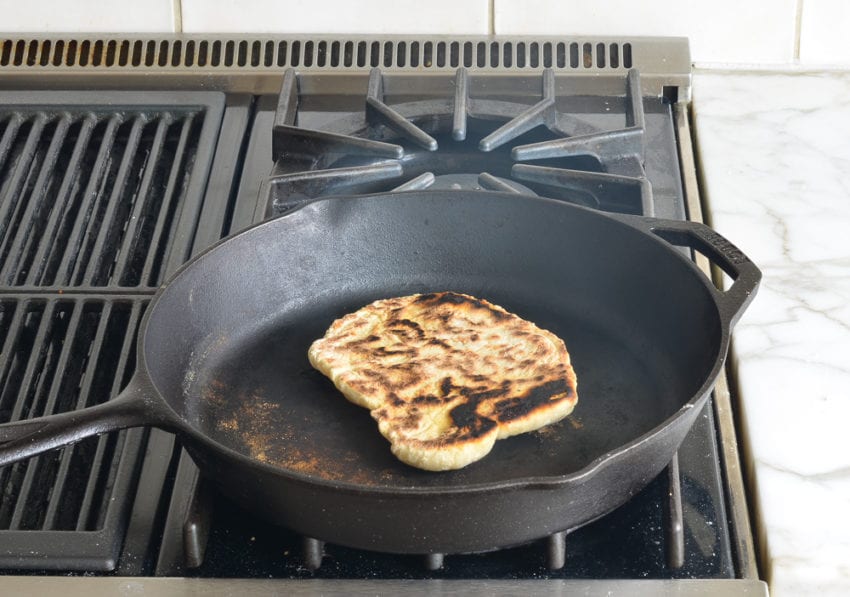
Brush and serve: Brush each naan with melted butter as soon as it comes out of the skillet, then keep it tucked in a clean kitchen towel while you cook the rest. Sprinkle with parsley, if using, and serve warm.

storage & Freezing Tips
Naan is best enjoyed fresh from the skillet, but leftovers can be stored in a resealable plastic bag. To reheat, wrap the naan in aluminum foil and warm in a 350°F (175°C) oven until heated through. Naan also freezes well for up to 3 months. Once completely cooled, wrap each piece tightly in plastic wrap and place them together in a freezer bag. To reheat from frozen, wrap the naan in foil and warm in a 350°F (175°C) oven until hot.
Naan Recipe Video Tutorial
Homemade Naan
Ingredients
- 2 cups all purpose flour spooned into measuring cup and leveled-off, plus more for rolling (see note)
- 1 tablespoon sugar
- 1 teaspoon instant dry yeast/rapid-rise yeast (see note)
- 1 teaspoon salt
- Heaping ½ teaspoon anise seeds (optional)
- 3 tablespoons plain yogurt
- 2 tablespoons extra-virgin olive oil
- ¾ cup warm water (about 100°F/38°C)
- 2 tablespoons melted salted butter, for brushing on finished naans
- 1 tablespoon chopped fresh Italian parsley (optional), for serving
Instructions
- In a large bowl, whisk together the flour, sugar, yeast, salt and anise seeds (if using). Set aside.
- In a medium bowl, whisk together the yogurt, olive oil, and ¾ cup (180 ml) warm water (about 100°F/38°C).
- Add the yogurt mixture to the dry ingredients and mix with a fork until the dough begins to come together. Lightly flour your hands and knead gently to form a soft, slightly sticky dough, adding more flour a little at a time if it’s too wet to handle. Stop kneading as soon as the dough comes together.
- Lightly oil a clean bowl or coat it with nonstick cooking spray (the bowl should be large enough to allow the dough to double in size). Transfer the dough to the prepared bowl and cover with plastic wrap or a damp kitchen towel. Let rise in a warm place for 1 to 1½ hours, or until roughly doubled in size.
- Place about ½ cup (65 g) flour in a small bowl. Lightly dust a work surface with some of the flour and turn the dough out onto it. Sprinkle a little flour over the dough and your hands.
- Shape the dough into a long rectangle and cut it into 6 equal portions, dusting with more flour as needed to prevent sticking. Roll each portion in the bowl of flour to coat lightly.
- Warm a large cast iron or heavy nonstick pan over medium-high heat until very hot.
- Using a rolling pin, roll one portion of dough into an oval about ⅛ in (3 mm) thick and 9 x 4 in (23 x 10 cm). Gently toss the dough back and forth between your hands to shake off any excess flour, then carefully lay it in the dry skillet.
- Cook for a few minutes, until air bubbles form across the surface and the bottom is golden brown with blackened spots. Flip and cook 1 to 2 minutes more, until the bottom is lightly browned and blistered in spots.
- Remove the naan from the skillet, brush with melted butter, and place in a tea towel-lined dish to keep warm.
- Repeat with the remaining naans, adjusting the heat lower if necessary as you go (I usually find it necessary to lower the heat to medium after the first naan). Sprinkle with parsley, if using, and serve warm.
Notes
- I use King Arthur flour, which is higher in protein than some other all-purpose flours. If using a flour with a lower protein content, such as Gold Medal, you will likely need to add a few more tablespoons of flour.
- Active dry yeast may be used instead of instant/rapid-rise yeast, however, the dough will take longer to rise. To give active dry yeast a boost, you can dissolve it in the lukewarm water and let it sit until frothy, about 10 minutes. After that, add it to the flour, sugar, salt, and anise seeds, and proceed with the recipe.
- To keep the cooked naan warm, place them in a 200°F (96°C) oven.
Nutrition Information
This website is written and produced for informational purposes only. I am not a certified nutritionist and the nutritional data on this site has not been evaluated or approved by a nutritionist or the Food and Drug Administration. Nutritional information is offered as a courtesy and should not be construed as a guarantee. The data is calculated through an online nutritional calculator, Edamam.com. Although I do my best to provide accurate nutritional information, these figures should be considered estimates only. Varying factors such as product types or brands purchased, natural fluctuations in fresh produce, and the way ingredients are processed change the effective nutritional information in any given recipe. Furthermore, different online calculators provide different results depending on their own nutrition fact sources and algorithms. To obtain the most accurate nutritional information in a given recipe, you should calculate the nutritional information with the actual ingredients used in your recipe, using your preferred nutrition calculator.
See more recipes:
Ways to Use Naan
Naan is delicious alongside curries, but there are plenty of other ways to enjoy it. Serve it with a bowl of mulligatawny soup, use it as a base for individual flatbread pizzas, or fold it around grilled chicken, kabobs, or roasted vegetables for a sandwich or wrap. You can even top warm naan with fried eggs for a quick and satisfying breakfast.




First time on the site and this recipe did not dissapoint! I’m always intimidated by yeast-based recipes because of some rising fails in my baking past … but this one came out DELICIOUS and was easier than I thought it would be! I used Instant Rapid Rise yeast and had no issues with rising. As some other reviewers noted, the dough was sticky and hard to work with (maybe I’ll use less oil and yogurt next time) but with enough flour, it came out great!
Beautiful, looking store-bought naans 🙂 My friends were impressed!
Next, I’ll try coconut yogurt for a vegan option! #veganuary
Hi there, I have made this to the exact recipe, and found that
The dough is meant to be sticky, just throw a little more flour over the dough as you are bringing it together ( lightly kneading) if you lessen oil and yoghurt, you will end up with a dry and tough bread. Good Luck
Jenn! You never fail to surprise me with wonderful recipes! First time making naan bread, it was super easy and turned out fluffy & slightly chewy. Perfection! Kids gobbled them up, another winner! Thank you!!
Hello Jen,
Can I use Greek yoghurt instead as it’s the only yoghurt we have?
Thanks
Sure – Hope you enjoy!
I used your Naan recipe for my first attempt at making Naan. The results were terrific!! Thank you so much for the recipe it went amazing with your chicken curry recipe. This will be my go to recipe from now on!! I really appreciate a recipe that works with no changes, my family thanks you too, keep up the awesome recipes.
Kara
Hi Jenn, I have made this multiple times and its fantastic. I wanted to ask if I can use bread flour instead of AP flour since thats what I have on hand today (and if so, would it be 125 g per cup?)
Thank you so much!
Hi Malak, I haven’t made these with bread flour, but another reader commented that she did and was happy with the results, so I think you could get away with it. (And I’d figure on 130 grams per cup.) Hope you enjoy!
Agree with some reviewers that it’s way too much liquid, I wasn’t able to knead into a ball. HOWEVER, it did rise when left in the sun. The first couple on the griddle were terrible (like pancakes), but once I floured up the dough a bit more and rolled out the portions VERY THINLY, they puffed up as predicted and had a a lovely tangy taste.
Will make again.
Can u store the dough mixture in some way to be cooked fresh at a later date? Love the recipe.
Hi Hayden, You can make the dough in advance and refrigerate it. Just keep in mind that you’ll get the best results if you refrigerate it for no more than 48 hours. Hope that helps!
I’ve made this recipe a few times now and these naan bread are wonderful! I’m having guests come early January and am going to make these to go with a butter chicken, in advance and freeze. Just wanting to know if you wrap them in foil individually, to reheat?? Thanks Jen
So glad you like these! For reheating, you don’t need to wrap them individually in foil. They can all go in the same foil packet.
Thanks so much Jen and a very Merry Christmas and New Year to you and yours 🙂
Outstanding recipe! I liked the simple, preservative-free taste so much that I didn’t add butter at the end, and even ate the leftovers for breakfast the next morning. Once Upon A Chef has become my preferred go-to source for recipes even though I pay for access to other cooking sites like the New York Times and Cook’s Illustrated. I know I can count on Jenn’s recipes to be “tested and perfected” just like advertised. Keep up the great work.
😊
This was so yummy and simple to make! I am Indian and I’ve never attempted naan. We usually just buy it. Because of dietary restrictions I can’t have store bought naan and my whole family loved this home made version so much better anyway! Thank you!
Meant to rate but surely 5 stars from me!
So I thought it was odd that you didn’t proof the yeast first, but I followed the recipe anyway as I hadn’t made naan before. Then when I was done, I read *at the bottom* that if you’re using active dry yeast to proof it first. *sigh* Perhaps move that to the top so others avoid my mistake? We’ll see how this turns out.