
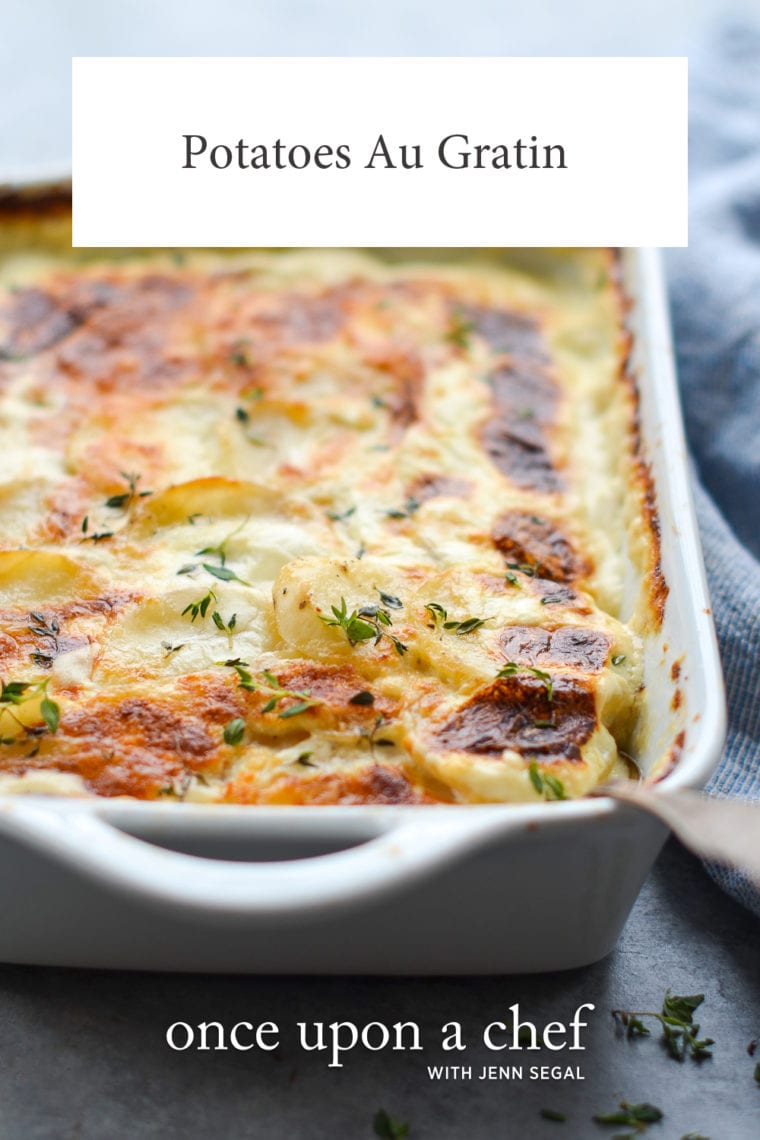
Potatoes Au Gratin

This post may contain affiliate links. Read my full disclosure policy.
Rich, comforting, and surprisingly simple, these potatoes au gratin are an irresistible side dish that always gets rave reviews.
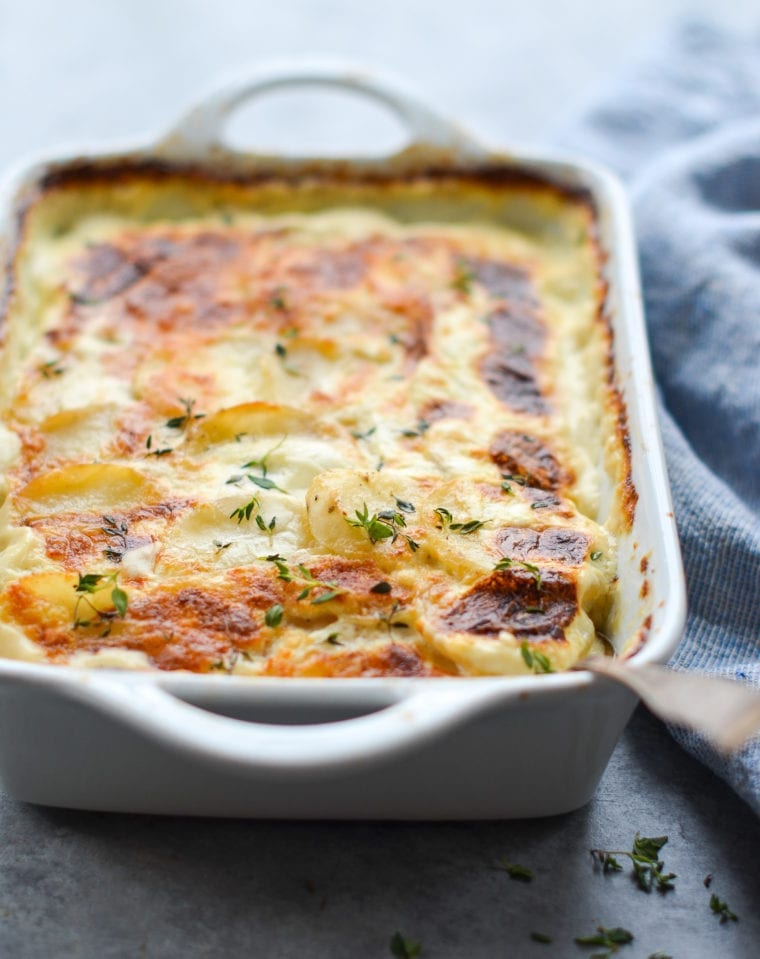
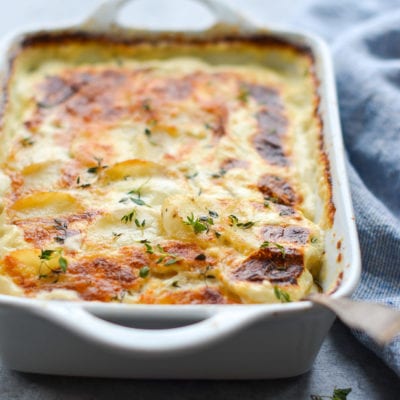
This classic potatoes au gratin recipe is one of my favorite Thanksgiving side dishes, and it’s also fitting for Christmas, a dinner party, or any meal that calls for something a little extra. It involves layering thinly sliced potatoes with heavy cream and grated cheese in a casserole dish, and then baking until the cream thickens and blankets the potatoes in a rich, creamy sauce. And while it’s certainly worthy of a special occasion, honestly, a pan of these potatoes makes any dinner feel like one.
“I only gave this five stars because I couldn’t give it 10 stars. This may be my favorite side dish ever. It is amazing!”
Potatoes Au Gratin vs Scalloped Potatoes
Potatoes au gratin and scalloped potatoes are similar dishes, but there are a few key differences. Both are made with thinly sliced potatoes baked until tender, but au gratin potatoes typically include cheese and are known for their rich, golden-brown top. Scalloped potatoes traditionally don’t contain cheese and are often flavored with onions and baked in a milk or cream sauce thickened with a roux.
What You’ll Need To Make Potatoes Au Gratin
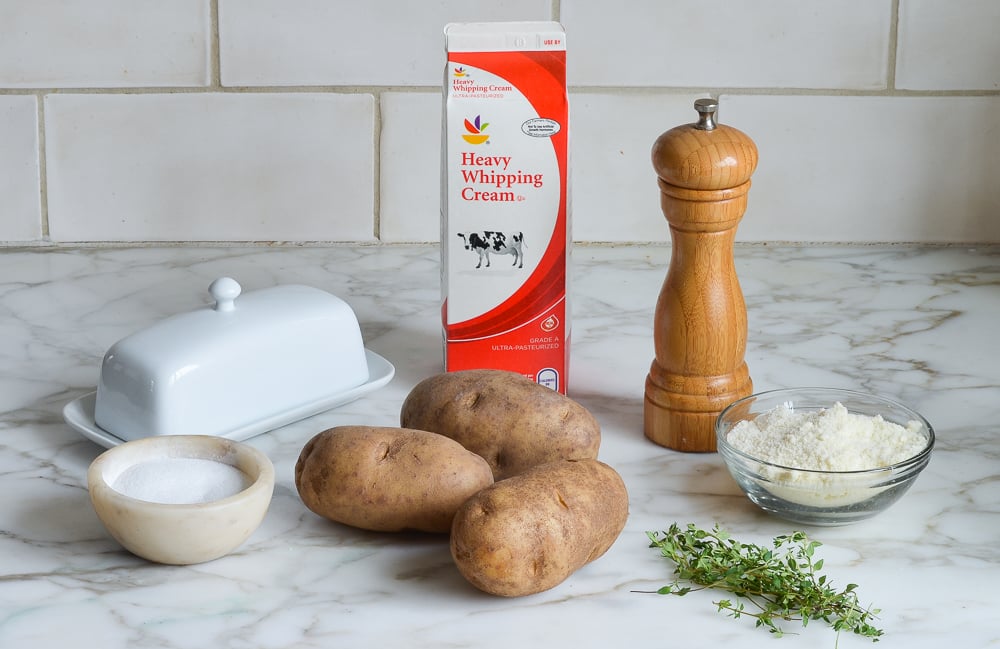
- Russet Potatoes: With their high starch content, russets soak up the cream beautifully and bake into soft, melt-in-your-mouth layers. They’re the best choice for this dish. Skip the Yukon Golds here—they won’t give you the same texture.
- Heavy Cream: The secret to the luscious, velvety sauce. You might be tempted to swap in milk or half-and-half, but don’t—this recipe really needs heavy cream to thicken properly.
- Parmigiano Reggiano: Adds a salty, nutty depth that melts right into the potatoes, creating incredible flavor and texture. Be sure to use true Parmigiano Reggiano. If you can’t find it, Pecorino Romano makes a great substitute.
- Salt, Pepper & Thyme: These simple seasonings bring everything to life—the thyme is optional but adds a subtle earthiness that pairs perfectly with the creamy potatoes and cheese.
- Jump to the printable recipe for precise measurements
How To Make Potatoes Au Gratin
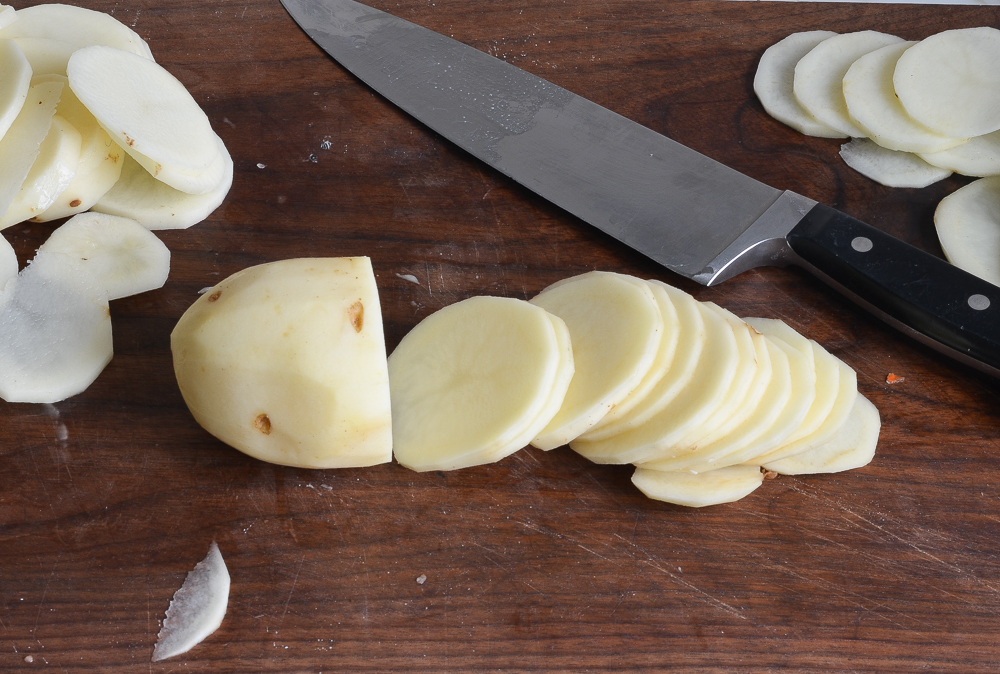
Slice the potatoes: Slice the potatoes as thinly and uniformly as possible so they cook at the same rate. A mandoline works well, but a sharp knife is all you need. If a potato feels wobbly, cut a thin slice lengthwise and place it cut-side down on the cutting board to create a stable base.
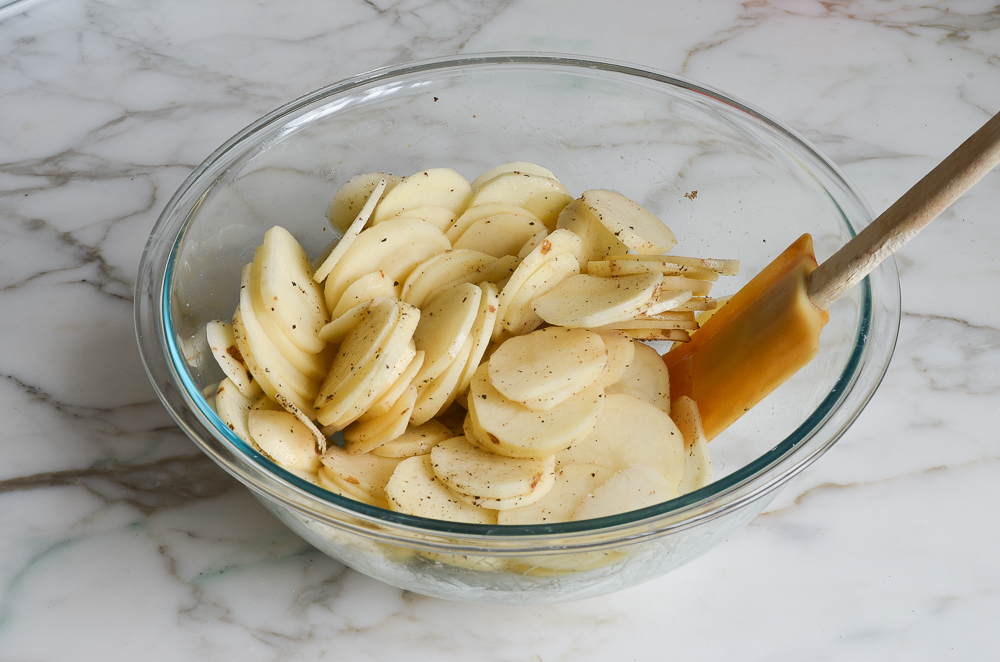
Season the potatoes: Toss the slices thoroughly with salt and pepper so the seasoning is evenly distributed. Potatoes need a generous amount of salt to bring out their flavor, so don’t be tempted to skimp.
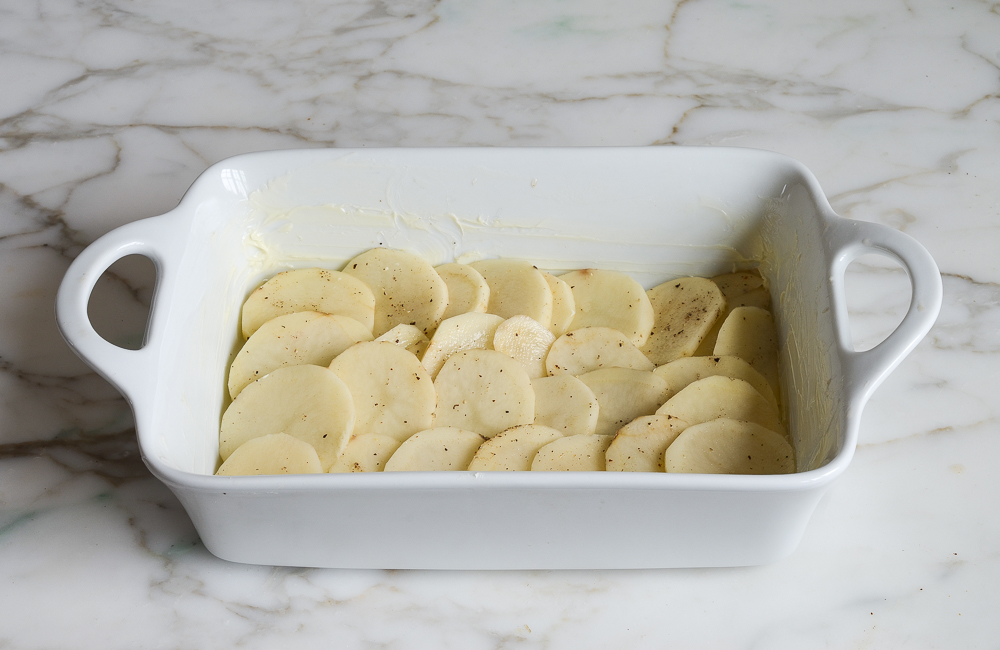
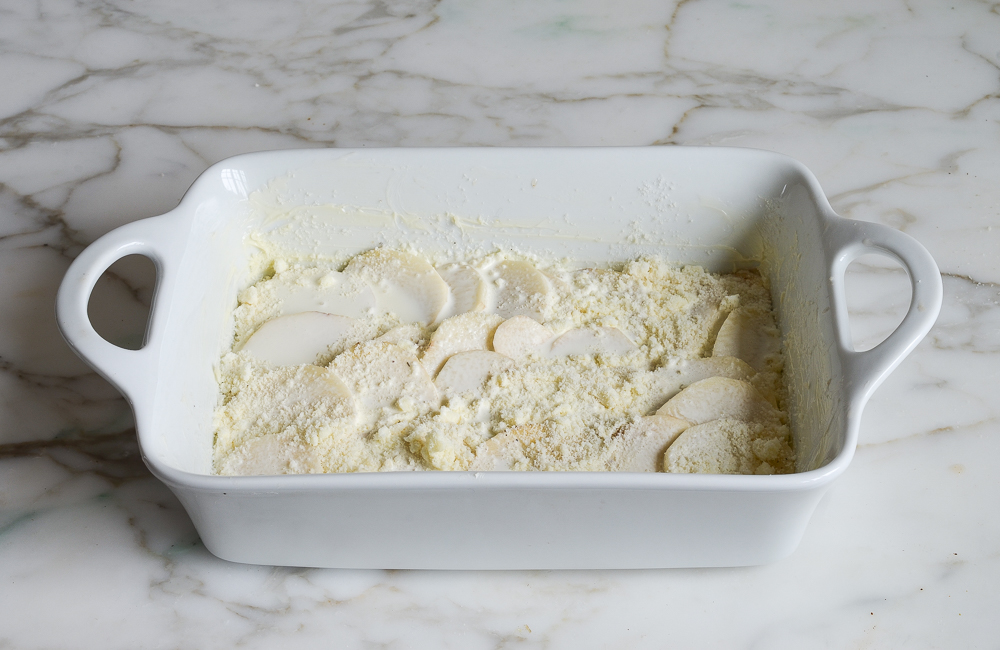
Assemble the gratin: Arrange the potatoes in overlapping layers in a buttered baking dish, distributing the cheese and cream evenly as you go. Don’t worry about making the layers perfectly neat, but try to keep them fairly even so the potatoes cook uniformly. Be sure to pour in all of the cream—it will thicken as the gratin bakes, creating the rich, velvety sauce.

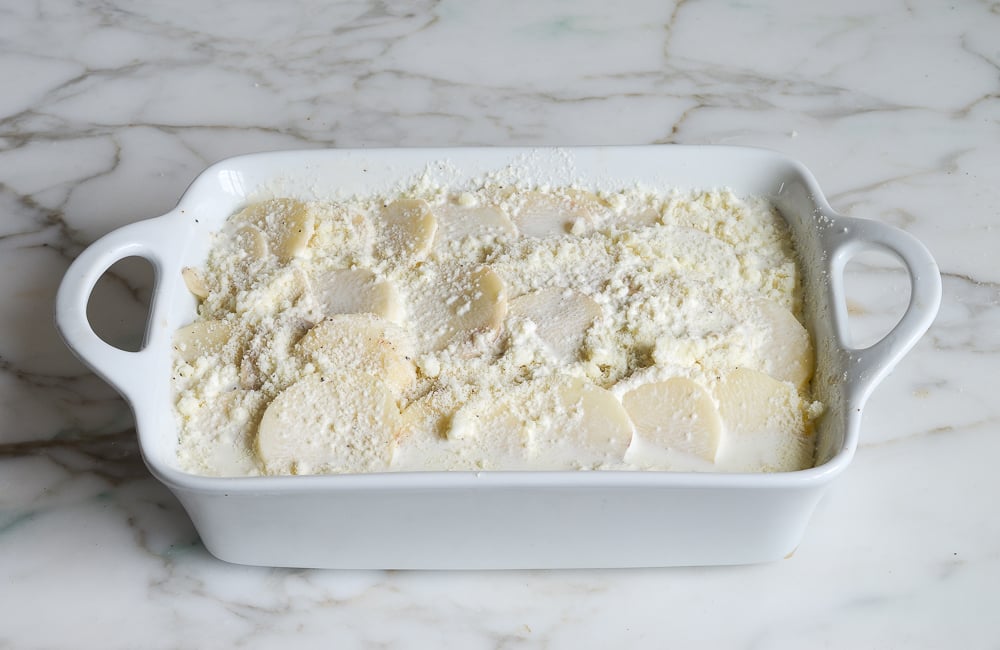
Bake until golden: Bake the gratin until the top is deeply golden and a knife slides easily through the potatoes with almost no resistance. Don’t cover the dish with foil; baking it uncovered is what gives you that beautiful browned top. Let it rest for a few minutes before serving so the cream can settle and thicken around the potatoes.
Finish with a sprinkle of fresh thyme and serve hot, while the top is crisp and golden and the potatoes underneath are creamy and tender.
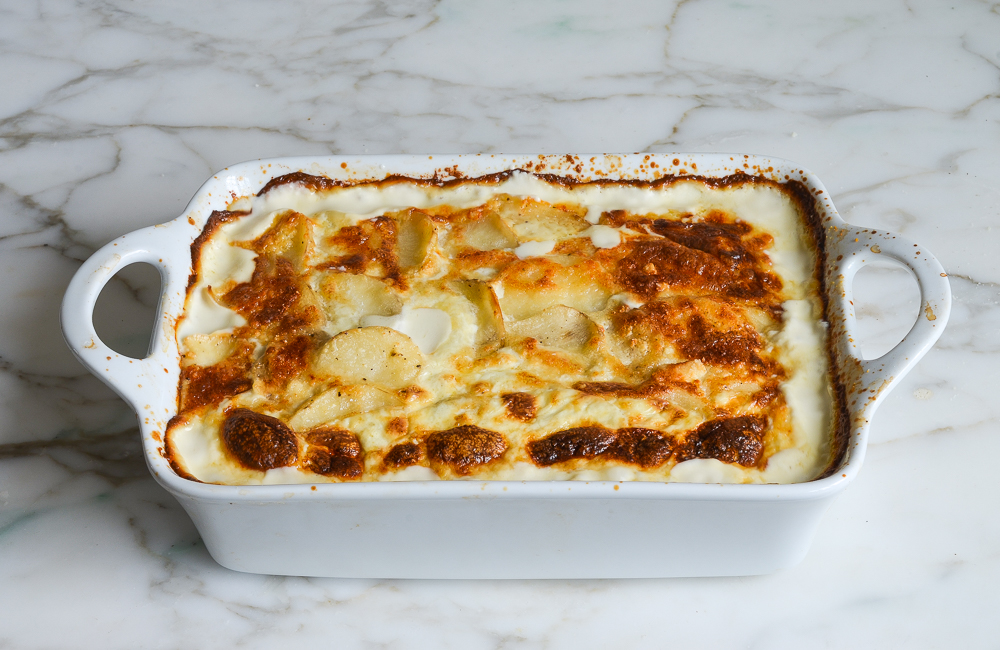
Potatoes au gratin are best baked just before serving, but you can do some of the work ahead. See the recipe card below for my make-ahead, storage, and reheating instructions. If you love this recipe, try my cauliflower gratin or Brussels sprouts gratin next.
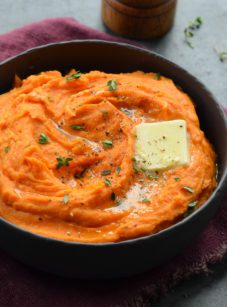
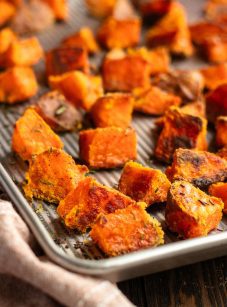
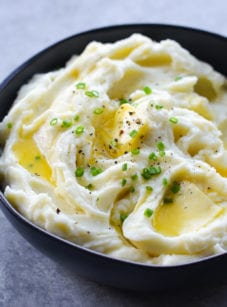
More Potato Side Dishes You May Like

Potatoes Au Gratin
Ingredients
- Butter to grease the baking dish
- 2½ lb Russet potatoes (3 to 4), peeled and very thinly sliced
- 1½ teaspoons salt
- ¼ teaspoon freshly ground black pepper
- 1 cup (4 oz) finely grated Parmigiano-Reggiano
- 2¼ cups heavy cream
- Fresh thyme, for serving (optional)
Instructions
- Preheat the oven to 350°F (175°C) and set an oven rack in the middle position. Grease an 8-in (20-cm) or 2-qt/2L baking dish with butter.
- In a large mixing bowl, toss the potatoes with the salt and pepper until evenly coated.
- Arrange some of the potato slices, edges overlapping, in a single layer on the bottom of the prepared baking dish. Sprinkle a quarter of the cheese over the potatoes, and then pour a quarter of the cream over the cheese. Repeat with the remaining potatoes, cheese, and cream, forming 4 layers. Pour any leftover cream over top.
- Place in the oven and bake, uncovered, for 60 to 75 minutes, or until the potatoes are tender when pierced with a knife and golden brown on top. Let the dish settle on the counter for about ten minutes. Sprinkle with fresh thyme, if using, and then serve.
Notes
Nutrition Information
This website is written and produced for informational purposes only. I am not a certified nutritionist and the nutritional data on this site has not been evaluated or approved by a nutritionist or the Food and Drug Administration. Nutritional information is offered as a courtesy and should not be construed as a guarantee. The data is calculated through an online nutritional calculator, Edamam.com. Although I do my best to provide accurate nutritional information, these figures should be considered estimates only. Varying factors such as product types or brands purchased, natural fluctuations in fresh produce, and the way ingredients are processed change the effective nutritional information in any given recipe. Furthermore, different online calculators provide different results depending on their own nutrition fact sources and algorithms. To obtain the most accurate nutritional information in a given recipe, you should calculate the nutritional information with the actual ingredients used in your recipe, using your preferred nutrition calculator.
Gluten-Free Adaptable Note
To the best of my knowledge, all of the ingredients used in this recipe are gluten-free or widely available in gluten-free versions. There is hidden gluten in many foods; if you’re following a gluten-free diet or cooking for someone with gluten allergies, always read the labels of your ingredients to verify that they are gluten-free.
Can you make this ahead of time and freeze it, baking it the day of the dinner?
Hi MaryDee, I don’t recommend it – sorry!
Love this recipe,. I’d like to make it for Christmas Eve dinner but have time restrictions that day. What is the outcome of preparing it earlier in the day and reheating it later? It’s possible it’s a risk worth taking if it’s still tasty. Thank you so much.
By the way, we haven’t had a recipe of yours that hasn’t been delicious!
So glad you like the recipes! I don’t recommend making this in advance and reheating, but you can assemble it ahead. Just make sure to cover it tightly with plastic wrap, pressing the wrap directly against the potatoes so they don’t turn brown. Hope everyone enjoys!
Hi Jenn, just curious, did you revise the recipe? I remember adding salt and pepper to the cream and not the potatoes.
Yes, I did revise the recipe a while back. I did that because I found that the salt and pepper stuck to the bottom of the bowl of heavy cream and didn’t dissolve well. Hope that clarifies!
I still do it that way, I just pour the carton of cream in to a litre sized measuring cup and whisk the salt and pepper in well, I’ve never noticed it sinking to the bottom.
This is a phenomenal recipe. I do push the time to 75 minutes or even a little longer, based on a previous try when the potatoes were slightly underdone. Perfection this year! Everyone loved them.
Hi Jenn,
I’ve been making this recipe for special occasions and holidays for several years and I just love it! I have wondered; after you cut the potatoes and they’re in a bowl and salted and peppered they tend to get juicy, should I discard the juice so they don’t get too liquidy?
Happy Thanksgiving!
So glad you like it! Yes, feel free to discard any juices that accumulate. Happy Thanksgiving!
How would doubling this recipie look?
Hi Emily, If you want to double this, for the best results, I’d bake it in two separate pans. That ensures that it will cook evenly. They may take a few extra minutes in the oven, but not much.
Would it work to use this recipe substituting cauliflower for the potatoes?
Hi Kay, I don’t recommend it. For the best results, I’d stick with potatoes. If you want to use cauliflower, I’d look for a recipe specifically for that.
Love your recipes.
I am making a reverse sear slow cook prime rib for Christmas and can reward the potatoes while the beef rests before the 500 degree blast. Can I make potatoes in the morning and reheat?
Hi Carol, so glad you like the recipes! Unfortunately, this is not a dish that reheats very well. Sorry!
Can this be made with half and half or whole milk?
I don’t recommend it – sorry!
I am going to make your salmon with mustard and panko crust and it needs to be baked at 450 degrees. Can I do the potatoes at that temperature for a shorter time?
Hi Inga, I’d reduce the temperature to 400°F. The salmon will take a little longer, and the potatoes will not need as long. Hope you enjoy both!
We love your au gratin potatoes! We are required to make scalloped potatoes for a potluck. Think I could just throw some ham in the au gratin potatoes?
A few readers have mentioned that they’ve added ham to this, and that the moisture from the ham added a little bit too much moisture to the dish. If you want to try it, I’d reduce the cream to 2 cups. Hope everyone enjoys!