

This post may contain affiliate links. Read my full disclosure policy.
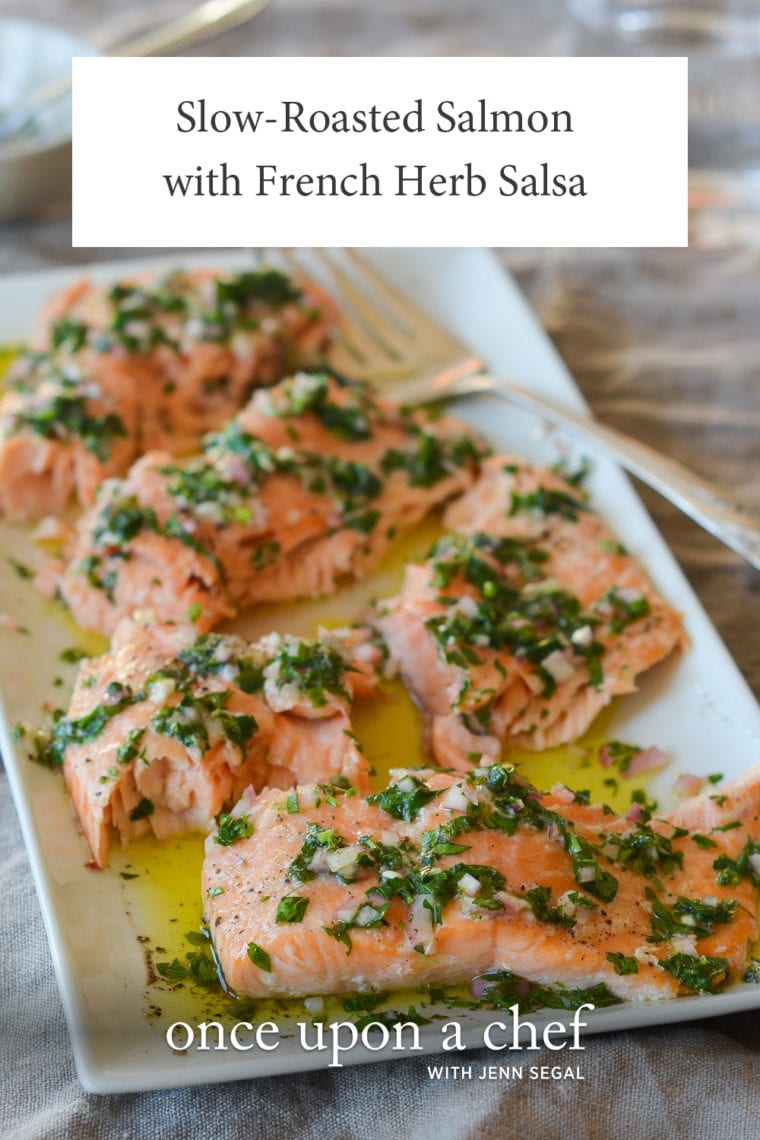
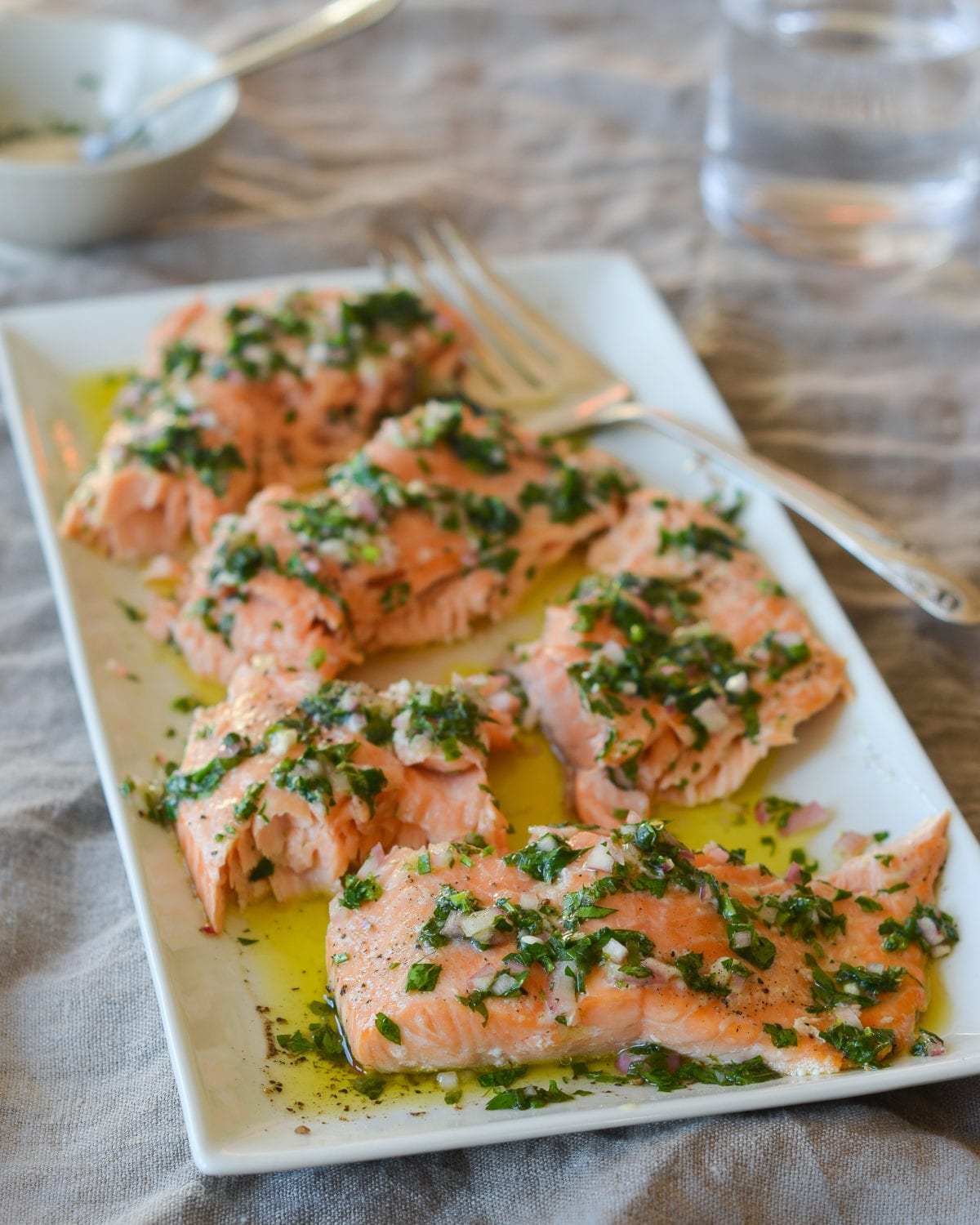
Want to impress your guests without stressing? This slow-roasted salmon with fresh herb salsa looks impressive, tastes amazing, and couldn’t be easier. Serve it warm, chilled, or at room temp—whatever works for you.
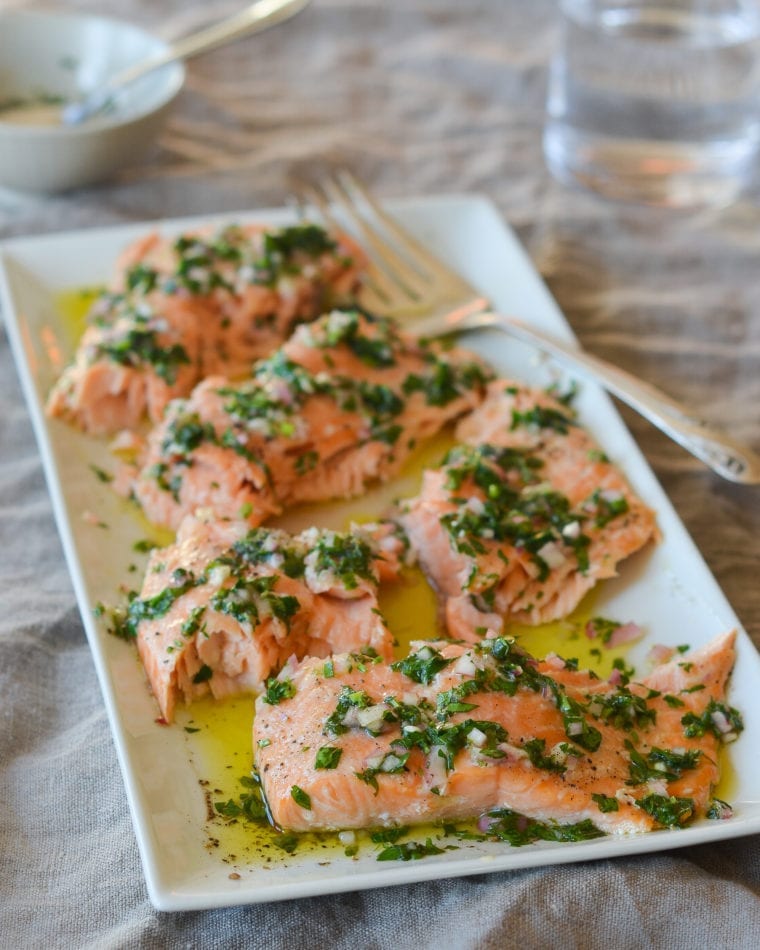
This slow-roasted salmon, a gem from Samin Nosrat’s Salt, Fat, Acid, Heat, has become a favorite in my kitchen. Her method is simple but brilliant—roasting the fish low and slow makes it almost impossible to overcook. It stays incredibly moist and just a little translucent, even when fully cooked. Like many of Samin’s recipes, it’s more of a technique than a strict formula, with plenty of room to play around with sauces and variations.
I usually serve it with a simple herb salsa—just macerated shallots, olive oil, and a mix of fresh herbs. It takes minutes to make and adds so much flavor.
You can serve the salmon warm, cold, or at room temperature (my favorite), and it always feels a little special, especially on a holiday buffet. It’s great with roasted potatoes, a simple green salad, or roasted asparagus, and the fact that you can make it ahead is a huge bonus when you’re hosting.
“So tender – melt in your mouth. The sauce is excellent. Incredibly simple yet beautiful presentation. My new go to salmon recipe.”
What you’ll need To Make Slow-Roasted Salmon
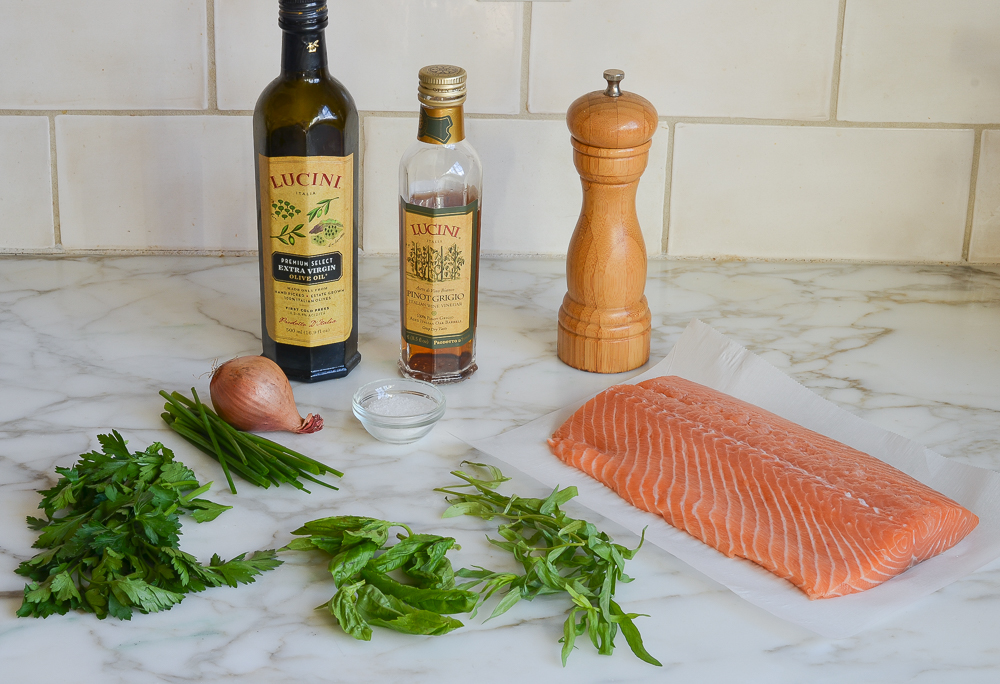
- Salmon Filet: You can ask your fishmonger to remove the skin for convenience. If you don’t, it’s easy to remove once the salmon is cooked; just slide a thin metal spatula between the flesh and skin when serving.
- Extra-Virgin Olive Oil: Used to coat the salmon for moisture and richness, and as the base for the herb salsa.
- Shallot: Adds a mild, slightly sweet onion flavor to the salsa.
- White Wine Vinegar: Provides bright acidity to balance the richness of the salmon and round out the salsa.
- Fresh Italian Parsley, Chervil, Chives, Basil, And Tarragon: A blend of fresh herbs that gives the salsa its bright, fresh flavor.
- Jump to the printable recipe for precise measurements
Step-by-Step Instructions
Step 1. Prep the salmon. Place the salmon on a baking sheet, drizzle with olive oil, and sprinkle evenly with salt.
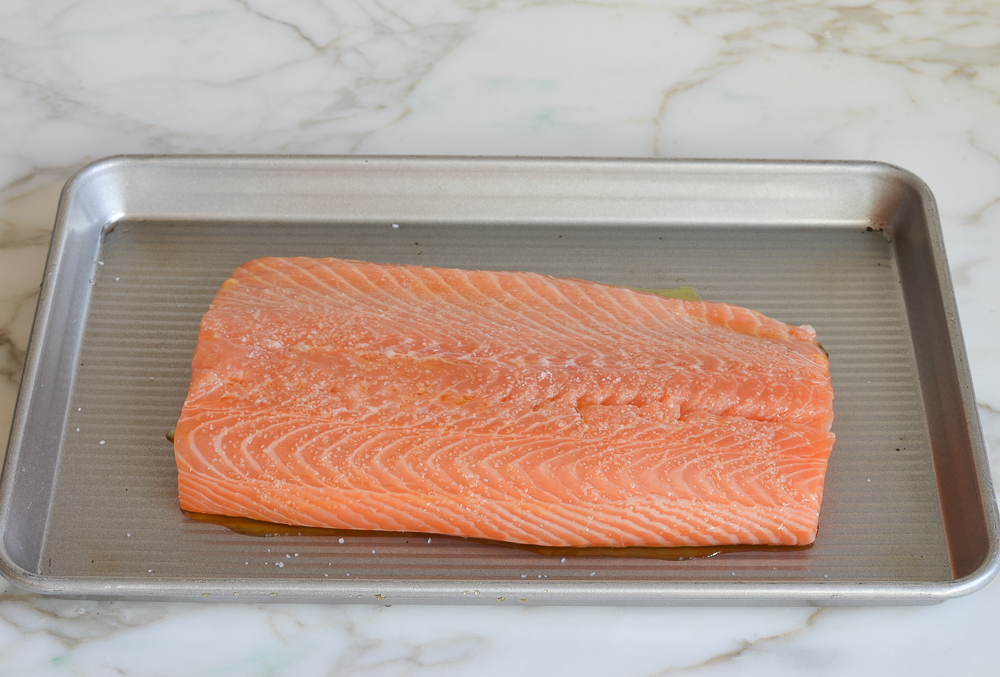
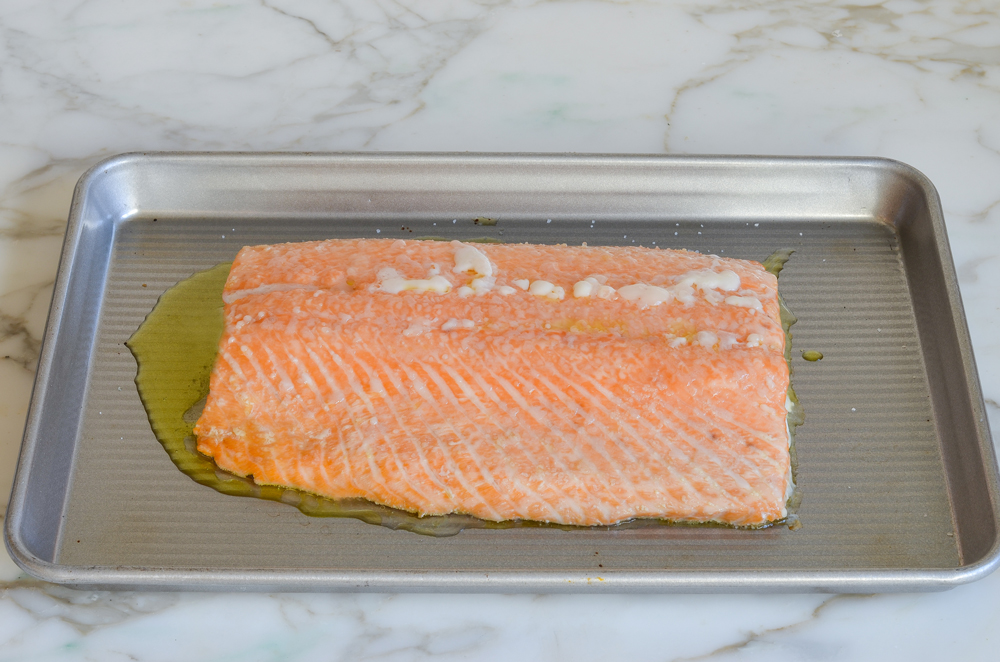
Step 2. Roast the salmon. Roast for 40 to 50 minutes in a 225°F oven until the thickest part flakes easily when pressed with a knife or your finger. It will still look a little translucent even when fully cooked.
Pro Tip: Slow-roasting keeps the fish tender, prevents it from seizing up, and reduces the amount of white protein (albumin) that surfaces. If you see a bit (like below), simply scrape it off with a spoon.
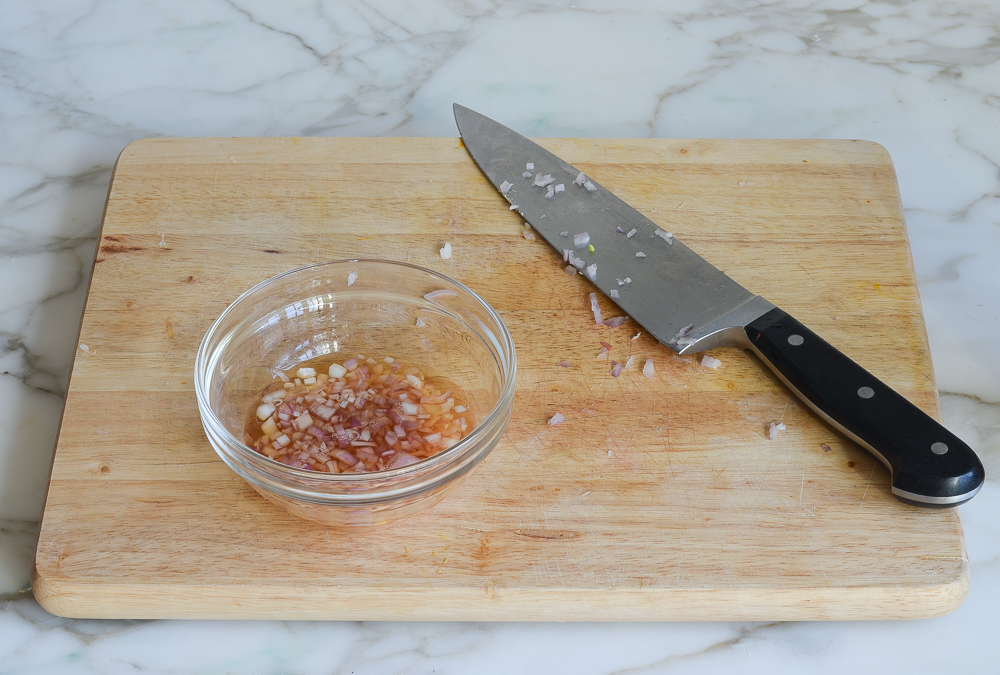
Step 3. Macerate the shallots. In a small bowl, combine the shallot and vinegar and let sit for 15 minutes.
Pro Tip: Macerating mellows the sharp bite of the shallot and enhances its natural sweetness.
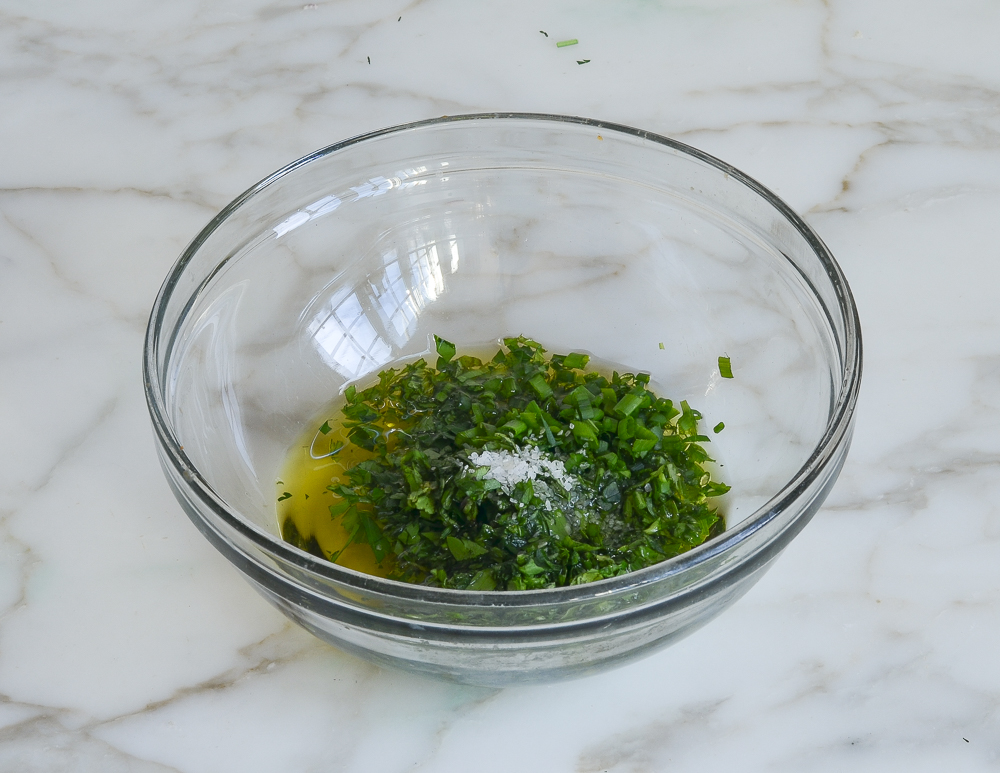
Step 4. Make the herb oil. In another bowl, mix the herbs, olive oil, salt, and black pepper.
Pro Tip: Chop the herbs as finely as possible so their essential oils release and flavor distributes evenly.
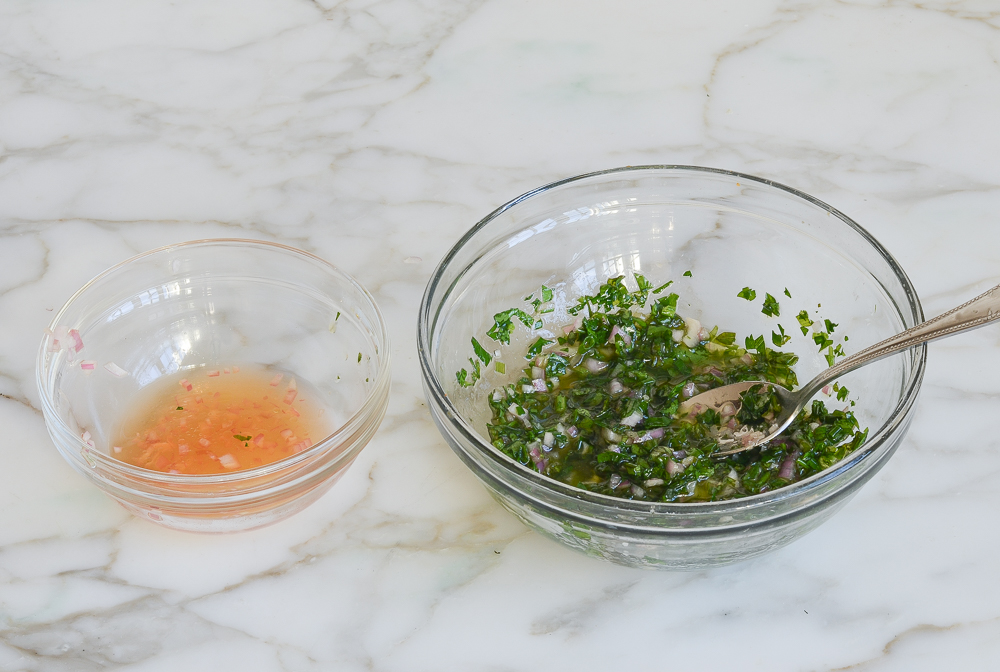
Step 5. Finish the salsa. Right before serving, use a slotted spoon to transfer the shallots (without the vinegar) into the herb oil. Stir, then taste and add 2 to 3 teaspoons of the vinegar, depending on how sharp the flavor is. Adjust salt if needed.
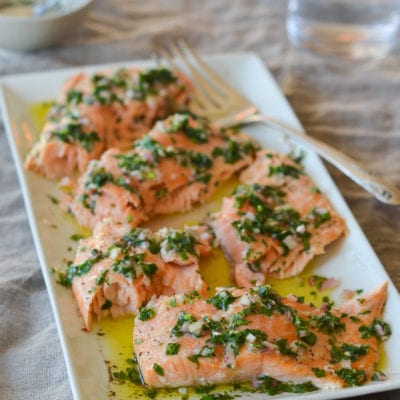
Step 6. Break and serve the salmon. Break the salmon into rustic pieces, spoon the herb salsa over the top, and serve. The salmon can be roasted a day ahead and refrigerated, and the salsa can be made up to two days in advance and chilled until ready to use.
More Salmon Recipes You may like
Slow-Roasted Salmon with French Herb Salsa
Ingredients
For the Salmon
- 1 (2-lb) salmon filet, pin bones and skin removed
- 1 tablespoon extra-virgin olive oil
- ¾ teaspoon kosher salt
For the French Herb Salsa
- 3 tablespoons finely diced shallot, from 1 medium shallot
- 3 tablespoons white wine vinegar
- 2 tablespoons very finely chopped fresh Italian parsley
- 1 tablespoon very finely chopped fresh chervil (okay to substitute more parsley if you can't find it)
- 1 tablespoon very finely chopped fresh chives
- 1 tablespoon very finely chopped fresh basil
- 1 teaspoon very finely chopped fresh tarragon
- 5 tablespoons extra-virgin olive oil
- ¼ teaspoon kosher salt
- Freshly ground black pepper
Instructions
For the Salmon
- Preheat the oven to 225°F (105°C) and set an oven rack in the middle position.
- Place the salmon on a baking sheet. Drizzle with the olive oil and sprinkle the salt evenly over top. Slide the pan into the oven and roast for 40 to 50 minutes, until the fish begins to flake in the thickest part of the filet when poked with a knife or your finger. (Because this method is so gentle on its proteins, the fish will appear translucent even when it’s cooked.) Using a small spoon, scrape off any white coagulated proteins that may have formed on the salmon.
- Break the salmon into large, rustic pieces and spoon the French herb salsa (below) over top. This dish can be served hot, cold, or room temperature.
For the French Herb Salsa
- In a small bowl, combine the shallot and vinegar and let sit for 15 minutes to macerate.
- In a separate small bowl, combine the herbs, olive oil, salt, and a few grinds of black pepper.
- Just before serving, use a slotted spoon to add the shallot (but not the vinegar, yet) to the herb oil. Stir, taste, and add the vinegar as needed (I usually add 2 to 3 teaspoons). Taste and adjust salt, if necessary.
Notes
Nutrition Information
This website is written and produced for informational purposes only. I am not a certified nutritionist and the nutritional data on this site has not been evaluated or approved by a nutritionist or the Food and Drug Administration. Nutritional information is offered as a courtesy and should not be construed as a guarantee. The data is calculated through an online nutritional calculator, Edamam.com. Although I do my best to provide accurate nutritional information, these figures should be considered estimates only. Varying factors such as product types or brands purchased, natural fluctuations in fresh produce, and the way ingredients are processed change the effective nutritional information in any given recipe. Furthermore, different online calculators provide different results depending on their own nutrition fact sources and algorithms. To obtain the most accurate nutritional information in a given recipe, you should calculate the nutritional information with the actual ingredients used in your recipe, using your preferred nutrition calculator.
Gluten-Free Adaptable Note
To the best of my knowledge, all of the ingredients used in this recipe are gluten-free or widely available in gluten-free versions. There is hidden gluten in many foods; if you’re following a gluten-free diet or cooking for someone with gluten allergies, always read the labels of your ingredients to verify that they are gluten-free.
If I were to prepare the salmon and salsa the day before, would I flake the salmon after allowing to come to room temperature and then add the salsa? Thank you in advance!
Yep – Enjoy!
Very nice recipe that gives you a lot of flexibility for entertaining because you can make ahead and serve hot, warm or cold. Also very easy to make!
Love your recipes. Can this be made ahead, refrigerated and then warmed up so it can be served warm instead of room temperature? I have a warming oven.
Hi Laura, so glad you liked the recipes! Yes, you can make this a day ahead. I prefer it at room temperature, but it’s fine to warm it in a warming oven if you’d prefer.
Thank you so much for your recipes, truly amazing site! I wonder if the salmon leftovers can be frozen?
So glad you like the recipes! I’ve never frozen this before so I can’t say for sure if the texture will be different when thawed, but I think you can get away with it.
I received a long, relatively thin piece (an inch or so) of wild-caught Alaskan skin-on salmon from a friend. I am worried about taking the skin off. Could I cook the salmon skin and remove it afterward? Thanks!!
Hi Theresa, Yup, that’s fine. It’ll be easy to remove once the salmon is cooked; just slide a thin metal spatula between the flesh and skin when serving.
Hi Jen – Making this for the first time tonight. Using a smaller piece of salmon – 1.25lbs. Will the cooking time be the same? The salmon is center cut New Zealand salmon
Hi Paulette, it may take slightly less time, but not much – just keep an close eye on it and you’ll know it’s done when the fish begins to flake and the thickest part. Hope you enjoy!
Hi Jenn! We love your books and recipes and have been using them for years. We’re planning a shabbat dinner in a couple of weeks and want to make a pretty elaborate meal, with this salmon as one of the main dishes. We want to do a much prep in advance since we’ll have a lot of items to keep track of. We want to serve this salmon warm. What’s the best way to do any prep work in advance and serve it warm?
Hi Clayton, Thanks for your nice words about the recipes — so glad you like them! For the salmon, I think I’d undercooked it ever so slightly initially and then reheat it gently before serving.
This is my go to recipe for my family. They love it. In the past, I have served it in the spring and in the summer .
I am planning a fall birthday ladies luncheon for my BFF. What would you suggest as sides?
So glad it’s a hit with your family! It would pair nicely with crusty bread and carrot salad.
I have a Miele steam oven. Would this recipe work (and be just as good) in the steam oven?
Hi Evie, I’m not familiar with a steam oven so I can’t say for sure – I’m sorry I can’t be more helpful!
I hope you can give me a suggestion. I would love to make this for an up coming dinner party, baked on fig leaves. One of my guests does not eat shallots or onions is there another salsa you would suggest. also what temperature does the salmon need to cook to. Thanks so much
Hi Lynn, you can just omit the shallots. I might suggest serving a bowl of chives on the side and allowing guests to sprinkle them on top of their portions. And regarding the temperature, I’d aim for about 125°F at the thickest part. (Typically, I’d suggest cooking closer to 145°F, but for this, you’re aiming for it to be just barely cooked through.) Hope everyone enjoys!