

This post may contain affiliate links. Read my full disclosure policy.
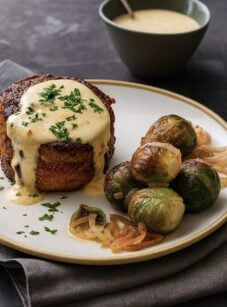
Learn how to cook steak on the stovetop with this simple pan-searing method for steakhouse-worthy results at home.
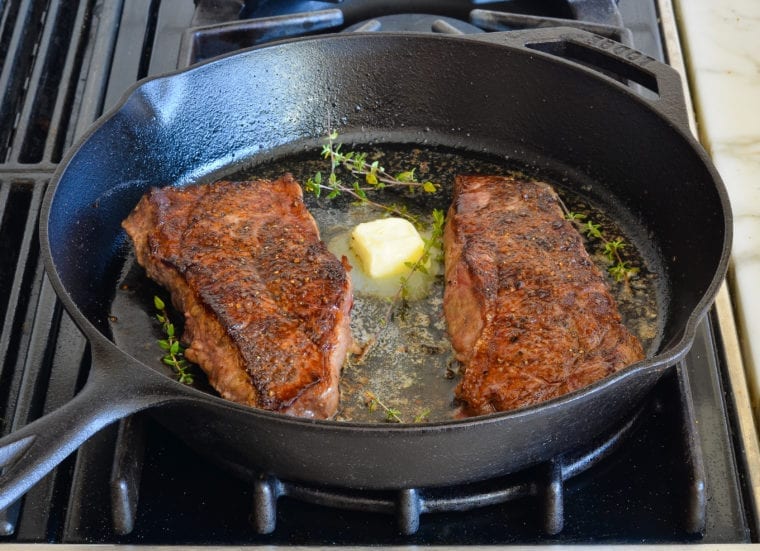
Pan-searing is my favorite way to cook steak at home. The direct contact with a very hot pan creates a deeply browned, flavorful crust while keeping the inside juicy and tender.
In this guide, I’ll walk you through how to cook steak on the stovetop, from choosing the right cut and getting a good sear to knowing when it’s perfectly cooked. The technique is simple, but a few small details—starting with a dry steak, getting the pan properly hot, and letting the meat rest—make all the difference.
“I followed these instructions to a T using a cast iron skillet and had one of the best steaks of my life. I was amazed.”
What You’ll Need to Cook Steak on the Stovetop
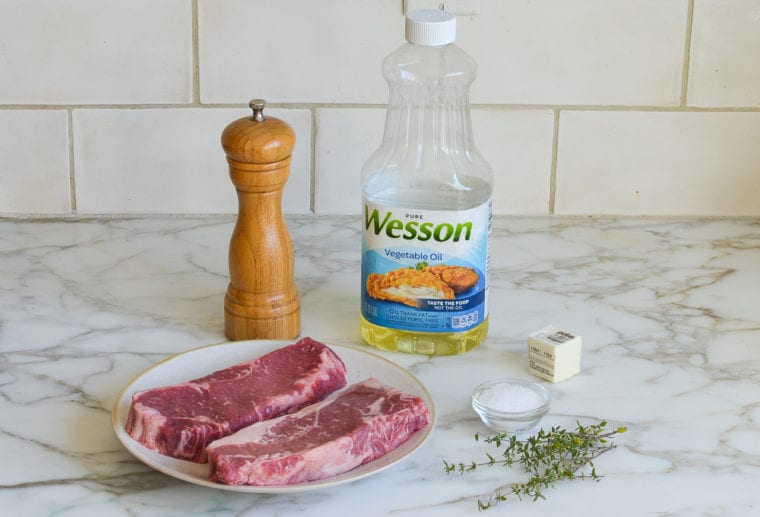
- Steak: Boneless ribeye, New York strip, and filet mignon all work well with this method. Ribeye is the richest and most marbled, strip has a beefier flavor and a bit more chew, and filet is the leanest and most tender. Whichever cut you choose, look for steaks about 1 to 1½ inches thick so they can develop a good crust without overcooking inside.
- Kosher salt and black pepper: Season the steaks generously on both sides. I prefer kosher salt because its larger grains make it easier to season evenly.
- Vegetable oil: Use a neutral oil with a high smoke point for searing. Avoid extra-virgin olive oil, which can smoke and burn at the high heat needed to get a good sear.
- Unsalted butter & fresh thyme (optional): Added toward the end of cooking, when the heat is lower, to give the steak a rich, aromatic finish.
- Jump to the printable recipe for precise measurements
How to Cook Steak on The Stovetop
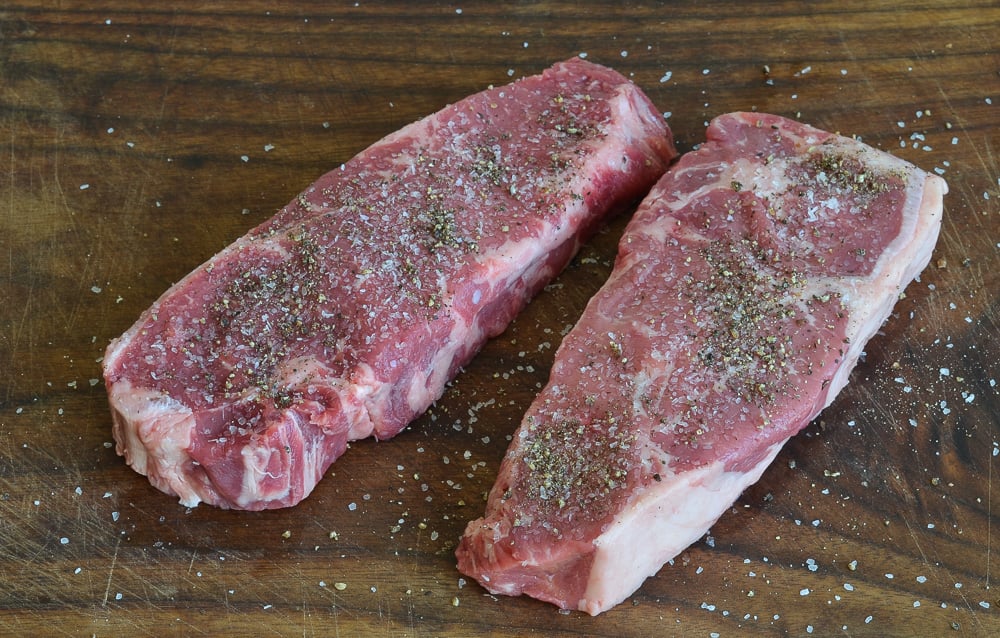
Prep the steaks: Pat the steaks very dry with paper towels—this is important for getting a good sear as any moisture on the exterior of the steak must first evaporate before the meat begins to brown. Season generously on both sides with salt and pepper.
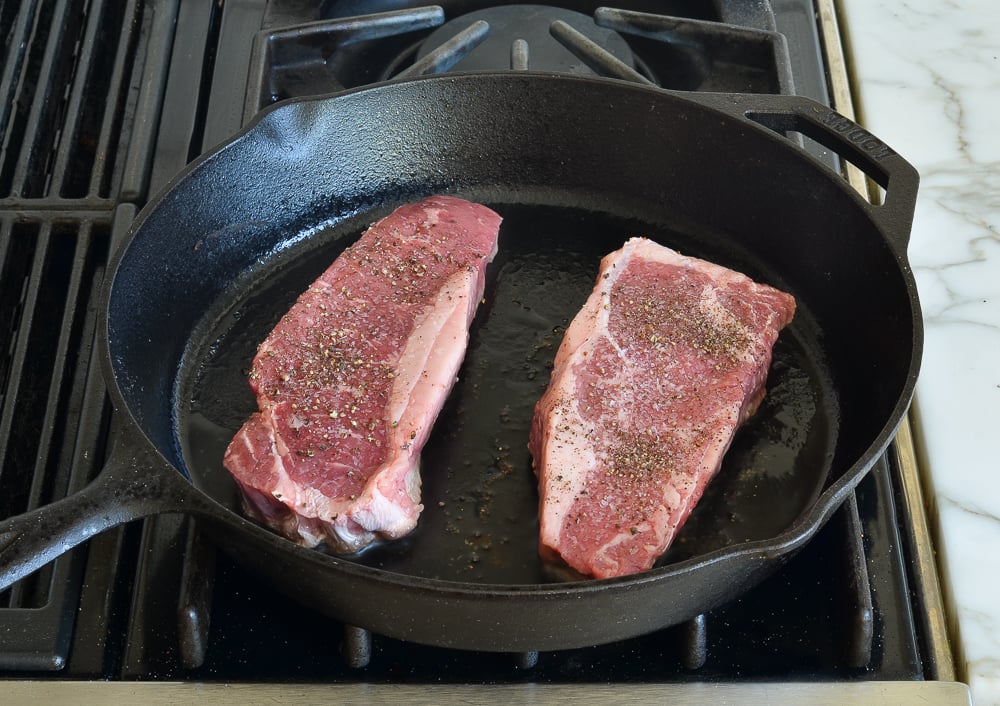
Sear the steaks: Heat a heavy skillet over high heat until very hot, then add the oil. When the oil is shimmering, carefully add the steaks. You should hear a strong sizzle as soon as they hit the pan. Cook undisturbed until deeply browned on the bottom, then flip and sear the other side. Avoid moving the steaks around as they cook so they have a chance to develop a good crust.
Pro tip: Stainless steel or cast iron works best here, since both can handle high heat. And use a pan large enough to give the steaks some breathing room; if they’re crowded, the pan will cool down and the steaks will steam instead of sear.
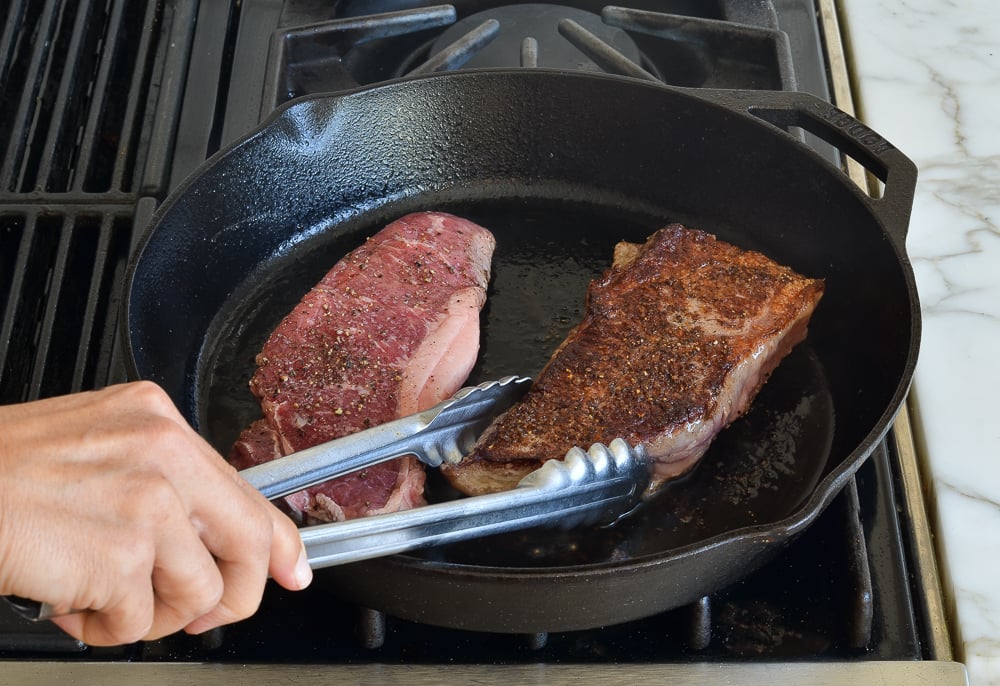
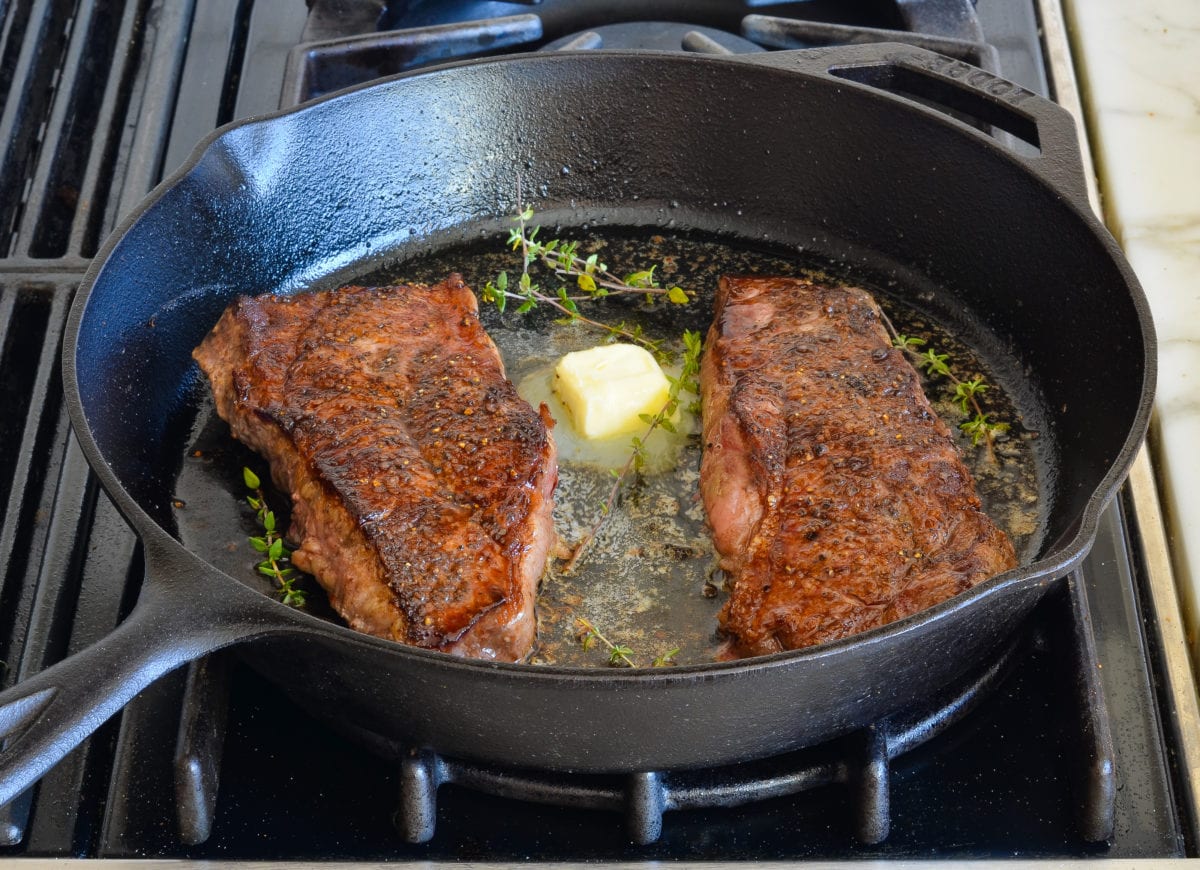
Finish with butter: Add the butter and thyme, if using, and continue cooking the steaks until they reach your desired doneness. You can use the cooking times in the recipe as a guide, but for the most accurate results, check the internal temperature with an instant-read thermometer.
Pro Tip: Let the steaks rest for about 5 minutes before slicing. Cutting into them right away will cause more of the juices to run out onto the cutting board rather than stay in the meat.
Steak Doneness Temperature Guide
Cooking times can vary depending on the thickness of your steak, the cut, and how hot your pan gets, so an instant-read thermometer is the most reliable way to check for doneness. Insert it into the thickest part of the steak. Note that the temperature will continue to rise a few degrees as the steak rests.
- Rare: Remove from the heat at 120°F to 125°F
- Medium-rare: Remove from the heat at 125°F to 130°F
- Medium: Remove from the heat at 135°F to 140°F
- Medium-well: Remove from the heat at 145°F to 150°F
- Well-done: Remove from the heat at 155°F or higher
What to Serve with Steak
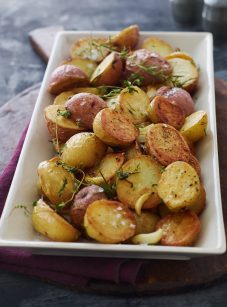
For a classic steakhouse-style dinner, serve the steak with creamed spinach, roasted potatoes, or baked potatoes. A simple green salad or roasted asparagus is great if you want something lighter on the side.
Video Tutorial
How to Cook Steak on the Stovetop (Pan-Seared)

Ingredients
- 2 (12-oz) New York strip or ribeye steaks or 4 (6-oz) filet mignons, about 1½ inches thick
- 1 heaping teaspoon kosher salt
- ½ teaspoon freshly ground black pepper
- 2 tablespoons vegetable oil
- 1 tablespoon unsalted butter
- A few sprigs fresh thyme leaves (optional)
Instructions
- Pat the steaks dry with paper towels and season them all over with the salt and pepper.
- Turn on your exhaust fan and heat a heavy pan (preferably cast iron or stainless steel) over medium-high heat until it’s VERY hot.
- Add the oil to the pan and heat until it begins to shimmer and move fluidly around the pan. Carefully set the steaks in the pan, releasing them away from you so the oil doesn’t splatter in your direction. The oil should sizzle.
- Leave the steaks undisturbed for about 3 minutes to develop a deep-brown crust. Resist the temptation to peek, move, or flip them repeatedly. When the steaks release easily from the pan and are nicely browned underneath, flip them.
- Cook for another 3 to 4 minutes on the second side for rare to medium-rare, 4 to 5 minutes for medium, or 5 to 6 minutes for well-done.
- During the last minute of cooking, add the butter and thyme sprigs (if using) to the pan with the steaks.
- If you are serving the steaks unsliced, transfer them to plates and serve hot. If you plan to slice the steaks, transfer them to a cutting board and let rest, covered with aluminum foil, for 5 to 10 minutes; then slice thinly against the grain.
Notes
- Cooking times are a guide; for the most accurate results, use an instant-read thermometer to check for doneness. See the temperature guide above for recommended pull temperatures.
Nutrition Information
This website is written and produced for informational purposes only. I am not a certified nutritionist and the nutritional data on this site has not been evaluated or approved by a nutritionist or the Food and Drug Administration. Nutritional information is offered as a courtesy and should not be construed as a guarantee. The data is calculated through an online nutritional calculator, Edamam.com. Although I do my best to provide accurate nutritional information, these figures should be considered estimates only. Varying factors such as product types or brands purchased, natural fluctuations in fresh produce, and the way ingredients are processed change the effective nutritional information in any given recipe. Furthermore, different online calculators provide different results depending on their own nutrition fact sources and algorithms. To obtain the most accurate nutritional information in a given recipe, you should calculate the nutritional information with the actual ingredients used in your recipe, using your preferred nutrition calculator.


Hi Jenn. I am excited to try this recipe as where I live, I cannot have a grill. Do you have a suggestion as to whether you like the stainless steel or cast iron better? I see that you show cast iron.
Hi Nery, Either will work well, but if I had to choose, I’d probably go with the cast iron. I think you may get a slightly better sear with it.
This is good instruction for basic steak cooking. If you don’t have success with it…you need more practice.
Wow! I am stuck at home in Brussels and needed to start clearing out my freezer to find dinner. I found a lovely filet, but my grill was out of gas. Jenn to the rescue!!! My filet was absolutely gorgeous- perfectly cooked and seasoned! I already love your book and blog, but this was just superb. Thank you for keeping a girl well-fed.
Can you talk about oils? I see you use vegetable oil in this recipe rather than olive oil? Is there a reason?
Hi Mary, Vegetable oil has a lower smoke point than olive oil, so it’s better to use it when you’re heating oil to a high temperature. Hope that clarifies!
Thanks for saving me from the broiler…and the clean up. I followed your recipe and it came out delicious. And thanks for telling me not to play with it until it released. Because that is what I would have done. The steak came out medium rare, just the way we like it. It was a T-bone steak, BTW.
This reminded me of the heavens.
Telling people to GENEROUSLY season with SALT and pepper DESTROYED my rib eye. I cannot believe the good reviews. I did what you said and though MY gut saved the medium rare I wanted(had to cook at least twice as long as you suggested. However the steak was inedible! I’m serious. WAY too salty. I’m a vert experienced and good cook, but circumstances put me in a place I had to cook a rib eye on the stove. Very surprised that you publish such a disastrous recipe.
Other reviewers could not have used salt as you so illy advised.
But we did use salt as she “so illy advised”. You’re one of those toxic people who hates on other people. She has a lot of good reviews for a reason. Have a seat & try find something more productive to do
Wasn’t impressed at all….had to put it back on the stove for another 6 minutes and it was still inedible.
Amen brother
Apparently, you shouldn’t, since you are a very negative person and it manifests in your cooking outcome. Ever think, that it could be you?
Absolutely delicious! Never made one on the stove top before. Just the broiler and what a mess! This recipe is to die for, and if you have a splatter cover there is virtually no mess. Great flavor and super tender. I used ribeyes.
Delicious! I never make steak period. It was always awful…on the stove. Too much trouble to fire up the grill for me. I used the iron skillet and followed these instructions…I had a wonderful steak!!! I enjoyed every bite!!
Never cooked steak in a pan before. I’ve been missing something! So flavorful and inside perfect doneness! A good alternative to the grill!