


This post may contain affiliate links. Read my full disclosure policy.
This baked mac and cheese recipe has a creamy three-cheese sauce and a crisp, golden topping.

This baked mac and cheese is everything the classic should be: ultra-creamy and cheesy on the inside, with a crisp, golden panko topping. The trick to getting it just right is using plenty of cheese sauce, made with extra-sharp cheddar, Gruyère, and Parmigiano-Reggiano, and slightly undercooking the pasta so it finishes cooking and absorbs some of the sauce in the oven.
But what really sets this mac and cheese recipe apart is the crispy panko and herb topping, inspired by a “fancy” mac and cheese I once enjoyed at a restaurant. And rather than relying on the oven to brown the breadcrumbs, I toast them in butter first, which guarantees a crunchy, golden crust.
This dish just as at home on a holiday table as it is for a cozy family dinner. And for easy entertaining, it can be assembled ahead of time and baked just before serving.
“I took it to a dinner party last night and it was an absolute hit with all of the adults and children. Gone in minutes and I doubled the recipe!”
What You’ll Need To Make Homemade Mac and Cheese

- Macaroni, cavatappi, or penne pasta: Elbow macaroni is traditional, but any short pasta with plenty of nooks and crannies to catch the creamy cheese sauce works well. Cavatappi is another favorite because its ridges and twists hold onto the sauce beautifully.
- Unsalted butter: Forms the base of the roux and is also used to toast the panko topping. Using unsalted butter gives you better control over the seasoning.
- All-purpose flour: Combines with the butter to make a roux, which thickens the milk into a smooth béchamel and gives the cheese sauce its creamy consistency.
- Whole milk: I prefer whole milk here for the richest, creamiest sauce. Low-fat milk will work, but the finished sauce won’t be quite as rich.
- Gruyère, extra-sharp Cheddar, and Parmigiano-Reggiano: Using three cheeses instead of one gives the sauce more depth of flavor. Gruyère is nutty and melts beautifully, extra-sharp Cheddar adds that classic mac-and-cheese flavor, and Parmigiano-Reggiano brings a salty, savory note. For the smoothest sauce, grate the cheeses yourself rather than using pre-shredded cheese.
- Nutmeg: Just a pinch is traditional in béchamel-based sauces; you won’t really taste it, but it adds warmth and brings out the flavor of the cheese.
- Panko breadcrumbs: Their light, flaky texture makes a much crispier topping than ordinary breadcrumbs. Toasting them in butter before baking guarantees a golden, crunchy crust.
- Herbes de Provence or dried thyme: The herbs give the buttery panko topping a savory, aromatic note.
- Jump to the printable recipe for precise measurements
How To Make Baked Mac and Cheese
Boil the noodles: Cook the pasta until it is just shy of al dente. It should still have a little firmness in the center, since it will continue to cook in the oven and absorb some of the cheese sauce as it bakes. Drain well and set aside.

Make the cheese sauce: Start by cooking the butter and flour together to form a smooth roux. Gradually whisk in the milk, and cook until it thickens into a creamy sauce. Whisk in the Gruyère, Cheddar, and Parmigiano-Reggiano along with the seasonings. Once the cheeses have melted, the sauce should be silky, smooth, and thick enough to coat a spoon. This cheese-enriched béchamel is known as a Mornay sauce.

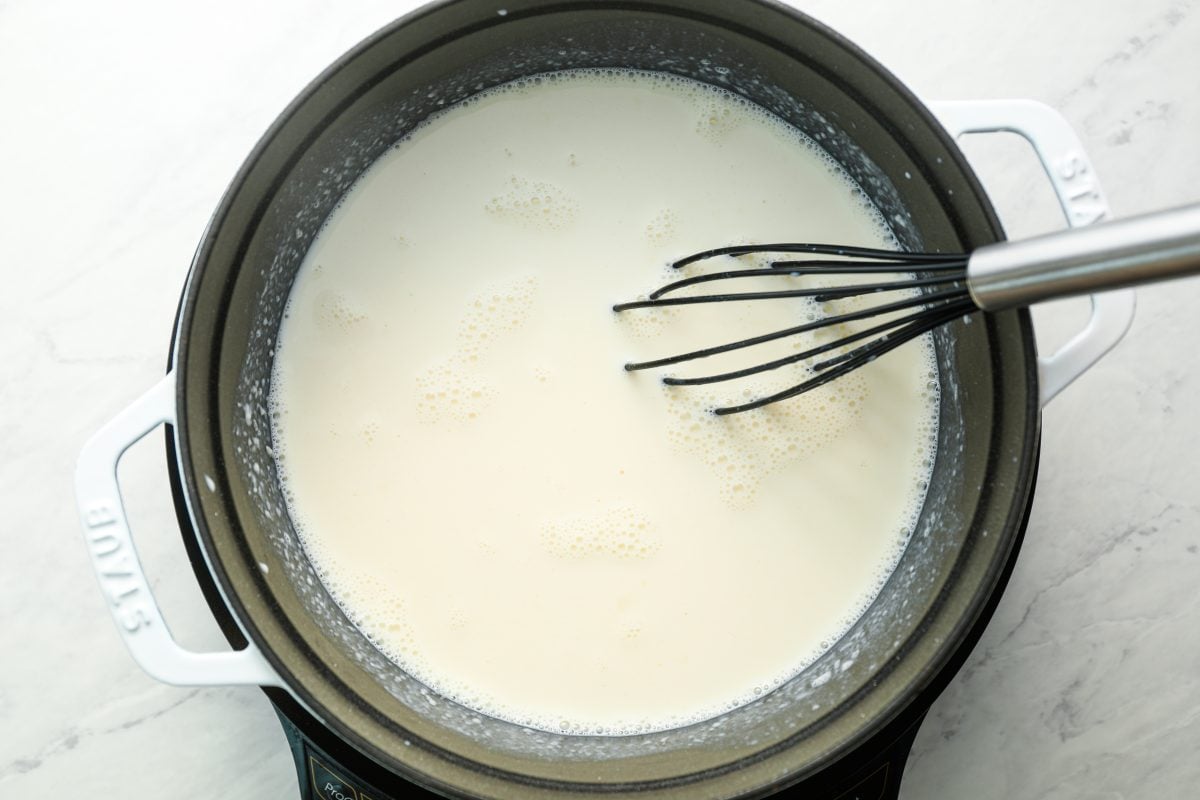


Assemble: Stir the cooked pasta into the cheese sauce until every piece is well coated. The mixture will look very loose and saucy at this point—almost excessively so—but that is exactly what you want. The pasta will absorb some of the sauce as it bakes, which is what keeps the finished mac and cheese creamy rather than dry. Transfer the mixture to the baking dish and spread it into an even layer.


Prepare the crispy topping: Toast the panko in butter until it begins to turn golden, then stir in the herbs. Giving the breadcrumbs a head start on the stovetop ensures they become deeply golden and crisp in the oven without having to overbake the mac and cheese. Scatter the toasted panko and more Parmesan cheese evenly over the pasta.


Bake: Bake the mac and cheese until the sauce is bubbling around the edges and the topping is crisp and golden. Let it rest briefly before serving so the sauce can settle slightly while remaining creamy. Enjoy!

Make-Ahead & Freezing Instructions
The mac and cheese can be assembled up to 1 day ahead of time and refrigerated. Bake directly from the fridge, allowing a few extra minutes in the oven.
The mac and cheese can be frozen, unbaked, for up to 3 months. To bake, thaw it in the refrigerator for 24 hours, then follow the baking instructions in the recipe.
How To Reheat Mac & Cheese
To reheat leftovers, cover with aluminum foil and warm in a 300°F (150°C) oven. For best results, do not microwave.
Video Tutorial
Baked Mac and Cheese

Ingredients
- 16 oz macaroni, cavatappi or penne pasta
- ½ cup (1 stick) unsalted butter, divided, plus more for greasing the pan
- ½ cup all-purpose flour
- 5 cups whole milk
- 12 oz Gruyere, shredded (about 4 cups)
- 8 oz extra-sharp Cheddar, shredded (about 2 cups)
- ⅔ cup grated Parmigiano-Reggiano
- 1 teaspoon salt, plus more for the pasta water
- ½ teaspoon freshly ground black pepper
- ¼ teaspoon ground nutmeg
- 1 cup panko breadcrumbs
- 1 teaspoon herbes de Provence or dried thyme
Instructions
- Preheat the oven to 375°F (190°C) and set an oven rack in the middle position. Grease a 9 x 13-in (23 x 33-cm) baking dish with butter.
- Bring a large pot of salted water to a boil. Add the pasta and cook until al dente, or just slightly underdone. (It will continue to cook in the oven so you don’t want it fully cooked.) Drain the pasta and rinse it with cold water.
- Meanwhile, melt 6 tablespoons (84 g) of the butter in a medium pot over low heat. Add the flour and cook for 2 minutes, stirring with a whisk. While whisking, gradually add the milk. Bring to a boil, then reduce the heat to low and cook, uncovered, for a few minutes more, until thickened and smooth. Off the heat, whisk in the Gruyere, Cheddar, ½ cup (50 g) of the Parmigiano-Reggiano, salt, pepper, and nutmeg. (If the cheese doesn't fully melt off the heat, it's okay to place the pan back over low heat, but do not let the sauce boil.) Add the cooked pasta and stir well. It will be very soupy; that's good. Pour into the prepared baking dish and set aside.
- In a small skillet over medium heat, melt the remaining 2 tablespoons butter. Add the panko and cook, stirring often, until golden brown. Stir in the herbes de Provence or thyme. Sprinkle the toasted panko mixture over the pasta and cheese sauce, followed by the remaining Parmigiano-Reggiano (about 2½ tablespoons). Bake for 30 to 35 minutes, or until bubbly and golden brown.
Nutrition Information
This website is written and produced for informational purposes only. I am not a certified nutritionist and the nutritional data on this site has not been evaluated or approved by a nutritionist or the Food and Drug Administration. Nutritional information is offered as a courtesy and should not be construed as a guarantee. The data is calculated through an online nutritional calculator, Edamam.com. Although I do my best to provide accurate nutritional information, these figures should be considered estimates only. Varying factors such as product types or brands purchased, natural fluctuations in fresh produce, and the way ingredients are processed change the effective nutritional information in any given recipe. Furthermore, different online calculators provide different results depending on their own nutrition fact sources and algorithms. To obtain the most accurate nutritional information in a given recipe, you should calculate the nutritional information with the actual ingredients used in your recipe, using your preferred nutrition calculator.
What To Serve with Mac and Cheese
Baked mac and cheese can be served as a main dish with a simple green salad or roasted vegetables, or as a side with comfort-food favorites like meatloaf, barbecue chicken, pulled pork, or ribs. It’s also a natural fit for holiday meals alongside ham or turkey.


I paired this with your amazing fried chicken tenders and your honey mustard dipping sauce and garlic bread and what a hit! Thank you!!!
This is the BEST. I’ve been trying to find the perfect, ultra creamy mac and cheese and I have found it! Thank you! My husband and I almost ate the whole pan it was so good. I didn’t follow the cheeses you listed and used what I had on hand instead (gouda, sharp cheddar, parmesan) but I think you could easily change this recipe up with any cheese. I also used preseasoned breadcrumbs which made it quick and easy.
First time making any type of home made Mac n cheese. Even this Wisconsin kid is impressed. Didn’t disappoint! Shared with a few friends as well!
Thanks
I have made this recipe many times and it’s always a hit. I’ve also frozen it and reheated as directed and it’s equally delicious. Thanks for the advice not to reheat in the microwave. I did try it once, and you are right! It’s much better to reheat in the oven. (In the rare case there are leftovers!)
Jenn,
What size pan does this recipe use? What size pan is the Emile Henry?
Thank you!
CJ
Hi CJ, that’s an 11 x 7-inch pan.
Hi. I am a huge fan! I have both of your cookbooks and your website is my favorite resource for recipes and learning how to cook.
I have a question. Can this recipe be doubled and baked in one pan to feed a large crowd?
Thanks.
Yep, the bake time may be a bit longer…and so glad you enjoy the recipes! 🙂
I am serving a vegetarian meal. Would you serve mac and cheese with garlic bread made with your recipe?
Thanks
Hi Elizabeth, The mac and cheese and garlic bread sound really carb-heavy, so I would probably go with a salad instead. Hope that helps!
Looks delicious! Curious if you can make it without the panko? Feel like the panko may make it too heavy with everything else I plan to serve for Christmas!
Sure, it would be fine to omit the panko. Keep in mind that the top of the pasta will get a little crispy.
Thanks Jenn!
I’m sure it will be another Once Upon A Chef recipe the family will love!
Lynda
Hi Jenn,
The mac and cheese recipe calls for 6 ounces of Gruyere cheese (about 2 cups) but 6 ounces equals approximately 3/4 of a cup. Also calls for 4 ounces of Cheddar (about 1 cup) but 4 ounces equals 1/2 a cup. Wondering which measurements I should use? Thanks, Lynda
Hi Lynda, the ounces you see in the recipe refer to weigh,t not volume. So if you were to weigh the Gruyere, it would come out to 6 ounces. Same goes for the cheddar – if you were to weigh what you needed, it would come out to 4 ounces. Hope that clarifies and that you enjoy!
Can you just put it in cups instead of ounces. I’m not very good at converting.
Hi Nancy, the ingredients have the cup equivalents for all three of the cheeses. Hope you enjoy if you make it!
Maybe this will help also……This is an excerpt from the Wisconsin Cheese website on measuring CHEESE accurately: “Weight vs. Volume -If you love cheese as much as we do, you’ll want the most accurate measurements possible. For cheese, that measurement is weight (ounces, grams). But what if your recipe only gives a volumetric measurement like cups, or if you don’t have a food scale? In that case we have some useful rules of thumb for you to follow, depending on the type of cheese you’re using. When it comes to measuring cheeses accurately, it’s all about the type of cheese.
Soft cheeses are heavier per cup, while hard cheeses are lighter. Here’s what we recommend:
• Soft or crumbly cheeses (e.g. feta or blue) 1 cup = 6 ounces
• Semi-hard cheeses (e.g. cheddar or Havarti) 1 cup = 4 ounces
• Hard cheeses (e.g. parmesan or asiago) 1 cup = 3 ounces