

This post may contain affiliate links. Read my full disclosure policy.
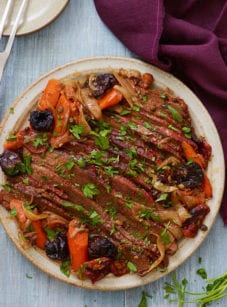
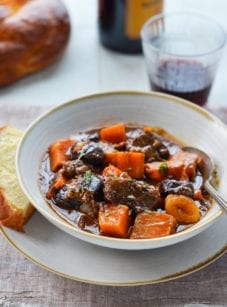
This iconic brisket recipe is famous for a reason: it’s easy to make, packed with flavor, and perfect for any special occasion. No wine or stock needed—the onions do all the work, melting into a rich, flavorful gravy. Best of all, it can be made entirely in advance, making hosting a breeze!
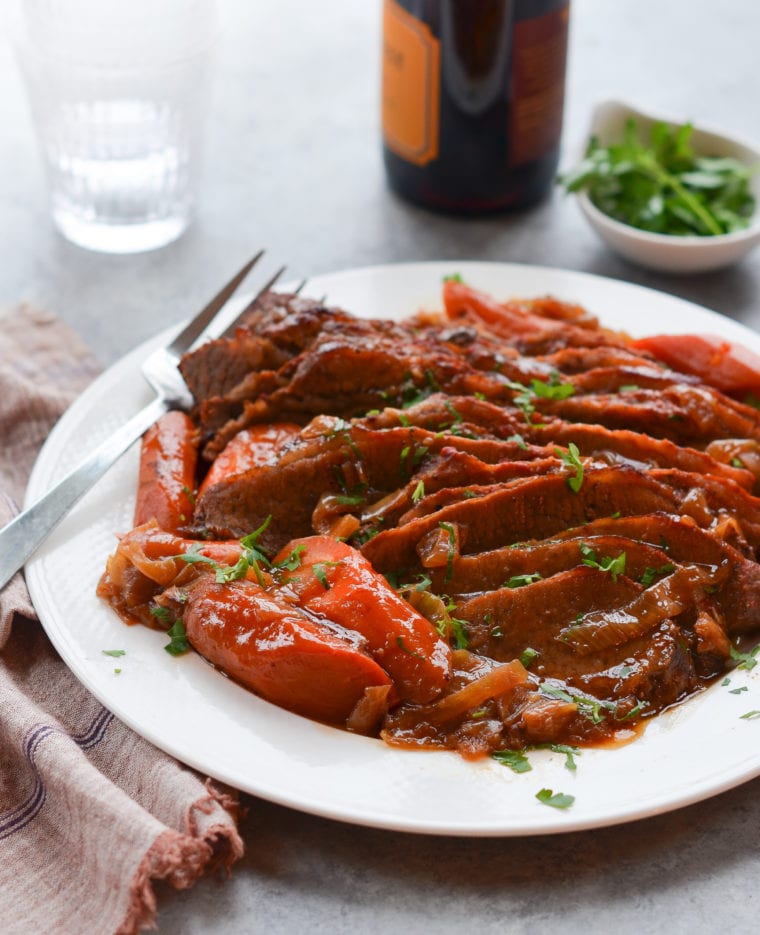
This celebrated beef brisket recipe comes from the late Nach Waxman, owner of the beloved New York City cookbook shop Kitchen Arts & Letters. First published in The Silver Palette New Basics Cookbook in 1989, it’s said to be the world’s most Googled brisket recipe. It’s surprisingly simple: the brisket roasts on a bed of onions that slowly caramelize into a deeply savory sauce.
Over the years, I’ve made a few tweaks to the recipe, but you can still find Waxman’s original brisket recipe here. It’s ideal for preparing ahead of time, as the flavors deepen when served the following day. For me, it’s a Jewish holiday staple, especially for Rosh Hashanah and Passover, alongside classics matzo ball soup, challah, and latkes. (For Passover, swap the flour for matzo meal.)
“Goodness, this is a magical meal.”
What You’ll Need To Make Classic Brisket With Onions
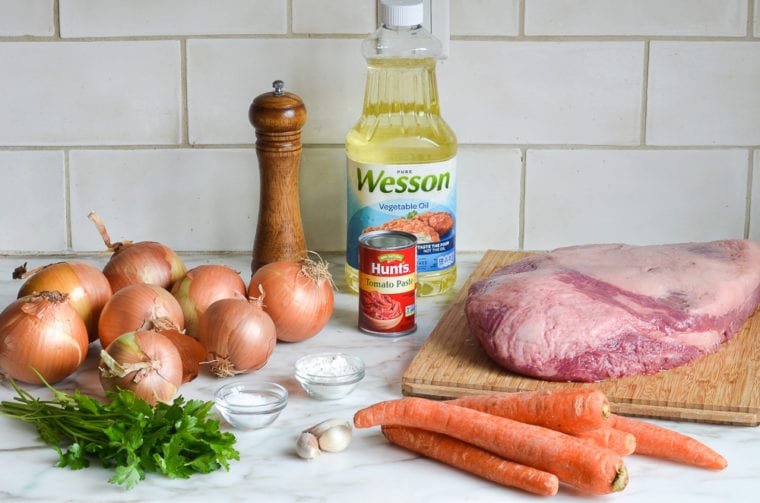
- Beef Brisket: Turns meltingly tender when slow-braised, soaking up all the rich sauce. This recipe uses a first-cut (flat-cut) brisket—it’s lean but has just enough fat to keep the meat juicy and flavorful.
- Kosher Salt, Ground Black Pepper & All-Purpose Flour: Season the meat and help create a nice crust when searing; the flour also thickens the sauce as it cooks.
- Vegetable Oil: Used to sear the brisket, giving it a golden, flavorful crust.
- Yellow Onions, Garlic & Carrots: The onions cook down into a sweet, caramelized base for the sauce; the garlic adds savory flavor, and the carrots soften as they braise, soaking up all the flavor and adding a subtle sweetness.
- Tomato Paste: Adds a rich, concentrated tomato flavor that deepens the sauce.
- Fresh Chopped Parsley (Optional): Sprinkled on at the end for a bit of fresh, herby color.
- Jump to the printable recipe for precise measurements
Video Tutorial
How To Make Brisket
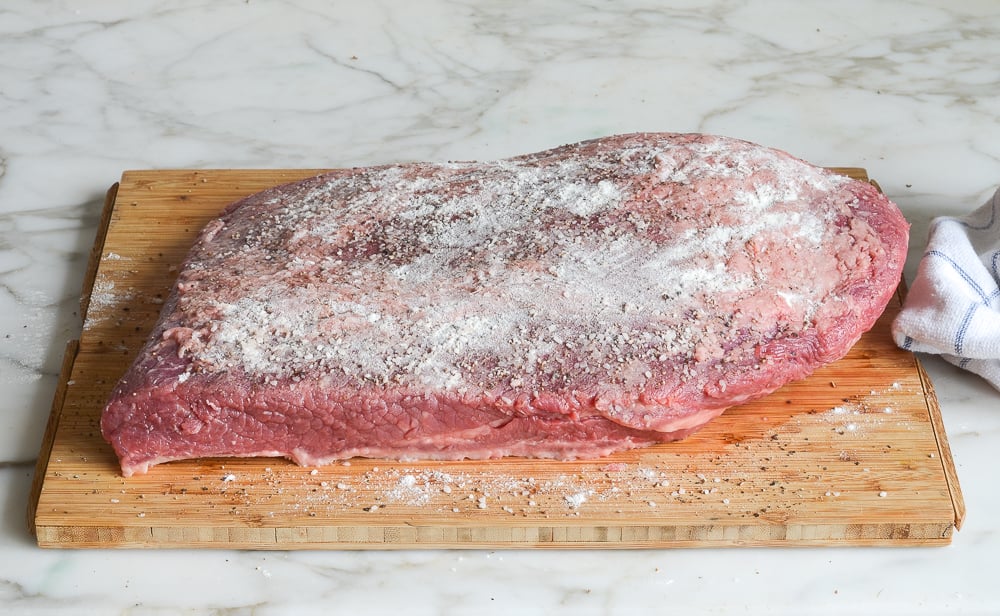
Step 1: Season and flour the brisket. Generously season the brisket with salt and pepper, then dust both sides lightly with flour.
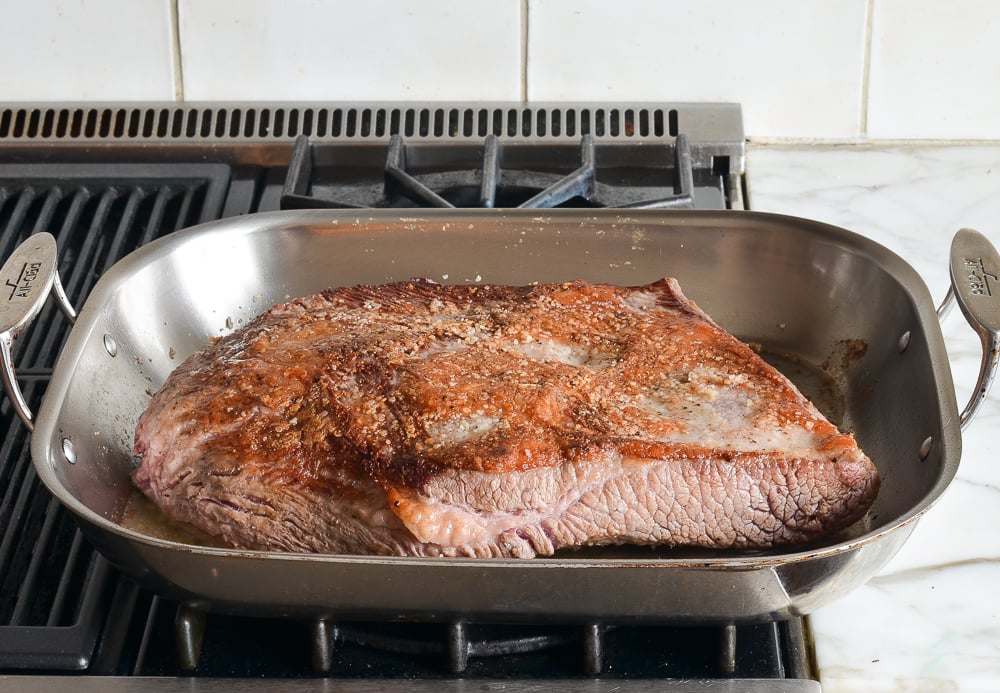
Step 2: Sear the meat. Heat the oil in a heavy roasting pan or Dutch oven until shimmering, then sear the brisket on both sides until browned and crusty in spots. Transfer it to a platter.
Pro Tip: Take your time when searing—proper browning means deeper flavor in the final dish, so don’t rush it.
Step 3: Cook the onions. Add the onions to the pan and cook, stirring and scraping up all those browned bits (which add tons of flavor to the braising liquid), until they’re soft and golden brown, about 15 minutes.
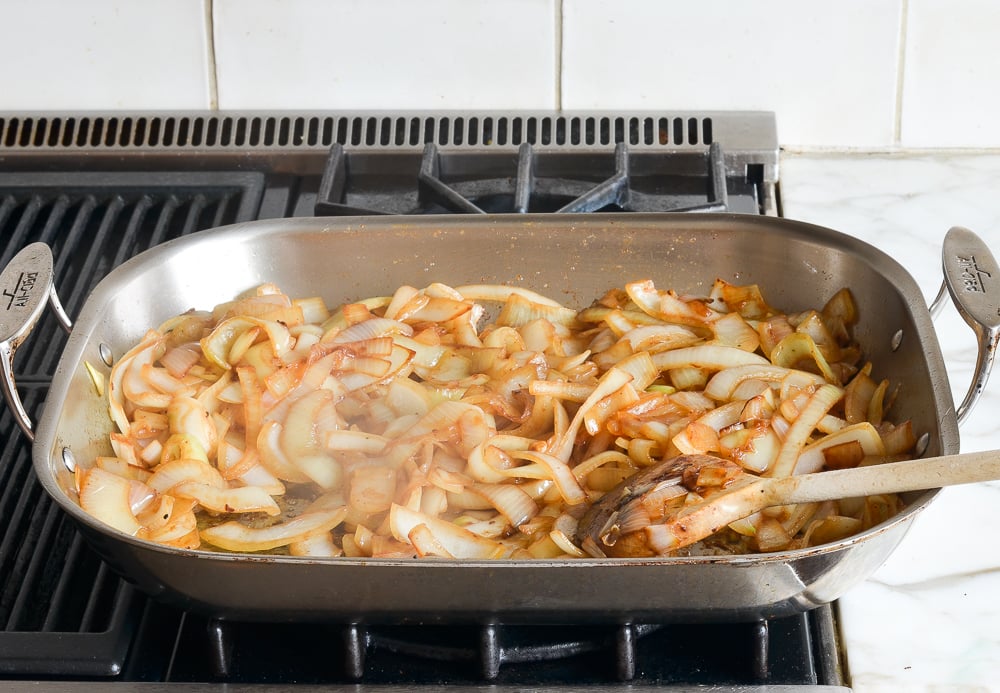
Step 4: Add everything back. Nestle the brisket on top of the onions, spread the tomato paste over the meat, and scatter the carrots and garlic around the edges. Cover tightly with aluminum foil or a lid and bake for 1½ hours.

Step 5: Slice the brisket. Take the brisket out and transfer it to a cutting board. Slice it thinly—about ⅛ to ¼ inch thick—against the grain (it’s easier to slice now than later, and the second braise allows the slices to soak up lots of juice, keeping the meat moist and flavorful).
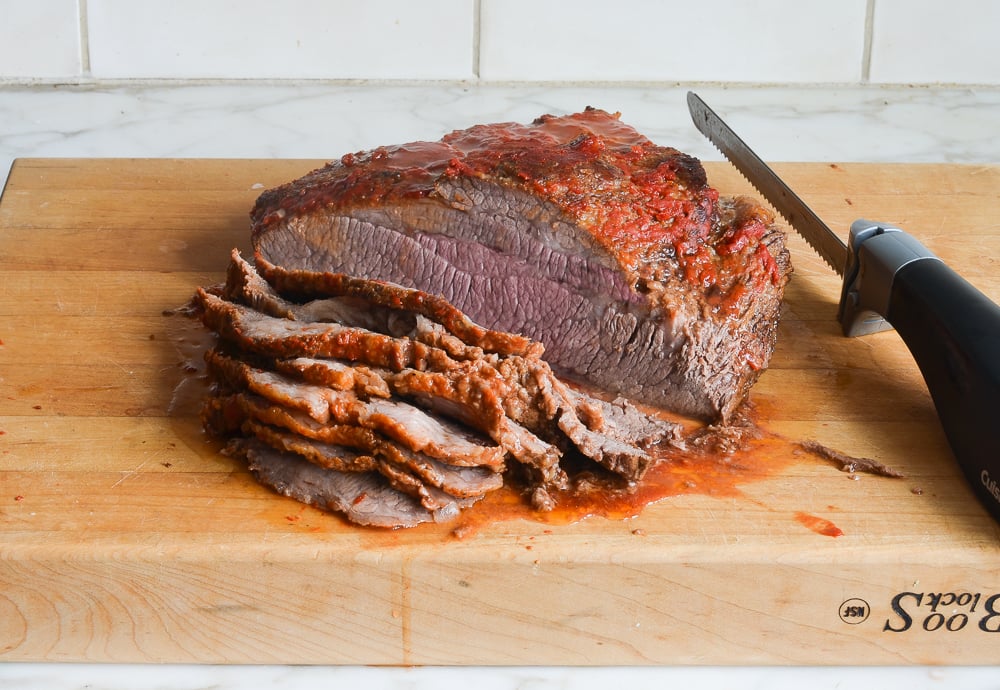
Step 6: Finish cooking. Return the slices to the pan, overlapping slightly, and baste with the pan juices. Pop it back in the oven and bake for a few more hours until tender. Cooking brisket can be an exercise in patience, but it’s worth it—it takes time to break down the meat’s connective tissue and get that melt-in-your-mouth texture.
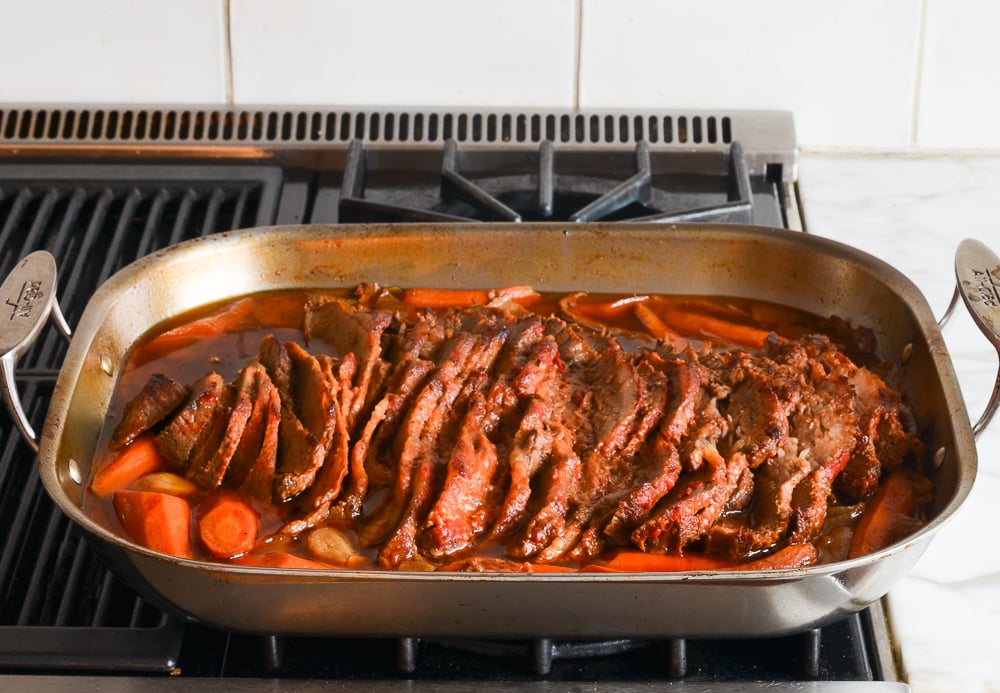
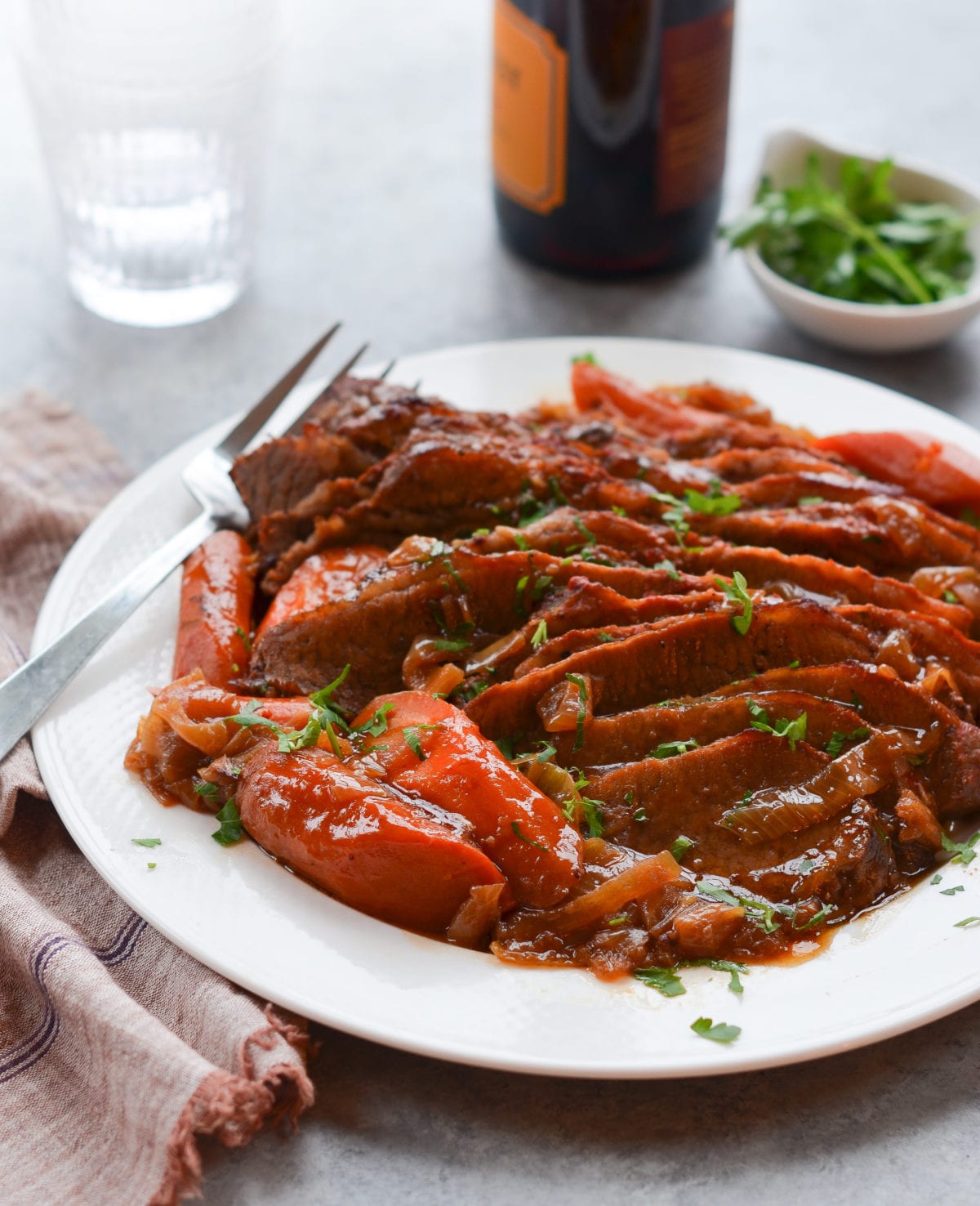
Step 7: Serve or store. You can serve the brisket right away, but it’s even better if you chill it overnight and reheat the next day. It also freezes beautifully.
Tips for Making The Best Brisket
- Use the right cut. Brisket comes in two cuts: flat-cut (also called first-cut) and point cut (this recipe uses flat-cut). The flat-cut is lean but has a fat cap that adds flavor and moisture—keep some of that fat on for the best results.
- Season generously. Brisket is a big cut, so don’t be shy with the salt and pepper—they help create a flavorful crust and bring out the meat’s depth.
- Pick the right pan. You want a pan that holds the brisket and veggies snugly—too much empty space can cause the liquid to evaporate too fast and burn.
- Keep it covered. Covering the pan well traps steam and keeps the meat nice and tender.
- Slice against the grain. Look for the lines running through the meat—cut across those lines, not with them, for the most tender bites.
- Check liquid levels as it cooks. Make sure there’s always enough braising liquid in the pan so the brisket stays moist; add a splash of broth or water if it’s getting low.
- Make it Ahead. Brisket tastes even better the next day as the flavors deepen. If you can, make it a day ahead and reheat gently before serving.
Brisket is typically prepared one of two ways: braised in the oven, like this version, or smoked BBQ-style. If you’re looking for the BBQ version, head over to my smoked brisket recipe—it’s cooked low and slow in a smoker until tender and juicy with a crusty bark.
More Crowd-Pleasing Recipes You’ll Love


Classic Brisket with Onions
Ingredients
- 5 to 6 lb first-cut (or flat-cut) beef brisket, trimmed so a thin layer of fat remains in some spots (do not over trim!)
- 1½ tablespoons kosher salt
- 1 teaspoon freshly ground black pepper
- 2 tablespoons all-purpose flour (okay to substitute matzo cake meal for Passover)
- 3 tablespoons vegetable oil
- 8 medium yellow onions, peeled and sliced ½-in (13-mm) thick
- 3 tablespoons tomato paste
- 3 cloves garlic, roughly chopped
- 6 carrots, peeled and sliced into large chunks on a diagonal
- Handful fresh chopped parsley, for garnish (optional)
Instructions
- Set an oven rack in the middle position and preheat the oven to 350°F (175°C).
- Season the brisket on both sides with the salt and pepper. Lightly dust the brisket with the flour, then shake and turn to coat evenly. Heat the oil over medium-high heat in a heavy flameproof roasting pan or ovenproof enameled cast-iron pot just large enough to hold the brisket and carrots snugly. Add the brisket to the pan and sear on both sides until crusty brown areas appear on the surface, 5 to 7 minutes per side.
- Transfer the brisket to a platter, then add the onions to the pan and stir constantly with a wooden spoon, scraping up any browned bits stuck to the bottom of the pan. Cook until the onions are softened and golden brown, about 15 minutes. (If browned bits stick to the bottom of the pan and start to burn, add a few tablespoons of water and scrape with a wooden spoon to release them.)
- Turn off the heat and place the brisket, fatty side up, and any accumulated juices on top of the onions. Spread the tomato paste evenly over the brisket, then scatter the garlic and carrots around the edges of the pan. Cover the pan very tightly with aluminum foil (preferably heavy-duty or two layers) or a lid, then transfer to the oven and cook for 1½ hours.
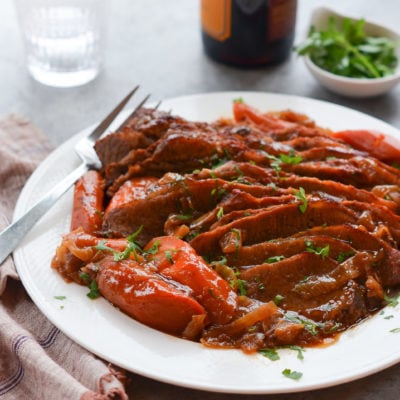
- Transfer the brisket to a cutting board and, using an electric or very sharp knife, slice the meat across the grain into approximately ⅛ to ¼-in (3 to 6-mm)-thick slices. Return the slices to the pan, overlapping them at an angle so that you can see a bit of the top edge of each slice. The end result should resemble the original unsliced brisket, leaning slightly backward. Cover the pan tightly and return to the oven.
- Lower the heat to 325°F (165°C) and cook the brisket until it is fork-tender, 1¾ to 2½ hours, or longer if necessary. The brisket is ready to serve with its juices, but it is even better the second day. (Note: If the sauce seems greasy, transfer the meat and vegetables to a platter and cover with foil to keep warm. Pour the sauce into a bowl and let sit until the fat rises to the top. Using a small ladle, spoon out the fat. Pour the skimmed gravy back over the meat.)
Notes
- Nutritional information was calculated for a 5-lb (2.25-kg) brisket.
- Make-Ahead/Freezing Instructions: The brisket can be made up to 3 days ahead of time and refrigerated. Reheat the brisket in a 300°F (150°C) oven until hot, about 45 minutes. The brisket also freezes well for up to 2 months; defrost in the refrigerator 2 days ahead of time.
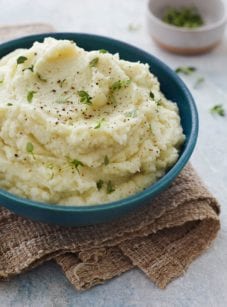
Pair with
Nutrition Information
This website is written and produced for informational purposes only. I am not a certified nutritionist and the nutritional data on this site has not been evaluated or approved by a nutritionist or the Food and Drug Administration. Nutritional information is offered as a courtesy and should not be construed as a guarantee. The data is calculated through an online nutritional calculator, Edamam.com. Although I do my best to provide accurate nutritional information, these figures should be considered estimates only. Varying factors such as product types or brands purchased, natural fluctuations in fresh produce, and the way ingredients are processed change the effective nutritional information in any given recipe. Furthermore, different online calculators provide different results depending on their own nutrition fact sources and algorithms. To obtain the most accurate nutritional information in a given recipe, you should calculate the nutritional information with the actual ingredients used in your recipe, using your preferred nutrition calculator.
Looks delicious, Jenn.
Do you think I could use round cut of beef instead of brisket. It’s almost impossible to get brisket cut here 🙁 different butcher history I guess 🙂
Thanks.
Hi Martin, if you have access to boneless beef chuck, that would be preferable, but if not, I think a round cut would work. I’d love to hear how it turns out!
Delicious! Made this for Passover dinner and followed your recipe to a tee. It was so moist and tender. Everyone loved it! Will only use your recipe for brisket going forward. Thanks Jen for helping me make a stress-free dinner!
PS: I am so impressed with your recipes that I just pre-ordered your cookbook!.
😊
A Passover hit! I used matza cake flour to dust the meat. I also added extra carrots since my family loves them. Delicious!
How do you recommend reheating the next day?
Hi Eric, To reheat the brisket, Cover it tightly with foil and reheat in a 300-degree oven til hot. I’d start checking it about 30 minutes. Enjoy!
I’ve been making brisket for 20 years and this by far is the best tasting and easiest recipe! It’s all about the onions and the length of cooking tine. I’ve never prepared brisket in advance and frozen it, I did this time. I froze it in the Dutch oven I prepared it in, thawed it out in fridge 2 days prior to serving. I then removed from fridge for a couple of hours and reheated for about an hour and a half at 250. The only thing I would change if I were to freeze again would be to add carrots after it’s thawed. Wonderful!
Would I be able to cook the first part tonight, cut it and cook the balance of the recipe tomorrow?
Sure, Roberta, that will work. Hope you enjoy!
I would like to make this recipe for Passover but need to substitute the flour with something. Would you recommend matzah flour, rice four, almond four or quinoa flour if any?
Hi Galia, any of those would work in place of the all-purpose flour. Hope you enjoy and happy holiday!
Hi Jenn!
I’m planning on making this for Easter dinner but I don’t have a roasting pan that I can use on my stovetop. Would it be ok to use a Le Creset Dutch oven for searing and then baking in the oven? I’m also planing on getting 2 briskets as I’m hosting 14 people. Would it be ok to sear each piece seperately but then add them both (probably one on top of the other) to the onions in the Dutch oven for the baking part? Or should I use 2 separate pots so each piece is in its own pot? What would you recommend? Thanks in advance for your help! Love all your recipes 🙂
Hi Mounira, It’s fine to use your Dutch oven for searing and baking. However, I would bake them in separate pans so you don’t have to stack them. Hope it turns out well!
Hi there!
What kind of pan are you using in the picture to cook this?
Also how do you best reheat this since you stated it taste better on second day?
Hi Anastasia, To reheat the brisket, Cover it tightly with foil and reheat in a 300-degree oven til hot. I’d start checking it about 30 minutes. Hope everyone enjoys it!
Hi Anastasia, I believe a used my All-Clad large roasting pan.
Question: if I choose to make this brisket a day ahead, how exactly would you recommend I reheat it?
P.S. I absolutely love all your recipes! They always turn out just like you say they will and are super delicious!! Thank you for your blog and your careful instructions and detailed recipes!
So glad you like the recipes, Danielle! To reheat the brisket, Cover it tightly with foil and reheat in a 300-degree oven til hot. I’d start checking it about 30 minutes. Hope everyone enjoys it!