
Homemade Pesto Recipe

This post may contain affiliate links. Read my full disclosure policy.
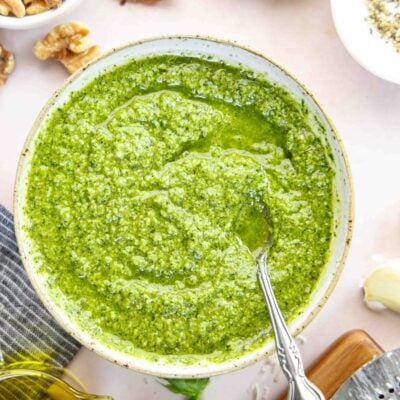
This homemade pesto comes together in minutes and is one of the easiest ways to make the most of summer basil. Toss it with pasta, spread it on sandwiches, spoon it over grilled meats and vegetables, or swirl it into soups.
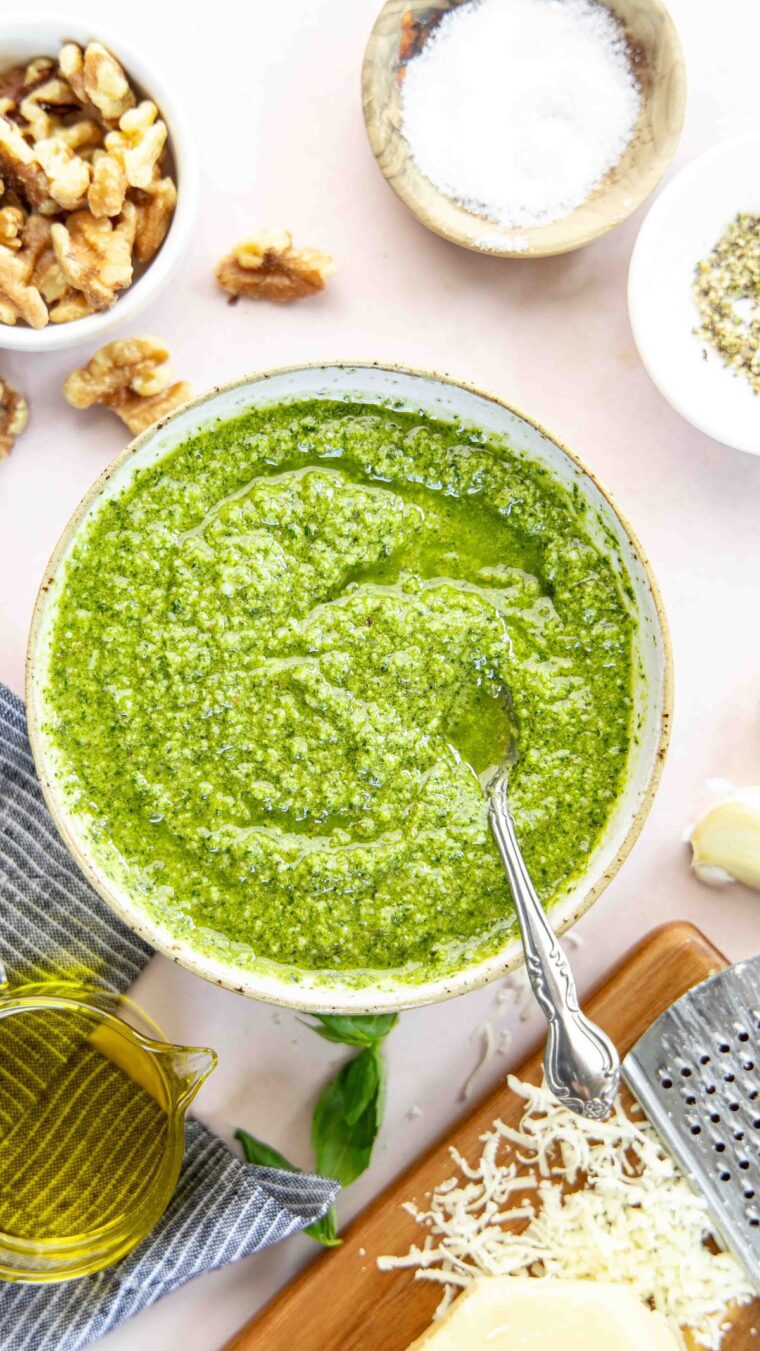
Pesto, or pesto alla Genovese, is a vibrant, garlicky green sauce from Genoa, Italy. Made with fresh basil, nuts, garlic, Parmigiano-Reggiano, and olive oil, it’s one of the easiest and most versatile sauces you can make at home. While pesto is traditionally made with a mortar and pestle, a food processor makes quick work of it.
This homemade pesto recipe uses walnuts instead of the traditional pine nuts, making it more affordable without sacrificing flavor. Once everything is blended together, you’d be hard-pressed to tell the difference. I make a batch whenever basil is overflowing in the garden, and since it freezes beautifully, I always stash a few containers away for quick meals later on.
“Simply, my favorite pesto recipe!”
What You’ll Need To Make Pesto Sauce
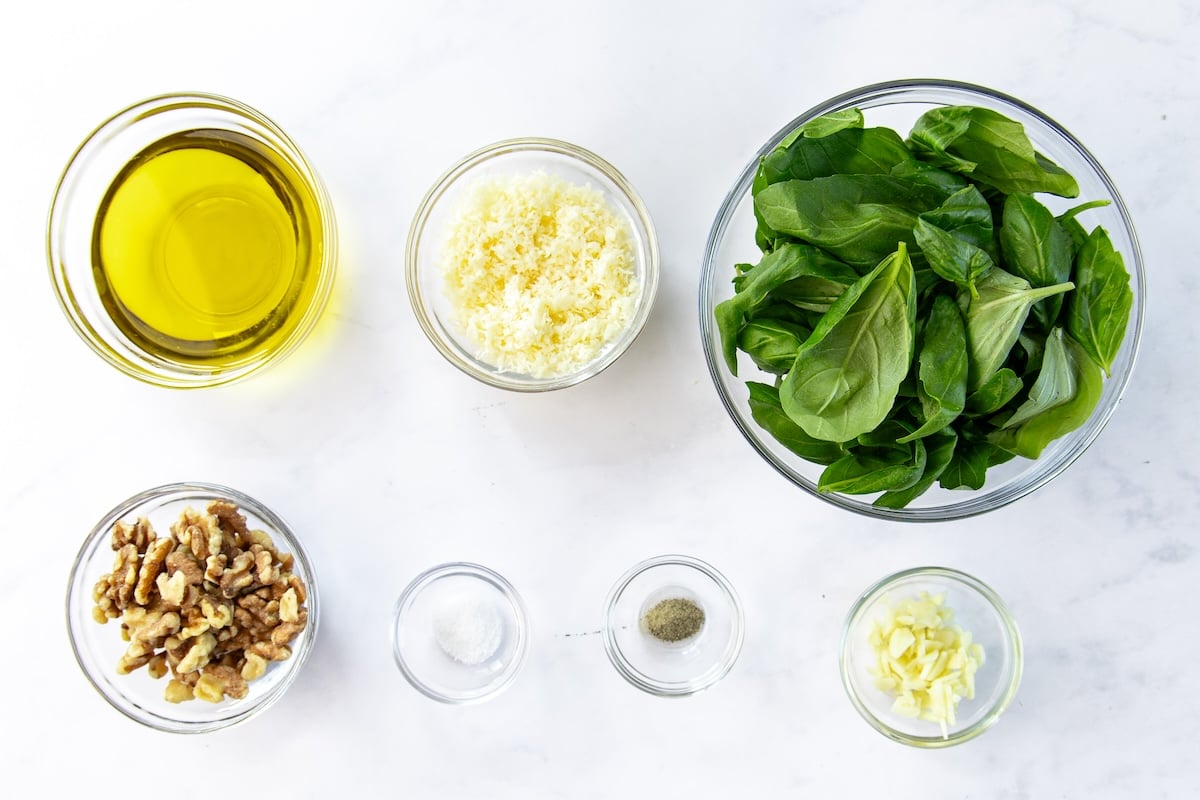
- Walnuts: Traditional pesto is made with pine nuts, but I almost always reach for walnuts. They’re easier to find, much less expensive, and have a rich, buttery flavor that works beautifully.
Almonds, pecans, and pistachios work well too. Pro tip: Toast the nuts in the oven or a dry skillet for a few minutes to deepen their flavor. - Garlic Cloves: Bring bold, punchy flavor that is key to the flavor of pesto.
- Fresh Basil Leaves: Use vibrant, fragrant leaves with no dark spots. Be sure to wash and dry them thoroughly—wet basil can dilute the pesto and dull the flavor.
- Extra Virgin Olive Oil: Binds everything together and adds smooth, fruity richness. Use one you enjoy the flavor of since it’s a major component of the sauce.
- Grated Parmigiano-Reggiano: Adds salty, nutty flavor. Always use authentic Parmigiano-Reggiano from Italy—look for the name stamped on the rind or clearly labeled on pre-grated packages. Avoid shelf-stable grated cheese or anything labeled “Parmesan” or “Parmesan cheese.”
- Jump to the printable recipe for precise measurements
Step-by-Step Instructions
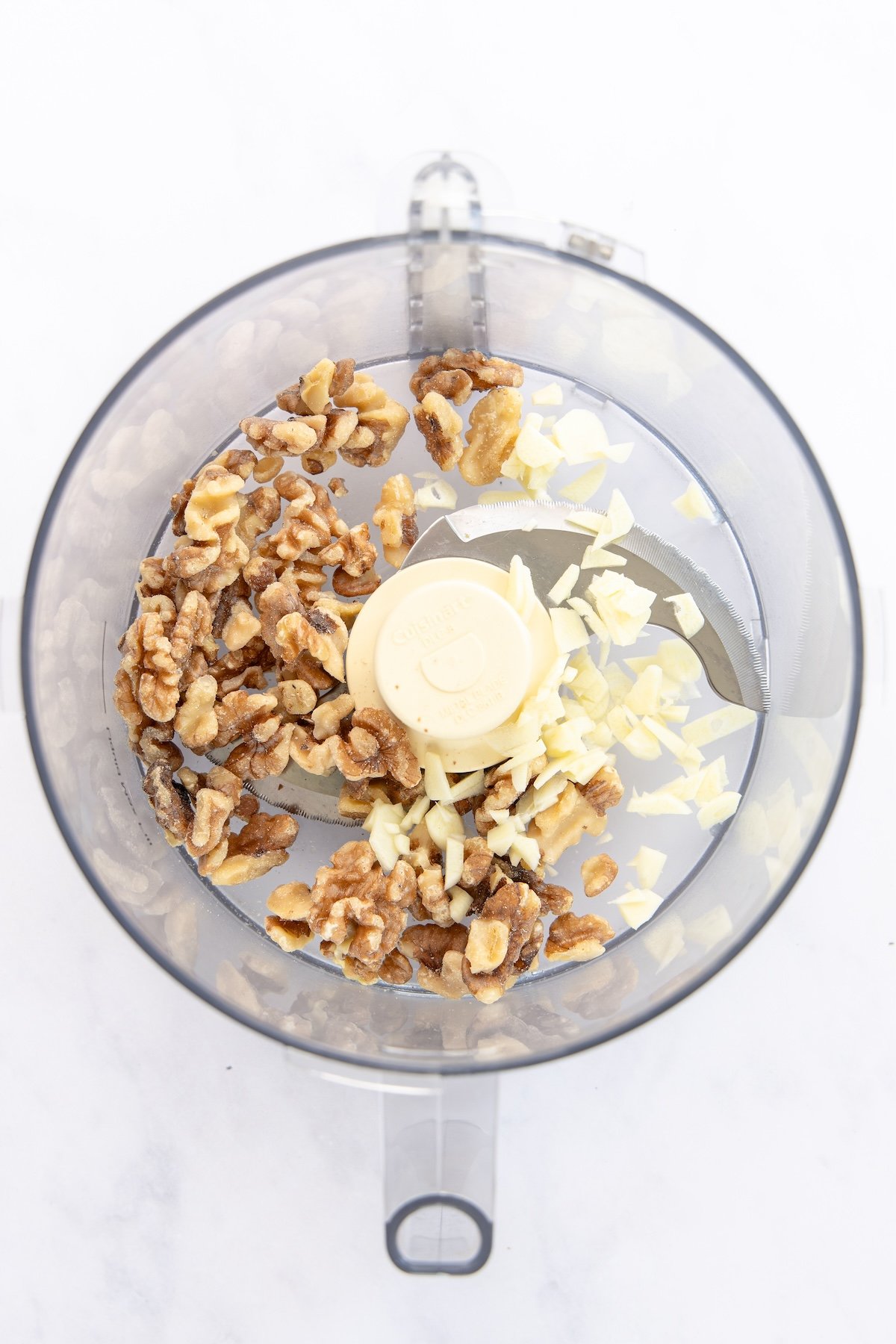
Pulse the walnuts and garlic first, then add the basil and seasonings. As you slowly drizzle in the olive oil, the pesto will come together into a smooth, vibrant green sauce. Taking your time with the oil helps it emulsify for the best texture.
Pro Tip: If you don’t have a food processor, a blender works too, though you may need to stop and scrape down the sides a few times to keep everything moving.
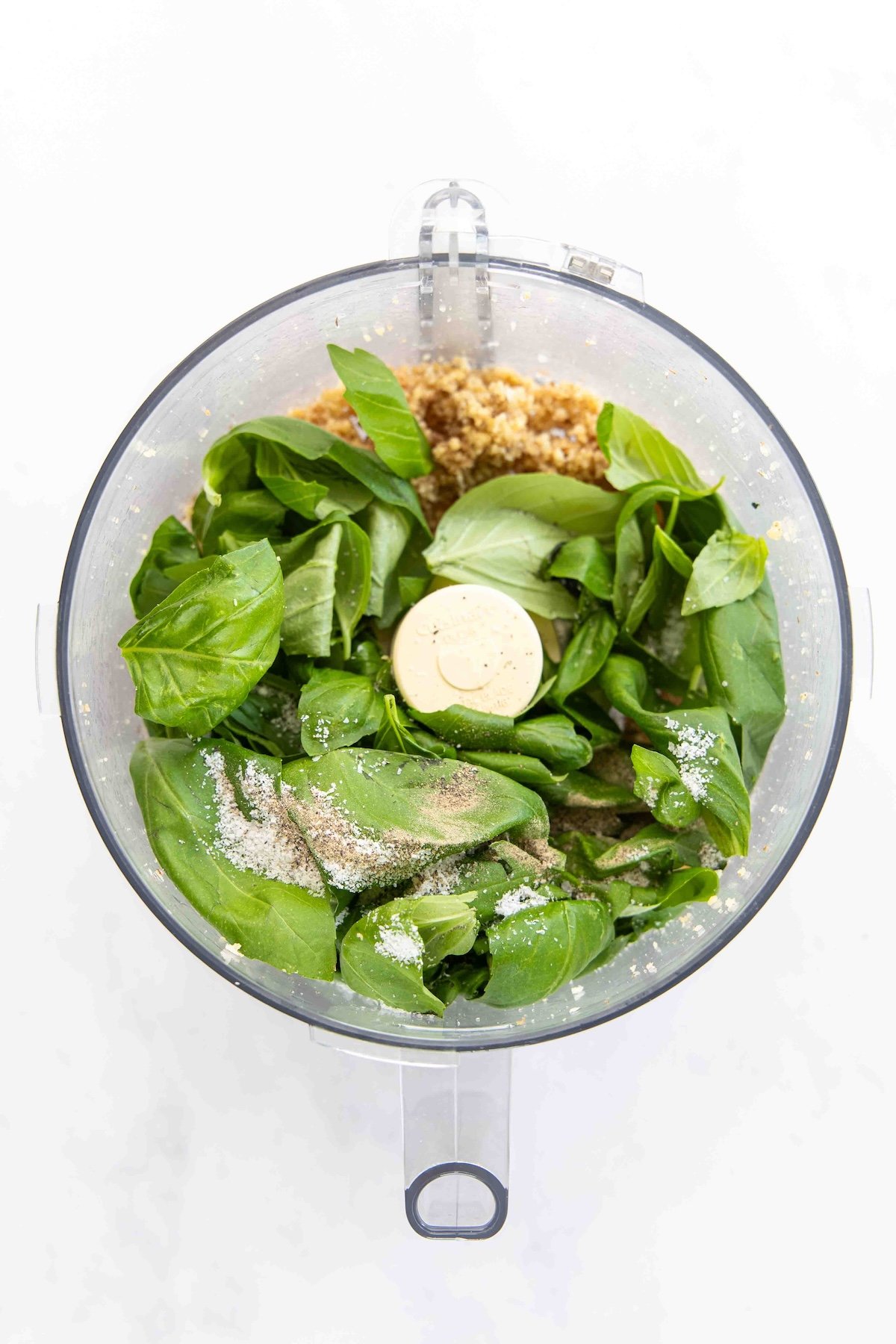
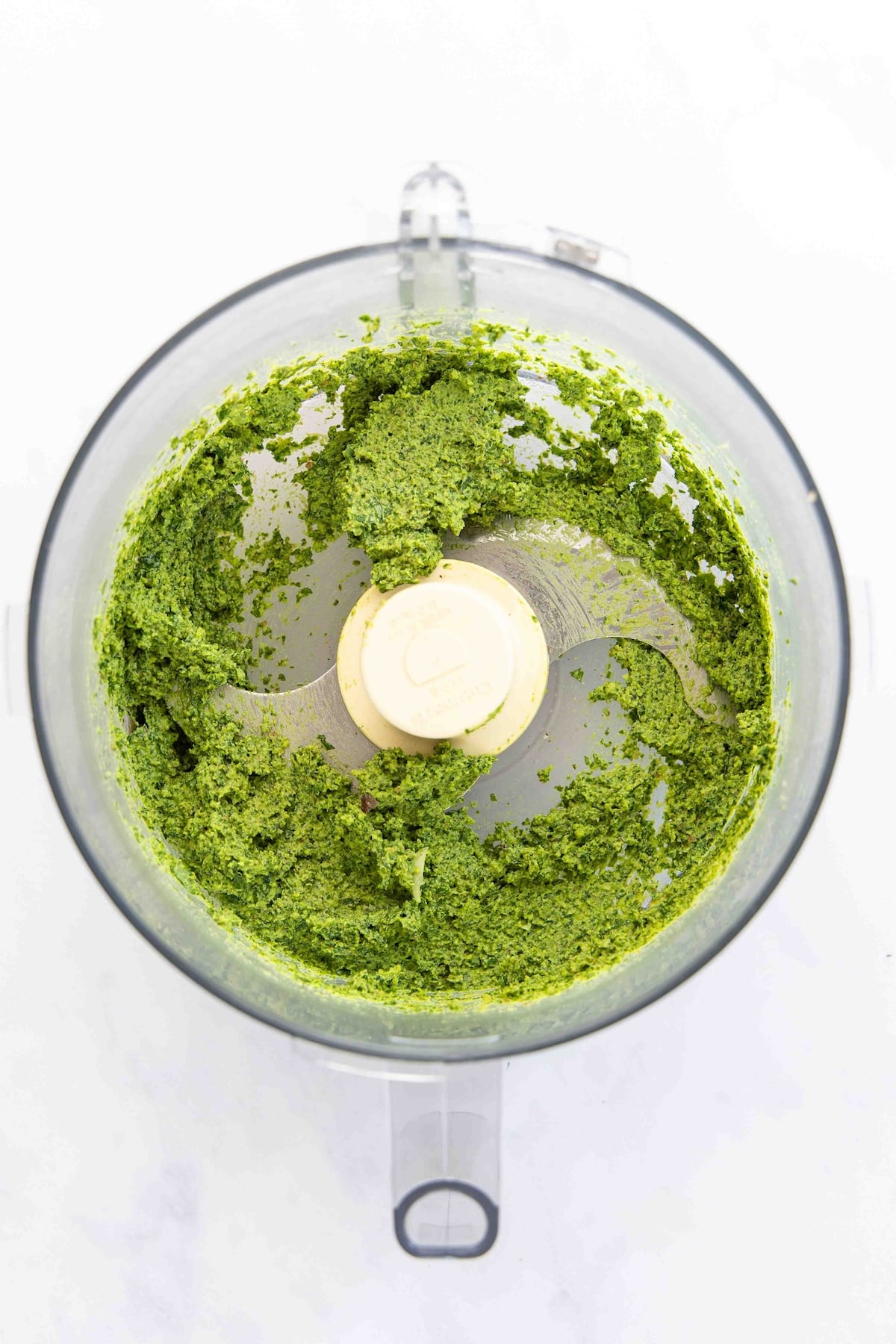
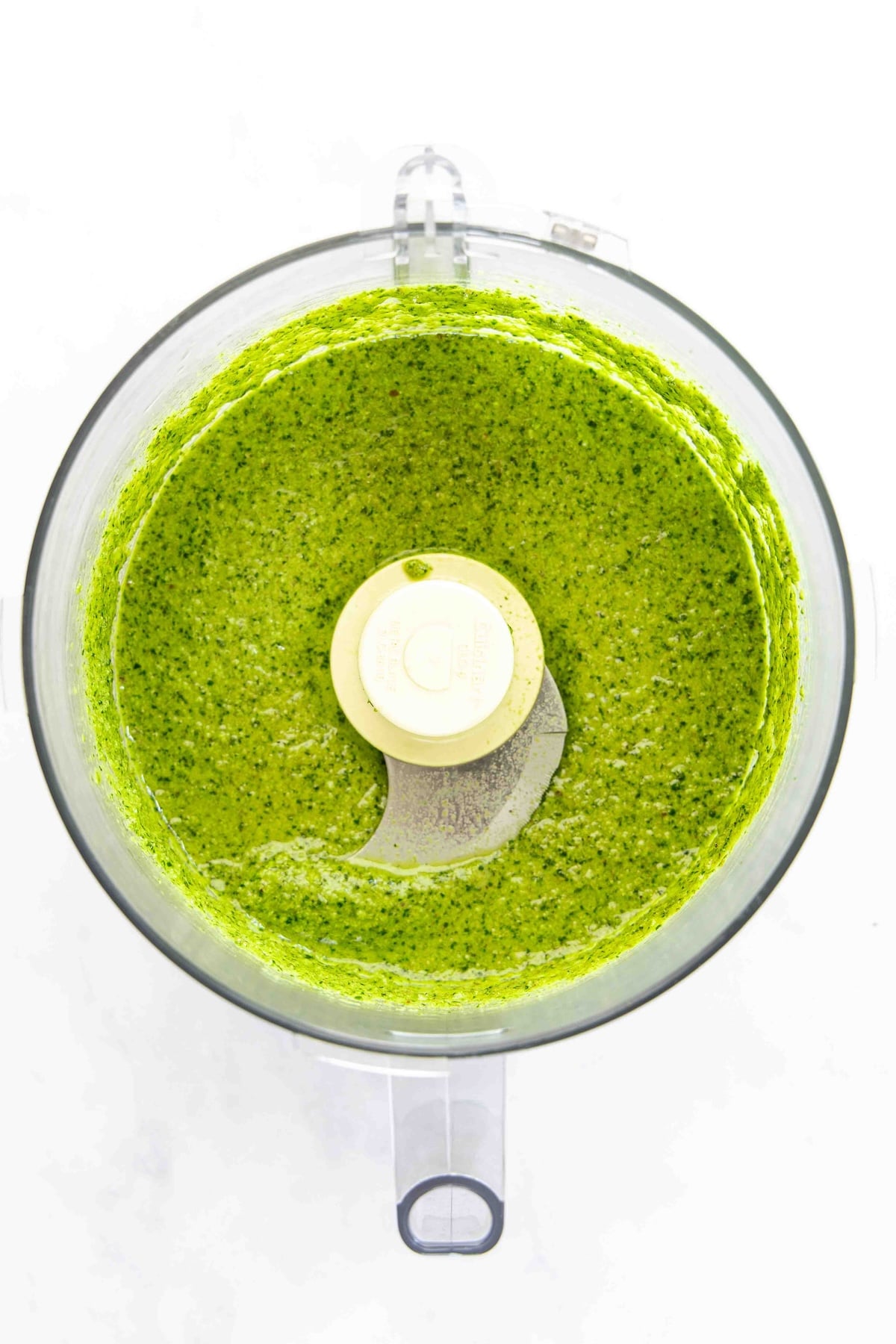
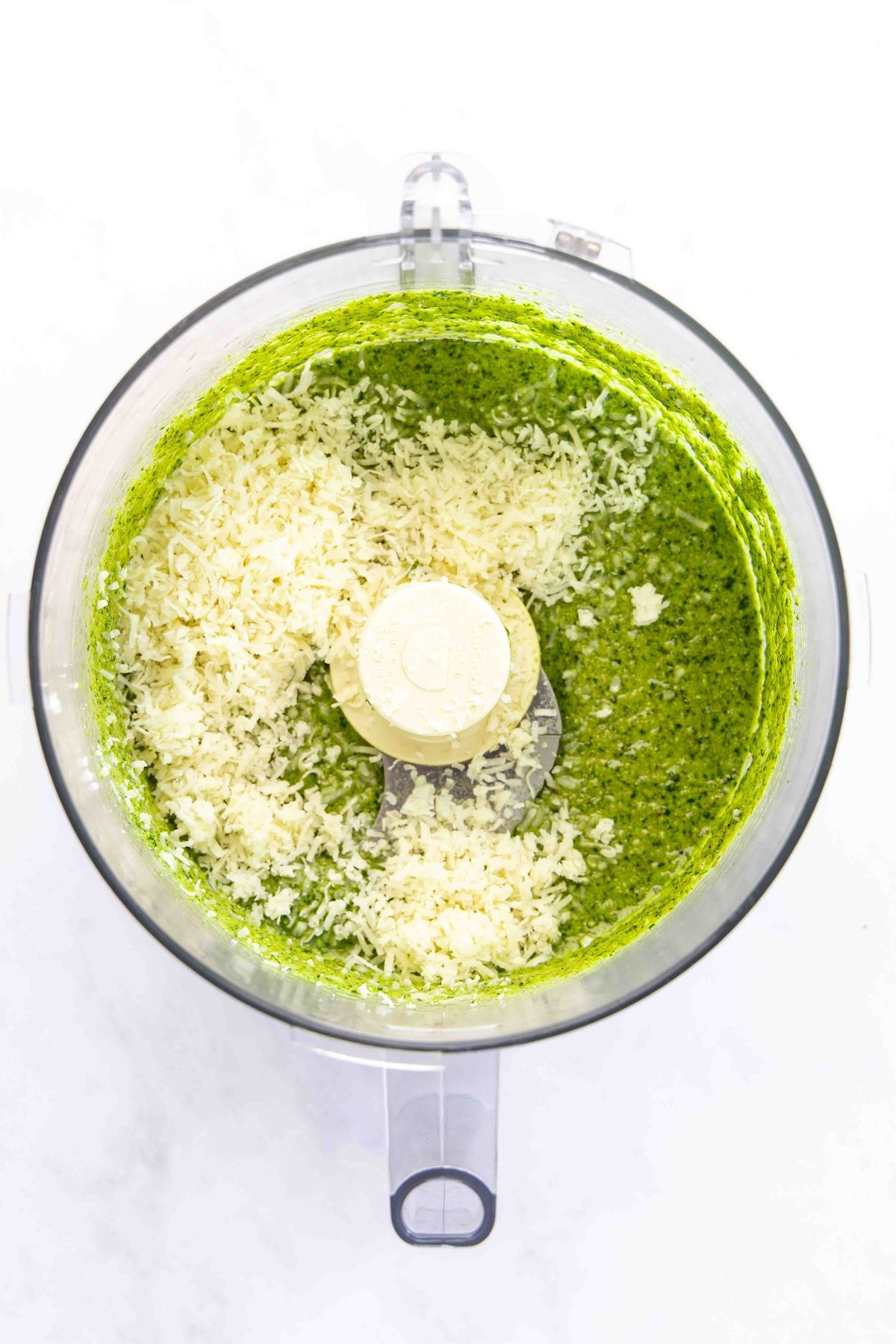
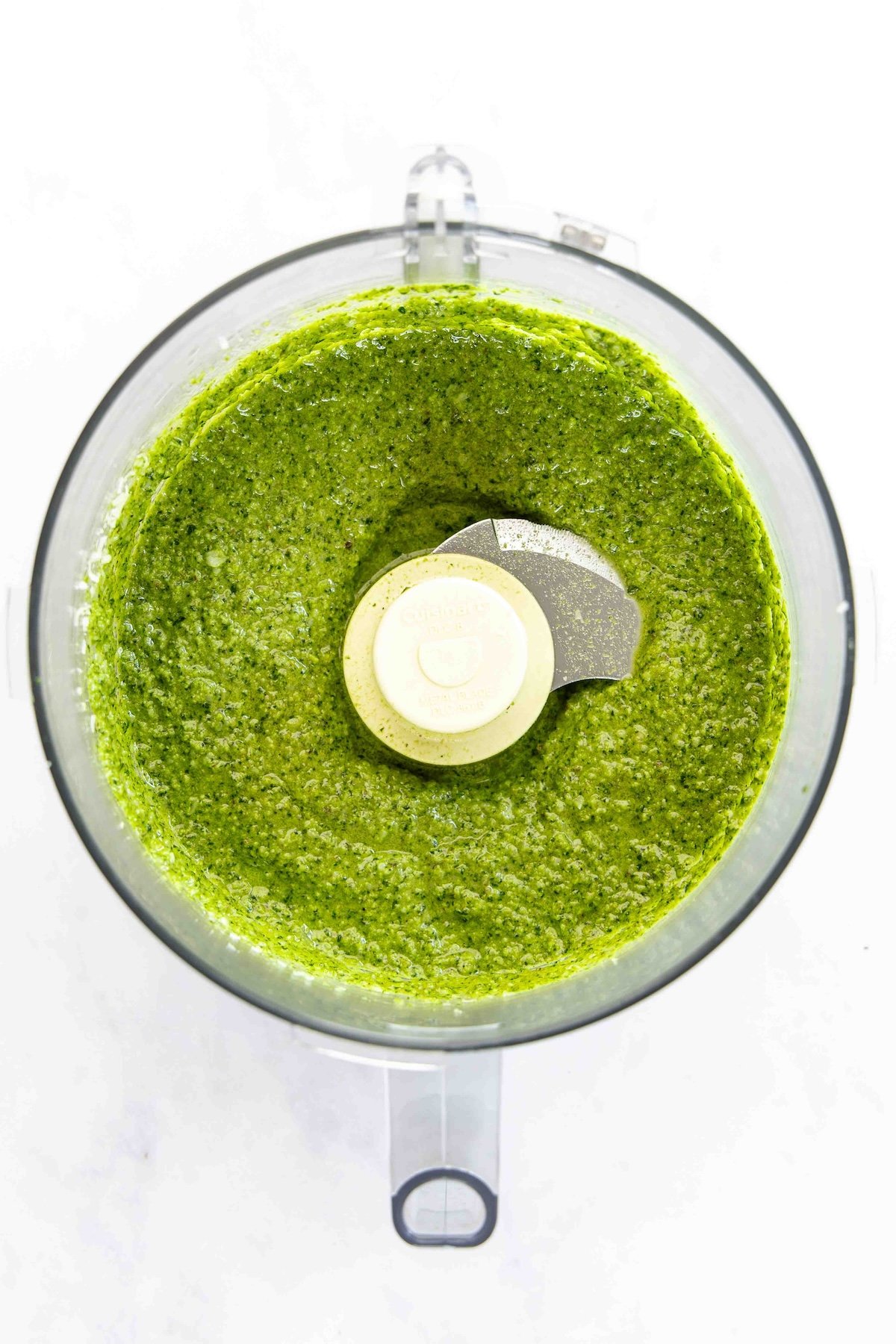
Add the cheese and blend just until incorporated. It’ll thicken the pesto slightly and give it a rich, creamy texture.
How To Store & Freeze Pesto
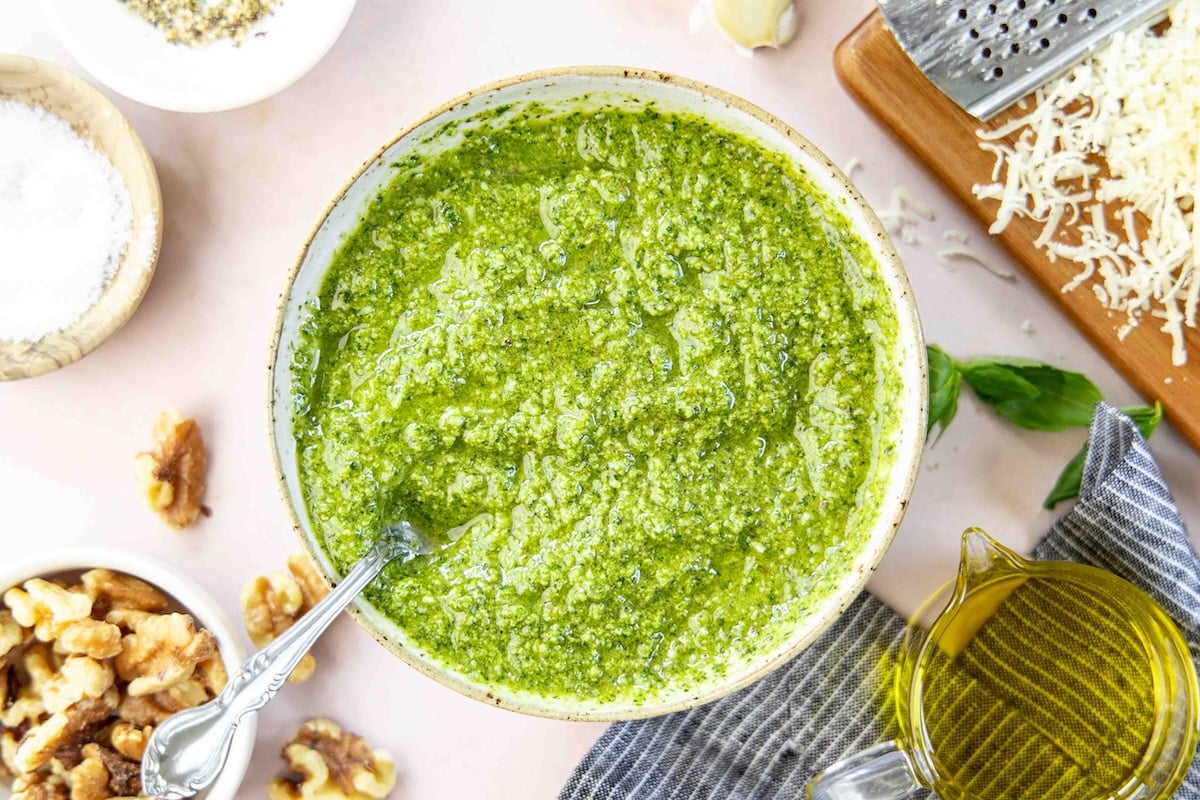
Pesto keeps well in the refrigerator for about a week. To help prevent browning, smooth the surface and pour a thin layer of olive oil over the top before refrigerating (this seals out the air and prevents the sauce from oxidizing).
For longer storage, freeze pesto in ice cube trays. Once frozen, transfer the cubes to a freezer bag so you can thaw exactly as much as you need.
Best Ways to Use Homemade Pesto
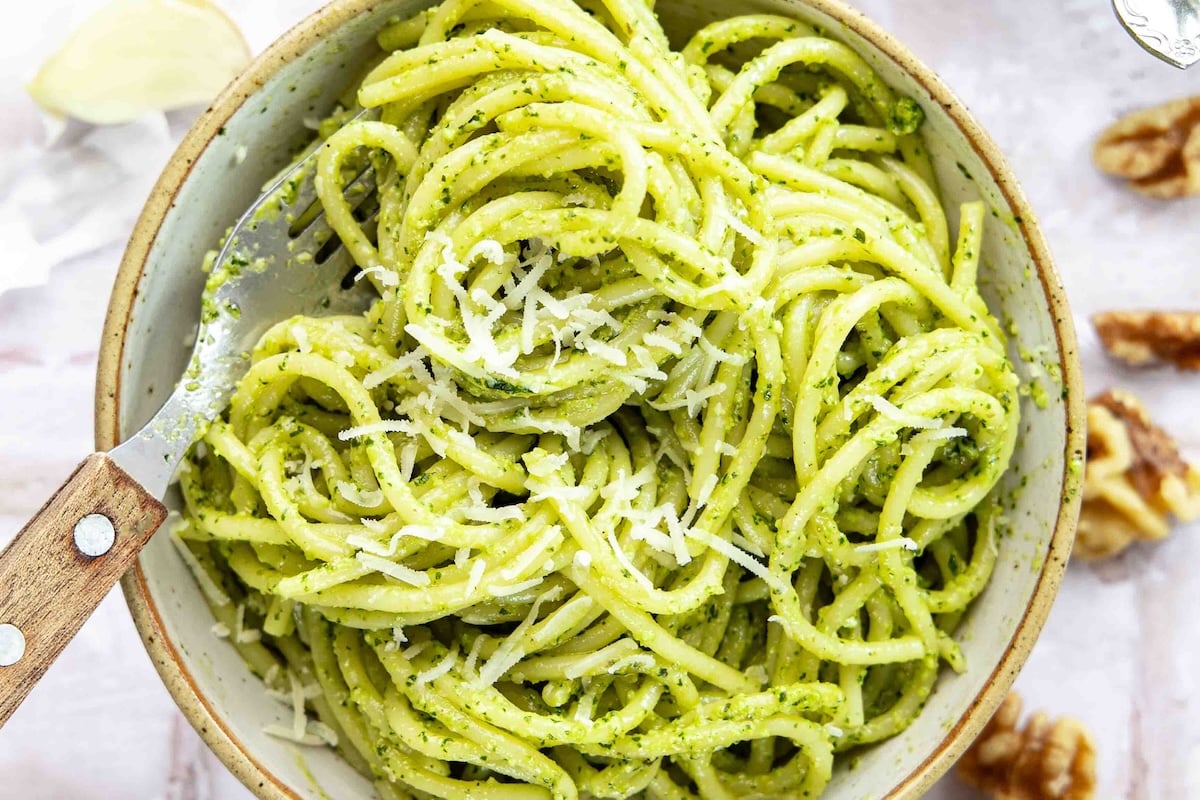
Homemade pesto is far more versatile than just pasta. Here are some of my favorite ways to use it:
- Toss it with homemade pasta to make pesto pasta
- Make zucchini noodles
- Spoon over grilled chicken, shrimp, salmon, or steak
- Spread on focaccia, sandwiches and smash burgers
- Drizzle over roasted vegetables
- Stir into minestrone or vegetable soup
- Spread on pizza instead of tomato sauce
- Swirl into scrambled eggs or omelettes
- Mix into mayonnaise for sandwiches
- Spoon onto burrata with fresh tomatoes
- Drizzle over baked potatoes
Video Tutorial
You May Also Like

Homemade Pesto Recipe
Ingredients
- ⅓ cup walnuts, toasted if desired (see note)
- 2 large cloves garlic, roughly chopped
- 2 cups packed fresh basil leaves
- ½ teaspoon salt
- ¼ teaspoon freshly ground black pepper
- ⅔ cup extra-virgin olive oil
- ½ cup grated Parmigiano-Reggiano
Instructions
- Place the walnuts and garlic in the bowl of a food processor fitted with a steel blade. Process until coarsely chopped, about 10 seconds. Add the basil leaves, salt, and pepper and process until mixture resembles a paste, about 1 minute. With the processor running, slowly pour the olive oil through the feed tube and process until the pesto is thoroughly blended. Add the Parmesan and process a minute more. Use pesto immediately or store in a tightly sealed jar or air-tight plastic container, covered with a thin layer of olive oil (this seals out the air and prevents the pesto from oxidizing, which would turn it an unappetizing brown color). It will keep in the refrigerator for about a week.
Notes
- Toasting the walnuts isn’t essential, but it brings out their flavor. To toast them, preheat the oven to 350°F. Arrange the walnuts on a baking sheet in a single layer. Bake, checking frequently, until lightly toasted and fragrant, 6 to 8 minutes. Transfer immediately to a plate to cool.
- Freezing Instructions: Pesto can be frozen in an airtight container for up to 6 months. You can also divide your prepared pesto into the compartments of an ice cube tray and freeze. Once it’s frozen, remove the pesto cubes from the tray and put in a sealable plastic bag or an airtight container. You can add the defrosted pesto cubes to soups, pasta dishes, eggs, sandwiches, and potatoes.
Nutrition Information
This website is written and produced for informational purposes only. I am not a certified nutritionist and the nutritional data on this site has not been evaluated or approved by a nutritionist or the Food and Drug Administration. Nutritional information is offered as a courtesy and should not be construed as a guarantee. The data is calculated through an online nutritional calculator, Edamam.com. Although I do my best to provide accurate nutritional information, these figures should be considered estimates only. Varying factors such as product types or brands purchased, natural fluctuations in fresh produce, and the way ingredients are processed change the effective nutritional information in any given recipe. Furthermore, different online calculators provide different results depending on their own nutrition fact sources and algorithms. To obtain the most accurate nutritional information in a given recipe, you should calculate the nutritional information with the actual ingredients used in your recipe, using your preferred nutrition calculator.
Gluten-Free Adaptable Note
To the best of my knowledge, all of the ingredients used in this recipe are gluten-free or widely available in gluten-free versions. There is hidden gluten in many foods; if you’re following a gluten-free diet or cooking for someone with gluten allergies, always read the labels of your ingredients to verify that they are gluten-free.
Our family loves many of your recipes, Jenn! Thanks for your awesome site. We have a big garden and use most of our substantual basil harvest to make and freeze this pesto recipe. So gooood! We do, however, cut the salt in half and increase the basil ratio a little for our perfect flavour. Thanks so much!
Best pesto!
Had a lot of basil in my garden and decided to make this recipe. It turned out really good, even my family (who are hard to please) enjoyed it. Definitely will be making this again.
Followed the recipe. The cheese overwhelms the basil. Added another cup of basil and still too cheesy and salty.
I agree. Soooo salty. Trying to remedy it now, but running out of basil 😫. Adding lemon to see if it helps.
There is no such thing as too salty 😉
So I have read quite a few reviews and fail to understand why no one has mentioned one major issue with this pesto….HOW DO YOU KEEP YOUR HANDS OFF OF IT?
This pesto is beyond good – It is PERFECTION!! Once I make it I do not know how to stop licking the bowl. I have this pesto with my pasta, sandwiches, salads, tacos, eggs and even Indian flat bread. In fact I find new ways to eat this beauty!
Thanks Jenn for a recipe that more than delivered!!!
I, too, suffer from the dreaded “Pine Mouth!” It’s terrible! It makes everything I eat or drink (especially wine) taste like soap for days! I made this recipe (with walnuts), using basil from the garden. It’s delicious, and I’m excited to have several small jars in the freezer, to add to pasta for an easy meal.
Amazing pesto …everybody in the family gave it a thumbs up! We love trying different pesto recipes, but we voted to keep this one rotation.
I’ve made a lot of pesto but none as good as this. In my opinion it’s the walnuts that make it pop and the ratio of the ingredients is perfect. Well done.
I have always used walnuts instead of pine nuts. I like the flavor more.
Really great recipe. I added an extra garlic clove because I love garlic. For pine nuts that aren’t bitter, they have to be from Italy. I tried the non-Italian ones and had the bitter taste that lasted for a couple days.
Freakin’ yum!