
How To Cook Steak On The Stovetop

This post may contain affiliate links. Read my full disclosure policy.
Pan-searing is the best—and easiest—way to cook a steak. Master this technique and you can turn out a steak that rivals your favorite steakhouse.
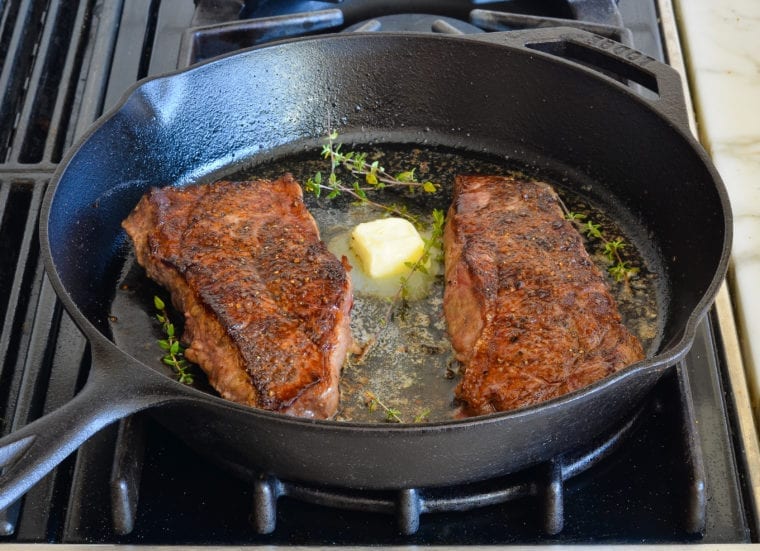
I love the kind of dinner you can make without relying on a recipe. Truth be told, good cooking really comes down to mastering a few core techniques—and some of the best dishes are also the simplest. A perfectly cooked steak is a prime example. The key is mastering the art of pan-searing.
This classic technique involves cooking the surface of your food undisturbed in a very hot pan until a crisp, golden-brown crust forms. It’s the foundation of great flavor and texture and gives food that unmistakable restaurant finish. Pan-searing is hands-down the best way to cook a steak (it works beautifully for salmon and scallops, too)—and it delivers steakhouse-worthy results with far more control than a grill.
“I followed these instructions to a T using a cast iron skillet and had one of the best steaks of my life. I was amazed.”
What you’ll need to Cook Steak on The Stovetop
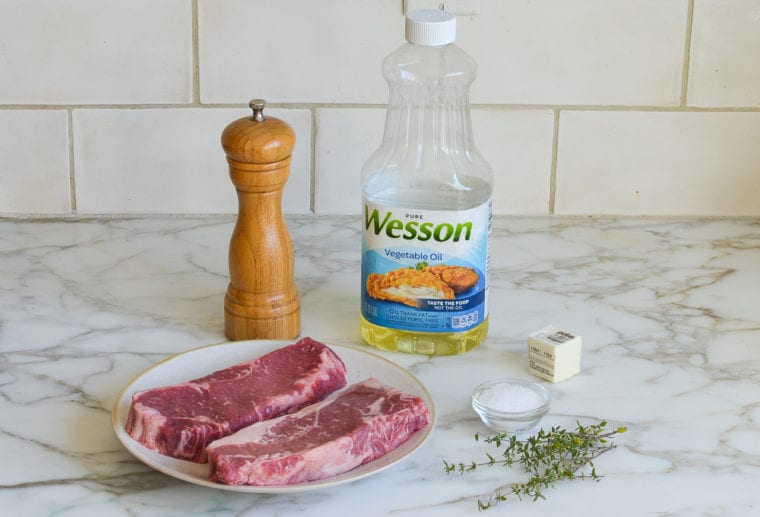
You don’t need much to make a great pan-seared steak: just the steaks themselves, an oil with a high smoke point (skip the olive oil and reach for vegetable oil), salt, pepper, butter, and a few sprigs of thyme if you like. When it comes to choosing a cut, boneless, quick-cooking steaks that are about 1 to 1½ inches thick work best. New York strip, rib eye, and filet mignon are all excellent options.
How to Cook Steak on The Stovetop
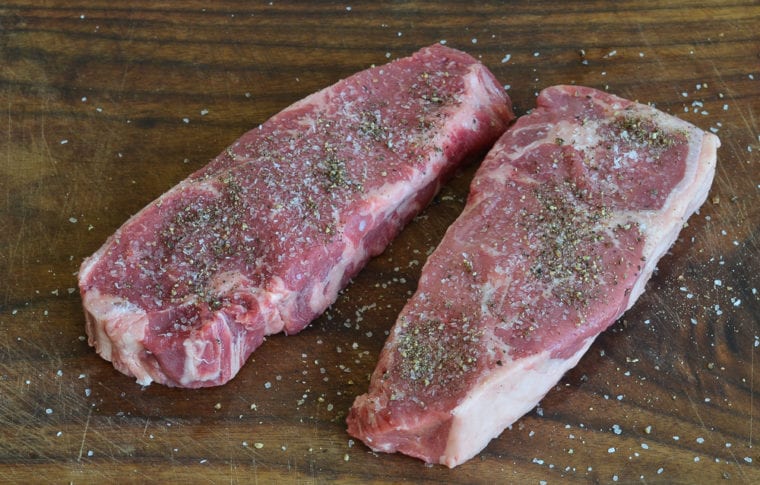
Step 1: Season the steaks. Pat the steak dry with paper towels. (Any moisture on the exterior of the steak must first evaporate before the meat begins to brown.) Season the steaks generously on both sides with salt and freshly ground black pepper; the seasoning will stick to the surface and help create a delicious crust.
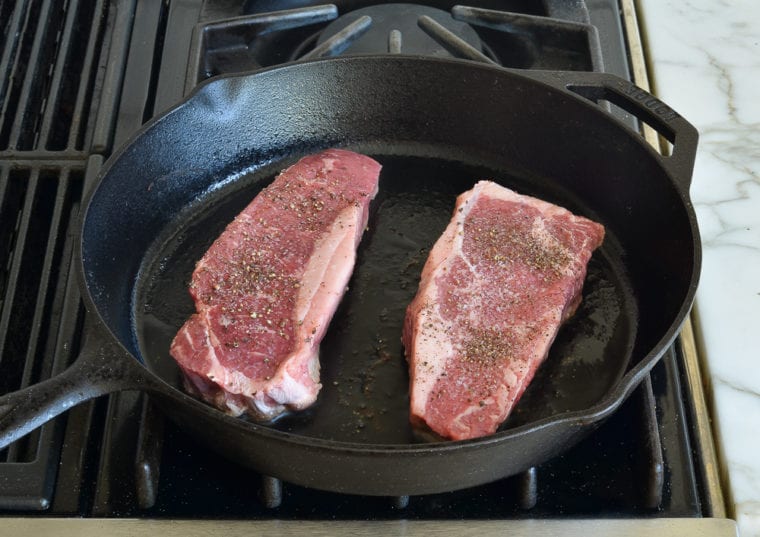
Step 2: Sear on the first side. Turn on your exhaust fan and heat a heavy pan over medium-high heat until very hot. Add the oil and swirl to coat—the oil should shimmer. Lay the steaks in the pan, placing them away from you so the oil doesn’t splatter; they should sizzle right away. Then leave them alone. Resist the urge to peek or flip—the steaks need a few minutes undisturbed to develop a good brown crust. Don’t worry about sticking; they’ll release easily when they’re ready.
Pro tip: Stainless steel or cast iron works best here, since both can handle high heat. And use a pan large enough to give the steaks some breathing room; if the pan is too crowded, it will cool down and the steak will steam instead of sear.
Step 3: Flip and sear the other side. Flip the steaks once they release easily and the first side is deeply browned, about 3 minutes. Continue cooking for another 3 to 4 minutes for rare to medium-rare.
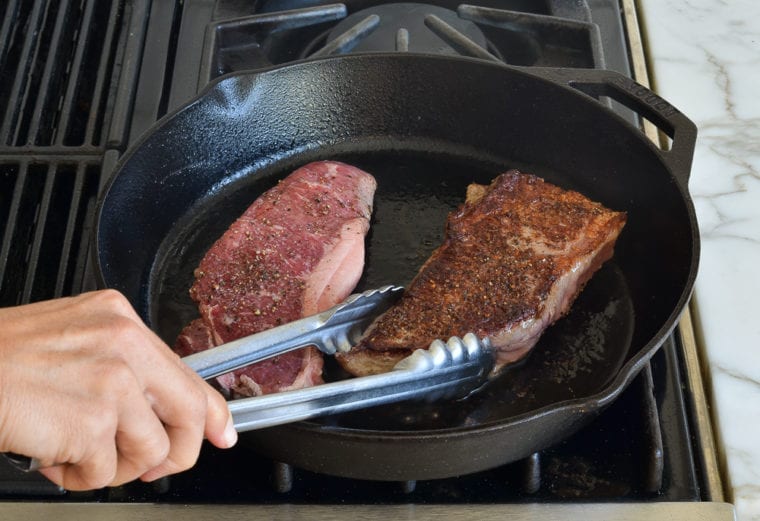
Step 4: Finish with butter, then rest and serve. During the last minute of cooking, add 1 tablespoon of butter and a few sprigs of thyme to the pan with the steaks (optional, but delicious). If you’re serving the steaks whole, transfer them straight to plates and serve hot. If you plan to slice them, move the steaks to a cutting board, tent loosely with foil, and let them rest for 5 to 10 minutes before slicing thinly against the grain. Resting gives the juices time to redistribute—slice too soon, and they’ll run right out.
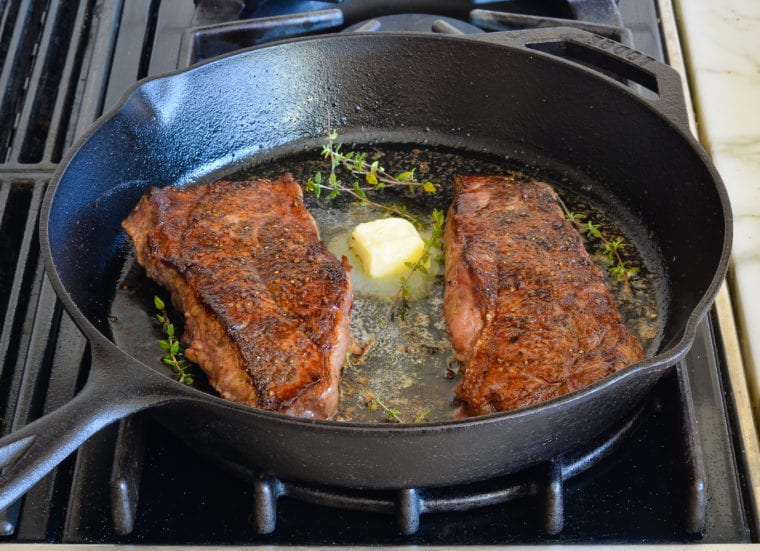
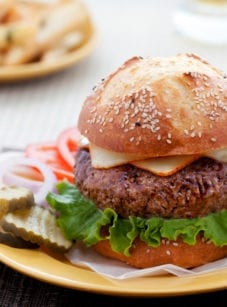
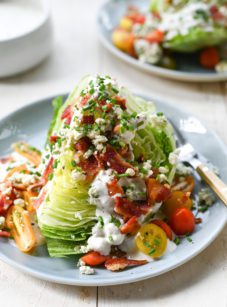
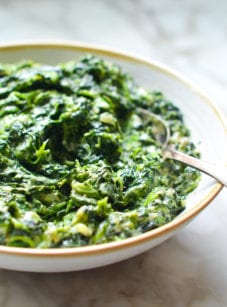
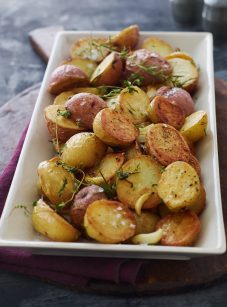
Step 5: Serve and enjoy. Serve the steaks hot, with your favorite sides. A classic wedge salad with blue cheese dressing, potatoes au gratin, roasted potatoes or creamed spinach are all great choices, but simple baked potatoes work just as well.
Video Tutorial
More Steakhouse Recipes You’ll Love

Pan-Seared Steaks

Ingredients
- 2 (12-oz) New York strip or ribeye steaks or 4 (6-oz) filet mignons, about 1½ inches thick
- 1 heaping teaspoon kosher salt
- ½ teaspoon freshly ground black pepper
- 2 tablespoons vegetable oil
- 1 tablespoon unsalted butter
- A few sprigs fresh thyme leaves
Instructions
- Pat the steaks dry with paper towels and season them all over with the salt and pepper.
- Turn on your exhaust fan and heat a heavy pan (preferably cast iron or stainless steel) over medium-high heat until it's VERY hot.
- Add the oil to the pan and heat until it begins to shimmer and move fluidly around the pan.
- Carefully set the steaks in the pan, releasing them away from you so the oil doesn’t splatter in your direction. The oil should sizzle.
- Leave the steaks alone! Avoid the temptation to peek or fiddle or flip repeatedly; the steaks need a few minutes undisturbed to develop a golden crust. Flip the steaks when they release easily and the bottom is a deep-brown color, about 3 minutes. Continue to cook the steaks for another 3 to 4 minutes on the second side for rare to medium-rare. (For medium, cook 4 to 5 minutes on second side; for well-done, cook 5 to 6 minutes on second side).
- During the last minute of cooking, add the butter and thyme sprigs to the pan with the steaks.
- If you are serving the steaks unsliced, transfer them to plates and serve hot. If you plan to slice the steaks, transfer them to a cutting board and let rest, covered with aluminum foil, for 5 to 10 minutes; then slice thinly against the grain.
Nutrition Information
This website is written and produced for informational purposes only. I am not a certified nutritionist and the nutritional data on this site has not been evaluated or approved by a nutritionist or the Food and Drug Administration. Nutritional information is offered as a courtesy and should not be construed as a guarantee. The data is calculated through an online nutritional calculator, Edamam.com. Although I do my best to provide accurate nutritional information, these figures should be considered estimates only. Varying factors such as product types or brands purchased, natural fluctuations in fresh produce, and the way ingredients are processed change the effective nutritional information in any given recipe. Furthermore, different online calculators provide different results depending on their own nutrition fact sources and algorithms. To obtain the most accurate nutritional information in a given recipe, you should calculate the nutritional information with the actual ingredients used in your recipe, using your preferred nutrition calculator.
This was the first time I’ve ever made steak and holy shit it came out PERFECT. I’ve repeated the process two other times now and they were equally perfect. What witchcraft is this recipe????
Add salt to the steak 1st. you don’t even need to even wash the steak it takes the juices outta the steak. Add a little garlic and an ice cube on top of the steak for great steam on top. I also do that with a hamburger on the stove – so so good. Add onions and mushrooms, fried then add to the cooked steak. SO AWESOME.
I got a tasty sear, will try it sometime on Steelhead.
Another recipe I tried wasn’t as hot (or misunderstood it), it suggested taking the steak out of the fridge early to warm up. I forgot that as my steak was a bit cold, though tasty. Of course I might have to cut back on cooking time to keep it rare?
Left steak on for well done time indicated and it was still very raw on the middle. Stove was on medium high and used cast iron skillet. Disappointed.
My stove was too hot…smoke everywhere 😂 burned the crust, rare inside. My son said it tasted good though
Another excellent recipe! Thank you!
Very yummy, very tasty, very wonderful.
Success! This is the first time I’ve been able to cook a steak on the stovetop and have it turn out how I want it. Delicious! Extra happy because it was my birthday and no one wants to ruin their birthday dinner. Thank you!
This was so easy to follow and the steak tasted so good!
I followed these instructions to a T using a cast iron skillet and had one of the best steaks of my life. I was amazed. So easy and so delicious.