

This post may contain affiliate links. Read my full disclosure policy.
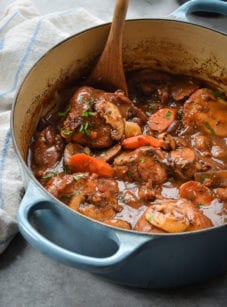
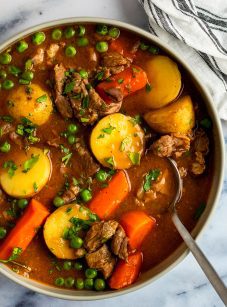
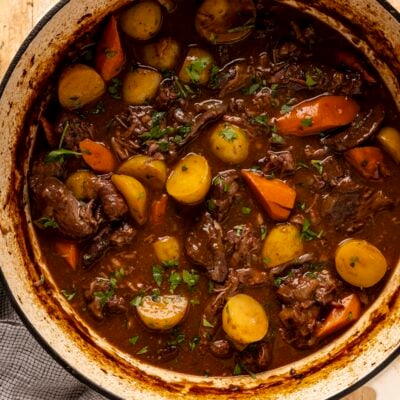
This classic beef stew recipe combines tender chunks of beef, carrots, and potatoes in a rich, deeply flavorful sauce. It’s the ultimate cold-weather comfort food.
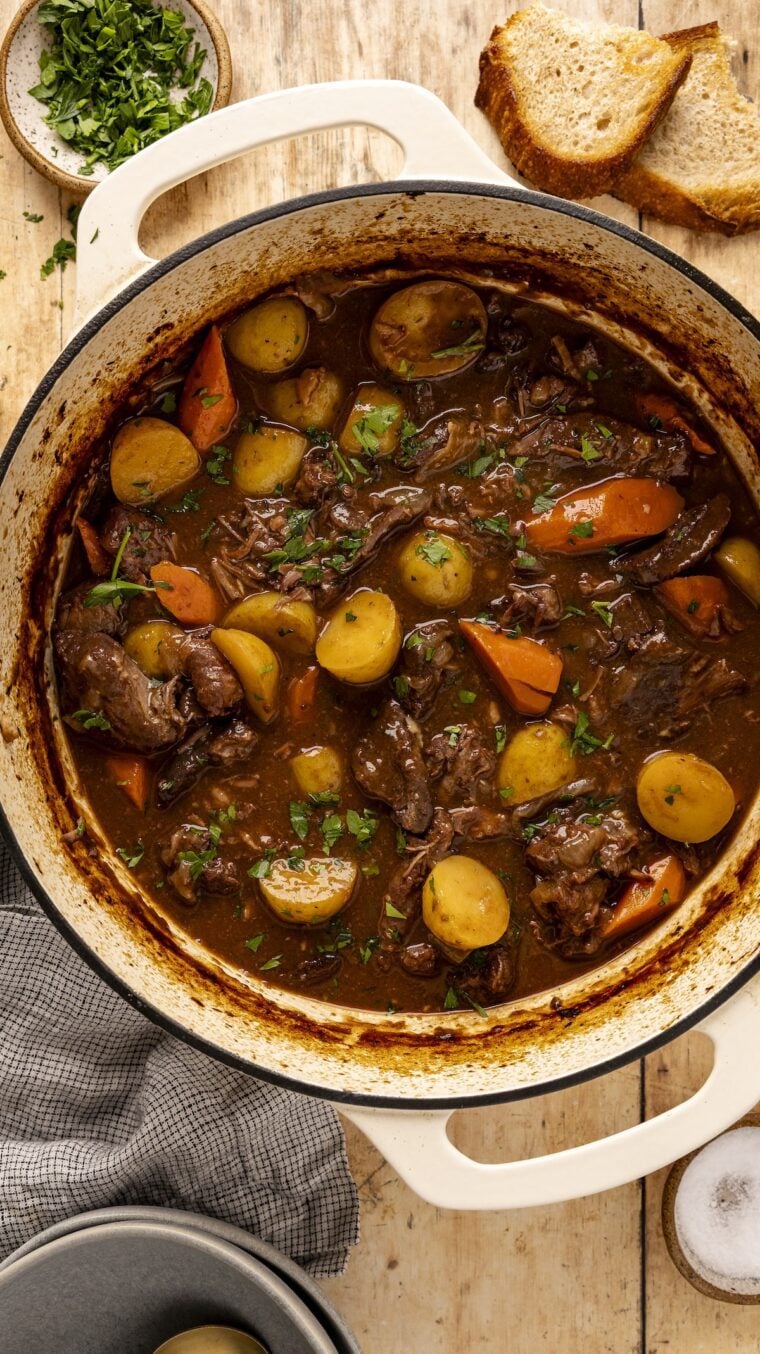
With thousands of 5-star reviews, this beef stew recipe is the most popular dish on my site—and for good reason. Well-marbled beef chuck is seared until deeply browned, then slowly braised with onions and garlic in a rich wine-based sauce. After a few hours in the oven, the beef is meltingly tender, the vegetables are perfectly cooked, and the sauce is rich and deeply savory.
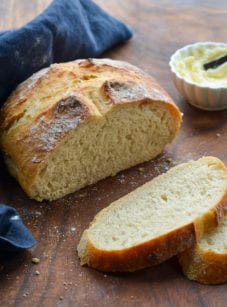
Better still, the recipe is largely hands-off once it goes into the oven, tastes even better a day or two after it’s made, and freezes beautifully. Serve it with crusty bread or popovers to soak up the sauce, or spoon it over egg noodles for an extra-hearty meal.
And don’t just take my word for it. When The Kitchn tested four popular beef stew recipes side by side, they gave this one a 9/10 and named it the “Straightforward Standout.”
“SERIOUSLY EPIC! Hands down, the best beef stew recipe I have ever made.”
What You’ll Need To Make Beef Stew
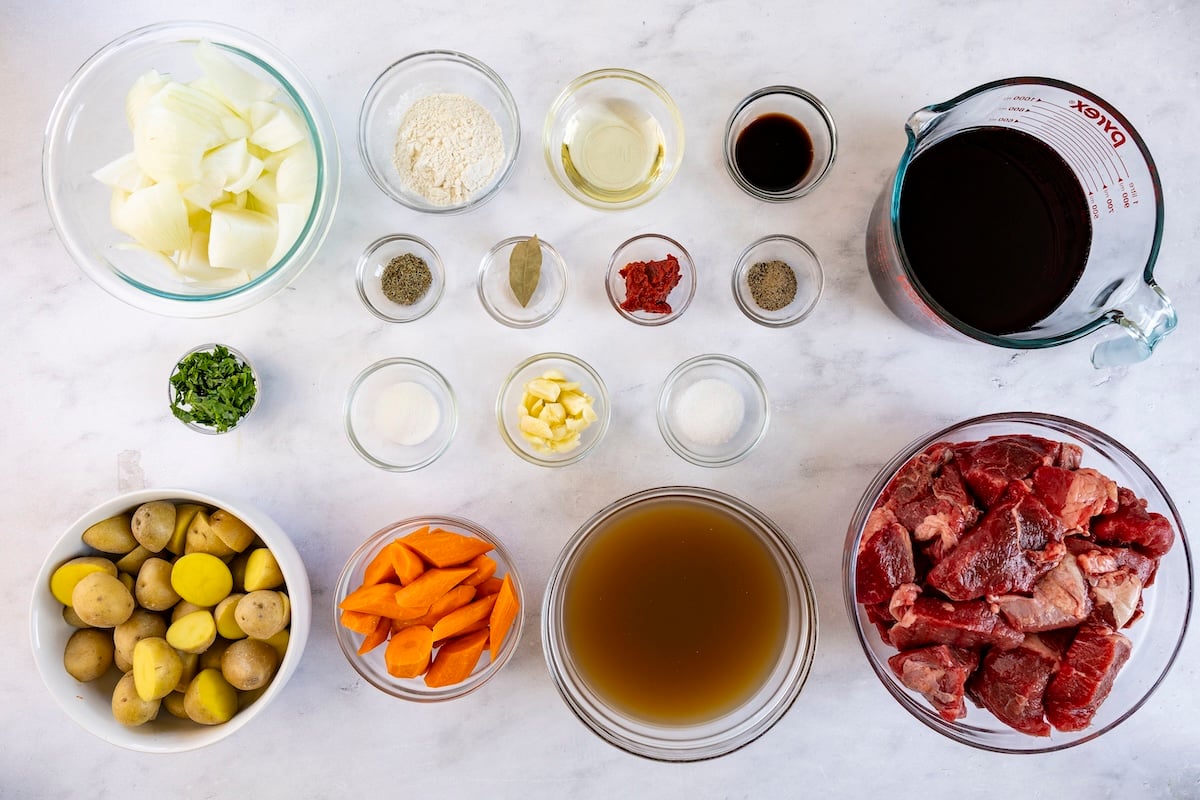
- Boneless beef chuck: My favorite cut for beef stew because its marbling and connective tissue make it especially well suited to slow braising—the meat becomes juicy and fork-tender as it cooks. Look for a well-marbled chuck roast and cut it into chunks yourself rather than buying packaged “stew meat,” which can contain leaner pieces from different cuts that cook unevenly.
- Yellow onions and garlic: These aromatics build the savory flavor base of the stew.
- Tomato paste and balsamic vinegar: Tomato paste adds richness and body while balsamic vinegar adds depth and acidity.
- All-purpose flour: Thickens the cooking liquid into a rich sauce that clings to the beef and vegetables.
- Red Wine, Beef Broth & Water: Form the flavorful braising liquid. For the wine, use an inexpensive dry red such as Pinot Noir, Merlot, or Cabernet Sauvignon—something good enough to drink.
- Bay leaf, thyme, and parsley: Bay leaf and thyme add earthy flavor as the stew braises; fresh parsley adds a bright finish just before serving.
- Carrots and white boiling potatoes (baby Yukons): Add sweetness, texture, and heartiness. Baby Yukons hold their shape well during braising while becoming tender and creamy inside. For extra vegetables and a pop of green, you can add frozen peas toward the end of cooking.
- Jump to the printable recipe for precise measurements
How To Make Beef Stew
Step 1: Prep the beef. Trim away any large, hard pieces of fat that are easy to get to, but don’t overdo it. The marbling running through the meat helps keep the beef juicy and tender as it braises. Pat the beef dry, which helps it brown rather than steam, then season with salt and freshly ground black pepper.
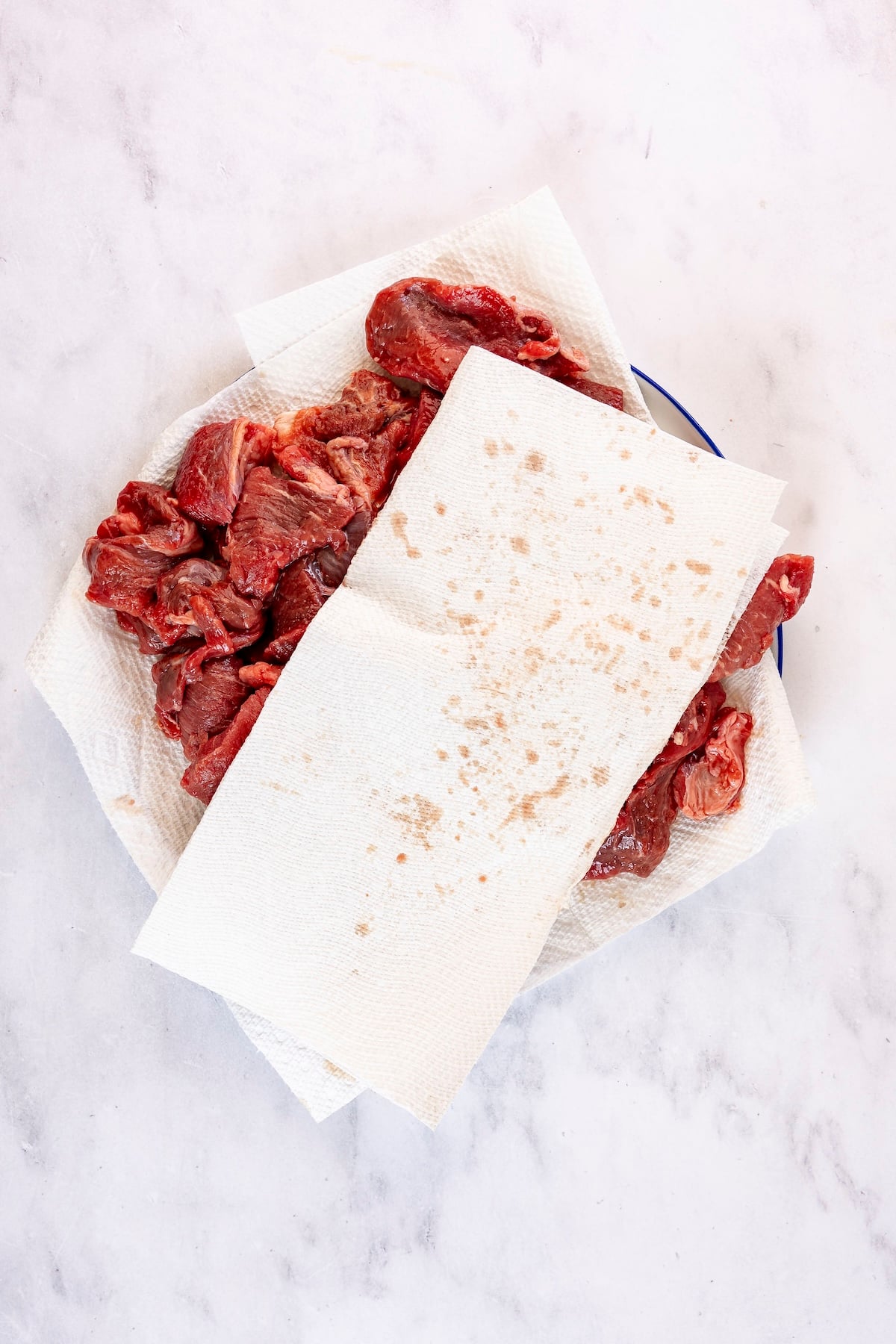
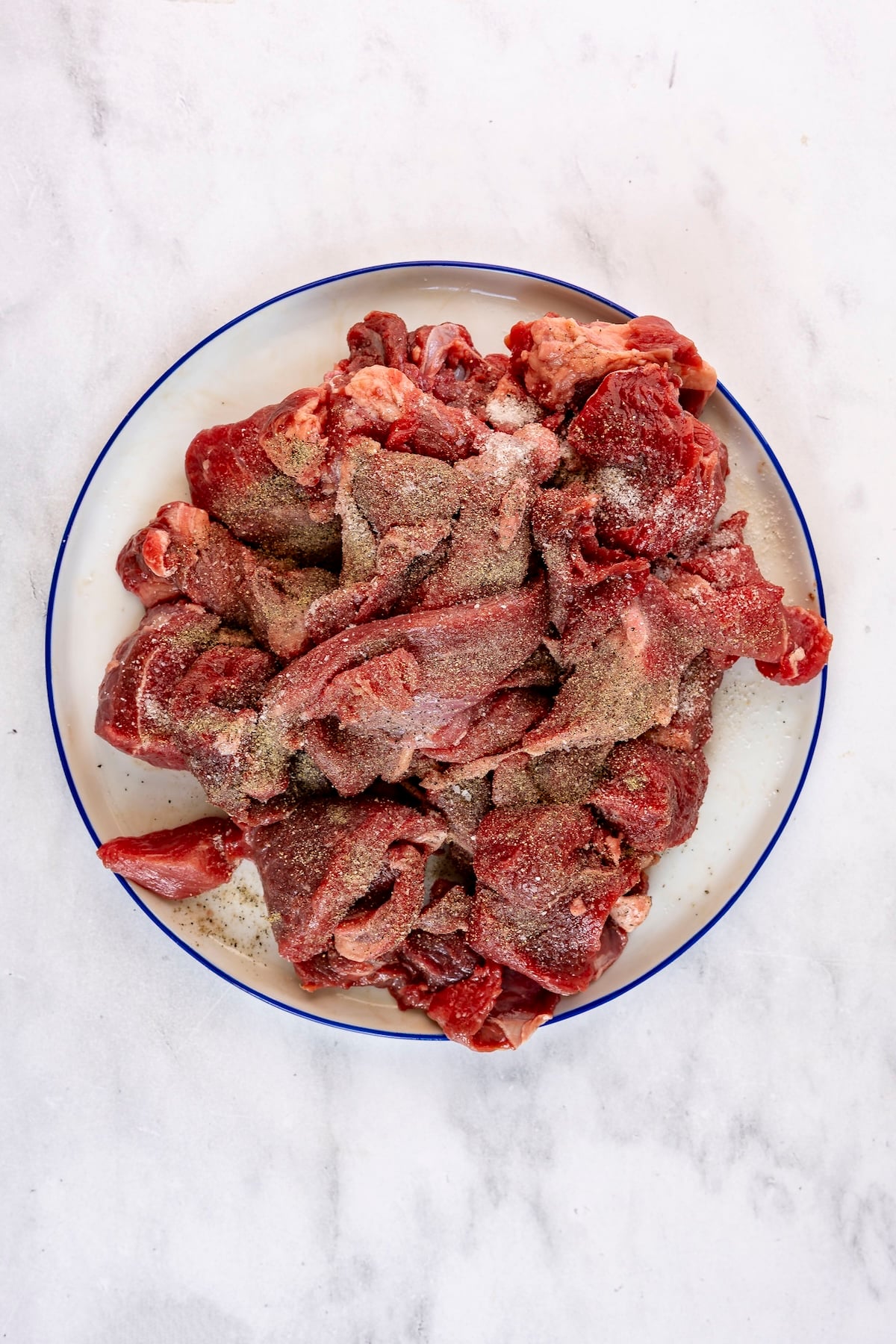
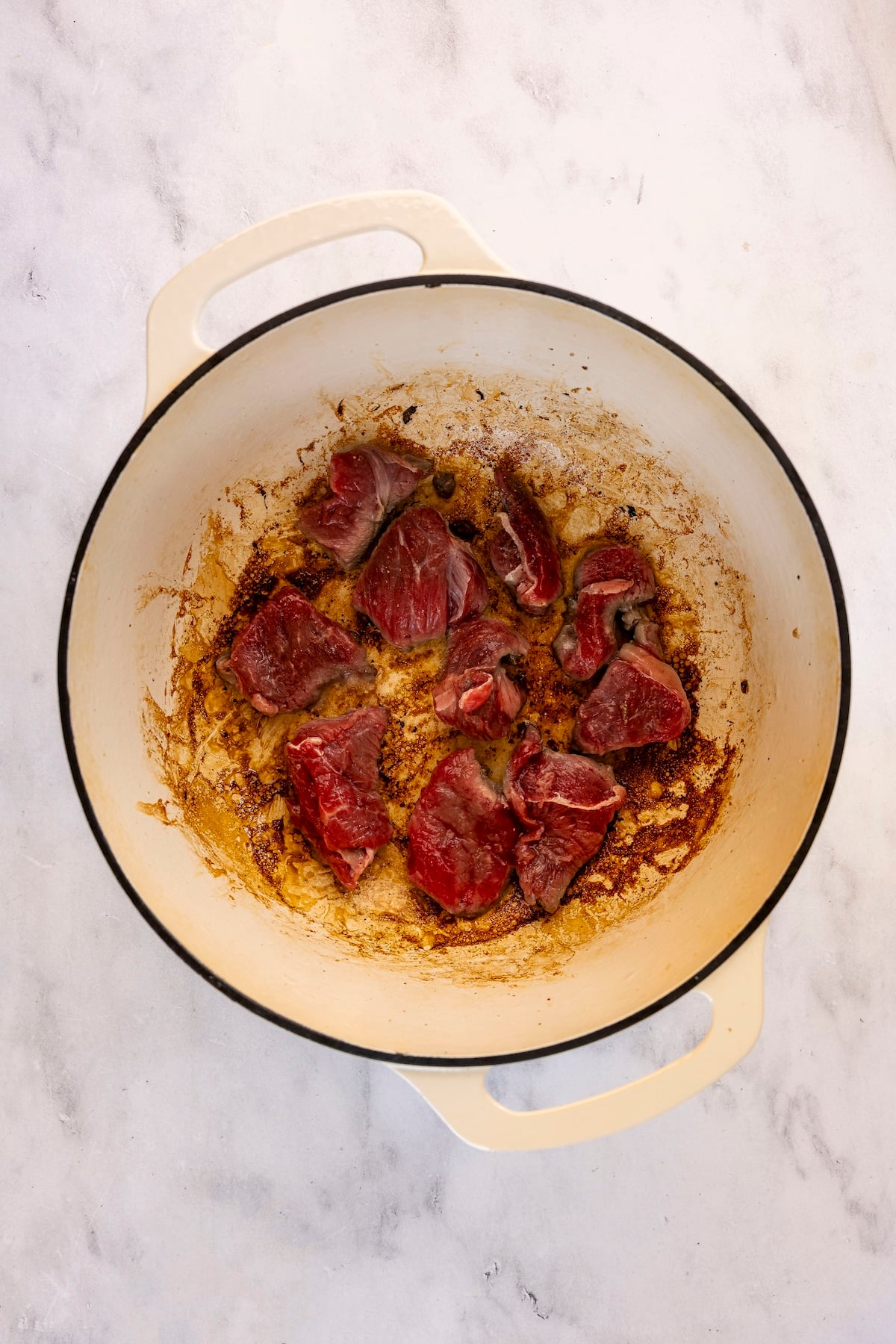
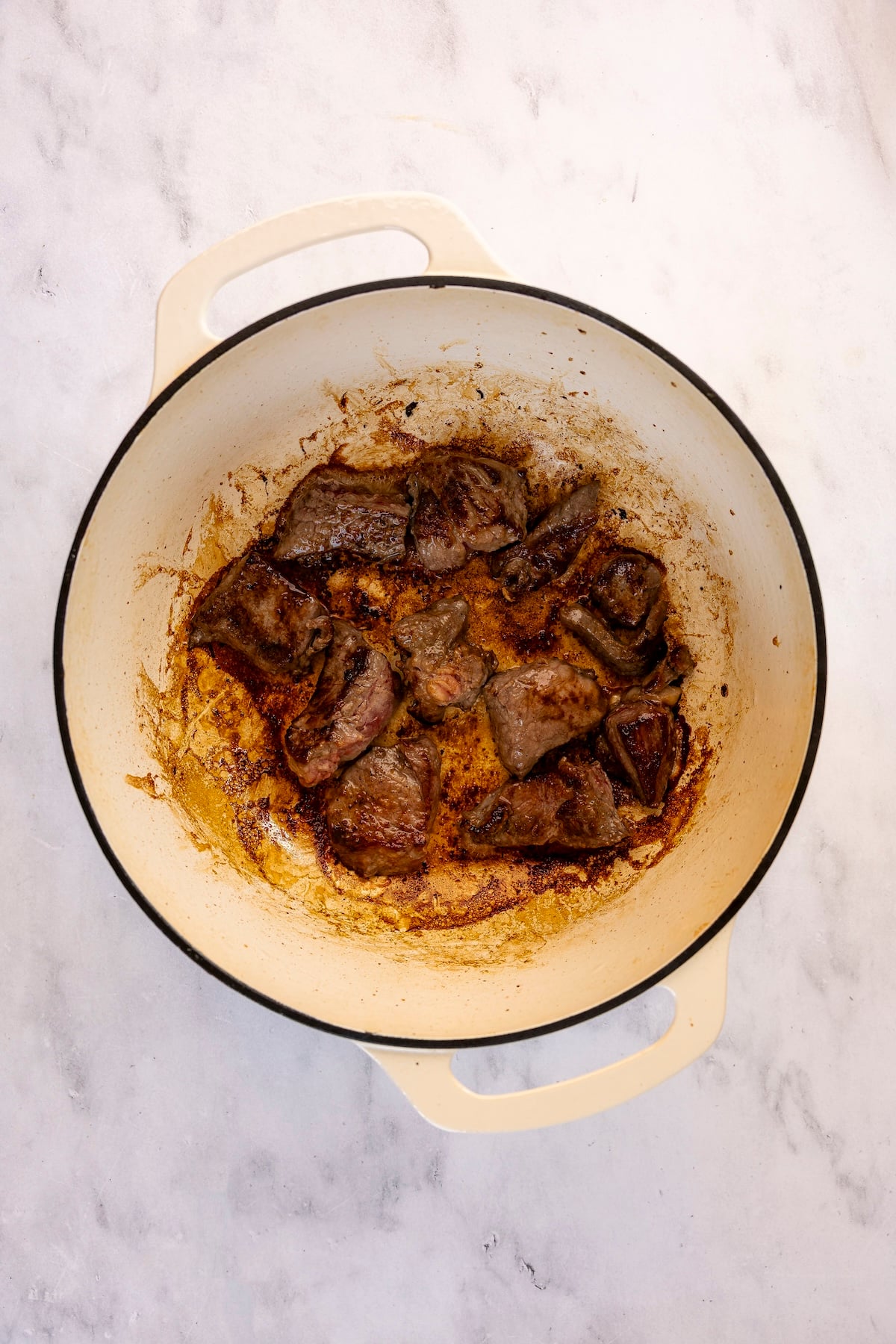
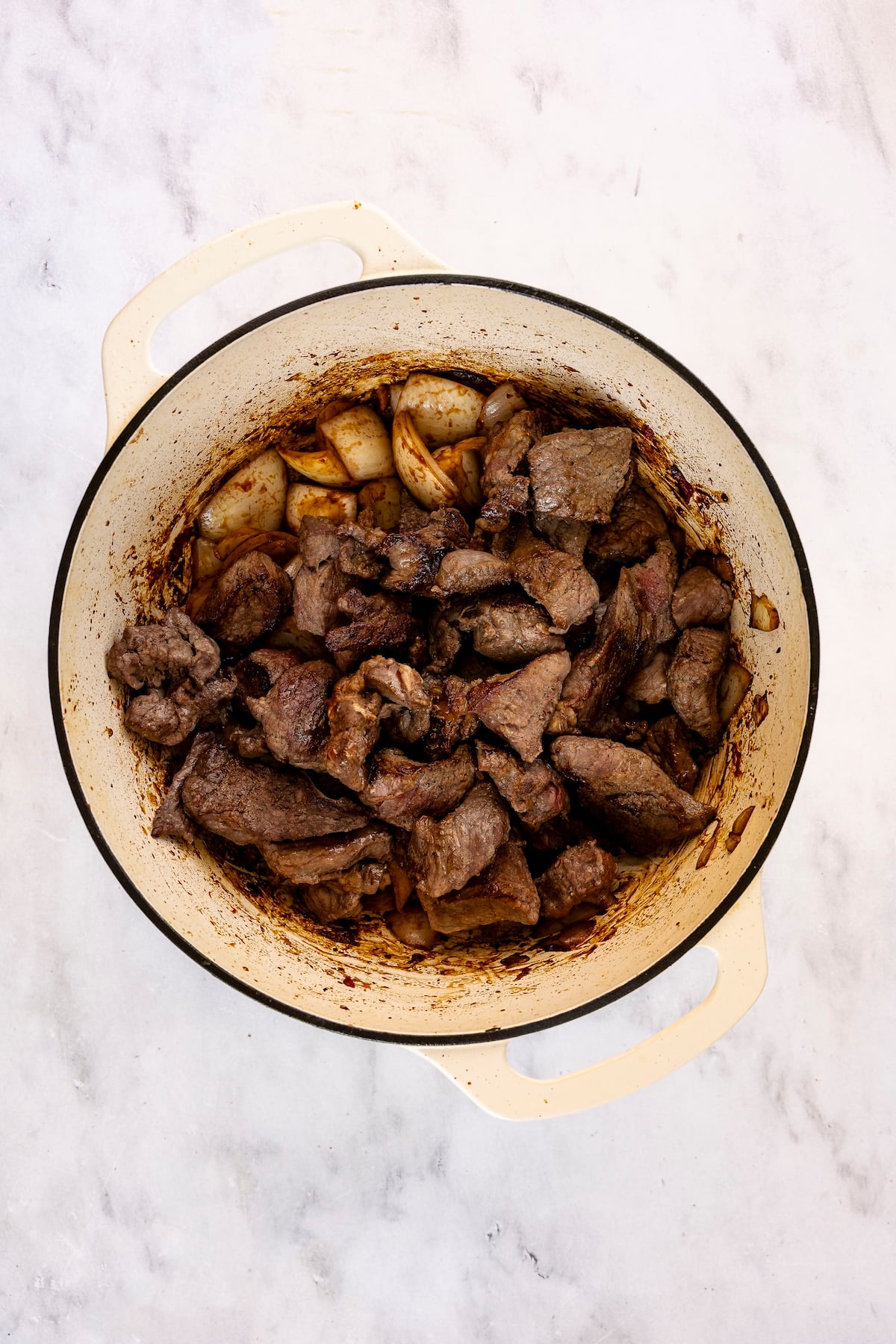
Step 2: Brown the beef. Heat a bit of oil in a Dutch oven or large pot and sear the beef in batches, leaving enough space between the pieces so they brown rather than steam. Take your time here; you’re looking for a deep brown crust, not just a change in color. The browned bits that collect on the bottom of the pot are important, too, as they’ll form part of the flavor base for the stew.
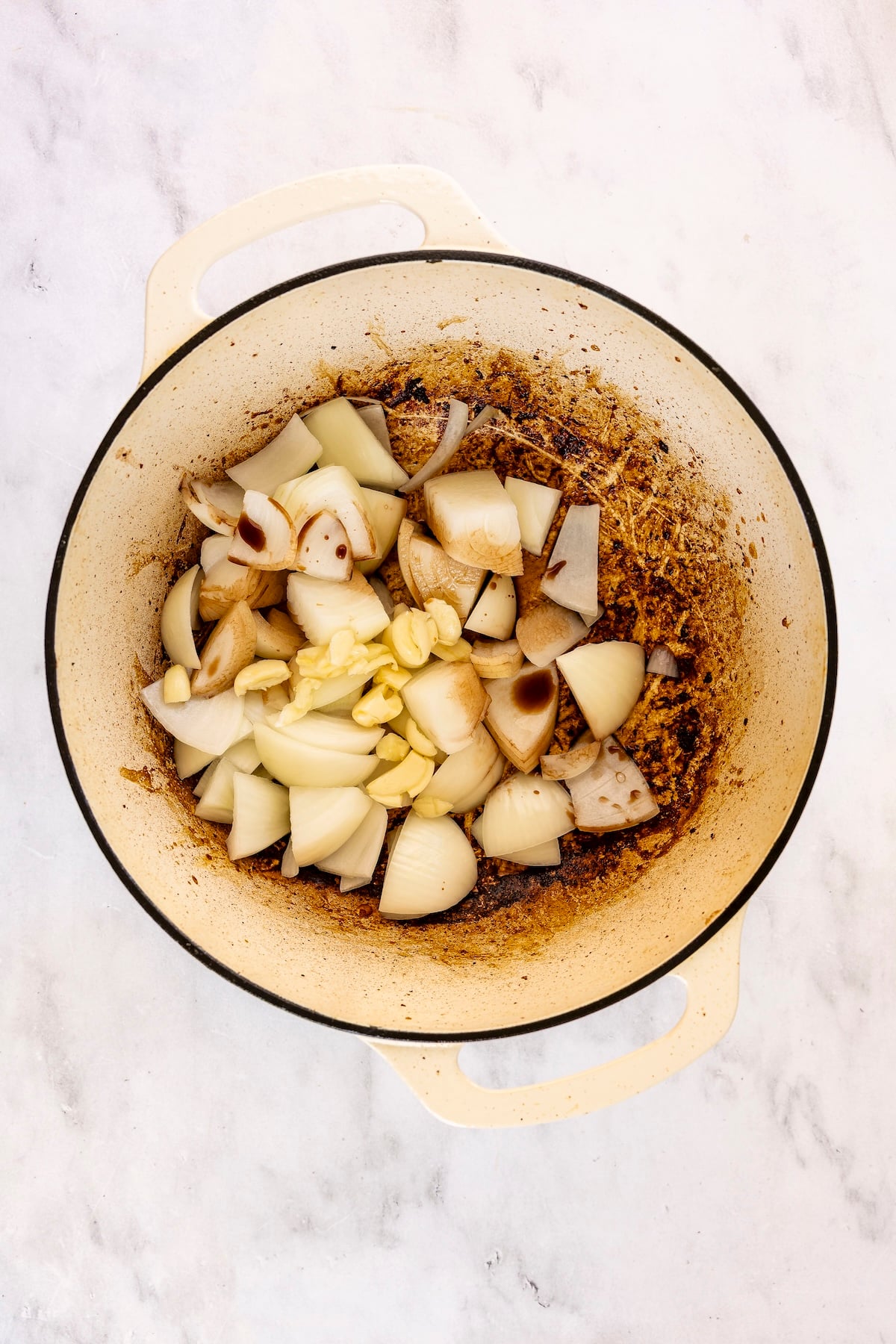
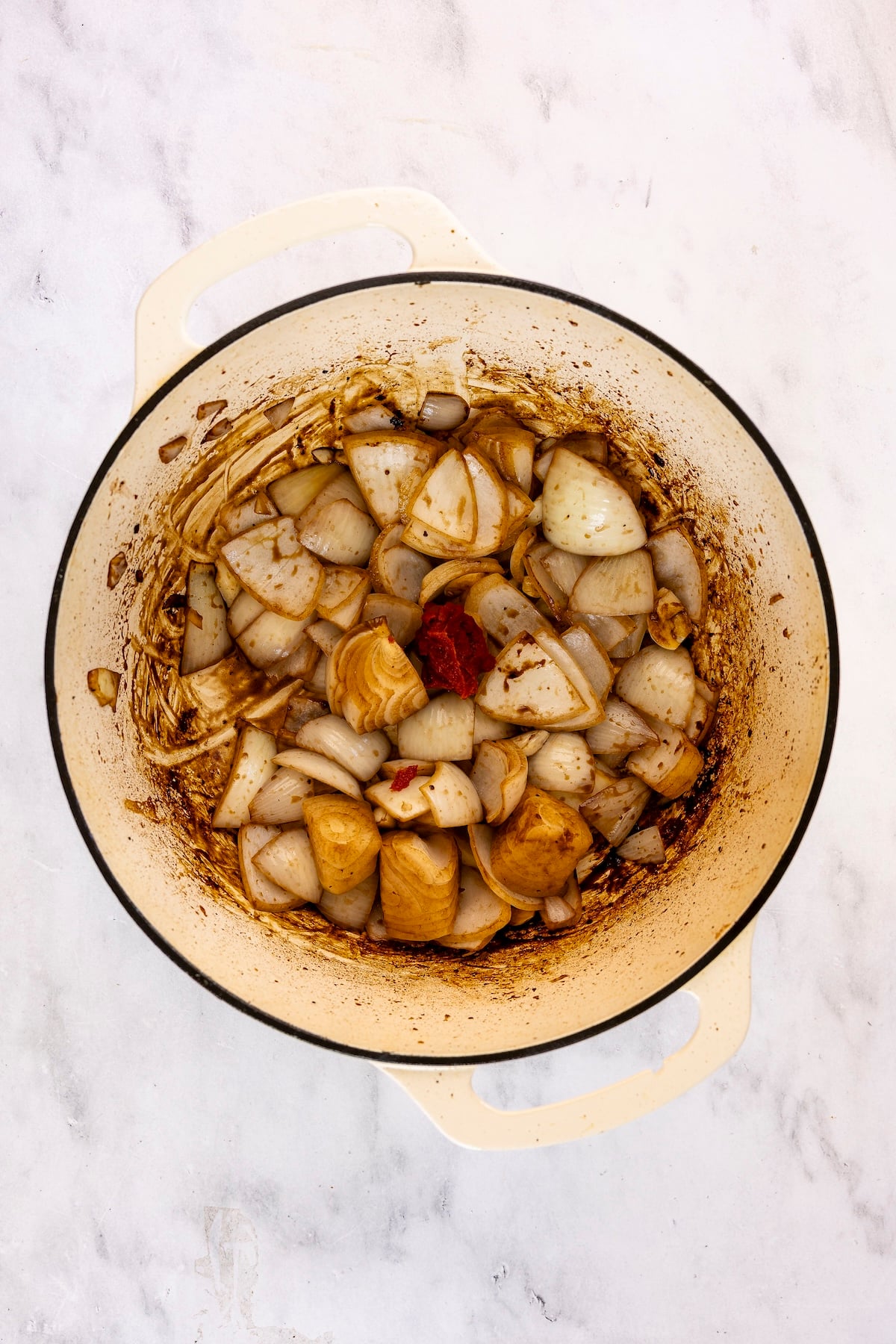
Step 3: Cook the aromatics. Add the onions, garlic, and balsamic vinegar to the pot. As the vinegar hits the hot pan, it will help loosen the flavorful browned bits stuck to the bottom, so scrape them up with a wooden spoon as the onions cook. Once the onions begin to soften, stir in the tomato paste and cook briefly to deepen its flavor.
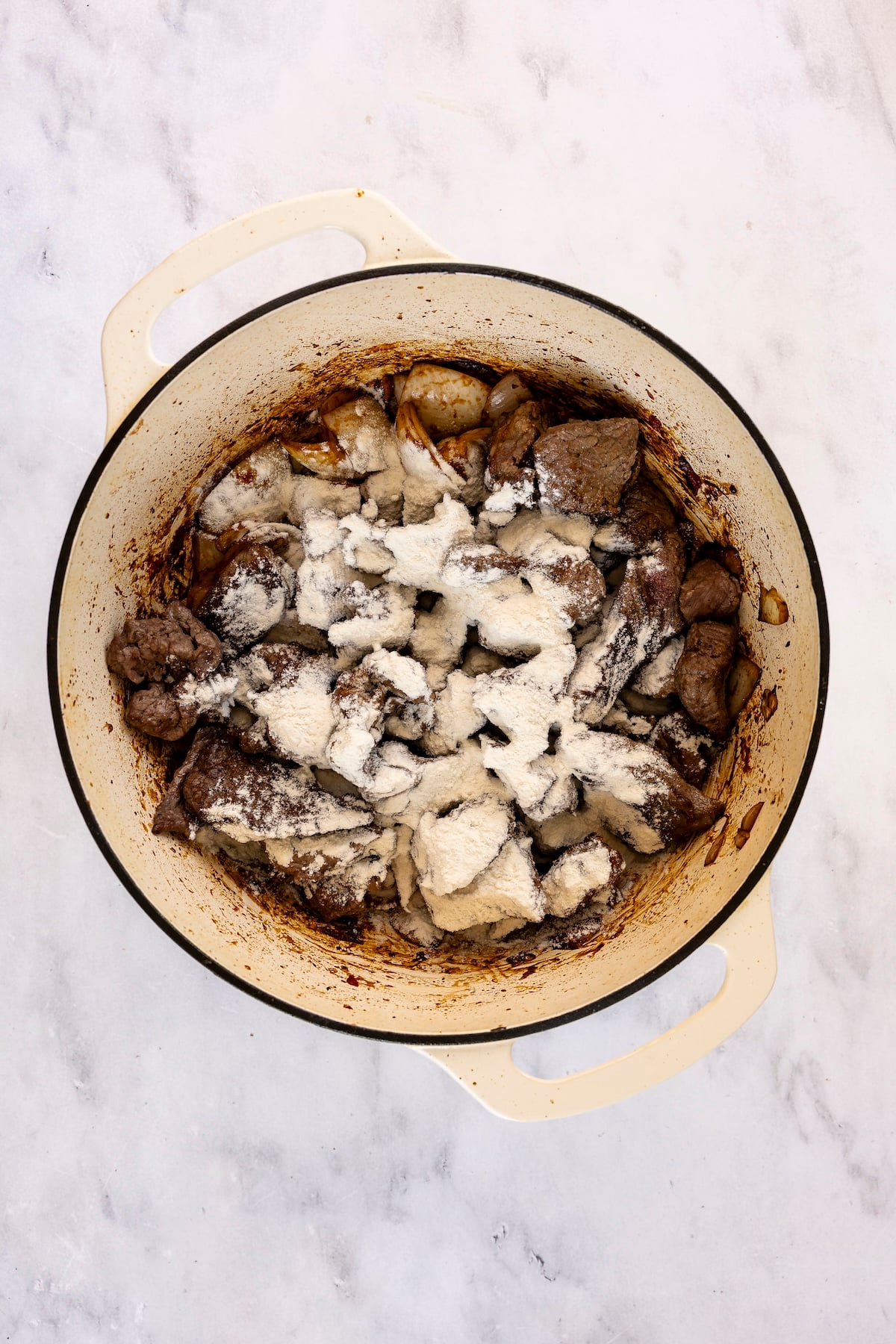
Step 4: Return the beef and add the flour. Return the beef and any juices on the plate to the pot, then stir in the flour until no dry streaks remain. The flour will thicken the braising liquid as the stew cooks, giving the finished sauce body.
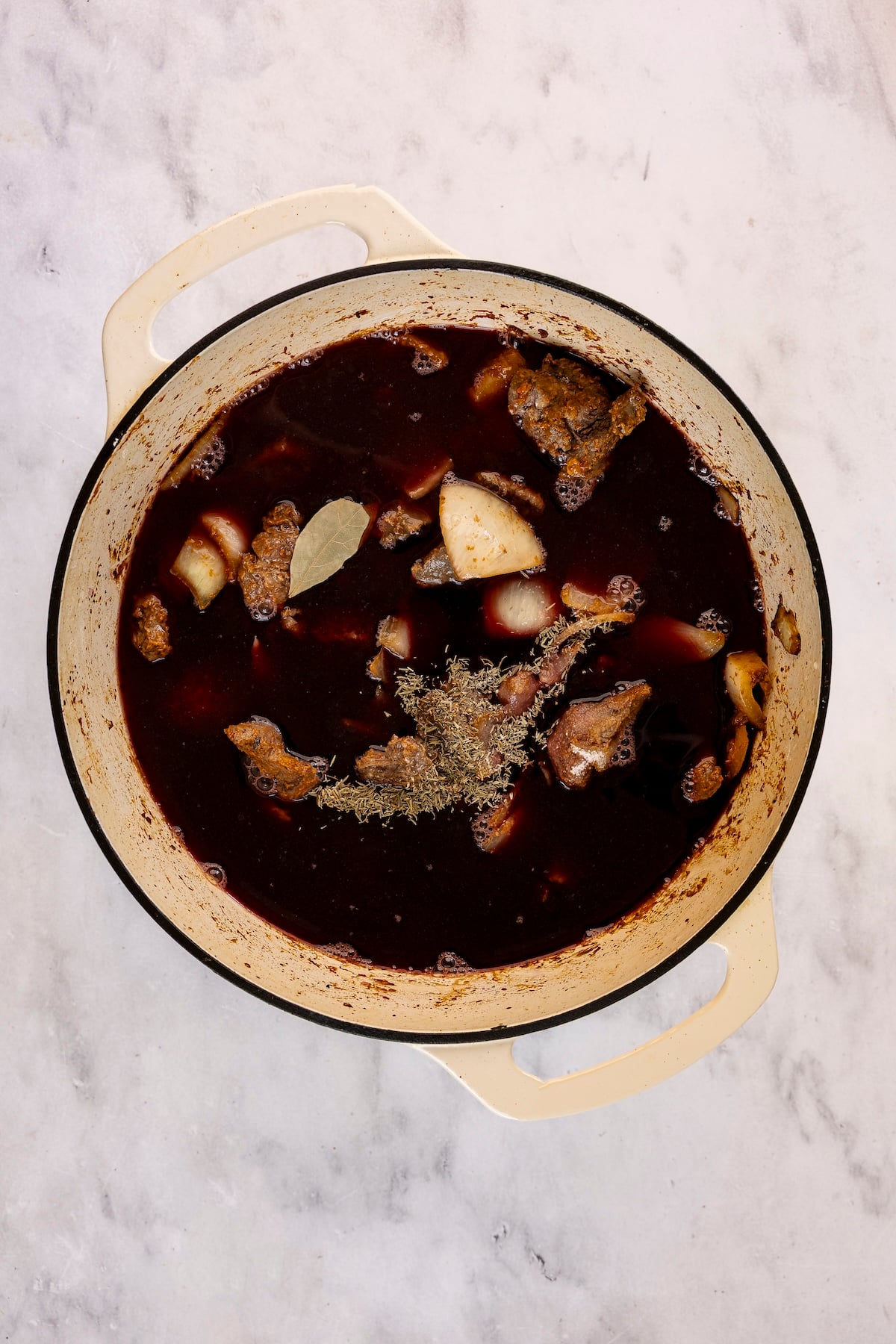
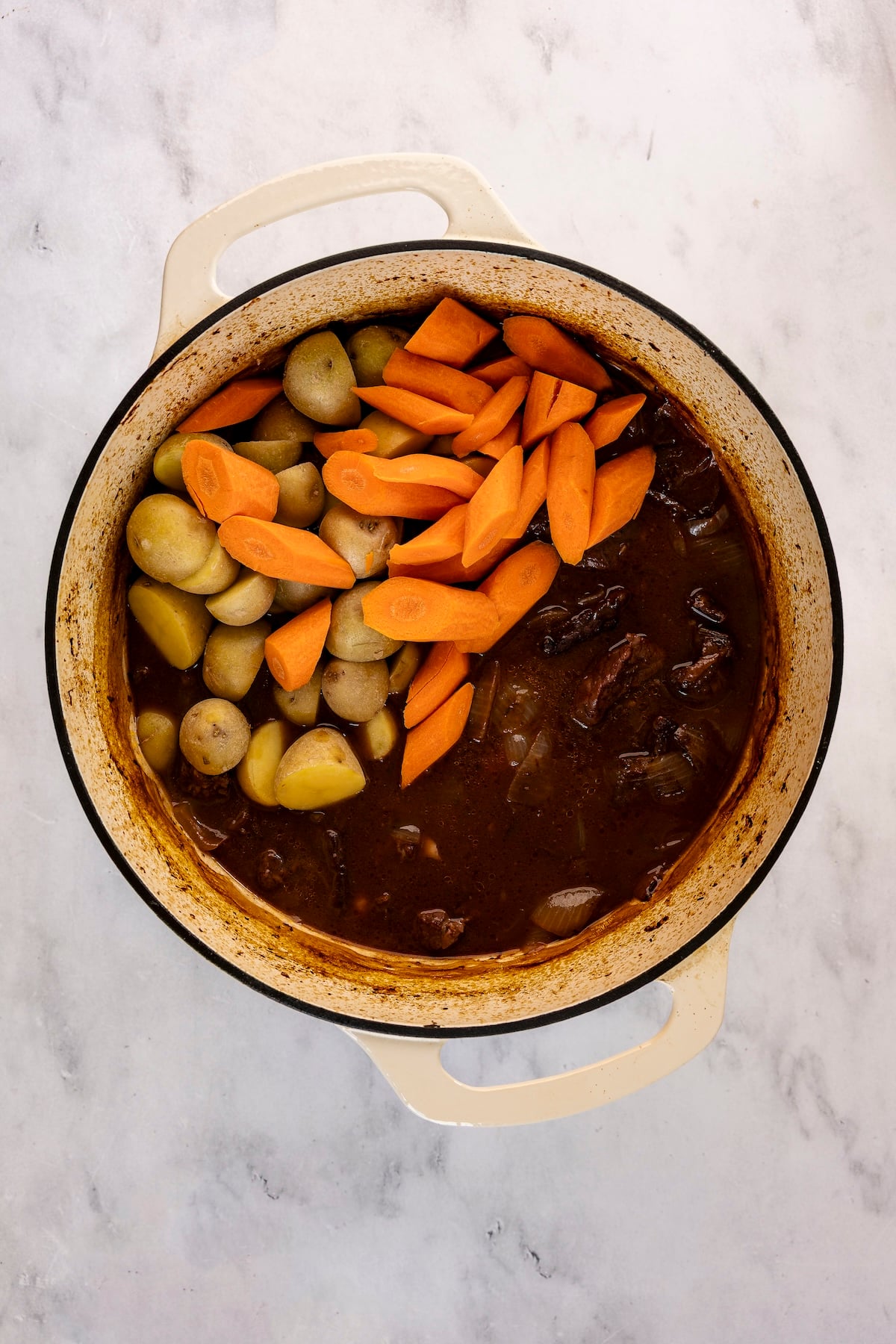
Step 5: Braise the stew. Pour in the wine, broth, and water, then add the bay leaf, thyme, and sugar. Stir well, scraping up any browned bits from the bottom of the pot. Bring to a boil, cover, and transfer to the oven. Braise for 2 hours, then stir in the carrots and potatoes and continue cooking until the beef is fork-tender and the vegetables are cooked through. Adding the vegetables later keeps them from becoming too soft or falling apart. Remove the bay leaf and adjust the seasoning before serving.
Pro tip: No Dutch oven? You can also cook the stew on the stovetop. Keep it covered over the lowest heat and stir occasionally to prevent sticking; the cooking time will be about the same.
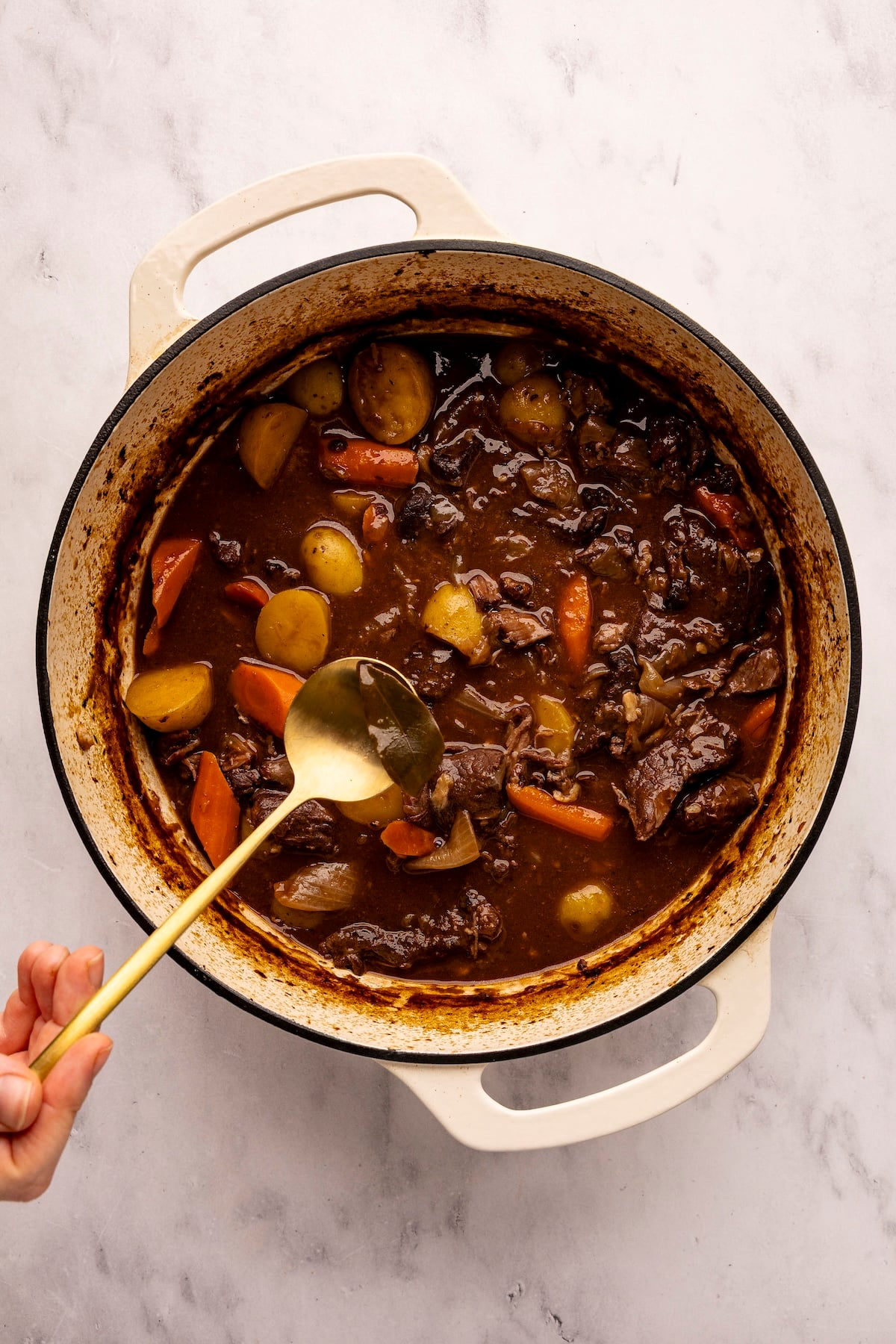
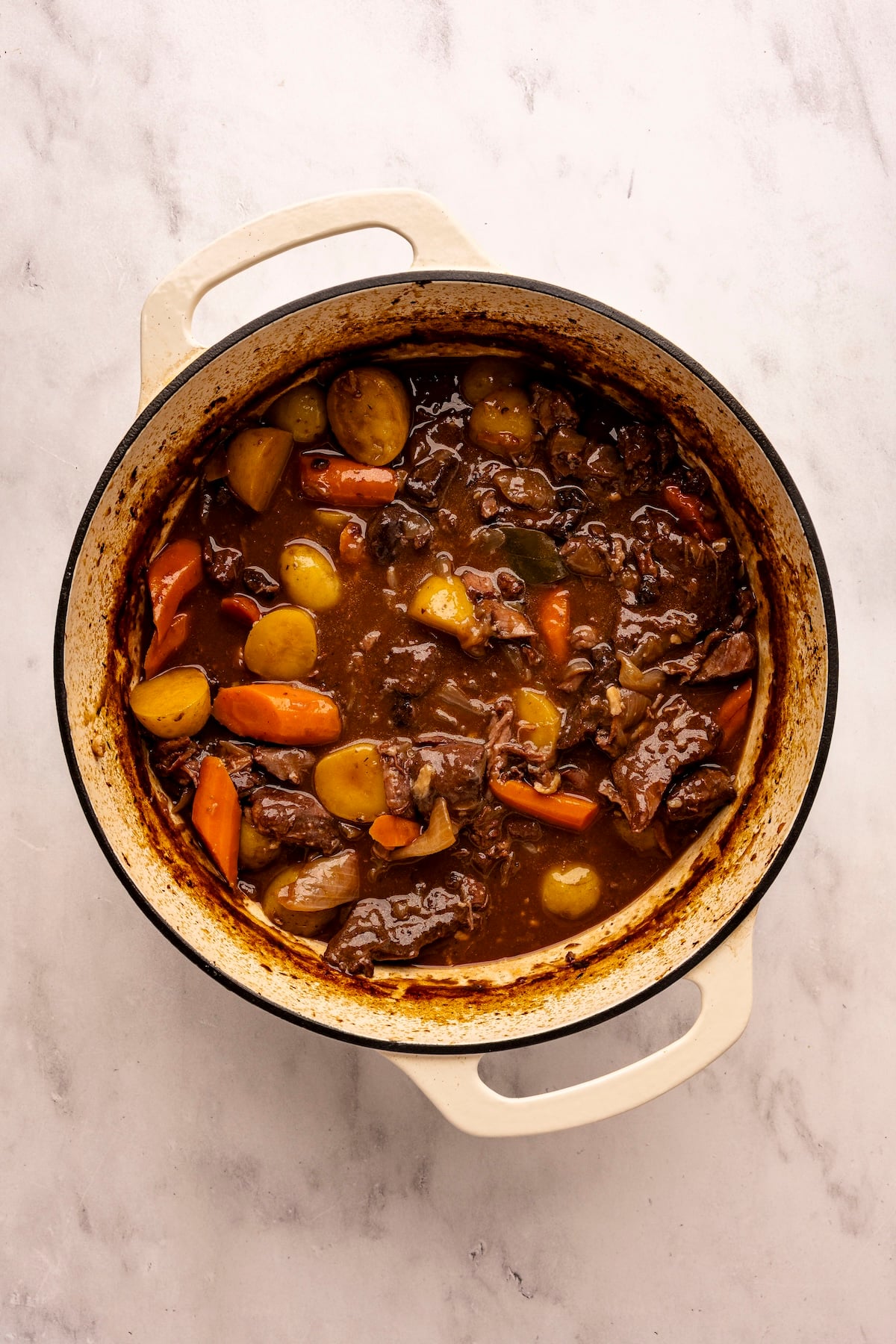
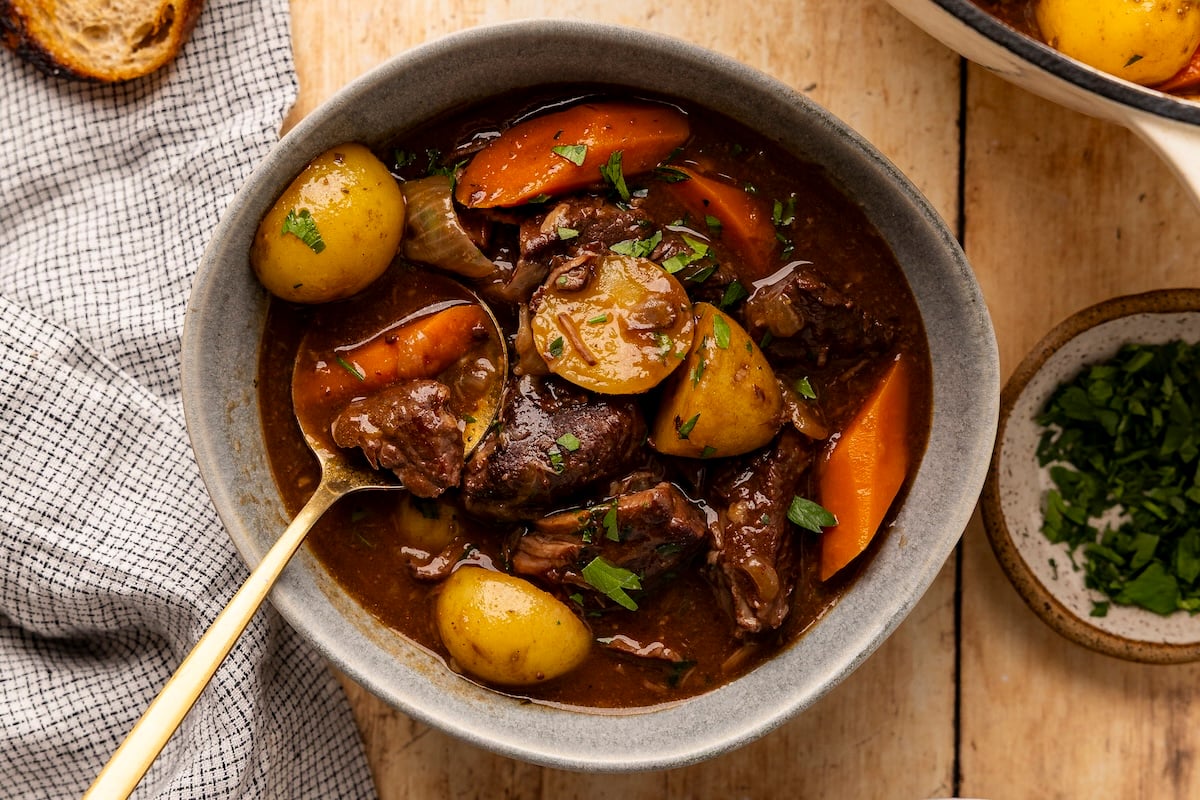
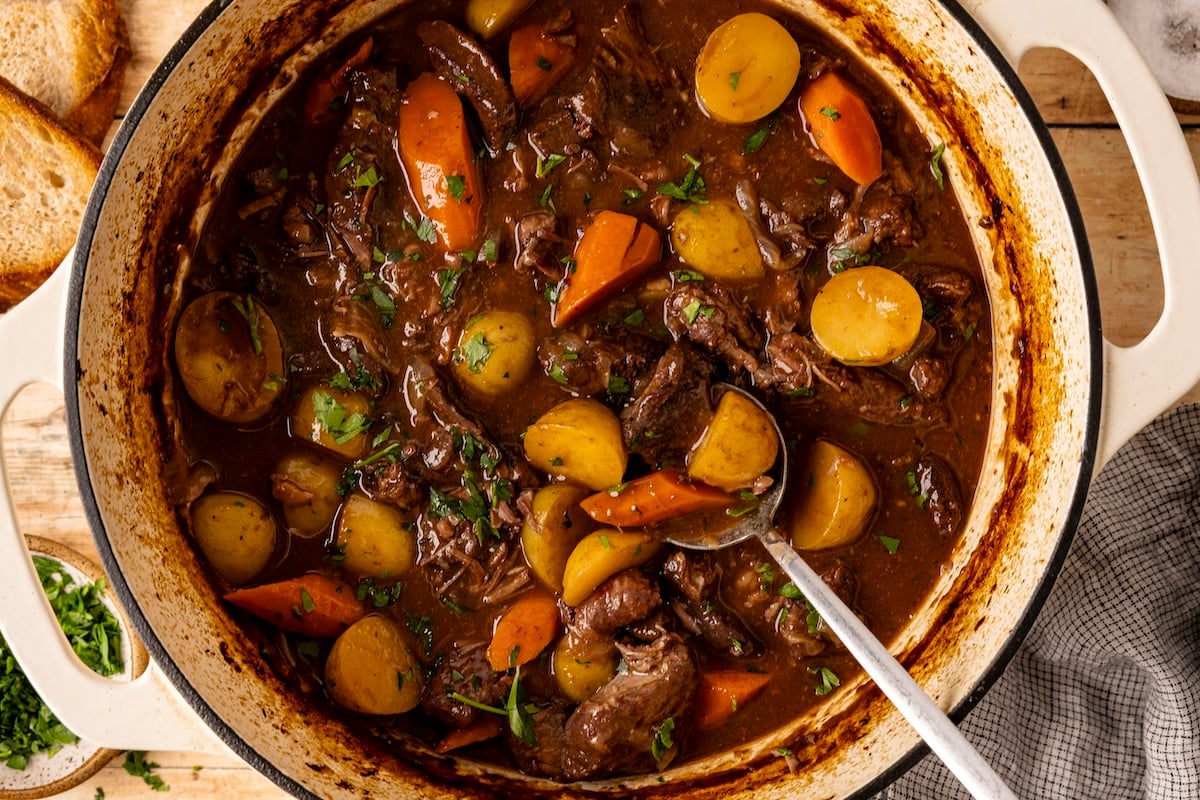
Step 6: Serve. Taste and adjust the seasoning if needed, then ladle the stew into bowls and garnish with fresh parsley. Serve with crusty bread for soaking up the rich sauce. Like most stews, it’s even better the next day, and it freezes beautifully, too.
How to Thicken Beef Stew
Don’t worry if the stew seems thin during cooking; it won’t fully thicken until the very end. If you’d still prefer a thicker sauce once it’s done, mash 2 tablespoons each of softened butter and flour into a smooth paste (this is called a beurre manié). Bring the stew to a simmer on the stovetop, then whisk in the paste a little at a time until the sauce reaches your desired consistency.
Can I Make Beef Stew in a Slow Cooker?
Yes, but for best results, begin on the stovetop as directed. Brown the beef, then cook the onions, garlic, and balsamic vinegar. Return the beef to the pot, sprinkle with the flour, and stir until incorporated. Transfer everything to the slow cooker, including the carrots and potatoes, and add the remaining ingredients. Cook on high for 4 to 5 hours, until the beef is tender and the vegetables are cooked through.
Make-Ahead, Storage & Freezing
This beef stew is ideal for making ahead, as the flavors improve after a day in the refrigerator. Prepare the stew as directed, let it cool, then cover and refrigerate for up to 3 days. Reheat gently on the stovetop over medium-low heat until hot. To freeze, let the stew cool completely, then transfer it to an airtight, freezer-safe container and freeze for up to 3 months. Thaw overnight in the refrigerator before reheating.
Video Tutorial
You May Also Like


Beef Stew Recipe (Fall-Apart Tender)
Ingredients
- 3 pounds boneless beef chuck, well-marbled, cut into 1½-inch pieces
- 2 teaspoons salt
- 1 teaspoon freshly ground black pepper
- 3 tablespoons olive oil
- 2 medium yellow onions, cut into 1-inch chunks
- 7 cloves garlic, peeled and smashed
- 2 tablespoons balsamic vinegar
- 1½ tablespoons tomato paste
- ¼ cup all-purpose flour
- 2 cups dry red wine
- 2 cups beef broth
- 2 cups water
- 1 bay leaf
- ½ teaspoon dried thyme
- 1½ teaspoons sugar
- 4 large carrots, peeled and cut into 1-inch chunks on a diagonal
- 1 pound small white boiling potatoes (baby yukons), cut in half
- Fresh chopped parsley, for serving (optional)
Instructions
- Preheat the oven to 325°F (165°C) and set a rack in the lower middle position.
- Pat the beef dry and season with the salt and pepper. In a large Dutch oven or other heavy, oven-safe soup pot (see note), heat 1 tablespoon of the olive oil over medium-high heat until hot and shimmering.
- Brown the meat in 3 batches, about 5 minutes per batch, adding 1 tablespoon of oil for each new batch. To ensure a good sear, don't crowd the pan, and let the meat develop a nice brown crust before turning it with tongs. Transfer the browned meat to a large plate and set aside.
- Add the onions, garlic and balsamic vinegar; cook, stirring with a wooden spoon and scraping the brown bits from bottom of the pan, for about 5 minutes. Add the tomato paste and cook for a minute more.
- Add the beef with its juices back to the pan and sprinkle with the flour. Stir with wooden spoon until the flour is dissolved, 1 to 2 minutes.
- Add the wine, beef broth, water, bay leaf, thyme, and sugar. Stir with a wooden spoon to loosen any brown bits from the bottom of the pan and bring to a boil. Cover the pot with a lid, transfer to the preheated oven, and braise for 2 hours.
- Remove the pot from the oven and add the carrots and potatoes. Cover and place back in oven for about an hour more, or until the vegetables are cooked, the broth is thickened, and the meat is tender.
- Remove and discard the bay leaf, then taste and adjust the seasoning, if necessary. Serve the stew warm, or let it cool and refrigerate until ready to serve. The flavor improves if made at least a day ahead. Reheat, covered, over medium heat. Garnish with fresh parsley, if desired.
Notes
- If you don’t have a Dutch oven or other oven-safe pot with a lid, you can cook the stew on the stovetop instead. Keep it covered over very low heat, maintaining a gentle simmer. The cooking time will be about the same.
Pair with
Nutrition Information
This website is written and produced for informational purposes only. I am not a certified nutritionist and the nutritional data on this site has not been evaluated or approved by a nutritionist or the Food and Drug Administration. Nutritional information is offered as a courtesy and should not be construed as a guarantee. The data is calculated through an online nutritional calculator, Edamam.com. Although I do my best to provide accurate nutritional information, these figures should be considered estimates only. Varying factors such as product types or brands purchased, natural fluctuations in fresh produce, and the way ingredients are processed change the effective nutritional information in any given recipe. Furthermore, different online calculators provide different results depending on their own nutrition fact sources and algorithms. To obtain the most accurate nutritional information in a given recipe, you should calculate the nutritional information with the actual ingredients used in your recipe, using your preferred nutrition calculator.
Hi. I love this stew recipe and make it often. Unfortunately, a family member has just been diagnosed with celiac disease so I need to start thickening the sauce without flour. Do you think it would be OK to use cornstarch and, if yes, how would you recommend I do that? Thanks so much!
Glad you like the stew! You could use gluten-free flour to coat the beef but if you want to use cornstarch, you’ll want to wait until the very end and then make a “slurry” by combining 2T cornstarch with 2T cold water; mix until completely smooth. Whisk half of the slurry into the stew and bring to a gentle boil on the stovetop and simmer until the broth is thickened and any starchy taste has been cooked away. If you want the broth thicker, add the remaining slurry and repeat. Enjoy!
Thanks so much!
Thanks again for getting back to me! I used the gluten free flour as suggested. I had been hesitant because I was afraid it would clump up but it worked perfectly. No need to fuss with the cornstarch slurry🙂
Hi, This looks great. I am making this for someone who is gluten-free. Is there a thickener that you prefer? Corn starch or Arrowroot starch? or something else? Thank you!
Hi Beth, You can replace the all-purpose flour with gluten-free flour. Hope they enjoy!
When you think stew, this is how you *hope* it tastes!! This was absolutely delicious and will forever be my go-to stew recipe!
Can I add turnips ?
Sure!
I want to make this stew today and serve tomorrow. Any tips on storage and reheating? Thanks you much
I’d store it covered in the fridge and reheat it on the stove on low heat. (And it’s even better the second day!)
Jen, OH MY GOODNESS! This is the most delicious Beef Stew recipe I have ever made. No reason to make any other. Followed the recipe except for adding a cup and a half of Peas. Even though it has the potatoes, I still made some wide noodles. The sauce is incredible. Seriously loved this. Thank you again. Everything I make of yours is a winner!
I tried this recipe and it came out more like soup than stew. What did I do wrong?
Hi Jessica, Did you make any adjustments to the recipe? If not and you still have some left over, you can thicken it. while reheating it (on the stove), make a paste with 1 tablespoon soft butter and 1 tablespoon flour; whisk it in and bring the stew to a simmer; it should thicken up. Another option when reheating, bring it to a gentle boil and simmer, uncovered, until the broth is thickened to your liking. Hope that helps!
O.M.G. This was so delicious I am in love and never want it to end! I followed the recipe exactly as written (unusual for me) and it just couldn’t have been any better. This was my first of your recipes to follow and believe me, it won’t be the last. Next recipe….Chicken Marsala! Thank you for sharing your wealth of cooking knowledge and for sharing with us all. Blessings on you and your family from me and all of mine!
💗
Hello Jenn. Love so many of your recipes and trying this one next. Question – when a recipe includes salt and doesn’t specify what kind, should I use table salt or kosher salt? I typically use kosher salt for cooking. Thank you!
Hi Debbie, When a recipe of mine says salt in the ingredient list, I am referring to regular/table salt. If it calls for something else like kosher salt, I will specify that in the recipe. Hope you enjoy the stew!
Question: I want to make this for 9 people. Does this recipe double well? Would you recommend changing any of the cooking times in the oven etc.? Any other tips for making a large quantity?
Thank you!
Hi Patrizia Yes, the recipe doubles nicely. You don’t need to make any recipe modifications but you’ll need a very large pot. If your pot won’t fit into the oven, feel free to cook it on the stove. Just give it a stir periodically so it doesn’t scorch on the bottom. Hope that helps and that everyone enjoys!
Amazing recipe. I did mine a tad bit differently. I used an extra cup of red wine beef broth (was just what was in the pantry), half the amount of wine, and an oxo cube. It was a 10/10 and my partner said it was the best stew he ever had! Only thing is I wished I had added some peas for colour.