

This post may contain affiliate links. Read my full disclosure policy.
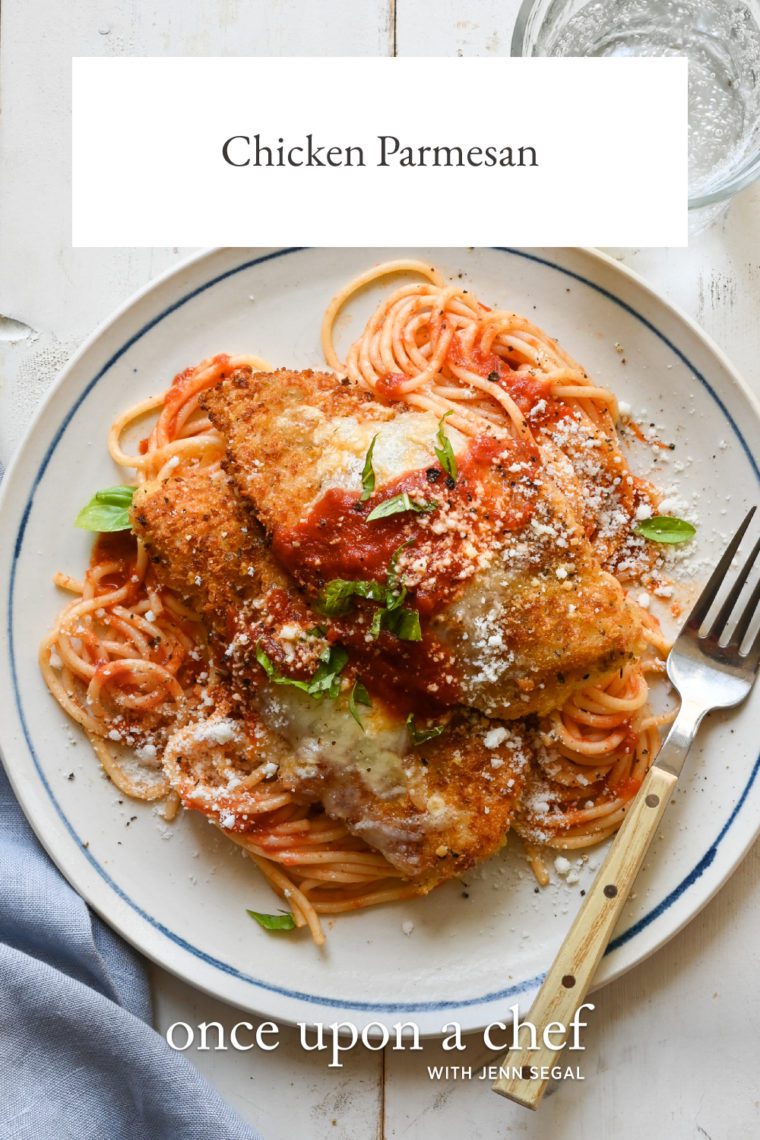
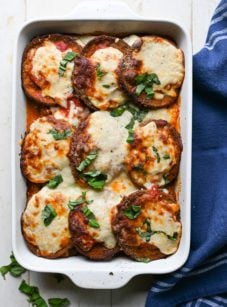
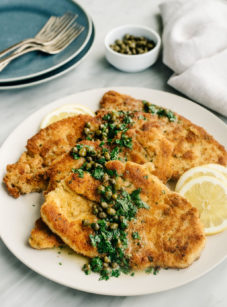
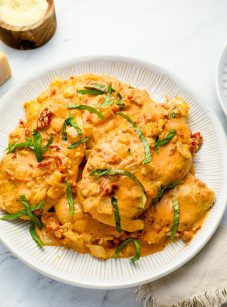
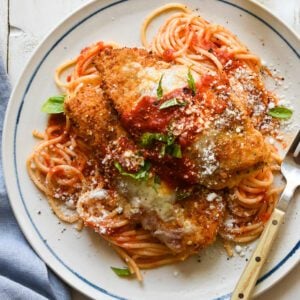
This chicken Parmesan recipe pairs juicy, golden-crisp chicken with melted cheese and marinara, with a simple technique that keeps the breading from getting soggy.

Chicken parm is always a hit with my family, but the traditional recipe can be a production. Between making tomato sauce, pounding and breading the chicken, frying it, and then baking it with sauce and cheese, you can easily end up spending over an hour in the kitchen with a sinkful of dishes. My version takes a few smart shortcuts, using quick-to-flatten chicken tenderloins and good-quality jarred marinara to make it much more manageable for a weeknight.
The other thing I do differently is resist the urge to smother the chicken with sauce and cheese. I use panko for an extra-crisp crust, add the cheese mostly to the center, and spoon the warm marinara over the top after broiling, leaving those crunchy edges exposed. You can always serve more sauce on the side. The result is everything I want in chicken Parmesan: juicy chicken, a crisp golden crust, gooey cheese, and plenty of marinara—without all the fuss.
“Huge hit with the family! Seasoning, moisture, crispness all on point…This is some really great chicken.”
What You’ll Need To Make Chicken Parmesan
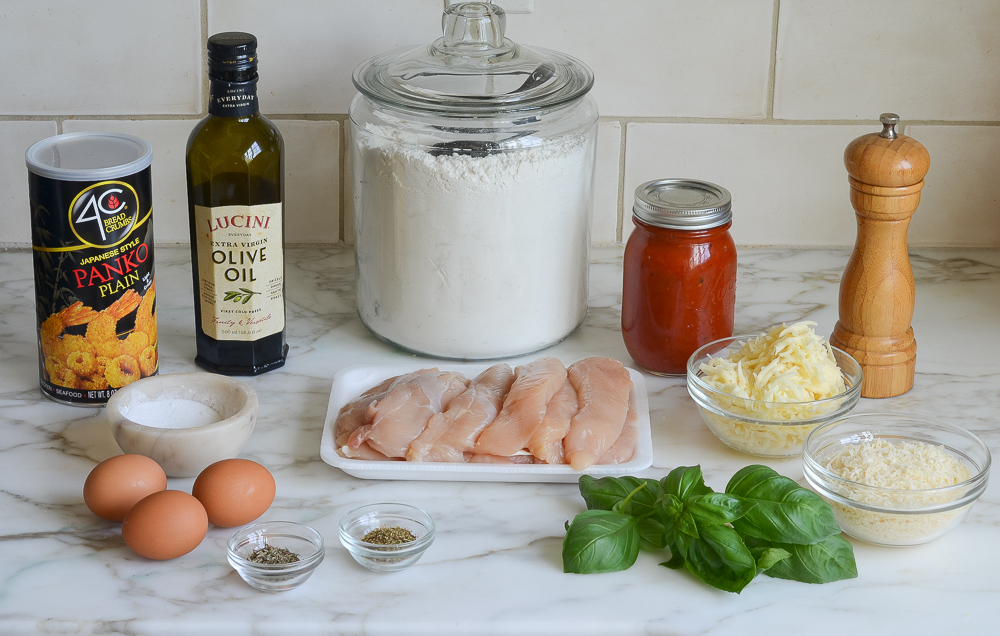
- Chicken Tenderloins: I prefer tenderloins to boneless, skinless chicken breasts here because they’re naturally tender and juicy and can be quickly flattened with the palm of your hand—no slicing or serious pounding required. They also stay moister than store-bought thin chicken cutlets.
- Marinara Sauce: A good-quality jarred marinara is one of the shortcuts that makes this chicken Parmesan weeknight-friendly. Since you only need a modest amount, there’s no need to make a sauce from scratch. Rao’s and Victoria are both good options.
- Panko Breadcrumbs: Their coarse, airy texture creates an especially crisp crust—and helps it stay crisp even if you bread the chicken ahead of time.
- Dried Oregano & Thyme: Season the breading with classic Italian flavor.
- Flour & Eggs: These make up the first two layers of the breading station: the flour gives the egg something to cling to, and the egg helps the panko coating adhere.
- Olive Oil: Used for pan-frying the chicken until the coating is crisp and golden.
- Fontina Cheese: I prefer fontina to mozzarella here because it has a buttery, nutty flavor and melts beautifully without becoming rubbery. Look for Swedish or Danish fontina with a red wax rind; mozzarella works well if you can’t find it.
- Parmigiano Reggiano: Adds salty, nutty flavor to both the breading and the cheesy topping.
- Fresh Basil: Adds freshness and a pop of color to the finished dish.
- Jump to the printable recipe for precise measurements
How To Make Chicken Parmesan
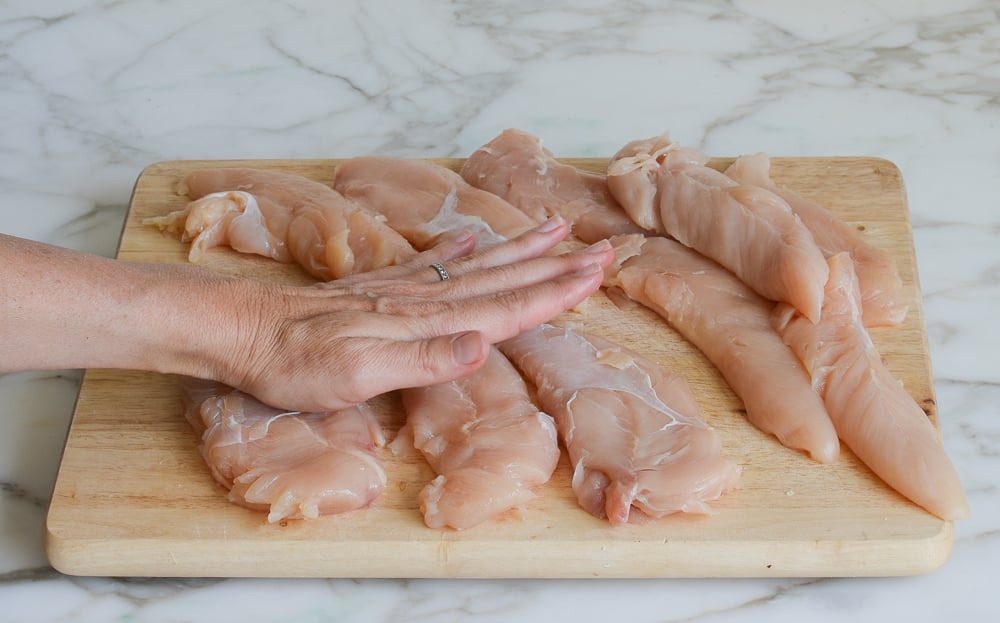
Prep the chicken: Trim away any visible tendon, then gently flatten the tenderloins with your palm so they’re an even thickness. This ensures they cook quickly and evenly.
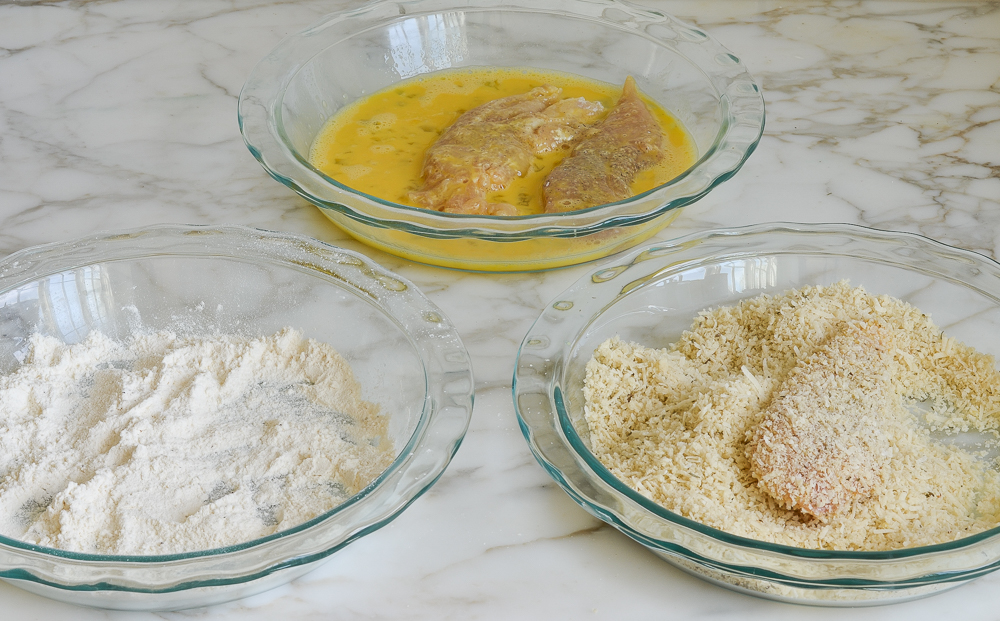
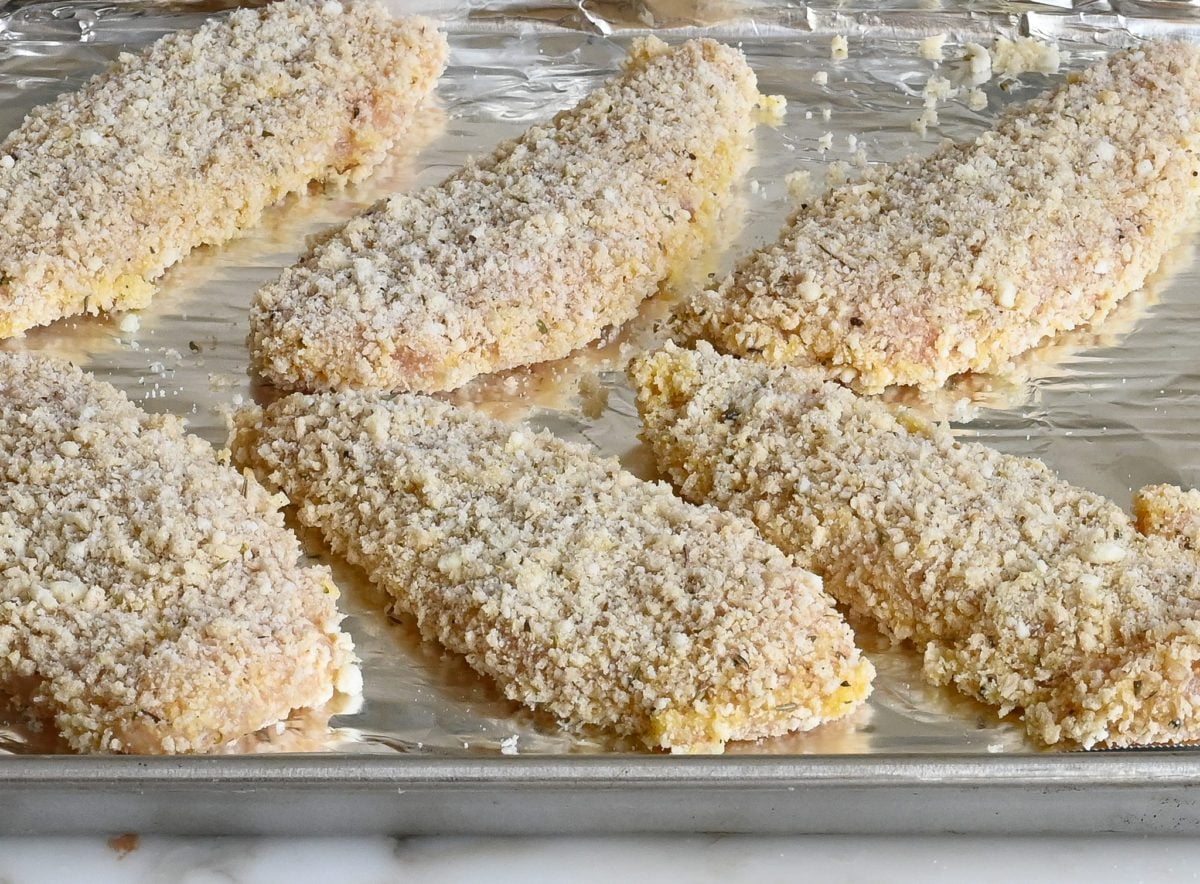
Bread the chicken: Set up a breading station with flour, beaten eggs, and the seasoned panko-Parmesan mixture. Coat each piece in flour, then egg, letting the excess drip off, and finally the panko mixture. Press the coating on gently so it adheres well. At this point, the breaded chicken can be covered and refrigerated (or frozen) until you’re ready to cook.
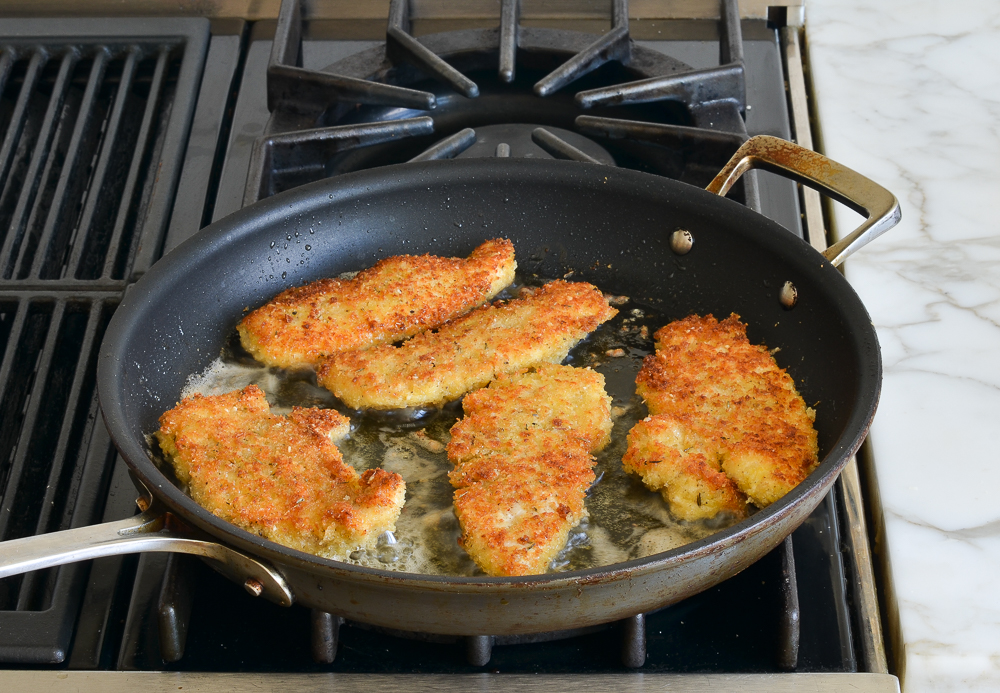
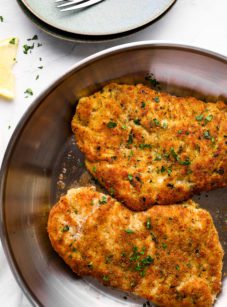
Pan-fry the chicken: Heat the oil until it shimmers before adding the chicken; if the oil isn’t hot enough, the breading will absorb oil rather than turning crisp. Work in batches so you don’t crowd the pan, and cook until the coating is deeply golden and the chicken is cooked through. Add more oil between batches as needed, allowing it to heat before adding more chicken.
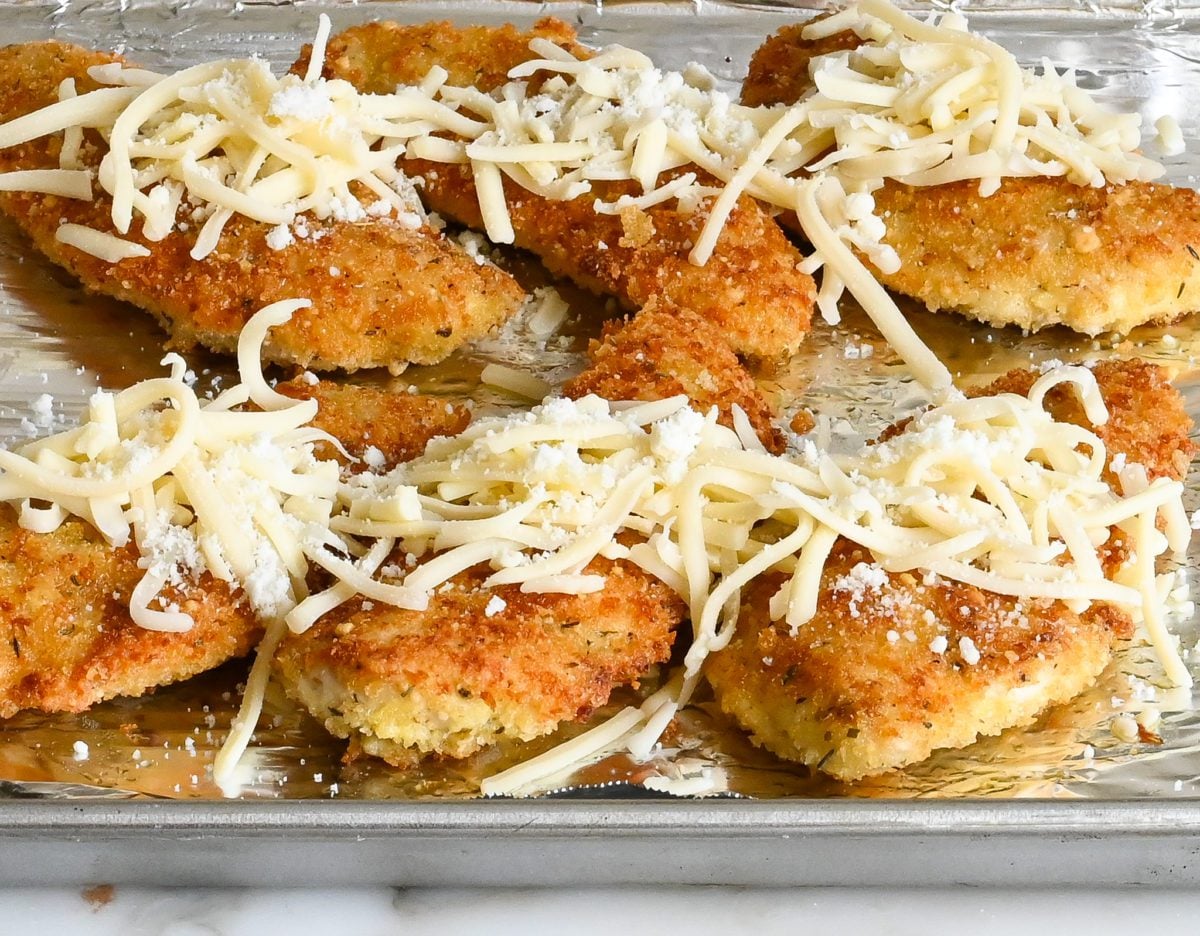
Add the cheese and broil: Arrange the cooked chicken on a foil-lined baking sheet and add the cheeses mainly to the center of each piece, leaving the breaded edges exposed. Broil just until the cheese is melted and bubbling. Keeping those edges uncovered is one of the keys to preserving the crisp crust.
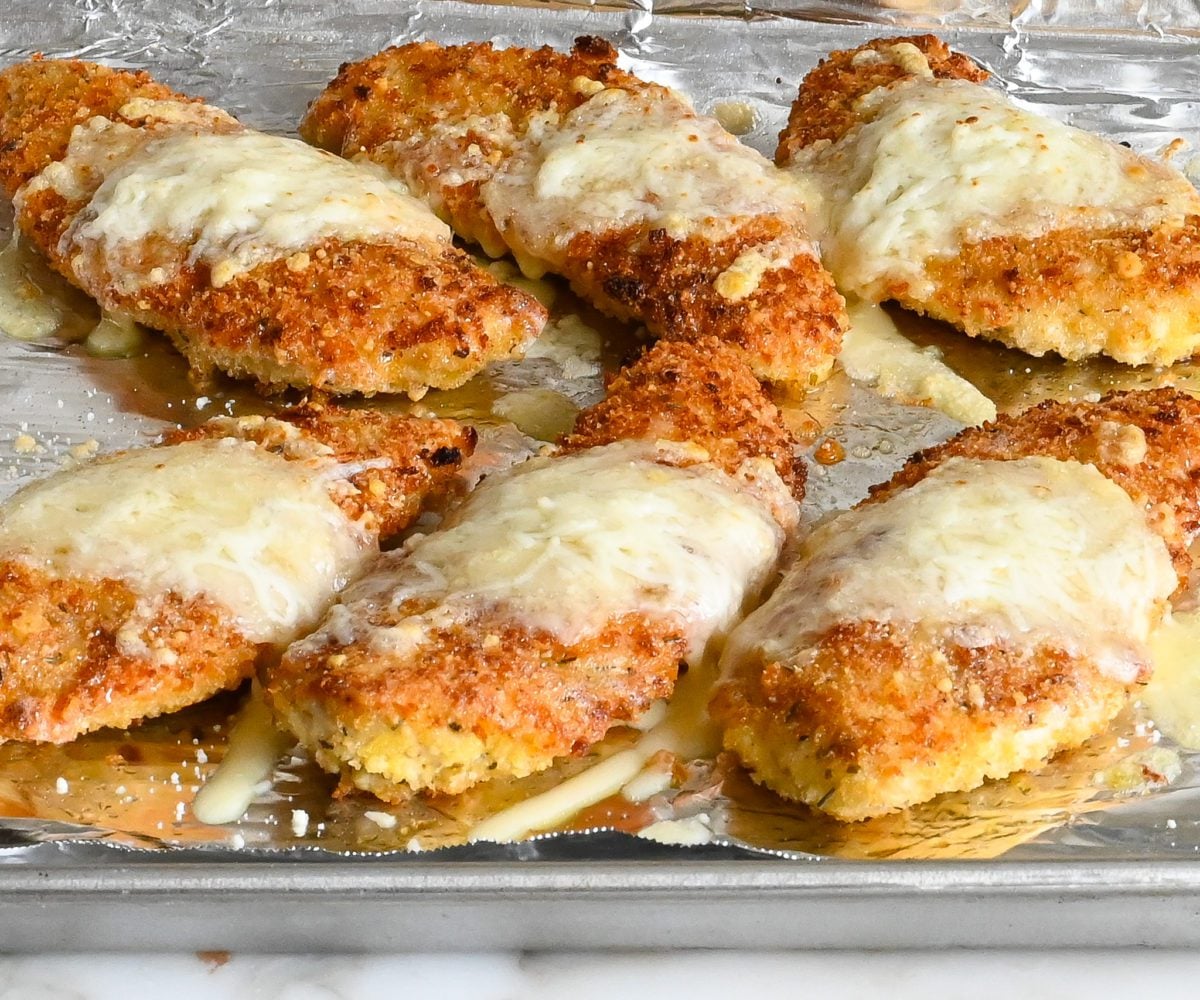
Finish with the marinara: Warm the marinara separately, tasting it before serving; a little fresh basil can perk up a jarred sauce. Spoon the warm sauce over the melted cheese rather than covering the entire piece of chicken, again leaving the crisp edges exposed. Finish with fresh basil and serve extra marinara on the side.

What To Serve with Chicken Parmesan
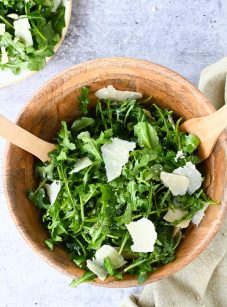
Chicken Parmesan is delicious with pasta or creamy polenta to catch the extra marinara. For something lighter alongside, try an arugula salad or roasted broccoli.
You May Also Like
Chicken Parmesan
Ingredients
- 2 lbs chicken tenderloins
- 2 teaspoons salt, divided
- ¾ teaspoons freshly ground black pepper, divided
- 1½ cups panko
- ¾ cup + 2 tablespoons grated Parmigiano Reggiano, divided
- 1 teaspoon dried oregano
- ½ teaspoon dried thyme
- ½ cup flour
- 3 large eggs
- Olive oil, for cooking
- 1½ cups homemade or store-bought marinara sauce, best quality such as Rao’s or Victoria
- 6 oz fontina, shredded (about 1½ cups)
- 3 tablespoons fresh chopped basil
Instructions
- Using kitchen shears, trim off any white tendons at the ends of the tenderloins. Using the palm of your hand, gently flatten the tenderloins so that they are an even ¼-in (6-mm) thickness. Season the chicken all over with 1¼ teaspoons of the salt and ½ teaspoon of the pepper.
- In a large shallow bowl, combine the panko, ¾ cup (75 g) of the Parmigiano Reggiano, the oregano, the thyme, the remaining ¾ teaspoon salt, and the remaining ¼ teaspoon pepper. Mix well, making sure there are no clumps of cheese.
- Place the flour in another shallow bowl. Beat the eggs in a third bowl. Set up a breading station in this order: flour, eggs, panko. Line a baking sheet with aluminum foil or parchment paper for easy clean up. Dredge the chicken in the flour, coating evenly; dip in the eggs, letting any excess drip off; then dredge in the panko mixture, turning and patting to adhere. Place the breaded chicken on the prepared baking sheet. (The recipe can be prepared up to this point, covered, and refrigerated up to 8 hours ahead of time.)
- Preheat the broiler and set an oven rack about 4 in (10 cm) from the heating element. Bring the marinara sauce to a simmer over low heat. Taste and adjust seasoning to your liking (with store-bought sauce, I find a generous pinch of sugar and fresh basil go a long way). Cover and keep warm.
- Line another baking sheet with aluminum foil or parchment for easy clean up; set aside. In a large nonstick skillet, heat about ⅛ in (3 mm) of oil over medium heat until shimmering. Place 5 or 6 tenders in the pan in a single layer and cook until the first side is golden brown, 2 to 3 minutes. Flip the chicken and cook for another 2 to 3 minutes, until golden and cooked through. Place the cooked chicken on the prepared baking sheet. Cook the remaining chicken in the same manner, adding additional oil only if necessary. You may need to lower the heat as you go, so that the chicken doesn't brown before it is cooked through.
- Sprinkle the fontina and remaining 2 tablespoons Parmigiano Reggiano over the center of the chicken tenderloins, leaving the sides bare so that they remain crispy. Broil until the cheese is melted and bubbling, 1 to 2 minutes.
- Transfer the chicken to a serving platter or individual plates. Spoon the marinara sauce over the cheese, again leaving the sides bare so that they stay crispy. Sprinkle with fresh basil and serve.
Notes
Nutrition Information
This website is written and produced for informational purposes only. I am not a certified nutritionist and the nutritional data on this site has not been evaluated or approved by a nutritionist or the Food and Drug Administration. Nutritional information is offered as a courtesy and should not be construed as a guarantee. The data is calculated through an online nutritional calculator, Edamam.com. Although I do my best to provide accurate nutritional information, these figures should be considered estimates only. Varying factors such as product types or brands purchased, natural fluctuations in fresh produce, and the way ingredients are processed change the effective nutritional information in any given recipe. Furthermore, different online calculators provide different results depending on their own nutrition fact sources and algorithms. To obtain the most accurate nutritional information in a given recipe, you should calculate the nutritional information with the actual ingredients used in your recipe, using your preferred nutrition calculator.
Would this Chicken Parmesan pair well with your Cheesy Baked Spaghetti Squash with Marinara Sauce recipe?
Thank you for always being so reliable and responding to questions and in such a timely manner. It is so nice to know if I have a question, to know that you will respond to it, and it is very helpful. And I always have a lot of questions! Also, my family and I love your websites and cookbooks! Your recipes are so reliable and delicious, and written so clearly in a way that makes it double for us to follow with not a lot of cooking experience. Thanks!
Thanks for your kind words, Heather – so glad you like the recipes and that they’ve helped you feel more confident in the kitchen! Yes, I think the spaghetti squash would pair nicely with this, but because you’re getting tomato sauce and cheese in both, if you plan to have another side dish, I’d suggest something green – either a green veggie or a salad. Hope that helps!
Thank you!!
I need to bring an entrée to a gathering of friends. I would love to make this and put it in my YETI insulated bowl. Do you think it would stay warm and crisp for an hour or so?
Hi Robin, I don’t have any experience with Yeti insulated bowls, so I can’t say how warm it will keep it. I do think it will lose some of its crispiness, though.
Yep. This was good one. The tenderloin idea was a game changer. No more trying to get the chicken breast cut perfectly in half and then POUND, POUND, POUND (Ooops, Too much. It shredded). The tenderloins were much easier and consistent. Also, the Fontina vs. the Mozzarella was a nice substitute. Nice nutty flavor enhancement minus the rubbery texture. My guest bragged to her co-workers the next day about what a great cook I am. Thanks for making me look good, Jenn.