

This post may contain affiliate links. Read my full disclosure policy.
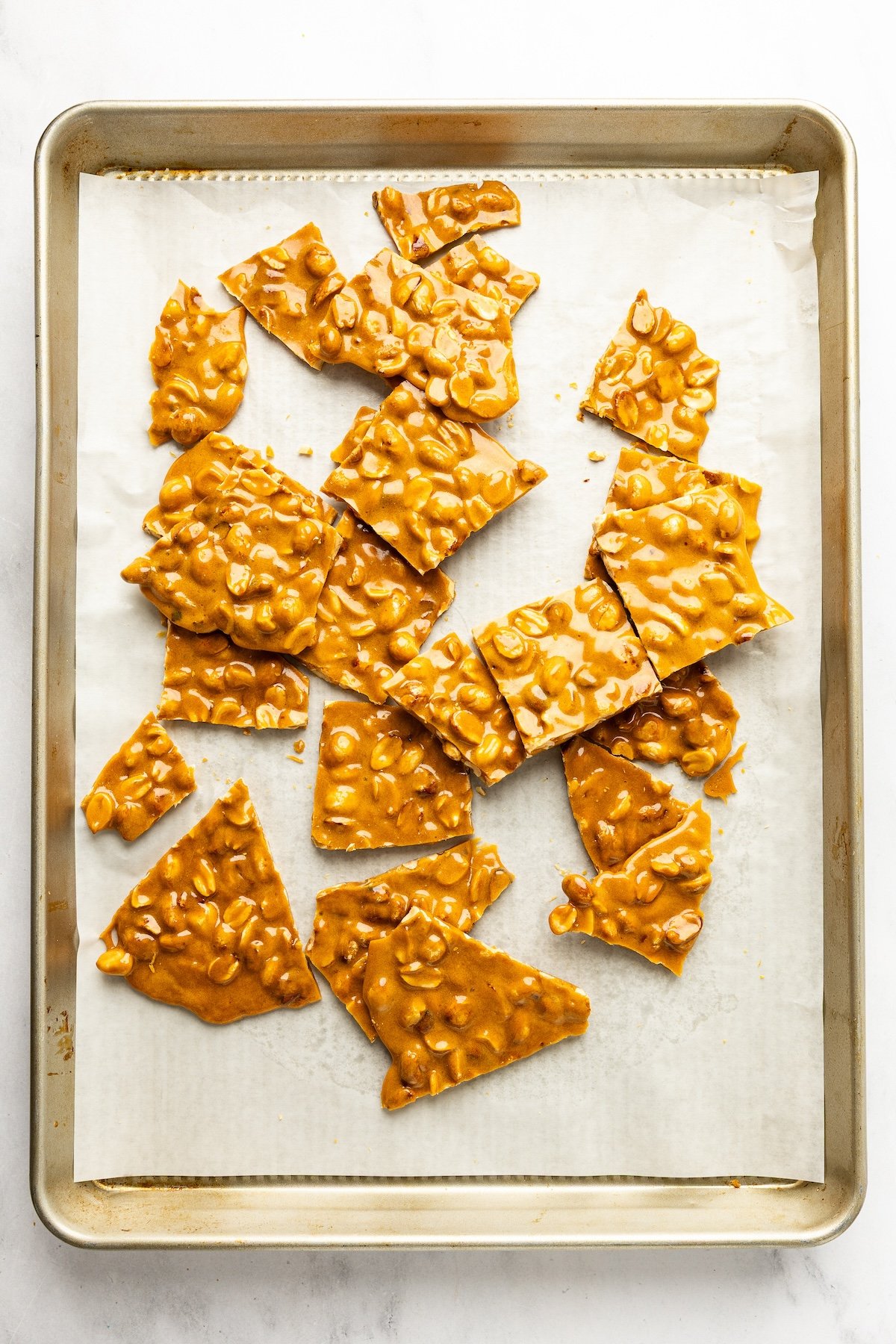
If you’re craving a nostalgic candy fix, this peanut brittle recipe checks every box—salty-sweet, crunchy, and way easier than you’d expect. Perfect for gifting or munching straight off the tray.
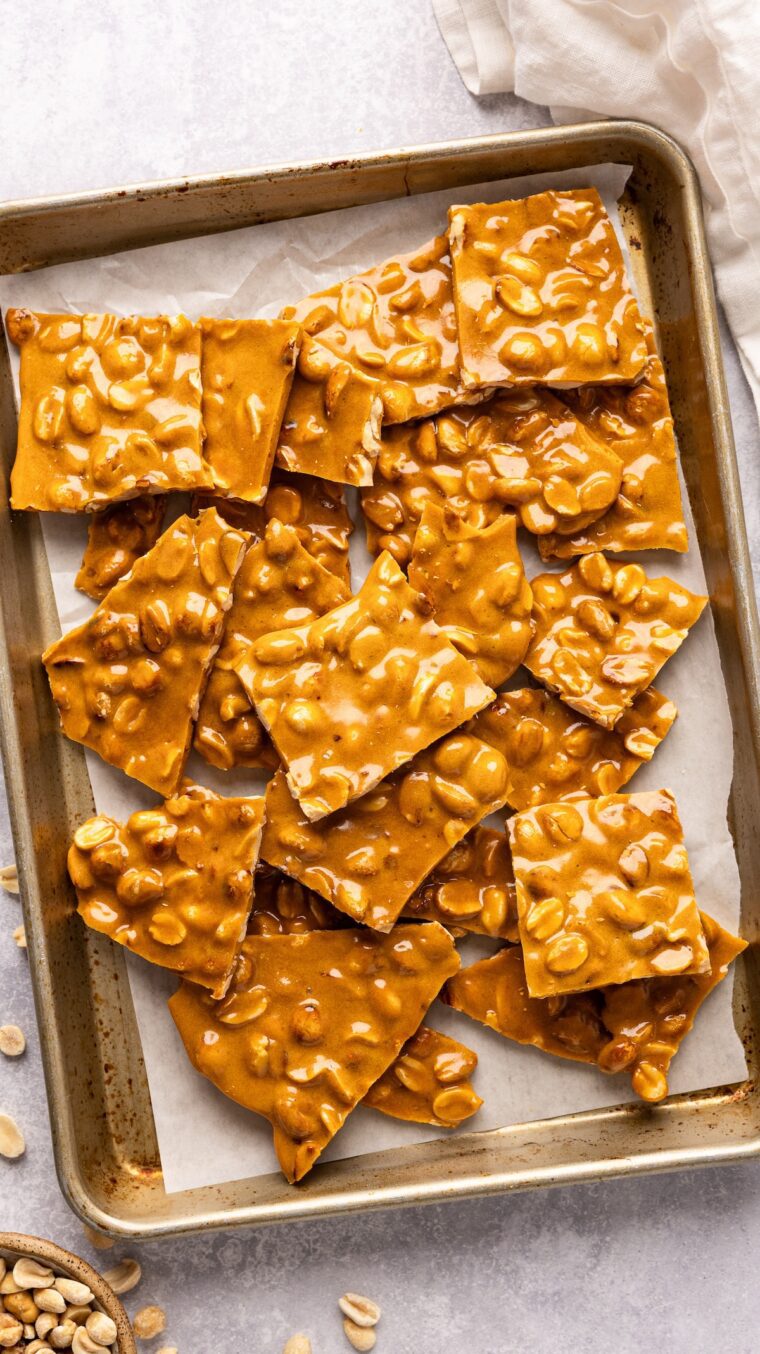
Peanut brittle is one of those candies that’s great to have around for when you want a little something sweet after dinner—or really anytime the mood strikes. This version is made with roasted, salted peanuts and turns into a salty-sweet, airy, crunchy candy that’s hard to stop nibbling. The baking soda is the secret to that snappy texture: it foams up the hot syrup, creating tiny bubbles that keep the brittle light and crisp rather than dense.
Candy-making can feel intimidating, but this one is very doable. As long as you have a heavy saucepan and a reliable candy thermometer, you’re in good shape. The key is keeping an eye on the thermometer—once the syrup reaches 300°F, it’s ready. One important note: hot sugar is much hotter than boiling water, so be careful and don’t touch or taste the brittle until it has cooled completely.
What You’ll Need To Make Peanut Brittle
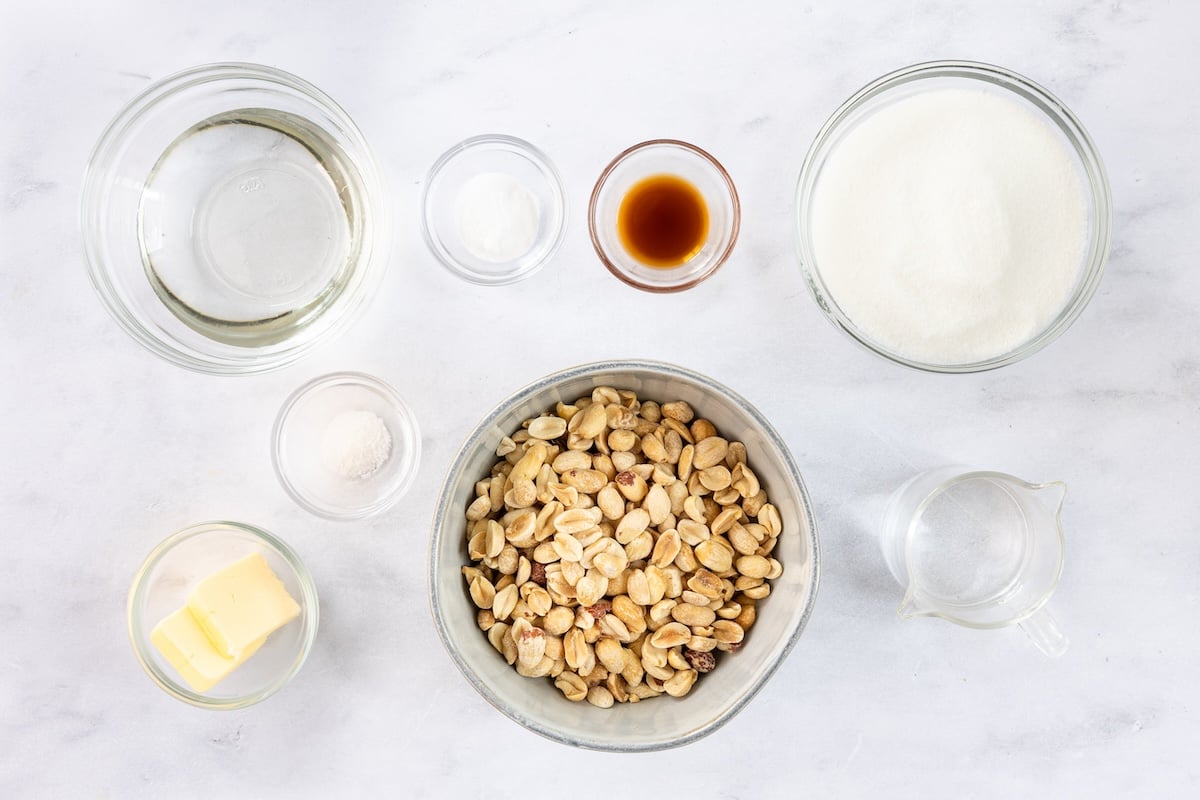
- Sugar, Light Corn Syrup, Water & Salt: These cook together to form the brittle’s caramel base.
- Roasted, Salted Peanuts: Add crunch, salt, and rich nutty flavor. Since they’re already roasted and seasoned, you can add them straight in—no extra prep needed.
- Butter & Vanilla: Stirred in right at the end for buttery richness and a warmth.
- Baking Soda: Creates tiny air bubbles as it reacts with the hot sugar, giving the brittle that light, snappy texture instead of an overly hard, jawbreaker-style crunch.
- Jump to the printable recipe for precise measurements
Step-By-Step Instructions
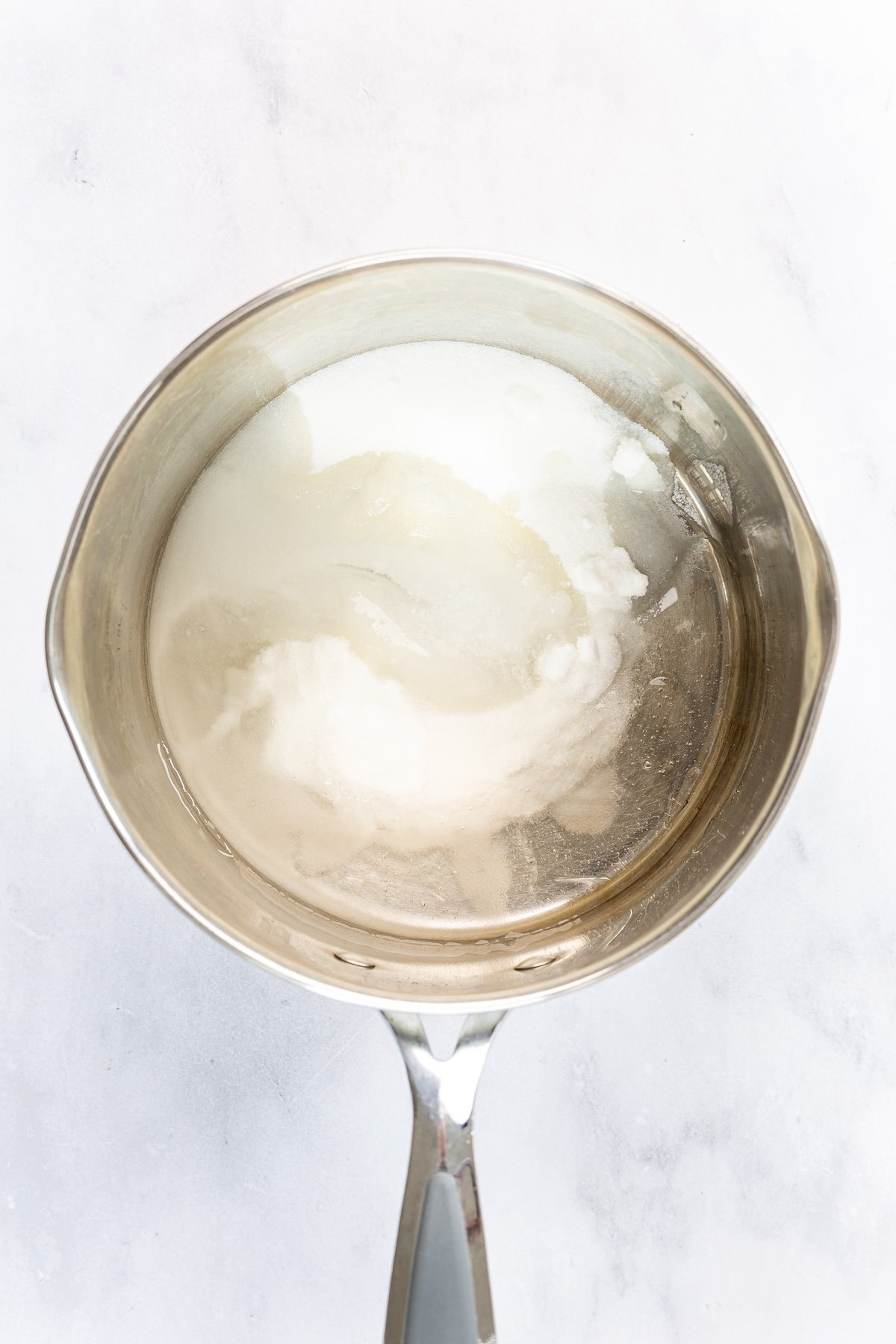
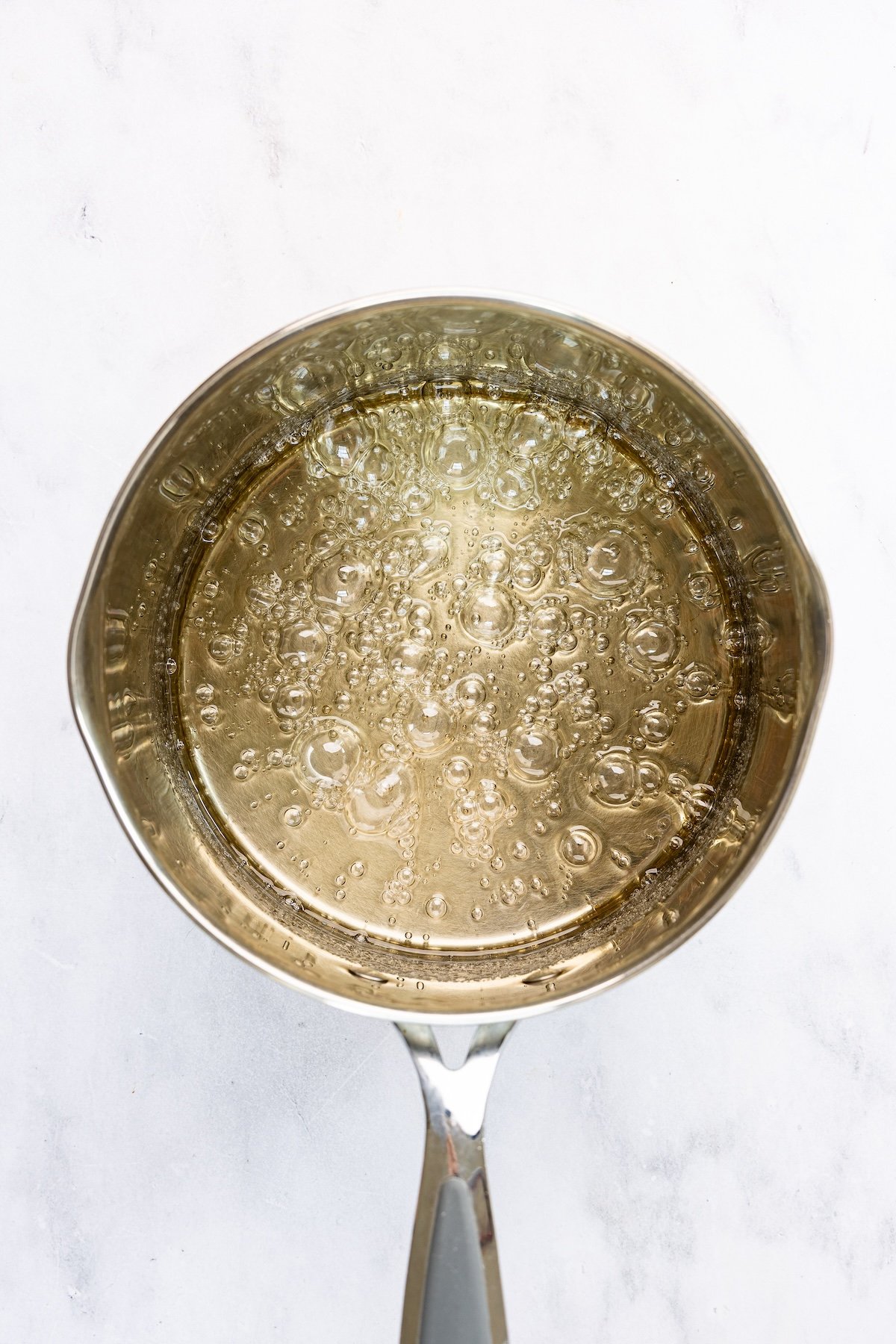
Step 1. Cook the sugar base. In a medium, heavy saucepan, combine the sugar, corn syrup, water, and salt, pouring into the center to avoid sugar on the sides. Set over medium heat and bring to a boil, stirring gently until the sugar dissolves and the sides stay clean. Clip on a candy thermometer and cook without stirring until the mixture reaches 280°F, 8 to 13 minutes.
Pro Tip. The timing listed in the recipe is a guideline, but the exact cook time can vary significantly depending on your stove and the pan you’re using. Using a candy thermometer is the only reliable way to know when you’ve hit 280°F before adding the peanuts, and 300°F (hard crack) at the end. Stay close to the pot—once the sugar starts climbing in temperature, it can jump several degrees in seconds.
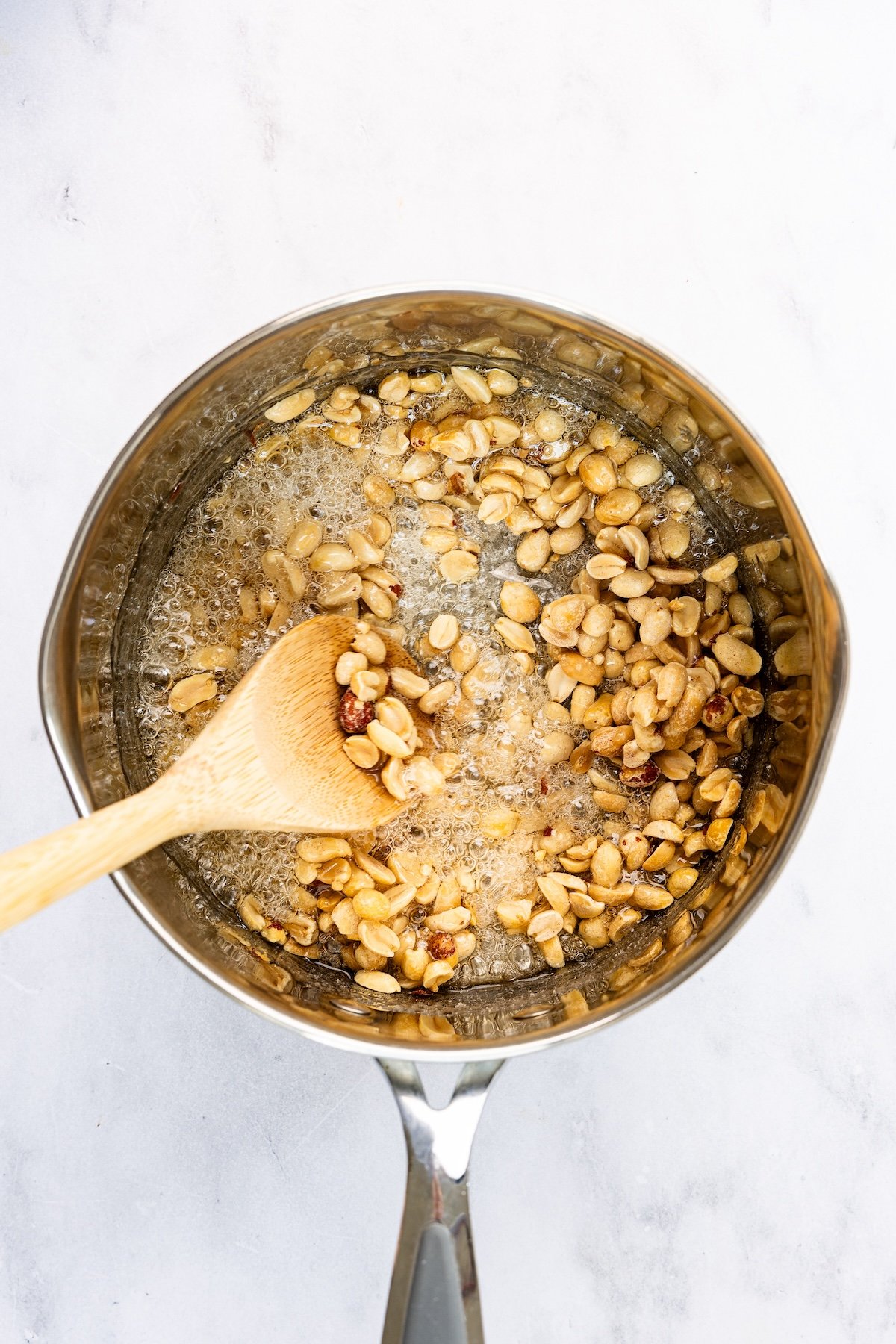
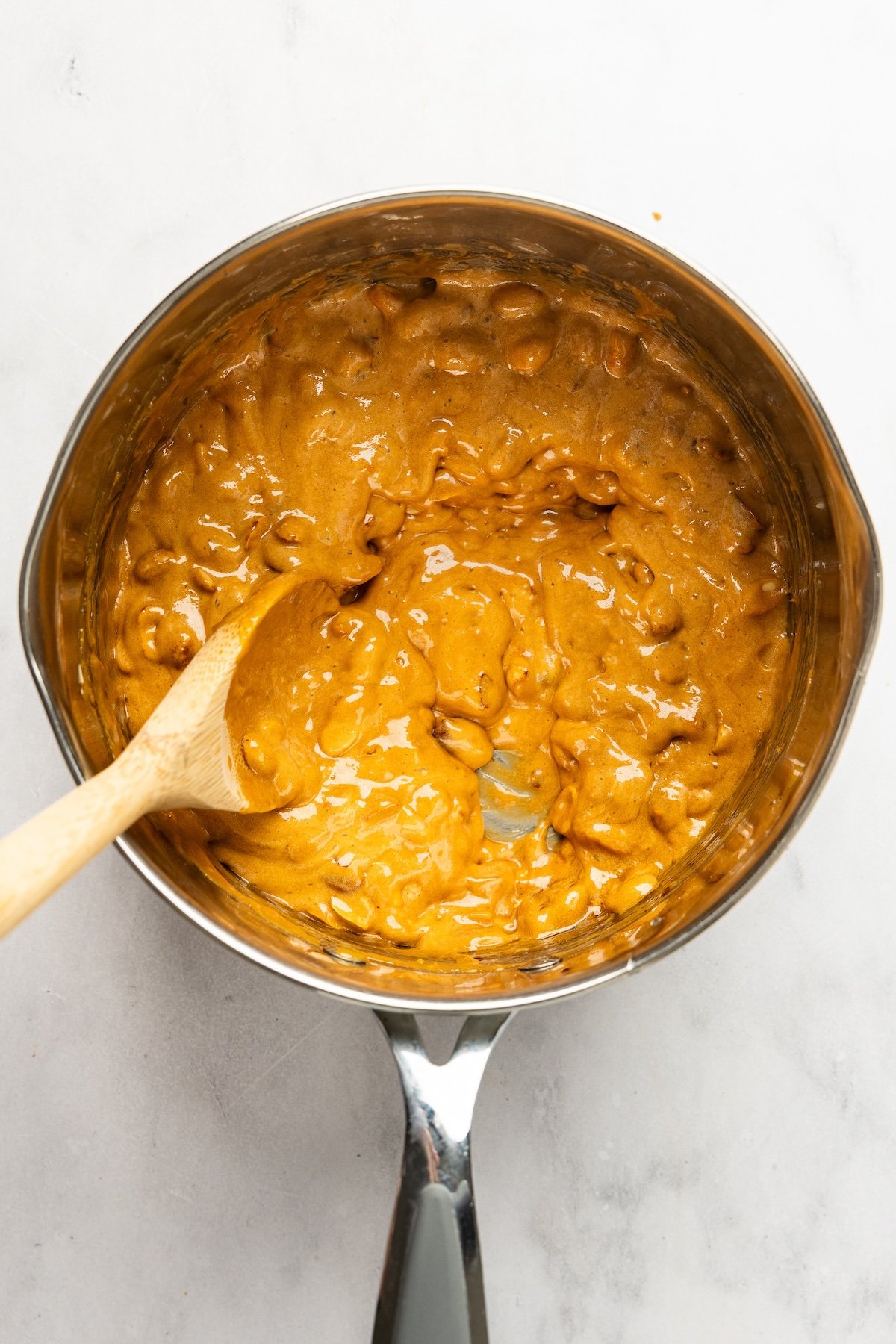
Step 2. Add peanuts and finish cooking. Stir in the peanuts and cook, stirring occasionally, until the mixture hits 300°F (hard crack stage), 3 to 5 minutes. Remove from the heat, stir in the butter and vanilla until melted, then quickly add the baking soda and stir—it will foam up.
Pro Tip. As soon as you add the baking soda, the mixture foams and sets quickly. Have your baking sheet lined and spatula greased before you start cooking so you can spread the brittle right away.
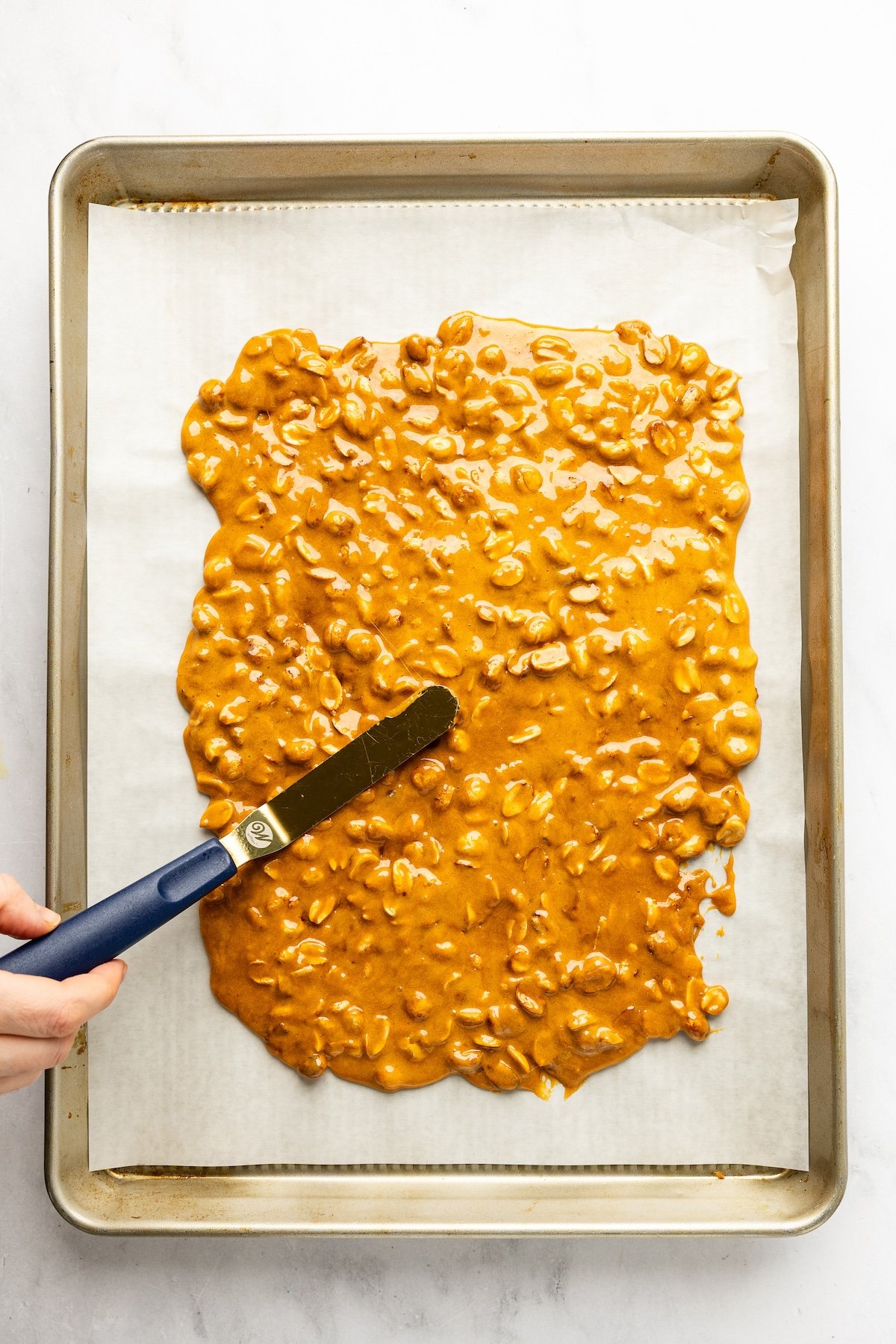
Step 3. Spread and cool the brittle. Pour the mixture onto a parchment-lined baking sheet and quickly spread into a ¼-inch layer with a greased offset spatula. Don’t overwork it; spread once and leave it. Let cool completely, about 30 minutes, then break into pieces. Peanut brittle keeps beautifully in an airtight container for a couple of weeks.
Pro Tip. If the brittle is tacky when you break it (this sometimes happens in very humid climates), pop the baking sheet into the freezer for 5 to 10 minutes to help it firm up and snap cleanly.
More Homemade Treats You’ll Love




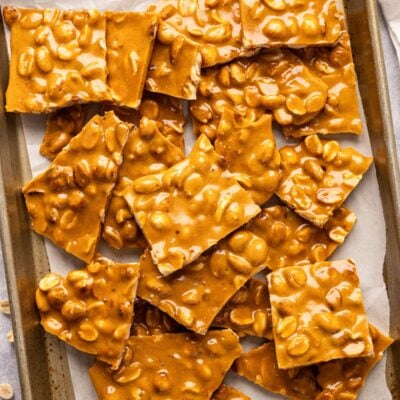
Peanut Brittle
Ingredients
- 1 cup sugar
- ½ cup light corn syrup
- ¼ cup water
- Heaping ¼ teaspoon salt
- 1⅓ cups roasted, salted peanuts
- 2 tablespoons unsalted butter, at room temperature
- 1 teaspoon vanilla extract
- 1 teaspoon baking soda
Instructions
- Line a baking sheet with parchment paper.
- In a medium, deep, heavy saucepan, combine the sugar, corn syrup, water, and salt, pouring everything into the center of the pan to avoid getting sugar on the sides (which can cause crystallization). Set over medium heat and bring to a boil, stirring gently until the sugar dissolves and the sides stay clean.
- Clip a candy thermometer to the side of the pan. Continue cooking, without stirring, until the mixture reaches 280°F—this usually takes 8 to 13 minutes, though the exact time will vary depending on your pan. Stir in the peanuts and continue cooking, stirring occasionally, until the thermometer registers 300°F (the hard crack stage), 3 to 5 minutes more. Again, the timing may vary significantly, so keep a close eye on it.
- Remove from the heat and quickly stir in the butter and vanilla until melted. Immediately add the baking soda and stir vigorously—the mixture will foam up. Pour the brittle onto the prepared baking sheet and quickly spread it into an even ¼-inch layer with a greased offset spatula. Don’t fuss with it; spread it once and let it be.
- Cool completely, about 30 minutes, then break into pieces.
Notes
- A 2½- to 3-quart heavy saucepan is ideal. A 2-quart pan gives you a deeper mixture (easier for the thermometer) but less space when the candy foams up. A 3-quart pan gives you more room to stir, but make sure the thermometer tip stays fully submerged.
- For accuracy, check your candy thermometer before you start. Bring a small pot of water to a boil and see where it registers. If it doesn’t read 212°F, adjust your target temperature up or down by the difference.
- Safety: Hot sugar is much hotter than boiling water and can cause severe burns. Use a deep saucepan, stir carefully, and never touch or taste the mixture until it has fully cooled.
- Make-Ahead/Storage Instructions: Once cooled and broken into pieces, store it in an airtight container in a cool, dry place for up to 2 weeks. If you live in a humid climate, you can separate the layers with parchment or wax paper to prevent any sticking, though it’s usually not necessary. Avoid refrigerating, as the moisture will make the candy sticky.
Nutrition Information
This website is written and produced for informational purposes only. I am not a certified nutritionist and the nutritional data on this site has not been evaluated or approved by a nutritionist or the Food and Drug Administration. Nutritional information is offered as a courtesy and should not be construed as a guarantee. The data is calculated through an online nutritional calculator, Edamam.com. Although I do my best to provide accurate nutritional information, these figures should be considered estimates only. Varying factors such as product types or brands purchased, natural fluctuations in fresh produce, and the way ingredients are processed change the effective nutritional information in any given recipe. Furthermore, different online calculators provide different results depending on their own nutrition fact sources and algorithms. To obtain the most accurate nutritional information in a given recipe, you should calculate the nutritional information with the actual ingredients used in your recipe, using your preferred nutrition calculator.
This came out PERFECT as long as I followed the instructions and used a thermometer and paid attention (which is really important on this sort of recipe). Once again, many thanks!
The peanut brittle was amazing! The recipe is very clearly written (which helped reduce the intimidation factor of being a first-timer with a candy thermometer)! I brought it to a meet and greet in my neighborhood, and everybody raved about it. I think I’ve made a name for myself among my new neighbors. They have no idea that I’m just your average home cook!! 🤣
First of all, I would like to point out, that with boiling sugars, it is a far far piece of time between 8 and 15 minutes, indeed. No matter, the person who posted this recipe has no regards for the price of groceries, and nuts and sugar and corn syrup. I worked 2 batches and both went into the trash. it looks like beer foam, despite the hard crack stage of cooking. disgusting. the person who posted this recipe should be forced to remove it. give exact times on cooking, or remove the recipe!
This review made my day, as I needed a good laugh. The recipe is fine as written. The time variation is normal. The recipe stated the exact temperature the sugar mix needed to be, and depending on the pan used, the elevation where you live, your stove, and other things, the time it takes to get to 280 degrees VARIES. As it clearly states. If the recipe just said, “cook for 7 minutes” and your situation takes 14, you’d be howling about that. 280 degrees is specific. You need a thermometer and know how to use it.
Yes, peanut brittle always foams up during cooking. You probably threw away 2 batches of perfectly good brittle, and if it was too soft, you could have used it in other ways. But sure, demand that the recipe be removed from existence because it clearly states reality. LoL.
Took two tries but eventually got it. This isn’t the type of creation where you can walk away for any amount of time, my mistake. It turned out delicious! Thank you, Jenn!