
Beef Tenderloin with Red Wine Sauce

This post may contain affiliate links. Read my full disclosure policy.
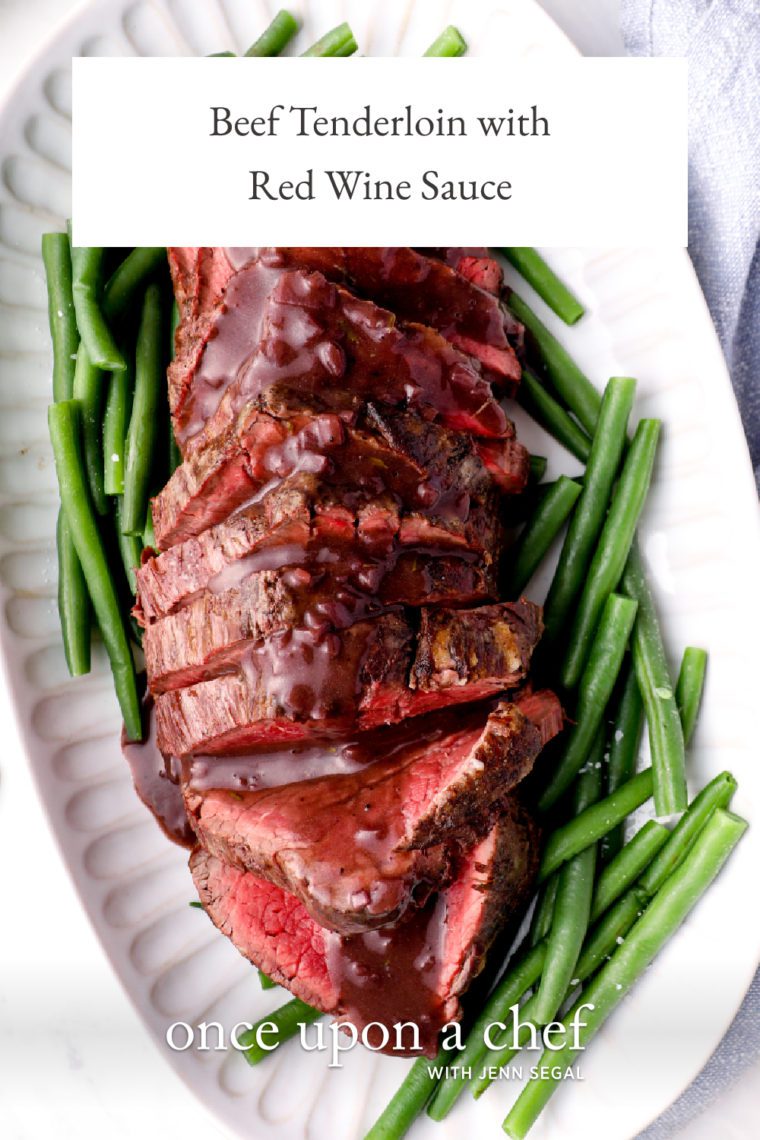
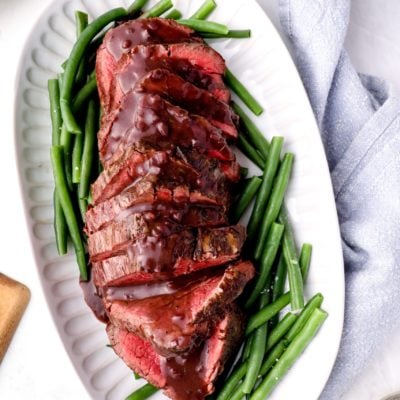
This beef tenderloin looks fancy, but it couldn’t be easier to make. It cooks up perfectly every time, and the rich red wine sauce takes it over the top. A total showstopper for any special dinner.
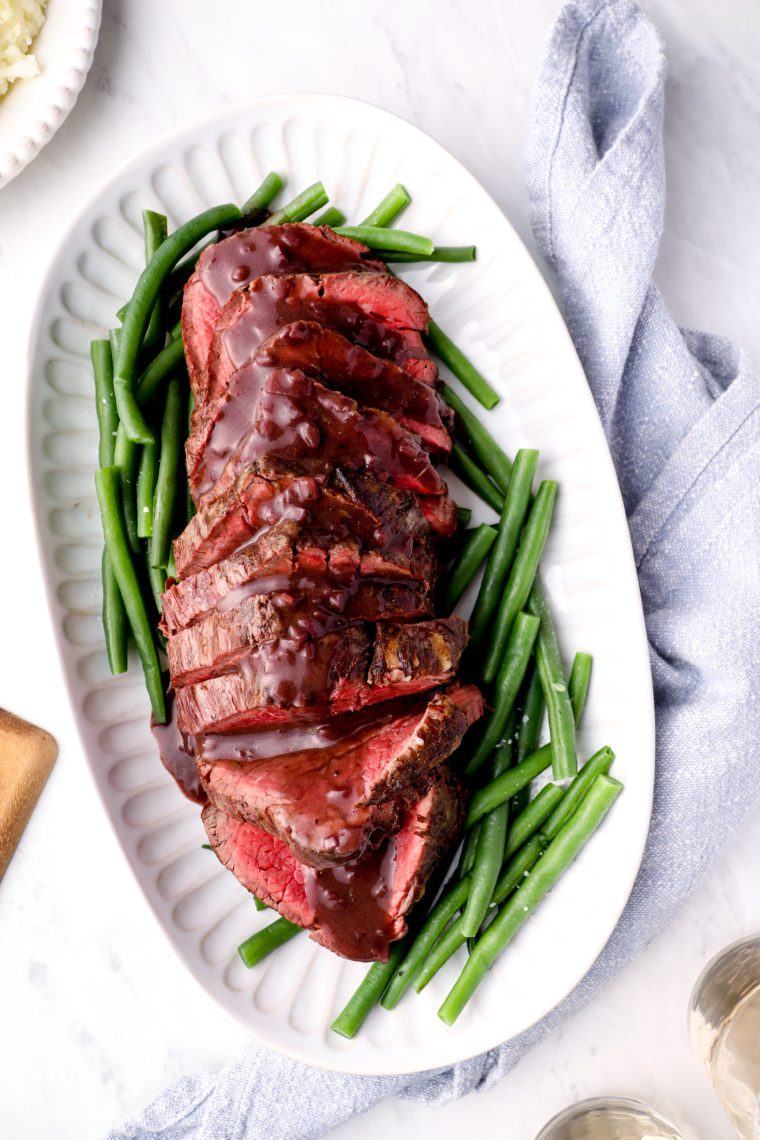
This beef tenderloin recipe is my #1 go-to for holidays and special occasions. It never fails to impress, and my foolproof method ensures perfectly cooked beef every time, with no guesswork. The tenderloin is paired with a red wine reduction sauce made by simmering wine, broth, and aromatics until the flavors concentrate, then finished with butter for a silky, gorgeous sauce that rivals anything you’d order at a fine restaurant. Yes, it’s fancy!
A great bonus is that the sauce can be prepared mostly in advance, so there’s very little fussing at the last minute. Similar to my glazed pork tenderloin, this recipe is truly the best of both worlds: simple to prepare yet incredibly delicious.
Video Tutorial
“Voted best Christmas dinner ever!”
What You’ll Need To Make Beef Tenderloin with Red Wine Sauce
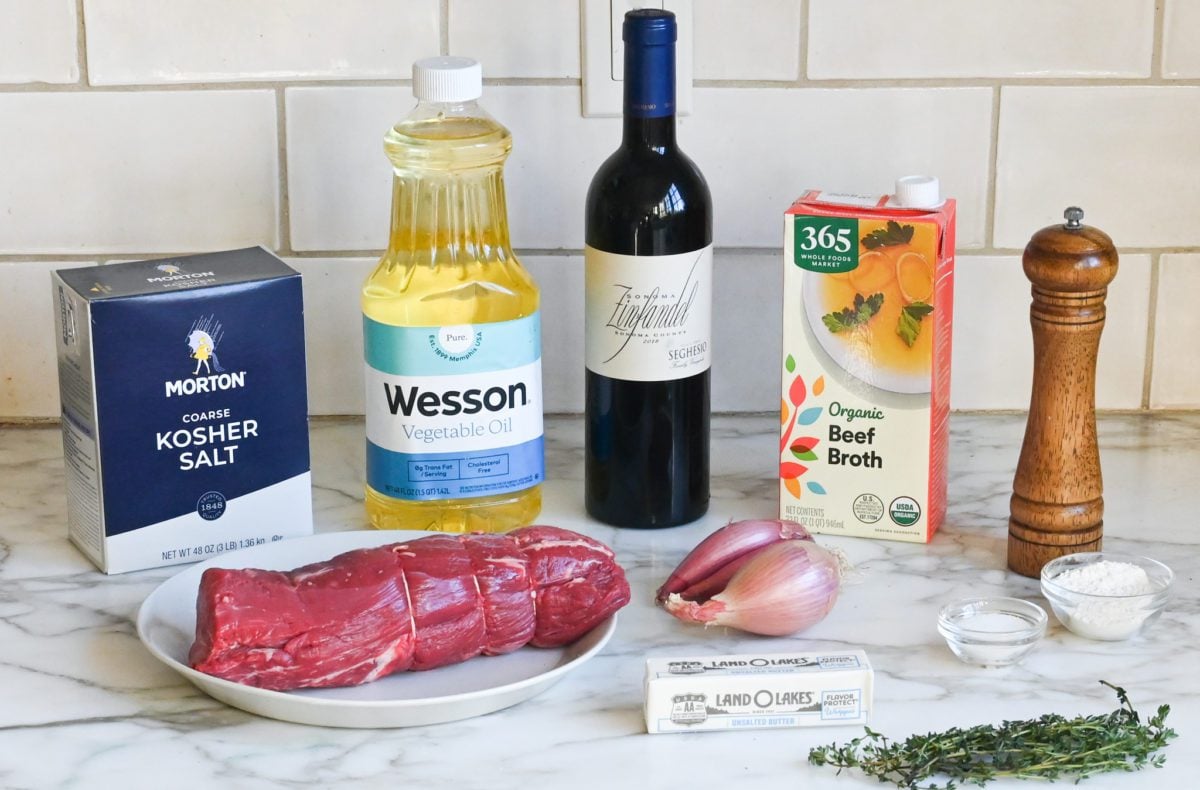
- Beef tenderloin: The most tender and expensive cut of beef, this is the whole piece before it’s sliced into steaks, which are known as filet mignon (great for recipes like steak au poivre or pan-seared steaks). As a general rule, plan for about ½ pound per person for a generous serving. Your tenderloin may be tied with butcher’s twine near the tapered end to keep it evenly thick; leave the string on until after it is cooked. If it’s not tied, no worries—no tying is necessary.
- Butter: A portion is used for sautéing shallots, while the rest is combined with flour to create a beurre manié, which thickens the sauce.
- Shallots: Adds a mild onion flavor to the sauce.
- Red wine: Adds rich, fruity flavors and depth of color to the sauce. Any variety, such as Merlot, Pinot Noir, Cabernet Sauvignon, Syrah, or Red Zinfandel, will work. When cooking with wine, choose an inexpensive bottle that’s still enjoyable to drink. Avoid supermarket “cooking wines,” which often contain salt and additives.
- Beef broth: Provides a savory base for the sauce; also used to deglaze the pan after roasting the beef.
- Thyme sprigs: Adds earthy, aromatic flavor to the sauce.
- All-purpose flour: Mixed with butter to create a beurre manié, a thickening agent for the sauce.
- Jump to the printable recipe for precise measurements
Step-by-Step Instructions
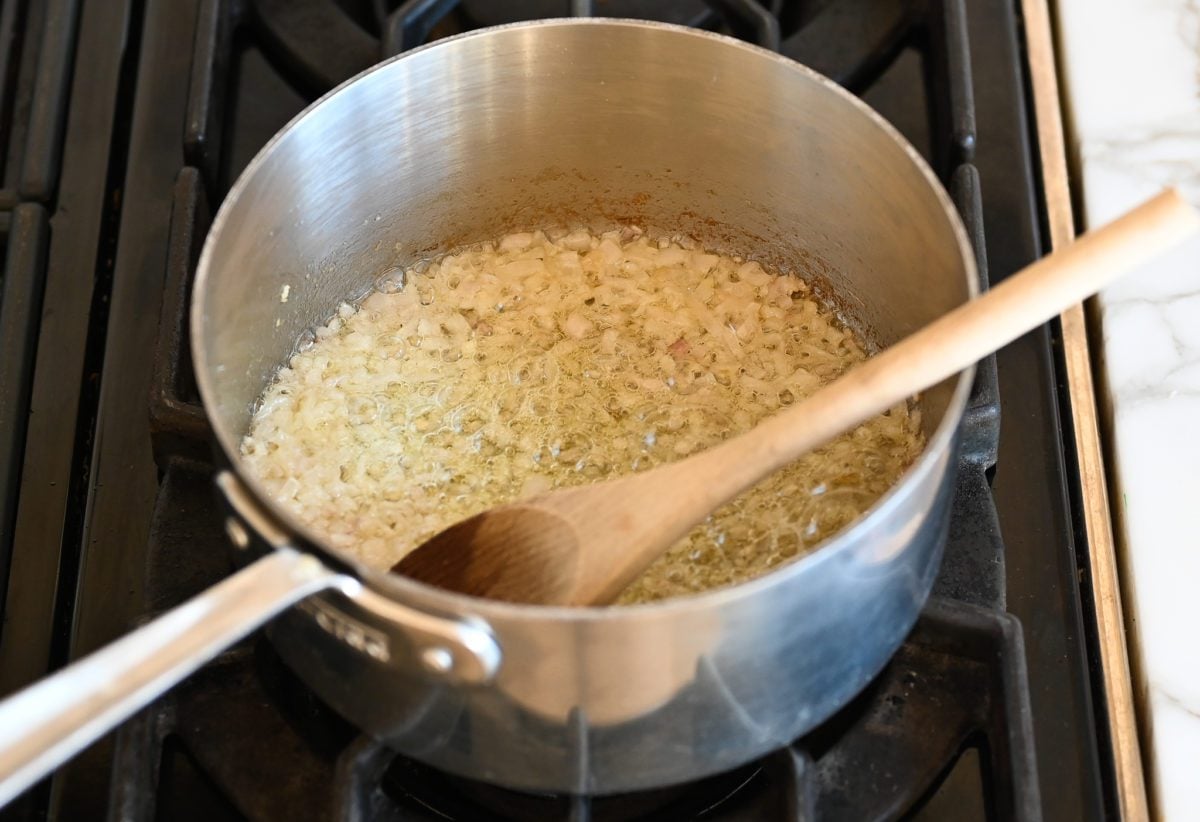
Make the Sauce: Melt the butter in a saucepan and cook the shallots over medium-low heat until soft.
Add the wine, broth, thyme, salt, pepper, and sugar, then bring to a boil. Simmer for 30 minutes until reduced by half.
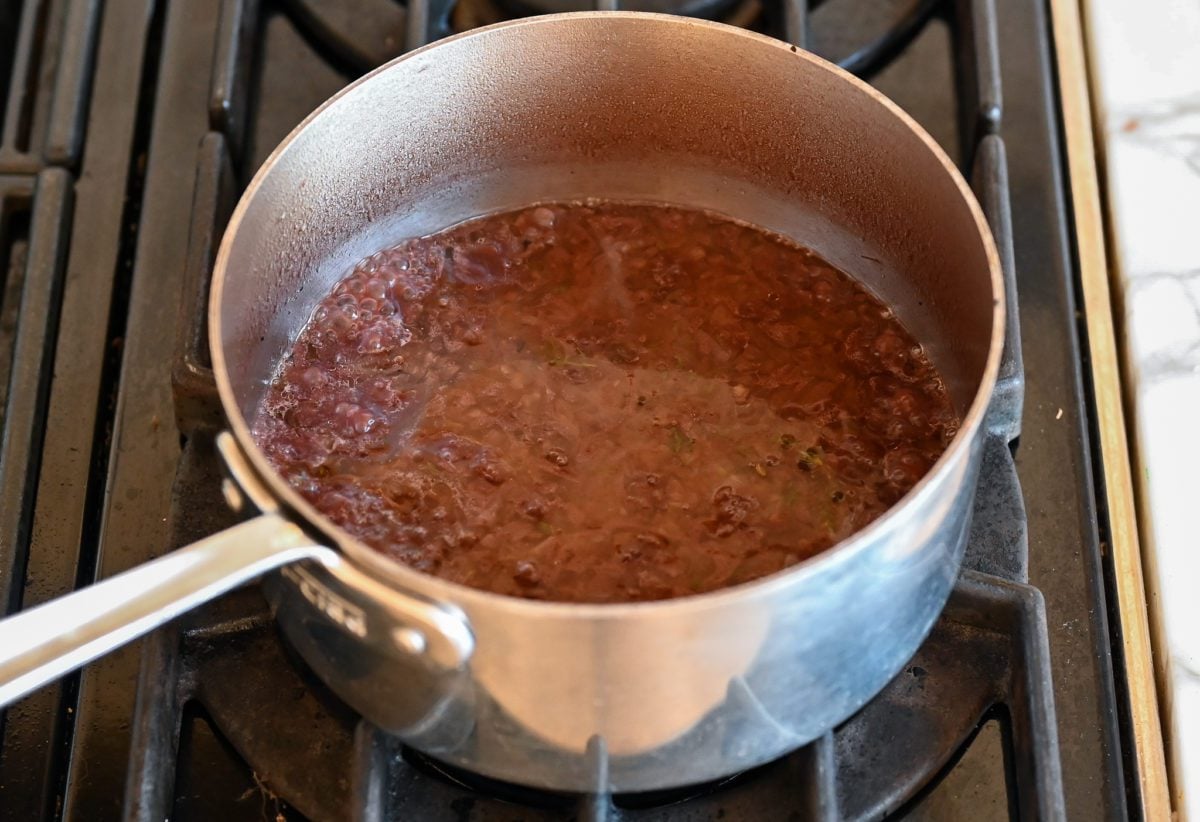
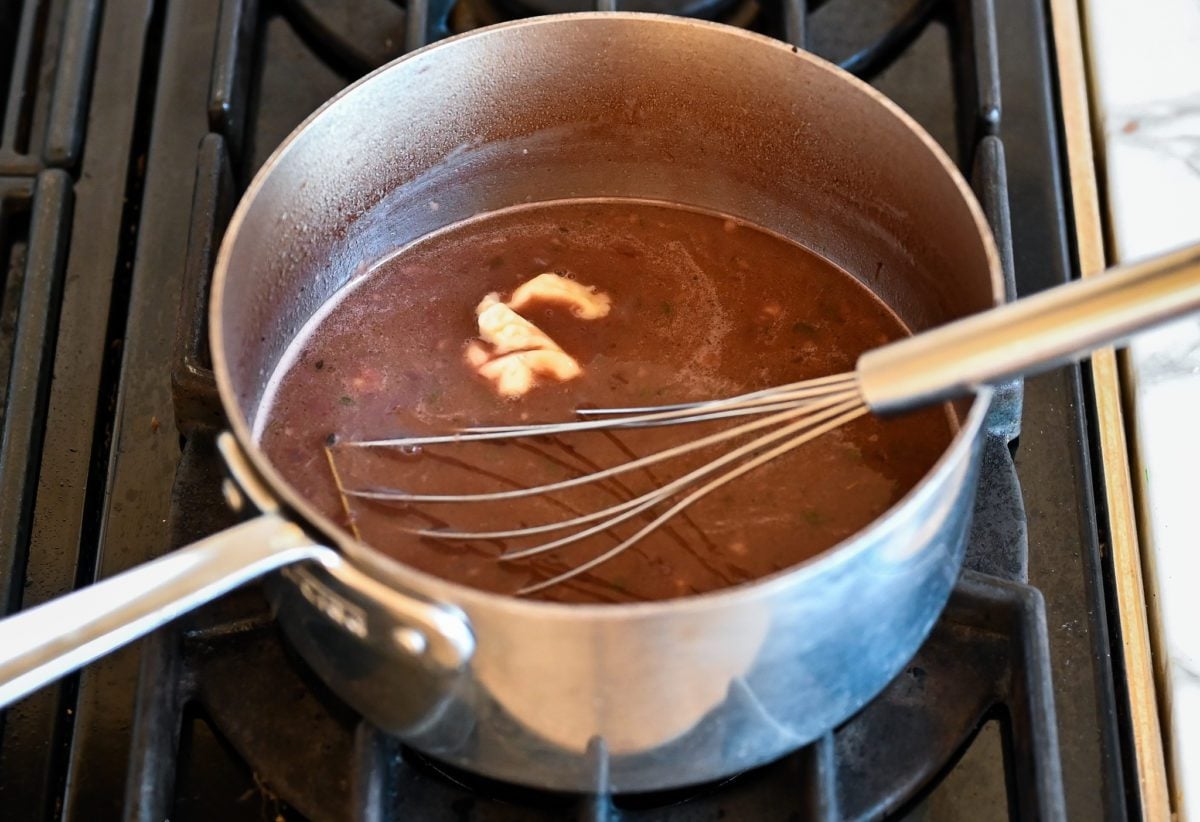
In a small bowl, mix a few more tablespoons butter with flour to form a paste. Gradually whisk the paste into the sauce and simmer until thickened. The sauce can be made a few days ahead up to this point.
Sear & Roast the Beef Tenderloin: Season the beef with kosher salt and freshly ground black pepper. Don’t be shy with the seasoning; it needs a lot!

Heat the oil in an oven-proof skillet over medium-high heat until almost smoking. Cook until well browned with a nice crust on all but one side. Turn the tenderloin so that the un-seared side is down and transfer the skillet directly to a 400°F oven. I recommend using a leave-in meat thermometer with a remote monitor to keep an eye on the roast. These are ideal for cooking pricey cuts like tenderloin (they’re great for other dishes too, like turkey).

Roast until cooked to your liking, keeping in mind that the the internal temperature will continue to rise 5 to 10 degrees after being removed from the oven—this is known as carryover cooking.
Rare: 115°F-120°F
Medium Rare: 120°F-125°F
Medium: 130°F-135°F
Medium-Well: 140°F-145°F
Well Done: 150°F and above
Finish the Sauce and Carve the Beef: Set the pan on the stovetop, add the broth, and bring to a boil, deglazing by scraping up the brown bits with a wooden spoon.

Add this flavorful broth to the wine sauce and bring it to a simmer.
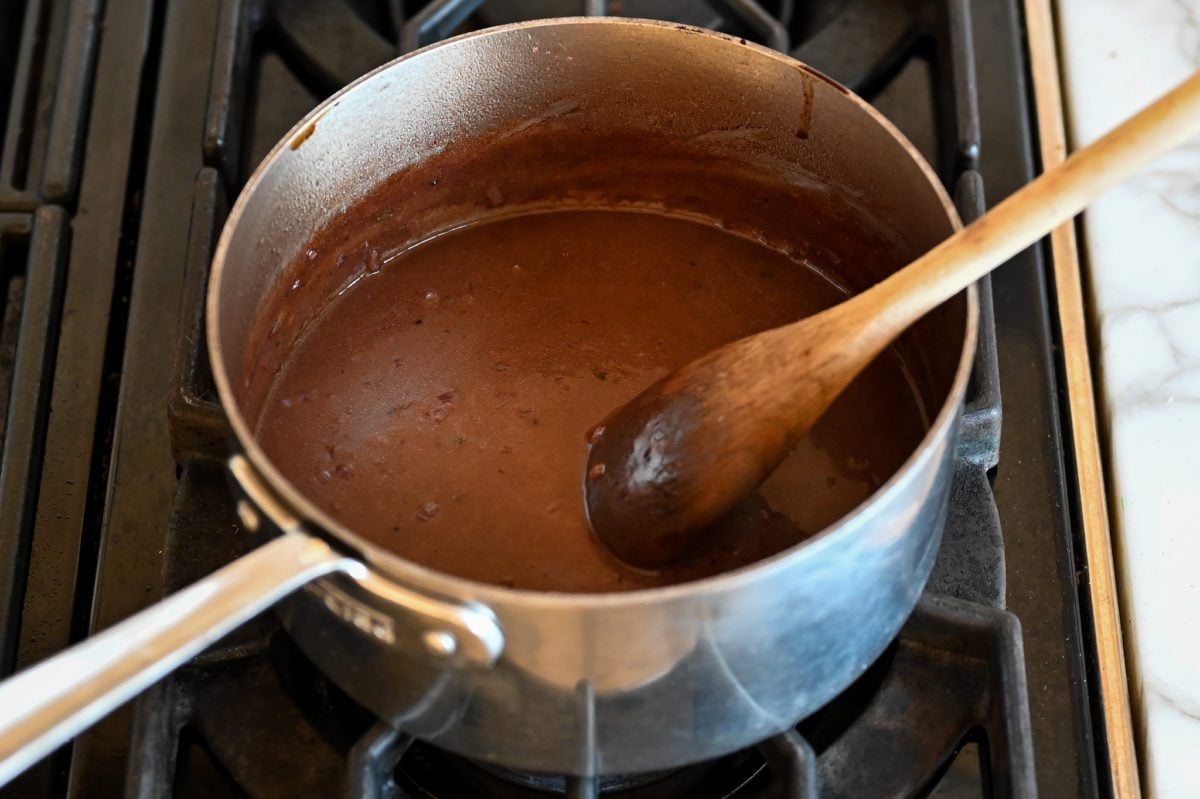
Carve the roast into slices and serve, passing the red wine sauce at the table. For a steakhouse-style meal, serve it with a classic wedge salad, crispy roasted potatoes, and a simple vegetable, like French green beans or roasted Brussels sprouts.

You May Also Like
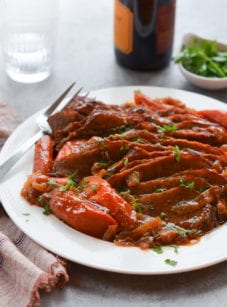


Beef Tenderloin with Red Wine Sauce
Ingredients
For the Sauce
- 8 tablespoons unsalted butter, divided
- ¾ cup finely chopped shallots, from 2 to 3 large shallots
- 1¼ cups red wine
- 3 cups beef broth
- 6 fresh thyme sprigs
- ¼ teaspoon kosher salt
- ⅛ teaspoon freshly ground black pepper
- 1 teaspoon sugar
- 2 tablespoons all-purpose flour
For the Beef
- 1 (2 to 3 lb) center-cut beef tenderloin roast
- Kosher salt (½ teaspoon per pound of beef)
- Freshly ground black pepper (¼ teaspoon per pound of beef)
- 2 tablespoons vegetable oil
- ¼ cup beef broth
Instructions
For the Sauce
- Melt 5 tablespoons of the butter in a medium saucepan. Add the shallots and cook over medium-low heat, stirring occasionally, until soft and translucent, 7 to 8 minutes. Add the wine, beef broth, thyme sprigs, salt, pepper and sugar, and bring to a boil. Cook over medium heat for about 30 minutes, or until the liquid is reduced by about half.
- While the liquid is reducing, place the remaining 3 tablespoons of butter in a small bowl and soften in the microwave, if necessary (it should be soft but not melted). Add the flour and, using a small spoon, mix into a smooth paste.
- Once the wine mixture is reduced, reduce the heat to low and remove the thyme sprigs. Whisk the flour-butter paste, a tablespoon at a time, into the simmering liquid, and simmer for a few minutes, until the sauce is thickened. Set aside. (The sauce can be made up to this point and refrigerated up to 3 days ahead of time.)
For the Tenderloin
- Let the beef stand at room temperature for 1 hour before roasting. Set an oven rack in the middle position and preheat the oven to 400°F (205°C).
- Season the beef all over with kosher salt and pepper. Heat the oil in an oven-proof skillet over medium-high heat until almost smoking. Cook, turning with tongs, until well browned on all but one side, about 10 minutes total. Turn the tenderloin so that the un-seared side is down, and transfer the skillet directly to the preheated oven. (If your pan isn't oven-proof, transfer the beef to a lightly oiled roasting pan.) Roast until a thermometer inserted into the center of the meat registers 120°F to 125° (49°C to 52°C) for medium rare, about 15 minutes, or until done to your liking (115°F to 120°F/46°C to 49°C for rare, 130°F to 135°F/54°C to 57°C for medium). Keep in mind that these temperatures account for the fact that the temperature will continue to rise about 5 degrees while the meat rests.
- Transfer the meat to a carving board (preferably with a well for collecting juices) and let it rest, covered loosely with aluminum foil, for 10 to 15 minutes. Place a dishtowel or oven mitt over the handle of the roasting pan to remind yourself that it’s hot.
- Meanwhile, carefully discard the fat from the roasting pan (remember that the handle is hot!). Set the pan on the stovetop and add the ¼ cup (60 ml) of broth. Bring the broth to a boil and, using a wooden spoon, scrape the fond, or brown bits, from the bottom of the pan. Add the flavorful broth to the red wine sauce, and then bring the sauce to a simmer.
- Carve the tenderloin into ½-inch (13-mm) thick slices. Serve the beef, passing the red wine sauce at the table.
Pair with
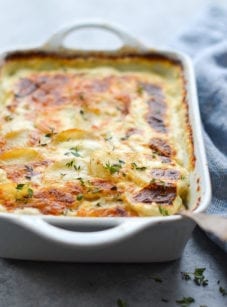
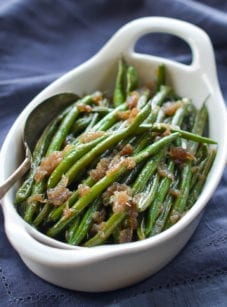

Nutrition Information
This website is written and produced for informational purposes only. I am not a certified nutritionist and the nutritional data on this site has not been evaluated or approved by a nutritionist or the Food and Drug Administration. Nutritional information is offered as a courtesy and should not be construed as a guarantee. The data is calculated through an online nutritional calculator, Edamam.com. Although I do my best to provide accurate nutritional information, these figures should be considered estimates only. Varying factors such as product types or brands purchased, natural fluctuations in fresh produce, and the way ingredients are processed change the effective nutritional information in any given recipe. Furthermore, different online calculators provide different results depending on their own nutrition fact sources and algorithms. To obtain the most accurate nutritional information in a given recipe, you should calculate the nutritional information with the actual ingredients used in your recipe, using your preferred nutrition calculator.
If I make 2 at the same time do I extend cooking time?
Hi Colette, You may need to increase the cook time a tiny bit (just because the oven will be more crowded) but remember the times are just a guideline – I’d suggest using a meat thermometer (preferably one with a remote probe like the one I use in the photos) to guarantee that the meat cooks to the right temperature. That way there’s no guesswork involved. Enjoy!
So delicious. Made this on thanksgiving instead of turkey and I was smothering the sauce on everything. I’ll definitely make again for Christmas!
Going to make this tonight. I have a 5-6 lb beef tenderloin. Should I cut it in half or if I cook it whole do I extend the time ? I noticed your recipe was for 2-3 lbs
Hi Diane, You can leave it whole if you can fit it in a pan to sear; otherwise cut it in half. If you leave it whole, it will take a bit longer to cook.
Love this recipe. The sauce is amazing. Would I be able to use the red wine sauce to make your short rib recipe instead of the BBQ sauce? Should I change anything in the recipe? Thanks!
Hi Kelly, I would make this recipe instead. It’s one of my favorites and I think what you’re going for.
Could I do the searing step a couple of hours ahead, rest the meat at room temp, and then roast it? Bringing this to a family member’s house and would love to have it ready to go into the oven without the mess of the sear at that location.
Hi Jess, I think the window of a few hours is too long. You could get away with searing the beef up to an hour ahead, but I wouldn’t push it any longer than that.
This has become our “go-to” way to cook beef tenderloin or a prime rib roast. The gravy is flavourful and compliments the beef perfectly. I haven’t changed a thing in the recipe and get rave reviews every time.
Hi Jen,
Made this recipe last night and it was superb. I got a recommendation from a chef in Ireland to sear the tenderloin 60 seconds on all sides, leave rest for 5 minutes and repeat the sear again for a minute on all sides and then transfer to oven. The results were beautiful. The sauce was amazing. Really wonderful when you want to impress people.
Wonderful, easy, restaurant quality recipe! It yields a lot of sauce which I used the following day over burgers. Thank you for another great recipe!
Delicious. Always takes me longer to prepare than stated, but likely just because I’m a beginner. Huge hit for dinner party. Thank you!!!
Fantastic recipe! Easy, quick, restaurant quality dish. Makes more sauce than one might need but it wasn’t wasted as I used it on burgers the next day. Thank you for another wonderful recipe.