

This post may contain affiliate links. Read my full disclosure policy.
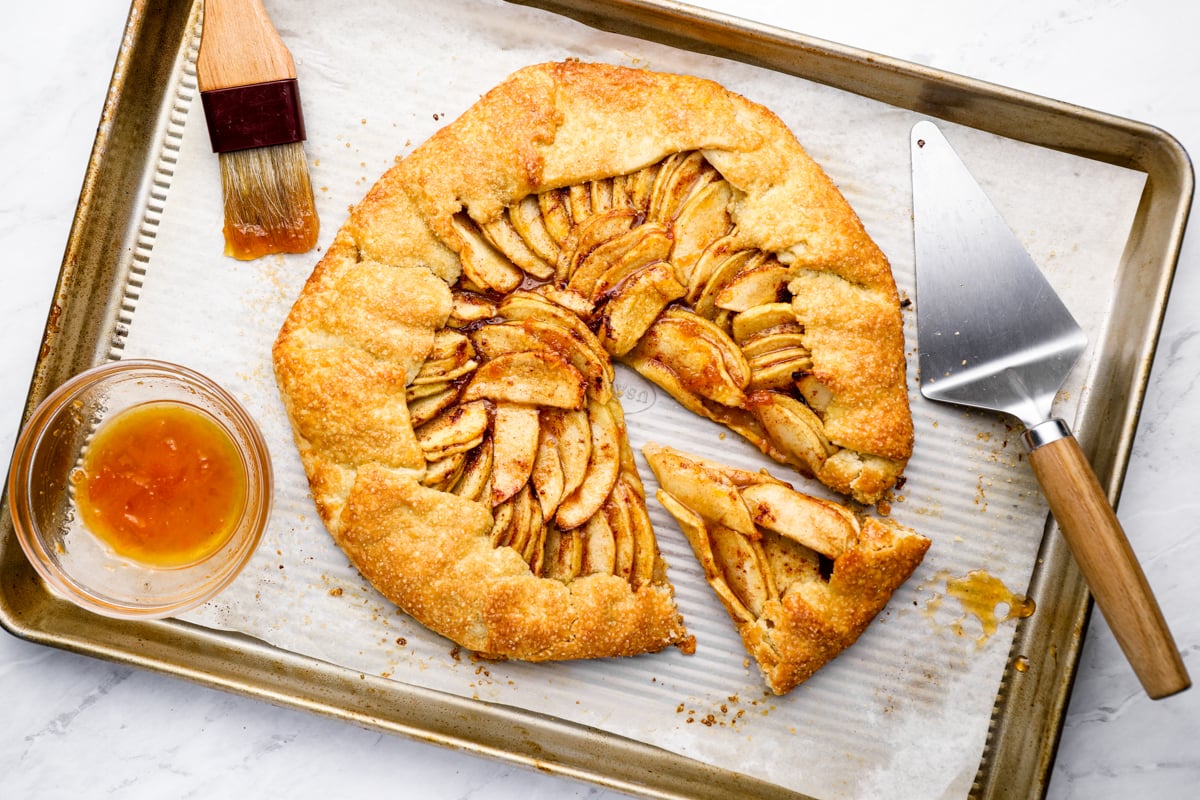
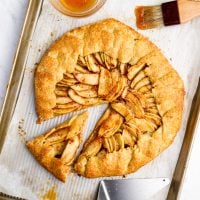
This apple tart recipe skips the tart pan altogether—the apples are piled onto the pastry and the edges simply folded up around them for a beautifully rustic dessert.
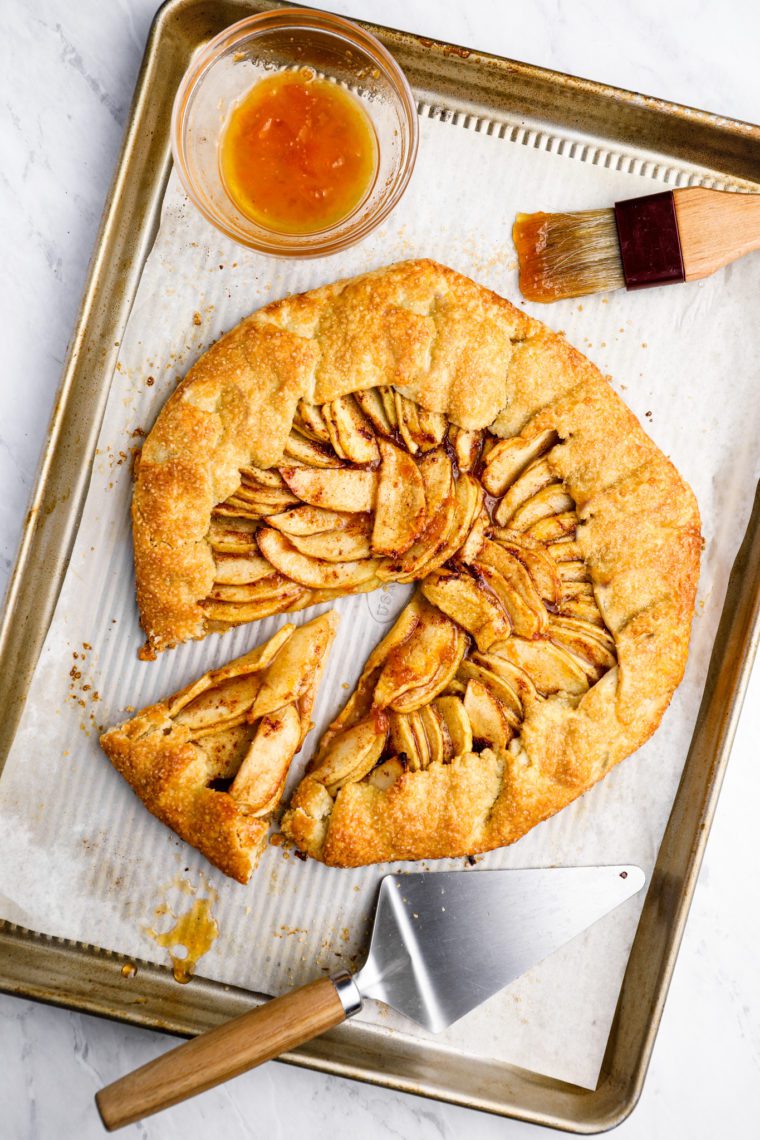
This apple tart recipe is essentially a free-form pie, with thinly sliced apples tossed with sugar and cinnamon and arranged on a buttery, flaky homemade crust. It’s every bit as delicious as a traditional apple pie but easier to assemble, and the rustic shape is part of its charm.
And don’t be intimidated by the homemade pastry—it comes together easily in the food processor, and because the tart is meant to look rustic, there’s no need to fuss over perfectly shaped edges. Bake it until the crust is golden and the apples are tender, then serve it warm or at room temperature, with vanilla ice cream if you like.
“I have made this at least 10 times and it turns out perfectly. I like to make a day or two ahead and freeze. Perfect dessert for company—I pop it in the oven when we start eating dinner and it’s done by the time we’re finished.”
What you’ll need to make a french apple tart
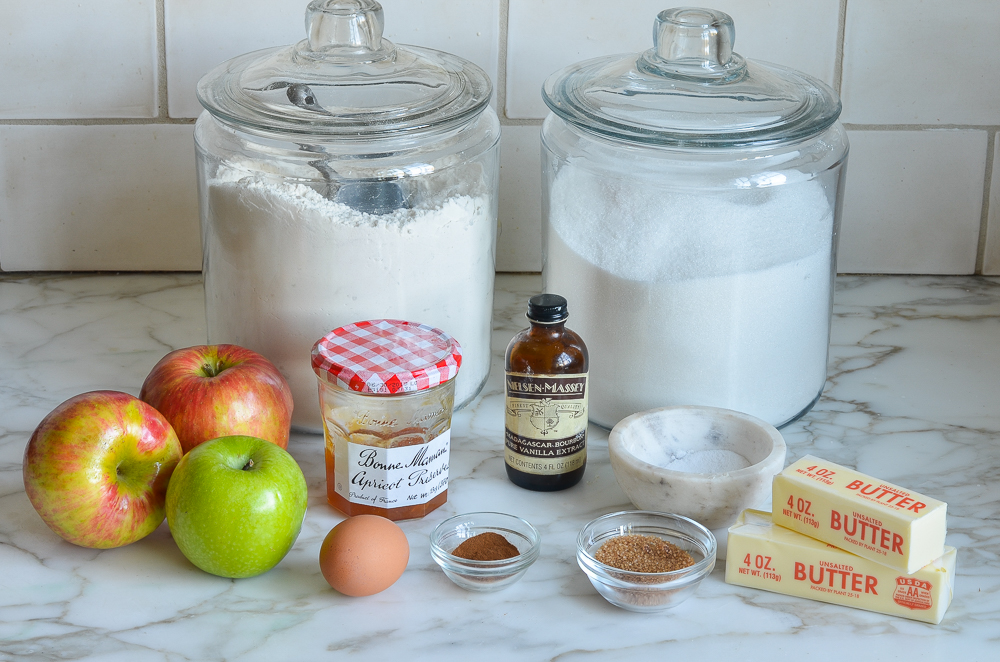
- All-purpose flour: Forms the base of the crust and provides structure to the dough and tart.
- Granulated sugar: Adds sweetness to the crust and filling, balancing the tartness of the apples.
- Butter: Makes the crust rich and flaky while also adding flavor to the filling.
- Baking apples: Use varieties like Honeycrisp, Jonagold, Fuji, Granny Smith, or Golden Delicious—and use a mix of different apples for the best flavor. Heads up: it can be tempting to load up the tart with extra apples, but less is more here—the apples release quite a bit of juice, which can leak from the tart and make a mess of the crust and your oven.
- Vanilla extract & Cinnamon: Adds warmth and enhances the sweetness in the apple filling.
- Egg: Brushed onto the crust for a golden, glossy finish.
- Turbinado sugar: Sprinkled on the crust and apples for added sweetness and a crunchy texture.
- Apricot jelly or jam (optional): Used to glaze the apples, giving them a glossy finish and adding a subtle fruit flavor.
- Jump to the printable recipe for precise measurements
How to Make French Apple Tart
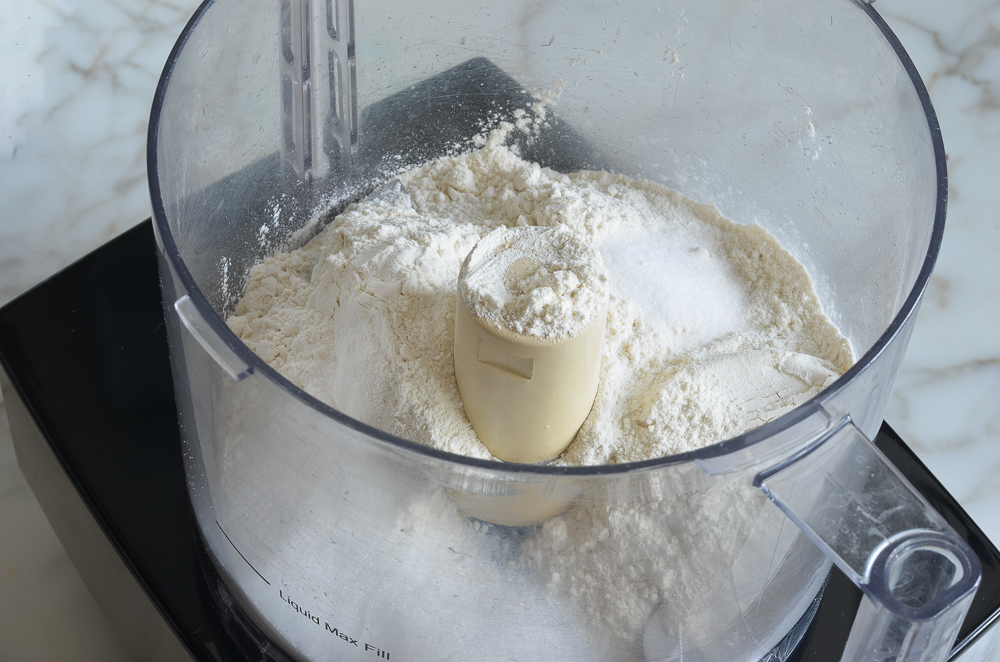
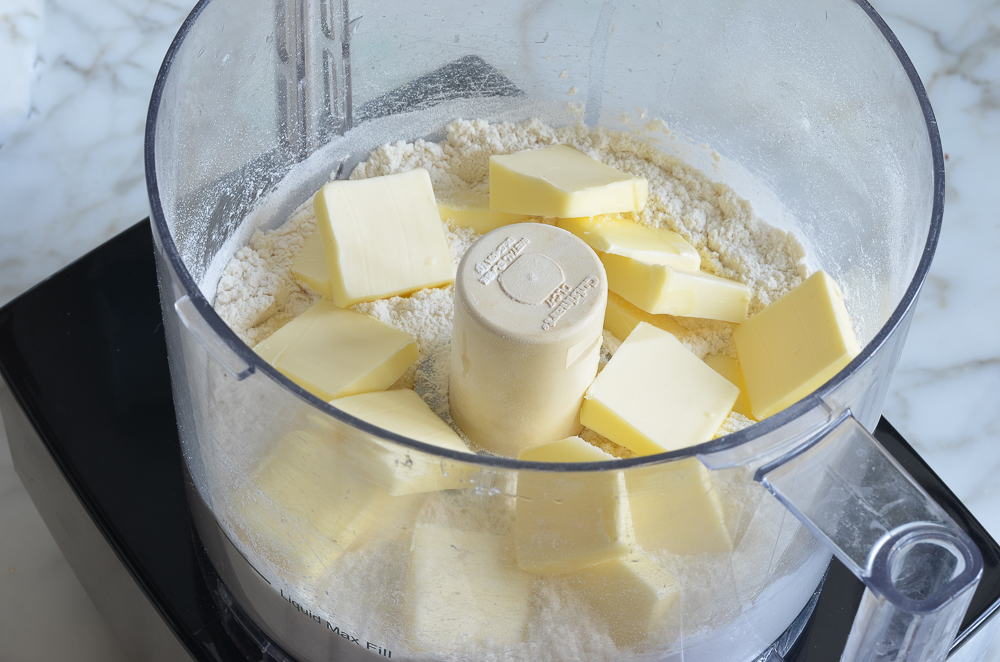
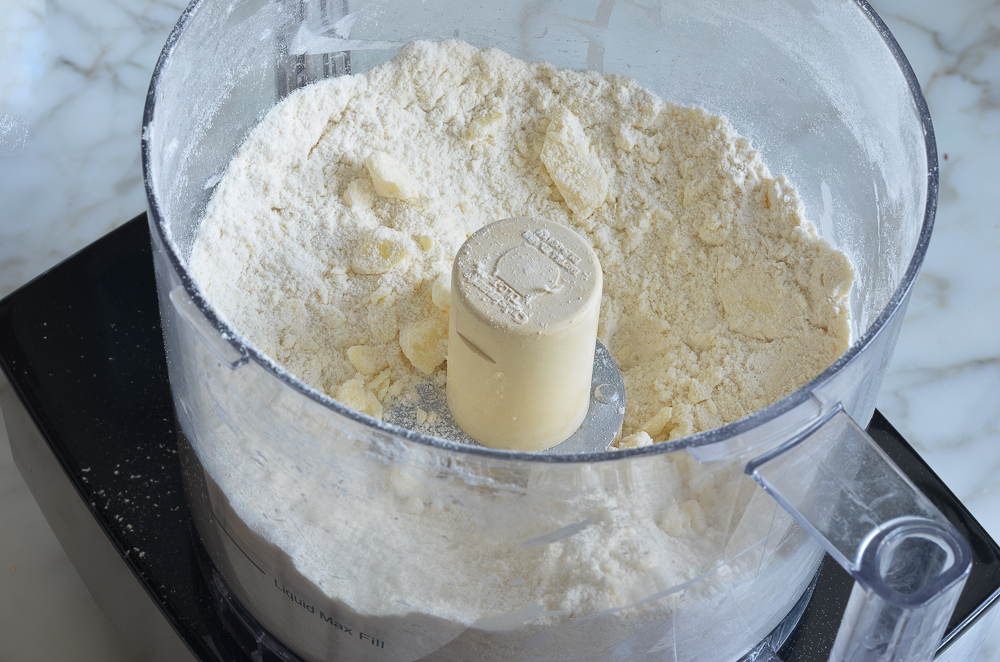
Make the pastry dough: In a food processor, pulse the flour, salt, and sugar to combine. Add the cold butter and pulse until the pieces are about the size of peas. Add the ice water and pulse just until the dough looks moistened and crumbly.
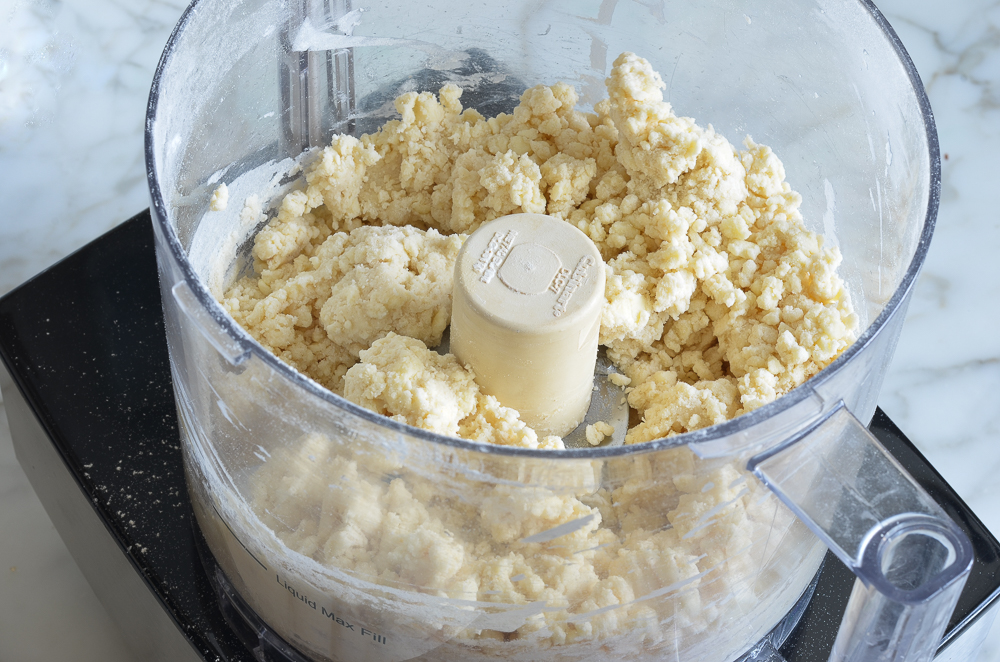
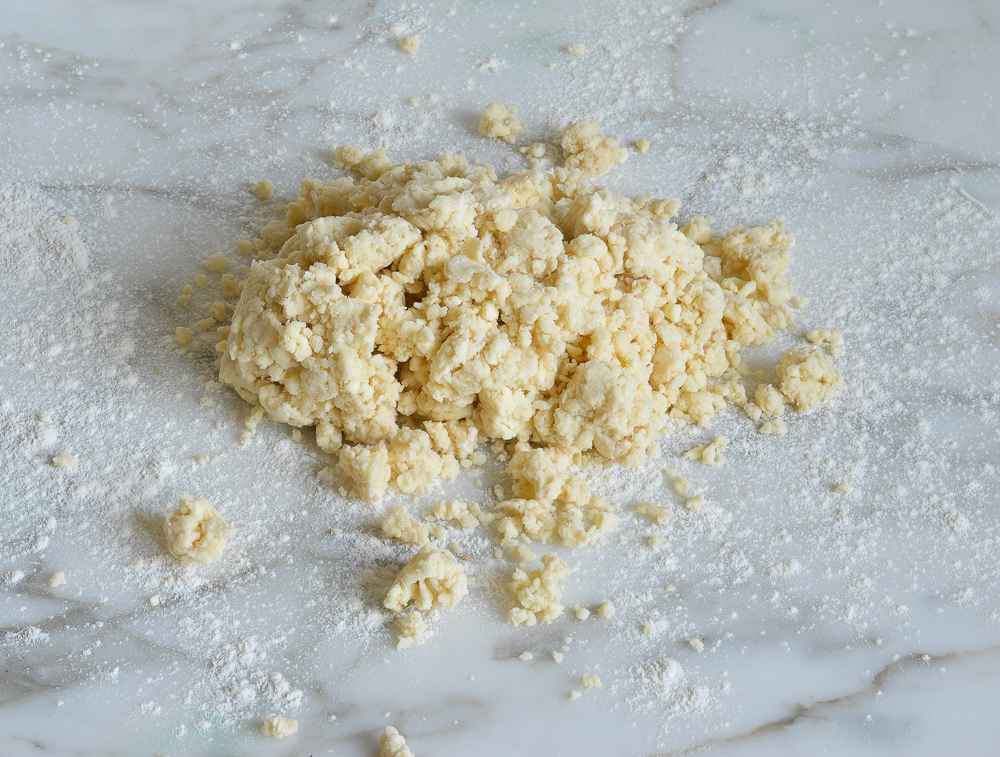
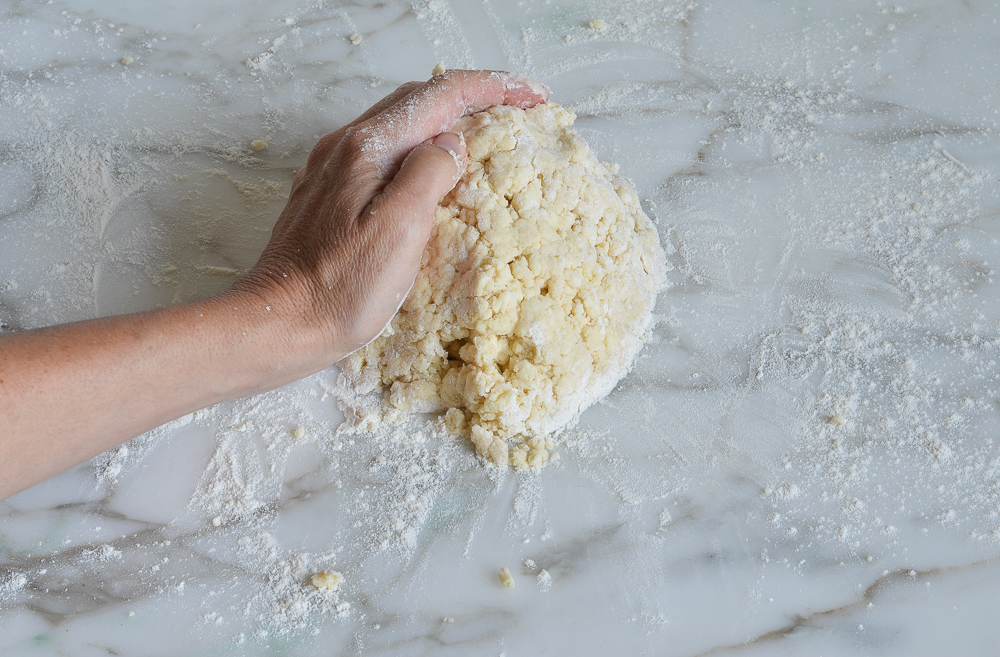
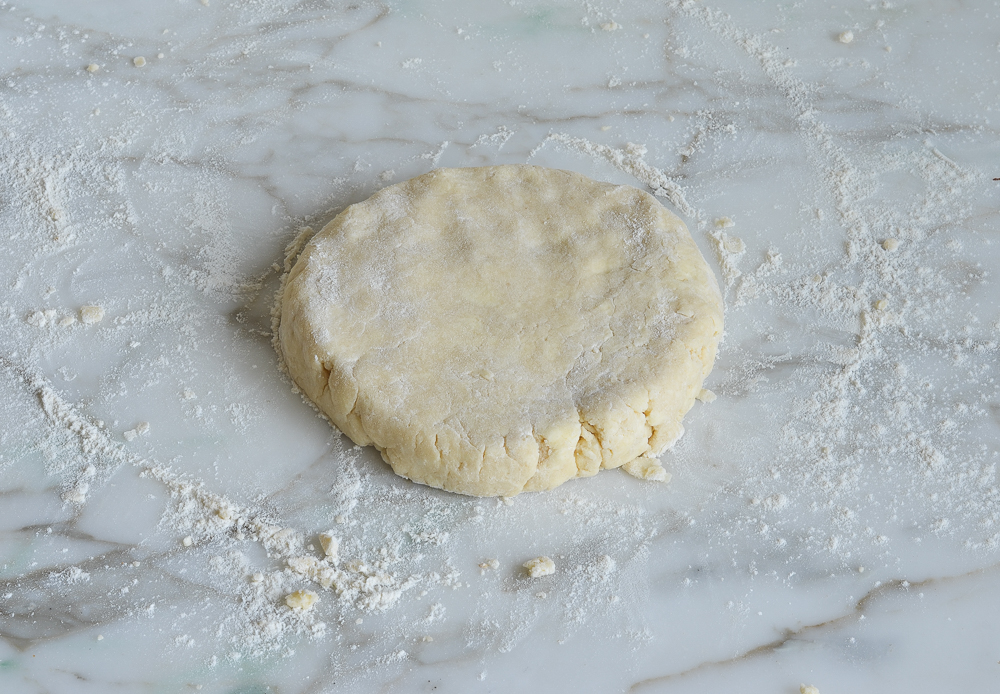
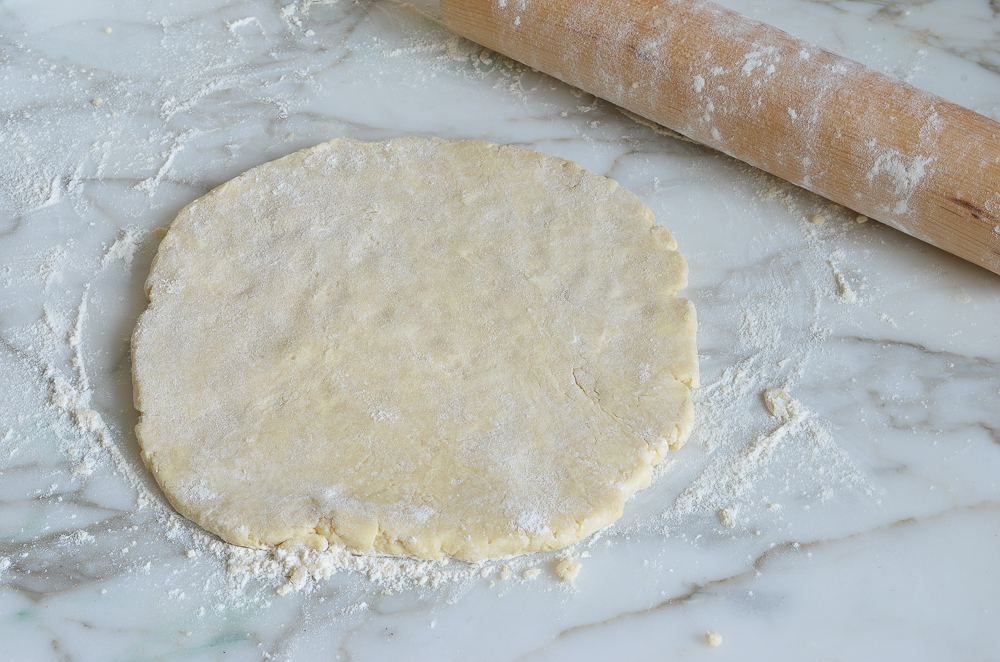
Form and chill the dough: Turn the dough onto a lightly floured surface and knead it a few times, just until it comes together. Shape it into a disk, roll it into a rough circle, and transfer it to a parchment-lined baking sheet. Refrigerate while you make the filling.
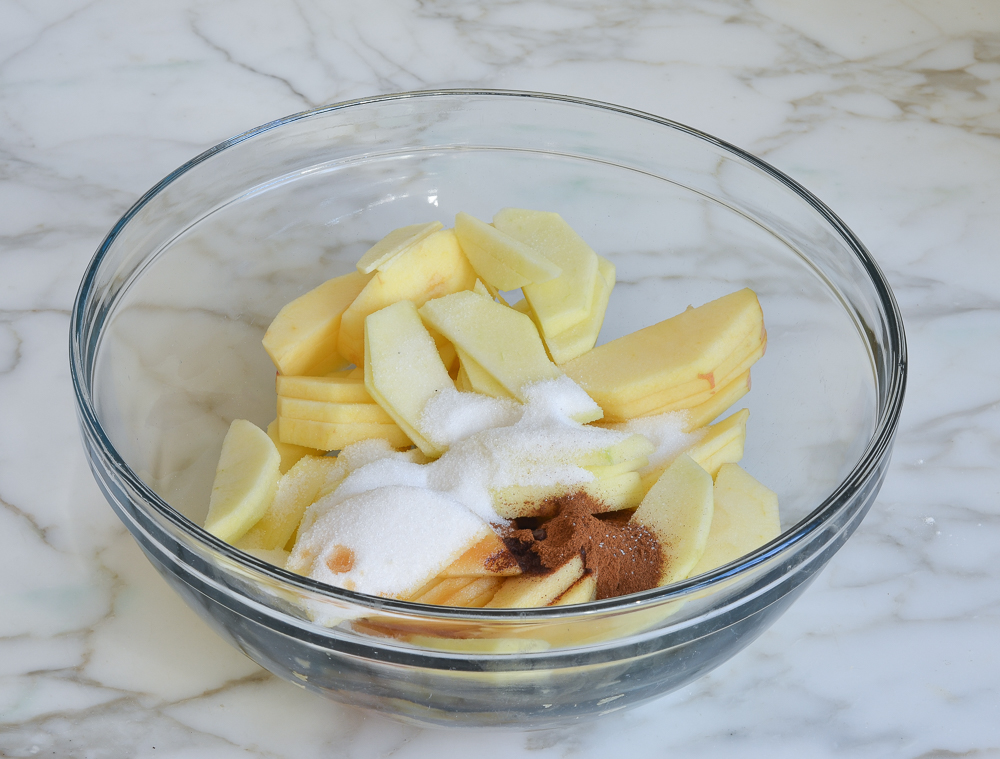
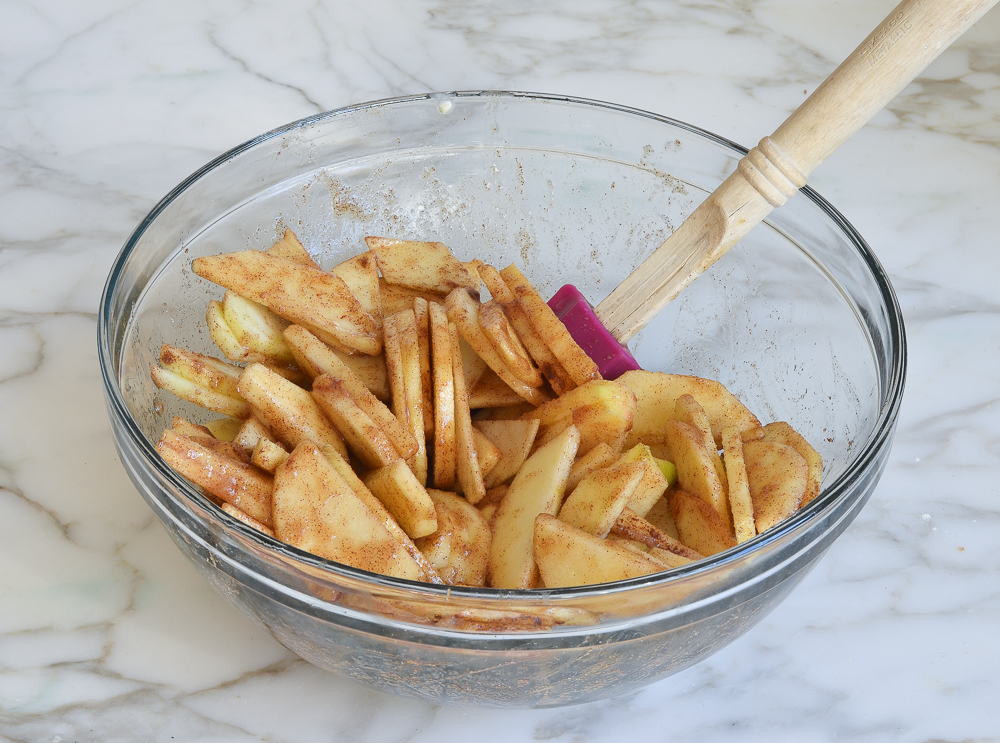
Make the apple filling: Peel, core, and thinly slice the apples. Toss with the sugar, vanilla, cinnamon, melted butter, and salt until evenly coated.
Assemble the tart: Roll the dough into a large circle directly on the parchment. Sprinkle with flour, then arrange the apples in overlapping circles, leaving a wide border around the edge. Fold the pastry over the apples, brush the crust with beaten egg, and sprinkle the tart with turbinado sugar. Chill while the oven preheats.
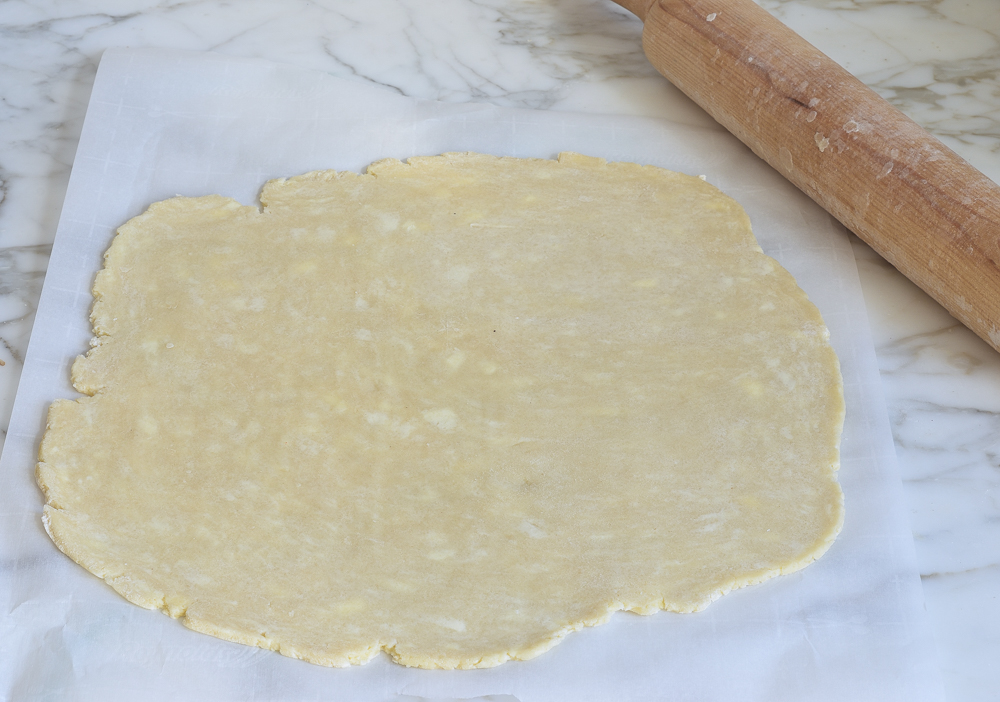
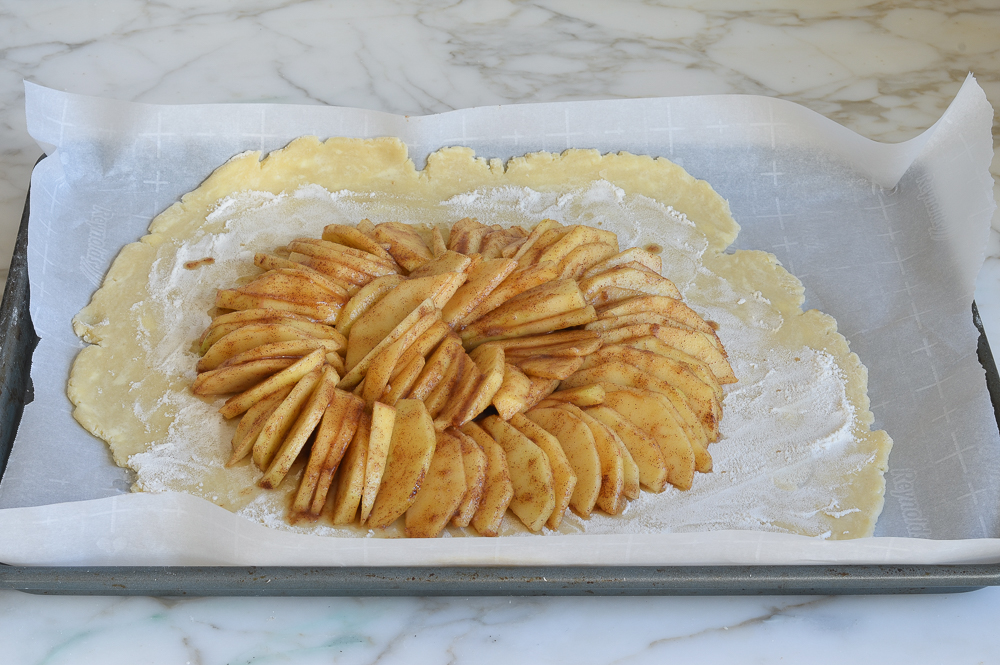
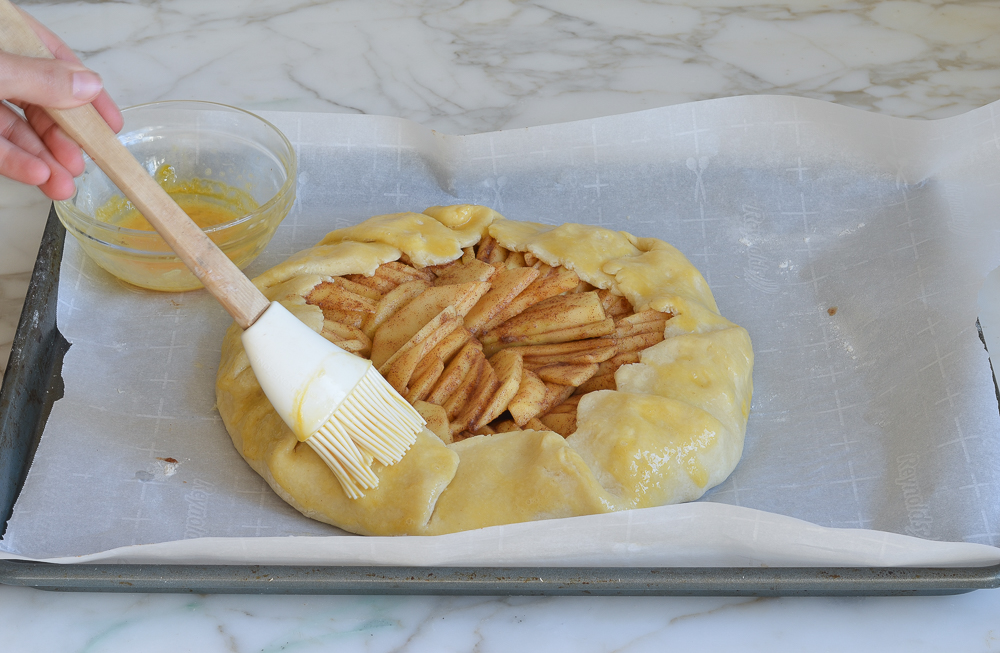
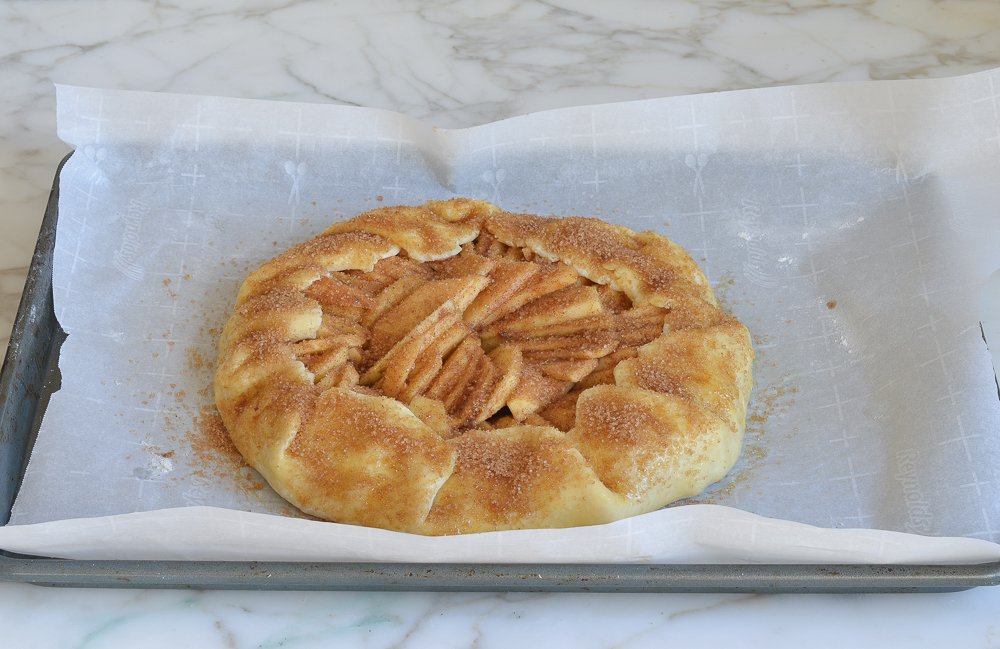
Bake and finish: Bake until the apples are tender and the crust is golden and cooked through. Let the tart cool, then brush the apples with the optional apricot glaze for a glossy finish. Slice and serve warm or at room temperature.
Video Tutorial
More Apple Desserts You may like

French Apple Tart
Ingredients
For the Crust
- 1½ cups all-purpose flour, spooned into measuring cup and leveled-off
- ½ teaspoon salt
- 2 tablespoons granulated sugar
- 12 tablespoons (1½ sticks) very cold unsalted butter, cut into ½-in (13-mm) pieces
- ¼ cup very cold water
For the Filling
- 1¾ lbs baking apples (3 large) (see note)
- ⅓ cup sugar
- 1 teaspoon vanilla extract
- 1 teaspoon cinnamon
- 2 tablespoons unsalted butter, melted
- ⅛ teaspoon salt
For Assembling & Baking
- 1 tablespoon all-purpose flour
- 1 egg, beaten
- 2 tablespoons turbinado sugar
- 1 tablespoon apricot jelly or jam (optional), for glaze
Instructions
- Make the crust: Line a baking sheet with parchment paper. In a food processor fitted with the steel blade, combine the flour, salt, and sugar. Pulse briefly to combine. Add the cold butter and process just until the butter is the size of peas, about 5 seconds. Sprinkle the ice water over the mixture and process just until moistened and very crumbly, about 5 seconds. Transfer the dough to a lightly floured work surface and knead a few times, just until it comes together into a cohesive ball. Pat the dough into a disk. Flour your work surface again and dust the dough with flour, as well. Using a rolling pin, roll into a circle 8 to 10 in (20 to 25 cm) in diameter, turning and adding more flour as necessary so the dough doesn’t stick. Transfer the dough to the parchment-lined baking sheet and refrigerate while you prepare the filling (you’ll roll the dough out further on the parchment paper, so go ahead and clean your work surface).
- Make the Filling: Peel, core, and cut the apples into ⅛-in (3-mm) thick slices (you should have about 4 cups) and place in a large bowl. Add the sugar, vanilla, cinnamon, melted butter, and salt; toss to combine.
- Take the dough from the fridge and slide the parchment paper onto the countertop. Roll the dough, directly on the parchment paper, into a 14-in (36-cm) circle about ⅛-in (3-mm) thick. It’s fine if the edges are a little ragged. Place the parchment and dough back on the baking sheet—the pastry should curve up the lip of the pan.
- Assemble the tart: Sprinkle the flour evenly over the pastry. Arrange the apple slices on top in overlapping concentric circles to within 3 in (7.5 cm) of the edge. Don’t worry about making it look perfect! It doesn’t make much difference in the end, and you don’t want the dough to get too warm. Fold the edges of the dough over the apples in a free-form fashion, working your way around and creating pleats as you go. Patch up any tears by pinching a bit of dough from the edge.
- Using a pastry brush, brush the pleated dough evenly with the beaten egg. Sprinkle 1 tablespoon of the turbinado sugar over the top crust and 1 tablespoon over the fruit. Chill the assembled tart in the fridge for 15 to 20 minutes.
- Meanwhile, preheat the oven to 350°F (175°C) and set an oven rack in the center position.
- Bake for 55 to 65 minutes, or until the apples are tender and the crust is golden and cooked through. (It’s okay if some of the juices leak from the tart onto the pan. The juices will burn on the pan but the tart should be fine—just scrape any burnt bits away from the tart once it’s baked.) Transfer the pan to a rack and let cool.
- While the tart cools, make the optional glaze. In a small bowl, mix the apricot jam with 1½ teaspoons water. Heat in the microwave until bubbling, about 20 seconds. Using a pastry brush, brush the apples with the apricot syrup.
- Use two large spatulas to transfer the tart to a serving plate or cutting board. Slice and serve warm or at room temperature. The tart is best served on the day it is made, but leftovers will keep, loosely covered on the countertop, for a few days.
Notes
- Be sure to use baking apples that hold their shape when cooked, such as Honeycrisp, Jonagold, Fuji, Granny Smith, or Golden Delicious. And use a mix of different varietals for the best flavor.
- Make-Ahead/Freezing Instructions: The dough can be made up to 3 days in advance and refrigerated. Allow it to sit at room temperature for about 15 minutes or until pliable before rolling. The assembled tart may be frozen for up to 3 months. To freeze, place the baking sheet in the freezer until the tart is frozen, then wrap tightly. (Wait until right before baking the tart to brush the beaten egg and sprinkle the sugar onto the crust.) Bake directly from the freezer. (It may take a few extra minutes to bake from frozen.)
Nutrition Information
This website is written and produced for informational purposes only. I am not a certified nutritionist and the nutritional data on this site has not been evaluated or approved by a nutritionist or the Food and Drug Administration. Nutritional information is offered as a courtesy and should not be construed as a guarantee. The data is calculated through an online nutritional calculator, Edamam.com. Although I do my best to provide accurate nutritional information, these figures should be considered estimates only. Varying factors such as product types or brands purchased, natural fluctuations in fresh produce, and the way ingredients are processed change the effective nutritional information in any given recipe. Furthermore, different online calculators provide different results depending on their own nutrition fact sources and algorithms. To obtain the most accurate nutritional information in a given recipe, you should calculate the nutritional information with the actual ingredients used in your recipe, using your preferred nutrition calculator.
This recipe is amazing! I made it with gluten free flour (Cup 4 Cup brand) and followed it exactly. Thanks for sharing it!
This was lovely. It comes together so easily and is not too sweet. My family loved it.
Just tried this and I just loved it!!! Reviews are right on….it is so yummy!!
One question. Could I make this into 2 smaller tarts? Would it work to cut the dough in half and form 2 smaller tarts and then put half the amount of apples in each tart?
If this works, what would you recommend as far as bake time?
Thanks!!
So glad you like it! Yes, I do think you could split this into two smaller tarts. I’d start checking them at about 30 minutes. Please LMK how they turn out!
How about making 4 individual serving tartes? Just made it for the first time this week and it was a hit with the whole fam! Was thinking of taking it to a Sunday dinner but thought it would look cute as several individual small tartes. Would you just half the time as you half the product? 15-20min for 4 smaller tartes?
Yes, I think starting to check them at 15 minutes sounds about right — just keep a close eye on them. Hope everyone enjoys!
I’ve made this recipe probably fifteen times, and it’s always delicious. The perfect amount for two people to devour in two sittings. Thank you for the excellent recipe. 💛
Hi Jenn,
Love your new cookbook, in fact making a few things from it next weekend for my granddaughter and friends.
Today I am making your Rustic French Apple Tart – it is absolutely delicious! I have 10 coming to dinner so I am wondering if I need to make two tarts or can I make a double batch and form it into a rectangle on my cookie sheet? Also can I complete making the tart and cook it about
1 1/2 hours before my guests come? Thanks so much. Carolyn
Hi Carolyn, So glad you’re enjoying the new book! I would definitely make two tarts as opposed to one large one, and it’s perfectly fine to make them a few hours ahead. 🙂
Had some trouble with the pastry, but considering I have neither a food processor nor any experience in making such things, that can hardly be blamed on the recipe. Thankfully the result was salvageable, leading to a rather ragged but delicious tart. If you’re new to pastry, this is a good one to get comfortable with!
Another issue I had was estimating the pastry to fruit ration. I had quite a lot left over, so I popped it in a saucepan and stewed it. Wonderful to have at breakfast!
After a few tries making this dish, I got confident enough to get a little creative. I used pears instead of apples and cardamom instead of cinnamon. Added some walnuts for added texture and wow! My house smelled heavenly while is was cooking, as did my hands after mixing. I’d really recommend it!
I made this recipe was good except really salty! Why ? I even used unsalted butter
Hi Nalini, I’m sorry you found this to be too salty — I haven’t heard that from other readers. Perhaps you’re really sensitive to salt? If you make this again, you could cut the salt in half for both the crust and the filling.
I’ve made this twice. Both came out great. The 2nd time I used half the butter in the filling and added the juice of one lemon, 2 teaspoons of corn starch, and let it sit about an hour in the fridge. Then I brought the filling up to a brief simmer and let it cool down before completing assembly.
The final product was more cohesive, with a bright tart flavor.
I made this tart for dinner guests last weekend and everyone loved it! It took me a little longer than 40 min to prepare, but I had a lot going on. I’m making it again now, and both times I’ve had to bake 20+ min longer to get the crust browned evenly. It’s not browning along the “pleats”. Maybe I should roll the edges thinner? Gala apples were perfect first time. Honeycrisp this time have leaked a lot of juice. I’m anxious to taste this one!
Hi Jenny, Yes, I think you may be able to resolve the issue by rolling the edges a bit thinner. (And glad you like it!)
There is no baking powder or baking soda in the crust? Is that typical?
Yes, that is typical as most pie crusts don’t have either of these. (That said, my pie crust recipes do include baking powder as it helps the dough expand a bit in the pan as opposed to shrinking down the sides. That isn’t necessary here as this isn’t baked in a pan.) Hope that clarifies!