
Easy Artisan Bread (No-Knead)

This post may contain affiliate links. Read my full disclosure policy.
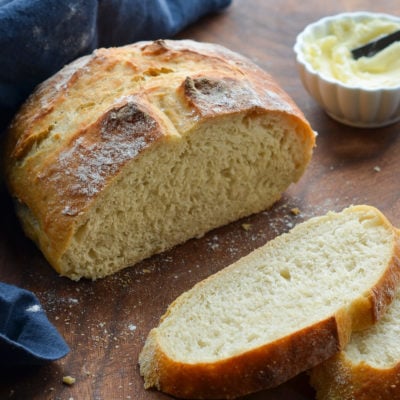
This easy artisan bread recipe takes the fuss out of bread-making—no kneading, no special equipment, just three golden, crusty loaves with hardly any effort.
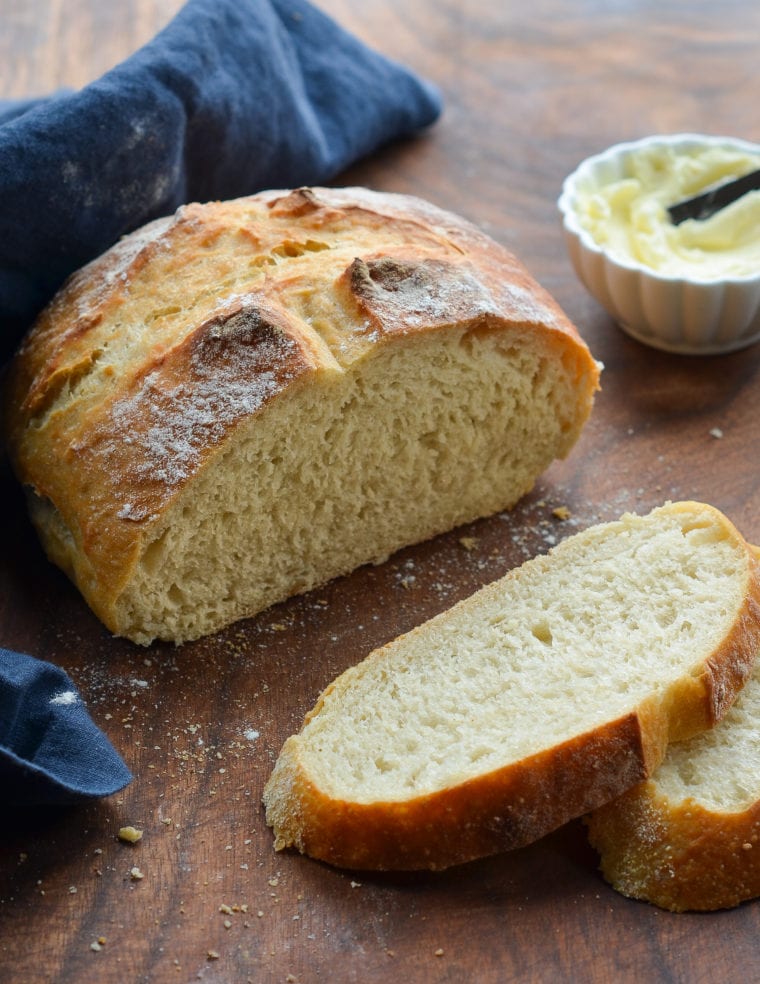
This crusty artisan bread recipe is astonishingly easy, and it makes enough for several loaves, which you can bake as needed. What’s more, the dough takes just five minutes to make, does not require kneading or any special equipment, and can rest in the fridge for up to two weeks—in fact, the longer it chills, the better it gets!
The recipe is modestly adapted from one of my favorite baking books, Artisan Bread in 5 Minutes A Day by Jeff Hertzberg M.D. and Zoë François.
“Absolutely one of our favorite bread recipes and so easy.”
What You’ll Need To Make Crusty Artisan Bread
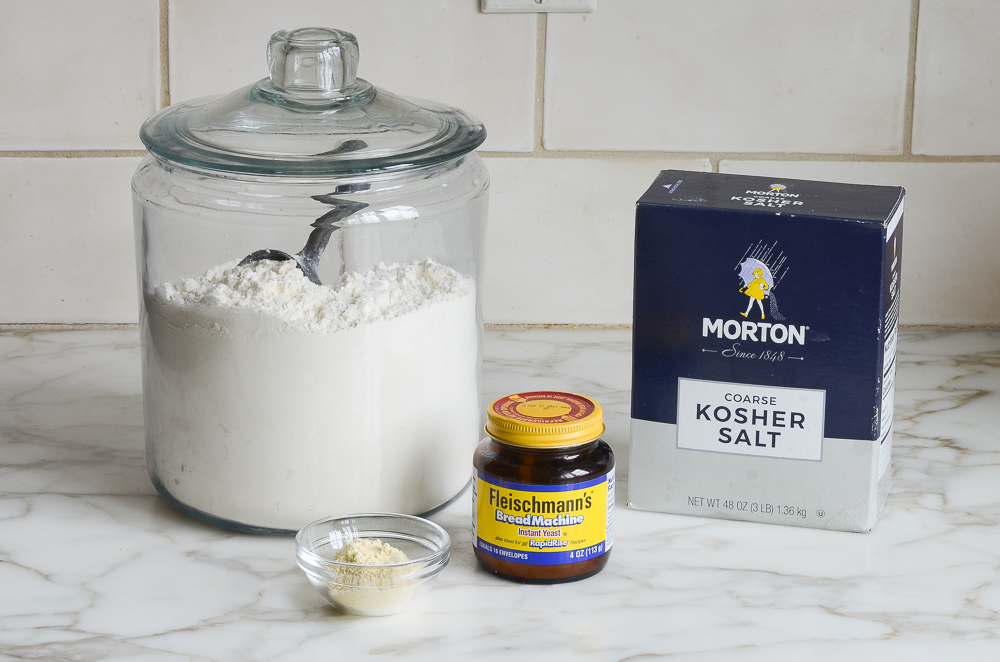
- All-purpose flour: The backbone of the dough. I recommend a high-protein flour like King Arthur for best results—if you’re using flour with less protein, you might need to add an extra spoonful or two.
- Kosher salt: Brings out the flavor of the bread and also helps regulate the yeast so the dough doesn’t rise too fast.
- Instant or rapid-rise yeast: The leavening agent. If you’re using active dry yeast instead, just plan for a longer rise time.
- Lukewarm water: Brings the dough together and helps activate the yeast. Aim for about 100°F—warm to the touch but not hot.
- Cornmeal: Sprinkled on the baking sheet so the dough doesn’t stick and to give the bottom crust a little extra texture.
- Jump to the printable recipe for precise measurements
Step-by-Step Instructions
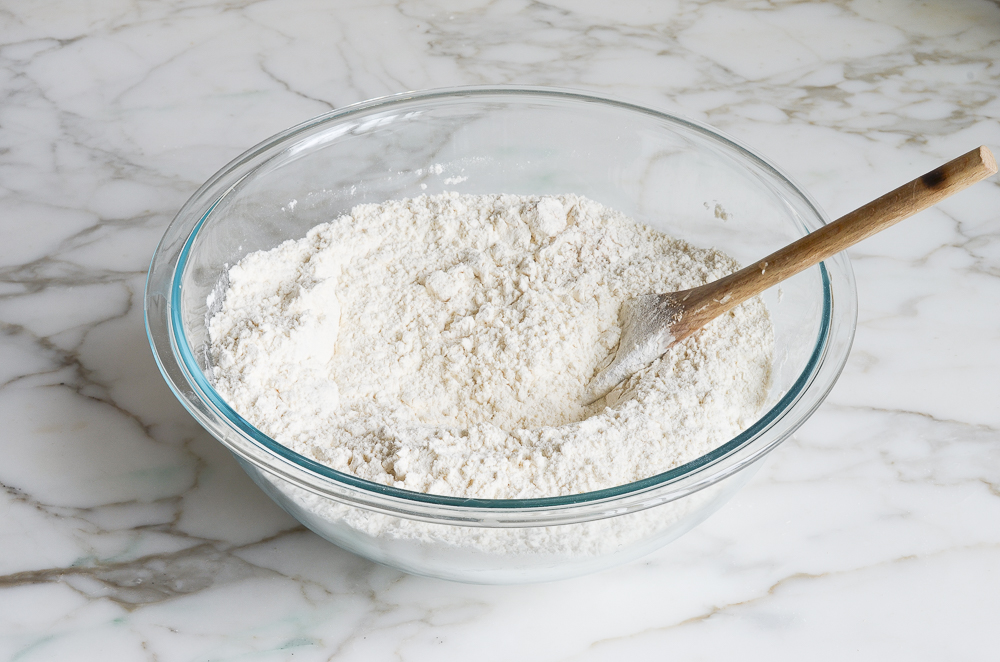
Step 1: Combine the dry ingredients. In a very large bowl (at least 6 quarts), mix together the flour, salt, and yeast with a wooden spoon.
Step 2: Add the water. Pour in 3 cups of lukewarm water (about 100°F). Make sure the water is warm but not hot—if it’s too hot, it can kill the yeast.
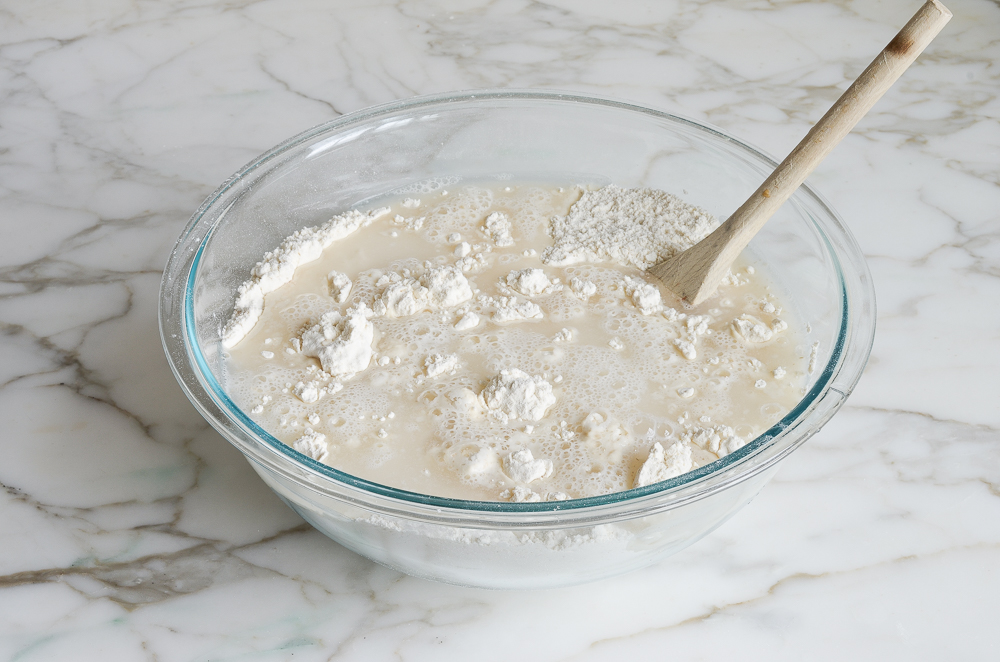
Step 3: Stir the dough. Mix with a wooden spoon until the flour is fully incorporated and there are no dry spots. The dough should be soft and a bit sticky (this helps create an open, airy crumb). If it seems dry, add warm water a tablespoon at a time; if too wet, add a little flour.
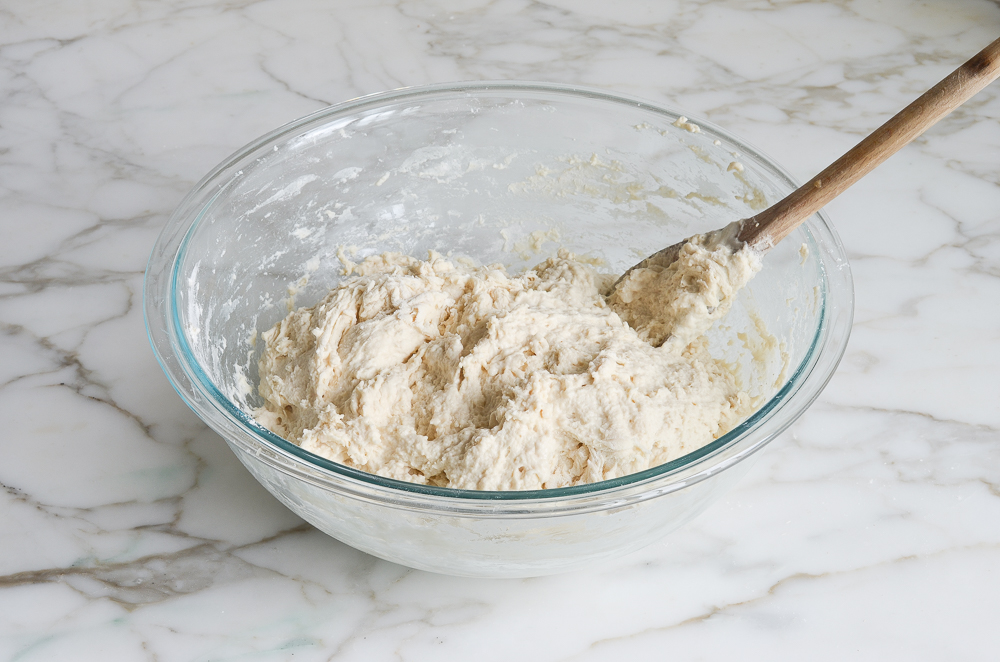
Step 4: Let the dough rise. Cover loosely with plastic wrap and let sit at room temp for about 2 hours, until risen and bubbly–it will rise a lot! (You can refrigerate the dough for up to 14 days or freeze for up to a month.)
Pro Tip: For a flavor boost, let the dough chill overnight—slow fermentation deepens the taste and makes it easier to handle.
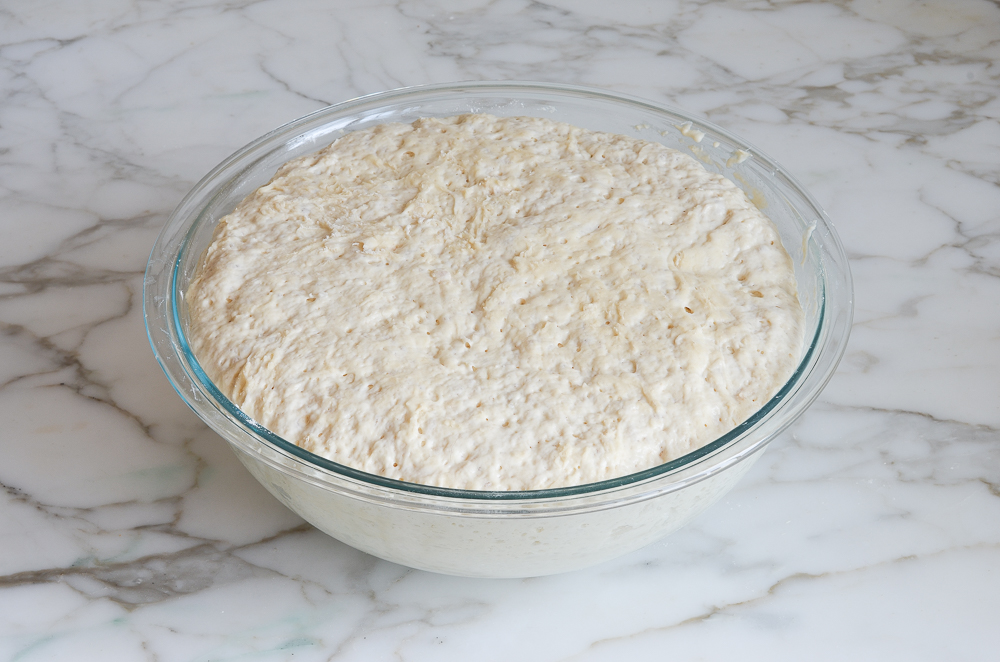
Step 5: Portion the dough. Dust the dough and your hands with flour, then pull out one-third of the dough—it will be sticky, and that’s normal.
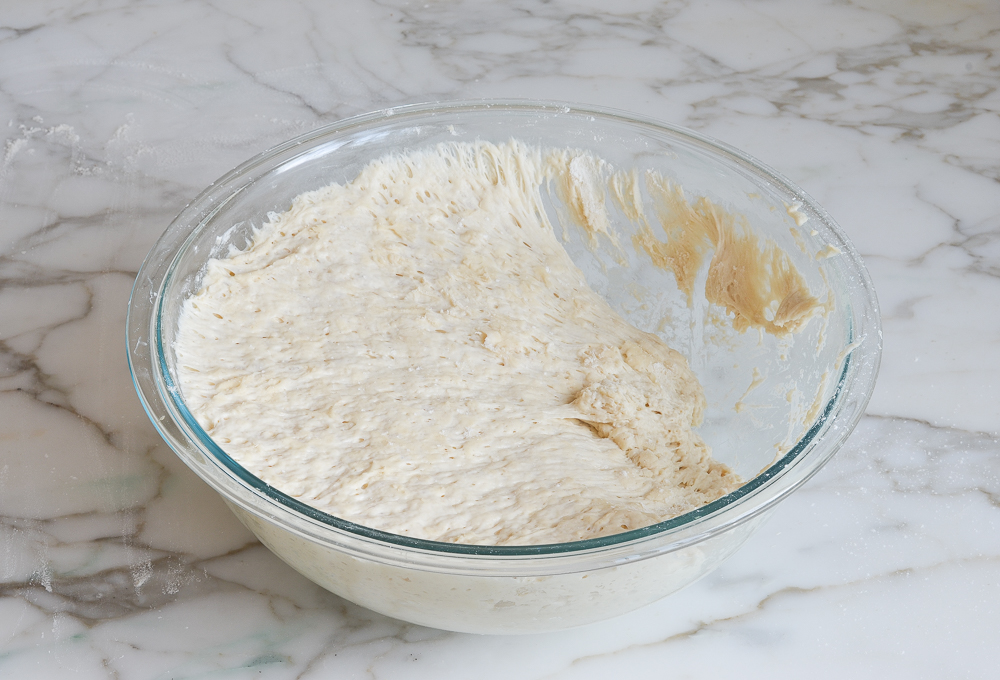
Step 6: Shape and rest the dough. Lightly flour the dough, shape it into a ball by tucking the edges under, and place it on a cornmeal-dusted baking sheet. Let rise uncovered for 40 minutes (or up to 90 minutes if chilled). The dough will rise slightly and may also spread out a bit.
Pro Tip: Resting uncovered helps the surface dry slightly, which encourages a better crust in the oven.
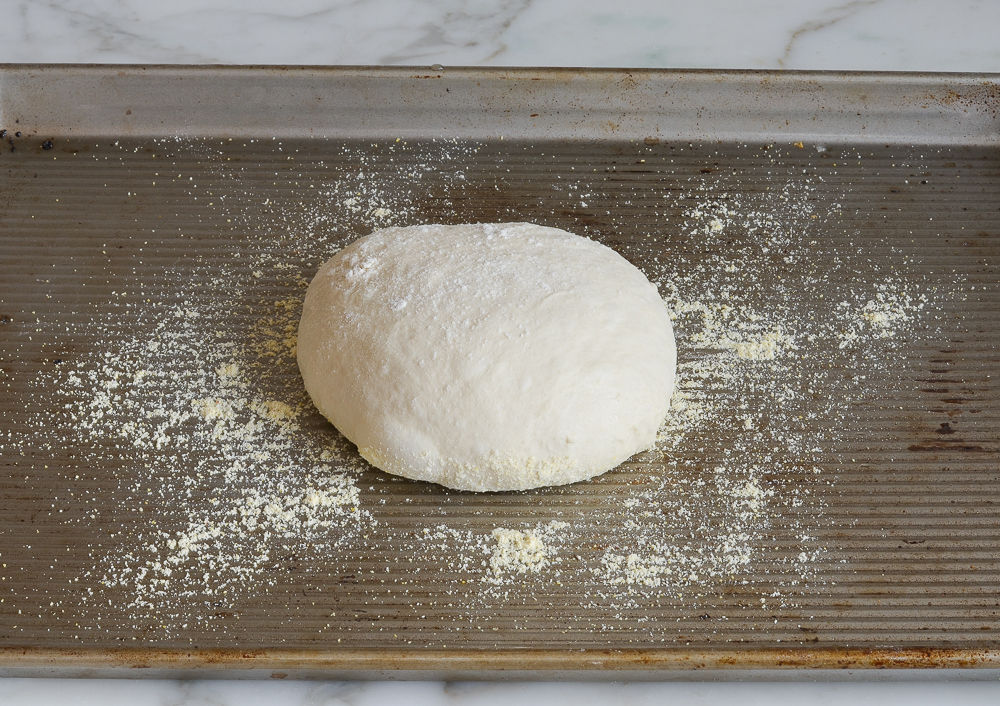
Step 7: Slash the dough. Lightly dust the loaf’s surface with flour and use a sharp knife to make a few ½-inch-deep slashes in any pattern you like (these let the bread expand as it bakes). Get creative! A scallop, a cross, or even a tic-tac-toe pattern will look great.
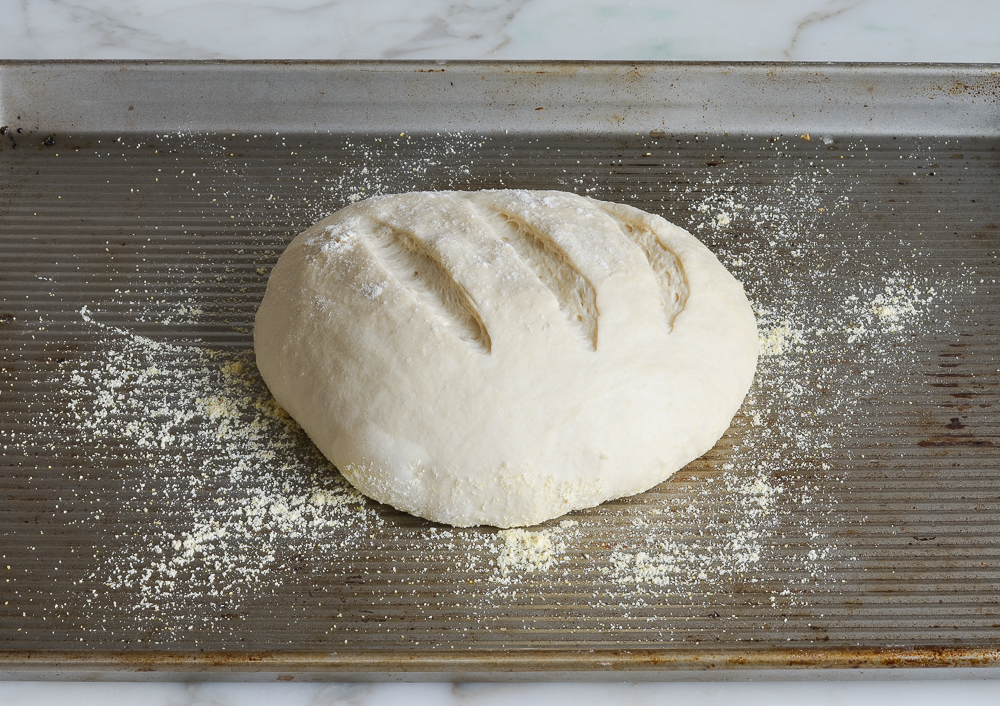
Step 8: Bake with steam. Preheat the oven to 450°F with a metal cake pan on the bottom rack. Slide in the baking sheet with the dough, pour 1 cup hot tap water into the cake pan, and bake for 30 minutes until golden-brown. (The steam generated by the water gives the loaf a crisp crust.)
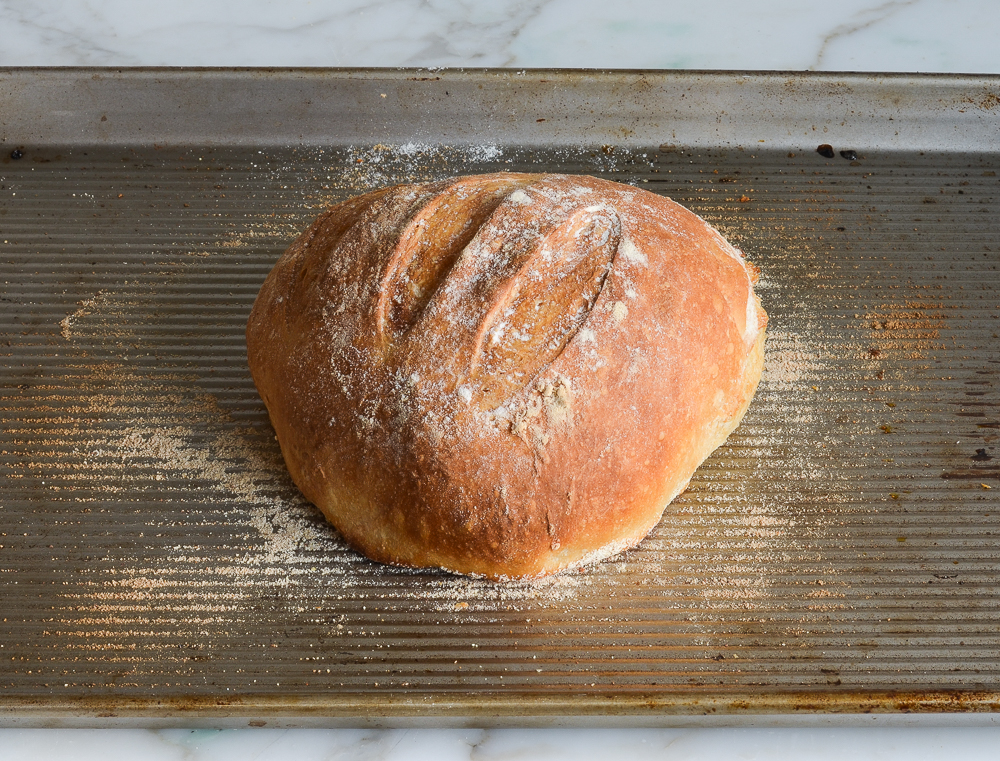
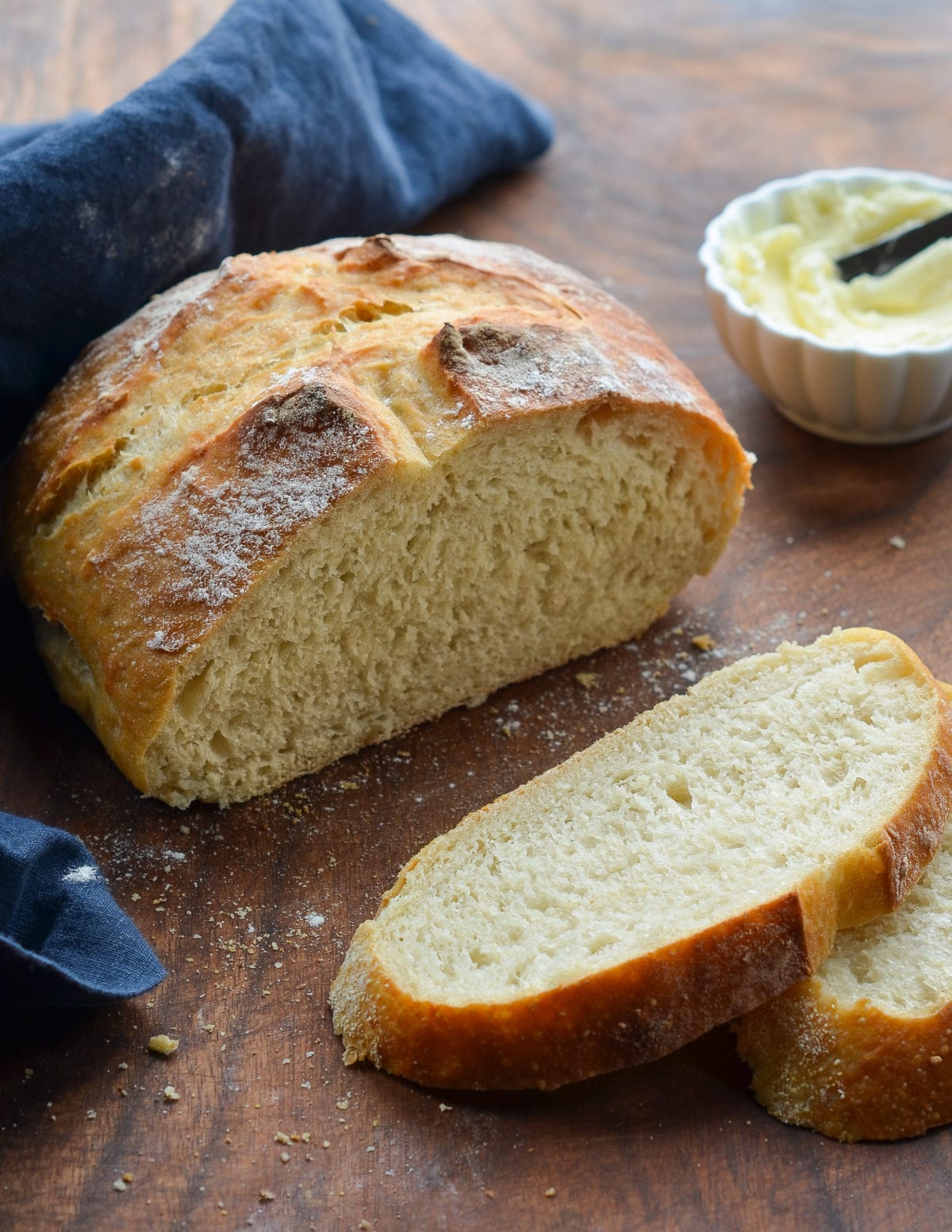
Step 9: Cool before slicing. Let the bread cool completely on a wire rack. It’s best the day it’s made, but can be frozen for longer storage.
Pro Tip: Don’t be tempted to slice it while warm; slicing too soon traps steam inside and can make the interior gummy. Cooling fully helps the crumb set properly.
Other Bread You May Like
Homemade Artisan Bread
Ingredients
- 6½ cups all-purpose flour spooned into measuring cup and leveled-off (preferably King Arthur; see note)
- 4 teaspoons kosher salt
- 1½ tablespoons instant/rapid-rise yeast (see note)
- 3 cups lukewarm water (no need to be exact, but lukewarm is about 100°F/38°C)
- Cornmeal, for dusting the pan
Instructions
- In a very large (6-qt/6-L) bowl, whisk together the flour, salt, and yeast. Add the water and stir with a wooden spoon until the mixture is uniformly moist, without any patches of flour. The dough should be sticky and conform to the shape of the bowl. If your dough is too dry, add a few tablespoons more warm water. If it's too wet, add a few tablespoons of flour. (See the step-by-step photos for guidance on what the dough should look like.) Cover the bowl loosely with plastic wrap and let it sit on the counter in a warm spot for 2 hours. If you plan to bake a loaf immediately, proceed to the next step. Otherwise, place the bowl of dough in the refrigerator to be used over the next 14 days. (Once refrigerated, the dough will shrink back a bit; that's okay. Do not punch down the dough at any point, and keep it loosely covered with plastic wrap.)
- Dust a sturdy baking sheet with cornmeal.
- Dust the surface of the dough and your hands lightly with flour. Pull out one-third of the dough and coat the outside lightly with flour (you don't want to incorporate more flour into the dough, you just want to be able to handle it). Gently work the dough into a smooth ball, stretching the surface and tucking the ends underneath, adding more flour as needed so it doesn't stick to your hands. (Don't overwork the dough; this process should only take about 30 seconds.) Put the dough ball onto the prepared baking sheet and let it rest at room temperature, uncovered, for about 40 minutes. (If the dough has been refrigerated, allow it to rise for 60 minutes, or up to 90 minutes if you want a more open and airy crumb structure.) The dough will rise a bit. It may also spread/flatten a bit; that's okay.
- Preheat the oven to 450°F (235°C). Set one rack in the lowest position of the oven and one rack in the middle position. Place a metal pan (any metal cake pan or broiler pan will work; just don't use glass) on the bottom rack. (You will fill this with water later to create steam in the oven).
- Generously dust the dough with flour. Using a sharp knife, make a few ½-in (13-mm)-deep slashes in the dough -- a scallop, cross, or tic tac toe pattern all look nice.
- Slide the baking sheet with the dough into the oven, and carefully fill the metal cake pan with one cup of hot tap water. (Try to do this quickly so as not to let heat out of the oven.) Bake until the loaf is golden brown, about 30 minutes. Cool completely on a wire rack.
- This bread is best enjoyed fresh on the day it is made. Once sliced, place the loaf cut-side down on a cutting board or plate and leave it uncovered. (If it lasts beyond a day, I suggest slicing and freezing.)
Notes
- I use King Arthur flour, which is higher in protein than some other all-purpose flours. If using a flour with a lower protein content, such as Gold Medal, you will likely need to add a few more tablespoons of flour.
- Active dry yeast may be used instead of instant/rapid-rise yeast, however, the dough will take longer to rise. To give active dry yeast a boost, you can dissolve it in the lukewarm water and let it sit until frothy, about 10 minutes. After that, add it to the flour and salt, and proceed with the recipe.
- Freezing Instructions: After the initial 2-hour rise, the dough can be portioned into thirds and frozen in airtight plastic containers for up to 1 month. Defrost the dough in the refrigerator overnight, then shape, rest and bake as usual. The baked loaves can also be frozen whole or sliced: Wrap in a zip-top freezer bag and freeze for up to 1 month. (If you plan to use slices one at a time, place pieces of parchment between them so they don't stick.) To thaw, take the bread out of the freezer and let it come to room temperature on the countertop. Reheat in a 350°F (175°C) oven until warmed through, about 10 minutes.
Nutrition Information
This website is written and produced for informational purposes only. I am not a certified nutritionist and the nutritional data on this site has not been evaluated or approved by a nutritionist or the Food and Drug Administration. Nutritional information is offered as a courtesy and should not be construed as a guarantee. The data is calculated through an online nutritional calculator, Edamam.com. Although I do my best to provide accurate nutritional information, these figures should be considered estimates only. Varying factors such as product types or brands purchased, natural fluctuations in fresh produce, and the way ingredients are processed change the effective nutritional information in any given recipe. Furthermore, different online calculators provide different results depending on their own nutrition fact sources and algorithms. To obtain the most accurate nutritional information in a given recipe, you should calculate the nutritional information with the actual ingredients used in your recipe, using your preferred nutrition calculator.
Jenn,
I hope you and your family are doing OK during these challenging times.
THANK you for another fantastic and so easy recipe!
I once mentioned that you were going to cost Vie De France some business, I promise to continue going there just to support the business when we get back to some level normalcy … but no longer for bread 🙂
In all seriousness, I want to let you know that your recipes have been keeping our family busy during these incredibly strange times and we appreciate your diligent work.
I also want to encourage all, if possible, to purchase your book for themselves and gifting as I have done and plan to do again this holiday season. I am glued to the website thought and have our family copy of the book seating on the shelve for the few recipes that are exclusive to the book.
Anyway, long review, but THANK you so much for your work and keep safe with your family …
Are you ever going to have a book signing for those of us close by? It would great memories for my girls to gals with them when they turn to college age in many years 🙂
Best
Aww thank you for the sweet note. I’m so happy that your family is enjoying the recipes — and that cooking is providing a happy diversion. I do hope to do more book signings once we can leave the house again (and I have another cookbook unofficially on the way). 💕
This totally made my day! Another cookbook, yay! Thanks for letting is know! 😍
Hi Jenn,
I have silly question.
Regarding the measurements….is it 6 and a half cups of flour or 6x half cups of flour?
Hi Vas, Sorry for the confusion. It is 6 and a half cups of flour. 🙂
If I wanted to make the bread somewhat healthy, could I add flax meal to the dough? How much would I add and do you think it would be worth doing?
Hi Jeff, Honestly, this is such a perfect and foolproof recipe, I’d be nervous to mess with it. But I think you could probably get away with replacing about 1/2 cup of the flour with flax meal. I’d love to know how it turns out if you try it. 🙂
Hi Jenn, you bread is amazing. I have sent your recipe to a bunch of family and friends for them make it and they all loved your bread too.
What I wanted to know was if I can use flour instead of corn flour When baking the bread as I have no more in my pantry.
So glad you enjoyed this enough to share the recipe with others! 🙂 I’m assuming you’re referring to cornmeal? If so, I wouldn’t recommend flour but you can line the baking sheet with parchment.
I cooked this and it turned out great! Very thorough instructions and the pictures definitely helped. My only complaint is that it makes ALOT of bread. I wish there had been measurements for only 1 or 2 loaves. But still a great recipe.
Good Morning,
I would gladly take your left over bread … these are fantastic and my kids are killing the three we just made 🙂
Keep safe
We are empty nesters so I divided the recipe in half which was super easy to do with these measurements, and then I made two smaller loaves of bread. These slightly smaller loaves were the perfect size for us.
Jenn
There used to be a commercial on tv (you’re too young to remember) where a guy with an upset stomach says “Honey i can’t believe i ate the whole thing.” My wife had to stop us from eating this bread or we would never have had an appetite for dinner! The bread is incredible. I can’t believe it came out of my oven! Got tired of gardening so thought i would give this bread recipe a try. Have the second loaf in now. Wifey wants me to take it to our daughter’s house in case it won’t work out next time! Every recipe I have tried of yours is fantastic. no need to look elsewhere.
ron
Vancouver BC Canada
🙂 So glad you enjoyed the bread!
Hi! Can I bake all three loaves at once? if so should i add another metal pan filled with water?
thank you!
Hi Grace, if you bake all three loaves at the same time, they’ll take a bit longer. I’d start checking them at about 35 minutes and use the color as a visual cue–you’re looking for a golden brown. (And I don’t think you’ll need to add an additional pan with water. Please LMK how they turn out!
Wow – – I have tried making bread before including no knead overnight rise method recipes, but this one my co-worker recommended was AMAZING – as good as any bread from a bakery that specializes in bread! This would make a great hostess gift. I made it exactly according to the recipe but did 1/2 the quantity as I only had 1 packet of instant dried yeast, used my instant pot on Yogurt setting to halve the time for the first rise, sprinkled black sesame seeds on top before baking (next time I would press them into the dough a bit because they fell off when I sliced the loaf). Next time I’m going to try substituting half the flour with wholewheat bread flour which I see from another review means adding and extra 1/3 cup water. I’ll be thrilled if it turns out anywhere close to this one.
Thank you Jenn for sharing your wonderful recipe.
This was my first time making Artisan bread and it was so delicious. I ended up making three batches and went around spreading cheer to many dear friends during these difficult times, with wrapped packages of bread on their doorsteps.
I added Rosemary, Garlic and a pinch of Thyme to a few smaller loaves. Omg…Yummm!
Thank you again.
Once upon a chef Artisan bread. Awesome, easy, tasty. Will make this again for sure.
Do you think I could add a bit of olive oil and dried rosemary to it as well, to make a crusty artisan rosemary olive oil loaf? And how much olive oil would you recommend?
Thanks Jenn, fantastic recipes and cookbook!
Hi Thomas, Glad you like the recipes! I wouldn’t add olive oil to the dough (it’s already a very wet dough) but some rosemary would be fine. Hope you enjoy!