


This post may contain affiliate links. Read my full disclosure policy.
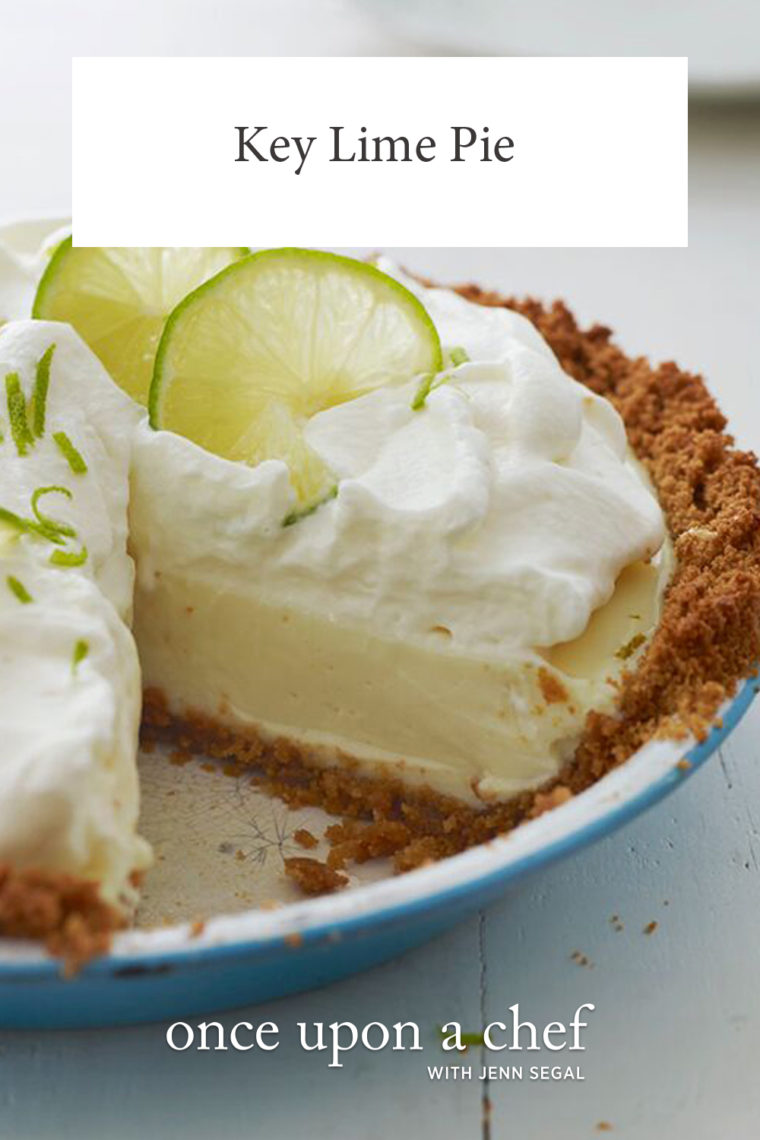
Sweet, tart, and refreshingly creamy, this easy Key lime pie recipe has all the flavor of the classic with a wonderfully simple filling.
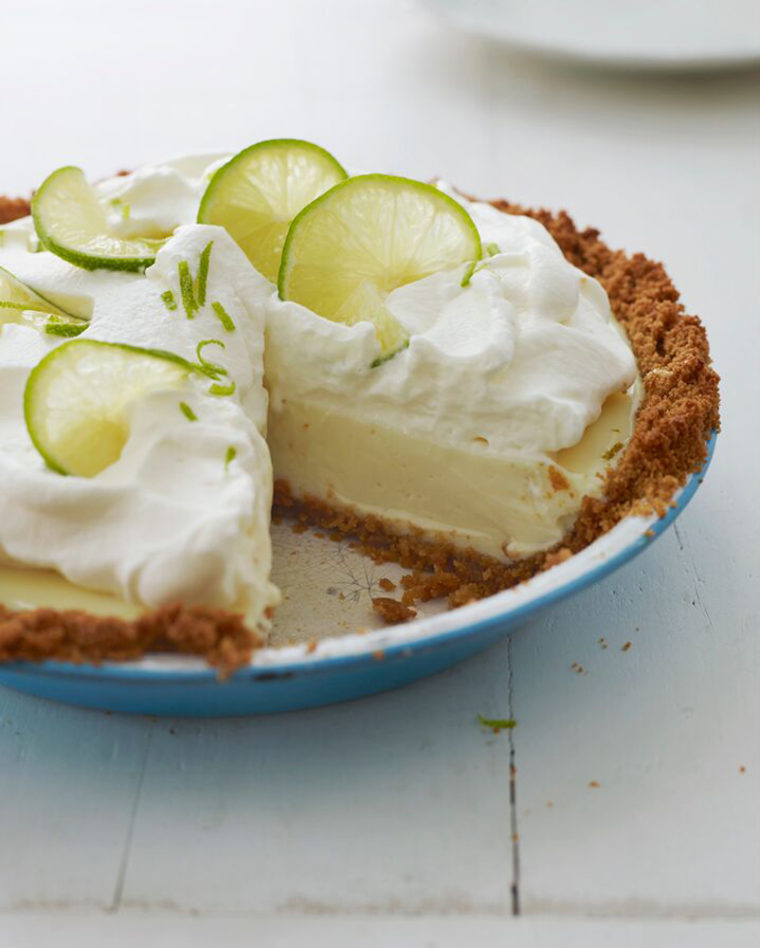
One of the most popular recipes from my first cookbook, this easy Key lime pie recipe has been a reader favorite for years. It has a buttery graham cracker crust and a cool, creamy filling with just the right balance of sweet and tart.
My version is a little different from the classic: I use Greek yogurt instead of egg yolks for the filling. I’ve tested it both ways, and I actually prefer it with yogurt—it sets beautifully and gives the pie a clean, bright lime flavor. And there’s no need to hunt down Key limes; regular grocery-store limes work beautifully here.
“The best key lime pie I’ve ever had!! Tart, sweet, fresh but rich.”
Do yOU Really Need Key Limes?
Despite the name, you don’t need Key limes to make a great Key lime pie. I’ve tested this recipe with fresh Key limes, bottled Key lime juice (such as Nellie & Joe’s), and regular Persian limes from the grocery store, and I actually prefer the regular limes. They’re juicier, easier to work with, and give the pie plenty of bright, tart lime flavor. If you do use Key limes, keep in mind that they’re much smaller, so you’ll need quite a few to get enough juice.
What You’ll Need To Make Key Lime Pie
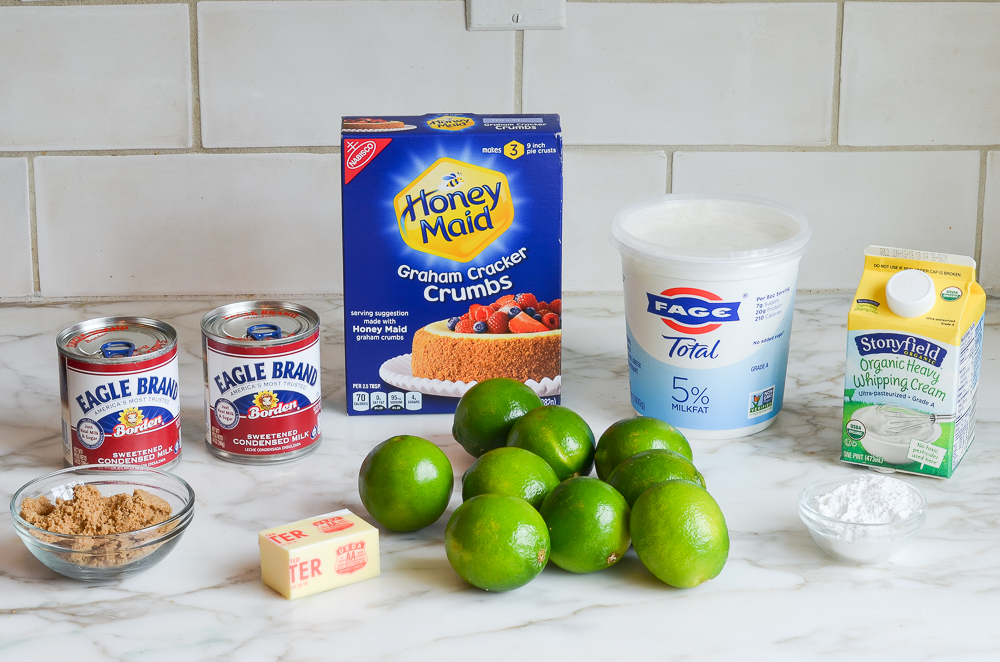
- Graham cracker crumbs, brown sugar & butter: Form the crisp, buttery crust. Brown sugar adds a little caramel flavor and helps the crust hold together.
- Sweetened condensed milk: Provides the sweetness and creamy base for the filling. Be sure you’re using sweetened condensed milk, not evaporated milk.
- Greek yogurt: Gives the filling body and richness without egg yolks. I’ve tested the pie both ways and prefer the cleaner, brighter lime flavor of the yogurt version.
- Fresh lime juice & zest: Provide the pie’s signature tart, citrusy flavor. Regular Persian limes work beautifully, so there’s no need to track down Key limes.
- Heavy cream & confectioners’ sugar: Whip together for the soft, creamy topping that balances the tart filling.
- Jump to the printable recipe for precise measurements
Note: Most traditional Key lime pie recipes call for egg yolks, but they aren’t necessary here. The lime juice reacts with the proteins in the yogurt and sweetened condensed milk, helping the filling thicken and set as it bakes. Leaving out the yolks also gives the pie a cleaner, brighter lime flavor—and makes the recipe even easier.
How To Make Key Lime Pie
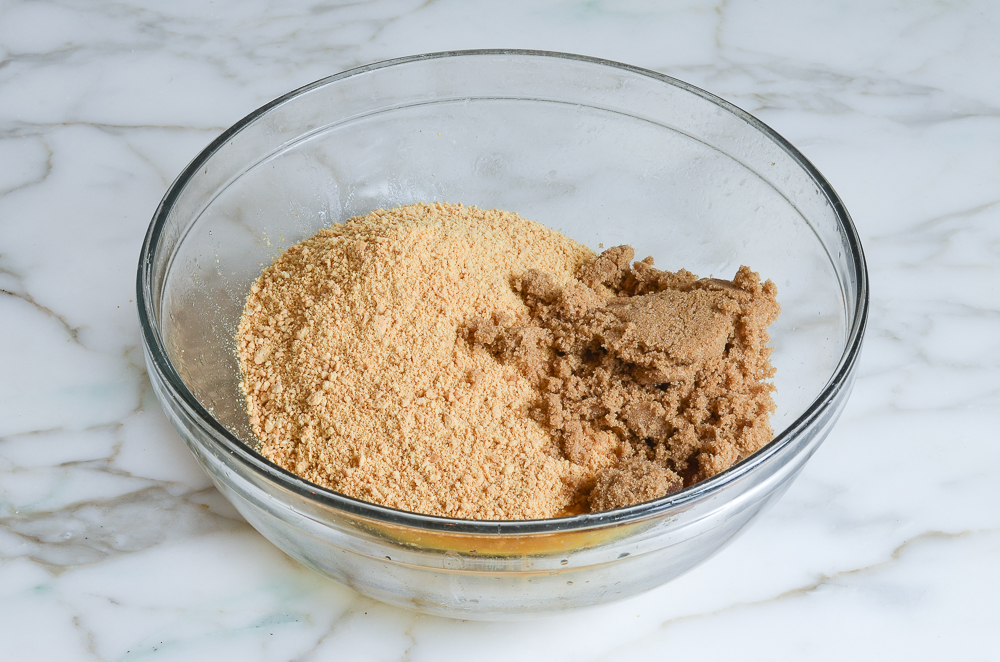
Make the crust: Combine the graham cracker crumbs, brown sugar, and melted butter until the mixture resembles damp sand and holds together when squeezed. Press the crumbs firmly up the sides of the pan first, then over the bottom—this makes it easier to get an even, compact crust. Bake just until the edges darken slightly and the crust smells toasty. This brief bake deepens the flavor and helps keep the crust from getting soggy once the filling goes in.
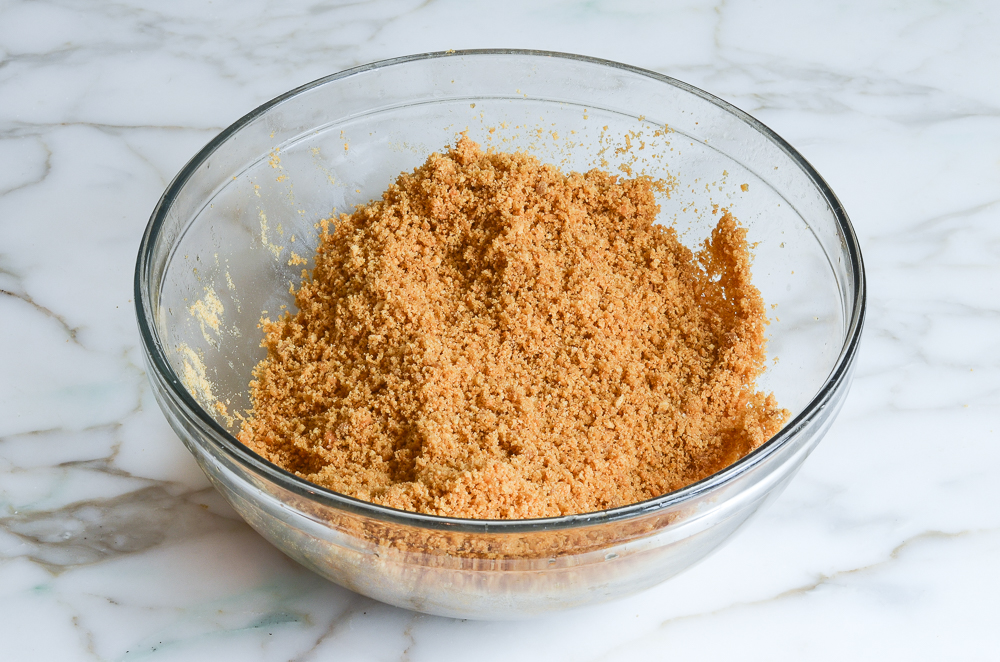
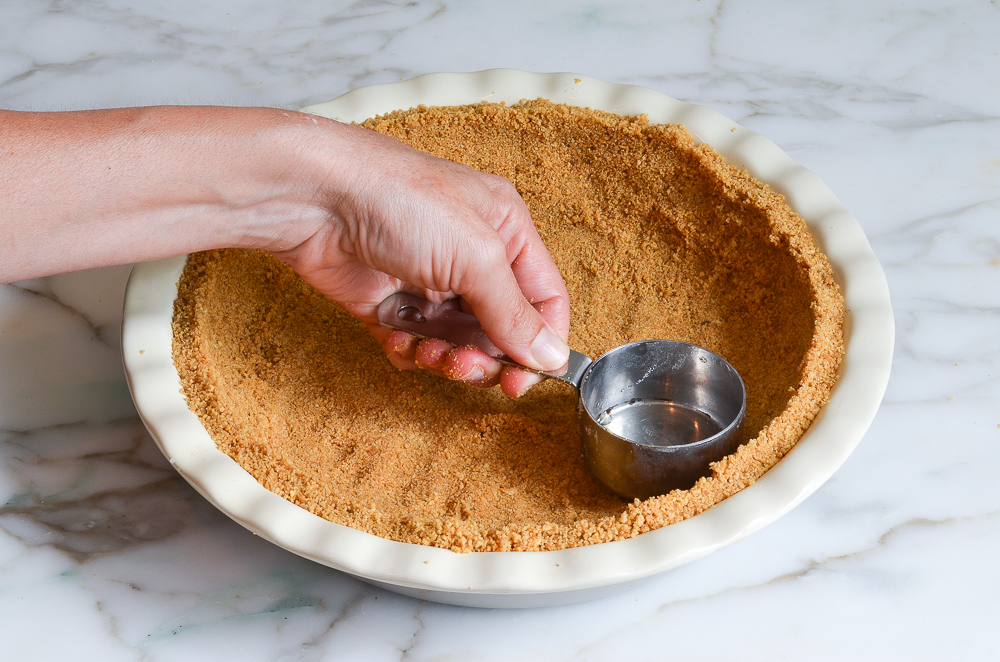
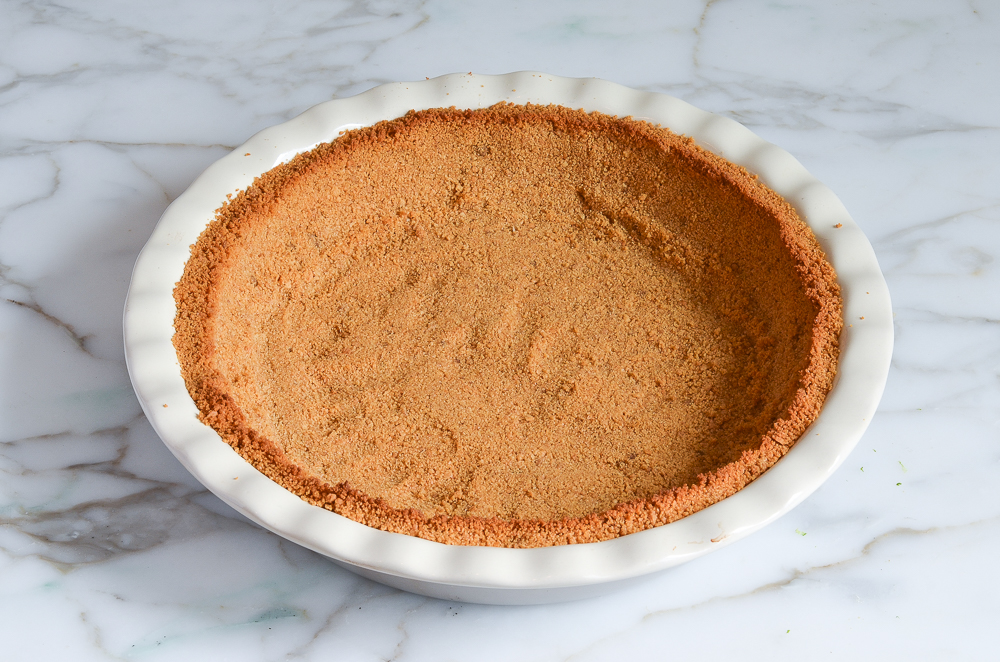
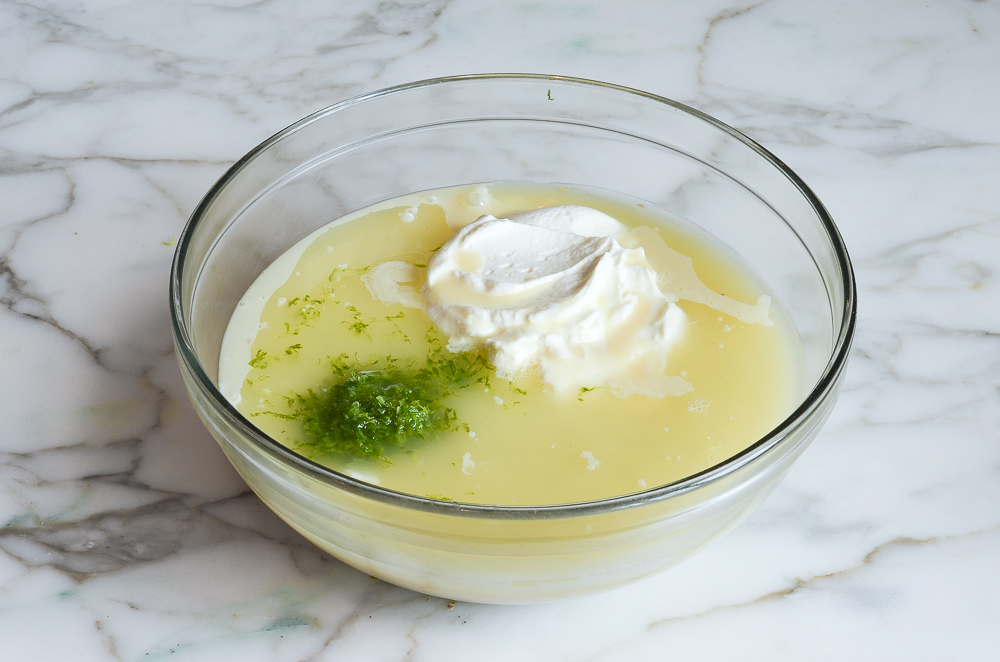
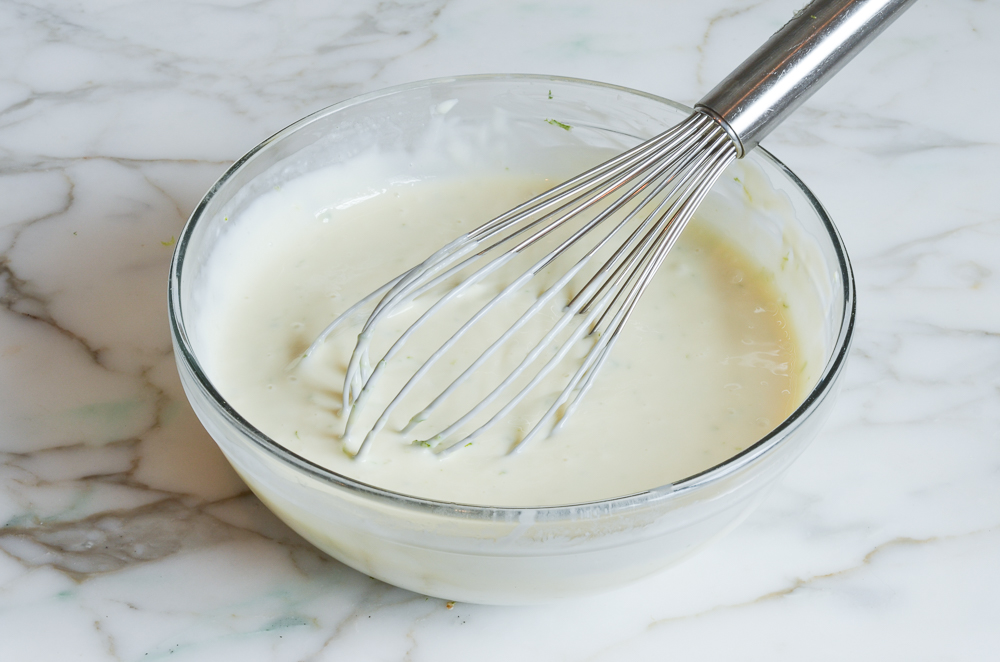
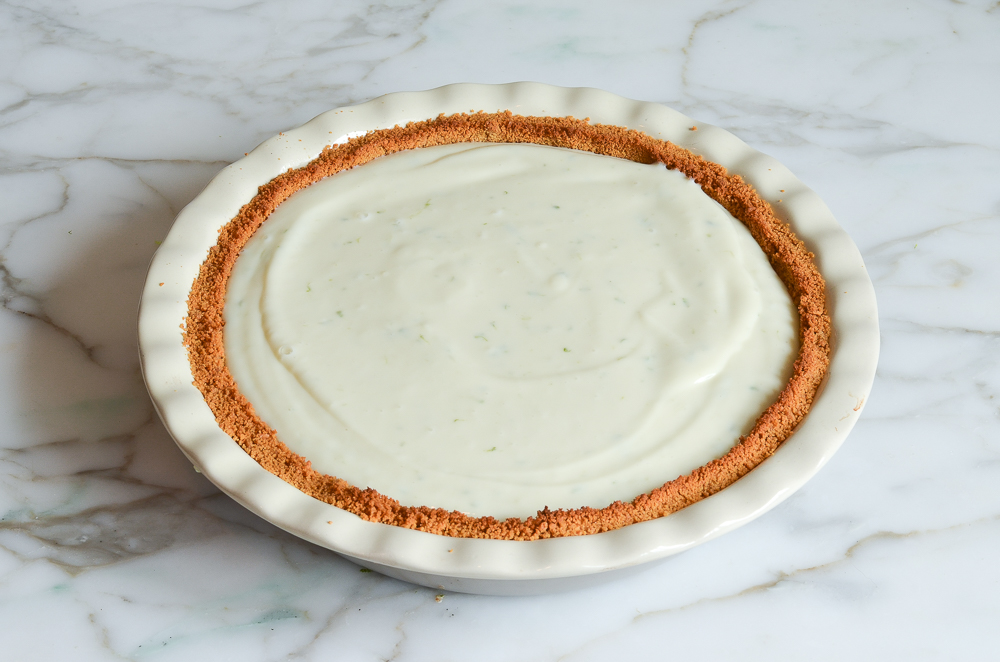
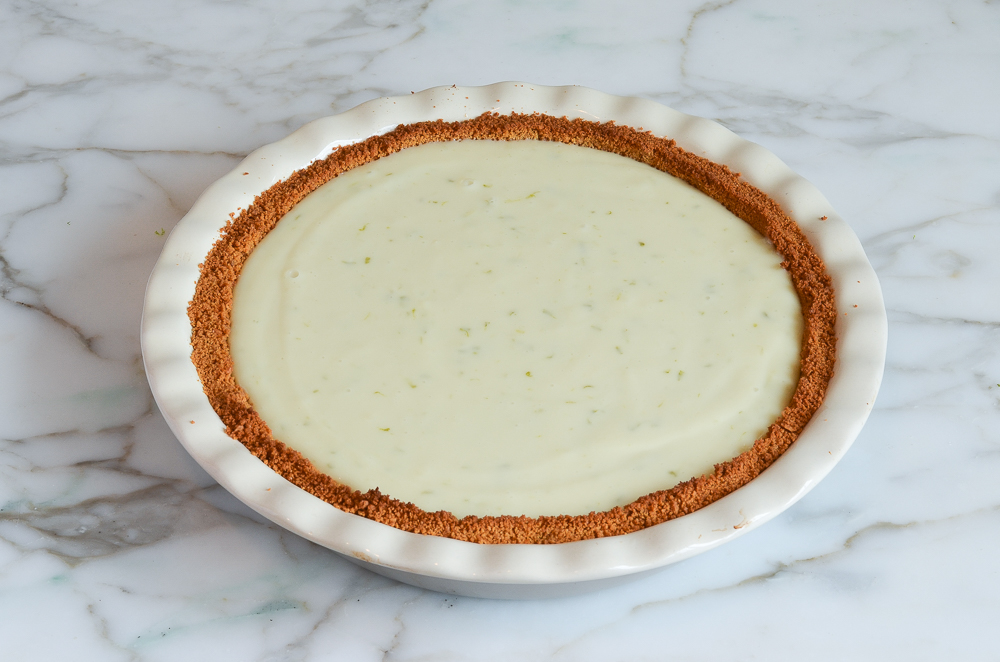
Make and bake the filling: Whisk the sweetened condensed milk, Greek yogurt, lime zest, and lime juice until smooth, then pour the filling into the warm crust. Bake until the filling is just set—it should be firm around the edges with a slight wobble in the center. Let the pie cool, then refrigerate until thoroughly chilled.
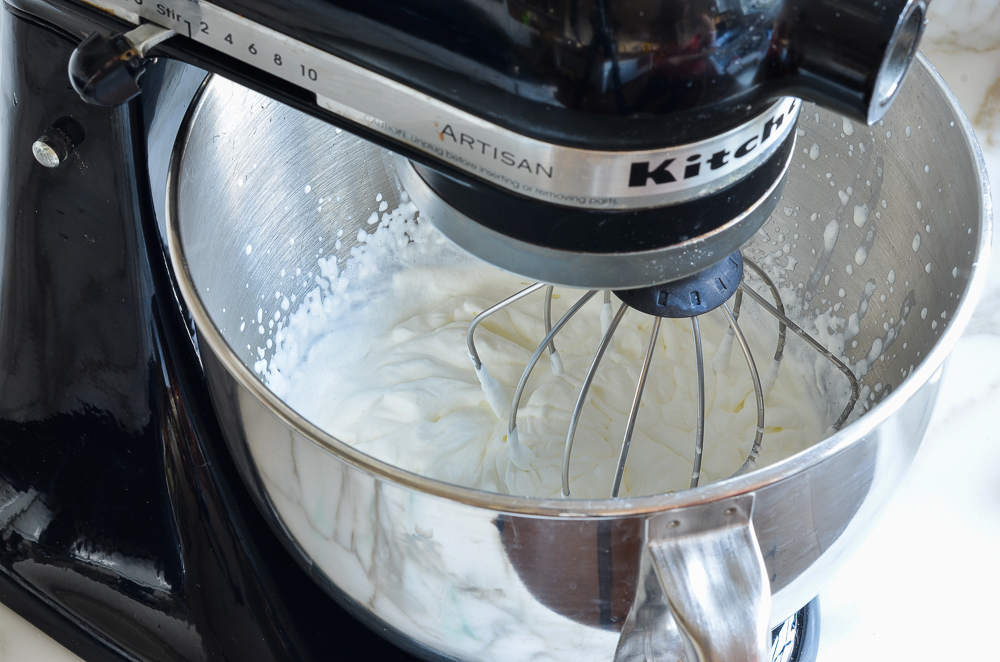
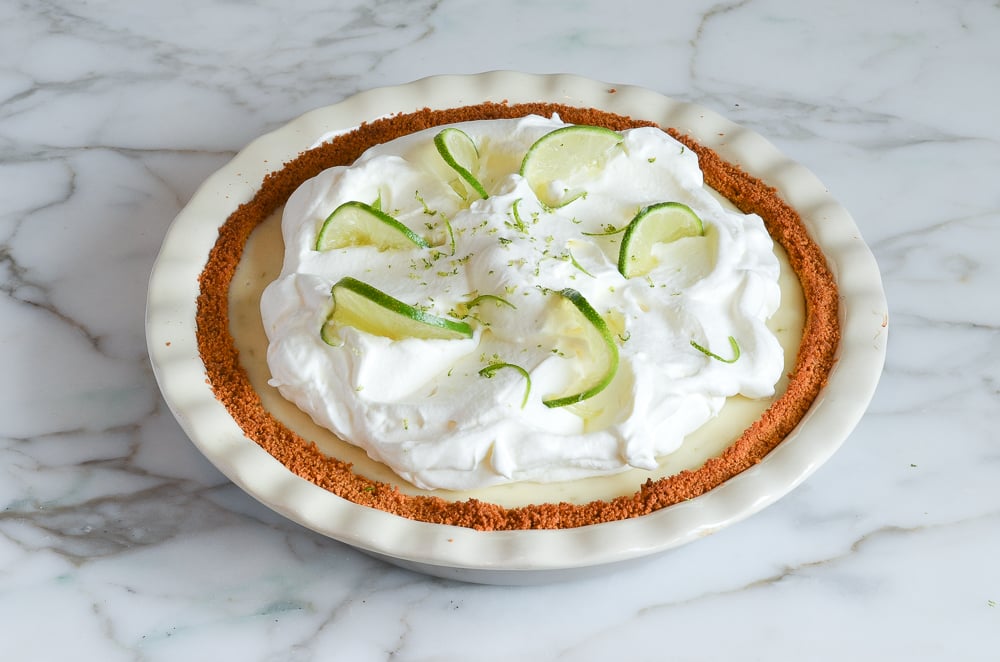
Top the pie: hortly before serving, whip the heavy cream and confectioners’ sugar until it holds its shape, then spoon or pipe it over the chilled pie. Garnish with lime zest and slices, if you like. Return the pie to the refrigerator until you’re ready to slice it.
Key Lime Pie Video Tutorial
More Cool, Creamy Pie Recipes You’ll Love


Key Lime Pie Recipe (No Eggs)

Ingredients
For the Crust
- 1½ cups finely crushed graham cracker crumbs, from about 12 whole graham crackers
- ⅓ cup (packed) light brown sugar
- 4 tablespoons unsalted butter, melted
For the Filling
- Two 14-oz cans sweetened condensed milk
- 1 cup plain Greek yogurt (2% or whole milk)
- 1 tablespoon grated lime zest
- ¾ cup fresh lime juice
For the Topping
- 1 cup cold heavy cream
- 2 tablespoons confectioners’ sugar
- 1 teaspoon grated lime zest
- 8 to 10 thin lime slices
Instructions
- Make the Crust: Preheat oven to 375°F (190°C) and set an oven rack in the middle position.In a medium bowl, combine the graham cracker crumbs, brown sugar, and melted butter; stir with a fork first, and then your hands until the mixture is well combined. Using your fingers and the bottom of a glass or dry measuring cup, press the crumbs firmly into the bottom and up the sides of a 9 x 1½-in (23 x 4-cm) pie pan. The crust should be about ¼-in (6-mm) thick. (Tip: do the sides first.)Bake for 10 minutes, until just slightly browned. Let the crust cool on a wire rack.
- Make the Filling: Lower the oven temperature to 350°F (180°C). In a large bowl, whisk together the sweetened condensed milk, yogurt, lime zest, and lime juice. Pour the thick mixture into the warm graham cracker crust. Bake for 15 minutes, until the filling is almost set; it should wobble a bit. Let cool at room temperature for 30 minutes, then place in the refrigerator to chill thoroughly, about 3 hours.
- Make the Topping: In the bowl of an electric mixer, beat the heavy cream until soft peaks form. Add the confectioners’ sugar and beat until medium peaks form. Top the pie with the whipped cream. Decorate with the lime zest and lime slices. Store the pie in the refrigerator until ready to serve. Slice the pie into wedges, wiping your knife clean between slices, and serve cold.
Notes
- Make-Ahead Instructions: You can make the crust a day ahead of time, but the filling should be added on the day of serving, otherwise the crust will get soggy.
- The nutritional information was calculated using 2% Greek yogurt.
Nutrition Information
This website is written and produced for informational purposes only. I am not a certified nutritionist and the nutritional data on this site has not been evaluated or approved by a nutritionist or the Food and Drug Administration. Nutritional information is offered as a courtesy and should not be construed as a guarantee. The data is calculated through an online nutritional calculator, Edamam.com. Although I do my best to provide accurate nutritional information, these figures should be considered estimates only. Varying factors such as product types or brands purchased, natural fluctuations in fresh produce, and the way ingredients are processed change the effective nutritional information in any given recipe. Furthermore, different online calculators provide different results depending on their own nutrition fact sources and algorithms. To obtain the most accurate nutritional information in a given recipe, you should calculate the nutritional information with the actual ingredients used in your recipe, using your preferred nutrition calculator.
I have a 16 oz container of 5% Fage. Is that a cup or do I measure into a dry measuring cup
Hi David, you’ll need 1 dry measuring cup’s worth. Enjoy!
Thanks, this is the second time I’m making the pie first was a great success. This will be for Rosh Hashanah
I liked the taste of this pie but sadly the crust became soggy even though we ate it the same day. I feel like the soggy crust ruined it. I don’t understand what happened since I followed the recipe. I also noticed the filling didn’t get that hot in the oven, but I guess maybe it didn’t need to since it set and there wasn’t anything raw like egg in it.
This was THE best key lime pie I’ve made or eaten 🙌🏻🙌🏻
Thank you!!
Can you substitute fresh lemon juice and zest for the lime juice/zest?
Hi Naomi, I haven’t tried it, but it should work. While different, you may also want to consider my lemon meringue pie recipe.
Made this recipe as directed. The flavor was sensational. I did use actual Key limes for the recipe. The only issue was the filling turned on the yellow side instead of green. Any ideas what happened?
Hi Roberta, Key lime juice can be more yellow than regular limes, hence the color of your pie. Glad you enjoyed it!
I initially, on accident, made this recipe with nonfat plain Greek yogurt and all my pie samplers loved it! So, I have used nonfat Greek yogurt ever since.
Hi Jenn
Do you think I could use full fat sour cream in place of the Greek 2% yogurt?
( it’s what I have on hand).
Bringing this dessert to my chef’s table club—paella party! I know they will all comment, “well, Princess Barb only uses her bff, Jen Segal— so we know it will be great!” 😂. Many thanks!
Lol, I’m flattered, Princess Barb!
Yes, full-fat sour cream will work here — hope everyone enjoys!
I’ve made this pie 3 times and it gets a glowing review over and over. I really appreciate a recipe that can shine so bright without too many ingredients. Couldnt recommend it enough!!
Key lime pie is a favorite of mine and I was excited to try this recipe, because I’m such a fan of everything else I’ve made from this site. I was also curious, because it’s so different from other key lime pies I’ve previously made. I liked it, and will make it in the future, but it lacked the tart intensity I prefer. Next time, I will increase the juice to a cup and add more zest, too. Jenn, what would you suggest? Should I cut down on the amount of condensed milk to achieve that flavor profile? Thanks!
Hi Andi, I don’t think you need to cut back on the sweetened condensed milk, but would add more lime juice. You could also reduce the sugar a bit in the crust. Hope that helps!
Made recipe with 5% Greek yogurt. Came out perfectly. I just don’t understand what the 15 minutes in the oven does since there are no eggs. What is the chemistry between yogurt, evaporated milk, and lime juice and heat? Thx, David
Hi David, Great question! The acid in the lime juice reacts with the proteins in both the yogurt and sweetened condensed milk, causing them to coagulate and thicken. Without this acid, the mixture wouldn’t set properly, and you’d end up with a runny filling. This reaction is similar to what happens in cheese-making, where acid causes milk proteins to curdle and solidify.