

This post may contain affiliate links. Read my full disclosure policy.
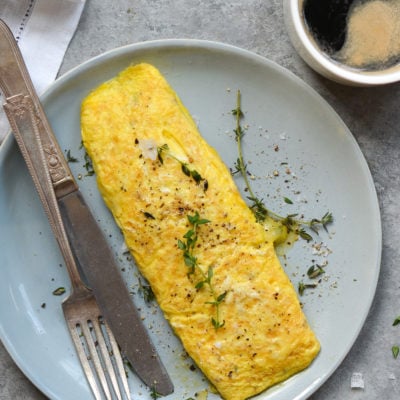
An omelette seems fancy at first, but it’s really just eggs, cheese, and a little confidence. Get cracking—this version is easy to master and endlessly customizable with whatever fillings you’re in the mood for.
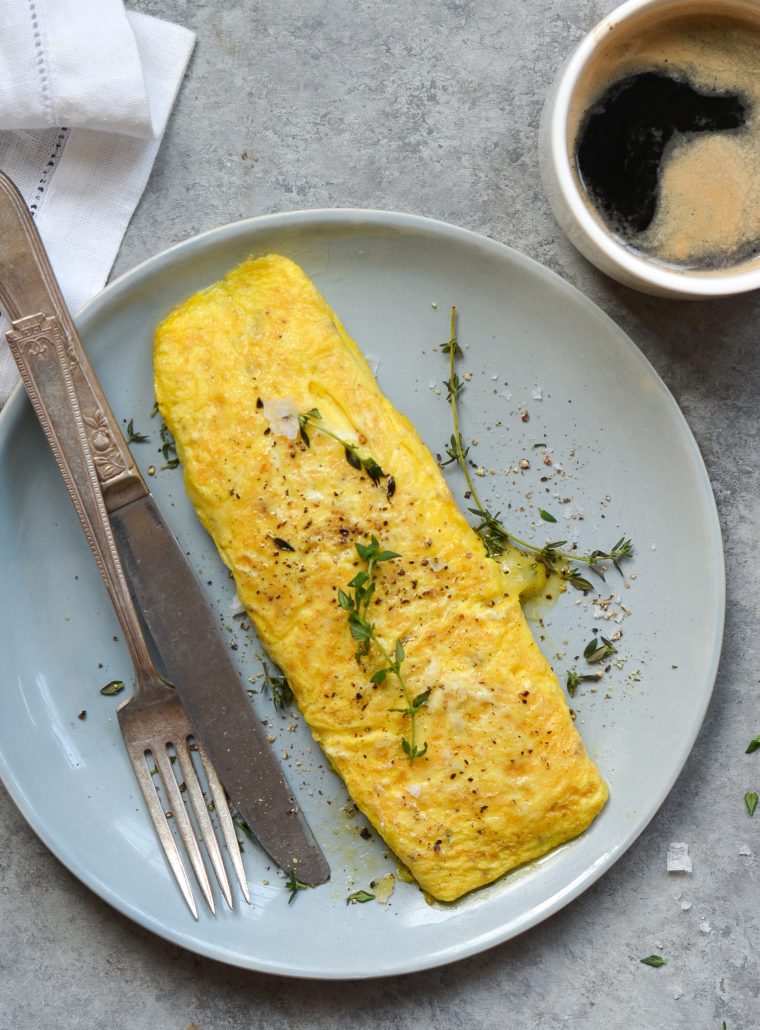
My first practical exam in culinary school was making an omelette, and it nearly gave me a panic attack. Students lined up single file at the stove, and we were each given exactly 3 minutes to crack, beat, and season the eggs; pour them into a sizzling-hot skillet; shake the pan to keep them from sticking; add the filling; and, finally, roll the omelette into a perfect cylinder. Meanwhile, the chef stood by, grading us—out loud.
Though an omelette is simple and made with just a few ingredients, it’s surprisingly tricky to master. In the restaurant world, a well-made omelette is often seen as the mark of a good cook; some chefs even require would-be line cooks to make an omelette as part of their job interview!
“This was a major winner…This was literally so easy that I felt like a chef making it.”
French vs American Omelettes
There are two main types of omelettes: French and American. A French omelette, made as described above, has a custardy, barely-set center that oozes when you cut into it and no hint of brown color.
An American omelette is fully cooked with a golden crust and fluffy texture – and, no surprise, much easier to make. The eggs are briefly scrambled in the pan and then left to set and develop a lightly golden crust. The omelet is then filled with cheese, meat, or vegetables and folded in half or thirds.
This is an American-style omelette (read: easy), but with a little French flair thanks to the creamy texture, good cheese, fresh herbs, and optional last-minute butter gloss. I keep it simple with just cheese, but feel free to add 1/4 cup of your favorite fillings; diced ham, bacon, breakfast sausage, smoked salmon, avocado, tomatoes, and cooked vegetables (like ratatouille) are all great options.
The Omelette Pan
It is essential to use a nonstick pan when making an omelette, as eggs like to stick. The size of the pan is also important, as it determines how thick or thin the base of your omelette will be. If the pan is too large, the eggs will spread too thin and dry out. For best results, use an 8-inch nonstick skillet (skillets are measured across the top) with sloping sides to make it easier to slide the omelette out of the skillet and onto a plate.
What You’ll Need To Make An Omelette
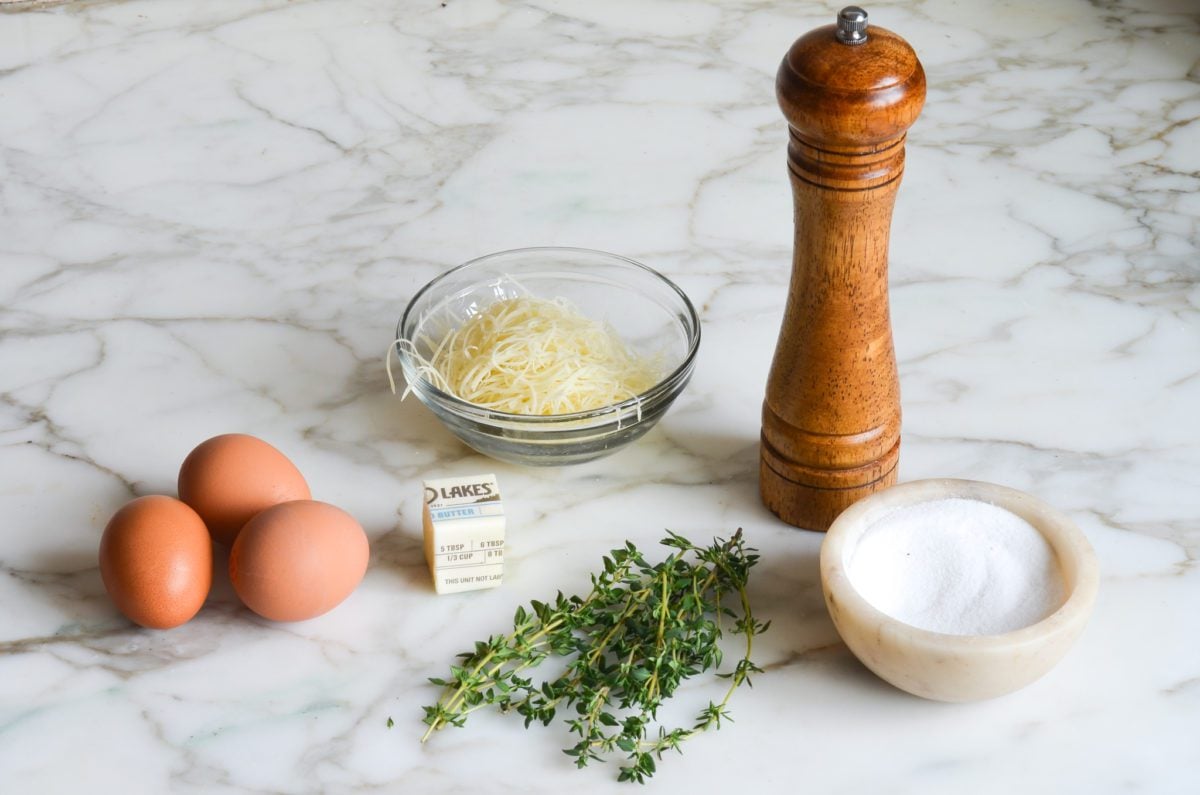
- Eggs, Water, Salt & Black Pepper: The basics. A splash of water keeps the eggs tender, and salt and pepper bring out their delicate flavor.
- Butter: For that classic silky texture and buttery taste—feel free to add a little extra at the end for gloss.
- Shredded Cheese: Gruyère, Cheddar, or any melty cheese you like. It melts into creamy, cheesy pockets throughout.
- Fresh Herbs (Optional): A sprinkle of chopped thyme or chives adds freshness and a little color if you’re feeling fancy.
- Jump to the printable recipe for precise measurements
Step-by-Step Instructions
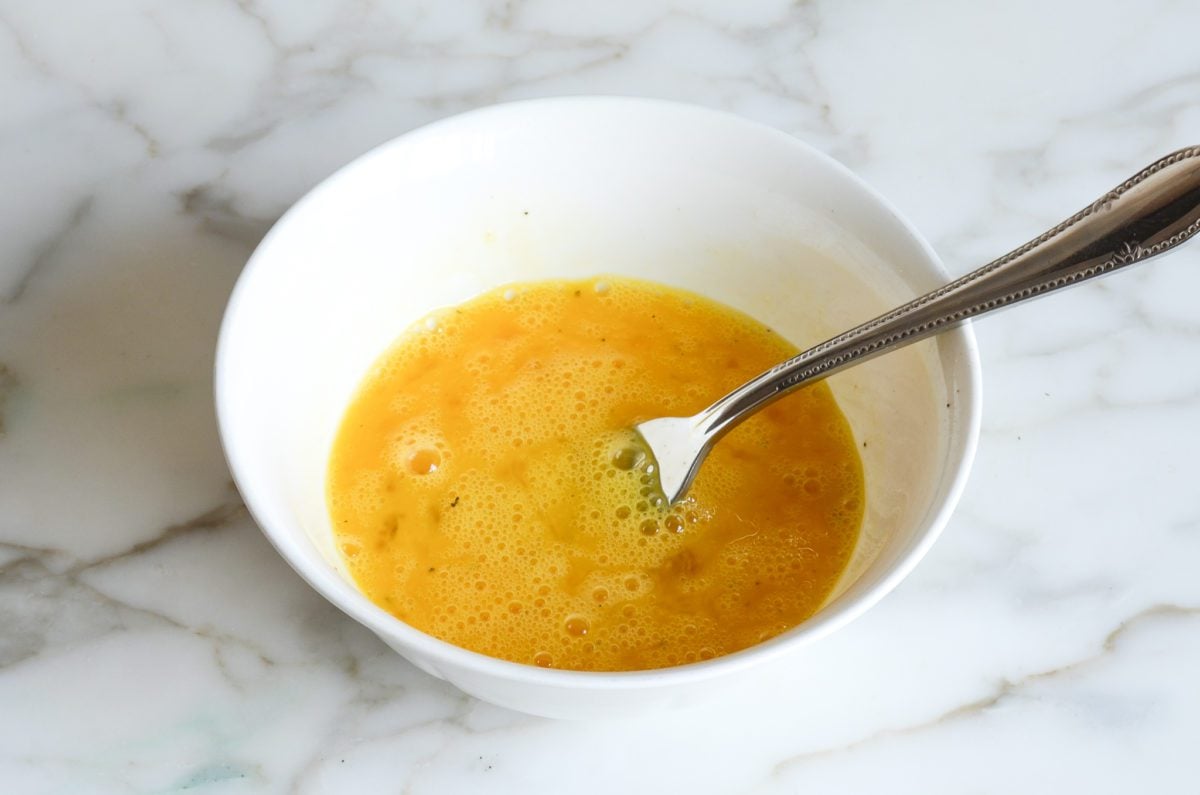
Step 1: Beat the eggs. In a medium bowl, combine the eggs with the water, a generous pinch of salt, and a few grinds of pepper. Beat with a fork until well combined. Using a fork instead of a whisk makes it easier to control the texture—you want the eggs well mixed but not overly aerated.
Step 2: Start cooking the eggs. Melt the butter in a small nonstick skillet over medium-low heat and swirl to coat the pan. (Medium-low heat is key—too hot and the eggs will brown or toughen instead of staying soft and creamy.) Pour in the eggs and let them cook undisturbed until the edges start to set.
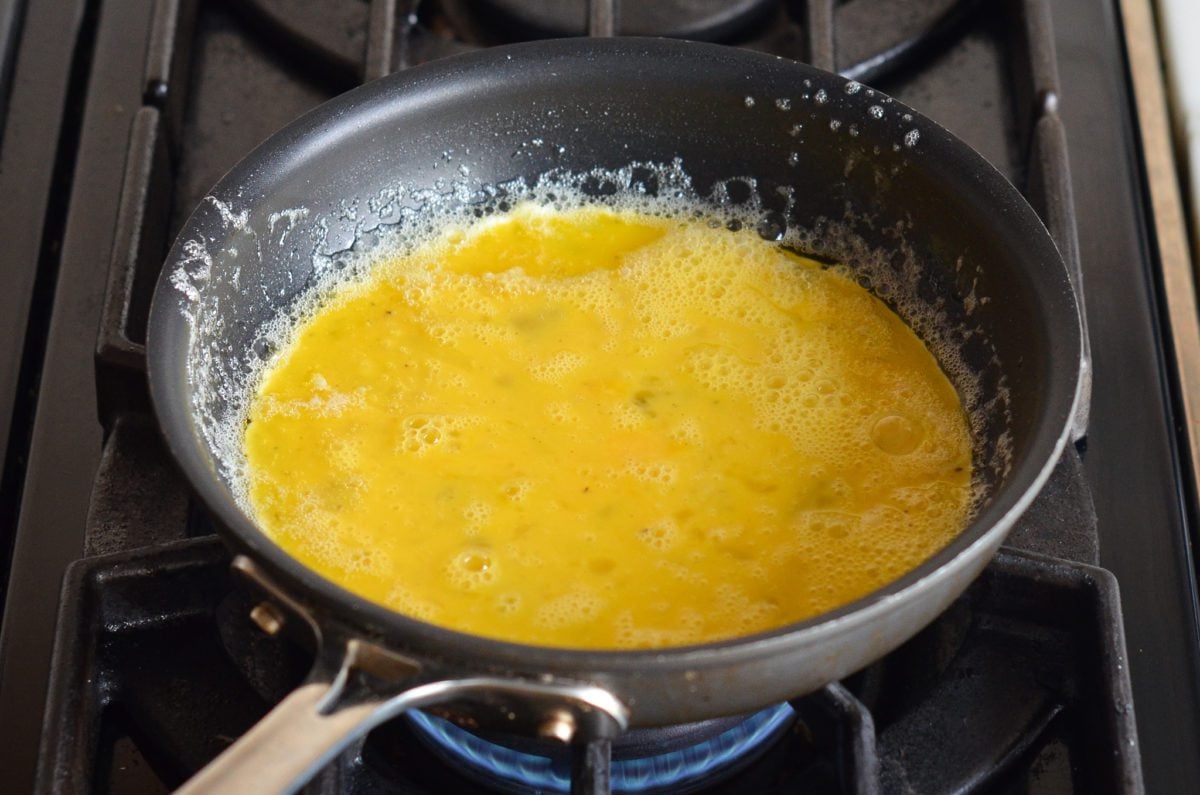
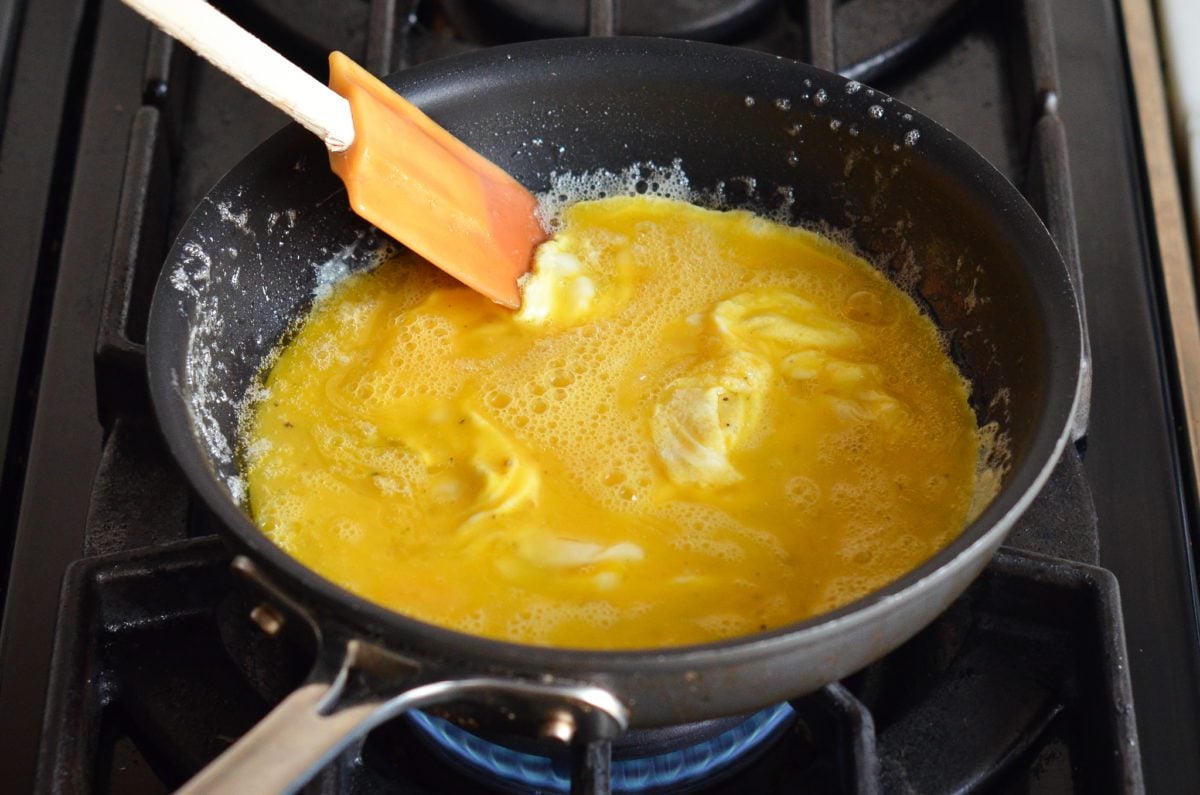
Step 3: Stir gently. Use a rubber spatula to gently pull the cooked eggs from the edges toward the center, letting the uncooked egg run to the outside of the pan.
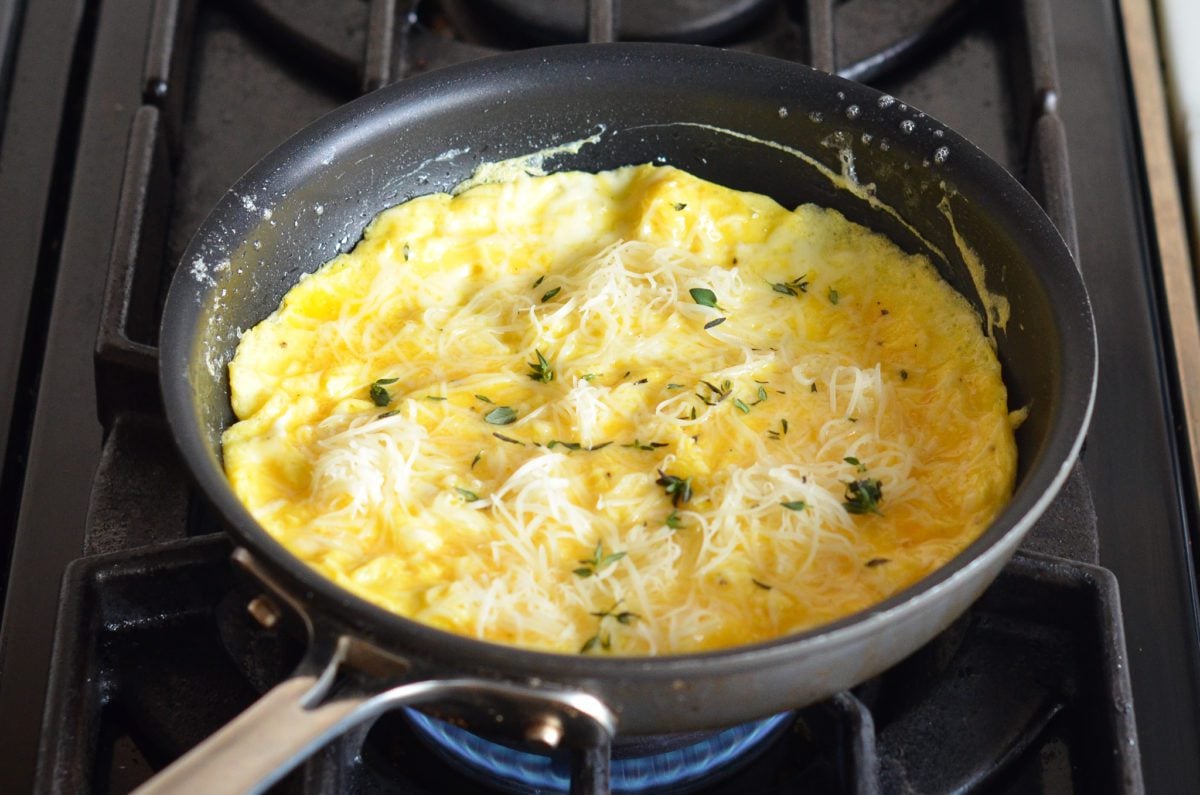
Step 4: Add cheese and herbs. When the eggs are about 75% set, press them into an even layer and sprinkle the cheese and herbs all over the surface. Let cook until the cheese is mostly melted.
Step 5: Fold the omelette. Use the spatula to fold the side closest to you toward the center.
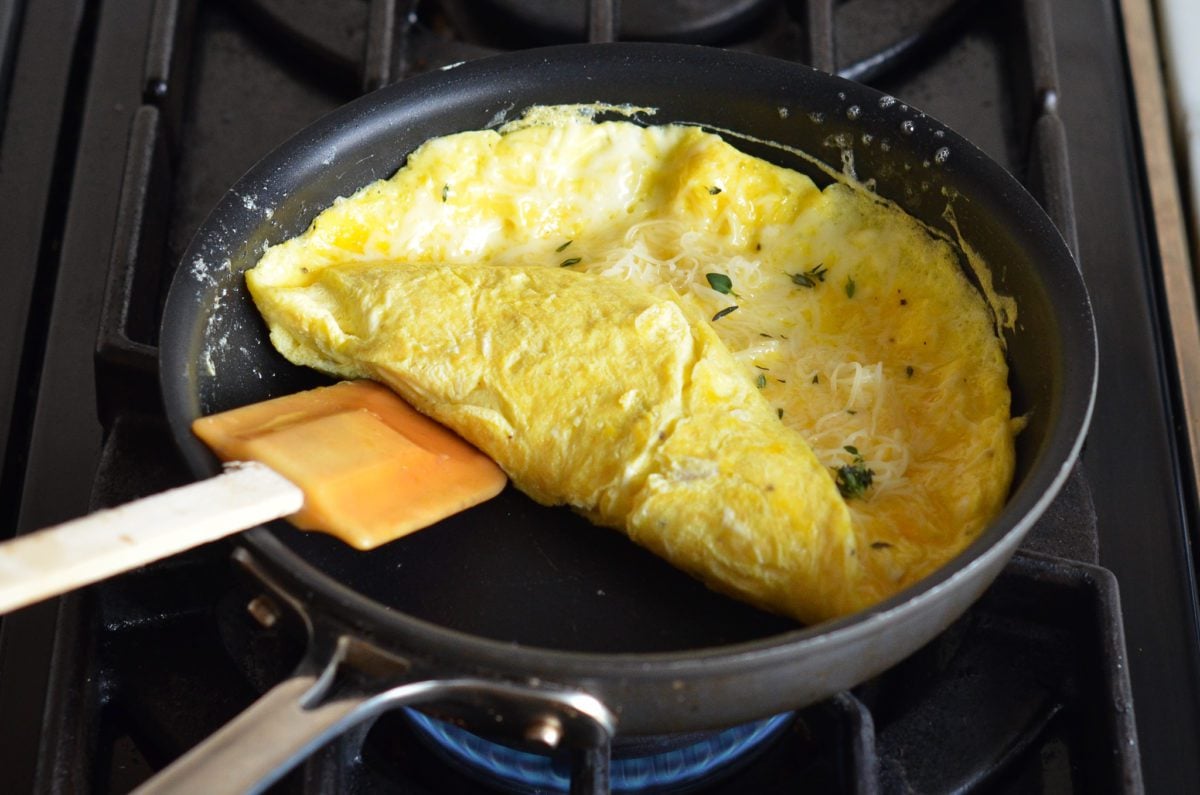
Fold the opposite side over to close the omelette. The entire cooking process should take no more than 3 to 4 minutes. Cooking quickly helps preserve the soft, velvety texture.
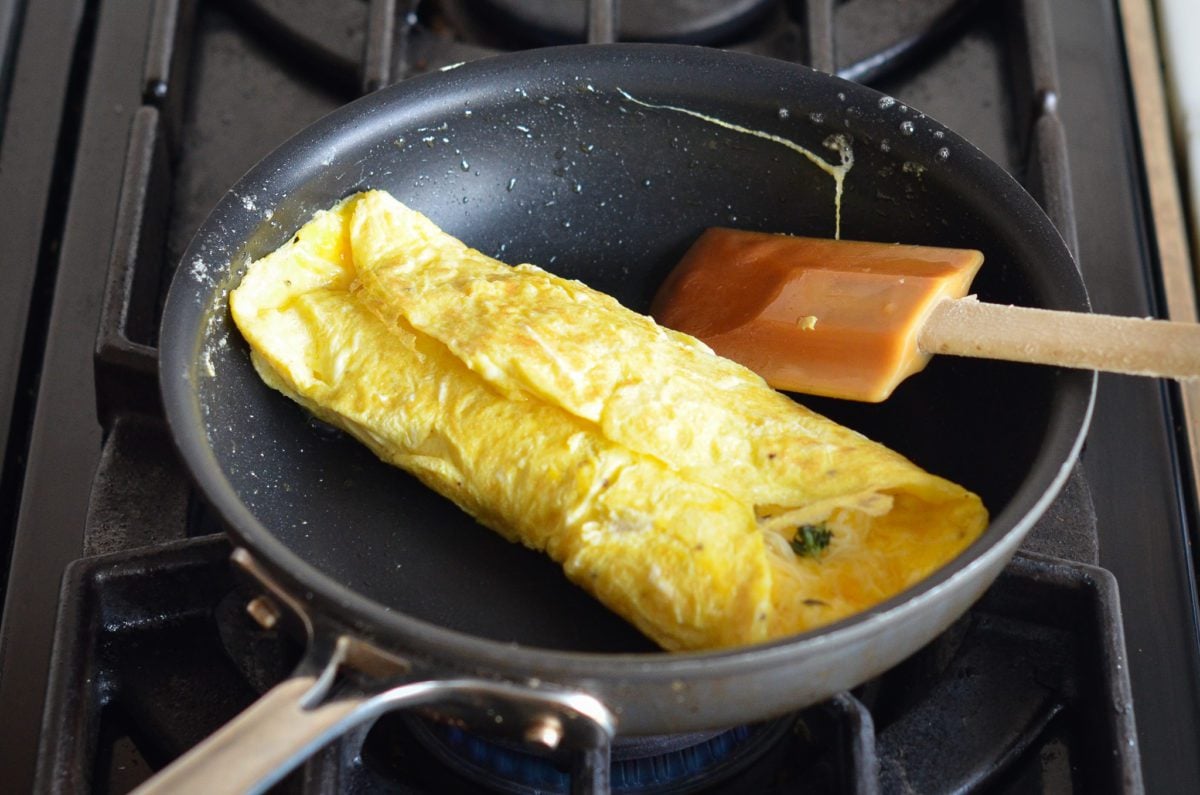
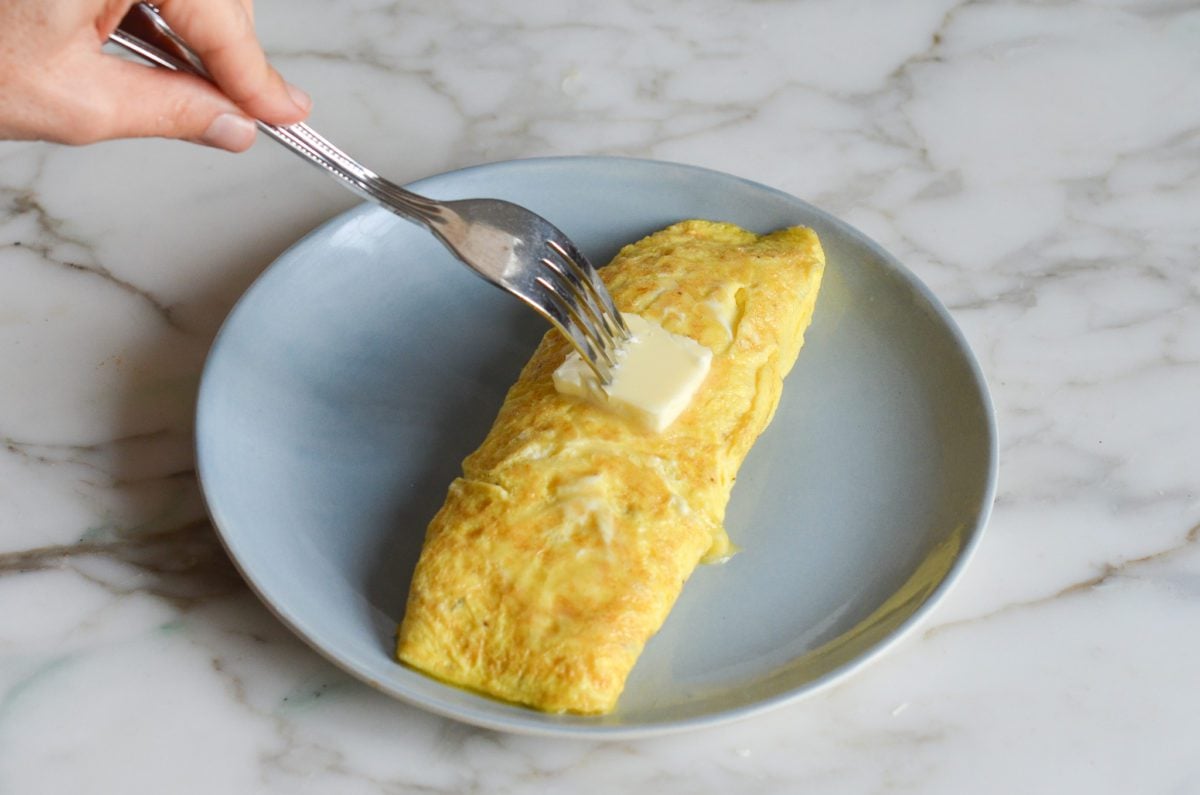
Step 6: Plate and finish. Tilt the pan over a plate to slide the omelette out seam-side down. (Sliding the omelette seam-side down helps it hold its shape and gives a more finished look on the plate.) For extra buttery flavor, you can run a fork with a bit of butter over the top before serving.
Video Tutorial
More Breakfast Recipes You May Like



How To Make An Omelette
Ingredients
- 3 large eggs
- 2 teaspoons water
- Salt
- Freshly ground black pepper
- 1 tablespoon unsalted butter, plus a bit more for glossing the omelette (optional)
- ⅓ cup finely shredded Gruyère, Cheddar, or any other flavorful melting cheese
- 1 teaspoon finely chopped fresh thyme or chives (optional)
Instructions
- In a medium bowl, combine the eggs with the water, a generous pinch of salt, and a few grinds of pepper. Using a fork or whisk, beat vigorously until well combined and there are no visible egg whites.
- In an 8-in (20-cm) nonstick skillet over medium-low heat, melt the butter and swirl to coat the whole surface of the pan. Add the eggs and let cook, undisturbed, until the eggs start to set around the edges. Once the eggs start to set, use a rubber spatula to move the cooked egg away from the edges, letting the raw egg run to the outside of the pan. Continue gently scrambling the eggs until they are about 75% set, and then use the spatula to press the runny eggs into an even layer. Sprinkle the cheese and herbs (if using) all over the eggs and let cook, undisturbed, until the cheese is mostly melted. Using the spatula, fold the edge of the omelette closest to you toward the center. Fold the other edge toward the center, and then tilt the pan over the center of a plate so the omelette lands seam side down. The entire cooking process should take no more than 3 to 4 minutes. If you'd like, spear the extra butter with a fork and run it over the top of the omelette to gloss it and give it some extra buttery flavor. Serve immediately.
Nutrition Information
This website is written and produced for informational purposes only. I am not a certified nutritionist and the nutritional data on this site has not been evaluated or approved by a nutritionist or the Food and Drug Administration. Nutritional information is offered as a courtesy and should not be construed as a guarantee. The data is calculated through an online nutritional calculator, Edamam.com. Although I do my best to provide accurate nutritional information, these figures should be considered estimates only. Varying factors such as product types or brands purchased, natural fluctuations in fresh produce, and the way ingredients are processed change the effective nutritional information in any given recipe. Furthermore, different online calculators provide different results depending on their own nutrition fact sources and algorithms. To obtain the most accurate nutritional information in a given recipe, you should calculate the nutritional information with the actual ingredients used in your recipe, using your preferred nutrition calculator.
Gluten-Free Adaptable Note
To the best of my knowledge, all of the ingredients used in this recipe are gluten-free or widely available in gluten-free versions. There is hidden gluten in many foods; if you’re following a gluten-free diet or cooking for someone with gluten allergies, always read the labels of your ingredients to verify that they are gluten-free.
Excellent tutorial! The best omelette I’ve made…and my husband agrees. He’s always requesting one and I never want to make them because they haven’t turned out! Thank you!!
Any recommendations for a good brand of omelet pan?
Hi Kate, I have an All-Clad nonstick pan that I love. 🙂
Perfect!
Since the omelette is not turned over to cook both sides, is it runny on the inside when finished? Also, I was taught to use a half eggshell of milk instead of water. Does that affect the consistency or flavor? Thanks.
Hi Elaine, It isn’t runny but rather soft, creamy, and just cooked through (not dry). I’ve always used water, but milk works too.
Interesting about the water! Would adding milk do the same? I’ve never been good at folding over omelettes, and I like the center to be fully set. So, I make a sort of combination egg scramble/omelette where once I add my toppings, I then put a lid on the pan. The eggs fluff beautifully up and around the toppings, embedding them in the eggs 😊 I usually skip the step of lifting the edges to get the eggs to go under, unless I’m using a lot of eggs in a relatively small pan.
Yep, milk works too. ☺️
LOVE this! I have never been able to make an omelet that is nice to look at – probably because I don’t care for nonstick pans as a general rule of thumb. Ordering an 8″ one now, though!
If you’re adding meat and/or veggies, do you cook or heat those first and then add the eggs to the pan or should you cook them in a separate pan and add them just before you start to fold the omelette?
Hi Cathy, Yes they should be cooked separately and ideally added warm right before folding.
Thanks so much. Can’t wait to try your technique!
Does the temperature of the eggs prior to cooking make a difference? Should they be closer to room temp?
Hi Sally, I don’t think it makes much difference; I pull them straight from the fridge. Hope that helps!
Dear Jenn, I learned how to make scrambled eggs in a 8 or 10 inch stainless steel pan. I lost his name. He may have been a Metalurgist. He teaches this: heat the pan till water drops dance on it. This is the temp that closes up the gap between the stainless steel molecules. Now food can’t enter that gap, causing a no stick surface.
Thank you very much! I wish I was able to see this part in action though: “Once the eggs start to set, use a rubber spatula to move the cooked egg away from the edges, letting the raw egg run to the outside of the pan.” It’s a bit difficult to visualize.
David, I use the spatula to slightly lift the edge after it shows signs of being cooked, and use the other hand to quickly tip the opposite side up a bit so that some of the uncooked egg on top runs to the edge and under the cooked portion. I can do this pretty quickly on 3-4 sides of the skillet, letting much of the uncooked top run underneath and come in contact with the hot skillet. I think Jenn is describing something similar.
Depending on how much of a meal we want, we have added: bacon or sausage, tomatoes, diced peppers, onions, cooked hash browns or fried potatoes, spinach, asparagus, chopped pecans, a variety of cheeses…. Maybe omelettes are a good “clean out the fridge” supper. We sometimes top the omelette with picante sauce or salsa, depending on the ingredients used. We love Jenn’s recipes, and now our omelettes will be even tastier.