


This post may contain affiliate links. Read my full disclosure policy.
Tender, buttery, and beautifully flaky, these homemade buttermilk biscuits are easy to make and ready in just 30 minutes.

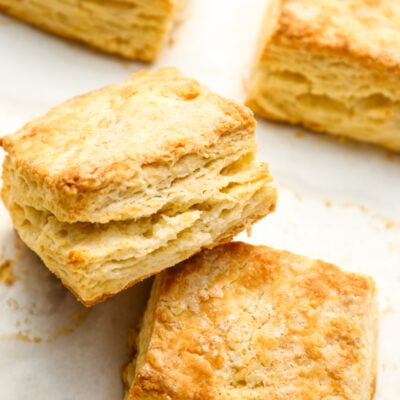
This easy buttermilk biscuit recipe makes tender, buttery biscuits with crisp golden tops and lots of flaky layers. Traditional Southern biscuits are typically made with White Lily flour, a low-protein flour that gives them their famously light, delicate texture. Since White Lily can be hard to find outside the South, I use a combination of all-purpose flour and cornstarch to achieve a similar result with ingredients available at any supermarket.
The technique is simple: stack the dough a few times to create flaky layers, then cut the biscuits into squares rather than rounds. The square shape eliminates scraps, so there’s no need to reroll the dough and risk overworking it. Best of all, the biscuits are ready in about 30 minutes—perfect with butter and jam or alongside fried chicken, soups, and stews.
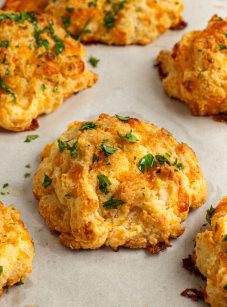
For an even easier alternative, try my drop biscuits or Cheddar Bay Biscuits—both skip the rolling and cutting altogether. Just drop, bake, and enjoy!
“These are amazing. Came together quickly for breakfast. My husband took a bite and gave me a high five. They’ll be a staple around here.”
What You’ll Need To Make Homemade Buttermilk Biscuits

- All-purpose flour: Provides the structure for the biscuits; always use the spoon-and-level method when measuring to ensure accuracy.
- Cornstarch: Softens the dough’s proteins to produce a more tender biscuit.
- Baking powder and baking soda: Leavening agents that work together to create rise and fluffiness in the biscuits. Baking soda also reacts with the acid in buttermilk, aiding in leavening and improving color.
- Sugar: Adds a slight sweetness to balance the flavors and aids in browning.
- Cold butter: Provides fat which, when cut into the dry ingredients, creates flaky layers as it melts and steams during baking. The cold temperature is crucial for achieving the desired flakiness, so keep it in the fridge until you’re ready to use it.
- Buttermilk: Moistens the dough and also adds acidity that reacts with the baking soda for leavening. If you don’t want to buy a whole carton, see my instructions for how to make buttermilk using milk and lemon juice or vinegar.
- Jump to the printable recipe for precise measurements
How To Make Biscuits
Step 1: Mix the dry ingredients and butter. Combine the flour, cornstarch, baking powder, baking soda, sugar, and salt in a food processor and pulse briefly to combine. Add the cold chunks of butter and pulse until the mixture resembles coarse sand with a few pea-size clumps of butter intact. (If you don’t have a food processor, this can be done by hand.)
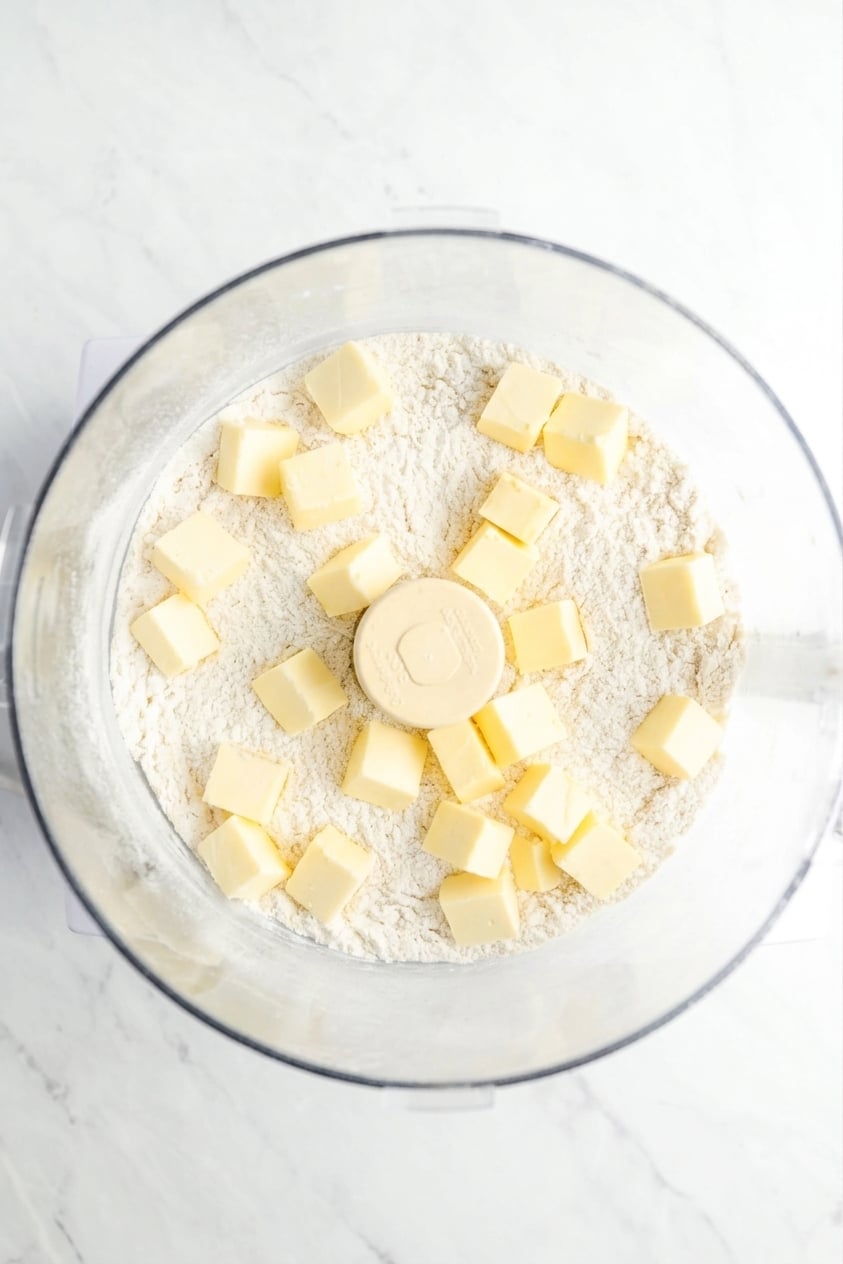
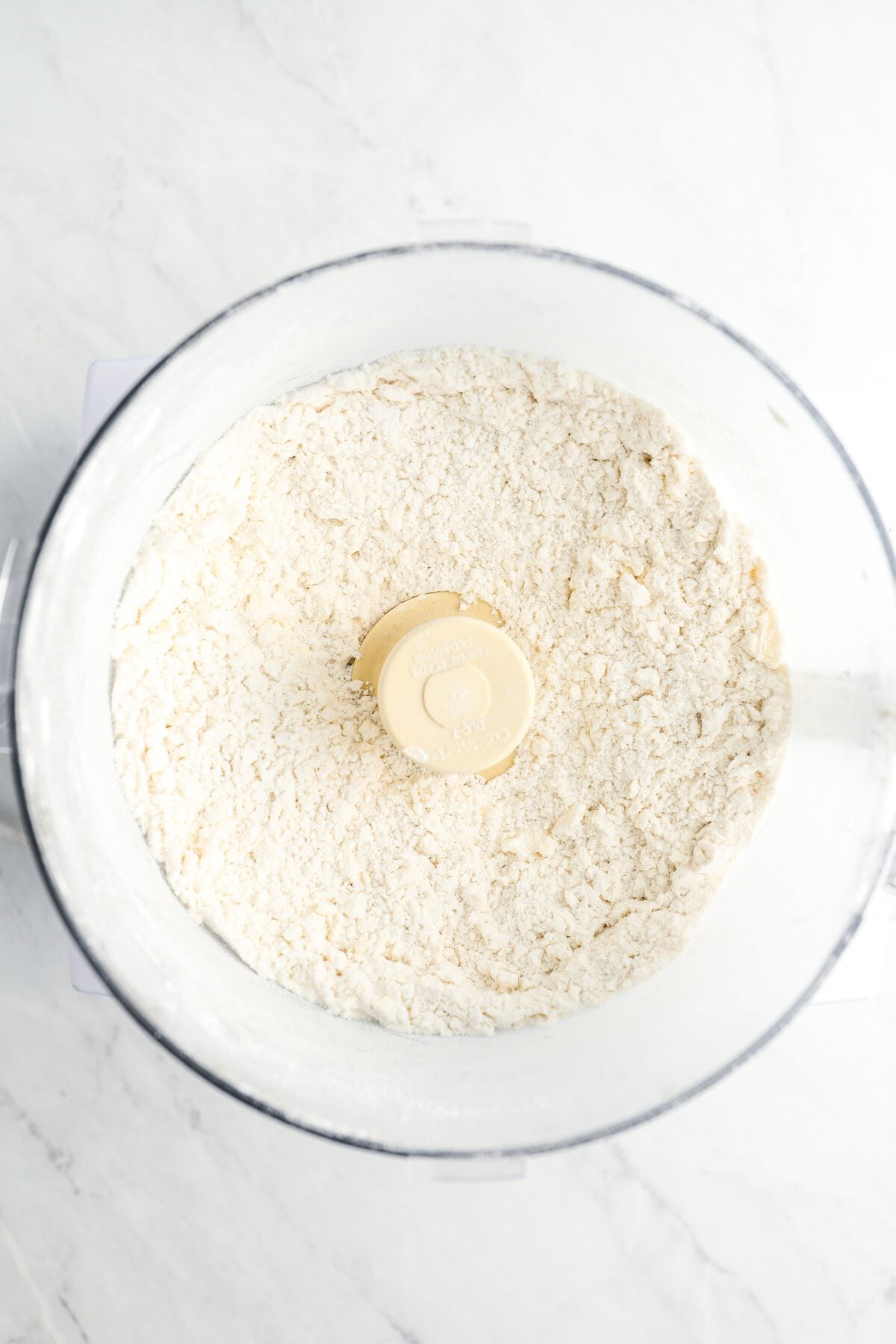
Step 2: Add the buttermilk. Transfer the mixture to a bowl. Add the buttermilk and stir until the mixture comes together into a shaggy mass. Be careful not to overmix—overmixing can impact the tenderness and rise of the finished biscuits.


Step 3: Layer the dough for flakiness. Turn the dough out onto a lightly floured work surface, shape it into a loose ball, and then gently pat it into a rectangle about ¾-inch thick. Cut the dough in thirds. Stack the pieces on top of one another and then pat it out into a rectangle again.


Step 4: Continue layering and cut into squares. Again, cut the dough into thirds, stack the pieces, and pat into a rectangle. This repetitive process creates layers in the dough, which makes for deliciously flaky biscuits. Cut the dough into 12 small squares (these biscuits are on the smaller side, so feel free to cut into 9 squares if you prefer larger biscuits). At this point, the unbaked biscuits can be frozen for up to 3 months.


Step 5: Bake the biscuits. Space them evenly apart on a parchment-lined baking sheet and bake for 13 to 15 minutes, until golden.


The biscuits are best served warm out of the oven (though a few minutes in the oven will revive slightly stale biscuits). If you’d like to freeze leftovers, let them cool completely, wrap tightly in plastic wrap, and freeze in an airtight container—when ready to eat, simply reheat in the oven until warmed through (no need to thaw them first).

What to Serve with Buttermilk Biscuits
Buttermilk biscuits are incredibly versatile, pairing perfectly with sweet and savory dishes alike. Whether you’re serving them for breakfast, dinner, or as a side, here are some delicious ways to enjoy them:
For Breakfast:
- Spread them with softened butter and strawberry jam, honey, or pumpkin butter.
- Smother the biscuits with creamy sausage gravy make for the ultimate comfort breakfast.
- Serve them alongside scrambled eggs, an omelette, crispy oven-fried bacon, or even as a breakfast sandwich with eggs and cheese.
For Dinner:
- Pair them with crispy fried chicken or chicken tenders for a comforting meal.
- Use the biscuits to soak up hearty dishes like beef stew, gumbo, or chicken noodle soup.
- Pair them with pulled pork, baby back ribs, BBQ chicken, or smoked brisket.
Video Tutorial
More Bread & Biscuit Recipes You’ll Love

Buttermilk Biscuits
Ingredients
- 2 cups all purpose flour, spooned into measuring cup and leveled-off
- 3 tablespoons cornstarch
- 1 tablespoon baking powder
- ¼ teaspoon baking soda
- 1 tablespoon sugar
- 1¼ teaspoons salt
- 10 tablespoons cold unsalted butter, cut into ½-in (13-mm) chunks
- ¾ cup buttermilk, plus a bit more if necessary (see note)
Instructions
- Preheat the oven to 425ºF (220°C) and set an oven rack in the middle position. Line a 13 x 18-in (33 x 46-cm) baking sheet with parchment paper.
- In the bowl of a food processor, combine the flour, cornstarch, baking powder, baking soda, sugar and salt. Pulse a few times to mix. (Alternatively, combine the ingredients in a mixing bowl.)
- Add the butter and pulse until the mixture resembles coarse sand with a few pea-sized clumps of butter intact. (If making by hand, “cut” the butter into the dry ingredients with a pastry cutter, two knifes, or your fingertips.) Transfer the mixture to a mixing bowl.
- Add the buttermilk and stir with a spoon or rubber spatula until the dough comes together into a shaggy mass. If the dough seems too dry, add a few more tablespoons of buttermilk. Do not over-mix.
- Turn the dough out onto a lightly floured work surface. Dust the top of the dough with a bit more flour and bring together gently into a loose ball. Pat the dough into a rectangle about ¾-in (2-cm) thick.
- Using a sharp knife, cut the dough into thirds. Stack the pieces on top of one another and pat out into a rectangle about ¾-in (2-cm) thick again, flouring the surface lightly as needed to prevent the dough from sticking.
- Cut the dough into thirds again. Stack the pieces on top of one another and pat into a rectangle with a final thickness of about ¾ in (2-cm).
- Dust the blade of a sharp knife with flour and cut the dough into twelve even squares (they will seem small). Transfer the squares to the prepared baking sheet and bake for 13 to 15 minutes, until the biscuits are lightly golden on top and a rich, golden brown on the bottom. The biscuits are best served warm out of the oven (though a few minutes in the oven will revive slightly older biscuits).
Notes
- Check out an easy method for how to make buttermilk using milk and lemon juice or vinegar.
- Freezing Instructions: Before baking, the biscuits can be frozen for up to three months. Place the unbaked biscuits on a baking sheet and freeze until solid, then transfer them to a freezer-safe bag or container. When ready to bake, there’s no need to thaw, but they may require a few extra minutes in the oven.
Nutrition Information
This website is written and produced for informational purposes only. I am not a certified nutritionist and the nutritional data on this site has not been evaluated or approved by a nutritionist or the Food and Drug Administration. Nutritional information is offered as a courtesy and should not be construed as a guarantee. The data is calculated through an online nutritional calculator, Edamam.com. Although I do my best to provide accurate nutritional information, these figures should be considered estimates only. Varying factors such as product types or brands purchased, natural fluctuations in fresh produce, and the way ingredients are processed change the effective nutritional information in any given recipe. Furthermore, different online calculators provide different results depending on their own nutrition fact sources and algorithms. To obtain the most accurate nutritional information in a given recipe, you should calculate the nutritional information with the actual ingredients used in your recipe, using your preferred nutrition calculator.
I made this recipe the day I received it in my email box. We are empty nesters and this recipe was easy to cut in half. They turned out great, but next time I would brush the top of the biscuits with melted butter to give it just a bit more of that golden color. I will make this again and maybe next get my grandson involved.
Thank you for sharing wonderful on-line recipes and my friend Kristen who introduced me to your cookbook and recipes.
What is the equivalent in cups to 10 Tablespoons of butter?
Hi Diana, that would be the equivalent of 1/2 cup (one stick) + 2 tablespoons. Hope that helps!
Your biscuit recipe sounds wonderful and I will be certain to try it (like many of your recipes.) I find it humorous that you “laminate” the dough by piling it on top of itself twice to create layers. Why not just do folds as you would for danish and croissant dough?
Hi Lisa, You could definitely do folds; I think cutting it makes for a more even rise but either way is fine.
Hi Jenn,
I would like to try this recipe and I am wondering if it would be possible to sub out the AP flour and cornstarch with cake flour? Thanks so much!
Hi Trish, I think it will work. Please LMK how it turns out. 🙂
Hi! I love your biscuit recipes…both the one in your cookbook and this one….it appears you removed the cream cheese on the website version? I really loved the cream cheese addition, can you advise what the amount of cream cheese was? Thanks!
Sure Maura, You can find the original recipe here.
Jenn,
Original recipe link doesn’t seem to work.
Joe
Sorry about that Joe! I just fixed it. 🙂
Thank you !!!
Why do some comments refer to cream cheese, when there isn’t any in the recipe?
Hi Diane, The recipe was recently updated. I replaced the cream cheese with additional butter to simplify the recipe. Sorry for the confusion!
Hi, Jenn! I can’t wait to try this recipe! I’ve never made biscuits before. I want to make these ahead to bake later tonight. Can I pat out the dough, and go ahead and cut it into biscuits, and refrigerate the biscuits on the sheet pan already cut-up?
Sure – enjoy!
Could I make the dough the night before & then refrigerate until baking the next day?
Sure!
Jenn,
The one piece of equipment that isn’t in my kitchen is a food processor. I do all my cutting in of butter, shortening, etc. by hand with a pastry blender. Very old school, but it works! My pie crust is exceptionally flaky! Will that work for these biscuits? The recipe looks great and I’ve been trying to find a classic buttermilk biscuit recipe. And your recipes never, ever disappoint!
So glad you like the recipes! And, yes, you can make these without a food processor – enjoy 🙂
These are awesome. I’ve made them several times now. This last time I was out of buttermilk and since I have never been impressed with the method of adding lemon juice to regular milk, I decided to try and substitute sour cream. It worked great and my biscuits had that slight tangy buttermilk flavor. I added just a bit more sour cream than what the recipe calls for in buttermilk.
Well thought I would be daring and try your biscuits. Made them gluten free. My flour blend of almond, coconut flour and tapioca. They were a bit too wet, so had to add more of my flour blend. Cooked them for 12 minutes and still not quite done. Extra 5 minutes and done. They did fall and flattened out almost like a cookie to 1/2″. We let them cook and found they tasted very good. A little to sweet for a biscuit, but will work out well for a desert. Maybe bread pudding. Will see. So any hints? Have you used Cassava flour? Maybe that would be a better choice. Will still give 5 stars as it turned out good for us.
Hi Carol, glad to hear you enjoyed the biscuits despite some minor issues. You asked for some hints – – are you referring to how to use them because you think they’re a bit too sweet for you, or for how to achieve a fuller biscuit? If so, you may want to include the cream cheese and give an all-purpose gluten-free flour mix like this one by King Arthur a try. I know a lot of people report having success with it. Hope that helps!